OBD2 code lookup
What does your trouble code mean?
Type a code, several codes, or a word like catalyst or misfire.
Take any code apart
A trouble code has five characters. Together they name the system, the type of code, the part group and the fault. Enter one above to read it.
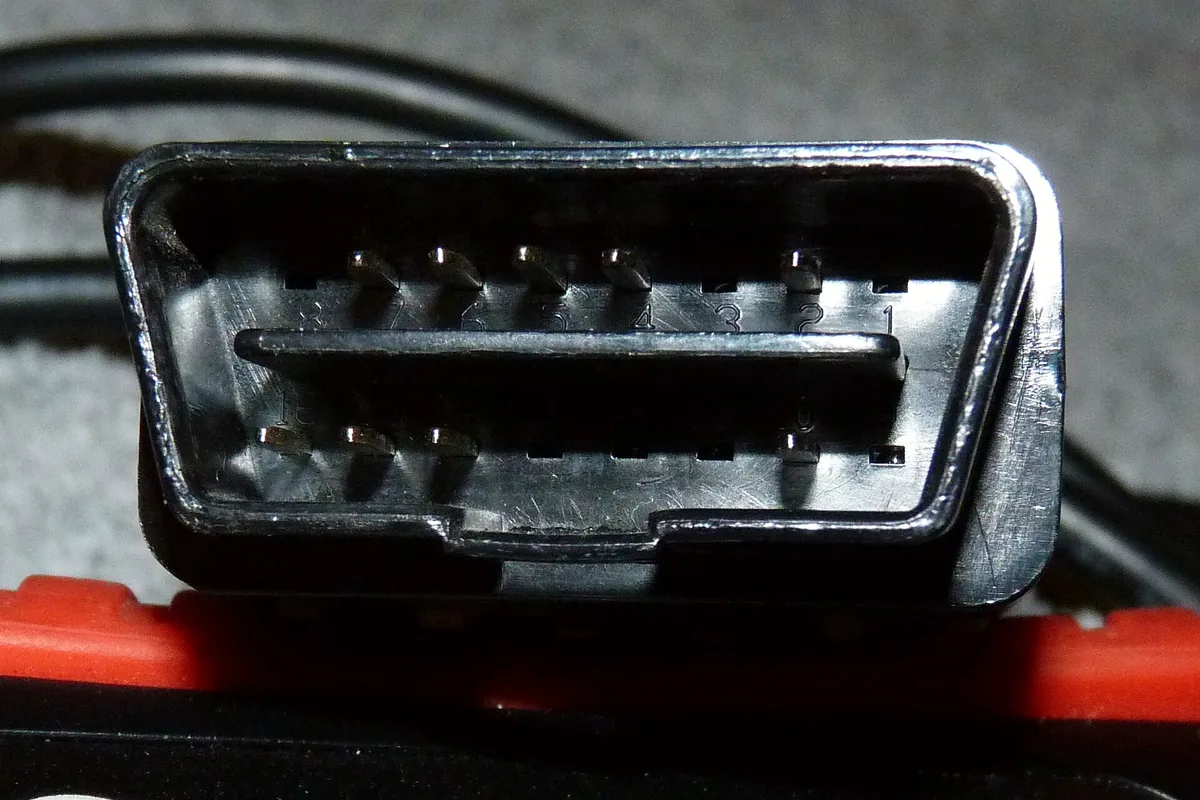
Need a scanner to read the code? See the best OBD2 scanners for beginners or learn how to use an OBD2 scanner.
Definitions are the generic SAE J2012 meanings. Makers may define codes differently, so check the service information for your vehicle.
An OBD2 code is a five-character fault code your car’s computer stores when a sensor reading falls outside its expected range. The letter names the system, the digits narrow it down to a circuit or component, and the code is what turns on the check engine light. Type any code into the OBD2 code lookup above to get its meaning, how serious it is, the most likely causes and what to check first.
I spent ten years in independent shops and dealer service bays, and most of the cars that came in with a check engine light had one of about twenty codes. The lookup covers 9,533 generic OBD2 codes. The 158 most common ones have a full entry with causes ranked by how often they turn out to be the problem, written the way I would explain them to a customer at the counter.
How to read an OBD2 code
Every OBD2 code follows the same pattern, set by the SAE J2012 standard. Once you know it, you can tell roughly where the fault sits before you look anything up.
| Position | Example (P0420) | What it tells you |
|---|---|---|
| 1st: letter | P | The system. P is powertrain (engine and transmission), B is body, C is chassis and U is network communication between modules. |
| 2nd: digit | 0 | Who defined the code. 0 and 2 are generic and mean the same thing on every car. 1 means the carmaker wrote its own definition. P3 codes are split: P34xx is generic and the rest belong to the carmaker. |
| 3rd: character | 4 | The subsystem. In P codes, 4 is auxiliary emissions controls such as the catalytic converter, EGR and EVAP system. |
| 4th and 5th | 20 | The specific fault inside that subsystem. |
P0420 reads as powertrain, generic, emissions controls, fault 20. The lookup draws this breakdown for every code you enter, including codes it has no detailed entry for.
OBD2 code groups
The third character of a P code tells you what kind of problem you have.
| Code range | Subsystem | Common examples |
|---|---|---|
| P00xx, P01xx | Fuel and air metering: mass airflow, oxygen sensors, cam timing, fuel trim | P0011, P0101, P0128, P0171 |
| P02xx | Fuel injector circuits and turbo boost | P0201, P0234, P0299 |
| P03xx | Ignition system and misfires | P0300, P0301, P0335 |
| P04xx | Emissions controls: EGR, catalytic converter, EVAP | P0401, P0420, P0442, P0455 |
| P05xx | Vehicle speed, idle control and auxiliary inputs | P0500, P0505, P0562 |
| P06xx | Engine computer and its output circuits | P0606 |
| P07xx to P09xx | Transmission | P0700, P0730, P0741 |
| P0Axx | Hybrid and electric drive | P0A80 |
| P2xxx | Generic codes added later for the same systems | P2096, P2135, P2187 |
| U0xxx | Lost communication between control modules | U0100, U0121 |
The most common OBD2 codes
These are the codes drivers look up most. Click a code to open it in the lookup, or click its meaning for the full guide to that code.
| Code | Meaning | Check first |
|---|---|---|
| P0420 | Catalytic converter efficiency below threshold, bank 1 | Exhaust leaks ahead of the rear oxygen sensor, then the converter |
| P0171 | System too lean, bank 1 | Vacuum leaks and a dirty mass airflow sensor |
| P0456 | EVAP system very small leak | Gas cap seal, then EVAP hoses |
| P0430 | Catalytic converter efficiency below threshold, bank 2 | Same as P0420, on the other side of a V engine |
| P0300 | Random or multiple cylinder misfire | Spark plugs, coils, vacuum leaks, fuel pressure |
| P0455 | EVAP system large leak | Missing or loose gas cap, purge valve |
| P0128 | Coolant temperature below thermostat temperature | Thermostat stuck open |
| P0299 | Turbocharger underboost | Boost leaks at intercooler hoses and clamps |
| P0442 | EVAP system small leak | Gas cap, then hoses and the purge valve |
| P0700 | Transmission control system malfunction | Read the transmission module for the code that set it |
| P0172 | System too rich, bank 1 | Leaking injector, mass airflow sensor, fuel pressure |
| P0441 | EVAP incorrect purge flow | Purge valve and its hoses |
| P0496 | EVAP high purge flow | Purge valve stuck open |
| P0014 | Exhaust camshaft timing over-advanced, bank 1 | Oil level and condition, then the cam timing solenoid |
| P0174 | System too lean, bank 2 | Vacuum leaks, mass airflow sensor |
| P0446 | EVAP vent control circuit | Vent valve near the charcoal canister |
| P0011 | Intake camshaft timing over-advanced, bank 1 | Oil level and condition, then the cam timing solenoid |
| P0101 | Mass airflow sensor range or performance | Air leaks after the sensor, dirty sensor, air filter |
| P0301 | Cylinder 1 misfire | Swap the coil to another cylinder and see if the misfire follows |
| P0016 | Crankshaft and camshaft position correlation, bank 1 | Oil, then timing chain stretch |
Bank 1 is the side of the engine with cylinder 1. On a four-cylinder there is only bank 1. On a V6 or V8, bank 2 is the other cylinder head, which is why P0171 and P0174 often show up together when a vacuum leak affects both sides.
Is it safe to drive with a check engine light?
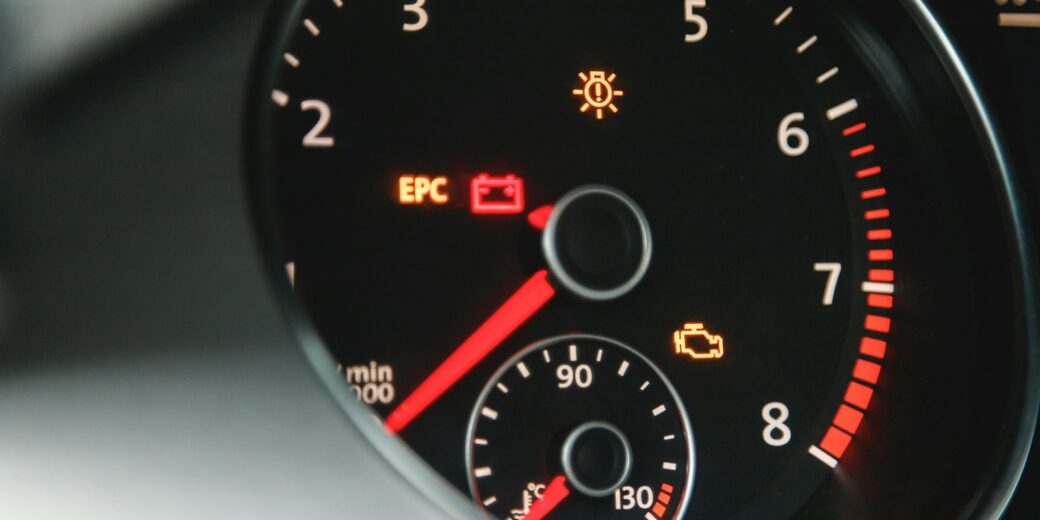
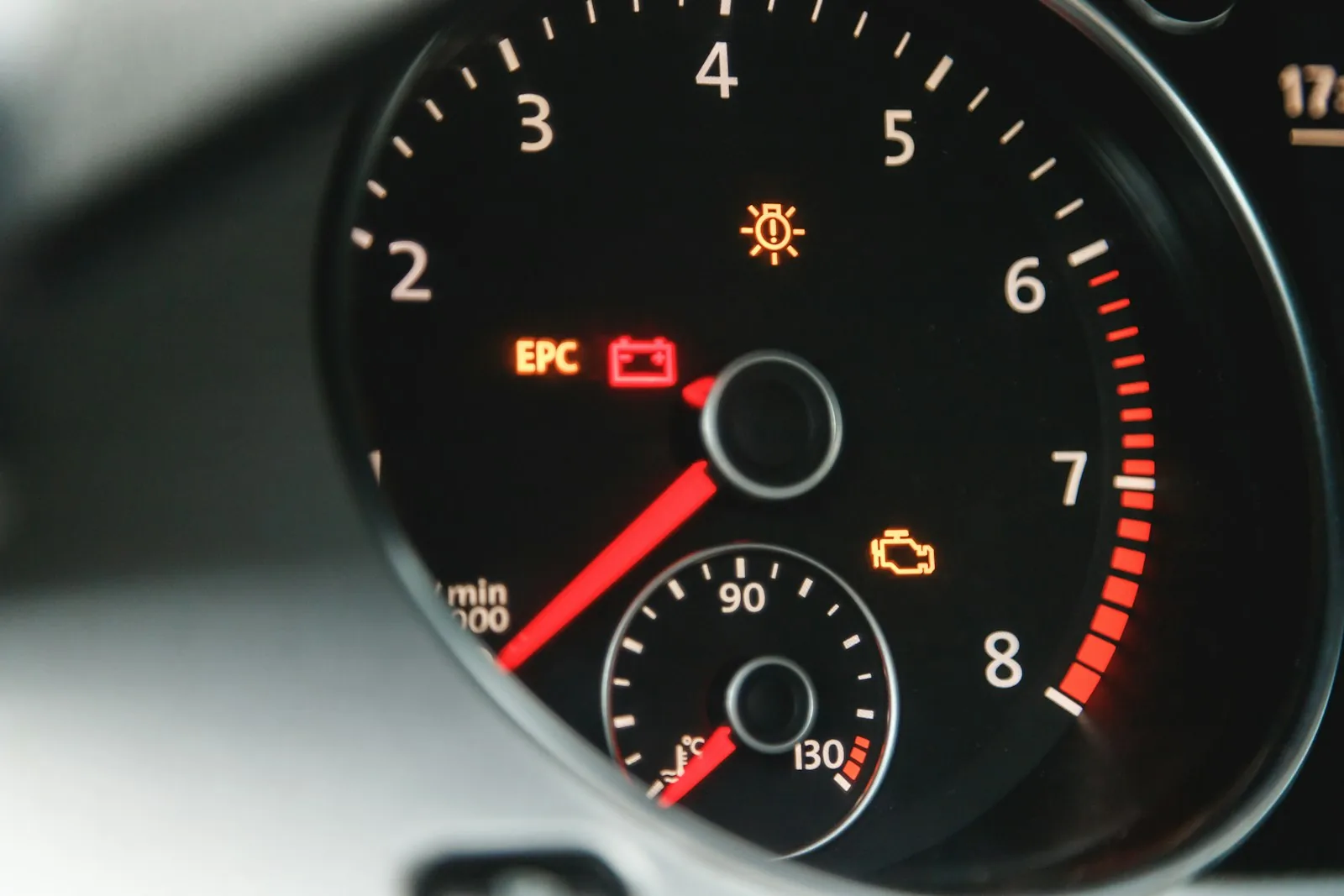
The light tells you more than you might think. How it behaves decides what you do next.
- Solid light, car drives normally: a fault is stored. Most of these are emissions or sensor faults that can wait a few days for a scan. EVAP leak codes and a loose gas cap fall here.
- Solid light, car runs badly: shaking, stalling, loss of power or a transmission stuck in one gear. Drive gently and get it scanned the same day.
- Flashing light: the engine is misfiring badly enough to send unburned fuel into the exhaust. That fuel overheats the catalytic converter and can destroy it within a short drive. Slow down, avoid hard acceleration and park as soon as you safely can.
The check engine light only covers faults the engine and transmission computers watch. A red oil pressure light or a temperature gauge climbing into the red is more urgent than any check engine code. Stop the engine for those.
Each entry in the lookup carries one of three ratings: fix soon, fix promptly or stop driving. The rating assumes the car is running normally. Symptoms always override it.
Why one code can have several causes
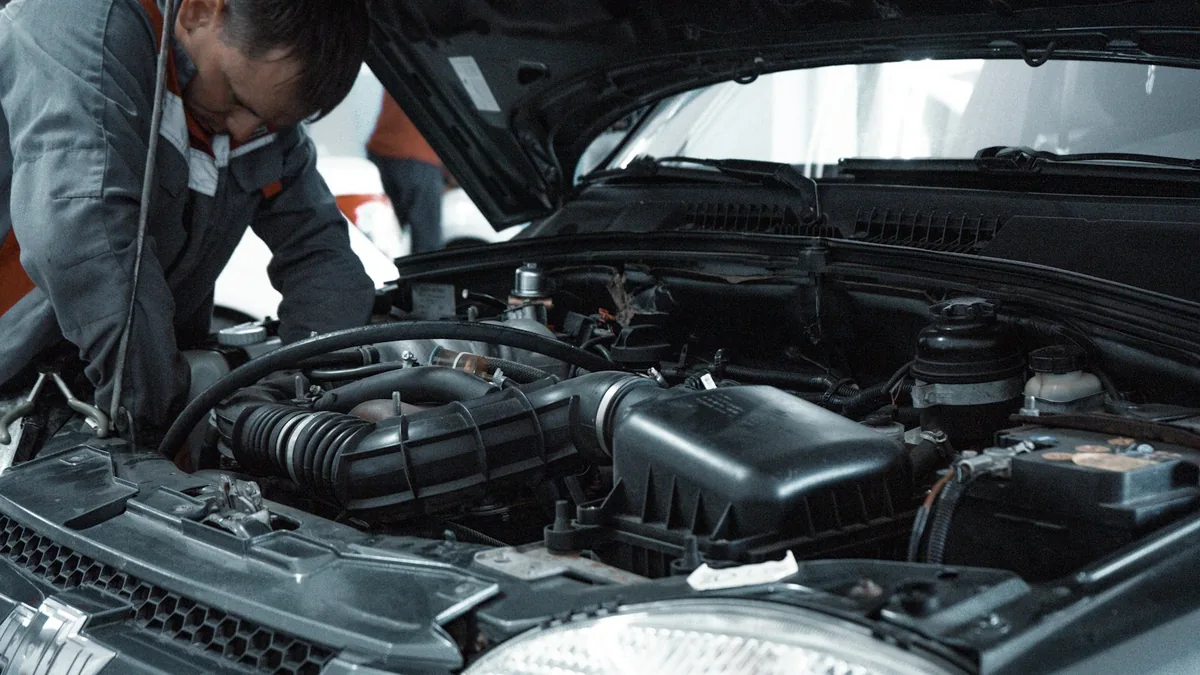
A code records what the computer saw, not which part failed. P0171 means the oxygen sensor reported too much air for the fuel being injected. The computer cannot tell whether that air came through a cracked intake hose, a stuck PCV valve or a leaking intake gasket, or whether the mass airflow sensor under-reported the air in the first place.
That is why the lookup ranks causes as common, possible or rare. Start with the common ones and the cheap checks. Replacing the part named in the code title is the most expensive way to diagnose a car. An oxygen sensor code is often caused by the wiring or an exhaust leak near the sensor, and a P0420 caused by a misfire will come back on a new converter.
The freeze frame data your scanner saves with each code helps narrow it down. It records engine speed, load, coolant temperature and fuel trims at the moment the code set. A lean code that set at idle points to a vacuum leak. One that set at full throttle points to fuel delivery. The guide to using an OBD2 scanner covers how to read freeze frame and live data.
Generic vs manufacturer-specific codes
Generic codes (P0, P2, most of B0, C0 and U0) are defined by the standard and mean the same on a Ford, a Toyota or a BMW. Manufacturer-specific codes (P1, most P3, B1 to B3, C1 to C3, U1 and U2) are defined by each carmaker. P1456 means an EVAP leak at the fuel tank on a Honda and can mean something different, or nothing at all, on another make.
The lookup explains the structure of any manufacturer code and tells you which system it sits in, but it does not guess at a meaning. For those codes, check the service information for your make, a dealer or a scanner with manufacturer software. Basic code readers often show only generic codes, and many cheap units cannot read B, C or U codes at all.
What to do after you look up a code
- Write down every code and its freeze frame before clearing anything. Clearing erases the freeze frame and resets the readiness monitors an emissions test needs.
- Fix the first code in the chain. A misfire can set a catalyst code, and a low battery can set a dozen U codes. Work on the root cause and recheck before chasing the rest.
- Do the free checks first. Tighten the gas cap, check the oil level, look for cracked hoses and loose connectors near the part the code names.
- Test before you buy parts. A multimeter, a smoke test for vacuum and EVAP leaks or a look at live data confirms the cause. A shop diagnostic is cheaper than two wrong parts.
- Clear the code and drive. If the light stays off for several days of normal driving, the repair worked. If the code returns as pending, the fault is still there.
If you don’t have a scanner yet, a basic code reader that shows freeze frame and readiness costs less than one shop diagnostic fee. The best OBD2 scanners for beginners compares handheld readers and Bluetooth adapters, including which ones read ABS, airbag and manufacturer codes.
FAQ
What do OBD2 codes mean?
OBD2 codes are standardized fault codes your car’s computer stores when it detects a problem with the engine, transmission, emissions system or another monitored system. Each code has five characters: a letter for the system, a digit that says whether the code is generic or manufacturer-specific, and three characters that identify the subsystem and the exact fault.
How do I look up an OBD2 code for free?
Type the code into the OBD2 code lookup at the top of this page. It works for any generic P, B, C or U code and shows the meaning, severity, likely causes and first checks. To read the code from the car, use any OBD2 scanner, or ask an auto parts store, since many scan cars for free.
What is the most common check engine light code?
P0420, catalytic converter efficiency below threshold, is the most searched code. The lean codes P0171 and P0174, the misfire code P0300 and the EVAP leak codes P0442, P0455 and P0456 are close behind. EVAP leak codes are often fixed by tightening or replacing the gas cap.
Are OBD2 codes the same for all cars?
Generic codes, those starting with P0, P2, P34, B0, C0 and U0, mean the same thing on every OBD2 car. Codes with a 1 as the second character, and most P3 codes, are manufacturer-specific, so the same code can mean different faults on different makes.
What does it mean when the check engine light is flashing?
A flashing check engine light means a severe misfire. Unburned fuel is entering the exhaust and can overheat and damage the catalytic converter. Reduce speed, avoid hard acceleration and stop driving as soon as it is safe.
Will the check engine light turn off by itself?
Yes, if the fault goes away. Most cars turn the light off after the fault is not seen for three consecutive drive cycles. The code stays in memory as a history code for a while after the light goes out.
Can a loose gas cap cause a check engine light?
Yes. A loose, damaged or missing gas cap lets fuel vapor escape and commonly sets P0455, P0456 or P0457. Tighten the cap until it clicks, then drive normally for a few days. The light goes off on its own if the cap was the cause.
What is the difference between a P0 and a P1 code?
A P0 code is generic and has the same definition on every car. A P1 code is manufacturer-specific, meaning the carmaker defined it for its own systems, so you need make-specific information to know what it means.
What are U codes?
U codes are network codes. They mean a control module stopped talking to another one over the car’s data network. U0100, lost communication with the engine computer, is the most common. A weak battery, a corroded ground or a damaged wiring connector causes many of them.
How many OBD2 codes are there?
There are thousands. The lookup on this page holds 9,533 generic codes, and each carmaker adds hundreds of its own manufacturer-specific codes on top of those.
Related guides
Sources & References
- SAE J2012, diagnostic trouble code definitions: https://www.sae.org/standards/content/j2012_201612/
- EPA, vehicle emissions inspection and maintenance: https://www.epa.gov/state-and-local-transportation/vehicle-emissions-inspection-and-maintenance-im
- California Air Resources Board, on-board diagnostics: https://ww2.arb.ca.gov/our-work/programs/obd-board-diagnostic-program
- 40 CFR 86.1806, onboard diagnostics requirements: https://www.ecfr.gov/current/title-40/chapter-I/subchapter-C/part-86/subpart-S/section-86.1806-17

James Kowalski
More from James KowalskiHow we reviewed this article
This article was researched against manufacturer records and editorially reviewed before publishing. We accept no payment for coverage. Some guides contain affiliate links; see our affiliate disclosure.