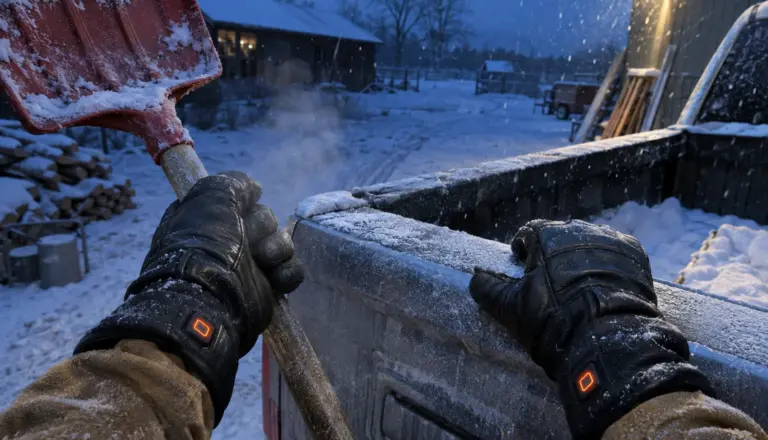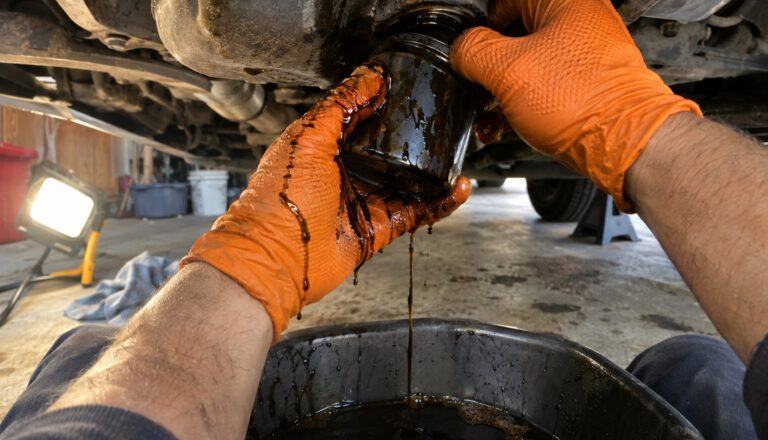
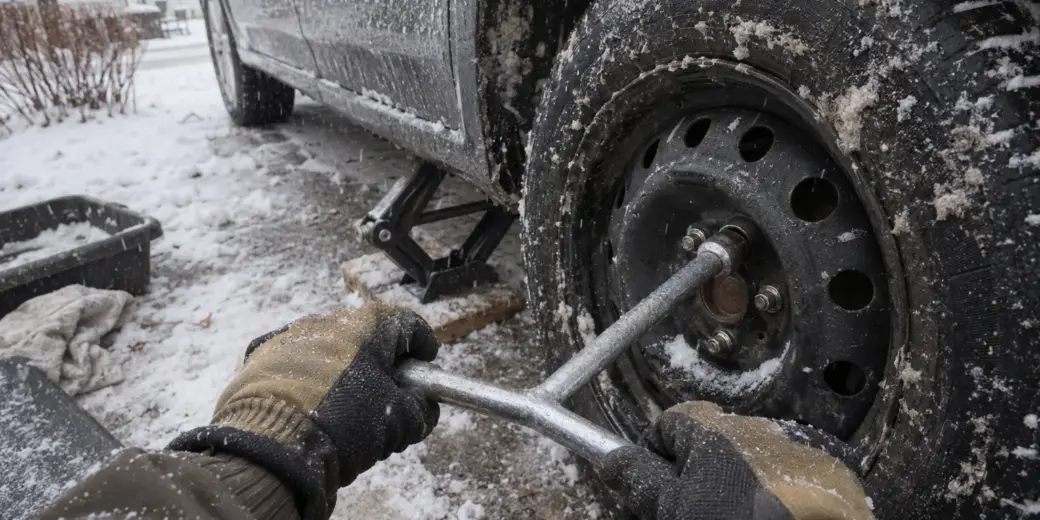
The best winter work gloves for most people are the Carhartt Waterproof Insulated gloves: warm, waterproof and cheap enough to own two pairs. For mechanics who need to start bolts and feel clips in a cold garage, the Mechanix ColdWork Original and the oil-proof toolant insulated nitrile gloves keep the most feel. For slush, washer fluid and chain work, the fully coated Showa Temres 282 is the waterproof glove to buy. No single glove does all three jobs, so this guide sorts 20 picks by the job: warm all-rounders, mechanic gloves, waterproof gloves, extreme cold, heated gloves and liners.
As an Amazon Associate we earn from qualifying purchases. Disclosure
Every November the shop where I learned turned into a tire store. Winter tire changeovers ran from opening to close, and the tire machine sat next to the bay door, which went up for every car. Each car rolled in carrying a wheel well full of slush. By ten in the morning the tech on that machine had soaked through his first pair of gloves, and by lunch he was on his third. He kept the spares on top of the heater vent and rotated them like a pit crew. The guys who lasted that month all had the same setup: thin dipped gloves for the fiddly work, a big waterproof pair for running cars in and out of the lot, and a dry pair waiting on the heater. That system is the core of this guide. Every pick was in stock on Amazon in November 2026, and the guide uses lab data and published tests from Family Handyman and Bob Vila where they exist.
Quick picks
| Glove | Best for | Waterproof | Dexterity |
|---|---|---|---|
| Carhartt Waterproof Insulated | Best overall: snow, yard and outdoor work | Yes (insert) | Low |
| Youngstown Waterproof Winter Plus | Construction and snow clearing with better feel | Yes (membrane) | Medium |
| Kinco 1927KW lined pigskin | Leather gloves that last for years | No (water resistant) | Medium |
| Mechanix ColdWork Original | Mechanics in a cold garage | No (water resistant) | High |
| toolant insulated nitrile | Oily, wet work in the cold | Yes (coating) | High |
| Showa Temres 282 | Slush, water and tire chains | Yes (full coat) | Medium |
| Carhartt Waterproof Insulated Mitten | Extreme cold and plowing | Yes (insert) | Very low |
| Savior Heat heated gloves | Long hours outside, poor circulation | Yes (membrane) | Low |
How to choose winter work gloves
Winter gloves fight three problems at once: cold air, cold water and lost dexterity. Every feature that solves one makes another worse. More insulation means a fatter finger. A waterproof membrane traps sweat. A thin dipped glove keeps feel but soaks through in slush. Pick the problem that matters most for your work, then choose the glove that solves it.
Warmth: insulation weight
Most insulated work gloves use 3M Thinsulate or a knit acrylic liner. Thinsulate is sold by weight in grams per square meter, and the number tells you how warm and how bulky the glove will be. Safety supplier SPI sums up the usual rule:
- 40 g: cool weather and active work where you need dexterity.
- 60 to 100 g: the all-round winter range, still flexible enough for most tools.
- 150 to 200 g: extreme cold or standing still, such as plowing, flagging or ice fishing.
Activity matters as much as the temperature. A person shoveling heavy snow makes a lot of heat and sweats through a 150 g glove. A person standing at a flagging post at 20°F needs every gram.
Water: coated, membrane or water resistant
“Waterproof” means three different things on glove listings.
- Fully coated gloves (Showa 282, Atlas 460) are dipped in PVC, polyurethane or nitrile over the whole hand. Nothing gets in through the shell. They are the only type that survives holding a hand in slush or a bucket.
- Membrane or insert gloves (Carhartt, Youngstown, Ergodyne) hide a waterproof liner between the shell and the insulation. The shell gets wet and heavy, but the hand stays dry for hours. Water can still pour in over the cuff.
- Water-resistant gloves (most leather and softshell gloves) shed light snow and drizzle, then soak through. Family Handyman dunked the MCR Ninja Ice for 15 seconds in its winter glove test, and the glove took more than 12 hours to dry.
Palm-dipped gloves fall in between. The palm is waterproof, and the knit back is not.
Dexterity: what you need to pick up
Cold hands lose fine motor control fast. Hand performance research commonly puts the point of marked dexterity loss at a finger skin temperature around 59°F (15°C), and a 2025 study found finger performance falling off even earlier. That is why a warm glove matters even when you need feel: a thick glove on warm hands often beats a thin glove on numb ones. For a mechanic starting a 10 mm bolt, a fitted synthetic glove or an insulated nitrile dip is the minimum. For shoveling and carrying, bulk does not matter.
Leather or synthetic
Leather is the traditional winter work glove, and the type of hide matters in wet cold. Pigskin stays supple after it gets wet and dries. Cowhide is tougher and warmer but can dry stiff unless it is treated. Deerskin is the softest and dries soft. Synthetic gloves dry faster, wash in a machine and usually cost less, but they wear out sooner on rough work like splitting firewood or handling block.
Ratings: EN 511 and ANSI cut levels
Gloves sold in Europe and many industrial gloves carry an EN 511 cold rating: a snowflake with three digits. The first digit is convective cold (wind and air, 0 to 4), the second is contact cold (holding cold objects, 0 to 4) and the third is water penetration (1 means it passed a 30-minute test), as Watson Gloves explains. The Atlas 460 in this guide is rated 121. Cut ratings use ANSI/ISEA 105 levels from A1 to A9. Most winter gloves are not cut rated, so if you handle sheet metal, glass or sharp castings in the cold, buy a glove with an A-level printed on it.
Fit
Buy winter gloves with a little room at the fingertips. A glove that squeezes the hand compresses the insulation and restricts blood flow, and NIOSH warns that tight gloves raise frostbite risk. If you plan to wear a liner underneath, size up once.
Best warm winter work gloves for most jobs
These are all-round gloves for snow clearing, yard work, construction and outdoor jobs where warmth and dry hands matter more than picking up small screws.
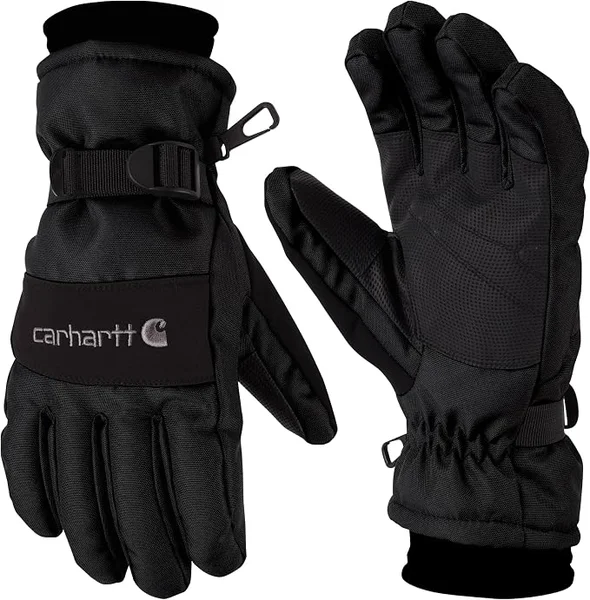
Best overall
1. Carhartt Men’s Waterproof Insulated Knit Cuff Glove
This is the most popular winter work glove on Amazon, with more than 37,000 ratings at 4.6 stars, and the testers agree on why. Family Handyman called it very warm, and Bob Vila’s ice test rated it “very warm” too. A waterproof insert sits under the polyester softshell, synthetic insulation fills the glove and a FastDry lining pulls sweat away from the hand. The knit fleece cuff and the wrist strap keep snow out when you reach into a drift. Both testers marked it down for dexterity: picking up a screw or a cotter pin means taking it off. Carhartt sizes its gloves by hand circumference, so measure before you order.
- Waterproof insert with synthetic insulation
- FastDry wicking lining
- Knit cuff plus adjustable wrist strap
- 8 colors
Good: Very warm; waterproof; huge size range; cheap enough to keep a spare pair. Not great: Bulky fingers; polyurethane palm wears through on rough work like firewood or block.
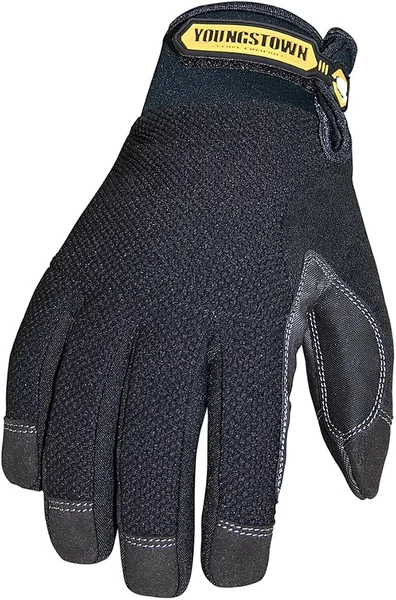
Better feel
2. Youngstown Glove Waterproof Winter Plus
The Winter Plus is the glove to buy if the Carhartt feels like a mitten. It uses a thinner 60 g layer of Thinsulate behind a waterproof, windproof and breathable membrane, and Youngstown cuts the fingers in a 3D pattern that curves like a relaxed hand, so it bends with less effort. The synthetic palm is rated ANSI A2 for cut, a small bonus for handling sheet metal or rough lumber. It runs from Small to 3X-Large, which matters for big hands that never fit a standard Large. Construction crews and utility workers are its target, and it handles a long day of snow clearing too.
- 60 g Thinsulate
- Waterproof, windproof breathable membrane
- ANSI cut level A2
- Sizes S to 3XL
Good: More dexterity than most waterproof insulated gloves; wide size range. Not great: Not as warm as heavier gloves below about 10°F; synthetic palm is less tough than leather.
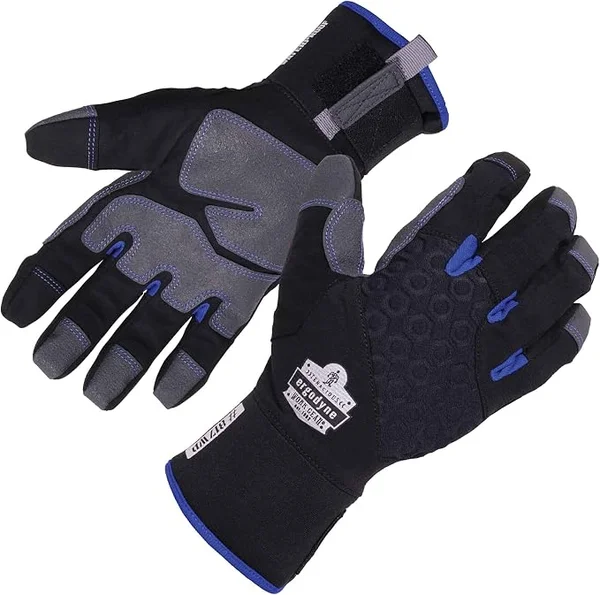
Touchscreen pick
3. Ergodyne ProFlex 817WP Thermal Waterproof Glove
The 817WP puts more insulation where it does the most good: 70 g of Thinsulate on the back of the hand, where wind hits, and 40 g in the palm, where you grip. That split keeps the palm thinner for holding tools. A breathable waterproof insert, a DWR-finished ripstop shell and reinforced palm and fingertips round it out. The thumb and index finger work on a phone screen, and the long neoprene cuff tucks under a jacket sleeve. It is a good glove for work that mixes tools with weather, like delivery, landscaping or loading trailers.
- 70 g Thinsulate back, 40 g palm
- Waterproof breathable insert
- Touchscreen thumb and index finger
- Extended neoprene cuff
Good: Thin palm for its warmth; long cuff; touchscreen works. Not great: Shell is fabric, so it wears faster than leather on abrasive jobs.
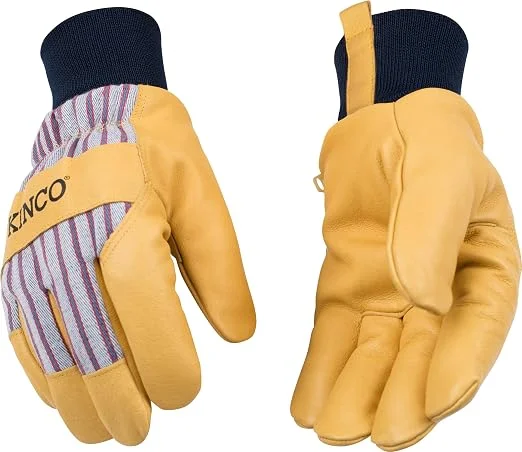
Best leather
4. Kinco 1927KW Lined Grain Pigskin Gloves
Ask on any work-glove forum for a warm glove that lasts, and Kinco’s lined pigskin gloves come up fast. The 1927KW has a golden grain pigskin palm, knuckle strap and fingertips, a striped cotton-blend back and Kinco’s Heatkeep thermal insulation, with a knit wrist to hold the heat in. Pigskin stays soft after it gets wet, which is why ranchers and snow crews like it. It is water resistant, not waterproof: the canvas back soaks through in slush. Many owners rub a wax waterproofer into the leather before the first snow to make it shed water longer. One review site reports the leather stiffens in extreme cold.
- Grain pigskin palm, knuckles and fingertips
- Heatkeep insulation
- Knit wrist with leather pull tab
- Kids’ to adult sizes
Good: Tough; breathable; stays soft after drying; long-lasting. Not great: Canvas back is not waterproof; needs a break-in period.
Softest leather
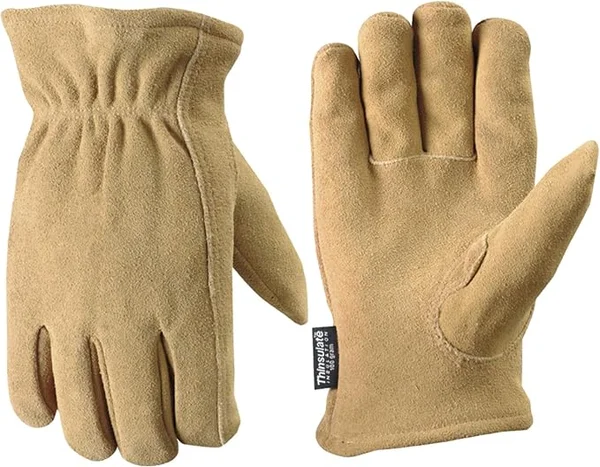
5. Wells Lamont Insulated Deerskin Winter Work Gloves
Bob Vila named Wells Lamont’s deerskin winter gloves the best overall in its ice-cooler test: the testers’ fingers stayed warm and their hands stayed dry handling ice, and they rated it the softest and most breathable glove of the group. Deerskin is the most flexible work leather, so these gloves give good feel for driving, power tools and equipment work. Wells Lamont rates them for light duty, and the listing says they are not water resistant. Keep them for dry cold and choose a coated or membrane glove for slush.
- Split deerskin leather
- Insulated lining
- Elastic knit wrist
- Keystone thumb
Good: Soft and flexible from day one; breathable. Not great: Not water resistant; light-duty leather wears out on rough jobs.
Best winter mechanic gloves
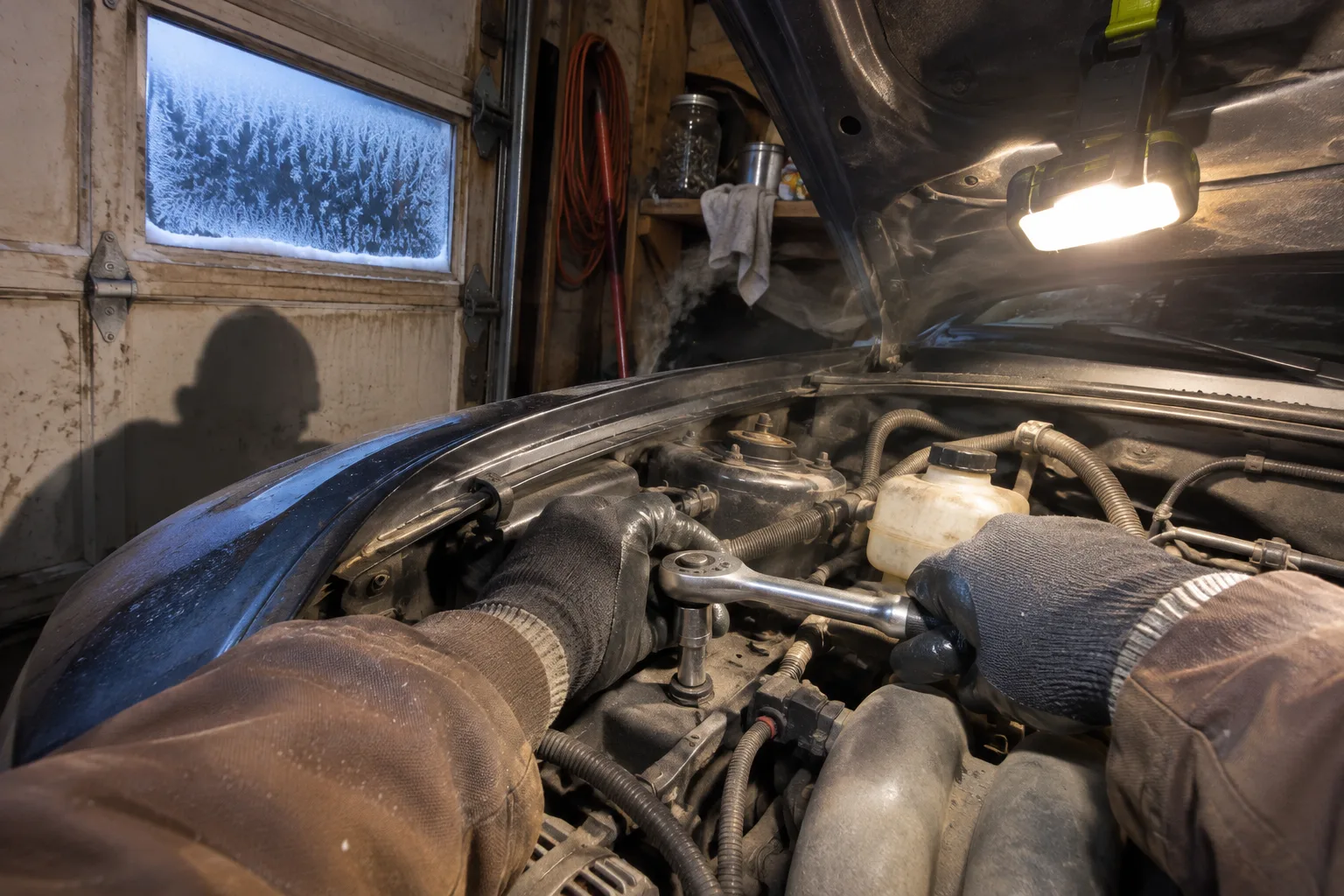
A mechanic in a cold garage needs a different glove than a person shoveling a driveway. You need to start bolts, squeeze hose clamps, feel a connector click and wipe oil off the glove without ruining it. That rules out most waterproof insulated gloves, which are too thick. The answer is a fitted synthetic glove or an insulated dip, plus a big warm pair for the moments you step outside. If your hands crack in the cold, our best hand cream for mechanics guide covers the other half of the problem, and the best mechanic gloves guide covers the gloves for the rest of the year.
Best for mechanics
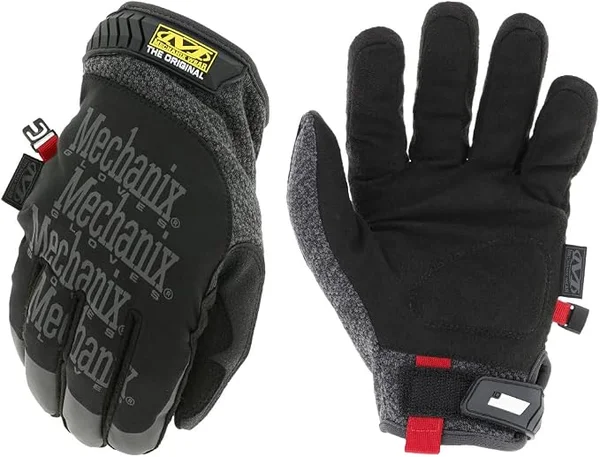
6. Mechanix Wear ColdWork Original
The ColdWork Original takes the shape of Mechanix’s classic mechanic glove and adds insulation and a wind-blocking softshell back. Bob Vila picked it as the dexterity winner in its winter test: it was not the warmest glove, and it kept water out “for a while.” GearJunkie called it the best budget winter glove. It has Armortex reinforcements at the wear points, touchscreen fingertips and a hook-and-loop cuff, and it goes in the washing machine, which matters for a glove that lives in oil. Expect it to handle a cold garage or a quick roadside job down to the mid-teens. Below that, or in slush, switch to a heavier glove.
- Insulated, with a wind- and water-resistant softshell back
- Armortex reinforcements
- Touchscreen capable
- Machine washable
Good: Best feel of any insulated glove here; washable; fits like a regular mechanic glove. Not great: Not waterproof; not warm enough for standing still in deep cold.
Impact protection
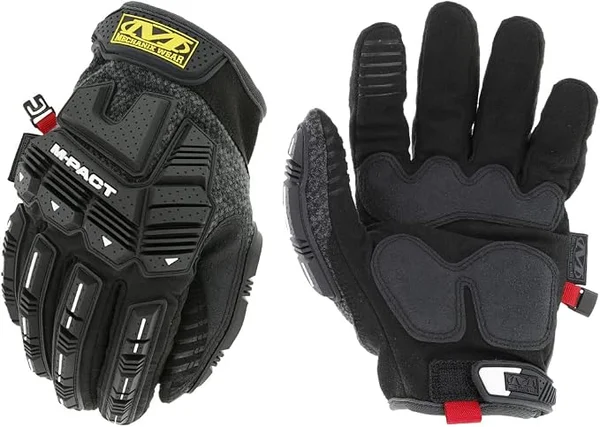
7. Mechanix Wear ColdWork M-Pact
The M-Pact version adds armor for heavy work. A thermoplastic rubber exoskeleton over the knuckles and fingers meets the ANSI 138 Level 2 impact standard, and D3O padding in the palm absorbs vibration from impact guns and hammers. Inside, there is 60 g of Thinsulate behind water-resistant E-Suede and a laminated wind barrier. It is warmer than the ColdWork Original but less nimble. It suits tire work, suspension jobs, towing and anyone swinging a hammer at a frozen ball joint.
- ANSI 138 Level 2 knuckle impact protection
- D3O palm padding
- 60 g Thinsulate with wind barrier
- Dual-layer fingertips
Good: Protects knuckles; warmer than the Original; absorbs vibration. Not great: Bulkier; knuckle armor limits fist closing in tight spaces.
Best oil-proof
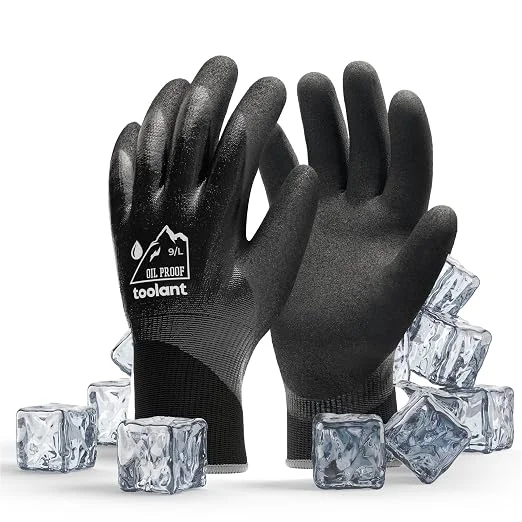
8. toolant Waterproof Insulated Nitrile Work Gloves
Latex-dipped winter gloves are cheap and grippy, but oil, fuel and solvents break down natural rubber. Nitrile resists them. The toolant glove pairs a thick acrylic thermal liner with a double nitrile dip and a sandy finish on the palm, and toolant says it stays flexible down to -4°F. The coating covers the palm and fingers and keeps out water and oil, so this is the winter glove for oil changes, coolant work and anything greasy in an unheated garage. It is a pull-on glove with no cuff strap. With more than 8,000 ratings and 13 colors, it is easy to stock by the pair.
- Double nitrile coating, waterproof and oil resistant
- Acrylic thermal liner
- Sandy grip finish
- Flexible to -4°F per toolant
Good: Shrugs off oil and water; good grip on wet tools; cheap enough to buy several. Not great: Coating does not breathe, so hands sweat on hard work; less warm than leather.
Classic dipped glove
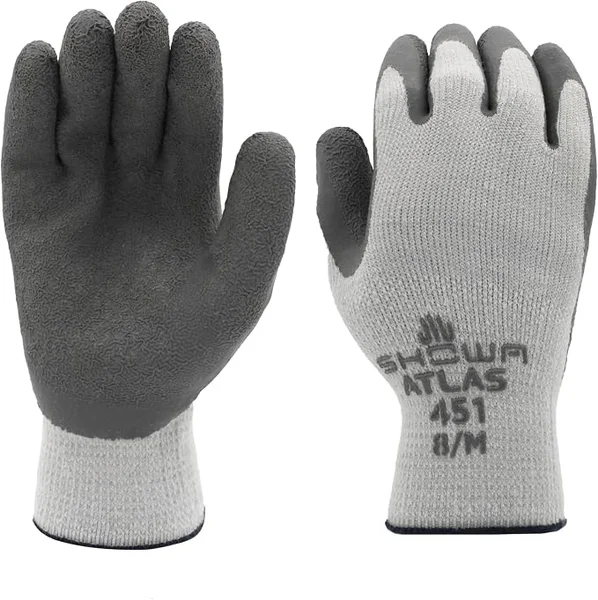
9. Showa Atlas 451 Insulated Latex Glove
The 451 is the gray glove you see on half the job sites in the northern states, and it gets repeat praise on work forums as a go-to for cold. A seamless acrylic and cotton knit liner keeps it warm, and the rough latex palm grips frozen tools and wet lumber well. It is cheap and comes in single pairs or 12-packs. Two limits matter for mechanics: the knit back is not waterproof, and latex does not hold up to oil and fuel the way nitrile does. Use it for dry cold, outdoor work and handling parts, and switch to the toolant nitrile glove for fluid work.
- Seamless acrylic and cotton insulated liner
- Rough latex palm coating
- Single pairs and 12-packs
Good: Warm for its thinness; excellent grip; cheap. Not great: Not waterproof; latex breaks down with oil and fuel.
Two-layer glove
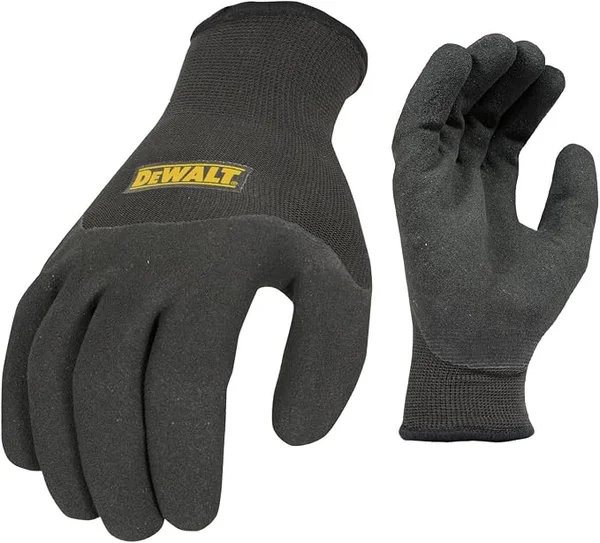
10. DeWalt DPG737 Thermal Insulated Grip Glove
The DPG737 uses a 2-in-1 build: a thin 15-gauge nylon shell with a micro-foam dip over three-quarters of the hand, and a thick 7-gauge acrylic thermal liner underneath. The foam dip on the knuckles adds wear protection that a palm-only dip lacks, and the thin outer layer keeps the glove from feeling as bulky as its warmth suggests. It is not waterproof. It suits a cold garage, warehouse work and carrying parts, and it costs little enough to keep a pair in the truck.
- 15-gauge nylon shell with 3/4 micro-foam dip
- 7-gauge acrylic thermal liner
- Knuckle coverage
Good: Warm for a dipped glove; covered knuckles; low cost. Not great: Not waterproof; foam dip soaks up oil over time.
Best waterproof winter work gloves
If your hands go into slush, water or washer fluid, a membrane glove will not keep up. These gloves are fully coated or coated over the palm and fingers. Fitting tire chains on a wet shoulder, washing equipment, ice fishing and any work in standing water fall here.
Best waterproof
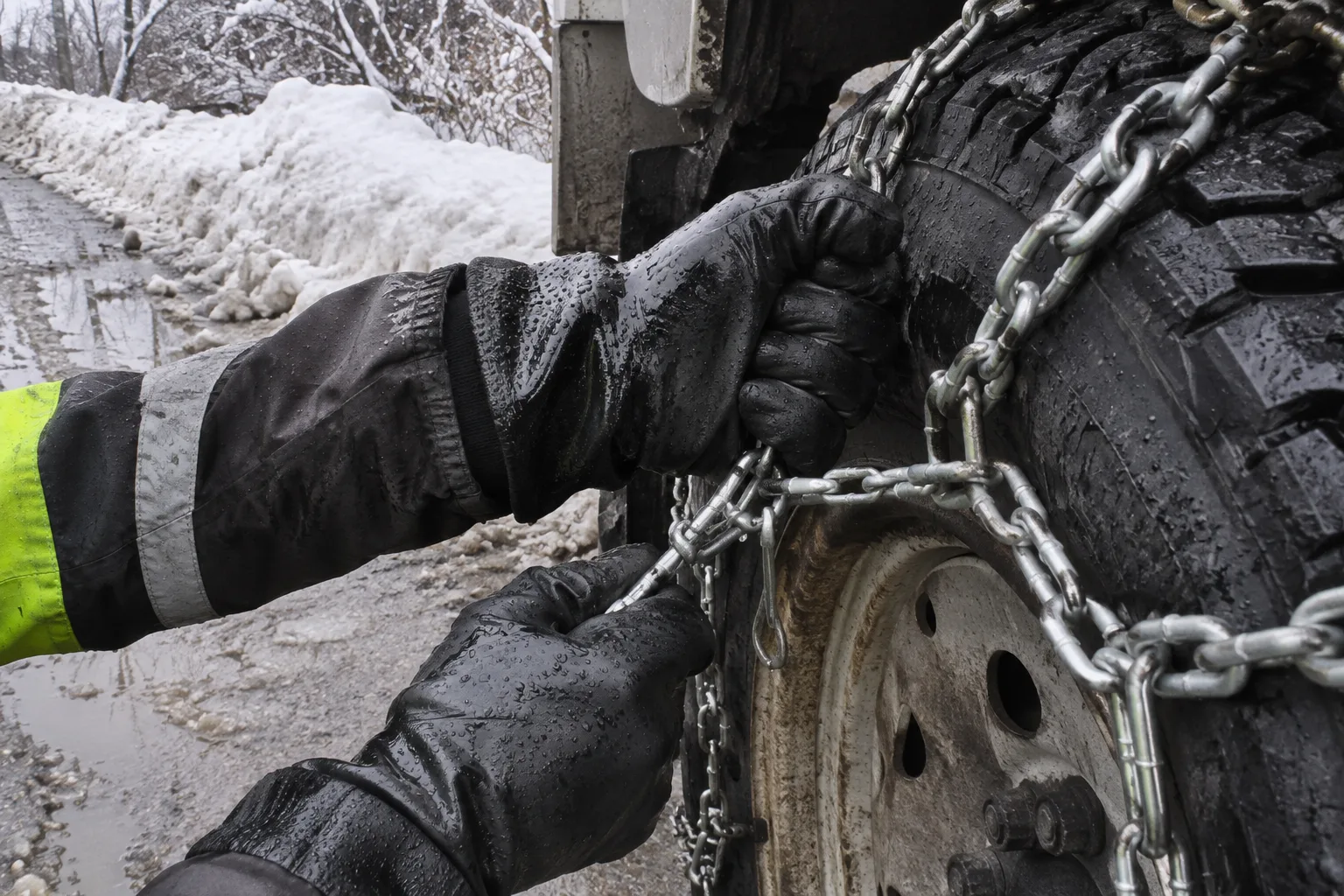
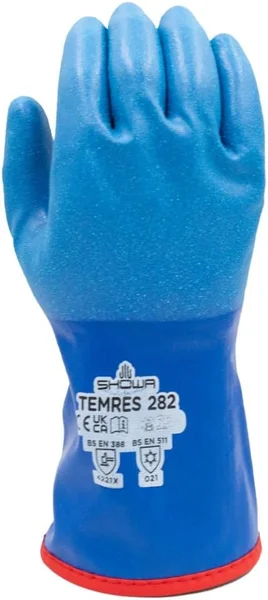
11. Showa Temres 282 Waterproof Insulated Glove
The Temres 282 is fully coated in polyurethane, so the whole hand is liquid-proof, but the coating breathes. That is unusual: most coated gloves trap sweat, and a wet liner is a cold liner. A fleece acrylic liner adds warmth, and Showa rates it down to -58°F. The rough finish grips wet pipe, frozen tools and chains, and the polyurethane stays flexible in the cold instead of cracking. A version with a built-in drawstring snow gaiter, the 282-02, is also on Amazon for people who work in deep snow.
- Fully coated breathable polyurethane
- Acrylic fleece liner, rated to -58°F by Showa
- Rough textured grip
Good: Truly waterproof yet breathable; good grip; flexible in the cold. Not great: Short cuff lets snow in on the standard version; fit runs snug.
Best value
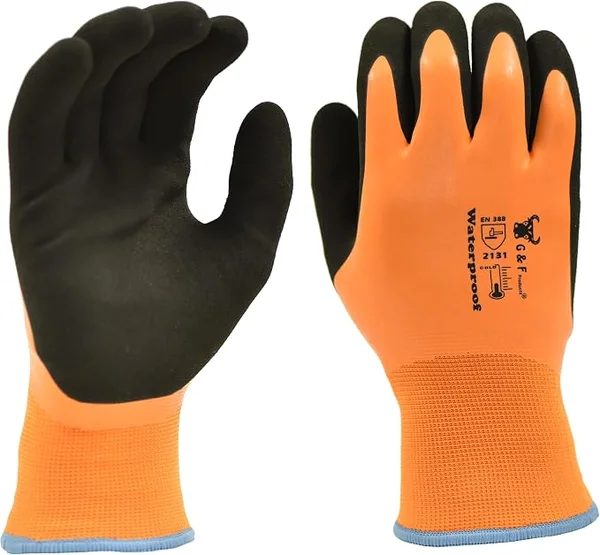
12. G&F Products 1628 Waterproof Winter Work Gloves
The G&F 1628 won the value pick in both Family Handyman’s and Bob Vila’s tests. Bob Vila confirmed it was waterproof, and Family Handyman listed its ratings: ANSI abrasion level 3, cut level A3 and puncture level 2. The palm has a double coating, latex outside and foam underneath, and a thick 7-gauge acrylic terry liner keeps the hand warm. Both testers found it ran hot and sweaty, which is the cost of a coating that does not breathe. With nearly 13,000 ratings, it is the cheapest proven waterproof winter glove you can buy.
- Double latex and foam palm coating
- 7-gauge acrylic terry liner
- ANSI abrasion 3, cut A3, puncture 2
Good: Tested waterproof; cut resistant; very cheap. Not great: Hands sweat on hard work; latex coating does not like oil or fuel.
For fluids
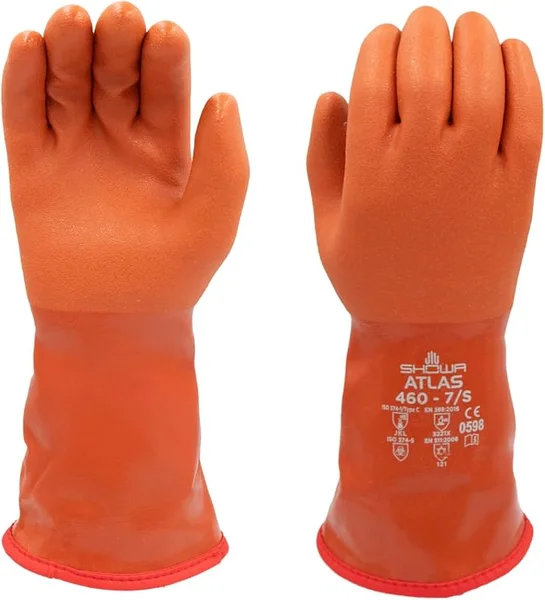
13. Atlas 460 Insulated PVC Gauntlet
The Atlas 460 is a fully PVC-coated insulated gauntlet with an 11.8-inch length that covers the wrist and forearm. It is chemical rated (EN ISO 374-1 Type JKL) and cold rated EN 511 121, which means it passed the 30-minute water test. A seamless cotton knit and a fixed acrylic liner keep it flexible to -4°F. This is the glove for draining coolant on a cold day, washing a truck in winter, mixing washer fluid or reaching into a bucket of salty water. It is too stiff for small parts.
- Full PVC coating, 11.8-inch length
- EN 511 121 and EN ISO 374-1 Type JKL
- Seamless cotton and acrylic liner, flexible to -4°F
Good: Fully waterproof up the forearm; chemical rated. Not great: Stiff; poor feel for small parts; no breathability.
Light and coated
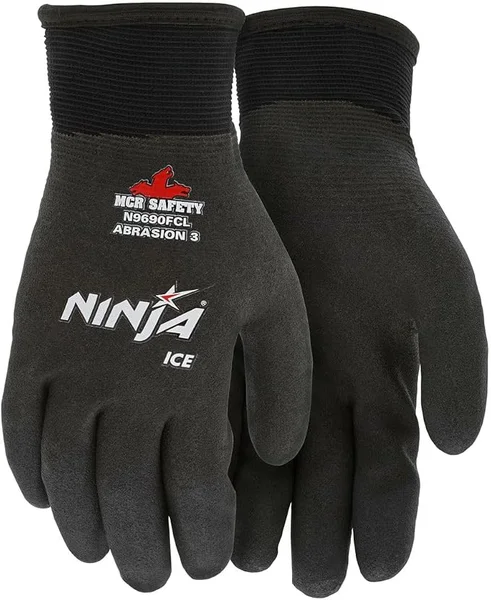
14. MCR Safety Ninja Ice N9690FC
The Ninja Ice is famous for dexterity: Family Handyman gave the standard version a 5 out of 5 for feel. That same test found the palm-coated glove soaked through in 15 seconds underwater. The N9690FC is the fully coated version, which closes that gap with a PVC and HPT coating over the whole nylon shell and an acrylic terry liner inside. MCR lists it as water repellent, not waterproof, so treat it as a glove for wet snow and damp tools rather than standing water. It suits work that needs feel and keeps getting wet, like plowing routes with lots of hand work.
- Full PVC and HPT coating over a nylon shell
- Acrylic terry liner
- Seamless knit
Good: Very good feel for a winter glove; covers the back of the hand. Not great: Rated water repellent, not waterproof; slow to dry once soaked.
Best gloves for extreme cold
Below about 0°F, or when you stand still for long stretches, dexterity stops mattering and warmth wins. Mittens, freezer gloves and cut-resistant shells cover this range.
Warmest
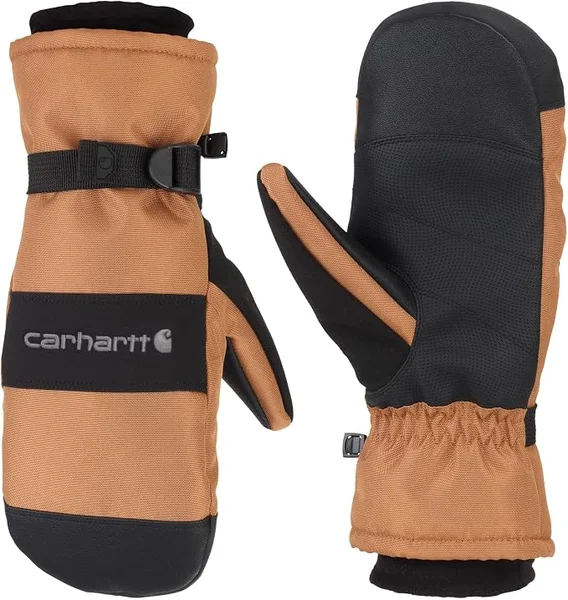
15. Carhartt Men’s Waterproof Insulated Knit Cuff Mitten
Mittens are warmer than gloves because the fingers share heat in one pocket instead of losing it through four. This Carhartt mitten uses the same waterproof insert, synthetic insulation and FastDry lining as the best-overall glove, with a softshell palm and a grip pattern. The fleece cuff and adjustable strap seal out snow, and there is a brow wipe on the back. Wear it for plowing, snowblowing, flagging and ice fishing, and slip it off to work in a liner glove when you need fingers.
- Waterproof insert
- Synthetic insulation with FastDry lining
- Fleece cuff and wrist strap
- More than 10,000 ratings
Good: Warmest pick here; waterproof; pairs well with a liner glove. Not great: No finger dexterity at all.
Freezer rated
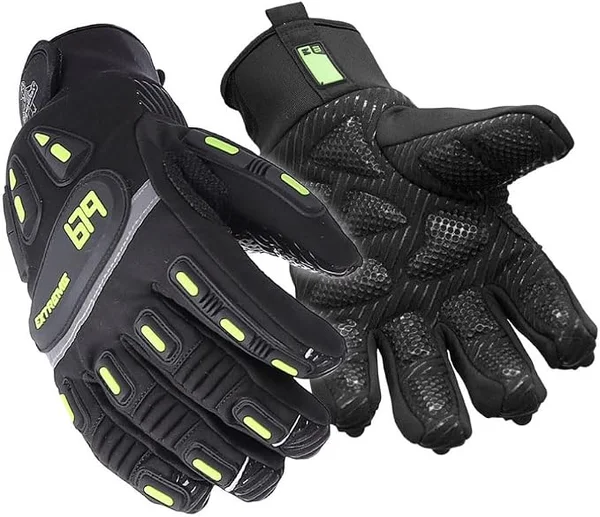
16. RefrigiWear Insulated Extreme Freezer Glove
RefrigiWear makes gear for people who work inside walk-in freezers, and this glove is rated to -30°F. It adds impact protection on the fingers, knuckles and back of the hand, a silicone palm grip for icy surfaces and AirBlaze insulation behind a tricot lining. It is a good glove for tow operators and roadside crews who work outside through the night. The listing marks it water resistant, not waterproof.
- Rated to -30°F
- Impact guards on fingers, knuckles and back
- Silicone palm grip
Good: Very warm; impact protection; made for cold all day. Not great: Bulky; not waterproof.
Cut resistant
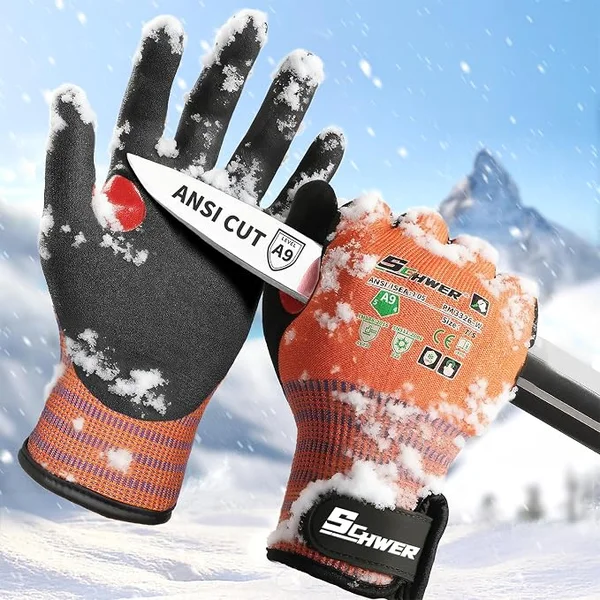
17. Schwer FreezeGuard-X ANSI A9 Winter Gloves
Body shops, glass installers and anyone handling sheet metal in the cold need cut protection, and most winter gloves have none. The FreezeGuard-X uses an HPPE and steel wire shell rated ANSI A9, the top level, with puncture level 2 and an acrylic terry liner for warmth. A nitrile foam coating on the palm grips in wet and greasy conditions. It is water repellent only, so it is a cold-weather glove for dry work, not slush.
- ANSI A9 cut, puncture level 2
- Acrylic terry liner
- Nitrile foam palm
- Packs from 1 to 120 pairs
Good: Top cut rating in a winter glove; good grip on oily parts. Not great: Not waterproof; not as warm as fully insulated gloves.
Best heated work gloves
Heated gloves make sense for long hours outside, such as plowing routes, outdoor inspections or for people with poor circulation or Raynaud’s. They are bulky for tool work, and battery claims run long: makers usually quote the low setting, and real runtime on high is often a few hours, shorter in deep cold. Our best heated work gloves guide compares 15 heated gloves, liners and mittens by job.
Best heated
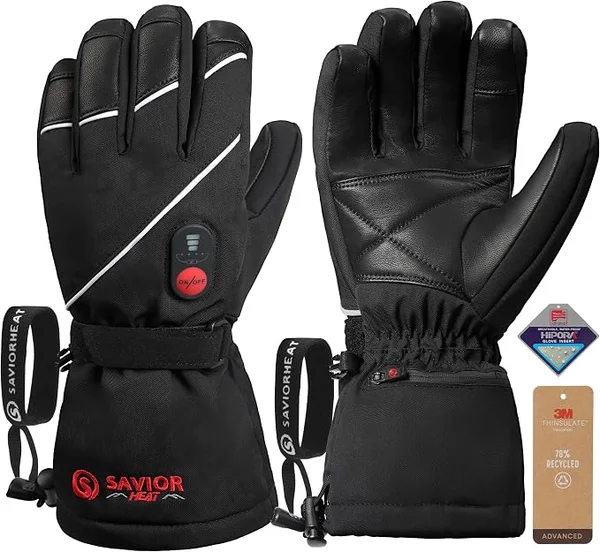
18. Savior Heat Rechargeable Heated Gloves
Savior’s heated gloves run on two 7.4V 2,200 mAh batteries, one in each cuff, with three heat settings from 104°F to 149°F that warm the fingers and the back of the hand. Savior claims up to 11 hours of heat, which applies to the lowest setting. Under the leather and polyester shell there is Thinsulate and a Hipora waterproof membrane, and the fingertips work on touchscreens. With more than 3,000 ratings, it is one of the most reviewed heated gloves on Amazon. Charge both batteries the night before, and carry the mitten or a spare pair in case they die.
- Two 7.4V 2,200 mAh batteries
- 3 heat settings, 104°F to 149°F
- Thinsulate and Hipora waterproof membrane
- Touchscreen fingertips
Good: Active heat for very long cold shifts; waterproof; warm fingertips. Not great: Bulky; batteries add weight; runtime on high is far below the 11-hour claim.
Best glove liners for layering
A liner glove under a bigger shell is the most flexible winter setup. Wear the liner alone for detail work and pull the shell on when you go back outside. NIOSH recommends thin liners under heavier gloves for exactly this reason. Size your outer glove up once to make room.
Best liner
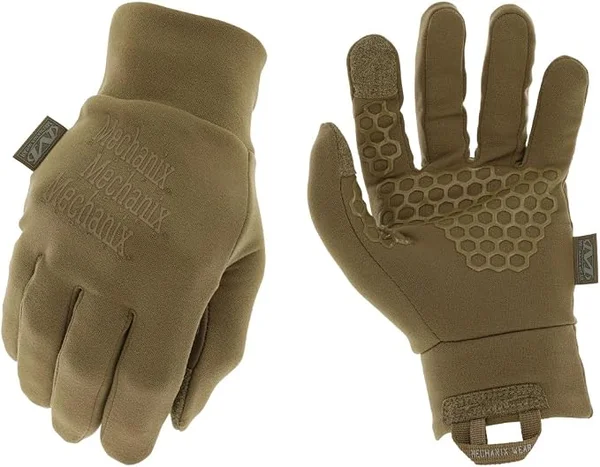
19. Mechanix Wear ColdWork Base Layer
The Base Layer is a stretchy softshell glove with a microfleece lining, a silicone grip pattern on the palm and touchscreen patches on the thumb and index finger. It is thin enough to wear under a mitten or a waterproof glove and grippy enough to do light work alone, like running a scan tool or checking tire pressure on a cold morning. It is machine washable, and more than 1,000 people buy it every month.
- Stretch softshell with microfleece lining
- Silicone grip palm
- Touchscreen thumb and index finger
- Machine washable
Good: Works alone or under a shell; good grip for a liner. Not great: Not warm enough alone in real cold; softshell is not waterproof.
Budget liner
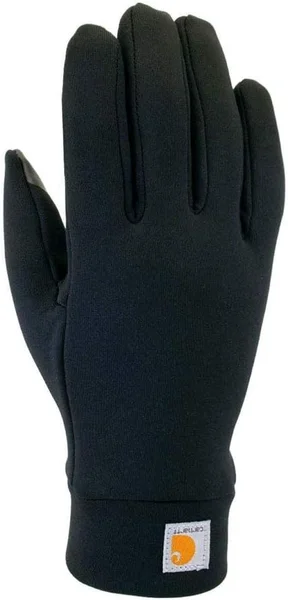
20. Carhartt Men’s Stretch Fleece Liner Glove
Carhartt’s fleece liner is a simple stretch-fleece glove with a silicone grip palm and a touchscreen fingertip. Carhartt designed it to be worn alone in mild weather or under heavier gloves, and it pairs naturally with the Carhartt waterproof mitten above. It costs little, so keeping a pair in the truck, the glove box and the coat pocket is easy.
- Stretch fleece shell and cuff
- Silicone grip palm
- Touchscreen capable
Good: Cheap; thin; pairs with Carhartt mittens. Not great: Fleece pills and wears through on tools; no wind protection.
Best winter gloves by job
| Job | First choice | Also good |
|---|---|---|
| Wrenching in a cold garage | Mechanix ColdWork Original | DeWalt DPG737 |
| Oil changes and fluid work | toolant insulated nitrile | Atlas 460 |
| Tire chains and roadside work | Showa Temres 282 | Mechanix ColdWork M-Pact |
| Shoveling and snow clearing | Carhartt Waterproof Insulated | G&F 1628 |
| Construction | Youngstown Winter Plus | Showa Atlas 451 |
| Ranch, firewood and rough work | Kinco 1927KW | Wells Lamont deerskin |
| Plowing, flagging, standing still | Carhartt mitten | Savior heated gloves |
| Sheet metal and glass | Schwer FreezeGuard-X | G&F 1628 |
| Towing and overnight roadside | RefrigiWear freezer glove | Mechanix ColdWork M-Pact |
How to keep your hands warm working outside
The glove is only part of it. Crews who work outside all winter follow a few rules.
- Keep the insulation dry. Wet insulation stops working, and cotton is the worst: it holds water and loses almost all of its warmth. OSHA’s cold stress guidance tells workers to carry spare gloves, and NIOSH says the same.
- Rotate two pairs. Wear one pair while the other dries. Switching to a dry pair at lunch makes the afternoon warmer than any thicker glove would.
- Dress for the activity. NIOSH points out that heavy insulated gloves worn during hard work cause sweating, and the sweat chills the hand as soon as you stop. Use a lighter glove while working hard and save the warm pair for breaks and standing.
- Warm your core. Your body cuts blood flow to the hands first when the core gets cold. A hat and a warm jacket keep the fingers warmer.
- Don’t grab cold metal bare-handed. Metal pulls heat from skin fast, and wet skin can freeze to it.
- Keep a backup kit in the car. A spare pair of gloves, a liner and hand warmers belong in every car emergency kit in winter, next to a good snow brush and ice scraper.
How to dry and care for winter gloves
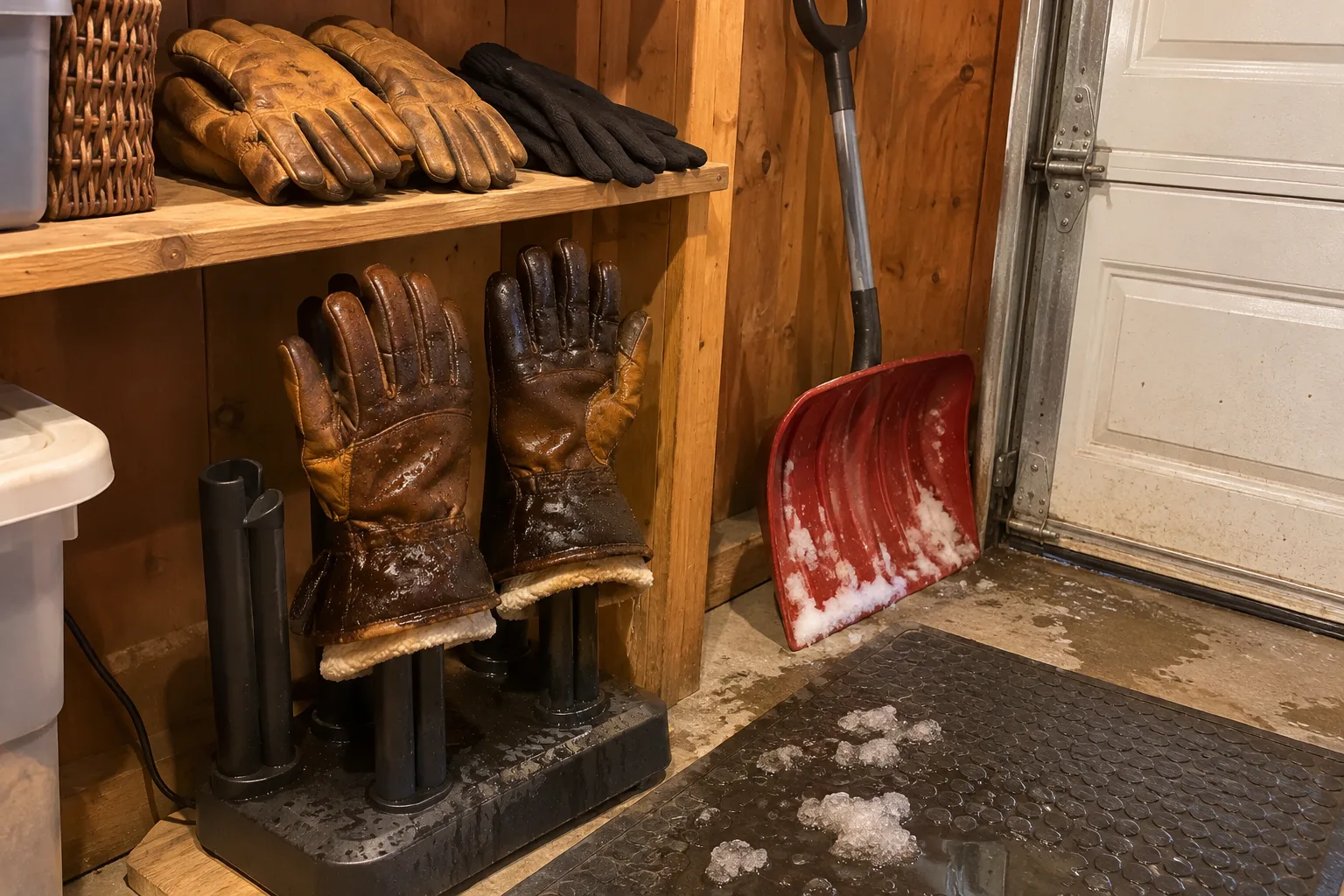
Dry gloves slowly and cuff-down so water drains out of the fingers. A boot and glove dryer works well. Never put leather on a hot radiator or in front of a heater, because fast heat shrinks and cracks it. Turn liners inside out to dry. Wash synthetic gloves like the Mechanix ColdWork on a gentle cycle and air dry them; check the label before washing anything with a membrane. Treat leather gloves with a wax or leather conditioner at the start of the season and again whenever the leather starts soaking up water. Rinse road salt off coated gloves with warm water so it does not eat at the coating.
FAQ
What are the warmest work gloves?
Insulated mittens are the warmest, such as the Carhartt Waterproof Insulated Mitten. For a glove with fingers, look for 150 g or more of Thinsulate or a freezer-rated glove like the RefrigiWear Extreme, rated to -30°F. Heated gloves add active warmth for long shifts.
What gloves do mechanics wear in winter?
Most mechanics wear a fitted insulated synthetic glove like the Mechanix ColdWork Original for tool work, an insulated nitrile-dipped glove for oil and fluids, and a heavier waterproof pair for outside. Many also wear a thin liner under disposable nitrile gloves in a cold garage.
Are waterproof work gloves warmer?
They keep you warmer when it is wet, because dry insulation holds heat and wet insulation does not. In dry cold, a waterproof glove is not warmer by itself, and a coating that does not breathe can make hands sweaty and cold. Breathable membranes and coatings like the Showa Temres 282 solve that.
How much Thinsulate do I need in work gloves?
Choose 40 g for cool weather and active work, 60 to 100 g for most winter jobs and 150 to 200 g for extreme cold or long periods standing still. Hard physical work needs less insulation than the temperature suggests.
Are leather gloves good in the winter?
Yes, lined leather gloves are warm and tough, and pigskin and deerskin stay soft after they get wet. Leather is water resistant, not waterproof, so treat it with wax and switch to a coated glove for slush and standing water.
What does EN 511 mean on gloves?
EN 511 is the European standard for cold protection. The three digits under the snowflake rate convective cold (0 to 4), contact cold (0 to 4) and water penetration (0 or 1). Higher numbers are better, and a 1 in the last spot means the glove passed a 30-minute water test.
Should winter work gloves be tight or loose?
Slightly loose. Leave a little room at the fingertips. Tight gloves squeeze the insulation flat and restrict blood flow, which makes hands colder and raises frostbite risk. Size up once if you plan to wear a liner.
How long do heated work gloves last on a charge?
Most last about 2 hours on high, 3 on medium and 5 or more on low. Maker claims of 8 to 11 hours refer to the lowest setting. Cold batteries drain faster, so expect less below 10°F.
How do I keep my fingers warm while working on a car in the cold?
Wear a thin insulated glove or liner for detail work, warm your hands in a heavy mitten between tasks, keep a dry spare pair on the heater and wear a hat and jacket to keep your core warm. A portable heater aimed at your work area helps more than any glove.

James Kowalski
More from James KowalskiHow we reviewed this article
This article was researched against manufacturer records and editorially reviewed before publishing. We accept no payment for coverage. Some guides contain affiliate links; see our affiliate disclosure.