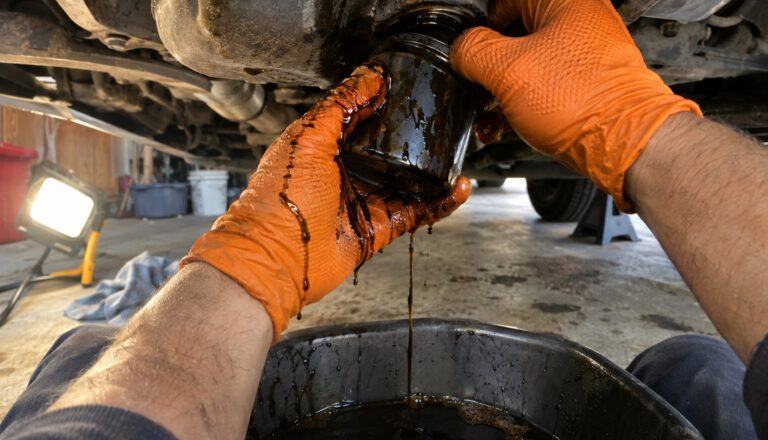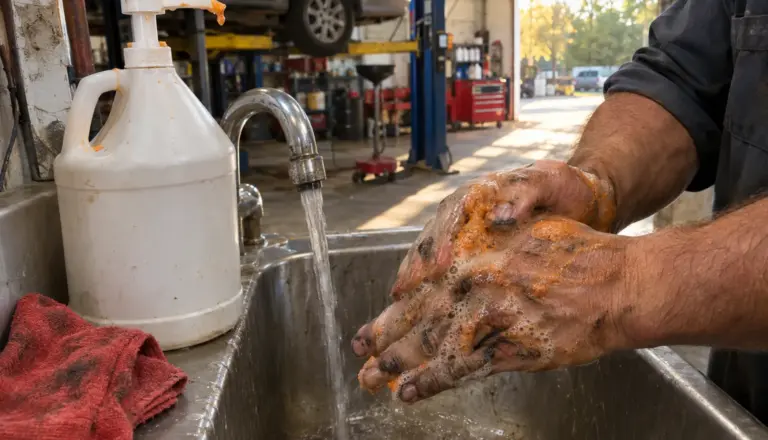
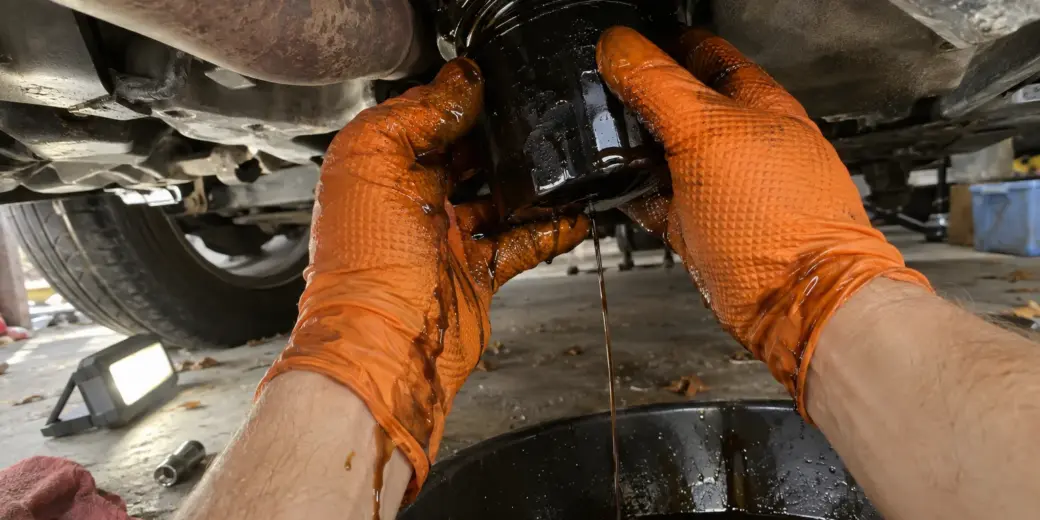
The best mechanic gloves are two gloves, not one. For anything wet (oil changes, coolant, brake fluid, grease) wear a disposable 6 to 8 mil nitrile glove like the Gloveworks HD orange. For dry work with sharp edges, hot parts or heavy tools, wear a reusable synthetic-leather glove like the Mechanix Original. Add an impact glove for suspension work, an insulated glove for a cold garage and a thick chemical glove for the parts washer, and you have every job covered.
As an Amazon Associate we earn from qualifying purchases. Disclosure
My first week at the dealership, I showed up with a pair of new padded “mechanic gloves” and wore them to drain a transmission pan. By lunch the palms were soaked through with ATF and my hands smelled like it for two days. The tech in the next bay, who had been turning wrenches since before I was born, pointed at the box of orange nitrile gloves on his cart and said, “Those are for wet. Those are for sharp.” Then he pointed at a beat-up pair of synthetic leather gloves hanging off his creeper. Twenty years later, that is still the best glove advice I know, and it matches what working technicians repeat on every mechanic forum. This guide sorts 17 mechanic gloves by job: disposables for fluids, reusable gloves for sharp and heavy work, coated knit gloves for all-day handling, plus winter, cut-resistant and chemical gloves. Every pick was in stock on Amazon in November 2026.
Quick picks
| Glove | Type | Best for |
|---|---|---|
| Gloveworks HD Orange 8 mil | Disposable nitrile | Best overall disposable |
| Microflex Diamond Grip | Disposable latex | Oily work, best stretch |
| Venom Steel | Disposable nitrile | Long jobs without rips |
| Mechanix Original | Synthetic leather | Best overall reusable |
| Mechanix M-Pact | Impact | Suspension, brakes, knuckle savers |
| MaxiFlex Ultimate 34-874 | Coated knit | All-day handling, hot engine bays |
| Mechanix ColdWork M-Pact | Insulated | Unheated garages in winter |
| Ansell Sol-Vex 37-175 | Reusable chemical | Parts washer and solvents |
Disposable vs reusable mechanic gloves
The phrase “mechanic gloves” covers two different products, and buying the wrong one is the most common mistake.
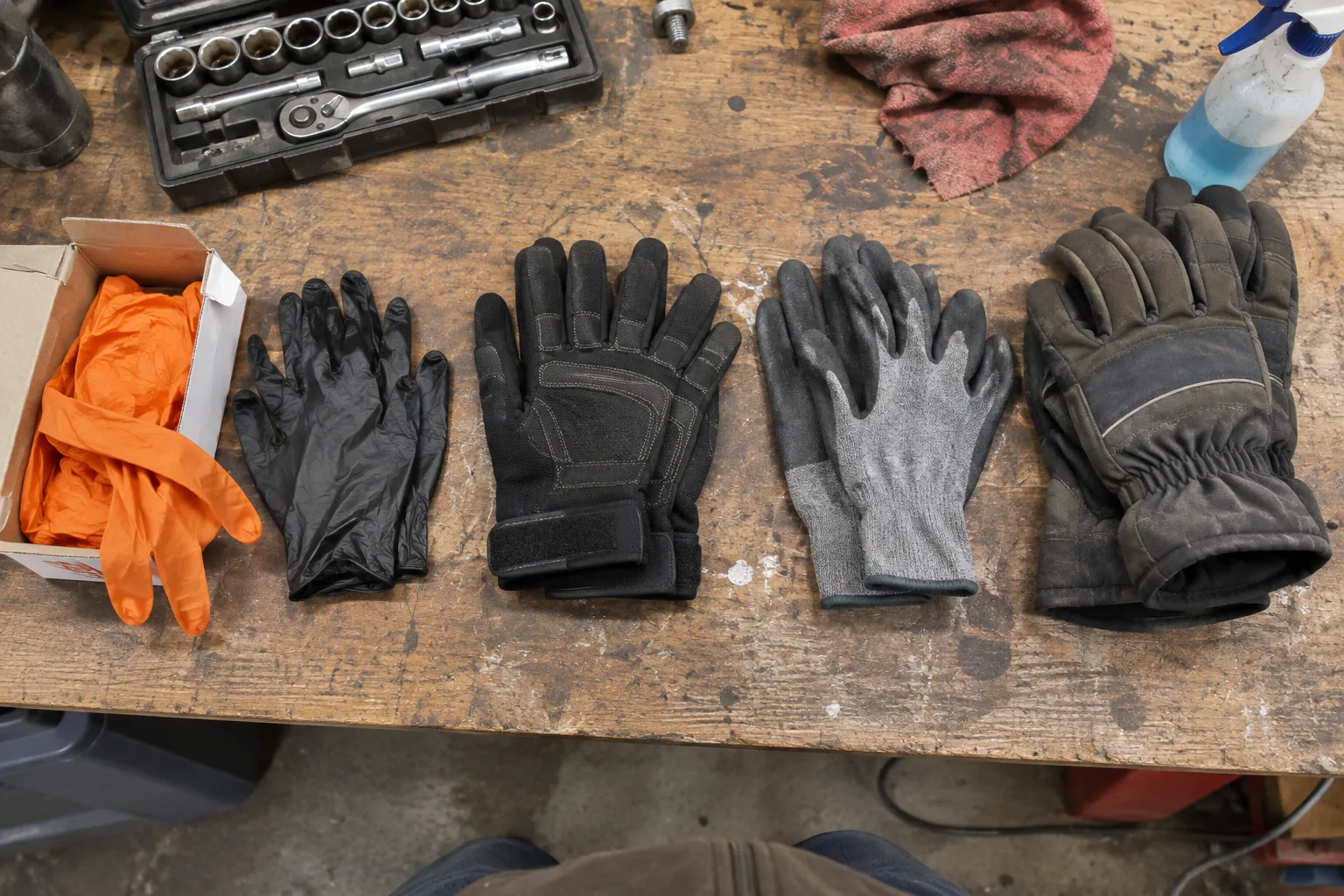
Disposable gloves (nitrile or latex) are a thin rubber barrier. They keep oil, grease, coolant, fuel and brake fluid off your skin, and you throw them away when they tear or get soaked. They give almost no protection from cuts, burns or a slipped wrench.
Reusable mechanic gloves (synthetic leather, often with padding) protect against scrapes, sharp sheet metal, hot exhaust parts and knuckle-busters. Most are fabric, so fluids soak straight through them. Oil-soaked fabric held against your skin all afternoon is worse than no glove at all.
Coated knit gloves sit between the two: a thin stretchy knit shell with a nitrile foam palm. They breathe, grip well on dry and lightly oily parts, and wash clean. They are not waterproof.
Most technicians keep a box of disposables on the cart and one or two pairs of reusable gloves in the toolbox, and switch between them several times a day. A common trick for cold or rough jobs is to wear a nitrile glove under a reusable glove: the nitrile keeps the hands clean and the outer glove takes the abuse.
| Job | Glove to wear |
|---|---|
| Oil and filter change | 6 to 8 mil nitrile or latex disposable |
| Coolant flush, brake bleeding | 6 to 8 mil nitrile |
| Fuel system work | 8 mil nitrile, changed often |
| Brakes and suspension | Impact glove, or nitrile under a mechanic glove |
| Exhaust, body panels, sharp brackets | Synthetic leather or cut-resistant glove |
| Interior, electrical, small fasteners | Coated knit or thin 0.5 mm mechanic glove |
| Parts washer, soaking parts in solvent | Reusable 15 mil chemical glove |
| Winter work outdoors or in a cold garage | Insulated glove with a waterproof coating |
Why mechanics wear gloves
Clean hands at the end of the day are the obvious reason. The better reason is used motor oil. The CDC’s Agency for Toxic Substances and Disease Registry notes that used crankcase oil collects polycyclic aromatic hydrocarbons (PAHs) and metals as it runs in an engine, and that mice developed skin cancer after long-term skin contact with it. It has not been classified as a human carcinogen, but California’s Prop 65 fact sheet on used engine oil tells anyone changing oil to wear gloves. Solvents like brake cleaner and degreaser also strip the oils out of your skin, which is how many career techs end up with cracked, painful hands (our best hand cream for mechanics guide covers repair creams and barrier lotions).
In a shop, gloves are not optional. OSHA’s hand protection rule, 29 CFR 1910.138, requires employers to provide gloves when workers face skin absorption of harmful substances, cuts, burns or chemical burns, and to pick gloves based on the actual hazard.
Best disposable mechanic gloves
For a home mechanic, thickness matters more than brand. Exam gloves at 3 to 4 mil rip the first time they catch a hose clamp. Five mil is fine for light work. Six to 8 mil is the range most technicians settle on, and anything thicker trades feel for durability.
Best overall disposable
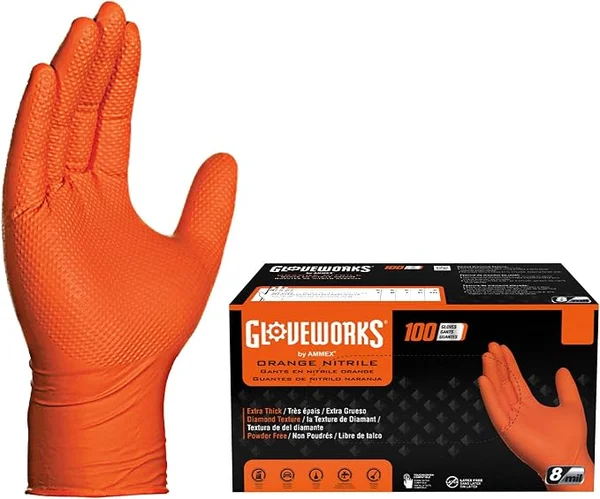
1. Gloveworks HD Orange Nitrile Gloves, 8 mil
These are the orange gloves you see on carts in independent shops and dealerships. At 8 mil they are about twice as thick as a standard exam glove, and the raised diamond texture on both sides of the hand gives them grip on an oily filter or drain plug. Gloveworks rates them three times as puncture resistant as latex, and they are latex free. The orange color also makes a tear easy to spot, so you know when to change pairs. They come in small through XX-large, and many mechanics size up one size: an 8 mil glove has less stretch than a thin one.
- 8 mil nitrile, latex and powder free
- Raised diamond grip texture
- Sizes S to XXL
Good: Durable enough to last through an oil change and a tire rotation; grips well when oily. Not great: Hot and sweaty in summer; the thickness dulls fingertip feel for tiny clips and connectors.
Best latex
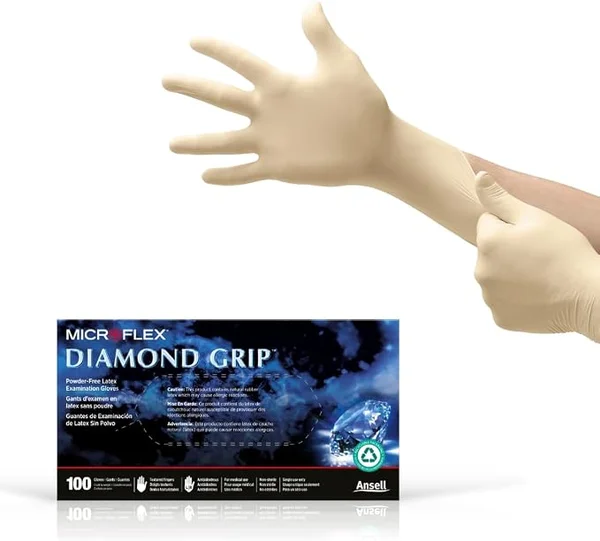
2. Microflex Diamond Grip MF-300 Latex Gloves
On mechanic forums, the Microflex Diamond Grip is the disposable glove that professional technicians name more often than any other. It is latex, not nitrile, and latex stretches more, so it goes on easily, follows the shape of the hand and tears less often when it snags. The textured surface grips well on oily parts. The trade-offs are chemical resistance and allergies: latex holds up poorly to gasoline and solvents such as brake cleaner, and about 4 percent of the general population is sensitized to latex. Keep a box of nitrile next to it for fuel work.
- Natural rubber latex, powder free
- Textured grip
- Box of 100, sizes S to XL
Good: Best fit and stretch of any disposable here; tears less on snags. Not great: Breaks down quickly around gasoline and brake cleaner; not for anyone with a latex allergy.
Longest lasting
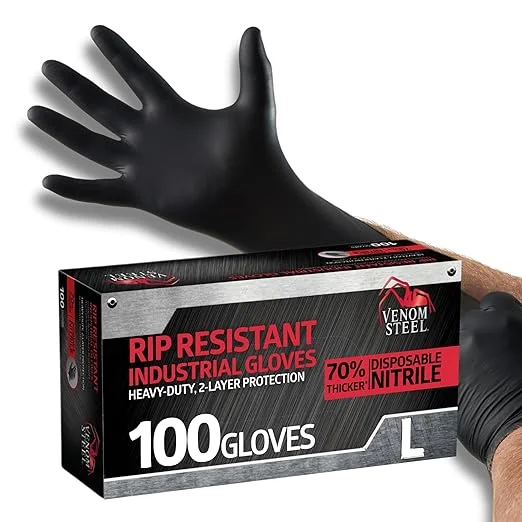
3. Venom Steel Industrial Nitrile Gloves, 6 mil
Venom Steel gloves are built from two layers of nitrile: a black outer layer over a white inner layer. When the outer layer wears through, white shows, which tells you to change gloves before oil reaches your skin. At 6 mil they are lighter than the 8 mil Gloveworks HD, with better feel for small parts, yet mechanics report getting through three or four hour jobs without a tear. They resist oil, grease and fuels, and the black color hides grime.
- Two-layer 6 mil nitrile with white breakthrough indicator
- Latex and powder free
- Sizes M to XXL
Good: Wear indicator shows when to change; good balance of feel and toughness. Not great: Costs more per glove than most nitrile boxes; runs slightly small.
Best for everyday jobs
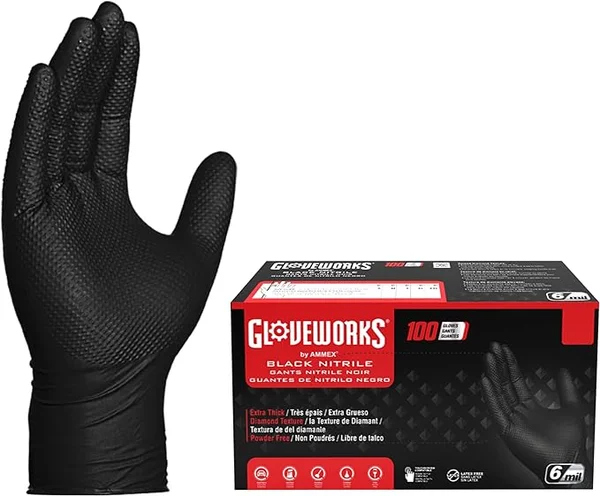
4. Gloveworks Black Nitrile Gloves, 6 mil
This is the thinner sibling of the orange HD glove, with the same raised diamond grip in 6 mil black nitrile. It is the better choice for jobs where you need feel: electrical connectors, interior trim clips, sensor plugs or detailing. Black hides grease, which is why so many people keep a box for both the garage and the grill. If you only buy one box for occasional weekend work, this is a good all-rounder.
- 6 mil nitrile, latex free
- Raised diamond texture
- Sizes M to XXL
Good: Better fingertip feel than 8 mil gloves; easy to get on and off. Not great: Tears sooner than the HD on sharp edges and hose clamps.
Thickest disposable
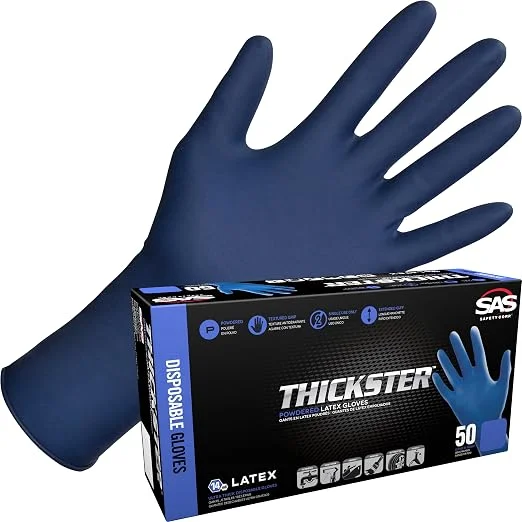
5. SAS Thickster Latex Gloves, 14 mil
The Thickster is a 14 mil latex glove with a 12-inch extended cuff, close to a reusable glove in thickness. Mechanics who hate changing gloves pick it for dirty jobs: pulling a greasy transmission, scraping old gaskets or digging through a junkyard car. Many wash, dry and reuse a pair. The thickness means less feel and sweaty hands after an hour, and it is powdered latex, so it is out for anyone sensitive to latex.
- 14 mil latex with 12-inch cuff
- Fully textured
- Box of 50
Good: Very hard to tear; the long cuff keeps fluids off your wrists. Not great: Hot and stiff; powdered latex; poor against gasoline.
Thickness cheat sheet. 3 to 4 mil: exam gloves, too thin for car work. 5 mil: light jobs, change often. 6 mil: the best balance of feel and durability. 8 mil: heavy jobs and fuel. 10 mil and up: maximum toughness, low feel.
Nitrile vs latex for car work
Nitrile is the safer default for a home garage. It resists gasoline, motor oil, ATF and brake fluid better than latex, and it does not trigger latex allergies. Latex fits better, stretches more and is less likely to rip when it snags, which is why so many professionals still prefer it for oily work.
Neither one is a solvent glove. Thin disposable gloves are splash protection only. Glove maker Ansell tells users of its Microflex gloves to remove and replace them after any chemical exposure. Acetone, the main ingredient in many non-chlorinated brake cleaners, can pass through nitrile in under ten minutes, according to WC Safety’s solvent glove guide. If brake cleaner soaks your glove, change it. For long contact with solvents, use a thick reusable chemical glove like the Sol-Vex, or butyl rubber for acetone.
Best reusable mechanic gloves
Reusable gloves are for dry work: removing exhaust hangers, pulling a wheel, handling rusty brackets or carrying parts. Wash them when they get dirty, and do not wear them for fluid jobs. Fabric gloves soak up oil and hold it against your skin.
Best overall reusable
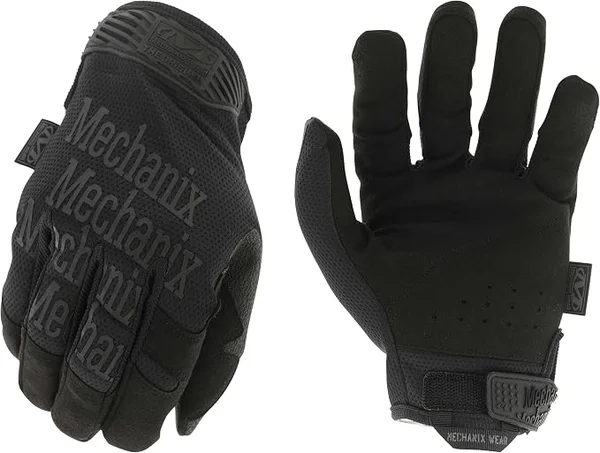
6. Mechanix Wear Original Gloves
The Mechanix Original is the glove that made the category. It has a 0.8 mm synthetic leather palm, a stretchy TrekDry back that breathes, and a hook-and-loop cuff. It is thin enough to thread a nut and still protects against scrapes and hot parts, and it works on a phone screen. It has more than 34,000 Amazon ratings, and it goes in the washing machine. Its weakness is the fingertip seams: heavy users report stitching wearing through at the fingertips after a few months of daily use.
- 0.8 mm synthetic leather palm
- Breathable TrekDry back
- Touchscreen palm, machine washable
Good: Good dexterity for a protective glove; fits close; easy to wash. Not great: Not oil proof; fingertip seams wear out first with daily pro use.
Best impact glove
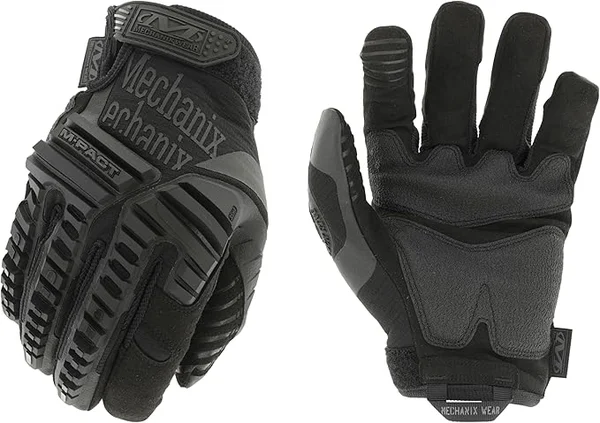
7. Mechanix Wear M-Pact Gloves
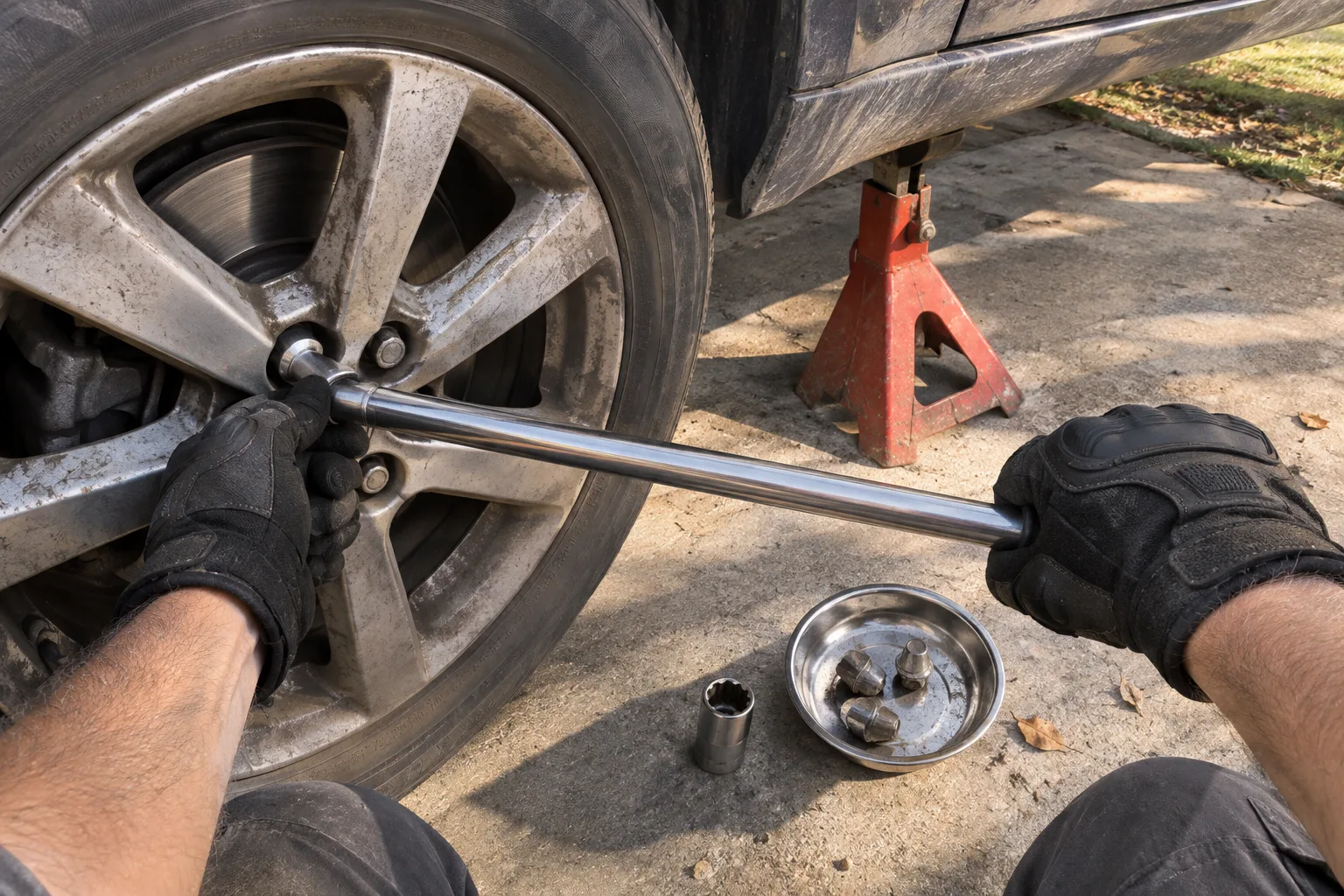
The M-Pact adds thermoplastic rubber knuckle guards and D3O padding in the palm to the Original’s design. That is the glove for jobs where knuckles meet metal: breaking loose a lug nut, prying a ball joint, swinging a hammer at a stuck rotor. The padded palm also takes some sting out of air tools. The trade-off is bulk, so swap to a thinner glove for small fasteners.
- TPR knuckle guards and D3O palm padding
- Silicone grip palm
- Sizes S to XXL
Good: Real knuckle protection; grippy palm. Not great: Too bulky for small clips and connectors; warm in summer.
Easiest on and off
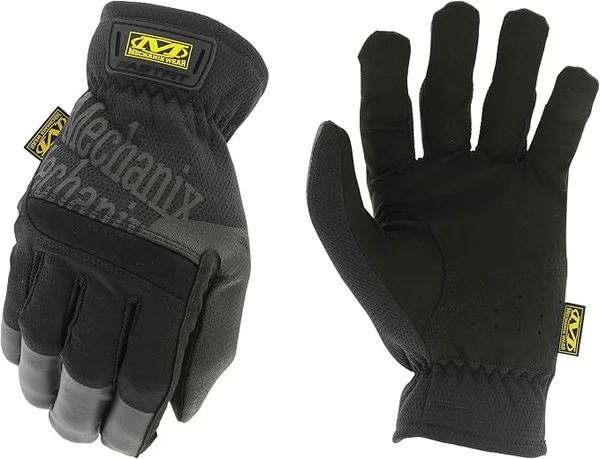
8. Mechanix Wear FastFit Gloves
The FastFit swaps the hook-and-loop strap for a full elastic cuff, so you can pull it off with one hand when you switch to nitrile for a fluid job and back again. The fingertips are single-seam wrapped and the knuckles have neoprene panels. It is the glove for mechanics who take gloves off and on all day.
- Elastic slip-on cuff
- Neoprene knuckle padding
- Touchscreen palm, machine washable
Good: Fastest glove to swap; comfortable for long wear. Not great: The cuff lets debris in more easily than a strap.
Best dexterity
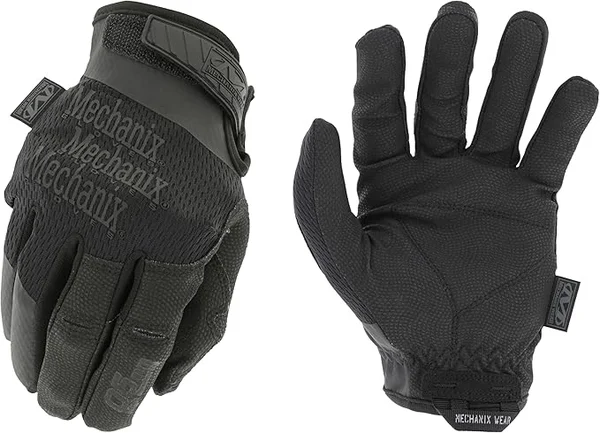
9. Mechanix Wear Specialty 0.5mm Gloves
Thick gloves make small parts frustrating. The Specialty 0.5mm uses a palm of 0.5 mm AX-Suede, thinner than the Original’s 0.8 mm, with stretch panels at the finger joints. You can pick up a 10 mm bolt, feel a connector click and start a screw by hand. It is a good choice for electrical, interior and engine-bay work where you need feel but still want a barrier against scrapes.
- 0.5 mm AX-Suede palm
- Breathable TrekDry back
- Touchscreen compatible
Good: Best fingertip feel of any reusable glove here. Not great: Thin palm offers less protection and wears faster.
Best for hot weather
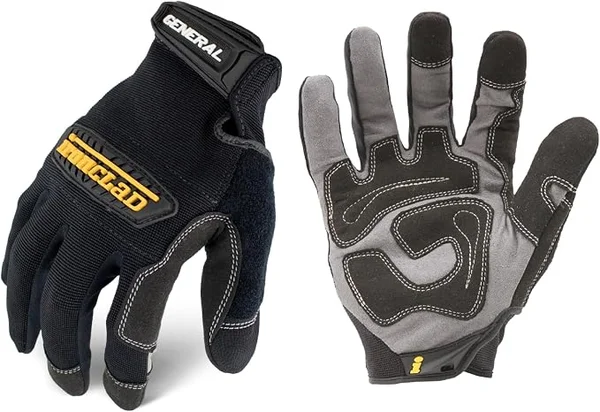
10. Ironclad General Utility Gloves (GUG)
The Ironclad GUG is a simple, well-built work glove with a padded palm, double stitching on the palm, thumb saddle and fingers, and rubberized knuckle protection. It is lighter and cooler than padded impact gloves, which makes it a favorite for summer work in a hot garage. Ironclad says it is machine washable, and it comes in sizes from extra small to 3XL, which helps people whose hands do not fit standard sizes.
- Padded palm, double-stitched wear points
- Rubberized knuckle guard
- Sizes XS to 3XL
Good: Cool and comfortable; wide size range. Not great: Not oil proof; knuckle protection is light.
Best value
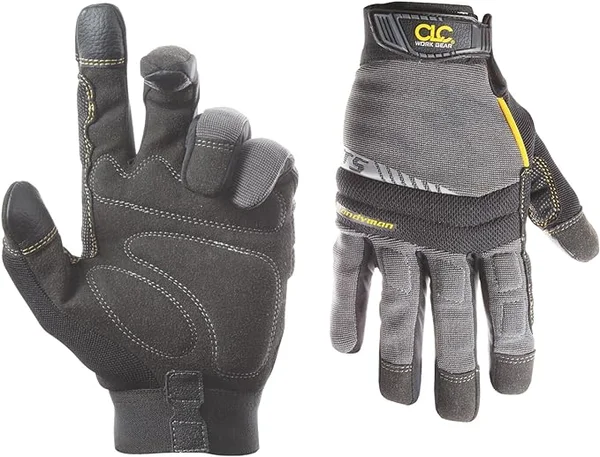
11. CLC Custom Leathercraft 125 Handyman Flex Grip Gloves
The CLC Handyman is a long-time budget favorite with nearly 20,000 Amazon ratings. The synthetic leather palm resists shrinking and hardening after it gets wet, the inner stitching is hidden so it does not snag on metal, and spandex side panels help with flex. It is a solid pick for occasional DIY jobs, yard work and junkyard trips where you do not want to wreck a nicer pair.
- Shrink-resistant synthetic leather palm
- Concealed inner stitching
- Spandex and Lycra side panels
Good: Durable for the price; good all-around glove. Not great: Less breathable than the Mechanix gloves; seams can fail under heavy daily use.
Best coated knit gloves
Coated knit gloves are what many technicians wear for “anything that isn’t fluid related”: handling parts, interior work, engine bay jobs on a hot engine. They breathe much better than synthetic leather and grip dry or lightly oily parts well. They are also cheap enough to buy by the dozen.
Best coated knit
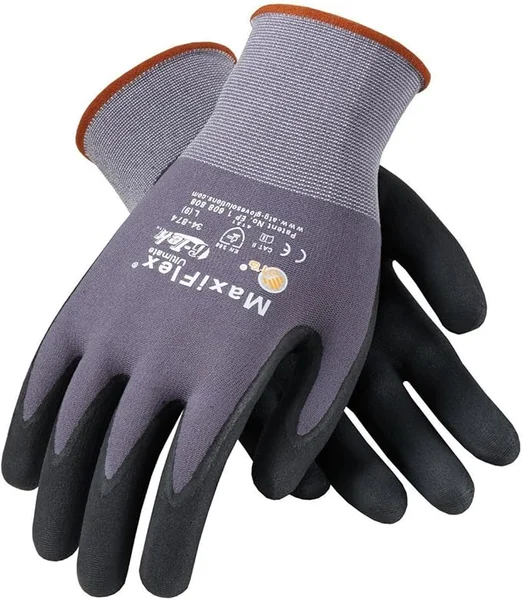
12. MaxiFlex Ultimate 34-874 Nitrile Coated Gloves
MaxiFlex Ultimate gloves have a following among mechanics and machinists that borders on loyalty. The seamless nylon and Lycra shell is thin enough to feel small fasteners, and the micro-foam nitrile coating grips well on dry or lightly oily parts. The back is uncoated, so hands stay cool in summer. Many wear them alone for dry work and over a nitrile glove for oily jobs. They are sold by the pair or in 12-packs.
- Seamless nylon and Lycra knit
- Micro-foam nitrile palm coating
- Sizes XXS to XXL
Good: Very breathable; excellent feel; cheap per pair in a 12-pack. Not great: Not waterproof; oil soaks through the back.
Most durable knit
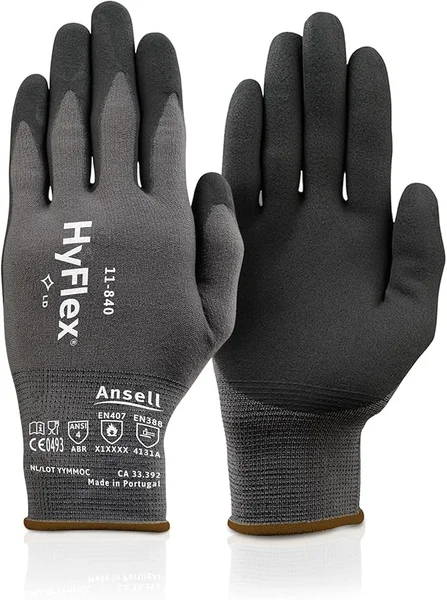
13. Ansell HyFlex 11-840 Gloves
The HyFlex 11-840 is an industrial-grade coated knit glove from Ansell, built for automotive assembly, aerospace and machinery work. The nylon and spandex shell has a foam nitrile coating with a sandy finish that holds well on oily parts and resists abrasion. Ansell sizes it by number from 6 (XS) to 11 (XXL), so check the chart before you order.
- Nylon and spandex knit, foam nitrile coating
- Abrasion resistant
- Sizes 6 to 11
Good: Good grip on oily metal; lasts longer than budget coated gloves. Not great: Numbered sizes confuse first-time buyers; not waterproof.
Best winter mechanic gloves
In a cold garage, bare hands go numb in minutes, and numb hands drop bolts. Thin nitrile does nothing for warmth. Some mechanics wear nitrile under a winter glove to keep the liner clean. Our best winter work gloves guide covers 20 cold-weather picks, from liners to waterproof and heated gloves. For long cold shifts outside, see our best heated work gloves.
Best winter glove
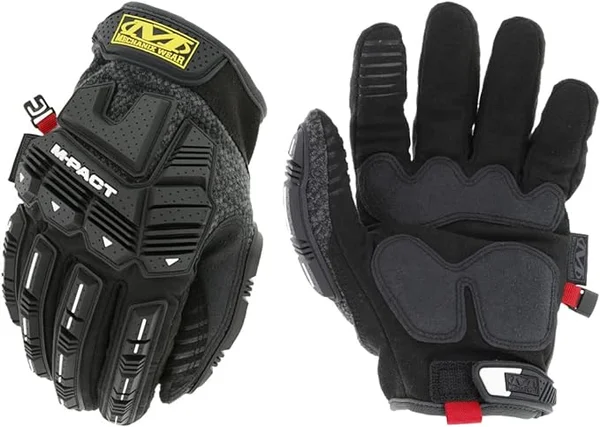
14. Mechanix Wear ColdWork M-Pact Insulated Gloves
The ColdWork M-Pact is the impact glove in a winter version. It has 60 grams of 3M Thinsulate insulation, a water-resistant E-Suede shell, a laminated wind barrier, and the same TPR knuckle guard and D3O palm padding as the M-Pact. Mechanix rates the knuckle protection to the ANSI 138 Level 2 impact standard. It is warm enough for a winter driveway brake job and still grippy enough for a breaker bar.
- 60 g 3M Thinsulate insulation, wind barrier
- ANSI 138 Level 2 knuckle protection
- Machine washable
Good: Warm and protective; good grip on tools. Not great: Too bulky for small parts; not waterproof in heavy rain or slush.
Best waterproof winter glove
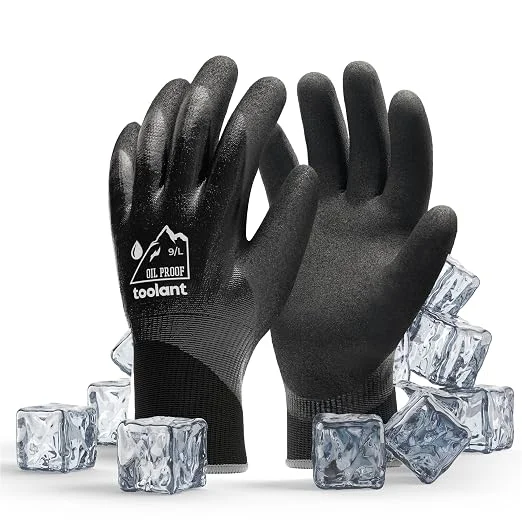
15. toolant Waterproof Winter Work Gloves
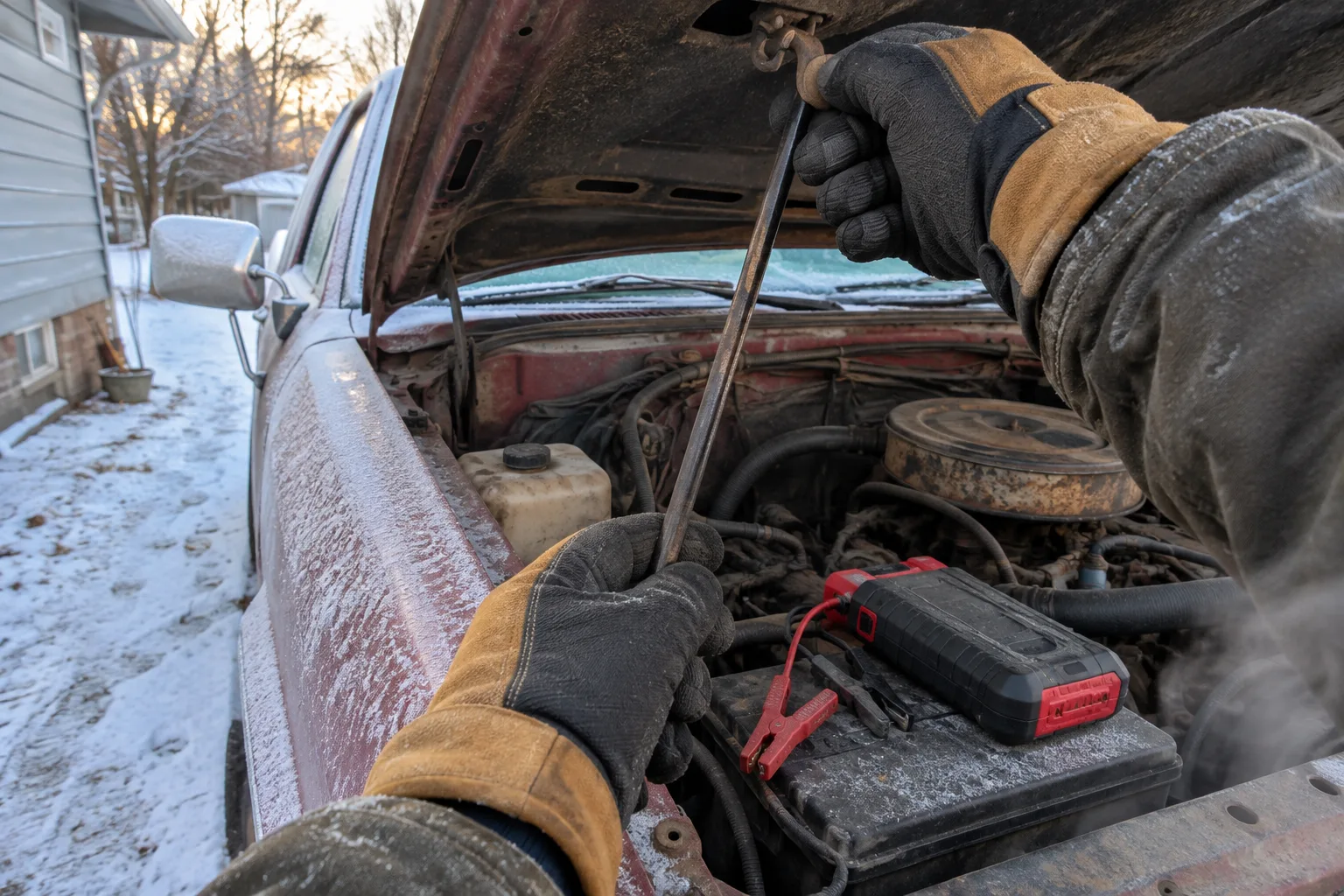
The toolant glove has an acrylic thermal liner under a double nitrile dip that covers the whole palm and fingers, so snow, slush and oil bead off instead of soaking in. The sandy nitrile palm grips wet tools. toolant rates them to stay flexible down to minus 4°F. This is the glove for outdoor work: jump-starting a car, swapping a tire on the shoulder or working in a driveway in January.
- Acrylic thermal liner
- Double nitrile coating, waterproof and oil resistant
- Rated flexible to -4°F
Good: Truly waterproof; repels oil; good grip. Not great: Thick liner limits dexterity; slow to dry if the inside gets wet.
Best cut-resistant mechanic gloves
Exhaust work, body panels, sheet-metal heat shields and broken glass cut through ordinary gloves. A cut-resistant glove is rated on the ANSI/ISEA 105 scale from A1 to A9, based on how many grams of force a blade needs to cut through. A1 starts at 200 grams and A4 at 1,500 grams. For car work, A2 to A4 is plenty; higher levels get stiff.
Best cut-resistant
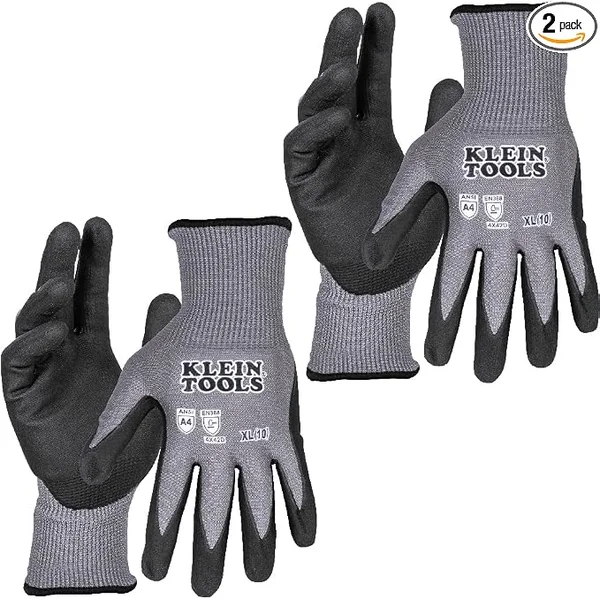
16. Klein Tools 60590 A4 Cut-Resistant Gloves
The Klein A4 is a knit HPPE glove with a microfoam nitrile palm, rated ANSI A4 for cut resistance. It fits close like a coated knit glove, so you keep dexterity while handling sharp heat shields, sheet metal, cut hose clamps or a cracked mirror. The microfoam coating grips in dry, wet and oily conditions, and the fingertips work on a touchscreen. It comes as a 2-pack.
- ANSI A4 cut rating, HPPE knit
- Microfoam nitrile palm
- Touchscreen fingertips, 2-pair pack
Good: Real cut protection without bulk; good grip. Not great: Cut-resistant, not puncture-proof; not waterproof.
Best chemical-resistant glove for the parts washer
Soaking parts in solvent or scrubbing in a parts washer is the job that eats disposable gloves fastest. One technician put it bluntly on Reddit: parts washer solvent “goes right through nitrile.” The answer is a thick, reusable, unsupported nitrile glove with a long cuff.
Best for solvents
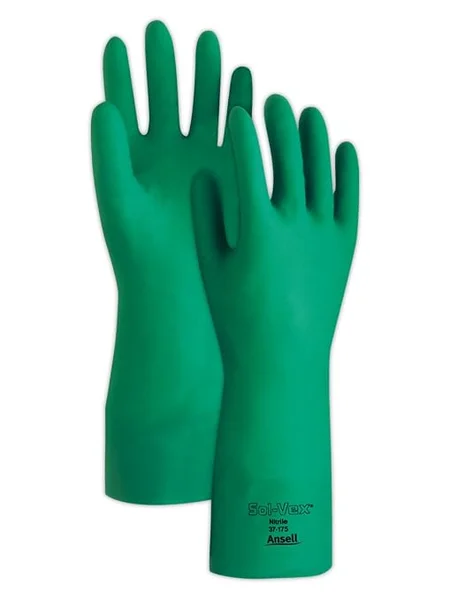
17. Ansell Sol-Vex 37-175 Chemical Gloves
The Sol-Vex 37-175 is a 15 mil unsupported nitrile glove with a flock lining and a cuff that reaches well past the wrist. It is built for long contact with petroleum solvents, degreasers and oils, the chemicals in a typical parts washer. The flock lining absorbs sweat and makes the glove easier to pull on. Rinse and hang it to dry, and it lasts for months. It is still nitrile, so it is a poor choice for acetone and other ketones.
- 15 mil unsupported nitrile, flock lined
- Long cuff
- Sold in sizes 8 and 10
Good: Holds up to solvents that wreck disposables; reusable for months. Not great: Clumsy for detailed work; only two sizes listed.
How to choose mechanic gloves
Match the glove to the job
Start with what touches your hands. Fluids call for disposable nitrile or latex. Sharp, hot or heavy parts call for a synthetic leather, impact or cut-resistant glove. Long solvent contact calls for a reusable chemical glove. If a job has both, wear nitrile under a reusable glove.
Get the size right
A glove that is too tight rips as you pull it on and tires your hands. A glove that is too loose catches on things and costs you feel. Measure around your palm just below the knuckles, not counting the thumb. Most brands put a men’s medium at about 8 inches and a large at about 9. For thick disposables, many mechanics go up one size.
Choose the thickness
For disposables, 6 mil is the best all-around choice and 8 mil is better for messy or long jobs. For reusable gloves, a thinner palm (0.5 mm) gives feel and a thicker one (0.8 mm and up) gives protection.
Think about heat and sweat
Thick nitrile and padded gloves get hot fast. In summer, coated knit gloves and the Ironclad GUG are cooler. Some techs wear a thin cotton liner under nitrile, or pull off disposables, turn them inside out to dry and reuse them for the next dirty step.
Check for latex allergies
If you or anyone sharing the box has a latex sensitivity, skip latex entirely and buy nitrile.
Buying gloves as a gift
A box of 8 mil nitrile and a pair of insulated gloves make a practical present for anyone who works on cars. Check which gloves they already use and match the size. For more ideas, see our stocking stuffers for mechanics and Christmas gifts for mechanics. If you are shopping for a scan tool to go with them, start with our best OBD2 scanner for beginners.
Tips for wearing mechanic gloves
- Change disposables when they tear. A torn glove traps oil against your skin.
- Change after a solvent soak. Brake cleaner and fuel weaken nitrile even when you cannot see damage.
- Double up in tight spaces. Two thin nitrile gloves let you peel off the dirty outer layer and keep working.
- Peel off from the cuff. Pull the glove inside out so the dirty side never touches your skin.
- Wash reusable gloves. Oil and grit build up in fabric gloves and start to irritate the skin.
- Never wear gloves near a spinning tool. Remove gloves near drill presses, lathes and running engine belts, where a glove can be caught and pull your hand in.
FAQ
What gloves do professional mechanics use?
Most professional mechanics use disposable nitrile or latex gloves for anything wet, usually 6 to 8 mil, such as Gloveworks HD or Microflex Diamond Grip. They keep reusable synthetic leather gloves such as Mechanix for sharp, hot or cold jobs, and coated knit gloves such as MaxiFlex for general handling.
Are Mechanix gloves good for working on cars?
Mechanix gloves are good for dry car work: brakes, suspension, exhaust and handling sharp parts. They are not oil proof. Oil and coolant soak through the fabric, so wear nitrile gloves for fluid jobs, or a nitrile glove under the Mechanix.
What thickness of nitrile glove is best for mechanics?
6 mil is the best all-around thickness for mechanics, with good feel and decent durability. 8 mil is better for long, messy jobs and fuel work. Gloves under 5 mil tear too easily for car work.
Are nitrile or latex gloves better for mechanics?
Nitrile is better for most car work because it resists gasoline, oil and brake fluid and does not cause latex allergies. Latex stretches more and tears less, so some mechanics prefer it for oil changes, but it breaks down around fuel and solvents.
Do nitrile gloves protect against brake cleaner?
Only briefly. Thin nitrile is splash protection, and acetone-based brake cleaner can pass through it in minutes. Change gloves as soon as brake cleaner soaks them, and use a thick reusable chemical glove for long solvent contact.
Can you reuse disposable nitrile gloves?
Thick disposables (8 mil and up) can be reused for a few dirty steps in the same job if they are not torn or soaked with solvent. Turn them inside out to dry. Throw them away once they tear, stretch out or get soaked with fuel or solvent.
What are the best mechanic gloves for cold weather?
Insulated gloves with a waterproof or water-resistant shell, such as the Mechanix ColdWork M-Pact for impact protection or the toolant waterproof glove for wet, oily conditions. A thin nitrile glove underneath keeps the insulation clean.
How should mechanic gloves fit?
Mechanic gloves should fit snugly with no loose material at the fingertips, but not so tight that they pull across the palm when you make a fist. Measure around the palm below the knuckles and check the brand’s size chart.
Are mechanic gloves cut resistant?
Most standard mechanic gloves are not rated for cut resistance. For sharp sheet metal or exhaust work, buy a glove with an ANSI/ISEA 105 cut rating, such as the Klein Tools A4.
Sources
- OSHA: 29 CFR 1910.138, Hand Protection
- CDC ATSDR: ToxFAQs for Used Mineral-Based Crankcase Oil
- California OEHHA: Used Engine Oil fact sheet
- WC Safety: How to use solvents and degreasers safely
- WC Safety: Chemical resistant glove guide
- Journal of Occupational Health: Prevalence of latex allergy (2015 review)
- Ansell Microflex: Chemical resistance guide

James Kowalski
More from James KowalskiHow we reviewed this article
This article was researched against manufacturer records and editorially reviewed before publishing. We accept no payment for coverage. Some guides contain affiliate links; see our affiliate disclosure.