Ask someone to name a “classic BMW” and you’ll get the E30 M3 nine times out of ten. Fair enough — it earned that reputation. But 1990 specifically was a strange, loaded year for BMW, one that gets flattened into “the 90s” by every roundup that covers the decade instead of the calendar year. That’s a mistake, because 1990 is when the outgoing and incoming BMW overlapped on the same price list.
TLDR: What BMW Sold in 1990
Five model lines, spanning a company in transition. The E30 3 Series was in its final full seasons before the E36 replaced it. The E34 5 Series was still fresh, and its M5 variant got a mid-cycle power bump. The E32 7 Series carried BMW’s first V12. The brand-new E31 8 Series launched that year as a genuine flagship statement. And the Z1 — a limited-run, plastic-bodied roadster with doors that slide down into the sills — was mid-production, built in numbers too small to matter commercially but too weird to ignore.
Here’s the full lineup, with specs, then what any of it is actually worth today if you’re shopping.
Table of Contents
- E30 3 Series: The Old Guard’s Last Stand
- E34 5 Series: The Mid-Size Flagship
- E32 7 Series: BMW’s V12 Statement
- E31 8 Series: The New Flagship
- BMW Z1: The Oddball
- 1990 BMW Spec Comparison
- Buying One in 2026
E30 3 Series: The Old Guard’s Last Stand {#e30-3-series}
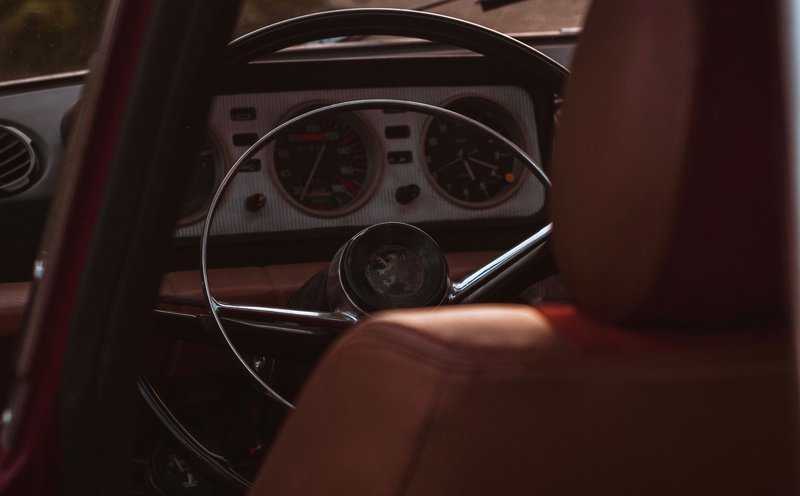
By 1990, the E30 had been in production for eight years and everyone at BMW knew its replacement was coming. That didn’t stop them from selling it hard — this was one of the last model years you could buy a new E30 in North America before the E36 took over for 1992.
The lineup ran from the 318i and 318is (1.8-liter four-cylinder, 113 hp in European trim) up through the 325i and 325is, powered by the M20 2.5-liter straight-six making 168-170 hp depending on market. The 325iX added all-wheel drive — genuinely unusual for a compact sport sedan in 1990, and a feature BMW wouldn’t revisit in the 3 Series for years. And for the money-no-object buyer, there was the M3 Convertible: a drop-top version of the homologation-special coupe, built in far smaller numbers than the hardtop and now one of the most sought-after E30 variants on the market.
The detail that gets lost in decade-spanning roundups: 1990 European buyers could still get the M3 Sport Evolution, the ultimate track-focused E30, in the same year American buyers were choosing between a 325i and a 325iX at their local dealer. Same chassis code, two completely different cars depending on which side of the Atlantic you stood on.
E34 5 Series: The Mid-Size Flagship {#e34-5-series}
The E34, introduced for 1988, was still the newest thing in BMW’s mid-size lineup in 1990 — and it got more interesting partway through the year. The 525i’s engine changed mid-cycle: cars built before roughly April 1990 made 170 hp from the older M20 six, while cars built from May 1990 onward got the new M50 engine and jumped to 192 hp. Same badge, meaningfully different car, depending on the build date on the door jamb.
The 535i sat above it with a 3.5-liter six making 211 hp — a genuinely quick sedan for the era, and the one most enthusiasts actually wanted if the M5 wasn’t in budget.
And then there was the M5. The E34 M5 launched with 315 hp from a 3.5-liter inline-six shared in spirit with the M1 supercar’s engine, hand-built by BMW Motorsport, and capable of embarrassing sports cars costing twice as much. It’s the car that defined “sleeper sedan” for a generation of enthusiasts, and 1990 cars sit right in the sweet spot of the model’s run — well before the styling and mechanical revisions of the mid-90s cars.
E32 7 Series: BMW’s V12 Statement {#e32-7-series}
The E32 wasn’t new in 1990 either, but it mattered because of what was under the hood. The 750iL, introduced a few years earlier, was BMW’s first production V12 — a 5.0-liter unit that put the 7 Series in direct competition with Mercedes’ S-Class at the top of the German luxury hierarchy. By 1990, the lineup ran 735i, the long-wheelbase 735iL, and the flagship 750iL, positioning BMW as a company that could build both a straight-six and a V12 in the same showroom.
It’s the car that quietly set up the 8 Series. BMW proved the V12 platform worked in a sedan first, then put a version of that engineering confidence into a two-door flagship the following year.
E31 8 Series: The New Flagship {#e31-8-series}
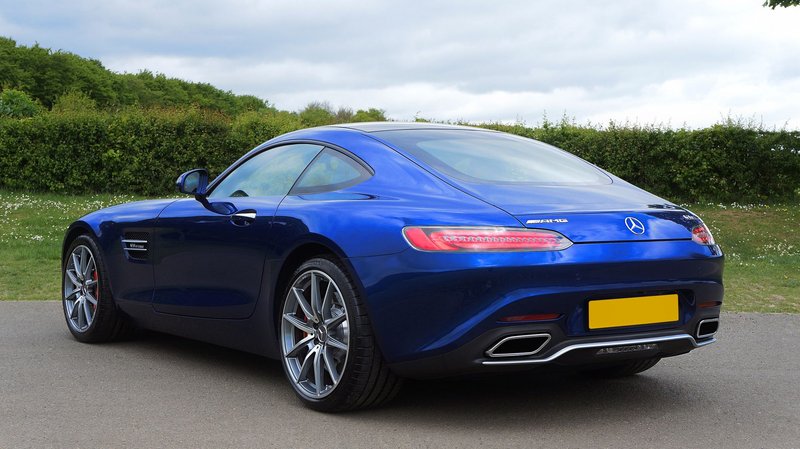
This is the actual news story of 1990. The E31 8 Series had debuted at the Frankfurt Motor Show in September 1989, and 1990 was its first real production year — the car BMW built specifically to go after buyers cross-shopping the Porsche 928 and other premium European coupes from the 1980s.
The launch car, the 850i, came exclusively with a 5.0-liter V12 making close to 300 hp and 332 lb-ft of torque, and it was the first production car with a V12 offered alongside a six-speed manual transmission — most V12 luxury cars of the era were automatic-only. Buyers could also spec a four-speed automatic if they wanted the smoother, more GT-oriented experience.
What made the 8 Series a statement rather than just another coupe: pop-up headlights, a wedge profile that dated well, frameless windows, and electronics that were genuinely ahead of the curve — multiplex wiring, for one, at a time when most cars still ran point-to-point looms. It was expensive to engineer and it showed in the sticker price, which is part of why it never sold in huge numbers. That scarcity is exactly why clean E31s have become collector-desirable now instead of forgotten.
BMW Z1: The Oddball {#bmw-z1}
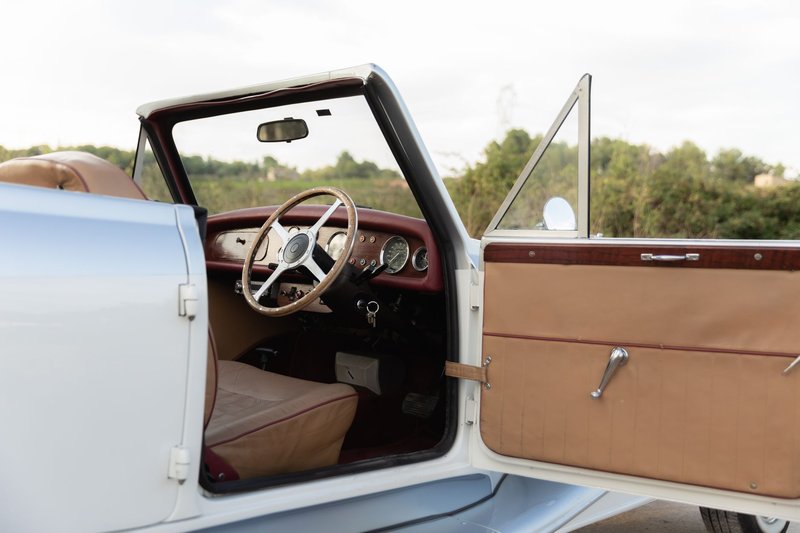
The Z1 doesn’t fit neatly into any BMW lineup, then or now, and that’s the point. Built by BMW Technik as a rolling engineering showcase, it ran from March 1989 through June 1991, with total production capped around 8,000 cars. Of those, roughly 4,091 — just over half — were built in the 1990 model year, making 1990 the Z1’s peak production year.
Mechanically, it’s straightforward: the same 2.5-liter M20 six from the 325i, making 170 hp, paired with a five-speed manual. What made it a phenomenon was everything else. The body panels were injection-molded thermoplastic instead of steel, bolted to a steel monocoque, and the doors didn’t open outward — they slid vertically down into the sills, so you could drive with the doors fully retracted. BMW originally targeted a launch price around DM 80,000 and ended up closer to DM 83,000, translating to roughly $55,000 at the time — a genuinely premium price for a car with a mid-range six-cylinder engine, justified almost entirely by the engineering novelty rather than outright performance.
BMW never sold the Z1 in North America new, which is why most examples you’ll find in the US today came in later through the 25-year import exemption — another reason 1990 cars specifically are starting to show up more often on the American market now.
1990 BMW Spec Comparison {#spec-comparison}
| Model | Chassis | Engine | Power | Production Span |
|---|---|---|---|---|
| 318i / 318is | E30 | 1.8L I4 | 113 hp | 1983-1994 |
| 325i / 325is | E30 | 2.5L I6 | 168-170 hp | 1987-1991 |
| 325iX | E30 | 2.5L I6, AWD | 166-168 hp | 1988-1991 |
| M3 Convertible | E30 | 2.3L I4 | 192-215 hp | 1988-1991 |
| 525i (pre-May ’90) | E34 | 2.5L I6 | 170 hp | 1988-1995 |
| 525i (May ’90 on) | E34 | 2.5L I6 | 192 hp | 1990-1995 |
| 535i | E34 | 3.5L I6 | 211 hp | 1988-1993 |
| M5 | E34 | 3.5L I6 | 315 hp | 1988-1995 |
| 735i / 735iL | E32 | 3.5L I6 | 208 hp | 1986-1994 |
| 750iL | E32 | 5.0L V12 | 296 hp | 1987-1994 |
| 850i | E31 | 5.0L V12 | ~296 hp | 1989-1994 |
| Z1 | Z1 | 2.5L I6 | 170 hp | 1989-1991 |
Buying One in 2026 {#buying-guide}
If you’re shopping rather than just reading, condition and originality matter more than the badge on the trunk. A few things worth knowing before you go looking:
The M3 Convertible is the outlier of the E30 range, with roughly 785 built for the European market and prices for clean examples now running well into six figures — recent sales have landed between $105,000 and $113,000 for good cars, and standard E30 M3 coupes range from the mid-$50,000s for drivers up past $160,000 for the best examples. A plain 325i or 325iX, by contrast, is still one of the more affordable ways into a real BMW straight-six, often available for a fraction of M3 money.
The E34 M5 sits in a strange middle zone — genuinely rare and genuinely fast, but not yet commanding E30 M3 money. Recent valuations put good examples in the low-$40,000s, which makes it arguably the best performance-per-dollar classic BMW on this whole list if you can find one that hasn’t been thrashed.
The 850i is a buy-on-condition car more than a buy-on-mileage car. The V12 and its supporting electronics are expensive to service, and a cheap 8 Series usually stays cheap for a reason — budget for maintenance before you budget for the purchase price.
The Z1 is the wild card. Total production was small, American-market cars are scarcer still since it was never sold new here, and the plastic body panels mean rust isn’t the concern it is on steel BMWs — but panel fit, sliding-door mechanisms, and electrical gremlins are. Buy from a specialist, not a general classifieds listing.
Across the board: get a pre-purchase inspection from someone who specializes in the specific model, not just “BMWs” generally. An E30 mechanic and an E31 mechanic are not interchangeable skill sets, and the cars from this transitional year punish generalists more than most.

Daniela Voss
More from Daniela VossHow we reviewed this article
This article was researched against manufacturer records and editorially reviewed before publishing. We accept no payment for coverage. Some guides contain affiliate links; see our affiliate disclosure.