Volkswagen sold three families of car in 1960: the Beetle (Type 1), the Karmann Ghia (Type 14) and the Transporter (Type 2). All three ran the same air-cooled 1,192 cc flat-four, mounted in the back. That shared hardware is why the 1960 lineup is easy to learn and just as easy to mix up.
Search for it and you get scattered valuation pages and a few short encyclopedia entries, but nothing that lays out the whole range in one place. Here it is: the 1960 Volkswagen car models, what changed that year, what they cost then and now, and how to tell a 1960 from its neighbors.
Contents
- The 1960 lineup at a glance
- 1960 production context
- Beetle (Type 1)
- Karmann Ghia coupe and convertible
- Transporter (Type 2)
- Prices then and now
- How to identify a 1960 model
- Type 1 vs Type 2 vs Type 3
The 1960 lineup at a glance
| Model | Type | Body styles | Engine | Defining 1960 detail |
|---|---|---|---|---|
| Beetle | Type 1 | Sedan, sunroof sedan, Karmann convertible | 1,192 cc flat-four, about 36 hp | Comfort and handling updates |
| Karmann Ghia | Type 14 | Coupe, convertible | 1,192 cc flat-four, about 36 hp | Raised headlights, revised grille |
| Transporter | Type 2 | Panel van, Kombi, Microbus, Deluxe Microbus, pickup, double-cab pickup, high-roof van | 1,192 cc flat-four, low-to-mid 30s hp | Fresh-air heating, fully synchronized gearbox, high-roof option |
A note on dates. Volkswagen’s model year started in August, so a “1960” car is generally one built between August 1959 and July 1960. A car titled as a 1960 may have been built in either calendar year.
1960 production context
Volkswagen built about 725,939 vehicles in 1960. The Beetle accounted for the large majority. The Transporter was a clear second, and the Karmann Ghia, built by the coachbuilder Karmann in Osnabrück rather than at Wolfsburg, was a small-volume specialty.
The company’s own corporate chronicle picks up in 1961 with the Type 3 and the push into export markets. That makes 1960 the last year of the “one engine, three bodies” era, and the last model year before VW’s lineup began to branch.
Beetle (Type 1)
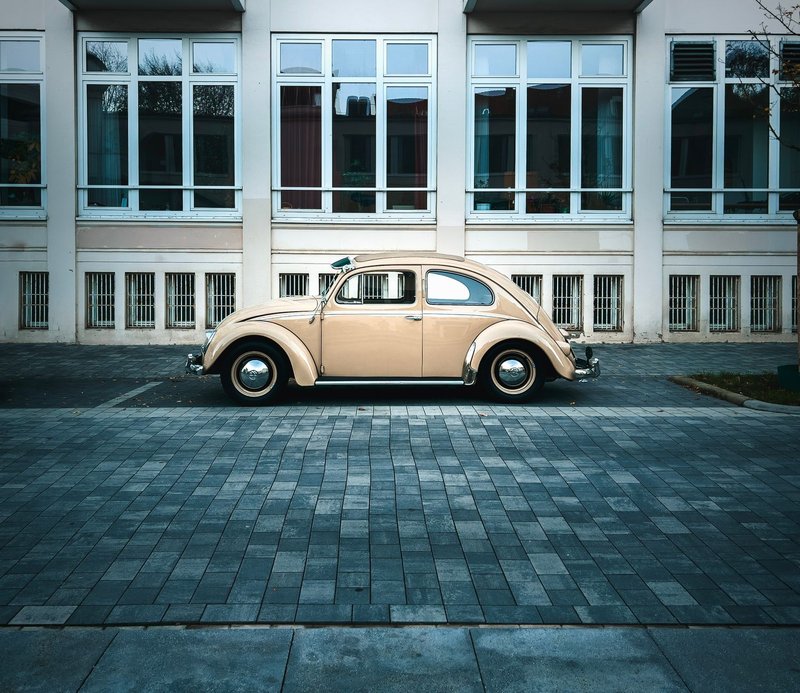
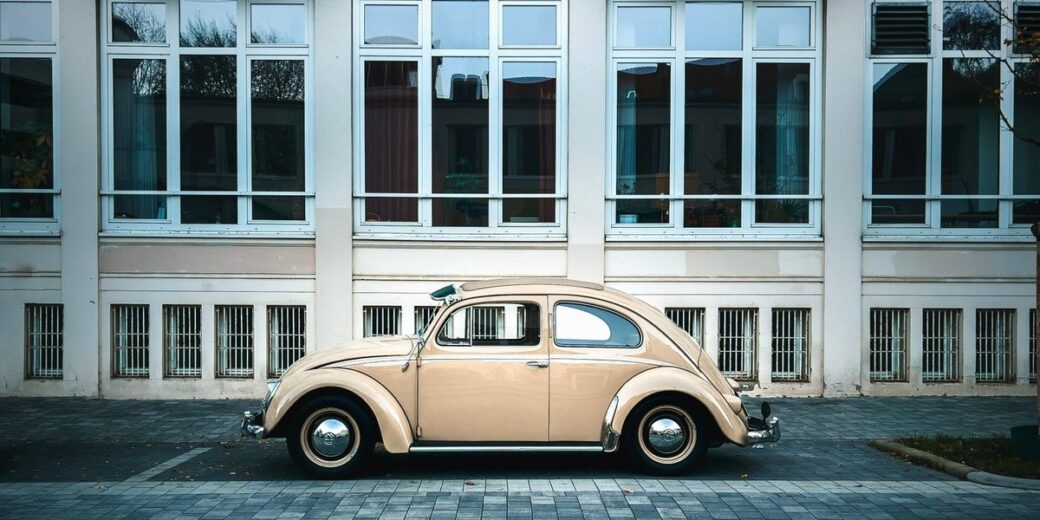
The 1960 Beetle came as a standard sedan, a sedan with the fabric folding sunroof, and the four-seat convertible built by Karmann. All three used the 1,192 cc engine making about 36 hp, paired with a four-speed gearbox. First gear still lacked synchromesh, so you stopped before selecting it or double-clutched. Full synchromesh came to the Beetle a model year later.
The 1960 changes were about how the car felt on the road. The commonly cited updates are a steering damper to calm the front end and a front anti-roll bar to reduce body lean. Neither is visible from the driver’s seat, but they’re the reason a 1960 car feels more settled than a mid-1950s one.
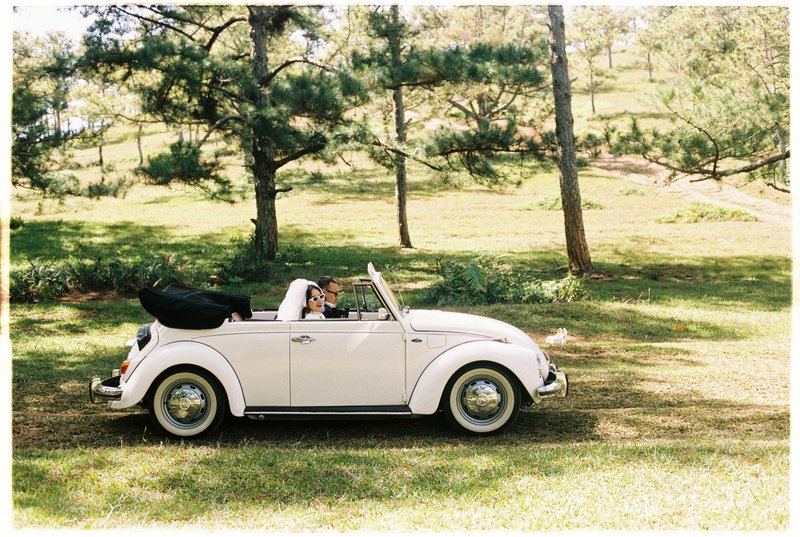
The sunroof sedan is a factory option and a clear value bump today, since fewer were ordered. The Karmann convertible is rarer still, with a hand-fitted padded top and a very different silhouette. It’s the most expensive of the three bodies by a wide margin.
Karmann Ghia coupe and convertible
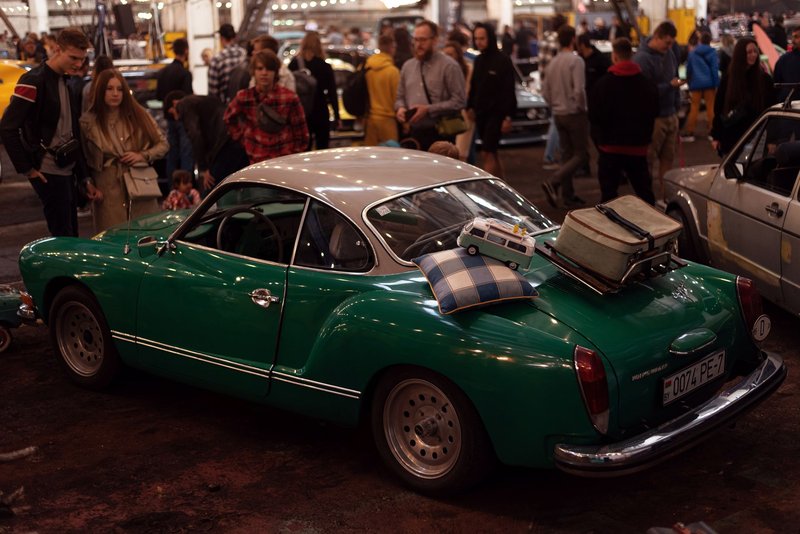
The Karmann Ghia is the Beetle’s mechanical twin in a tailored suit. Styling came from Ghia in Italy, hand-finished bodywork from Karmann, and the underpinnings and 1,192 cc, 36 hp engine from the Beetle. The coupe debuted in 1955 and the convertible followed in 1957.
The 1960 model year is the visual dividing line. Volkswagen raised the headlights, setting them higher on the fenders, and widened the grille opening beneath them. Earlier cars have lower-set headlights that give the nose a softer, more sunken look. You can tell the difference from across a parking lot.
Performance matched the Beetle’s, which is to say leisurely. About 36 hp moving a car of roughly 1,800 pounds means the Ghia sold on looks. It still does.
Transporter (Type 2)
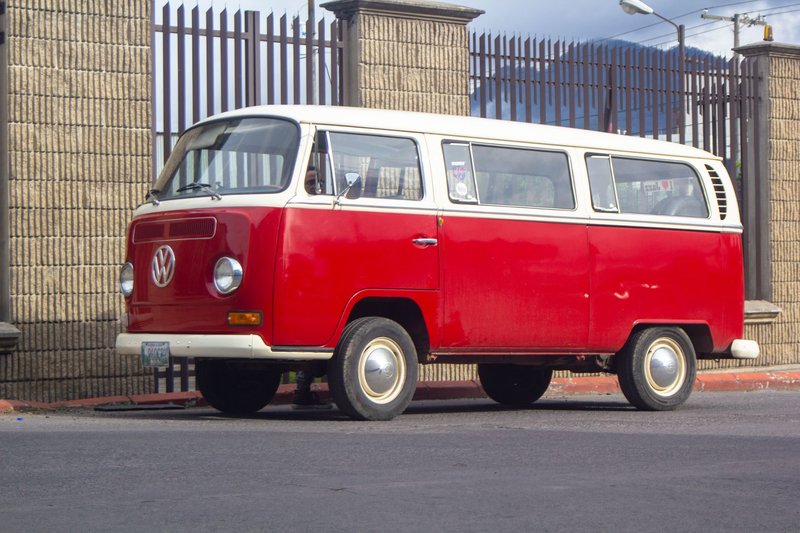
The Transporter was the most varied model in the range. The body styles included:
- Panel van: the delivery workhorse, with no side windows behind the cab.
- Kombi: side windows, removable rear seats and flexible cargo space.
- Microbus: the passenger version with proper seating.
- Deluxe Microbus: the trim-heavy one with skylight windows and two-tone paint, the one collectors call the Samba.
- Pickup: single cab with a drop-side load bed.
- Double-cab pickup: seating for a crew and a smaller bed.
- High-roof panel van: a taller cargo body for bulky loads.
The engine was the same 1,192 cc flat-four, but tuned for torque rather than top speed. Output sat in the low-to-mid 30s hp depending on market. The three changes that define the 1960 Transporter:
- Fresh-air heating. A revised heating and ventilation setup improved cabin comfort over earlier vans.
- A fully synchronized gearbox. Synchromesh on every forward gear, ahead of the Beetle. For a van you shift constantly in traffic, that’s the bigger quality-of-life upgrade.
- The high-roof option. Standing room in the back for tradespeople who needed it.
Visually, the first-generation bus is unmistakable: a two-piece “split” windshield with a center divider, and a V-shaped ridge down the nose with a large VW roundel.
Prices then and now
New, a 1960 Beetle sedan sold in the US for roughly $1,600. The Karmann Ghia coupe cost around $2,300 to $2,400, with the convertible a few hundred dollars above that. A Microbus sat in the mid-$2,000s depending on trim and options. Treat these as ballpark figures, since dealer and port-of-entry costs varied.
Collector values spread widely with condition. These are rough ranges, not appraisals:
| Model | Project or driver | Good to excellent |
|---|---|---|
| Beetle sedan | $5,000-$12,000 | $15,000-$25,000+ |
| Beetle sunroof sedan | $8,000-$15,000 | $20,000-$35,000 |
| Beetle convertible | $10,000-$20,000 | $25,000-$45,000 |
| Karmann Ghia coupe | $8,000-$15,000 | $20,000-$35,000 |
| Karmann Ghia convertible | $12,000-$25,000 | $30,000-$50,000 |
| Kombi / Microbus | $20,000-$50,000 | $60,000-$100,000 |
| Deluxe Microbus | $60,000-$100,000 | $150,000 and up |
Original paint, correct parts and documented history push a car to the top of its band. For live numbers on a specific car, Hagerty’s valuation tools let you price by year, model and condition.
How to identify a 1960 model
Use this checklist at a car show or when reading a listing.
Beetle
- Rear window. Larger than the small oval of 1953-57 cars, but far smaller than the big window of 1965 and later. A big rear window means the car is too new.
- Taillights. Small, narrow units. The larger, wider lamps came on later models.
- No fuel gauge. A 1960 Beetle has a reserve fuel tap on the floor. When the engine sputters, you flip the lever and get the last gallon or so.
- 6-volt electrics. The switch to 12 volts came later in the decade.
- Engine. 1,192 cc, with the generator mounted on top of the fan housing.
Karmann Ghia
- Headlights high on the fenders with a wider grille opening point to 1960 or later. Lower-set headlights mean 1959 or earlier.
- Body shape. Rounded nose and tail with a flat, low roofline.
- Engine. The same 1,192 cc as the Beetle.
Transporter
- Two-piece split windshield with a center divider.
- V-shaped nose with a large VW emblem.
- Rear engine, tall boxy body.
- Body style. Panel van, Kombi, Microbus, pickup or high-roof.
If a car carries a 1960 data plate but doesn’t match these details, check for later parts. Swaps are extremely common on old Volkswagens.
Type 1 vs Type 2 vs Type 3
The numbers confuse people, so here’s the shorthand. Type 1 is the Beetle. Type 2 is the Transporter. Type 14 is the Karmann Ghia. Type 3 doesn’t appear in a 1960 showroom.
VW introduced the Type 3 in 1961 as the 1500 notchback, then added a fastback and the Squareback wagon. It carried a larger 1,500 cc engine with a flatter profile. A car sold as a “1960 Type 3” is mislabeled. The Karmann Ghia Type 34, a larger and more angular Ghia built on Type 3 mechanicals, also arrived in 1961.
The 1960 Volkswagen car models stop at three families: Beetle, Karmann Ghia and Transporter. Everything else with a VW badge is earlier, later or a variant of those three.

Marco Delantero
More from Marco DelanteroHow we reviewed this article
This article was researched against manufacturer records and editorially reviewed before publishing. We accept no payment for coverage. Some guides contain affiliate links; see our affiliate disclosure.