My E85 isn’t 85%Usually 70 to 83%
Mix chart for your tankE20 to E85
| Target | From empty | From 25% full | ||
|---|---|---|---|---|
| E85 | Gas | E85 | Gas | |
| E20 | 2.0 | 13.0 | 2.0 | 9.3 |
| E30 | 4.0 | 11.0 | 4.0 | 7.3 |
| E40 | 6.0 | 9.0 | 6.0 | 5.3 |
| E50 | 8.0 | 7.0 | 8.0 | 3.3 |
| E60 | 10.0 | 5.0 | 10.0 | 1.3 |
| E70 | 12.0 | 3.0 | – | – |
| E85 | 15.0 | 0.0 | – | – |
Is E85 cheaper for you?Cost per mile
Check what’s really in your E85Testers
- Helix Racing Products Fuel/Ethanol Tester 350-3915 A graduated test tube that shows how much ethanol is in the E85 you just pumped.
- Reusable E85 ethanol testing kit, wide mouth, 2-pack Cheap reusable test bottles you can keep in the glovebox and fill from the nozzle.
- Innovate Motorsports MTX-D ethanol content and fuel temp gauge kit A dash gauge with an in-line sensor that reads the ethanol percentage of the fuel as you drive.
- Zeitronix ECA-2 ethanol content analyzer A digital analyzer that reads a flex fuel sensor and sends ethanol percent to a gauge or tuning software.
- AEM 30-2200 ethanol content flex fuel sensor kit The sensor an aftermarket tune uses to adjust fueling when the ethanol percentage changes.
This E30 mix calculator tells you how many gallons of E85 and how many gallons of pump gas to add to get E30, a blend of 30% ethanol and 70% gasoline. Enter your tank size, how much fuel is already in the tank and what it is, and it gives you both amounts, the order to pump them and what the fill-up costs. It works in gallons or liters. E30 here means the ethanol fuel blend, not the BMW E30 3 Series.
How much E85 do you need to make E30?
For an empty 15-gallon tank, pump 4.0 gallons of E85 and then fill the remaining 11.0 gallons with regular E10 gas. That works out to a little over a quarter of the tank in E85: 26.7% of the fuel you add. It assumes the E85 really is 85% ethanol and the pump gas is E10, which is what nearly every US station sells as regular, midgrade and premium.
If your tank is not empty, the answer changes with what is already in it. A tank of leftover E10 needs the same 4.0 gallons of E85 no matter how full it is, and only the gas amount shrinks. A tank that already holds E30 needs less E85, because the ethanol is already there. The calculator handles both, and the tables below cover the common cases.
How to use the E30 calculator
- Tank size. Enter your fuel tank capacity from the owner’s manual, or switch to liters.
- Fuel in the tank now. Slide to how full the tank is, or tap Empty. Then pick what that fuel is: E10 if you last filled with regular gas, E30 if you are topping up your blend.
- Target blend. It opens on E30. You can move it to E20, E40 or anything else your tune allows.
- Pump gas. Leave it on E10 unless you buy ethanol-free gas (E0) or E15.
- E85 ethanol content. Leave it at 85 or, better, enter the number from your ethanol tester. Pump E85 is often 70% to 80% ethanol.
The result shows the gallons of E85 and gas, the blend you end up with and a tank picture of the layers. Choose “add a set amount” instead of “fill to full” when you only want to put in, say, 5 gallons. The copy link button saves your numbers so the next fill-up takes one tap.
E30 mix chart by tank size
Gallons of E85 and E10 gas to fill an empty tank to E30, with E85 at 85% ethanol:
| Tank size | E85 | E10 gas |
|---|---|---|
| 10 gal | 2.7 gal | 7.3 gal |
| 12 gal | 3.2 gal | 8.8 gal |
| 13 gal | 3.5 gal | 9.5 gal |
| 14 gal | 3.7 gal | 10.3 gal |
| 15 gal | 4.0 gal | 11.0 gal |
| 16 gal | 4.3 gal | 11.7 gal |
| 18 gal | 4.8 gal | 13.2 gal |
| 20 gal | 5.3 gal | 14.7 gal |
| 25 gal | 6.7 gal | 18.3 gal |
In liters, from empty: a 45 L tank takes 12.0 L of E85 and 33.0 L of gas, a 50 L tank 13.3 L and 36.7 L, a 55 L tank 14.7 L and 40.3 L, and a 60 L tank 16.0 L and 44.0 L.
Topping up a tank that already has E30
This is the fill-up most E30 drivers do every week. When the fuel left in the tank is already E30, keep every new gallon at the same ratio: about 27% E85 and 73% gas, or roughly 1 gallon of E85 for every 2.75 gallons of gas.
| Tank size | Quarter full of E30 | Half full of E30 |
|---|---|---|
| 12 gal | 2.4 E85 + 6.6 gas | 1.6 E85 + 4.4 gas |
| 15 gal | 3.0 E85 + 8.3 gas | 2.0 E85 + 5.5 gas |
| 18 gal | 3.6 E85 + 9.9 gas | 2.4 E85 + 6.6 gas |
| 20 gal | 4.0 E85 + 11.0 gas | 2.7 E85 + 7.3 gas |
All amounts are in gallons and fill the tank to full. Coming from a tank of E10 instead, use the E85 amount from the empty-tank chart above and fill the rest with gas: the leftover E10 counts the same as pump gas.
The E30 mixing formula
With pump gas that already contains ethanol, the share of E85 in the fuel you add from empty is:
E85 share = (0.30 − pump gas ethanol) ÷ (E85 ethanol − pump gas ethanol)
With E10 gas and true 85% E85 that is (0.30 − 0.10) ÷ (0.85 − 0.10) = 0.20 ÷ 0.75 = 26.7%. For a 15-gallon tank, 15 × 0.267 = 4.0 gallons of E85 and 11.0 gallons of gas. Check: 4.0 gallons of E85 carries 3.4 gallons of ethanol, 11.0 gallons of E10 carries 1.1, and 4.5 out of 15 is 30%.
Many calculators use ethanol-free gas in this formula. With E10 at the pump, that puts more E85 in the tank than you meant to, and the blend comes out near E36 instead of E30. For the general version with fuel already in the tank and any target blend, see the E85 calculator.
Your E85 changes the E30 mix
The E85 standard (ASTM D5798) allows anything from 51% to 83% ethanol, and stations sell lower blends in winter so cars start in the cold. Summer E85 commonly tests around 80% and winter E85 around 70% to 74%. The less ethanol in your E85, the more of it you need for E30. For an empty 15-gallon tank with E10 gas:
| Real ethanol in your E85 | E85 | E10 gas |
|---|---|---|
| 85% | 4.0 gal | 11.0 gal |
| 80% | 4.3 gal | 10.7 gal |
| 74% | 4.7 gal | 10.3 gal |
| 70% | 5.0 gal | 10.0 gal |
| 60% | 6.0 gal | 9.0 gal |
| 51% | 7.3 gal | 7.7 gal |
Mix for 85% when the fuel is really 70% and your “E30” comes out at E26. On a tune without a flex fuel sensor, that is less knock protection than the tune assumes. Testing the fuel is the only way to know.
How to test your E85
A shake tester is a graduated tube: add water to the line, top up with fuel, shake and let it settle. Ethanol leaves the gasoline and joins the water, and the rise in the water layer gives the ethanol percentage. Kits such as the Helix Racing fuel ethanol tester or a reusable E85 test bottle 2-pack are accurate to a few points, which is enough for mixing. If you run E30 every week, a flex fuel sensor with a gauge such as the Innovate MTX-D ethanol content gauge reads the blend in the fuel line as you drive, so you see the result of every fill-up.
E10, E0 or E15 pump gas
Use the gas you will actually pump. Ethanol-free gas needs more E85 to reach E30 and E15 needs less:
| Empty tank | With E10 gas | With E0 gas | With E15 gas |
|---|---|---|---|
| 12 gal | 3.2 E85 + 8.8 gas | 4.2 E85 + 7.8 gas | 2.6 E85 + 9.4 gas |
| 15 gal | 4.0 E85 + 11.0 gas | 5.3 E85 + 9.7 gas | 3.2 E85 + 11.8 gas |
| 20 gal | 5.3 E85 + 14.7 gas | 7.1 E85 + 12.9 gas | 4.3 E85 + 15.7 gas |
Tuned cars usually mix E30 from premium (91 or 93 octane), which is E10 at almost every US station. E15 is mostly sold as 88 octane “Unleaded 88”, so it lowers the octane of the blend.
How to mix E30 at the pump
- Run the tank low. The emptier the tank, the less the leftover fuel matters and the closer your blend lands.
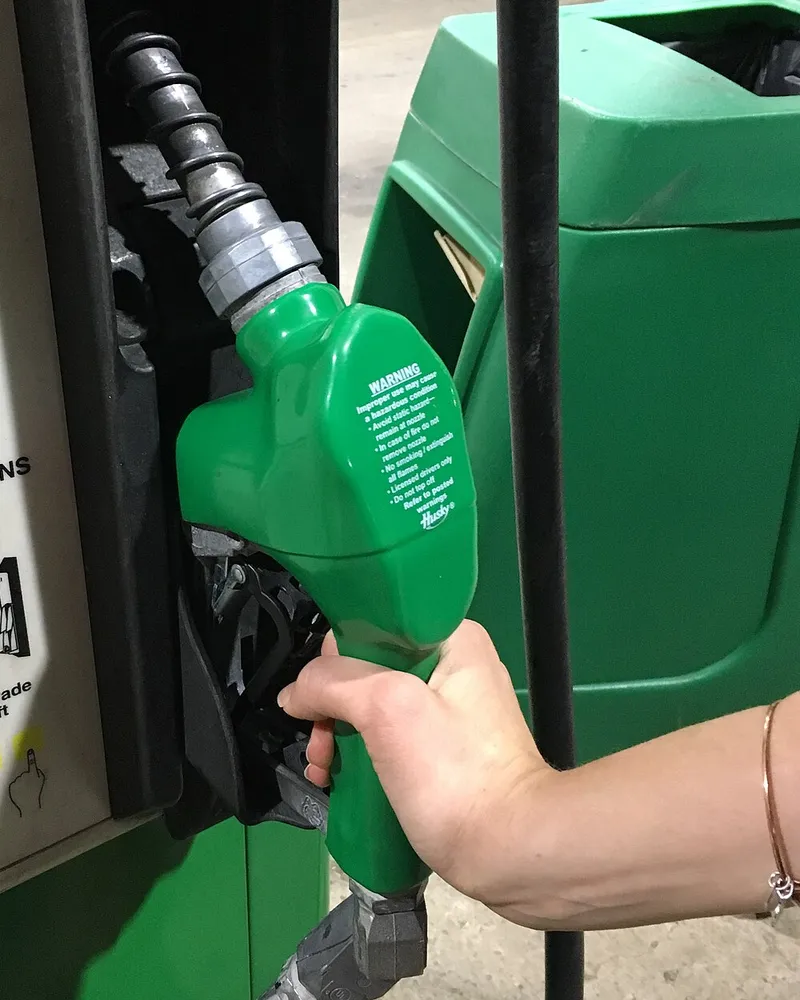
- Pump the E85 first. Stop at the gallons the calculator gives you. Pumping it first lets you stop at an exact number, and the gas that follows mixes it in.
- Top off with gas. Fill to full, or add the gas amount from the calculator if you are adding a set amount.
- Drive gently for a few miles. The fuel already in the lines and the high pressure pump is the old blend. Give it 5 to 10 minutes of easy driving before you use full throttle on an E30 tune.
Ethanol and gasoline mix fully and stay mixed in a sealed tank, so you don’t need to shake or stir anything. Water is the problem: ethanol absorbs it, so don’t store E30 for months in an open or non-sealed can.
What octane is E30?
E30 mixed from 93 octane premium comes out around 97 octane (AKI, the number on US pumps), and from 91 octane around 94 to 96. Ethanol’s octane boost is strongest in the first 30% or so, which is why E30 gives most of the knock resistance of E85 with far less extra fuel. Pre-blended E30 from a blender pump is usually made with the lowest grade of gas and can be as low as 93 octane. These are rough figures. Octane does not add up in a straight line, and the base gas varies from station to station.
Who runs E30?
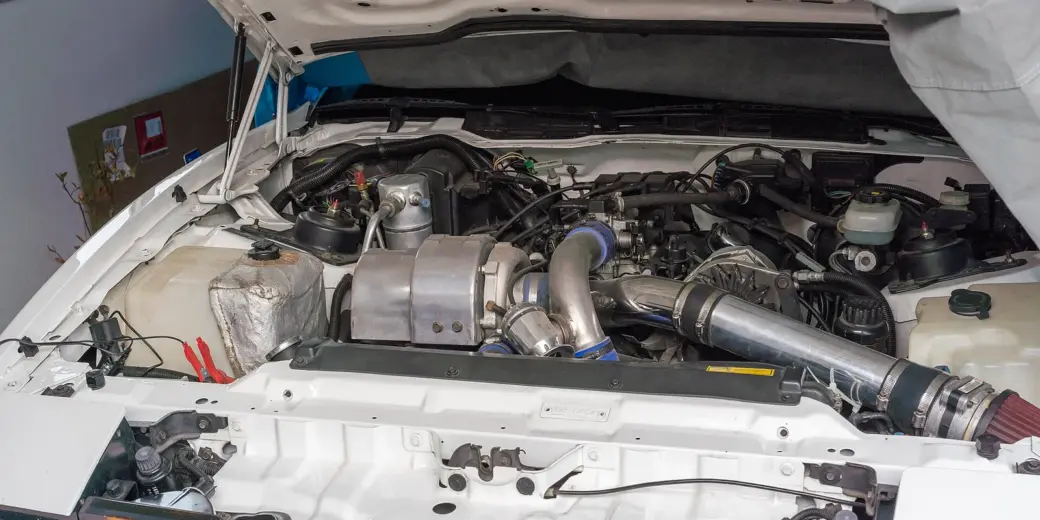
Mostly owners of tuned turbocharged cars. Tuners sell E30 maps for BMW B58, N55 and S55 engines, the VW and Audi EA888 (GTI, Golf R, S3), Ford EcoBoost cars like the Fiesta ST, Focus ST and RS and the Mustang EcoBoost, the Subaru WRX and turbo Toyota trucks. The extra octane and cooling let the tune add boost and timing.
E30 is popular because E85 needs about 30% more fuel flow than gasoline, which often means a bigger high pressure fuel pump and injectors. E30 needs roughly 10% more, which many stock fuel systems can supply at moderate power. Direct injection cars hit the high pressure pump limit first, so tunes log fuel pressure. Ask your tuner before you mix, and check that their E30 tune expects E10 premium, not E0.
Can a stock car run E30?
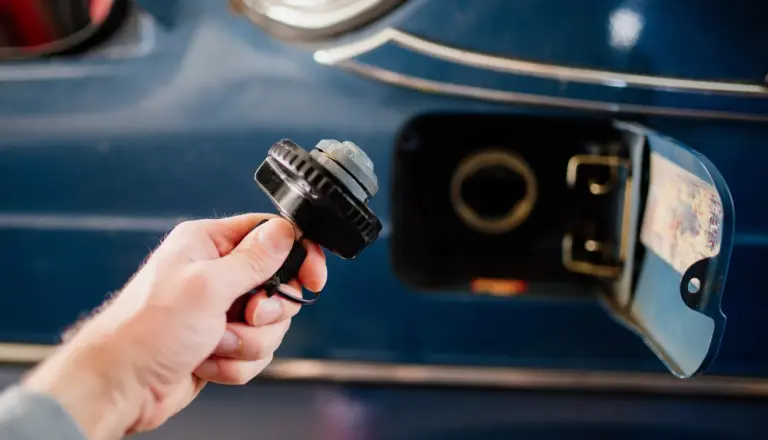
A flex fuel car can. It is built for any blend from gasoline to E85, and its sensor or fuel trims adjust to E30 on their own. Look for a yellow gas cap, an E85 or FlexFuel badge, or check the owner’s manual.
For a car that is not flex fuel, E30 is not approved by the EPA, which allows up to E15 in 2001 and newer cars. Most modern engines can trim enough fuel for E30 on a stock tune, and a Nebraska state fleet test with hundreds of non-flex vehicles reported no problems. But the stock tune is built for gasoline. You get the mileage loss of E30 without the power, because the computer does not add timing it was never told about. Some engines also set lean fault codes. If your car is not flex fuel, get an E30 tune or stay on gas. Running E30 can also affect your engine warranty.
Can you buy E30 at the pump?
Yes, at blender pumps, mostly in the Midwest: Minnesota, Nebraska and Kansas have stations that sell E15, E30 and E85 from the same dispenser. Pump E30 is labeled for flex fuel vehicles only. The AFDC station locator has a filter for stations with blender pumps.
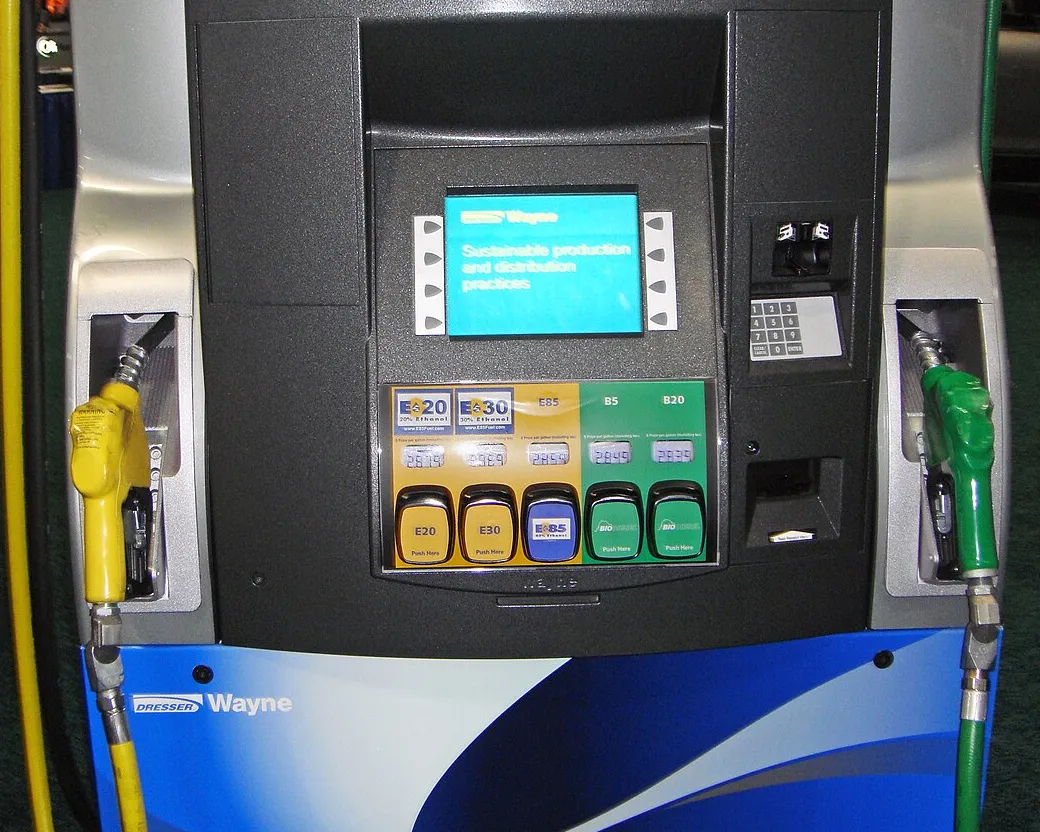
Mixing your own gives you control over the octane, because you choose the base gas. For a tuned car, mixing E85 with premium usually beats pump E30 made from 87 octane.
E30 gas mileage and cost
A gallon of E30 holds about 7% less energy than a gallon of E10, so expect about 7% fewer miles per gallon. The Nebraska fleet test measured 5.8% lower mileage on 2020 to 2024 vehicles. For comparison, E85 holds about 27% less energy than E10.
For E30 to cost the same per mile as E10, it has to be about 7% cheaper per gallon. At the July 2026 national averages ($2.95 for E85 and $3.84 for regular), a 15-gallon tank of E30 costs $54.04 and works out to about 15.5 cents a mile in a 25 mpg car, against 15.4 cents on E10. That is about the same. The reason to run E30 is the octane, not the price. Enter your local prices in the cost panel of the calculator to see your own numbers.
E30 vs E85
| E30 | E85 | |
|---|---|---|
| Ethanol | 30% | 51% to 83% in practice |
| Extra fuel flow vs gas | About 10% | About 30% |
| Fuel system upgrades | Often none at moderate power | Usually pump and injectors |
| Mileage vs E10 | About 7% less | About 27% less |
| Cold starts | Like gasoline | Harder in cold weather |
| Effect of a bad E85 batch | Small | Large |
| Air-fuel ratio (stoich) | 12.9 : 1 | 9.8 : 1 |
E85 makes more power on a car built for it. E30 gets most of the knock resistance with stock or near-stock fueling, and a few points of ethanol error matter less. To mix other blends such as E40 or E50, use the E85 mix calculator.
FAQ
What is E30 fuel?
E30 is a fuel blend of 30% ethanol and 70% gasoline. Drivers of tuned turbo cars mix it from E85 and premium gas for its higher octane, and some Midwest stations sell it from blender pumps for flex fuel vehicles. It has nothing to do with the BMW E30.
How much E85 do I mix with 93 octane to make E30?
About 27% of the tank. In an empty 15-gallon tank that is 4.0 gallons of E85 and 11.0 gallons of 93 octane, because US premium is already E10. If your E85 tests at 70% ethanol, use 5.0 gallons of E85 and 10.0 gallons of gas.
How do I keep E30 when I top up a tank that already has E30?
Add E85 and gas in the same ratio every time: about 27% E85 and 73% gas, or 1 gallon of E85 for every 2.75 gallons of gas. A 15-gallon tank that is a quarter full of E30 needs 3.0 gallons of E85 and 8.3 gallons of gas.
What octane is E30?
Roughly 94 to 97 octane (AKI), depending on the gas it is mixed with. E30 made from 93 octane premium is near the top of that range. Pump E30 made from 87 octane base gas can be as low as 93.
Do I need a tune to run E30?
To gain power, yes. A stock tune is built for gasoline and won’t add timing for the extra octane, so you only get the mileage loss. A flex fuel car can run E30 without a tune. A car that is not flex fuel should have an E30 tune.
Is E30 bad for my engine?
Not for an engine tuned or built for it. The risks come from running lean: a fuel system that can’t supply the extra 10% or so of fuel, or a blend with more ethanol than the tune expects. Older cars can have rubber fuel parts that ethanol wears out. The first tanks of ethanol can also loosen deposits, so change the fuel filter if your car has a serviceable one.
Does E30 get worse gas mileage?
Yes, about 7% fewer miles per gallon than E10, because a gallon of E30 holds about 7% less energy. A Nebraska fleet test measured 5.8% lower mileage in newer cars.
Is E30 the same in winter?
The math is the same, but winter E85 often has only 70% to 74% ethanol, so you need more of it. Test your E85 when the seasons change and enter the real number in the calculator. E30 itself starts in the cold about as well as gasoline.
Can I use E15 to mix E30?
Yes. E15 already carries more ethanol, so you need less E85: 3.2 gallons in an empty 15-gallon tank instead of 4.0. But E15 is usually 88 octane, so the finished blend has a lower octane than E30 made with premium.
What happens if I add too much E85?
You get a higher blend than E30. A flex fuel car adjusts. On a tune without a flex fuel sensor, the engine runs lean, which can set fault codes and, under boost, risks damage. Run the tank down and top up with gas, and use the calculator to see how much gas brings it back to E30.
Photos: Henrywingra, CC BY-SA 4.0, and Mario Roberto Duran Ortiz (Mariordo), CC BY-SA 3.0, via Wikimedia Commons. Featured image: Tobias ToMar Maier, CC BY-SA 3.0, via Wikimedia Commons.
Sources & References
- DOE Alternative Fuels Data Center, E85 (ASTM D5798) specifications: https://afdc.energy.gov/fuels/ethanol_e85_specs.html
- DOE Alternative Fuels Data Center, ethanol fuel basics: https://afdc.energy.gov/fuels/ethanol-fuel-basics
- DOE Clean Cities and Communities Alternative Fuel Price Report, July 2026: https://afdc.energy.gov/fuels/prices
- Nebraska Ethanol Board, E30 demonstration project: https://ethanol.nebraska.gov/library/research/e30-demonstration.html
- Sunoco Race Fuels, understanding ethanol blends in racing fuels: https://www.sunocoracefuels.com/tech-corner/understanding-ethanol-blends-in-racing-fuels
- Synergy BMW Tuning, E30 vs E85: https://www.synergybmwtuning.com/learn/e30-vs-e85-bmw-tune
- Equilibrium Tuning, ethanol mixture guide: https://eqtuning.com/blogs/technical-write-ups/equilibrium-tuning-ethanol-mixture-guide

James Kowalski
More from James KowalskiHow we reviewed this article
This article was researched against manufacturer records and editorially reviewed before publishing. We accept no payment for coverage. Some guides contain affiliate links; see our affiliate disclosure.