The best 1000 gram insulated work boot for most people is the Carhartt Yukon Pac 10-inch: 1000g insulation, a composite safety toe that meets ASTM F2413-24, a waterproof membrane and more than 2,000 Amazon ratings. If you need puncture protection and a lighter safety toe, the Avenger Hammer 8-inch adds a carbon toe, a puncture plate and an electrical hazard rating. For farm chores, ranch work and mud, the LaCrosse Alphaburly Pro is a 1000g rubber boot you can hose off. A 1000 gram boot is built for temperatures around 20°F and below when you are standing or moving slowly. If you walk all shift or work indoors, it is usually too warm. This guide sorts 18 picks into safety-toe work boots, outdoor and farm boots, rubber boots and women’s boots, then explains what the gram number means and what temperatures it handles.
As an Amazon Associate we earn from qualifying purchases. Disclosure
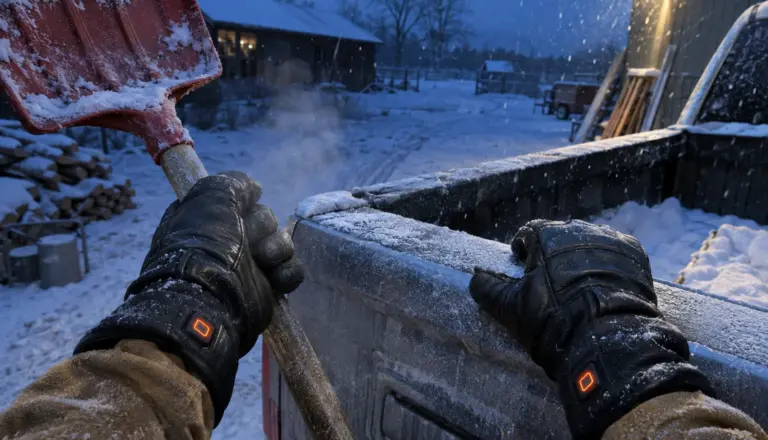
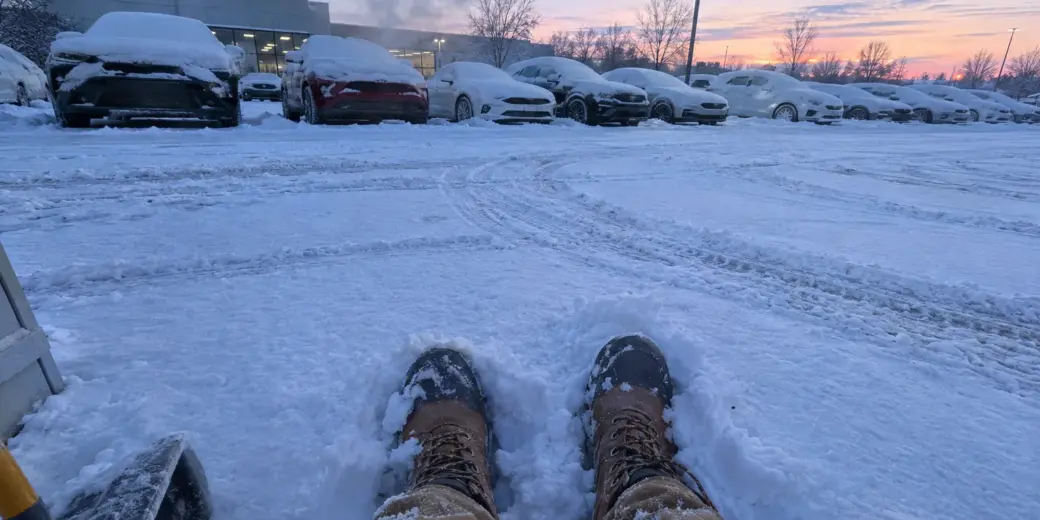
The February our dealership in Michigan ran a weekend tent sale, I spent two days on the lot handing keys to salespeople and moving cars for test drives. It was 8°F on Saturday morning and the asphalt was frozen solid. I wore my everyday 400 gram shop boots. By 11 a.m. I could not feel my toes, and by noon I was taking breaks in the service drive every half hour. Our used-car manager stood out there both days in a pair of tall 1000 gram pac boots and never went inside. The difference was not toughness. He was standing still in boots built for standing still, and I was standing still in boots built for walking around a warm shop. That is what the gram number is about. Every boot below was in stock on Amazon in November 2026 and its insulation weight was checked against the listing.
Quick picks
| Boot | Best for | Insulation | Toe |
|---|---|---|---|
| Carhartt Yukon Pac 10″ | Best overall | 1000g LiteFire | Composite |
| Avenger Hammer 8″ | Construction, puncture risk | 1000g | Carbon |
| Kenetrek Lineman Extreme 1000 ST | Linemen and tree work | 1000g Thinsulate | Steel |
| RefrigiWear Extreme Hiker | Freezers and cold storage | 1000g | Composite |
| Irish Setter Elk Tracker 12″ | Ranch and outdoor work | 1000g Thinsulate Ultra | Soft |
| Rocky Sport Utility | Classic Rocky 1000 gram boot | 1000g Thinsulate Ultra | Soft |
| LaCrosse Alphaburly Pro 18″ | Mud, slush, barn chores | 1000g Thinsulate Ultra | Soft |
| Hunthor 1000g boot | Budget pick | 1000g Thinsulate Ultra | Soft |
| Kenetrek Women’s Mountain Extreme 1000 | Women | 1000g Thinsulate | Soft |
What does 1000 gram insulation mean?
The gram number is the weight of one square meter of the insulation sheet inside the boot. A boot with 1000 gram insulation is lined with a material that weighs 1,000 grams per square meter. It does not mean the boot holds 1,000 grams of insulation. The actual amount in a pair is a small fraction of that, because a boot uses far less than a square meter of material.
A heavier sheet is a thicker sheet, and a thicker sheet traps more air, which is what keeps your feet warm. So within one material, more grams means more warmth: 1000 grams of Thinsulate is warmer than 400 grams of Thinsulate. Most 1000 gram boots use 3M Thinsulate or Thinsulate Ultra, a synthetic fiber insulation that stays warm when damp better than cotton or wool felt.
The number only compares fairly between boots that use the same material. Carhartt’s 1000g LiteFire uses an aluminum-based layer that reflects body heat, and PrimaLoft and private-label insulations each have their own warmth per gram. Treat the gram rating as a guide to thickness, then look at the material.
Rubber and neoprene boots such as Muck boots usually list neoprene thickness in millimeters instead of grams, so you cannot convert them directly. Some rubber boots, like the LaCrosse Alphaburly Pro, put a Thinsulate layer behind the neoprene and list both.
1000 gram insulated boots temperature rating
There is no official temperature rating for insulation weight. No ASTM or government standard ties a gram number to a temperature, and how warm a boot feels depends on how much you move, your socks, whether your feet are dry and how long you stay out. Manufacturer ratings vary wildly. RefrigiWear rates its 1000 gram Extreme Hiker for -40°F to 10°F and its 800 gram PolarForce Max to -40°F. LaCrosse says the 1000 gram Alphaburly Pro keeps feet warm down to -60°F. Read those numbers as the best case for a person who is moving.
A better way to choose is by temperature and activity together. These ranges match how most boot makers group their lines and what people who work outside all winter report.
| Insulation | Temperature | Activity | Typical use |
|---|---|---|---|
| 200g | 40°F to 60°F | Moving all the time | Fall hiking, early-season work |
| 400g | 20°F to 40°F | Steady movement | Most winter work boots, shop and site work |
| 600g | 10°F to 30°F | Mix of walking and standing | Outdoor trades, snow removal |
| 800g | 0°F to 20°F | Light activity | Lot work, loading docks, plow drivers |
| 1000g | -20°F to 20°F | Standing or slow work | Flagging, inspections, freezers, tree stands |
| 1200g and up | Below 0°F | Sitting or standing still for hours | Ice fishing, late-season hunting, extreme cold |
The pattern: every step up in grams buys you warmth at lower temperatures or lets you move less at the same temperature. A 1000 gram boot is the right call when you stand on frozen ground for hours, when the temperature sits near zero or when your feet always run cold. If you walk most of the day above 20°F, 400 to 600 grams is enough.
Best 1000 gram insulated work boots
These boots have a safety toe that meets ASTM F2413, the standard OSHA points to for protective footwear, or an electrical hazard rating for trades that need one. All are waterproof.
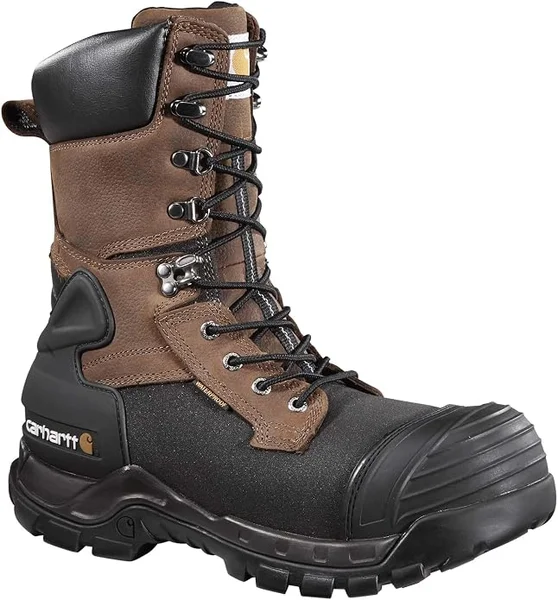
Best overall
1. Carhartt Yukon Pac 10-Inch Work Boot
The Yukon Pac is the most-reviewed 1000 gram safety boot on Amazon, with more than 2,000 ratings. It pairs oil-tanned leather with a black PU-coated leather lower that resists scuffs from kneeling and climbing, and the composite toe meets ASTM F2413-24. Carhartt’s Storm Defender membrane keeps water out while letting some sweat escape. The insulation is 1000g LiteFire, an aluminum-based layer that reflects body heat, so the boot is a little slimmer than most Thinsulate pac boots of the same warmth. The 10-inch shaft keeps snow out when you step off a plowed path.
- 1000g LiteFire insulation
- Composite safety toe, ASTM F2413-24
- Storm Defender waterproof breathable membrane
- 10-inch shaft, slip-resistant rubber lug outsole
Good: Most ratings in the 1000 gram class, tall shaft, non-metallic toe. Not great: LiteFire grams do not compare directly to Thinsulate grams, and wide sizes are limited.
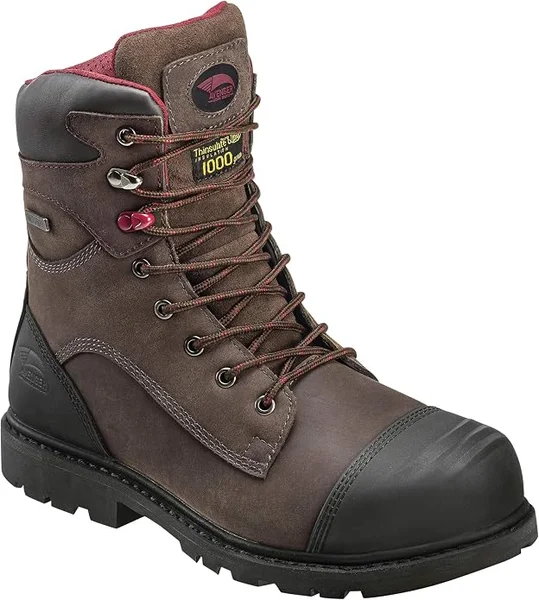
Best for construction
2. Avenger Hammer 8″ 1000g Carbon Toe Work Boot
The Hammer is a full construction boot with the warmth of a pac boot. The carbon nanofiber safety toe is lighter than steel, does not conduct cold and will not set off metal detectors. A Lenzi puncture-resistant plate under the foot protects against nails and rebar, and the outsole is oil- and slip-resistant nitrile rubber. It carries an electrical hazard rating and uses flex-welt construction with a waterproof membrane and sealed seams. At 8 inches it is shorter than a pac boot, which makes it easier to climb ladders and drive in.
- 1000g insulation
- Carbon nanofiber safety toe
- Puncture-resistant plate, EH rated
- Oil- and slip-resistant nitrile outsole
Good: Puncture plate and EH rating in one warm boot, light safety toe. Not great: Fewer reviews than the big brands, 8-inch shaft lets deep snow in.
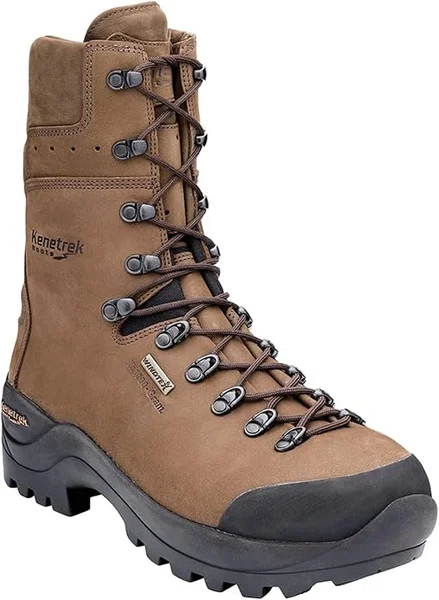
Best for linemen and tree work
3. Kenetrek Lineman Extreme 1000 ST
Kenetrek builds this boot for linemen, cable installers and arborists who spend long winter days on poles, ladders and climbing spurs. The 10-inch upper is one piece of 2.8mm leather with double and triple stitching, which removes the seams that fail first on cheaper boots. It has a steel safety toe that meets ASTM impact, compression and electrical hazard standards, a protective rubber toe cap and 1000 gram Thinsulate. It is the most expensive work boot here and has few Amazon ratings, but Kenetrek boots have a long record with mountain hunters and utility crews.
- 1000g Thinsulate
- Steel safety toe, ASTM and EH rated
- Seamless 10-inch 2.8mm leather upper
- Rubber toe cap for climbing and kneeling
Good: Heavy leather, stiff support for climbing, built to last several seasons. Not great: Premium tier, steel toe adds weight, long break-in.
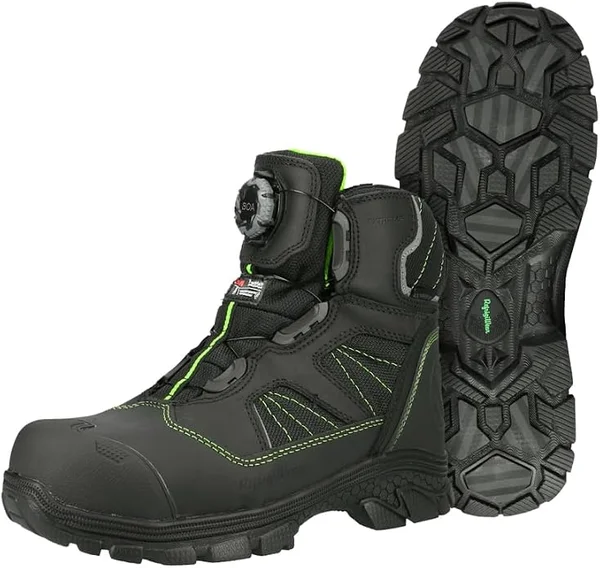
Best for freezers and cold storage
4. RefrigiWear Extreme Hiker Waterproof Work Boot
RefrigiWear makes gear for people who work inside walk-in freezers and cold warehouses, where you stand on frozen concrete all shift. The Extreme Hiker has 1000g insulation, a comfort rating of -40°F to 10°F from the maker, an ASTM composite safety toe and an electrical hazard rating. The BOA dial tightens and loosens the fit without taking off your gloves, which matters when you go in and out of a freezer all day. HYDRY waterproofing and rubber heel plates round it out. It is lighter and more athletic than a pac boot.
- 1000g insulation, rated -40°F to 10°F by RefrigiWear
- ASTM composite toe, EH rated
- BOA dial closure works with gloves on
- HYDRY waterproofing
Good: Glove-friendly closure, light, built for frozen floors. Not great: Hiker cut is lower than a pac boot, not for deep snow.
Best soft toe work boot
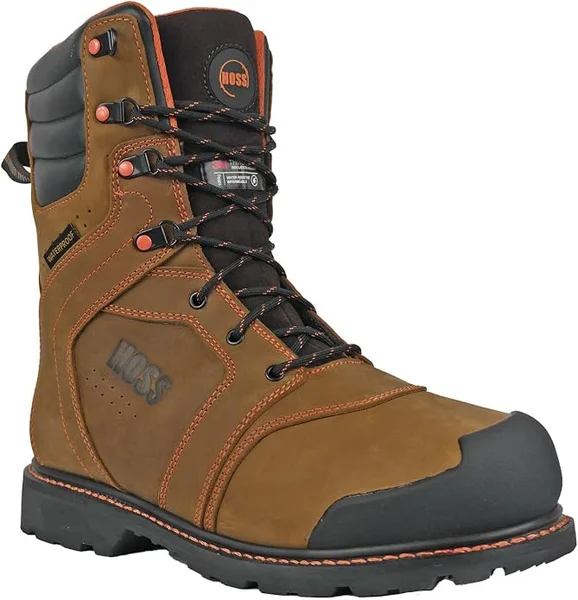
5. Hoss Clash 1000g Insulated 9″ Soft Toe Boot
For electricians, utility workers and anyone who needs an electrical hazard rating but no safety toe, the Clash is a warm, rebuildable option. It has 1000 gram Thinsulate Ultra, a HyDry waterproof membrane, full-grain leather and direct-attach Goodyear welt construction, which a cobbler can resole. The outsole meets ASTM F3445-21 for slip resistance and the boot is EH certified under ASTM F2892-18, the standard for soft toe protective footwear. It is new on Amazon and has no ratings yet.
- 1000g Thinsulate Ultra
- ASTM F2892-18 EH, ASTM F3445-21 slip resistant
- Goodyear welt, can be resoled
- HyDry waterproof membrane
Good: EH rating without a heavy toe cap, resoleable. Not great: No safety toe, no Amazon reviews yet.
Best 1000 gram boots for farm, ranch and outdoor work
These are soft toe boots made for hunting and outdoor work. Many people who feed livestock, plow a driveway, cut firewood or work a ranch in winter wear them instead of safety boots because they are lighter and more comfortable for walking. If your job requires a safety toe, pick from the section above.
Best for ranch and outdoor work
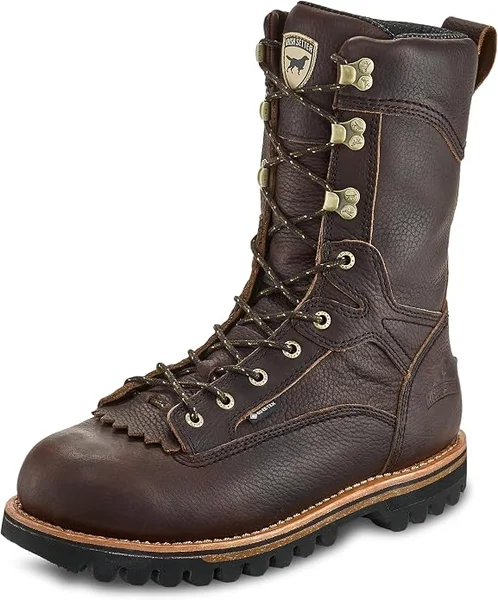
6. Irish Setter Elk Tracker 12″
The Elk Tracker is a tall leather boot from Red Wing’s hunting brand with 1000 gram Thinsulate Ultra, a GORE-TEX waterproof liner and a Goodyear welt that can be resoled. The 12-inch shaft keeps snow and brush out, and the heavy leather holds up to fence lines, brush and gravel better than nylon-panel hunting boots. It has more than 800 ratings. The leather needs a few weeks to break in, so buy it before the cold arrives.
- 1000g Thinsulate Ultra
- GORE-TEX waterproof liner
- 12-inch full-grain leather upper
- Goodyear welt, can be resoled
Good: Tall, resoleable, all-leather build for hard outdoor use. Not great: Heavy, needs break-in, no safety toe.
Best all-leather Rocky
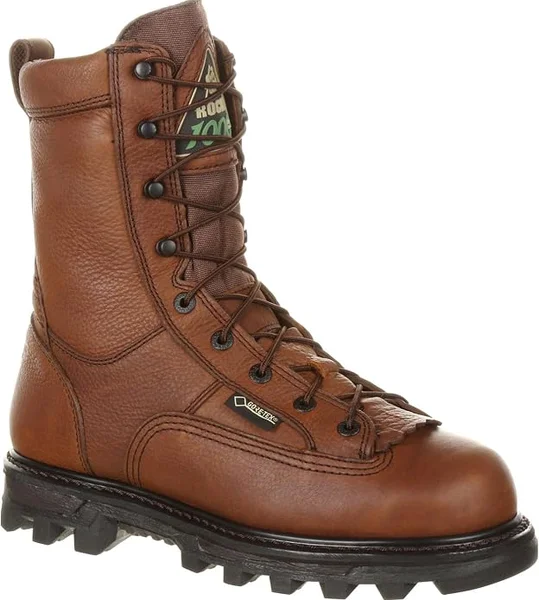
7. Rocky Bearclaw GORE-TEX Insulated Boot
The Bearclaw is a classic Rocky design with 1,000 grams of 3M Thinsulate, a GORE-TEX membrane and the Rocky Air-Port cushion footbed. The aggressive lug sole grips mud and snow, and the all-leather upper is easy to treat with boot grease each season. It has more than 350 ratings. It is a good choice for property work, firewood and walking fence lines in deep cold.
- 1,000g 3M Thinsulate
- GORE-TEX waterproof
- Air-Port cushion footbed
- Deep lug outsole
Good: Simple leather boot, waterproof membrane, strong traction. Not great: No safety toe, heavier than nylon-panel boots.
The classic Rocky 1000 gram boot
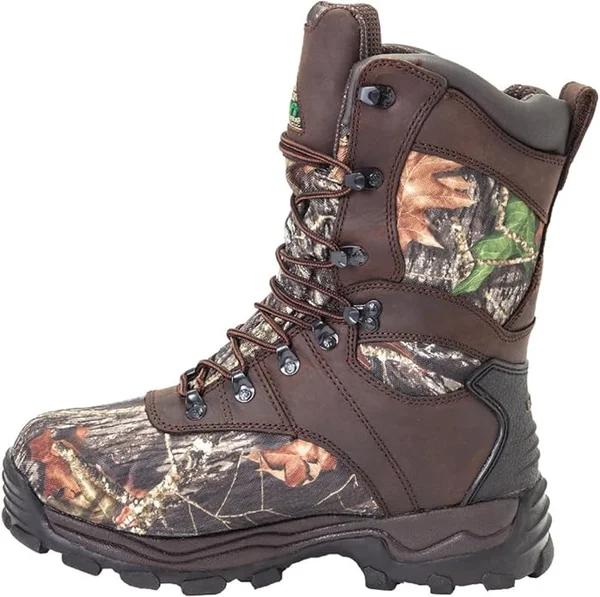
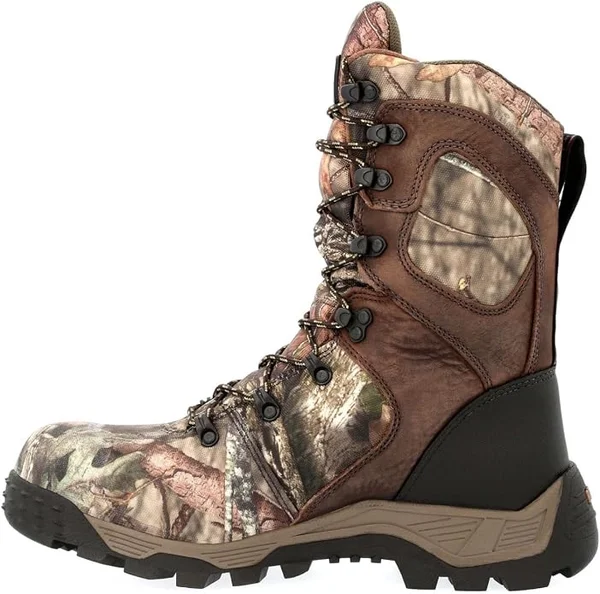
8. Rocky Sport Utility 1000G Insulated Waterproof Boot
If you searched “Rocky 1000 gram Thinsulate boots,” this is probably the boot you had in mind. The Sport Utility has been on Amazon since 2003 and has 1000 grams of Thinsulate Ultra, a 9-inch leather and nylon upper, Rocky’s guaranteed waterproof construction and a lace-up fit. It comes in Mossy Oak camo and other colors. The nylon panels make it lighter than all-leather boots, which helps on long walks. It has about 1,100 ratings.
- 1000g Thinsulate Ultra
- 9-inch leather and nylon upper
- Guaranteed waterproof
- Several camo and solid colors
Good: Long track record, lighter than all-leather boots. Not great: Camo is not for every jobsite, no safety toe.
Best Rocky for wet conditions
9. Rocky Sport Pro Insulated Boot
The Sport Pro uses 1,000 grams of Thinsulate Ultra with Rocky’s Vapor Pass waterproof membrane, which Rocky calls its driest system. The upper is full-grain leather and 900 denier nylon, the shaft is 9 inches and a nylon pull tab helps you get it on with cold hands. Rocky says it is built for severe wet conditions, which makes it a fit for slushy yards, wet snow and creek crossings. It has more than 1,000 ratings.
- 1,000g Thinsulate Ultra
- Rocky Vapor Pass waterproof membrane
- Full-grain leather and 900D nylon
- 9-inch shaft with pull tab
Good: Strong waterproofing for wet snow, lighter than all-leather. Not great: Camo look, no safety toe.
Best for steep ground
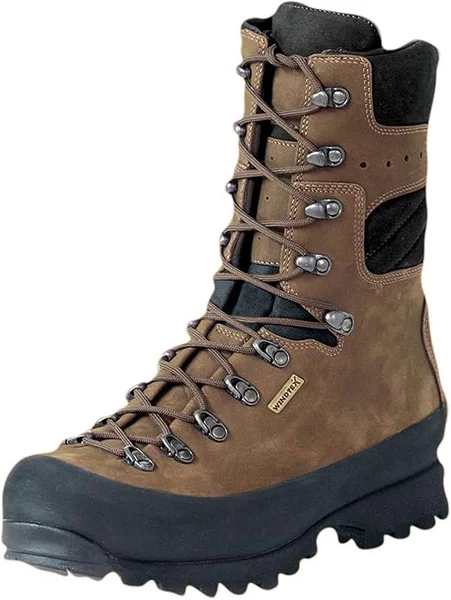
10. Kenetrek Mountain Extreme 1000
The Mountain Extreme is a mountaineering-style boot with 1000 gram Thinsulate, a stiff sole and a rubber rand that protects the leather on rocks. It is built for late-season elk and sheep hunting in the mountains, and it works for anyone who works on steep, icy ground and needs ankle support more than flexibility. It is the stiffest boot in this guide and needs a real break-in period.
- 1000g Thinsulate
- Stiff sole for edging on slopes
- Rubber rand protects the leather
- Tall leather upper
Good: Ankle support on steep and icy ground, built for years of use. Not great: Premium tier, stiff on flat ground and pavement.
Budget pick
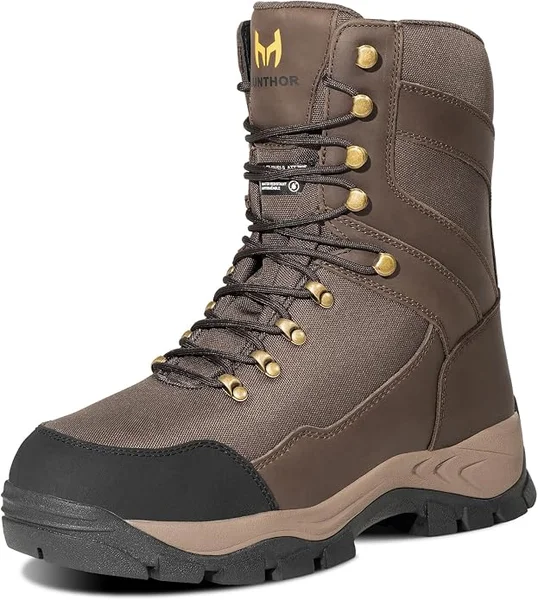
11. Hunthor 1000g Insulated Boot
Hunthor’s lace-up boot is the least expensive 1000 gram option here. It has 3M 1000g Thinsulate Ultra, a 900D oxford fabric and full-grain leather upper, an EVA midsole and rubber reinforcement at the toe, heel and Achilles. It is lighter than the big-brand boots and a sensible choice for occasional cold days, shoveling and dog walks. With under 100 ratings it has a shorter track record than Rocky or Irish Setter.
- 1000g 3M Thinsulate Ultra
- Oxford fabric and full-grain leather upper
- EVA midsole
- Rubber toe and heel reinforcement
Good: Lowest price for real Thinsulate 1000g, light. Not great: Short track record, fabric upper wears faster than leather.
Best 1000 gram insulated rubber boots
Rubber boots win in mud, manure and slush, where leather soaks through and is hard to clean. Lined rubber boots do not breathe, so feet sweat more than in leather. Wear wicking socks and dry the liners every night.

Best rubber boot
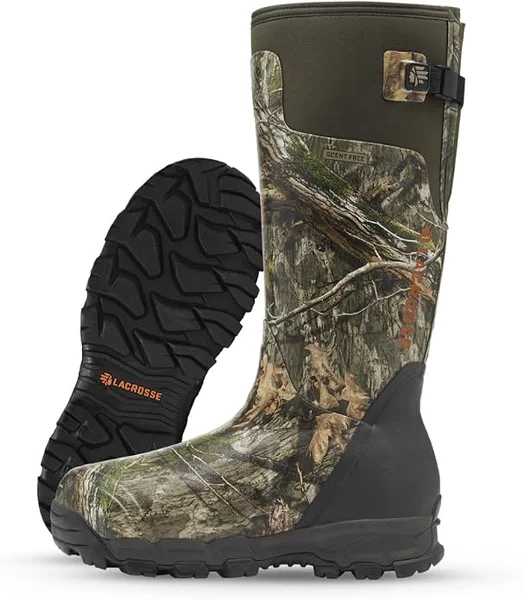
12. LaCrosse Alphaburly Pro 18″
The Alphaburly Pro is a tall rubber boot over neoprene with 1000 gram Thinsulate Ultra behind it, so you get the waterproofing of rubber and the warmth of a 1000 gram pac boot. LaCrosse says it keeps feet warm to -60°F. The 18-inch shaft handles deep snow and creek crossings, and the outer rubber hoses off after barn chores. It has more than 3,700 ratings, the most of any boot here, and comes in solid and camo colors.
- 1000g Thinsulate Ultra plus neoprene
- 18-inch waterproof rubber shaft
- Rated to -60°F by LaCrosse
- Hoses clean
Good: Fully waterproof, very tall, the most ratings in the guide. Not great: Does not breathe, and like most rubber boots it is loose around the ankle on uneven ground.
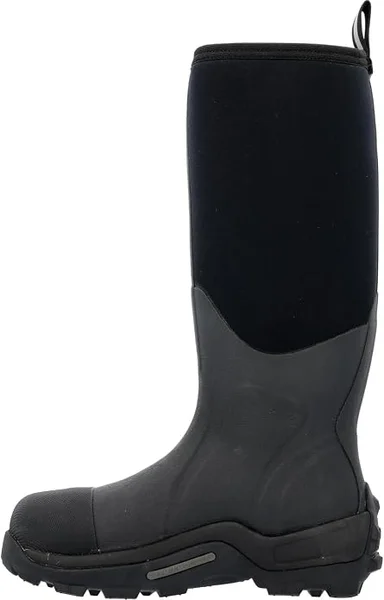
Rubber boot with a safety toe
13. Muck Arctic Sport Steel Toe
The Arctic Sport has no gram rating because its warmth comes from a 5mm neoprene bootie with a fleece lining and 2mm of thermal foam under the footbed, but it belongs in any list of 1000 gram class rubber boots. This version adds a steel toe that meets ASTM standards and an electrical hazard rating, so it works on farms, docks and sites that require safety footwear. It has more than 2,600 ratings.
- 5mm neoprene with fleece lining
- Steel safety toe, ASTM F2413 and EH rated
- Pull-on, 100% waterproof
- Shaft just over 14 inches
Good: Safety toe in a rubber boot, slips on in seconds. Not great: Warmth is not listed in grams, heavy with the steel toe.
1000 gram insulated boots for women
Few 1000 gram work boots come in women’s sizes on Amazon. Women with small feet can often wear men’s sizes about 1.5 sizes down, but women’s lasts are narrower in the heel, which reduces heel lift and blisters.
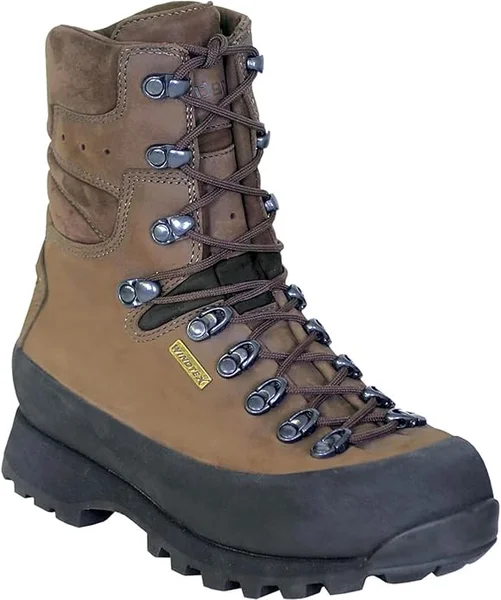
Best for women
14. Kenetrek Women’s Mountain Extreme 1000
This is the women’s version of the Mountain Extreme above, built on a women’s last with 1000 gram Thinsulate, a stiff sole and a protective rubber rand. It suits women who hunt, ranch or work outdoors on rough ground in deep cold. It is a premium boot and needs a break-in.
- 1000g Thinsulate
- Women’s last, narrower heel
- Rubber rand, stiff sole
- Tall leather upper
Good: True women’s fit with full 1000 gram warmth. Not great: Premium tier, too stiff for pavement.
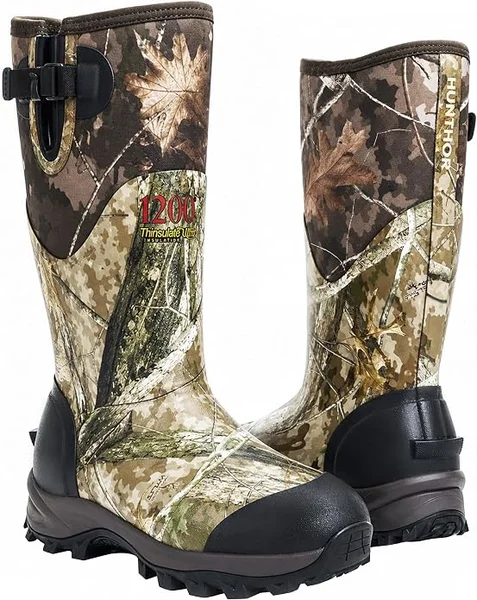
Women’s rubber boot
15. Hunthor Women’s 1200G Insulated Rubber Boots
A women’s rubber boot with 1200 gram insulation, a step above 1000 grams, for barn work, mud and standing still in the cold. It is a pull-on design with an adjustable strap at the top of the shaft. It is a budget option with a short track record.
- 1200g insulation
- Women’s sizing
- Waterproof rubber
- Adjustable top strap
Good: Women’s fit, warmer than 1000g, low price. Not great: Few ratings, does not breathe.
When 1000 grams is too much or not enough
If you sit or stand still in subzero weather, step up to 1200 grams. If you walk most of the day or move between a warm shop and the cold, 600 or 800 grams will keep you more comfortable.
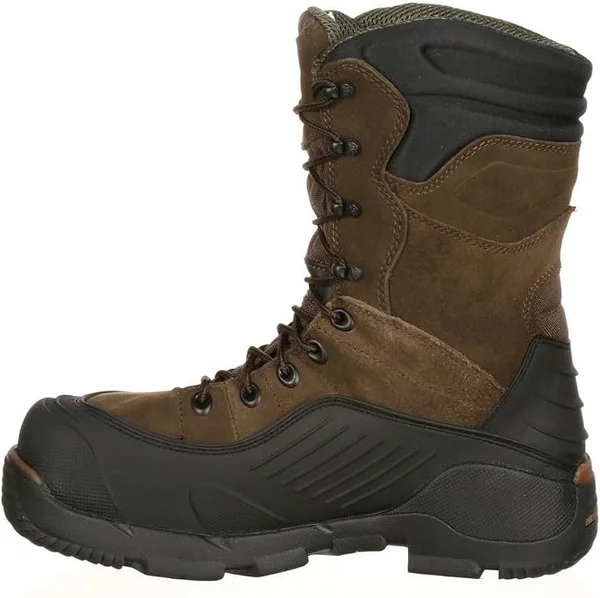
Warmer: 1200 grams
16. Rocky Blizzard Stalker Steel Toe 1200G
The Blizzard Stalker has 1200 grams of insulation, a steel safety toe that meets ASTM standards, an electrical hazard rating and a waterproof build. It is for people who stand in one place in very cold weather, such as gate guards, flaggers and plow drivers who get out to shovel.
- 1200g insulation
- Steel safety toe, ASTM and EH rated
- Leather upper, rubber vamp, 9-inch shaft
Good: More warmth than any 1000 gram boot here, with a safety toe. Not great: Too hot for walking work above about 10°F.
Lighter: 800 grams
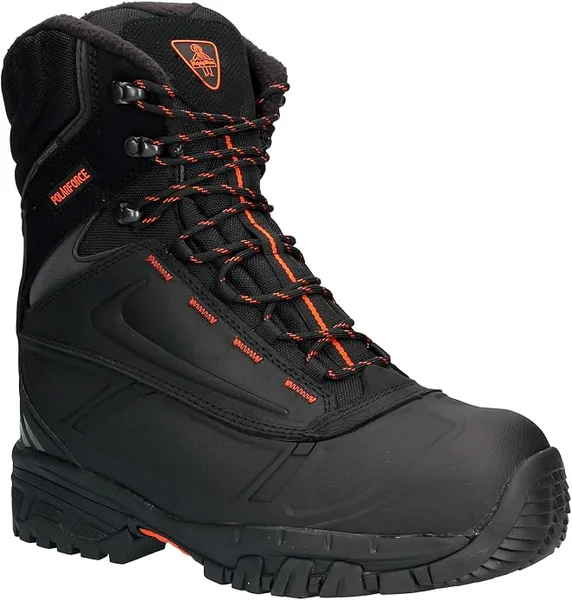
17. RefrigiWear PolarForce Max
The PolarForce Max has 800 grams of insulation, a composite safety toe and an electrical hazard rating, and RefrigiWear rates it to -40°F. That rating shows how far makers push the numbers: it is 200 grams lighter than the Extreme Hiker and rated just as cold. It is a good pick for loading docks and cold warehouses where you walk more than you stand.
- 800g insulation
- Composite toe, EH rated
- Rated to -40°F by RefrigiWear
- Waterproof
Good: Lighter and less sweaty than 1000 grams for active work. Not great: Less warmth for standing still.
Lighter: 600 grams
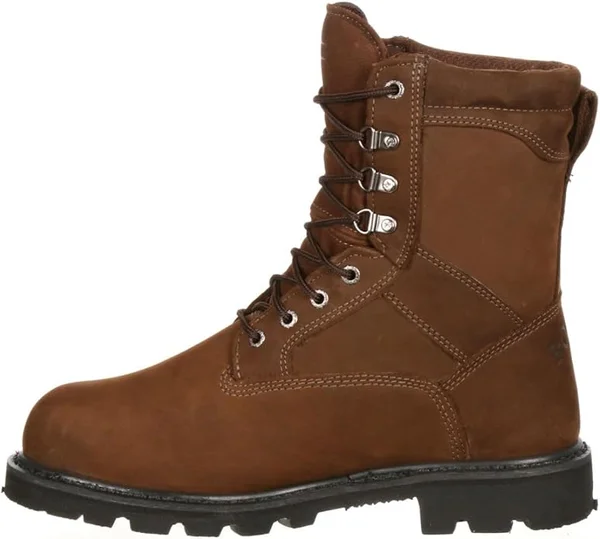
18. Rocky Ranger Steel Toe GORE-TEX
A traditional leather work boot with 600 grams of insulation, a steel safety toe that meets ASTM standards, a GORE-TEX liner and a Vibram outsole. Six hundred grams is the right weight for people who are on their feet and moving most of the day in temperatures from about 10°F to 30°F.
- 600g insulation
- Steel safety toe, ASTM rated
- GORE-TEX waterproof
- Vibram outsole
Good: Comfortable for walking work, breathable membrane. Not great: Not warm enough for long periods of standing in deep cold.
Are 1000 gram boots too hot?
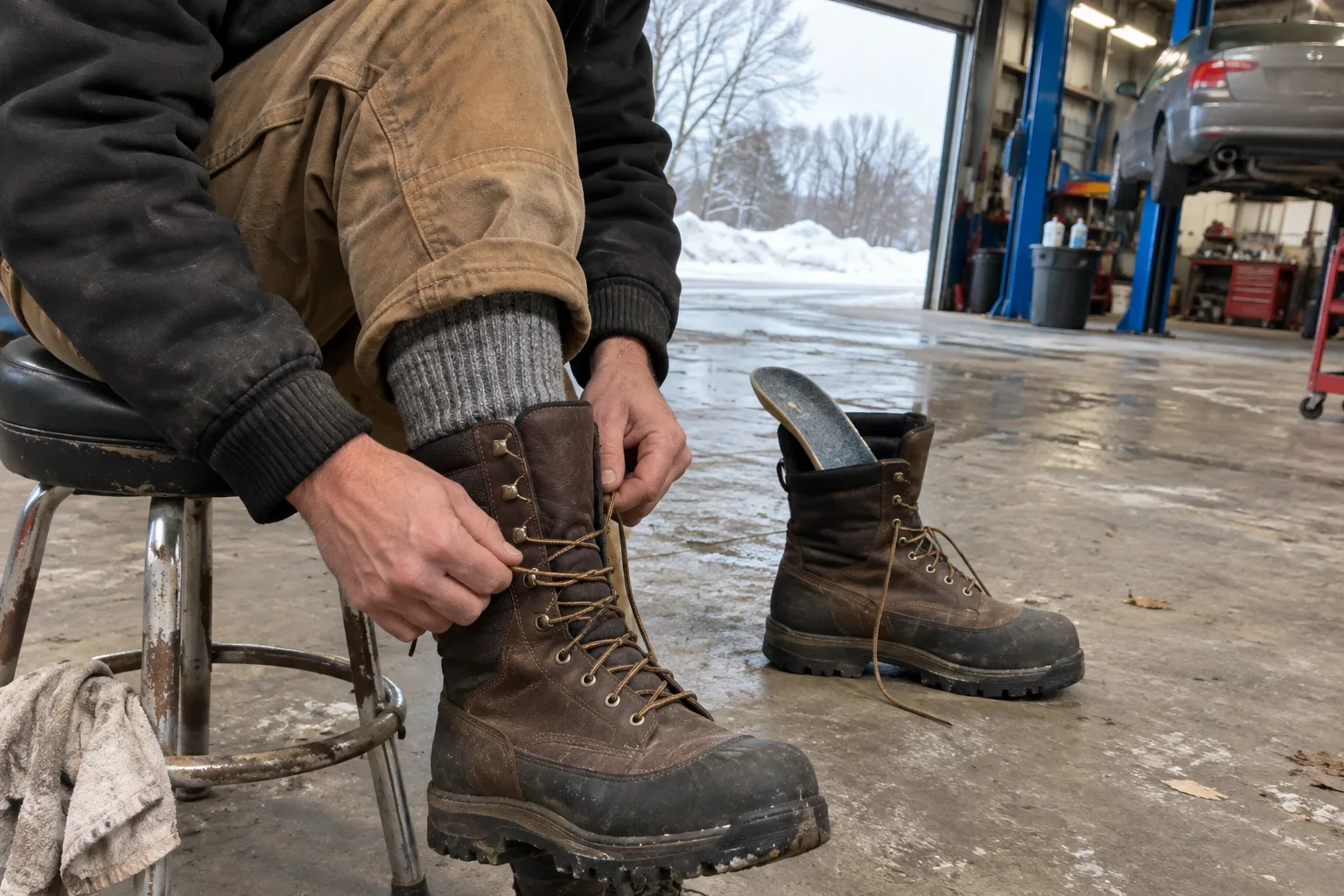
They are if you move a lot or work indoors. The winter after the tent sale I wore a pair of 1000 gram boots to work every day, shop shifts included. By lunch my socks were soaked through. At 5:30, when I walked across the lot to my truck, my feet went cold within a minute because the wet socks pulled the heat right out of them. Sweat is the main reason people complain that warm boots made their feet cold.
Your feet sweat more than most people think, and insulation that is wet with sweat traps less air. A 1000 gram boot works when the cold outside is strong enough to balance the heat your feet make. When it is warmer than about 30°F, or when you walk all day, that balance tips and the boot turns into a sauna. Now I keep two pairs: 400 grams for shop days and 1000 grams for lot days and snow days.
If you only want one pair, think about your coldest regular day, not your coldest possible day. Someone who works in a heated building and walks to the car can skip 1000 grams. Someone who stands on a frozen site for eight hours should not settle for less.
How to choose 1000 gram insulated boots
Safety toe: steel, composite or carbon
If your employer requires safety footwear, the boot needs a toe that meets ASTM F2413. Steel toes are the cheapest and thinnest. Composite and carbon toes are lighter, do not set off metal detectors and conduct less cold, which helps on long days on frozen ground. Thick insulation does more for warmth than the toe material, but people who work in the coldest conditions usually prefer non-metallic toes.
Electrical hazard rating
An EH rating means the sole is built to resist an accidental contact with live circuits. Electricians, linemen and utility crews should look for it. It is listed as EH in the title or bullets and is common on work boots, rare on hunting boots.
Waterproofing
Wet feet get cold fast in any boot, and NIOSH’s cold stress guidance says boots for cold work should be waterproof and insulated. Leather boots use a membrane such as GORE-TEX, HyDry or a brand’s own liner. Rubber boots are waterproof by design. A membrane lets some sweat vapor out, rubber does not.
Height
Eight-inch boots are easier to drive, climb and kneel in. Ten- to 12-inch boots keep snow out on unplowed ground. Rubber boots run 15 to 18 inches for mud and deep snow.
Fit and sizing
Try boots on with the socks you will wear in them. Thick winter socks can take up half a size, so many people go up a half size in insulated boots. The boot should be snug at the heel with room to wiggle your toes. A boot that squeezes your foot crushes the insulation and blocks circulation, and your feet get colder than they would in a lighter boot that fits.
Weight
A 1000 gram leather work boot with a safety toe is heavy, and the weight adds up over a shift of walking. If you cover a lot of ground, a lighter boot with fewer grams and a good sock system may keep you warmer than a heavy boot that makes you sweat.
How to keep your feet warm in insulated boots
The boot is half of it. These habits matter as much as the gram number.
- Wear merino wool or synthetic socks. Cotton holds sweat against your skin. One mid- or heavyweight wool sock usually beats two thin ones, which can bunch up and squeeze your toes.
- Change socks at lunch. A dry pair of socks in your jacket pocket does more than any boot upgrade on a long cold day.
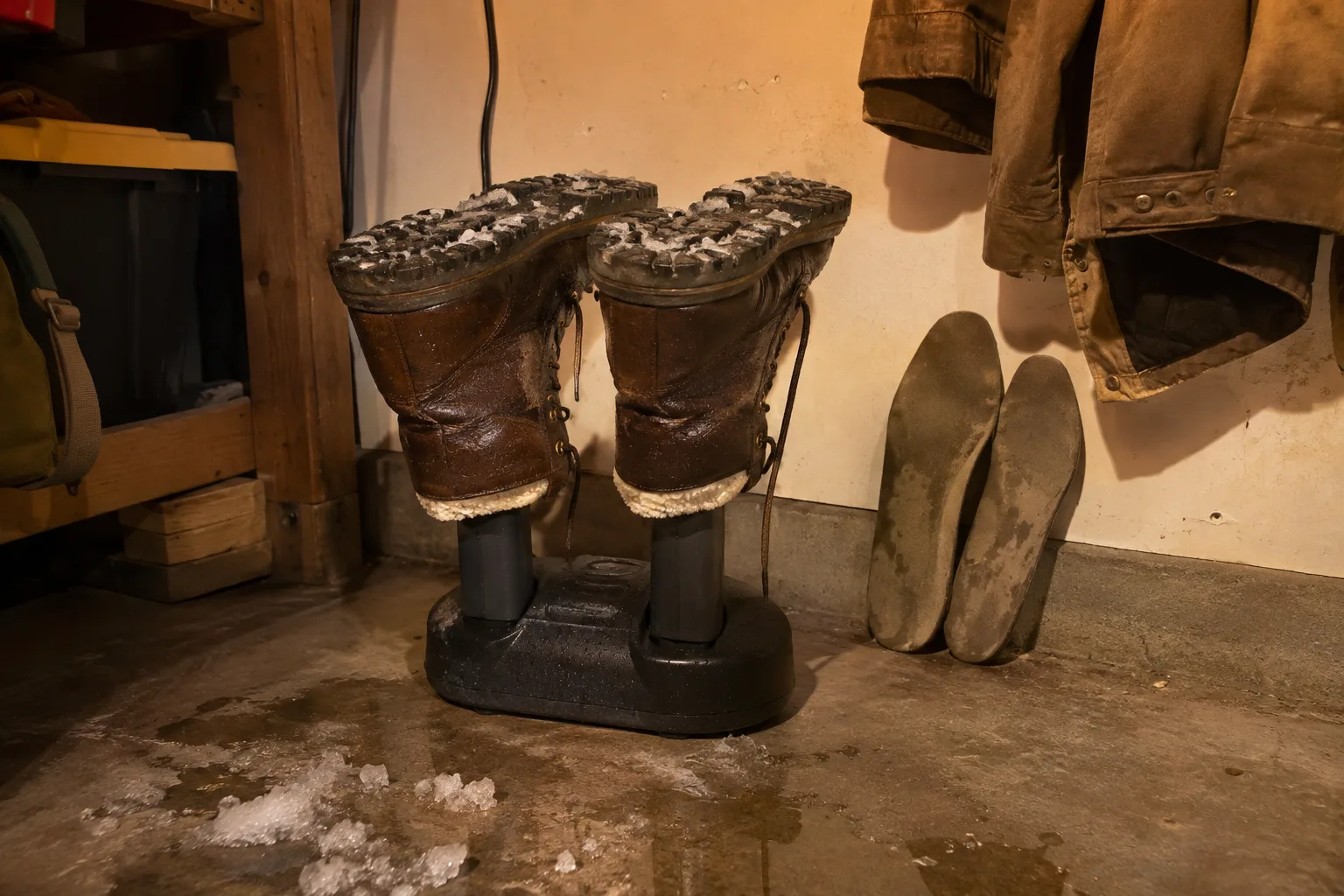
- Dry your boots every night. Pull the insoles out and use a boot dryer, or stand them near warm air but never against a heater, which cracks leather and can melt glue.
- Do not lace too tight. Tight laces over the top of the foot cut off circulation. Keep the lower laces snug and the top a bit looser.
- Get off the concrete. Frozen concrete pulls heat out through the sole. If you stand in one spot, a rubber mat or a piece of cardboard under your feet helps.
- Keep your core warm. When your body gets cold, it cuts blood flow to your feet first. A warm jacket and hat help your toes too.
Keep your hands warm the same way: for gloves that match these boots, see our best winter work gloves and, for standing still in deep cold, heated work gloves. If you drive in winter, add a dry pair of socks to the warm layers in your car emergency kit.
FAQ
How warm are 1000 gram insulated boots?
1000 gram boots are made for temperatures around 20°F and below when you are standing or moving slowly, and they handle subzero days with good socks. There is no official rating, so treat manufacturer claims like -40°F as best-case numbers for someone who is moving.
Is 1000 grams of insulation too much?
It is too much if you walk all day, work indoors or work in temperatures above about 30°F, because your feet will sweat. It is the right amount for standing on frozen ground, freezer work, flagging, hunting from a stand and anyone whose feet always run cold.
What is the difference between 800 and 1000 gram insulated boots?
A 1000 gram boot has a thicker insulation layer and is warmer when you stand still. An 800 gram boot is lighter and sweats less when you move. Pick 1000 grams for standing work in deep cold and 800 grams for active work around 0°F to 20°F.
Is 400 or 1000 gram insulation better for work boots?
400 grams is better for most work, because most jobs involve steady movement and many workers go in and out of heated buildings. 1000 grams is better for long periods outside without much movement, in temperatures near or below zero.
Does 1000 gram mean the boot has 1,000 grams of insulation?
No. The number is the weight of one square meter of the insulation material, 1,000 grams per square meter. The boot itself holds a small fraction of that.
Are 1000 gram boots good for ice fishing?
They are a minimum for ice fishing. Sitting still on the ice for hours in subzero weather is where 1200 to 1600 gram boots or pac boots with removable felt liners earn their weight.
Should I size up in insulated boots?
Many people go up a half size so there is room for thick socks. Try them on with your winter socks. Your heel should not slip and your toes should move freely, because a tight boot crushes the insulation.
Are steel toe boots colder?
Steel conducts cold more than composite or carbon toes, so some people feel it on long days on frozen ground. In a 1000 gram boot the difference is small, but non-metallic toes are the common choice in extreme cold.
How do I keep my feet from sweating in insulated boots?
Wear merino or synthetic socks, avoid cotton, choose a breathable membrane instead of rubber when you move a lot, change socks midday and dry your boots overnight. If your feet still sweat, the boot has more insulation than your work needs.
Sources
- 3M, Thinsulate insulation
- OSHA, 29 CFR 1910.136, foot protection
- ASTM International, F2413-24, performance requirements for protective toe cap footwear
- NIOSH, Cold stress and workers
- NIOSH, Cold stress science bulletin

James Kowalski
More from James KowalskiHow we reviewed this article
This article was researched against manufacturer records and editorially reviewed before publishing. We accept no payment for coverage. Some guides contain affiliate links; see our affiliate disclosure.