Contents
- TLDR
- How we picked them
- The 12 best sports cars of the 1950s
- America vs Europe: two ideas of a sports car
- Buying a 1950s sports car today
TLDR
The 1954 Mercedes-Benz 300SL Gullwing is the best sports car of the 1950s: the fastest, the most advanced and the one every other car on this list gets measured against. The rest of the field depends on what you want.
| Category | Pick |
|---|---|
| Best overall | Mercedes-Benz 300SL |
| Most beautiful | Ferrari 250 GT California Spyder |
| Best American | Chevrolet Corvette (1957 fuel-injected cars) |
| Best handling | Lotus Elite |
| Best British roadster | Austin-Healey 100 |
| Best value today | Triumph TR2 |
| Best Italian everyday sports car | Alfa Romeo Giulietta Spider |
How we picked them
Most “best sports cars of the 1950s” lists are half racing cars. The Jaguar C-Type and D-Type, the Aston Martin DBR1 and the Mercedes 300 SLR were extraordinary machines, but you couldn’t register one and drive to work. This list is road cars only: production models a customer could buy new, with headlights, a windscreen and a horn.
Three tests decided the cut:
- On sale for a meaningful part of the decade. The XK120 was unveiled in 1948 but sold through 1954, so it stays.
- Sporting intent. Two seats (or close to it), a focus on handling or speed, and a driver in mind. Saloons, pickup trucks and the Citroën DS don’t qualify, however good they are.
- Lasting influence. The car changed what came after it, either by setting a template or by proving an engineering idea.
The cars run in chronological order, not as a ranking, because a Corvette and a Ferrari California Spyder answer different questions. Values are rough US dollar ranges for roadworthy cars and shift with condition, history and the auction calendar. Check recent sales before you commit money.
The 12 best sports cars of the 1950s
1. Jaguar XK120 (1949–1954)
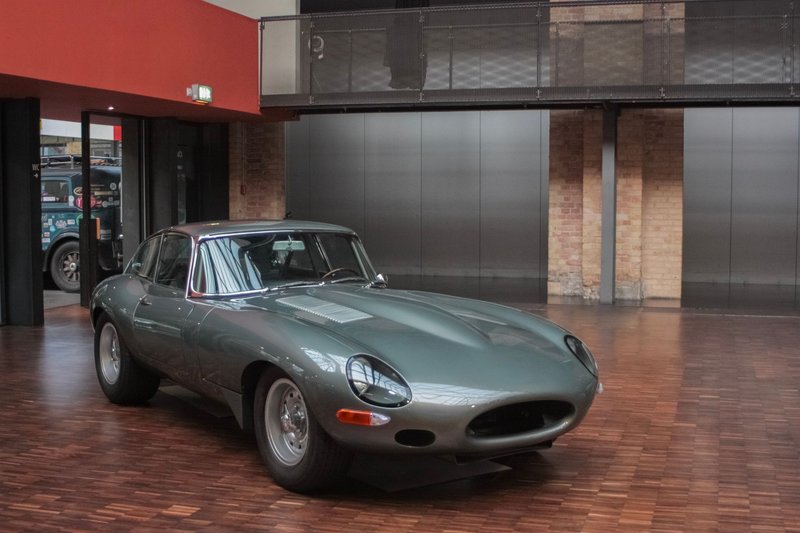
Jaguar built the XK120 as a show-stand special for the 1948 London Motor Show, expecting to sell a few hundred. The crowds had other ideas. The name was a claim: 120 mph, which made it the fastest production car in the world. In May 1949, on a closed motorway in Belgium, Jaguar proved it with a run of about 133 mph with the windscreen removed.
The engine was the real story. The 3.4-litre twin-cam straight-six was designed during the war, partly on fire-watch nights, and it stayed in Jaguars for four decades. The same engine powered the C-Type that won Le Mans in 1951 and 1953, so Jaguar’s racing reputation and its road-car reputation were the same thing.
| Engine | Power | 0–60 mph | Top speed | Built | Today |
|---|---|---|---|---|---|
| 3.4L inline-six | 160 hp | about 10 s | 120+ mph | about 12,000 | $80,000–$150,000 |
Original price: about £1,000 before UK purchase tax, and just under $4,000 in the US. The early aluminium-bodied cars are the rare ones and sell for far more.
Why it mattered: it made 120 mph a purchase option, at a fraction of what Italian exotics cost.
2. Chevrolet Corvette C1 (1953–1962)
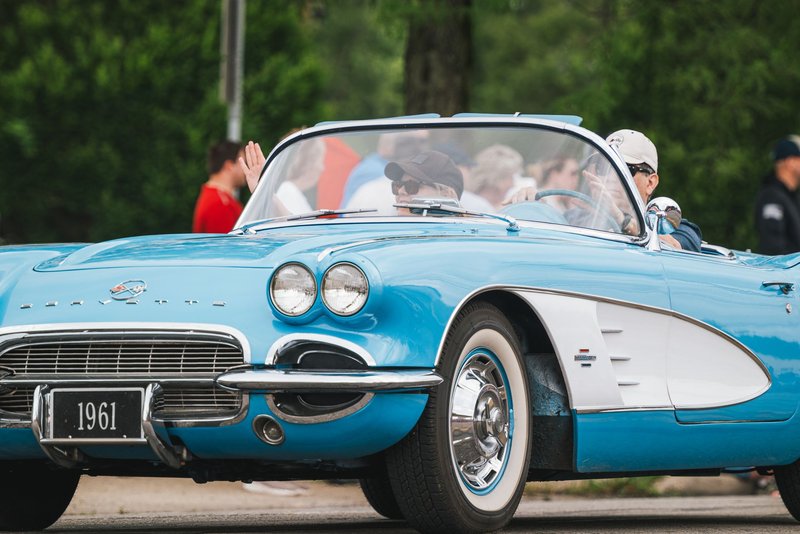
The first Corvettes, in 1953, were not good sports cars. Chevrolet hand-built 300 of them, all Polo White with red interiors, powered by a 150 hp six-cylinder and a two-speed automatic. They looked wild and drove like a sedan in a fibreglass suit.
Then Chevrolet fixed it. The 1955 car got a 265-cubic-inch V8 and, a little later, a manual gearbox. Zora Arkus-Duntov, a Belgian-born engineer who joined Chevrolet in 1953, worked on the chassis and then the engine. By 1957 the Corvette had a 283 V8 with mechanical fuel injection making 283 hp, one horsepower per cubic inch, and an available four-speed manual. The 1953 car nearly died from poor sales; the 1957 car established the Corvette as a serious performance car, and it has been in production ever since.
| Engine | Power | 0–60 mph | Top speed | Built | Today |
|---|---|---|---|---|---|
| 235 six (1953), 265/283 V8 (1955 on) | 150–283 hp | about 11 s (1953), about 6 s (1957 FI) | 105–130 mph | about 69,000 (C1 total) | $70,000–$150,000+ |
Original price: about $3,500 for the 1953 model. Fuel-injected 1957 cars, the ones with the real performance, cost more now than anything else in the C1 range.
Why it mattered: it gave America a sports car and, after a rocky start, a V8 the Europeans couldn’t match on cost.
3. Ford Thunderbird (1955–1957)
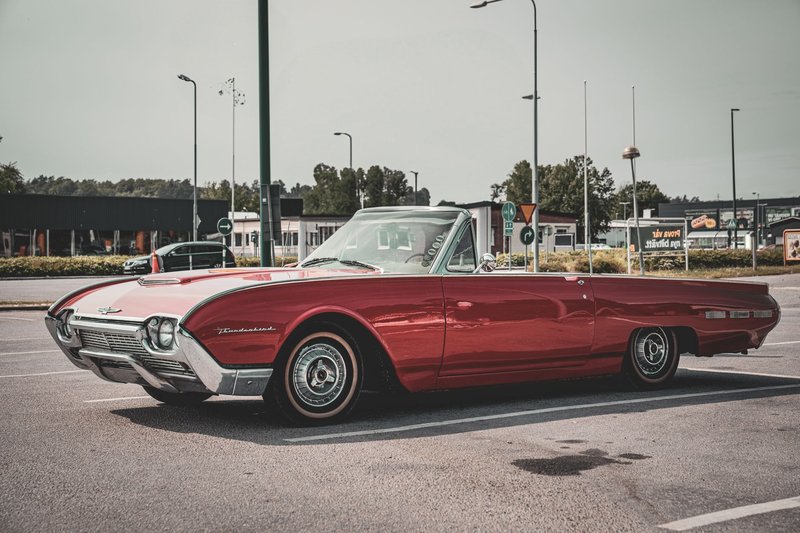
Ford never called the Thunderbird a sports car. It called it a “personal car”, which is marketing for “we’d like to sell this to people who also want comfort”. Two seats, a V8, an optional fibreglass hardtop and a 1955 price around $2,900 made the real argument.
The numbers are lopsided. Ford sold 16,155 Thunderbirds in 1955. Chevrolet sold roughly 700 Corvettes that year. Ford had read the market correctly: American buyers wanted a stylish two-seater with an easy V8 and a proper trunk, not a lightweight with side curtains. The 292 V8 made 193 hp, and in 1957 a supercharged 312 offered up to 300 hp for buyers who wanted to race at Daytona.
| Engine | Power | 0–60 mph | Top speed | Built | Today |
|---|---|---|---|---|---|
| 292 V8 | 193 hp | about 9 s | about 110 mph | about 53,000 (1955–57) | $45,000–$90,000 |
Ford killed the two-seater after 1957 and replaced it with a four-seat “Square Bird” that sold even better. Enthusiasts have been complaining ever since.
Why it mattered: it showed that most buyers wanted a sporty look more than sporty handling.
4. Austin-Healey 100 (1953–1956)
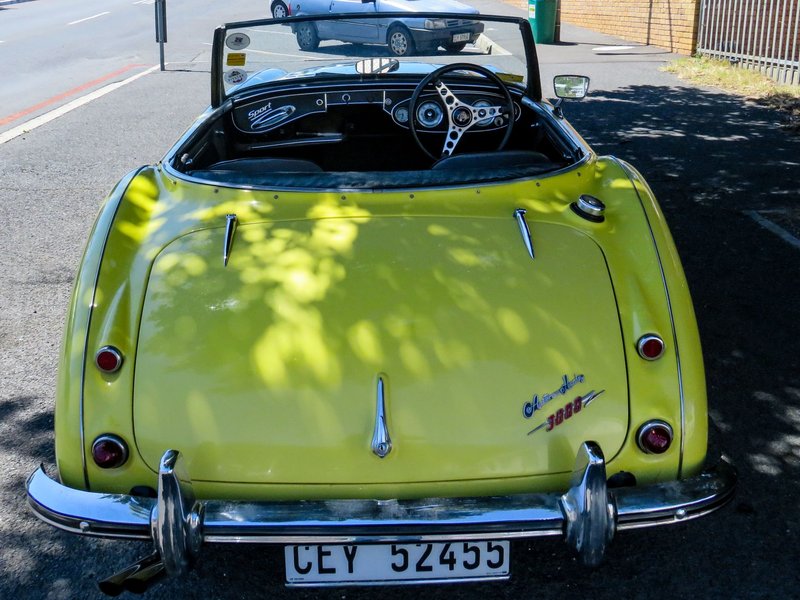
Donald Healey designed a lightweight roadster and showed it at the 1952 Earls Court Motor Show as the Healey Hundred. Austin’s chairman Leonard Lord saw it, agreed a deal on the spot, and by the end of the show it was an Austin-Healey.
The recipe was simple: a stout 2.7-litre four from the Austin A90 saloon, a low body by Gerry Coker, and a folding windscreen. It was cheap and loud, and it reached 100 mph, hence the name. In 1955 the 100S, a competition-spec version with disc brakes and a tuned engine, finished third overall at Sebring. Only about 55 were built.
| Engine | Power | 0–60 mph | Top speed | Built | Today |
|---|---|---|---|---|---|
| 2.7L inline-four | 90 hp | about 10–11 s | about 105 mph | about 14,000 | $60,000–$100,000 |
Original price: about £750 before tax in the UK, around $3,000 in the US. Parts are easy to find, and so is a restoration manual.
Why it mattered: it set the template for the cheap British roadster that America bought by the shipload, and it led straight to the Austin-Healey 3000.
5. Triumph TR2 (1953–1955)
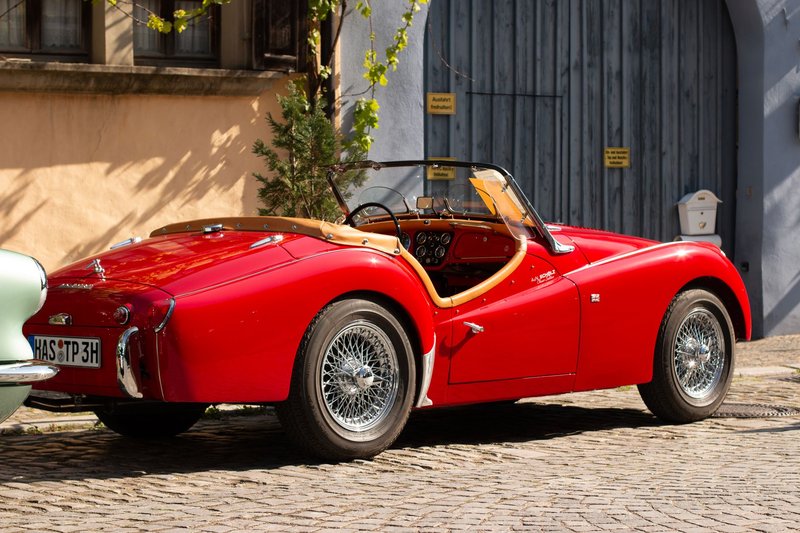
Triumph was nearly broke when it launched the TR2 in 1953. The company had a 2.0-litre four-cylinder engine derived from a tractor motor, a simple ladder chassis and a body that looked like a 1930s roadster with the fenders trimmed. It cost £555 before tax. It ran 100 mph, a stripped car reached 124 mph on the same Belgian motorway the XK120 had used, and the road car returned over 30 mpg.
That combination, cheap, fast, economical and tough, sold it everywhere. Triumph exported most of its TR2s, a large share of them to the US, where the TR line became the standard entry-level sports car for a generation of club racers.
| Engine | Power | 0–60 mph | Top speed | Built | Today |
|---|---|---|---|---|---|
| 2.0L inline-four | 90 hp | about 11 s | about 105 mph | about 8,600 | $25,000–$50,000 |
Why it mattered: a small British company built a car fast enough to be fun and cheap enough to be real. It’s also the best-value car on this list today.
6. Mercedes-Benz 300SL Gullwing (1954–1957)
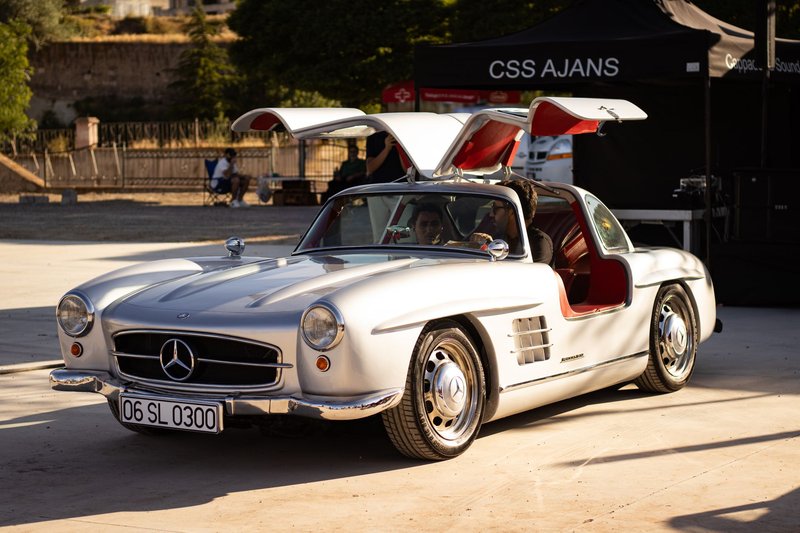
The 300SL is the car with the doors that go up. The doors weren’t a styling choice. Mercedes built the car on a tubular spaceframe, derived from the 1952 W194 race car that won Le Mans and the Carrera Panamericana, and the frame ran so high along the sides that normal doors wouldn’t fit. Roof-hinged doors were the fix.
Under the hood was an advance that mattered more than the doors: a 3.0-litre straight-six with Bosch mechanical direct fuel injection, a first for a production car. It made 215 hp. With the tallest rear axle ratio the car reached about 163 mph, which made it the fastest production car of its day. The US importer Max Hoffman pushed Mercedes to build it as a road car, and it debuted at the 1954 New York Auto Show.
| Engine | Power | 0–60 mph | Top speed | Built | Today |
|---|---|---|---|---|---|
| 3.0L inline-six, direct injection | 215 hp | about 8 s | 130–163 mph | about 1,400 coupes | $1.2M–$2M+ |
Original price: about $7,000 in the US, twice a Corvette. The 300SL Gullwing value has climbed for decades, and a good coupe now costs what a house does. Roadsters, built from 1957, are less rare (about 1,850) and a little cheaper.
Why it mattered: it put fuel injection and a race-car chassis in a showroom. It’s still the 1950s car most people picture.
7. Porsche 356 Speedster (1954–1958)
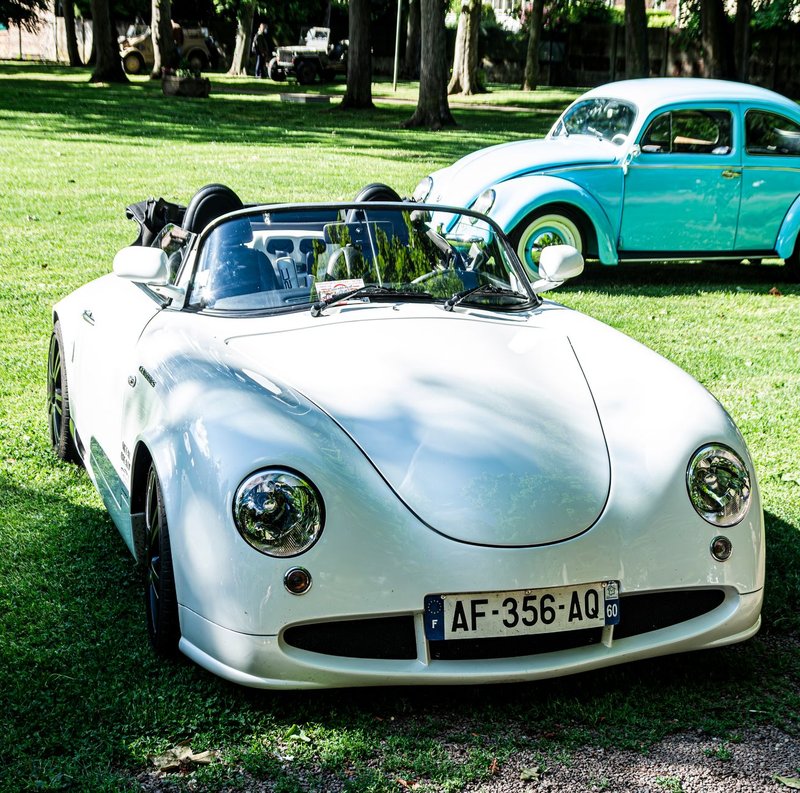
Porsche’s first production car was already a decent sports car by 1950, one of the postwar European sports cars built from scratch. But Max Hoffman, again, thought American buyers needed something simpler and cheaper. The result was the Speedster: a 356 with a low raked windscreen, a thin folding top and bucket seats, stripped for weight. It was priced at $2,995 in the US, a few hundred dollars less than a regular cabriolet.
It was not fast in a straight line. The pushrod 1.6-litre flat-four made 60 hp in the standard car and 75 in the Super, and the car needed over 12 seconds to reach 60 mph. But it weighed under 1,800 pounds and had the handling to make a bigger car look clumsy. Club racers bought them by the dozen.
| Engine | Power | 0–60 mph | Top speed | Built | Today |
|---|---|---|---|---|---|
| 1.6L flat-four | 60–75 hp | about 12–14 s | about 100 mph | about 4,100 | $300,000+ |
The four-cam Carrera engine, a racing-derived 1.5-litre with roughly 100 hp, was optional. If you find one, the price will look like a typo.
Why it mattered: a small, light, well-balanced car can beat a bigger one on the road, and the Speedster set Porsche on course to become a major sports-car brand.
8. Lancia Aurelia B24 Spider (1954–1956)
If you want one car on this list to impress someone who thinks they know everything, pick the Lancia. The Aurelia, introduced in 1950, was the first production car with a V6 engine. Lancia then wrapped it in a body by Pinin Farina and called the open version the B24 Spider America, named after the market Lancia hoped to sell it to.
The B20 GT coupe had already shown the chassis worked: Giovanni Bracco finished second overall in the 1951 Mille Miglia in one. The B24 Spider took the same design, widened the V6 to 2.5 litres and about 118 hp, and lost the roof. It had a de Dion rear axle and inboard rear brakes, which was exotic engineering in a car that cost less than a Ferrari.
| Engine | Power | 0–60 mph | Top speed | Built | Today |
|---|---|---|---|---|---|
| 2.5L V6 | about 118 hp | about 10 s | about 110 mph | about 240 (Spider America) | $500,000+ |
Why it mattered: it proved a V6 could work in a sports car decades before most manufacturers believed it. It’s also an Italian car that never got the attention the Ferraris did.
9. Alfa Romeo Giulietta Spider (1955–1962)
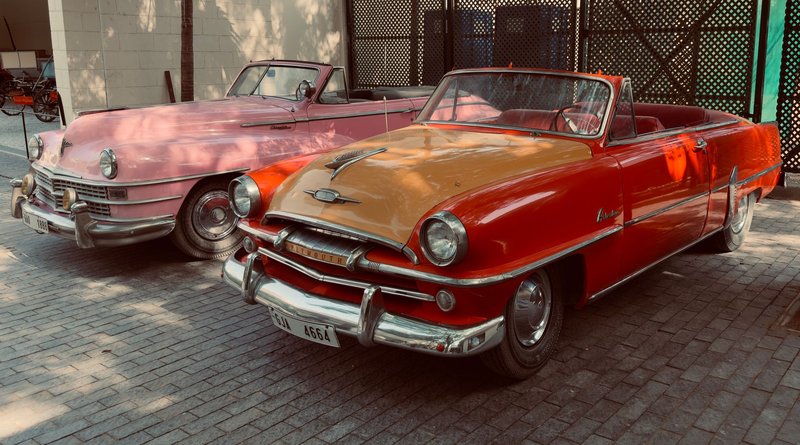
Ferrari gets the glamour, but Alfa Romeo sold the cars regular people bought. The Giulietta Spider, designed by Pininfarina and shown in 1955, put Alfa’s twin-cam engine in front of a much wider audience. Its 1.3-litre all-aluminium four made 65 hp in the standard car and 90 hp in the later Veloce, which isn’t much, but the car weighed about 1,900 pounds and the engine loved to rev.
It handled like a small Alfa should: precise, light and eager. It also looked like a miniature version of a more expensive Italian car, and that wasn’t an accident.
| Engine | Power | 0–60 mph | Top speed | Built | Today |
|---|---|---|---|---|---|
| 1.3L twin-cam four | 65–90 hp | about 13–14 s | about 100 mph | about 14,000 | $35,000–$80,000 |
Why it mattered: it made the Italian sports car an everyday car, and it’s the cheapest way into the Alfa Romeo myth today.
10. Ferrari 250 GT California Spyder (1957–1960)
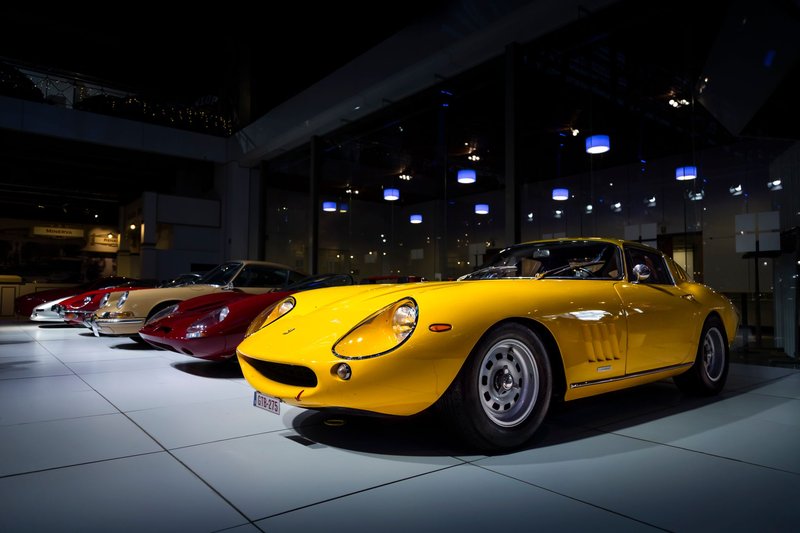
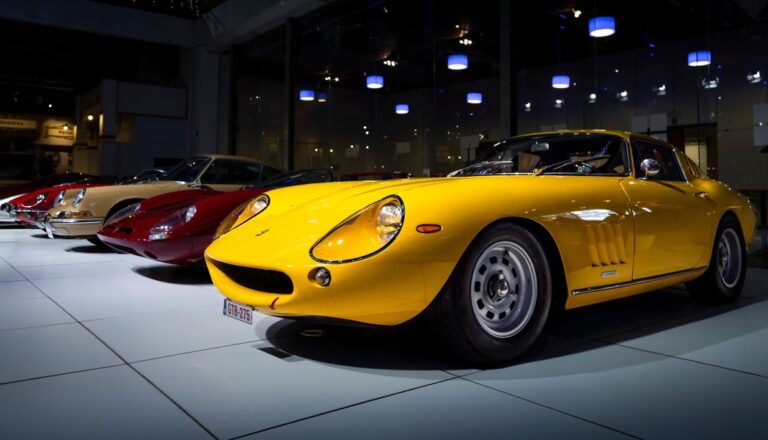
Ferrari’s 1950s output was dominated by race cars sold to rich amateurs. The 250 GT California Spyder was one of the first Ferraris shaped for a specific road-car buyer: wealthy Californians. John von Neumann and Luigi Chinetti, Ferrari’s West Coast and East Coast importers, pushed for an open version of the 250 GT. Scaglietti built the aluminium body in Modena, and the result is a candidate for the best-looking car of the decade.
The 3.0-litre Colombo V12 made around 240 hp. The long-wheelbase version, built from 1957, was a road car you could also race, and plenty of owners did. About 50 were built, and a short-wheelbase car followed in 1960. Ferris Bueller’s Day Off made the California Spyder shorthand for the dream car; the one that went through the glass wall was a replica.
| Engine | Power | 0–60 mph | Top speed | Built | Today |
|---|---|---|---|---|---|
| 3.0L V12 | about 240 hp | about 7 s | about 145 mph | about 50 (LWB) | $10M+ |
Why it mattered: it’s what a Ferrari road car looked like before Ferrari became a lifestyle brand.
11. BMW 507 (1956–1959)
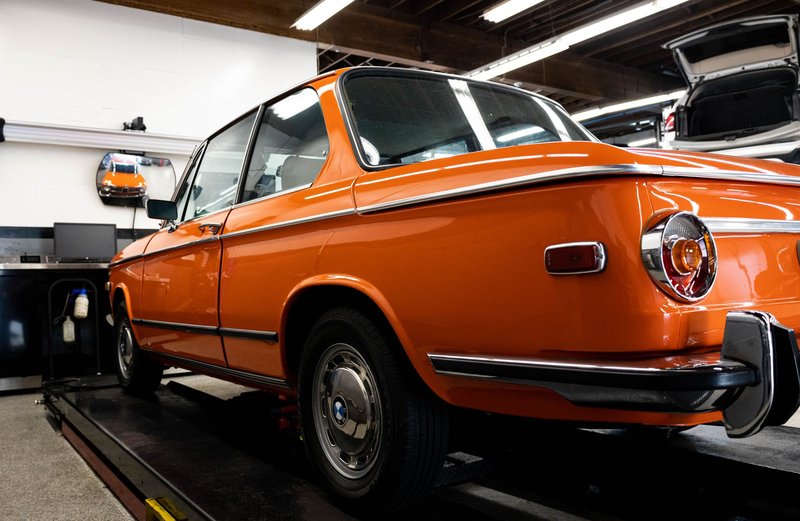
The 507 is the story of a company that nearly bankrupted itself with a beautiful car. Albrecht von Goertz, a German count who had worked in the US, designed the body. It had a 3.2-litre aluminium V8 with 150 hp, and a US price of $10,500, more than a 300SL and about triple a Corvette.
BMW planned to sell the car in large numbers. It didn’t. Only 252 were built, and the company lost money on each one. Elvis Presley bought a white 507 while stationed in Germany in 1958. Other celebrities followed, but not enough of them. BMW was close to bankruptcy by 1959 and was rescued by the Quandt family.
| Engine | Power | 0–60 mph | Top speed | Built | Today |
|---|---|---|---|---|---|
| 3.2L V8 | 150 hp | about 11 s | about 120 mph | 252 | $2M+ |
It wasn’t the fastest car on the road. It was one of the best-looking, and today it sells for more than most 300SLs.
Why it mattered: it’s the decade’s cautionary tale about pricing a beautiful car for a market that wasn’t there.
12. Lotus Elite (1957–1963)
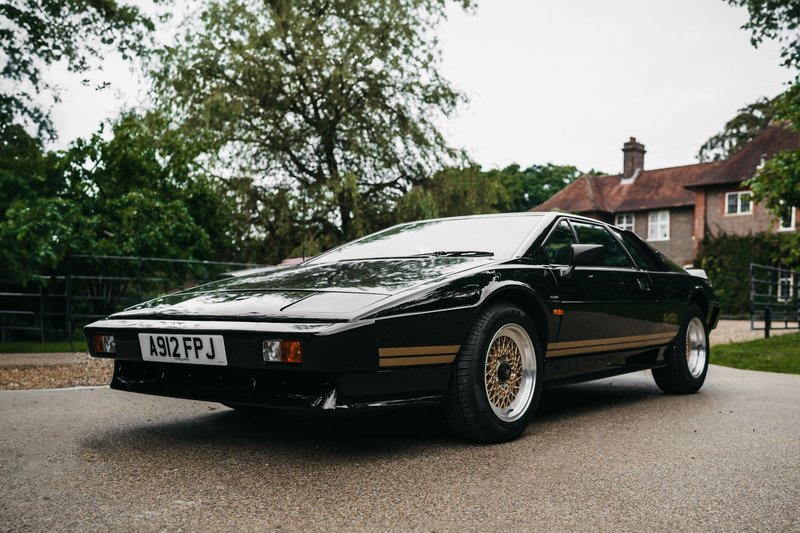
Colin Chapman’s Elite was the most advanced car of the decade, and arguably the least practical. The body and chassis were a single fibreglass monocoque, the first in a production car, with a shape penned by Peter Kirwan-Taylor that had a drag coefficient of about 0.29. The 1.2-litre Coventry Climax engine grew out of a fire-pump motor. The car weighed about 1,500 pounds.
On the road, that low weight and slippery shape made the Elite fast and agile: 75 to 83 hp was enough for a top speed near 118 mph and 35 mpg on a good day. In racing, it took class wins at Le Mans through the early 1960s. The downsides were real, though. Early cars had a habit of cracking the fibreglass around the rear differential mount, and the engine needed regular attention.
| Engine | Power | 0–60 mph | Top speed | Built | Today |
|---|---|---|---|---|---|
| 1.2L Coventry Climax four | 75–83 hp | about 11 s | about 118 mph | about 1,000 | $50,000–$100,000 |
Why it mattered: it showed that light weight and aerodynamics beat horsepower, which is the Lotus philosophy in one car.
The ones that missed the cut
The Jaguar XKSS, a road-legal D-Type built in 1957, is the strongest omission. Only 16 were completed before a factory fire destroyed the rest of the batch, which makes it almost a race car with plates. The Porsche 550 Spyder, the car James Dean died in, was a race car first and a road car by courtesy. The Maserati 3500 GT (1957) is a fine grand tourer but not a sports car in the sense used here. The MG A and the Aston Martin DB2/4 each have a case too.
America vs Europe: two ideas of a sports car
The 1950s split sports cars into two schools. European makers built small, light cars with small, high-revving engines: 60 to 240 hp from 1.2 to 3.0 litres, and handling that rewarded skill. American makers did the opposite. They put big V8s in comfortable cars and left the cornering to the driver’s imagination.
Neither was wrong. A Thunderbird crossed a continent more comfortably than a Triumph, and it was cheaper to run. A Lotus Elite beat the Thunderbird on any road with a corner in it. The Corvette ended up in the middle: Europe’s idea of a two-seater with America’s idea of an engine.
Buying a 1950s sports car today
The decade’s cars fall into three groups.
Parts and community, easy ownership. The Corvette, Thunderbird, Austin-Healey, TR2 and Alfa Giulietta all have strong clubs, reproduction parts and specialists in most countries. If you want to drive one, start here. The TR2 is the cheapest, and its simple mechanicals mean a competent owner can do most of the work.
Specialist ownership. The Porsche 356 Speedster, Lotus Elite and Lancia B24 need people who know them. The Elite in particular needs a mechanic familiar with the Climax engine and the fibreglass body. Buy on condition and history, and pay for a pre-purchase inspection.
Collector territory. The 300SL, BMW 507 and Ferrari California Spyder are investments as much as cars. Authenticity matters more than condition: matching numbers, original colour and documented history can swing the price by hundreds of thousands. Plenty of Speedsters and Spyders on the market are replicas, so check the chassis plate before you check anything else.
Rust is the killer in all of them. A car with good paint over bad metal is a trap. Look at the sills, floors and suspension mounts first, and walk away from anything that smells of filler.
Pick the one you’d actually drive. The best 1950s sports car is the one you’ll take out on a Sunday, not the one that sits in the garage.

Marco Delantero
More from Marco DelanteroHow we reviewed this article
This article was researched against manufacturer records and editorially reviewed before publishing. We accept no payment for coverage. Some guides contain affiliate links; see our affiliate disclosure.