More units
This horsepower converter turns any power figure into hp, kW, PS, bhp and watts as you type. It also does the two conversions spec sheets leave out: torque and rpm to horsepower, and wheel horsepower to crank horsepower with a drivetrain loss that matches your car. Type a number, pick its unit, and every other unit updates at once. The gauge shows where that figure sits next to real cars. If you only need one direction, use the kW to hp converter or the hp to kW converter.
Horsepower conversion formulas
One mechanical horsepower is 745.7 watts, so 1 hp = 0.7457 kW and 1 kW = 1.341 hp. To convert kW to hp, multiply by 1.341. To convert hp to kW, multiply by 0.7457. Metric horsepower (PS) is slightly smaller than mechanical horsepower: 1 PS = 0.9863 hp, a difference of 1.4%.
| From | To | Multiply by |
|---|---|---|
| kW | hp | 1.3410 |
| hp | kW | 0.7457 |
| PS | hp | 0.9863 |
| hp | PS | 1.0139 |
| kW | PS | 1.3596 |
| PS | kW | 0.7355 |
| hp | watts | 745.7 |
| watts | hp | 0.001341 |
The converter uses the exact definitions from NIST Special Publication 811: one mechanical horsepower is 550 foot-pounds per second, which works out to 745.69987 W, and one metric horsepower is 75 kilogram-force metres per second, or 735.49875 W. Electric horsepower is exactly 746 W.
How to use the horsepower converter
- Units. Type a number in the big field and tap the unit it is in. The cards below show it in every other unit. Tap a card’s copy button to copy that value. Search for a car to load its rated horsepower.
- Torque and HP. Enter torque in lb-ft or Nm and the engine speed in rpm to get horsepower and kW. Switch the direction to find the torque a given horsepower makes at that rpm.
- Wheel and Crank. Enter a dyno reading (wheel horsepower) and pick the drivetrain and gearbox. The converter fills in a typical loss and shows the crank horsepower. Switch the direction to estimate what a rated engine puts down at the wheels.
The page address updates as you work, so copying it from the address bar saves your numbers. A link you send opens the same conversion.
hp, bhp, PS, kW and whp: what each one means
| Unit | Name | Size | Where you see it |
|---|---|---|---|
| hp | Mechanical horsepower | 745.7 W | US spec sheets and ads |
| bhp | Brake horsepower | Same unit as hp (or PS) | UK and older US figures |
| PS | Metric horsepower (Pferdestärke) | 735.5 W | German and European spec sheets |
| CV, ch, pk | Metric horsepower in Italian, Spanish, French and Dutch | 735.5 W | Spec sheets in those countries |
| kW | Kilowatt | 1,000 W | EU type approval, registration papers, EVs |
| whp | Wheel horsepower | Same unit as hp | Chassis dyno results |
bhp is not a different size of unit. The “brake” refers to how the power was measured: at the crankshaft, with a brake dynamometer holding the engine against a load. A figure in bhp is crank power, the same thing a manufacturer quotes as hp. British makers have used bhp for both mechanical and metric horsepower, so a UK “bhp” figure can be up to 1.4% off from US hp. The converter treats bhp as mechanical horsepower.
PS is why European and US figures for the same car rarely match. The engine is identical. Only the unit changes.
| Car | European spec sheet | US spec sheet |
|---|---|---|
| Porsche 911 Carrera S (2025) | 353 kW (480 PS) | 473 hp |
| BMW M3 Competition | 375 kW (510 PS) | 503 hp |
| Volkswagen Golf GTI (Mk8) | 245 PS | 241 hp |
480 PS converts to 473.4 hp, 510 PS to 503.0 hp and 245 PS to 241.6 hp, so each US figure is the European one in a different unit. A gap bigger than 1.4% means the cars really are different. The 2025 Golf GTI makes 265 PS in Europe but 241 hp in the US, because the US car kept the older engine tune to meet emissions rules.
kW is the legal unit in the EU, so registration documents and electric car specs use it. Most EV makers quote peak motor power in kW, which the car can hold for only a few seconds.
Horsepower to kW conversion chart
Common engine outputs in kilowatts and metric horsepower. For every value from 1 to 1,000, see the full hp to kW table or the kW to hp table.
| hp | kW | PS |
|---|---|---|
| 100 | 74.6 | 101.4 |
| 150 | 111.9 | 152.1 |
| 200 | 149.1 | 202.8 |
| 250 | 186.4 | 253.5 |
| 300 | 223.7 | 304.2 |
| 350 | 261.0 | 354.9 |
| 400 | 298.3 | 405.5 |
| 450 | 335.6 | 456.2 |
| 500 | 372.8 | 506.9 |
| 600 | 447.4 | 608.3 |
| 700 | 522.0 | 709.7 |
| 800 | 596.6 | 811.1 |
| 1,000 | 745.7 | 1,013.9 |
Horsepower to watts and watts to horsepower
One horsepower is 745.7 watts, and one watt is 0.001341 hp. To convert watts to horsepower, divide by 745.7. To convert horsepower to watts, multiply by 745.7. A 1,500 W space heater draws about 2 hp, and a 746 W electric motor is rated at exactly 1 electric horsepower.
| Watts | hp |
|---|---|
| 1 | 0.001 |
| 100 | 0.134 |
| 250 | 0.335 |
| 500 | 0.671 |
| 746 | 1.000 |
| 1,000 | 1.341 |
| 1,500 | 2.012 |
| 2,000 | 2.682 |
| 3,000 | 4.023 |
| 5,000 | 6.705 |
| 7,500 | 10.058 |
| 10,000 | 13.410 |
| hp | Watts |
|---|---|
| 0.25 | 186.4 |
| 0.50 | 372.8 |
| 0.75 | 559.3 |
| 1 | 745.7 |
| 2 | 1,118.5 |
| 2 | 1,491.4 |
| 3 | 2,237.1 |
| 5 | 3,728.5 |
| 10 | 7,457.0 |
| 100 | 74,570.0 |
Electric motor nameplates in the US use electric horsepower, which is exactly 746 W. The 0.3 W difference from mechanical horsepower is too small to matter for a motor, so most people use 746 for both. The converter keeps them separate under More units.
Torque to horsepower
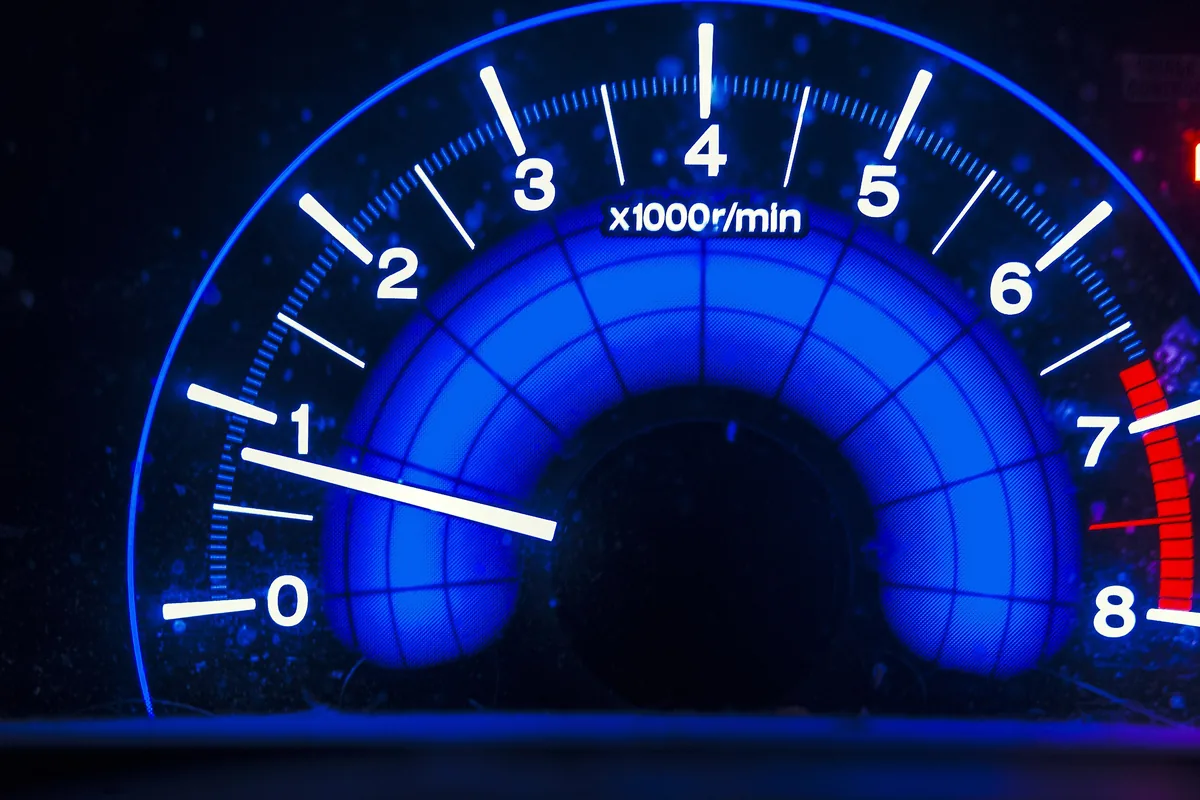
Horsepower and torque are not separate measurements. Horsepower is torque multiplied by how fast the engine turns:
- hp = torque (lb-ft) × rpm ÷ 5,252
- kW = torque (Nm) × rpm ÷ 9,549
The 5,252 comes from the definition of horsepower: 33,000 foot-pounds per minute, divided by 2π to turn revolutions into radians. Because of it, horsepower and lb-ft are always equal at 5,252 rpm, and on every dyno chart plotted in those units the two curves cross there. Below 5,252 rpm the torque number is higher. Above it the horsepower number is higher.
Examples: 400 lb-ft at 3,000 rpm is 228.5 hp. 500 Nm at 4,000 rpm is 209.4 kW, or 280.9 hp. A spec sheet’s peak torque and peak horsepower arrive at different rpm, so you cannot get one peak from the other without the rpm where it occurs. That is why the converter asks for it.
Torque decides how hard the car pulls in a given gear. Horsepower decides how fast it can accelerate across the whole run, which is what our 0-60 calculator and quarter mile calculator model. Gearing turns engine torque into force at the wheels; the gear ratio calculator shows how. If you know a quarter-mile time or a 0-60 time but not the torque curve, the horsepower calculator works backward to an estimate.
Wheel horsepower vs crank horsepower
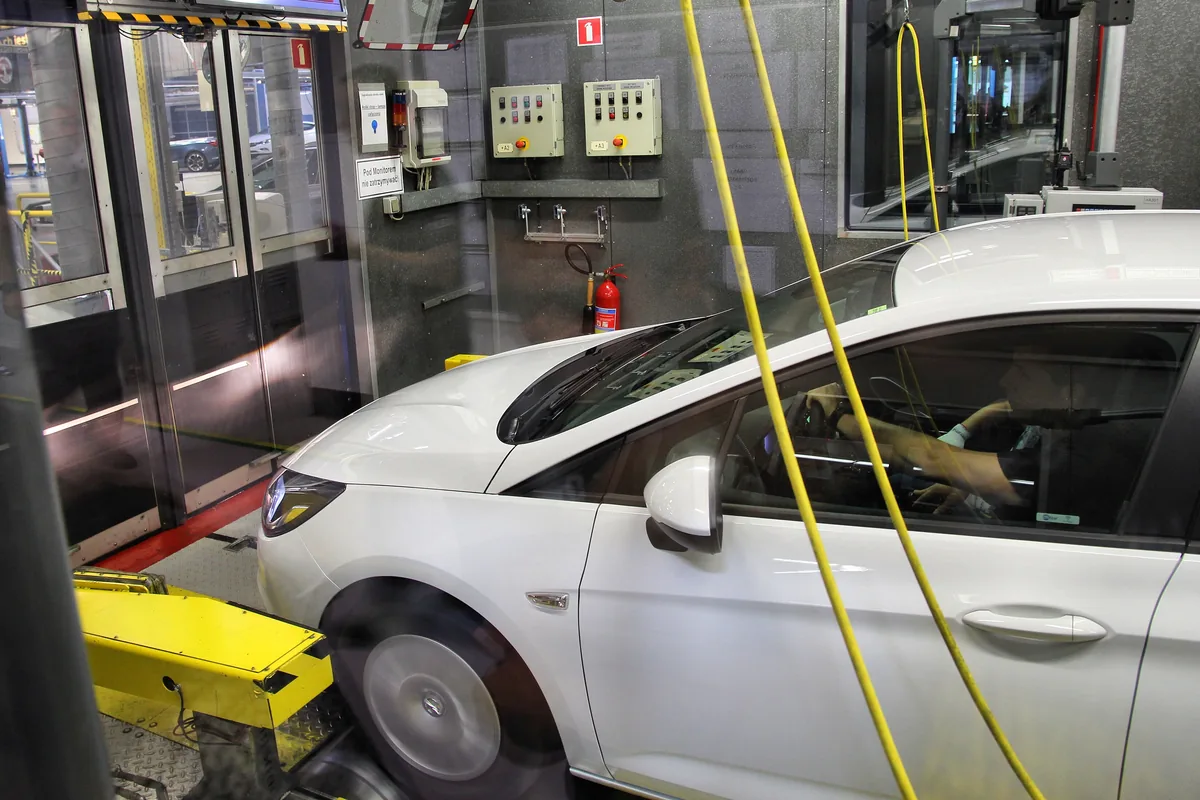
A manufacturer’s horsepower rating is crank horsepower: the engine’s output measured at the crankshaft on an engine dyno. A chassis dyno measures wheel horsepower (whp), what is left after the gearbox, driveshaft, differential and axles have taken their share. Wheel horsepower is always lower. The gap is the drivetrain loss.
These are the loss figures the converter uses as defaults. They are common conventions from tuners and dyno operators, not measurements of your car:
| Drivetrain | Gearbox | Default loss | Typical range | 300 crank hp at the wheels |
|---|---|---|---|---|
| Front-wheel drive | Manual | 12% | 10-15% | 264.0 whp |
| Front-wheel drive | Automatic or DCT | 15% | 12-18% | 255.0 whp |
| Rear-wheel drive | Manual | 15% | 12-18% | 255.0 whp |
| Rear-wheel drive | Automatic or DCT | 18% | 15-22% | 246.0 whp |
| All-wheel drive | Manual | 20% | 17-25% | 240.0 whp |
| All-wheel drive | Automatic or DCT | 23% | 20-27% | 231.0 whp |
| Electric | Single-speed | 8% | 5-12% | 276.0 whp |
To convert wheel horsepower to crank horsepower, divide by one minus the loss: crank hp = whp ÷ (1 − loss). A rear-drive manual car that makes 300 whp at 15% loss has 352.9 crank hp. The common mistake is to multiply by 1.15, which gives 345 hp and understates the engine by 8 hp. Going the other way, whp = crank hp × (1 − loss): a 300 hp rear-drive manual puts down about 255 whp.
Treat any percentage as an estimate. Part of the loss is a fixed amount of power it takes to turn the drivetrain, so a tuned engine making far more than stock loses a smaller share. Different dyno types read differently too: an inertia dyno such as a Dynojet usually reads higher than a load-bearing dyno, and a hub dyno reads closest to crank power. Electric cars lose less because they have a single-speed reduction gear instead of a multi-speed gearbox.
SAE gross vs net horsepower
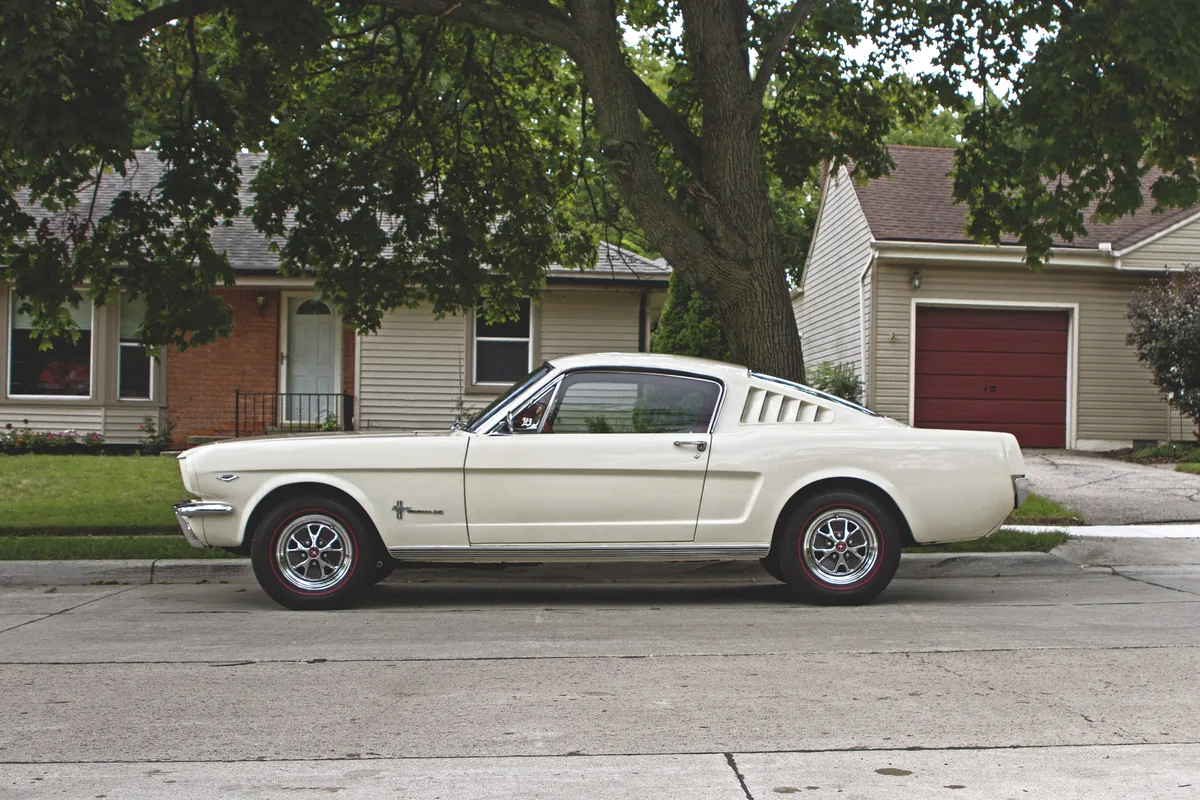
Horsepower figures from American cars before 1972 are not comparable with modern ones, even in the same unit. Until then, US makers rated engines SAE gross: a bare engine on a test stand with no air cleaner, alternator, water pump load or full exhaust, and the ignition timing set for maximum power. From 1972 ads had to use SAE net, which tests the engine as installed in the car with all of its accessories.
There is no fixed conversion. Net figures run roughly 12% to 25% below gross for the same engine, and Chevrolet’s 1972 Chevelle made about 20% less power than the 1970 car. Part of that drop was real, because compression was cut that year for unleaded fuel. European DIN ratings were always net: the Porsche 356 Super 90 was rated 90 hp DIN and 102 hp SAE gross. A 1960s European figure therefore compares with modern numbers far better than a 1960s American one. The converter shows the rating standard when it names a classic car next to your number.
FAQ
How do you convert kW to hp?
Multiply kilowatts by 1.341 to get mechanical horsepower. 100 kW is 134.1 hp and 150 kW is 201.2 hp. For metric horsepower (PS), multiply by 1.36 instead.
How do you convert hp to kW?
Multiply horsepower by 0.7457. 100 hp is 74.6 kW, 200 hp is 149.1 kW and 300 hp is 223.7 kW.
Is bhp the same as hp?
Yes in size. Brake horsepower is horsepower measured at the crankshaft, which is what manufacturers quote. The word “brake” refers to the brake dynamometer used to measure it. Some British figures in bhp are actually metric horsepower, which is 1.4% smaller.
What is the difference between hp and PS?
PS is metric horsepower, 735.5 W. Mechanical horsepower (hp) is 745.7 W. So 1 PS is 0.9863 hp, and a car rated 300 PS makes 295.9 hp. European makers quote PS, US makers quote hp.
How many watts is 1 horsepower?
One mechanical horsepower is 745.7 watts. One metric horsepower (PS) is 735.5 watts, and one electric horsepower is exactly 746 watts.
How many horsepower is 1,000 watts?
1,000 watts (1 kW) is 1.341 horsepower.
What is whp?
Whp is wheel horsepower, the power measured at the driven wheels on a chassis dyno. It is lower than the engine’s rated horsepower because the gearbox, driveshaft and differential absorb some power on the way.
How do you convert wheel horsepower to crank horsepower?
Divide wheel horsepower by one minus the drivetrain loss. At a 15% loss, 255 whp ÷ 0.85 = 300 crank hp. Multiplying by 1.15 gives 293 hp, which is wrong.
How much horsepower is lost through the drivetrain?
About 12% to 15% for a front-wheel-drive manual, 15% to 18% for rear-wheel drive and 20% to 23% for all-wheel drive, with automatics at the higher end. Electric cars lose around 8%. These are conventions; real losses vary by car and by dyno.
How do you convert torque to horsepower?
Multiply torque in lb-ft by rpm and divide by 5,252. An engine making 350 lb-ft at 4,500 rpm produces 299.9 hp at that speed. For newton-metres, multiply by rpm and divide by 9,549 to get kW.
Why do torque and horsepower cross at 5,252 rpm?
Because 5,252 is the constant in the formula hp = lb-ft × rpm ÷ 5,252. At exactly 5,252 rpm the rpm and the constant cancel, so horsepower equals torque. It only happens when torque is in lb-ft; in Nm and kW the curves cross elsewhere.
Why are old muscle car horsepower ratings so high?
Before 1972 American engines were rated SAE gross, on a test stand without accessories or the production exhaust. Modern SAE net ratings test the engine as installed, which gives figures roughly 12% to 25% lower for the same engine.
Sources & References
- NIST Special Publication 811, Appendix B.8, conversion factors for power: https://www.nist.gov/pml/special-publication-811/nist-guide-si-appendix-b-conversion-factors/nist-guide-si-appendix-b8
- Motor1, What even is drivetrain loss?: https://www.motor1.com/features/790569/what-is-drivetrain-loss/
- Weistec Engineering, crank vs wheel horsepower: https://www.weistec.com/media-events-press/crankvswheelhp/
- Chevy Hardcore, horsepower ratings gross versus net: https://www.chevyhardcore.com/news/horsepower-ratings-gross-versus-net
- Ate Up With Motor, DIN horsepower: https://ateupwithmotor.com/terms-technology-definitions/din-horsepower/
- Porsche Newsroom, 911 Carrera S (Australia): https://newsroom.porsche.com/en_AU/2025/products/porsche-911-carrera-s-and-cabriolet-38344.html
- Porsche Newsroom, 911 Carrera S (US): https://newsroom.porsche.com/en_US/2025/products/porsche-911-carrera-s-and-cabriolet-38321.html
- BMW Group, 2025 BMW M3: https://newsroom.bmwgroup.com/americas/the-new-2025-bmw-m3
- Motor1, why the 2025 GTI has less power in America: https://www.motor1.com/news/740927/2025-vw-gti-america-less-power/

James Kowalski
More from James KowalskiHow we reviewed this article
This article was researched against manufacturer records and editorially reviewed before publishing. We accept no payment for coverage. Some guides contain affiliate links; see our affiliate disclosure.