TLDR
The Ferrari F40 tops this list — the last Ferrari Enzo personally signed off on, and still the purest expression of what the decade was chasing. The Porsche 959 is the more complete machine, a technological leap the road-car world took a decade to catch up to. If you want the wildest story, it’s the Group B homologation trio: Audi’s Sport Quattro, Lancia’s Delta S4, and Ford’s RS200, built to legalize monsters for a rally series that got banned mid-decade. And if your budget doesn’t stretch to seven figures, the Fiat Uno Turbo and Renault 5 Turbo prove the best cheap thrills of the era came from hatchbacks, not supercars.
Table of Contents
- 1. Ferrari F40 (Italy)
- 2. Porsche 959 (Germany)
- 3. Lamborghini Countach 5000 QV (Italy)
- 4. Audi Sport Quattro (Germany)
- The Group B Interlude
- 5. Lancia Delta S4 Stradale (Italy)
- 6. Ford RS200 (Britain)
- 7. Ferrari 288 GTO (Italy)
- 8. Lotus Esprit Turbo (Britain)
- 9. BMW M3 E30 (Germany)
- 10. Alpina B12 (Germany)
- 11. Renault 5 Turbo (France)
- 12. Fiat Uno Turbo (Italy)
- 13. Ferrari Testarossa (Italy)
Every “best 80s sports cars” list runs the same eight names in a different order. This one does too, mostly — you can’t leave off the F40 or the Countach and call it honest. But it also makes room for the cars that actually built the decade’s engineering story: the homologation specials nobody had to build street-legal versions of, and did anyway, plus a few underrepresented picks that deserve to sit next to the icons instead of getting a footnote.
One organizing idea worth keeping in mind as you read: this era split cleanly along national lines. German cars chased precision and all-weather usability. Italian cars chased drama and never fully solved reliability. British cars split the difference and usually lost money doing it. That tension is half the reason this list is interesting.
1. Ferrari F40 (Italy)
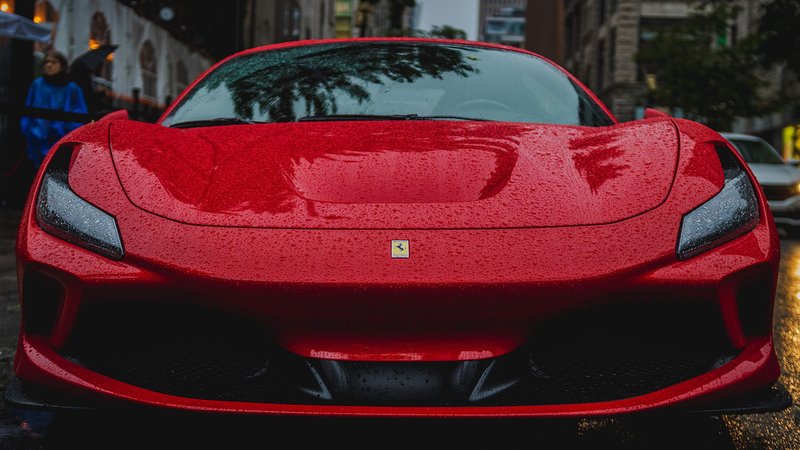
Enzo Ferrari’s last approved car, built to celebrate the company’s 40th anniversary and to answer the Porsche 959 directly. Under the F40’s Kevlar-and-carbon body sits a 2.9-liter twin-turbo V8 making roughly 478 horsepower, enough to make it the first production car to break 200 mph. There’s no carpet, no radio, no power steering, and the door panels are literally the inner skin of the bodywork with a pull-strap for a handle. Ferrari built around 1,315 of them, more than anyone expected for a car this extreme, which is part of why it’s more attainable today than the rarer 288 GTO that spawned it.
Ownership now means accepting that this is a race car with license plates — the ride is brutal, the turbo lag at low RPM is real, and parts sourcing for the IHI turbochargers isn’t casual. None of that matters once the boost comes in around 4,000 RPM. Values sit firmly in seven figures and have stayed there through multiple market corrections, because unlike a lot of 80s exotics, the F40 has never needed a nostalgia argument to justify the price.
2. Porsche 959 (Germany)
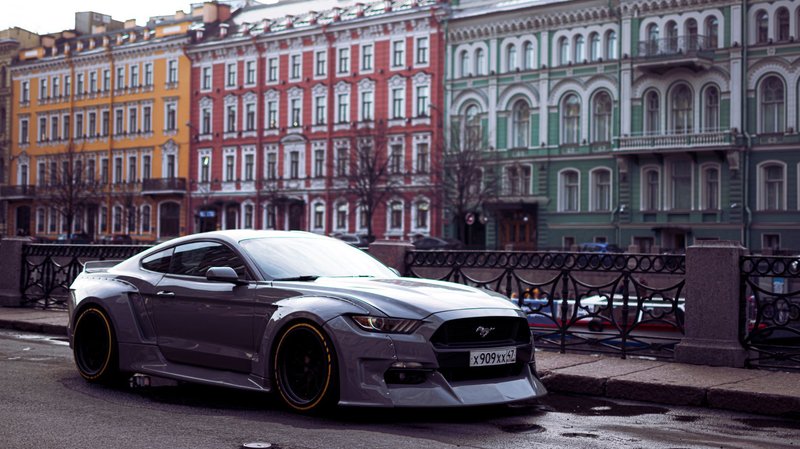
The 959 wasn’t built to be fast in a straight line, though at a claimed 197 mph it was the fastest production car on sale when it launched. It was built to prove that all-wheel drive, adjustable ride height, and a computer-managed sequential twin-turbo flat-six could all live in one car without cancelling each other out — a genuinely radical bet in 1986, when most performance cars still treated electronics as an afterthought. Porsche built roughly 292 of them and reportedly lost money on every one.
The 959’s American story is its own subplot: US regulators wouldn’t approve it for road use for years, forcing owners including Bill Gates to store cars in bonded warehouses until the “Show or Display” exemption cleared the way in the late 1990s. Today it’s the 959 that collectors point to when they want to argue the 1980s already had the modern supercar figured out — four-wheel drive, driver-selectable damping, a car that could be driven hard in the rain. That completeness is why it now trades in the same rarefied bracket as the F40, sometimes ahead of it.
3. Lamborghini Countach 5000 QV (Italy)
Marcello Gandini’s wedge shape had already been around since 1974, but the 5000 Quattrovalvole — four valves per cylinder, hence the name — is the version most people picture when they say “Countach.” A 5.2-liter flat-12 making around 455 horsepower, scissor doors that turned every exit into an event, and a driving position so cramped that period reviewers joked you needed to reverse it out of a parking space with the door open and your head outside.
None of that mattered. The Countach was never about being easy; it was about being impossible to ignore, and it worked — this is still the poster car for an entire generation of car enthusiasts who never sat in one. Ownership today means accepting mediocre visibility, a clutch that will build your left leg, and a car that’s genuinely difficult to see out of in traffic. Prices have cooled slightly from their peak but a good 5000 QV still commands a serious premium over lesser Countach years.
4. Audi Sport Quattro (Germany)
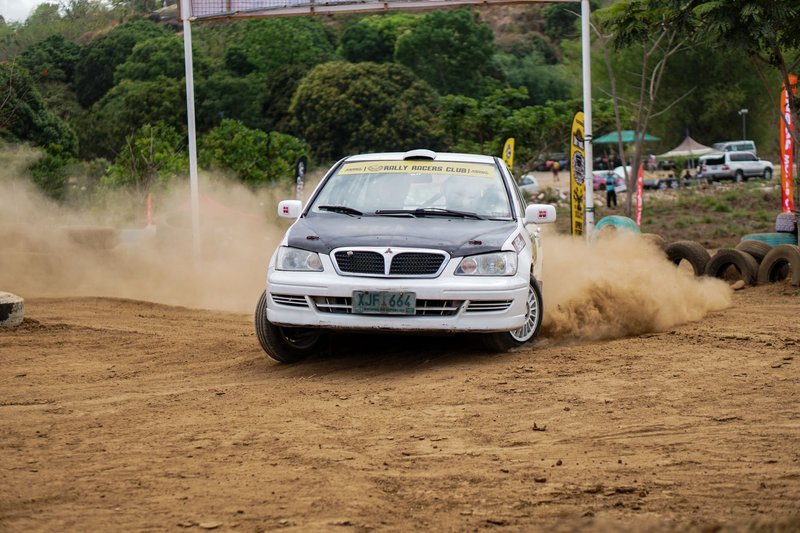
The standard Ur-Quattro, launched in 1980, is the car that proved permanent all-wheel drive belonged in a performance road car, not just a farm truck. The Sport Quattro is the homologation special Audi built four years later to keep winning rallies once the competition caught up — 12.6 inches shorter in the wheelbase, wider, lighter through extensive Kevlar and aluminum body panels, and packing a 2.1-liter turbocharged inline-five making around 306 horsepower in road trim, with rally versions pushing well past that.
Only about 214 Sport Quattros were built to satisfy homologation minimums, which makes them scarcer than most of the Italian exotics on this list despite the humbler badge. That scarcity, combined with the car’s direct lineage to Audi’s dominant early Group B rally program, has pushed Sport Quattro values into supercar territory even though it looks, at a glance, like an angry coupe version of a family sedan.
The Group B Interlude
The Audi Sport Quattro wasn’t built to flatter buyers. It was built because international rallying’s Group B regulations required manufacturers to sell a minimum number of road-going versions of their competition cars — as few as 200 units in the category’s later years. That loophole produced the strangest, fastest homologation specials the road-car world has ever seen, and three of them anchor this list: the Sport Quattro above, the Lancia Delta S4 below, and the Ford RS200 that follows it.
Group B rally cars themselves made 500 to 600 horsepower in a chassis weighing barely 2,200 pounds, with acceleration figures that outran contemporary Formula 1 cars off the line. The series ended abruptly after the 1986 season, following a string of fatal accidents involving drivers and spectators that the FIA, motorsport’s global governing body, judged the cars had simply outrun the safety standards of the stages they raced on. The road cars these regulations forced into existence outlived the category by decades, and they’re now some of the most sought-after homologation specials in the world — a strange, permanent souvenir from a racing formula that barely lasted five years.
5. Lancia Delta S4 Stradale (Italy)
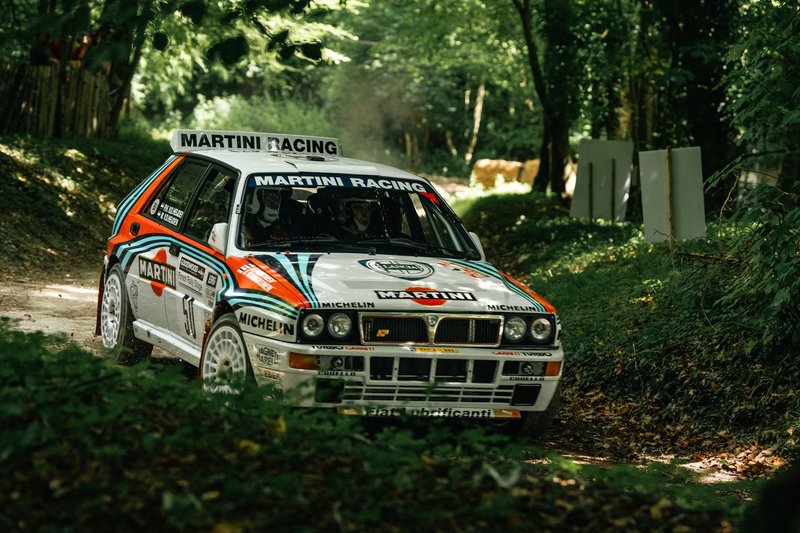
The S4 is the most extreme thing on this list mechanically. Its 1.8-liter four-cylinder used both a supercharger and a turbocharger — the supercharger covering low-RPM response, the turbo taking over higher up — feeding a mid-mounted, rear-wheel-biased all-wheel-drive system in a car that weighed under 2,100 pounds in rally trim. Lancia built just 200 road-going “Stradale” versions to satisfy Group B’s homologation rule, wrapped in a Kevlar and fiberglass body that looked almost nothing like anything else Lancia sold that decade.
The S4 is also inseparable from Group B’s end: it was the car Henri Toivonen was driving in the 1986 Tour de Corse when a crash killed him and co-driver Sergio Cresto, the accident most directly credited with the series’ cancellation that same year. Road-going Stradales are brutally rare, mechanically fragile by modern standards, and command prices that reflect both their scarcity and their place in motorsport history — this isn’t a car you find at a regional cars-and-coffee.
6. Ford RS200 (Britain)
Ford came to Group B later than Audi or Lancia and built something genuinely different: a bespoke mid-engine chassis, unrelated to any production Ford, wrapped in a boxy fiberglass body that looked more like a kit car than a factory product. Under the rear deck sat a turbocharged 1.8-liter Cosworth-derived four-cylinder driving all four wheels, with around 250 horsepower in road trim and reportedly over 450 in rally spec. Ford built the required 200 homologation cars at a dedicated factory in Boreham.
Like the S4, the RS200’s rally career ended in tragedy — a crash at the 1986 Rally de Portugal killed spectators and injured driver Joaquim Santos, one of several accidents that season that sealed Group B’s fate. As a road car, the RS200 is the outlier of this group: less refined than the Audi, less exotic-looking than the Lancia, but arguably the purest engineering exercise of the three, since Ford built it with no other production car to compromise around. It remains one of the more attainable Group B homologation specials, relatively speaking — “attainable” here still means a serious six-figure commitment.
7. Ferrari 288 GTO (Italy)
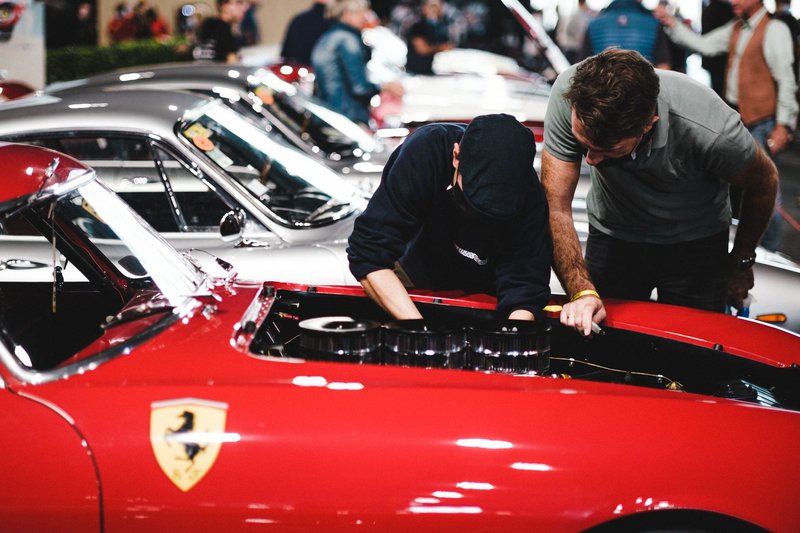
Before the F40, there was the 288 GTO — Ferrari’s own Group B homologation project, based on the 308 GTB but reengineered with a mid-mounted, twin-turbocharged 2.9-liter V8 making around 400 horsepower, a tube-frame chassis, and composite body panels. Ferrari built 272 examples to meet homologation minimums, and then Group B was cancelled before the GTO ever turned a wheel in the competition it was designed for.
That non-event is exactly what makes the 288 GTO significant: it’s the car that proved Ferrari could build something raw and race-focused for the road, and it directly set up the F40 that followed three years later. Fewer 288 GTOs exist than F40s, and among serious collectors it’s often rated the more important car of the two — the one where Ferrari figured out the formula, rather than the one that perfected it. Values reflect that rarity and sit at or above F40 money.
8. Lotus Esprit Turbo (Britain)
Giorgetto Giugiaro’s origami-folded wedge shape debuted on the naturally aspirated Esprit in 1976, but it’s the Turbo version — and its starring role opposite Roger Moore in For Your Eyes Only — that made the Esprit an 80s icon rather than a footnote. The turbocharged 2.2-liter four-cylinder made a modest 210 horsepower or so, which sounds unremarkable next to the Italian and German entries here, but the Esprit’s fiberglass body kept weight down around 2,800 pounds, and the mid-engine balance made it genuinely rewarding to drive fast.
It’s also the car on this list most likely to actually go wrong on you. Lotus electrics and build quality from this era have a well-earned reputation, and finding a good independent specialist matters more with an Esprit than with almost anything else here. The upside: it’s still one of the more attainable wedge-era exotics, trading well below its German and Italian contemporaries for a car with just as much period presence.
9. BMW M3 E30 (Germany)
BMW built the E30 M3 for one reason: to homologate a competitive touring car for Group A racing in Germany’s DTM series and beyond. That racing mandate shows in every panel — flared arches, a steeper rear windshield angle, a bespoke high-revving 2.3-liter four-cylinder (the S14) making around 192 horsepower in the earliest cars, climbing past 215 in later Evolution models. It’s the only car on this list that was never meant to be a status symbol first.
That’s exactly why it’s become the most desirable variant of the E30 generation, and why values have climbed harder, percentage-wise, than almost anything else here over the past decade. A clean, unmolested M3 E30 now trades for multiples of what a contemporary 3 Series commands, driven by buyers who grew up wanting one and finally have the means. It remains genuinely usable as a classic — parts support is strong, the mechanicals are straightforward by 1980s standards, and it’s the rare car on this list you could realistically drive to work.
10. Alpina B12 (Germany)
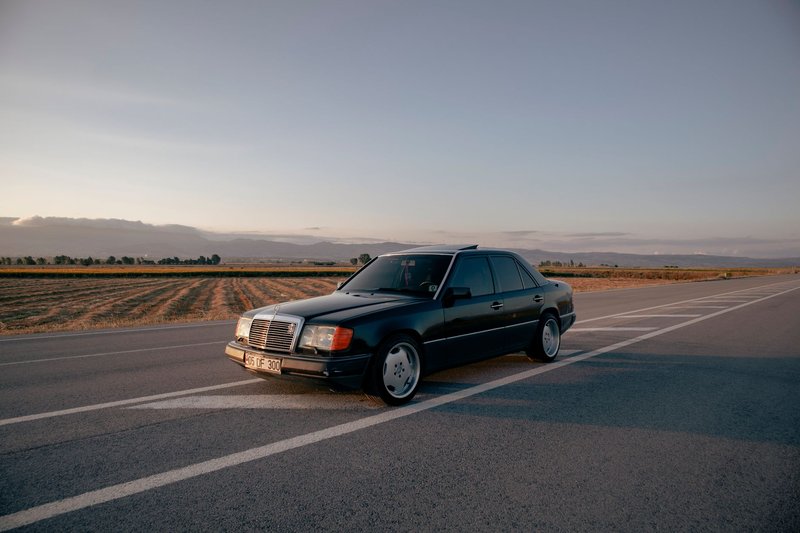
Alpina doesn’t get invited to these lists often, which is the point of including it. Rather than building a sports car from scratch, Alpina took BMW’s 7 Series flagship and dropped in its own tuned V12 — up to 5.9 liters in later versions — reworked suspension, and understated badges that told almost nobody what they were looking at. The B12 wasn’t trying to out-drama a Countach. It was trying to be the fastest, best-sorted way to cross a continent in one sitting, and by most contemporary accounts, it succeeded.
The B12’s obscurity today works in its favor for anyone actually wanting to own one of these. Production numbers were tiny even by Alpina’s standards, and prices, while rising, still sit well under what a comparable-performance Italian or British exotic from this list would cost. It’s the car for someone who wants 1980s German engineering at its most serious, without the get in an accident and wince at the invoice anxiety.
11. Renault 5 Turbo (France)
Renault took its humble front-engine, front-wheel-drive 5 supermini, ripped the rear seats and engine bay apart, and relocated a turbocharged 1.4-liter four-cylinder behind the driver, feeding the rear wheels through flared bodywork that turned a shopping car into something that looked ready to eat the road. It was built, like the Group B cars above, to satisfy homologation rules — in this case for Group 4, the rallying formula that preceded Group B — and it worked, winning Monte Carlo outright in 1981 and 1982.
It’s the most purely fun car on this list to talk about: a hatchback silhouette with supercar mechanical layout, French rally pedigree, and a level of visual drama that punches well above its size. It’s also, refreshingly, one of the more attainable cars here for a genuine homologation special — well documented, supported by an active enthusiast community, and priced closer to a good Group A rally replica than a 959.
12. Fiat Uno Turbo (Italy)
The Uno Turbo is the car this list needed and almost never gets: proof that the best cheap thrill of the 1980s came out of Turin in a hatchback body, not a supercar factory. A 1.3 or 1.4-liter turbocharged four-cylinder pushed the lightweight Uno to just over 100 horsepower — modest on paper, transformative in a car weighing under 1,900 pounds. It went toe-to-toe with the Peugeot 205 GTI and Renault 5 GT Turbo in period road tests and, in the right conditions, embarrassed cars that cost far more.
Nobody bought an Uno Turbo to be seen. They bought it because it was genuinely, unpretentiously quick, and that’s exactly the angle this list is missing if it only runs the usual seven-figure suspects. Good ones are rare now — most were driven hard and scrapped, not preserved — but the ones that survive are still some of the most attainable European performance cars of the decade, often for less than the cost of a decent modern hot hatch.
13. Ferrari Testarossa (Italy)
No car on this list is more instantly recognizable, and that’s almost entirely down to the side strakes — the horizontal cheese-grater vents that channel air to the rear-mounted radiators, and that turned up on posters, video games, and, most famously, the dashboard of Miami Vice. Under that unmistakable bodywork sits a flat-12 engine, 4.9 liters and roughly 390 horsepower, in a car built wide enough at the rear to look like it was designed around the strakes rather than the other way around.
The Testarossa spent years as the “affordable” 80s Ferrari, undervalued relative to the F40 and 288 GTO simply because Ferrari built thousands of them rather than hundreds. That gap has closed significantly as buyers who grew up with the poster have aged into Ferrari money, and clean, unmodified Testarossas — particularly early “monospecchio,” single-mirror cars — now command real premiums over what they traded for a decade ago. It remains, relative to nearly everything else on this list, one of the more usable classic Ferraris: parts support is solid, and the flat-12 has a reputation for durability that the turbocharged exotics above it can’t match.
Line these thirteen up and the decade’s real story comes into focus: it wasn’t really a supercar era, it was a homologation era. Racing rules that demanded road-legal versions of race cars produced the Quattro, the S4, the RS200, the 288 GTO, and the M3 — and the cars built purely to flatter, like the Countach and Testarossa, only look more extravagant standing next to them. If you’re chasing one of these for real, the Petersen Automotive Museum in Los Angeles keeps several in rotation and is worth a visit before you write a check for anything on this list.

Daniela Voss
More from Daniela VossHow we reviewed this article
This article was researched against manufacturer records and editorially reviewed before publishing. We accept no payment for coverage.