Mazda has killed off more nameplates than most brands have ever built. Some died because nobody bought them. One died because it couldn’t pass a European emissions test that half the industry quietly worked around. A few just got renamed and rebadged until the family tree turned into a hedge maze.
Dealer history pages tend to stop around 2004 and call it a day. Mazda’s own newsroom archive lists the discontinued models but treats them like a spreadsheet — no context, no “why,” no sense of which ones are worth chasing on the used market today. This is the version that fills in the gaps: every old Mazda model worth knowing, grouped by category, with production years, the reason each one got the axe, and what it takes to actually own one now.
Table of Contents
- The Micro Cars: Where It All Started
- The Rotary Cars: Cosmo Through RX-8
- The Sedans: Familia, Capella, Xedos, Millenia
- The SUVs and People-Movers: Tribute, MPV, Mazda5, CX-3, Mazda2
- Why Mazda Discontinues So Many Models
- Buying a Classic or Used Mazda: What to Know
The Micro Cars: Where It All Started
Mazda’s first passenger car wasn’t a sports car or a sedan. It was a 380-kilogram kei car called the R360, built from 1960 to 1966, with a rear-mounted 356cc V-twin making 16 PS. That’s less power than a modern ride-on lawn mower, and it still sold 23,417 units in its first year alone — a number that told Mazda’s engineers there was real demand for small, cheap transportation in postwar Japan.
The Carol followed in 1962, wearing a shrunken version of the styling cues from Mazda’s bigger cars, and it stuck around until 1970 with 265,226 units built. Mazda revived the Carol nameplate in 1989 for its Autozam kei sub-brand, though by then the car itself was a rebadged Suzuki — a pattern that would repeat across Mazda’s kei lineup for the next three decades. The Chantez (1972–1976) and later kei-class hatchbacks like the AZ-1 sports car came and went in the same window: Japan’s regulations cap kei cars at 660cc and a set of exterior dimensions, so the category has always been a rotating cast rather than a stable lineup.
None of these ever came to the US. If you want one, you’re importing.
The Rotary Cars: Cosmo Through RX-8
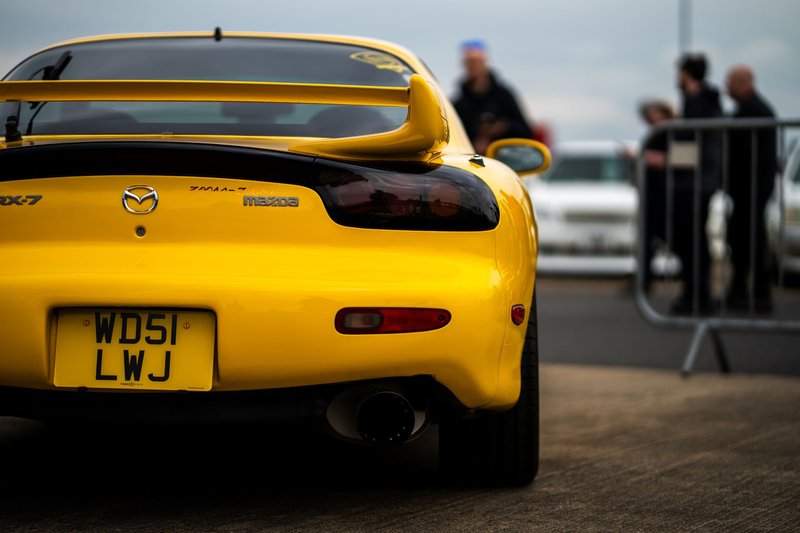
This is the section every Mazda old-models search is really about.
The Cosmo launched in 1967 as the world’s first mass-produced car with a Wankel rotary engine, a two-rotor coupe that Mazda built to prove the technology worked outside a lab. It ran four generations before production ended in 1995, by which point the flagship Cosmo variant carried a three-rotor 20B-REW — the only production three-rotor engine Mazda ever built.
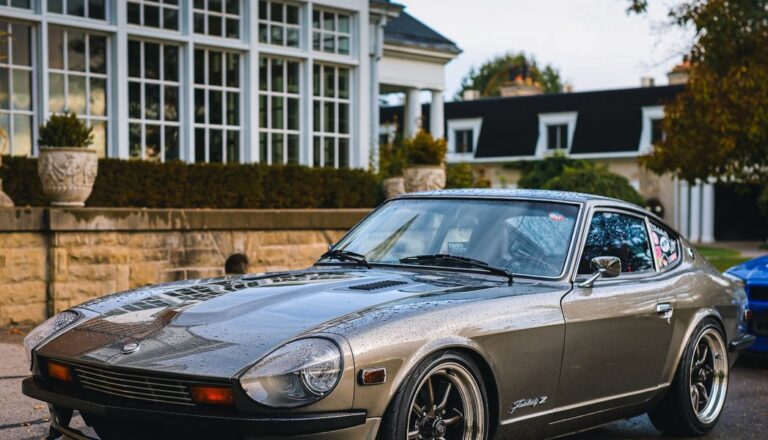
The RX-7 picked up where the Cosmo’s sporting side left off. Built from 1978 to 2002 across three generations (the SA/FB, FC, and FD), it’s the rotary car most people picture when they hear the name. Mazda pulled it from the US market in 1995 as sales cooled and emissions rules tightened, even though Japan kept building it until 2002. The FD generation (1992–2002) is the one collectors chase hardest today, with the twin-sequential-turbo 13B-REW putting out up to 280 PS in later Japanese-market trims.
Between the Cosmo and the RX-7 sat the RX-2, RX-3, and RX-4, badge-engineered rotary versions of Mazda’s regular sedans and coupes sold mostly in the 1970s. They’re the least documented of the bunch and, outside Japan and a handful of import scenes, the hardest to find.
The Sedans: Familia, Capella, Xedos, Millenia
The Familia is Mazda’s longest-running nameplate outside the kei class — built from 1963 to 2003, badged as the 323 or Protegé in various export markets, and finally folded into the Mazda3 for the 2004 model year. Four decades under one name, across roughly nine generations, is a run few compact cars can match.
The Capella (sold as the 626 in North America) ran from 1970 to 2002 before becoming the Mazda6. The Xedos 6 and Xedos 9 — Eunos 500 and Eunos 800 in Japan — were Mazda’s brief 1990s attempt at a near-luxury sub-brand, sold in Europe from 1992 to around 2000 before Mazda folded the concept back into the main lineup.
The most technically interesting sedan on this list is the Millenia (1993–2002), a near-luxury car built to give Mazda a foothold above the 626 without launching a whole new luxury division. The top trim used a Miller-cycle supercharged V6 — a design that closes the intake valve late to boost thermal efficiency, trading a bit of peak power for better fuel economy at a given output. It was clever engineering wrapped around a car nobody particularly wanted, and Mazda killed it after 2002 without a direct successor.
The SUVs and People-Movers: Tribute, MPV, Mazda5, CX-3, Mazda2
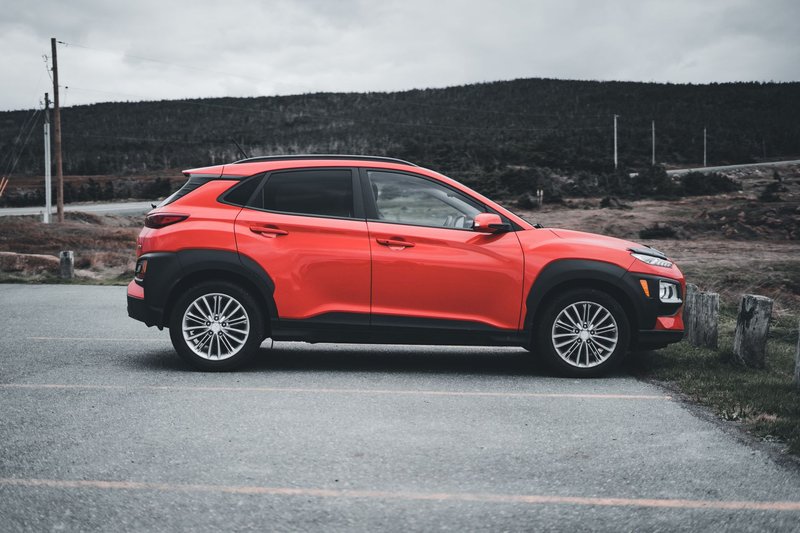
The Tribute (2000–2011) was Mazda’s first real SUV in North America, built on the same platform as the Ford Escape during the Ford-Mazda alliance years. When Mazda launched the CX-5 for 2013, the Tribute simply stopped existing — there was no need for two compact crossovers wearing different badges from companies about to go separate ways.
The MPV minivan ran from 1988 to 2006 in the US, then handed off to the smaller Mazda5 (a rebadged Premacy) from 2006 to 2015. Both nameplates were casualties of the same trend: American buyers traded minivans and wagons for crossovers en masse over that period, a shift the EPA’s own automotive trends data has tracked for two decades running. Mazda didn’t replace the Mazda5 with anything — the CX-5 and CX-9 absorbed that buyer instead.
The Mazda2 subcompact sold in the US from 2011 to 2014, then kept selling everywhere else in the world while Americans lost interest in small hatchbacks. The CX-3 arrived in 2016 as a genuinely good small crossover and lasted through the 2021 model year in the US before Mazda folded its buyers into the slightly larger CX-30. Neither car failed on merit — both got squeezed out by a lineup that no longer had room for two subcompact-adjacent models at once.
Why Mazda Discontinues So Many Models
Three forces show up again and again in this list. Emissions regulation ended the rotary engine’s run as a mass-production technology — the RX-8’s Euro 5 problem wasn’t a one-off, it was the writing on the wall for every combustion design that burns oil by nature. Market consolidation killed the sedans and minivans, as buyers who once wanted a Capella or an MPV moved to a Mazda6 or a CX-5 instead. And badge overlap took out models like the CX-3, which didn’t fail so much as get absorbed by a newer sibling built on better bones.
None of that makes the discontinued models less interesting. It just means the reasons are rarely about the car being bad.
Buying a Classic or Used Mazda: What to Know
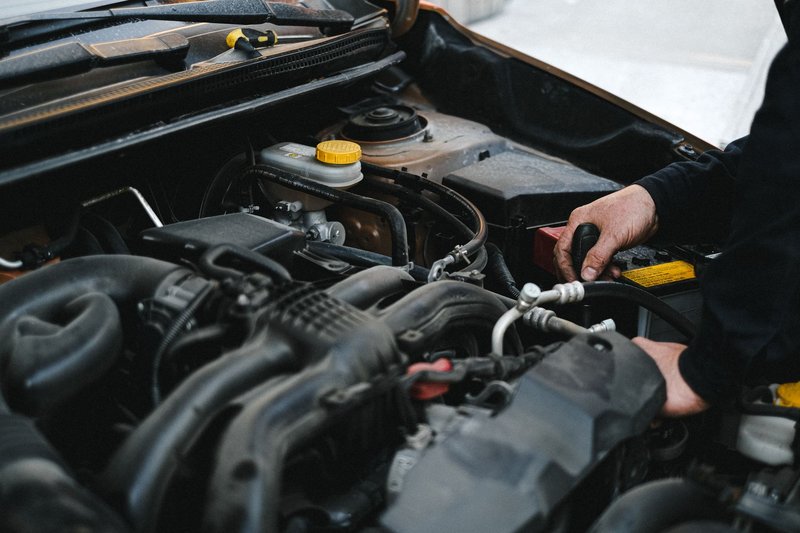
Parts availability splits cleanly by category. Sedans and SUVs on this list share enough architecture with later Mazdas, or with Ford platforms from the alliance years, that consumables aren’t hard to source. Rotary cars are a different story — Mazda still supports some RX-7 and RX-8 parts through its heritage parts program, but body panels and trim for early cars increasingly come from other owners’ parts cars rather than a catalog.
If you’re looking at a rotary specifically, budget your inspection around three things. First, compression: each rotor should read somewhere in the 6.5–7.5 kg/cm² range on an FD-generation RX-7, and anything under 6.0 usually means a rebuild in the near future, priced anywhere from $4,000 to $8,000 depending on the shop. Second, oil consumption: rotary engines burn oil by design, since it lubricates the apex seals as part of normal combustion, so expect to top off roughly a quart every 1,000 to 1,500 miles — that’s normal, not a leak. Third, ignition service intervals run shorter than a piston engine: plan on new spark plugs every 15,000–20,000 miles and coils every 30,000–40,000.
Values reflect all of this. Clean FD-generation RX-7s have climbed hard over the past decade as the JDM import window opened up and buyers realized how few well-kept ones are left. RX-8s remain the bargain of the rotary lineup precisely because their reliability reputation scared off casual buyers — a well-sorted one with fresh apex seals is a genuinely fast car for sedan money. Familia and Capella survivors are mostly valued as project cars or JDM curiosities rather than blue-chip collectibles, and the Millenia’s Miller-cycle V6 is niche enough that finding a mechanic who’s actually worked on one takes more effort than finding the car itself.
The short version: buy the rotary cars with your eyes open and a compression tester in hand, buy the sedans and SUVs like you’d buy any 15-to-25-year-old used car, and don’t expect Mazda’s own archive pages to tell you any of this — that’s what a compression gauge and a good pre-purchase inspection are for.

Marco Delantero
More from Marco DelanteroHow we reviewed this article
This article was researched against manufacturer records and editorially reviewed before publishing. We accept no payment for coverage.