Most pages on popular cars in 1970 blur the whole decade together or list the coolest muscle cars and call it a day. This one separates what people bought from what people remember. Sales-based entries and editorial picks are labeled, so you know which is which.
Contents
- TLDR
- The 1970 car market in brief
- Popular cars in 1970: the US best-sellers
- The muscle cars everyone remembers
- Imports and British favorites
- Quick-glance table
- What a 1970 car cost, and what it’s worth now
TLDR
- Best-selling car in America: the Chevrolet Impala. Ford’s Galaxie 500 and LTD were its main rivals.
- Hot new arrivals: Ford Maverick (late 1969 launch, huge first-year sales), Dodge Challenger (all-new for 1970), Datsun 240Z (US debut).
- Most iconic, not most popular: Hemi ‘Cuda, Pontiac GTO Judge, Chevelle SS 454 LS6, Boss 302 Mustang. Most of these sold in the thousands, not the hundreds of thousands.
- Outside the US: the Volkswagen Beetle dominated imports, and the Ford Cortina and Mini anchored British roads.
The 1970 car market in brief
Detroit still owned the American market. General Motors, Ford and Chrysler sold the overwhelming majority of the roughly 8.4 million new cars bought that year, a drop from 1969, and a 67-day United Auto Workers strike against GM in the fall pulled Chevrolet’s late-year numbers down.
Three things were changing underneath that.
Imports were growing. Volkswagen was the giant, but Toyota and Datsun were building dealer networks, and Detroit noticed. Ford’s Pinto and Chevrolet’s Vega, both small domestic cars, went on sale in September 1970 as a direct answer.
Muscle peaked. Horsepower ratings hit their highest numbers. The 1970 model year was the last time you could order a 450 hp Chevelle straight from the showroom.
Regulation was coming. The Clean Air Act amendments were signed at the end of 1970, and the EPA opened its doors that December. Emission rules pushed manufacturers to drop compression ratios within a couple of years, and that ended the muscle era’s horsepower race.
A note on numbers: sales figures differ by source, depending on model year versus calendar year and on whether a source counts production or retail sales. Figures below are rounded, and the sources behind them are the usual industry ones (Automotive News, Ward’s, and for Britain, the SMMT).
Popular cars in 1970: the US best-sellers
This section is sales-based. These are the cars that filled driveways.
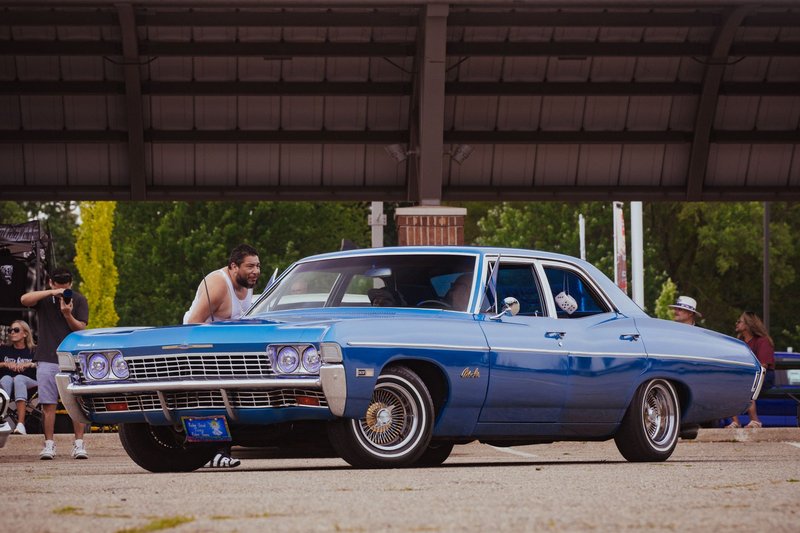
Chevrolet Impala
The Impala was America’s best-selling car in 1970, as it was for most of the 1960s, with roughly 600,000 sold. It was a big, soft-riding family car, and the range ran from a thrifty inline six to the 454 cubic inch V8, rated at 390 hp. Nobody bought it to be noticed. They bought it because their neighbor had one and it never gave them trouble.
Ford Galaxie 500 and LTD
Ford’s full-size line was the Impala’s direct rival, and the LTD was the more upscale pitch: quiet cabin, stacked-headlight styling, and a price that undercut Buick and Oldsmobile. The 429 V8 was the big engine option. If the Impala was the default, the LTD was the one that suggested you’d been promoted.
Chevrolet Nova
The Nova was the sensible compact with a secret. Order it with a six-cylinder and it was a cheap commuter at around $2,300. Order the Nova SS and you got the “396” V8 rated at 350 hp (the engine was actually 402 cubic inches that year, but Chevrolet kept the badge). It sold in the six figures every year of this era, and it was a rare car that worked equally well for your aunt and your older brother.
Ford Mustang
The Mustang sold 190,727 in 1970, a long way from its 1966 peak of more than 600,000. It was bigger and heavier now, and the pony car segment was crowded. The base hardtop started around $2,700. The Mach 1 and the homologation specials, the Boss 302 (7,013 built) and Boss 429 (499 built), were the real draw for enthusiasts. The standard car paid the bills.
Ford Maverick
This is the entry people forget. Ford launched the Maverick in April 1969 at $1,995, which undercut the Volkswagen Beetle’s real-world cost once you added options. It sold about 579,000 units in its first year. The standard engine was a 170 cubic inch six making 100 hp, and nobody pretended it was fast. It was honest, cheap and available, and that was the point.
Plymouth Road Runner
Plymouth licensed the cartoon character’s name and the “beep-beep” horn from Warner Bros., then stripped the car down to make it cheap: about $3,000 with a 383 V8 making 335 hp. It sold around 84,000 in 1969, and demand cooled to under 50,000 in 1970. That still made it one of the better-selling muscle cars on the market, and the buyer who wanted a Hemi could tick a box and pay for it.
Dodge Challenger
Dodge arrived late to the pony car party. The Challenger was all-new for 1970, with a wide range from a 225 cubic inch slant-six up to the 426 Hemi and the 440 Six Pack, and about 77,000 found buyers in its debut year. Prices started around $2,850. It looked fantastic and arrived just as the segment was cooling.
The muscle cars everyone remembers
This section is editorial. Nobody ranks these by volume, because the numbers are small. They’re here because 1970 was the peak, and this is what collectors search for.
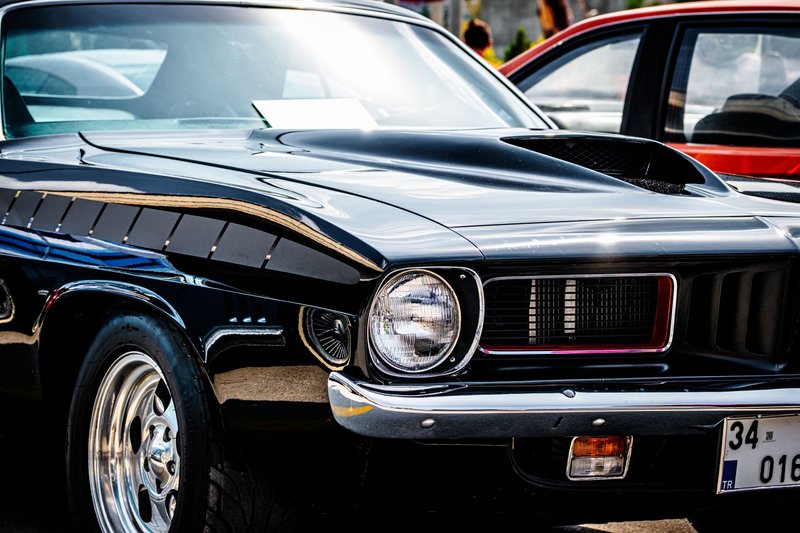
Plymouth Hemi ‘Cuda
Around 650 Hemi ‘Cuda hardtops were built in 1970, plus a tiny number of convertibles. The 426 Hemi was rated at 425 hp, though real output was widely believed to be higher. The Hemi ‘Cuda is now the poster car for the muscle era, and original convertibles trade for millions.
Chevrolet Chevelle SS 454 LS6
The LS6 option gave the Chevelle a 454 V8 rated at 450 hp, the highest factory rating of the era from Chevrolet. Only 4,475 were built. It’s the car that car magazines used to define 1970.
Pontiac GTO Judge
The Judge was Pontiac’s loud, orange-friendly package, named after a gag on the TV show Laugh-In. Pontiac built 3,797 Judges in 1970 (168 of them convertibles). Ram Air III made 366 hp, and Ram Air IV 370 hp.
Buick GSX and Oldsmobile 442
Buick’s GSX with the Stage 1 455 made an immense 510 lb-ft of torque, more than almost anything else on the road. Oldsmobile’s 442 with the W-30 package was a quieter alternative that was just as quick. Both are the type of car that people who know GM history rate above the better-known GTO.
Ford Mustang Boss 302 and Torino Cobra
Ford’s answer was the Boss 302, a road-racing special built to homologate Trans-Am engines, and the Torino Cobra, a stripped muscle car with a 429 Cobra Jet. Collectors tend to rate the Boss 302 higher because it handled well, not just in a straight line.
Pontiac Firebird Trans Am
The Trans Am arrived in February 1970 on the all-new second-generation Firebird, with a 345 hp 400 V8 and a wing on the back. It was a thin first year, but this is the car that Burt Reynolds would later make a pop culture icon.
Imports and British favorites
This section mixes sales-based and editorial calls, flagged per entry.
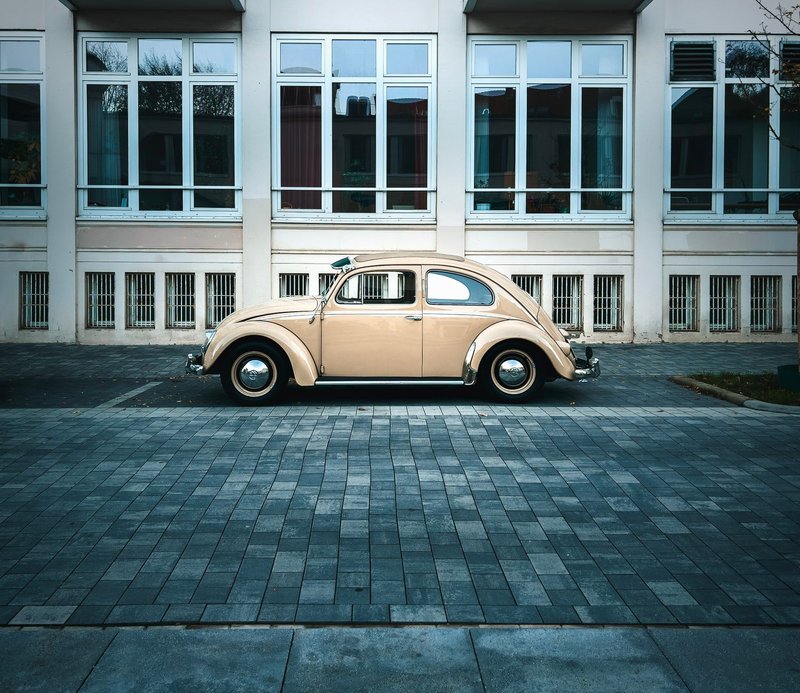
Volkswagen Beetle (sales-based)
The Beetle was the import that Detroit couldn’t beat. Volkswagen’s US sales were near their all-time peak in 1970, and the Beetle accounted for most of them. It cost under $2,000, ran a 53 hp air-cooled 1.5 liter flat-four and came in few colors. The ads were famously self-deprecating.
Ford Cortina Mk3 (sales-based)
In Britain, the Cortina was the car the average family bought. It was the UK’s best seller for much of the late 1960s and 1970s. The Mk3 launched in October 1970 with new “Coke bottle” styling, and a 1300 or 1600 Kent engine in most cars. The 1600 GT and the Pinto-engined 2.0 gave it more bite.
Mini (sales-based)
The Mini had been on sale since 1959 and in 1970 was still the clever small car in British driveways. It ran 848 cc and 998 cc engines, cost roughly £600, and the Clubman, introduced in 1969, gave it a longer nose. The performance versions, the Cooper S, were by now a separate story.
Toyota Corona and Datsun 510 (sales-based)
These were the Japanese cars that Americans bought for reliability. Toyota and Datsun each sold well over 100,000 cars in the US around this time. The Corona sold at about $2,100, and the Datsun 510 gave buyers a lively, European-style sedan with an overhead-cam engine for about $2,000.
Datsun 240Z (editorial)
The 240Z reached American showrooms in 1970 at about $3,526. It had a 2.4 liter inline-six making 151 hp, an independent rear suspension and looks that borrowed from the Jaguar E-Type. It wasn’t a volume car in 1970, but it changed what buyers expected from a Japanese brand.
Quick-glance table
Prices are approximate US base prices (UK entries in pounds) and rounded; check period brochures for exact trim pricing.
| Model | Approx. price | Headline engine | Basis |
|---|---|---|---|
| Chevrolet Impala | $3,000 to $3,500 | 454 V8, 390 hp (optional) | Sales |
| Ford Maverick | $1,995 | 170 cu in six, 100 hp | Sales |
| Ford Mustang | about $2,700 | Boss 302 and Boss 429 options | Sales |
| Chevrolet Nova | about $2,300 | “396” V8, 350 hp (SS) | Sales |
| Plymouth Road Runner | about $3,000 | 383 V8, 335 hp | Sales/Editorial |
| Dodge Challenger | about $2,850 | 426 Hemi, 425 hp (optional) | Sales/Editorial |
| Plymouth Hemi ‘Cuda | Option-dependent | 426 Hemi, 425 hp | Editorial |
| Chevelle SS 454 LS6 | Option-dependent | 454 V8, 450 hp | Editorial |
| VW Beetle | under $2,000 | 1.5 L flat-four, 53 hp | Sales |
| Datsun 240Z | about $3,526 | 2.4 L six, 151 hp | Editorial |
| Ford Cortina Mk3 | about £900 | 1300/1600 Kent, 2.0 Pinto | Sales |
| Mini | about £600 | 848 cc/998 cc | Sales |
What a 1970 car cost, and what it’s worth now
New car prices in 1970 sat in a narrow band. Most buyers paid $2,000 to $3,500, and the entry point, a Maverick or a Beetle, was under $2,000. Muscle options added up fast: the Hemi was a big-ticket extra on any Plymouth or Dodge, which is part of why so few were ordered.
Today the spread is enormous.
- Everyday cars (Impalas, Novas, Mavericks, Cortinas) usually sit in the tens of thousands at most, and plenty of clean examples are still affordable.
- Mid-tier muscle (Road Runner, Challenger, Chevelle SS) depends heavily on engine, originality and documentation.
- Rare big-engine cars (Hemi ‘Cuda, LS6 Chevelle, Boss 429) are investment-grade. Hemi ‘Cuda convertibles have sold at auction for millions.
- The Datsun 240Z is the surprise. Cheap and ignored for decades, good ones now sell for tens of thousands.
If you’re researching a specific car, check recent auction results and a valuation guide such as Hagerty’s before you take any number as gospel. Prices swing by trim, option codes and whether the numbers match.
The best-selling cars of 1970 were mostly ordinary. The cars people remember are mostly not. Both lists tell you something true about the year.

Marco Delantero
More from Marco DelanteroHow we reviewed this article
This article was researched against manufacturer records and editorially reviewed before publishing. We accept no payment for coverage. Some guides contain affiliate links; see our affiliate disclosure.