Table of Contents
- The Decade That Changed Everything
- TLDR: The Icons You Need to Know
- 1. Datsun 240Z (1969-1973)
- 2. Toyota 2000GT (1967-1970)
- 3. Nissan Skyline GT-R “Hakosuka” (1969-1972)
- 4. Nissan Skyline GT-R “Kenmeri” (1972-1973)
- 5. Datsun 510 (1968-1973)
- 6. Mazda RX-3 (1971-1978)
- 7. Mazda RX-7 (1978-1985)
- 8. Toyota Celica (1970-1977)
- 9. Mitsubishi Galant GTO (1970-1977)
- 10. Isuzu 117 Coupé (1968-1981)
- 11. Honda S800 (carryover, 1966-1970)
- 12. Toyota Corolla Levin / Trueno (TE27, 1972-1974)
- 13. Datsun 280Z (1975-1978)
- 14. Toyota Celica Liftback 2000GT (1976-1977)
- 15. Mazda Cosmo AP (1975-1981)
- Why the Oil Crisis Made These Cars Even More Important
- Why So Few Made It to America New
- What They’re Worth Now
The Decade That Changed Everything
By 1970, Japan had spent fifteen years building small, cheap, reliable cars for a domestic market that mostly wanted transportation, not thrills. Then a handful of engineers at Nissan, Toyota, Mazda, and Mitsubishi decided that wasn’t good enough anymore, and the results embarrassed a lot of European sports car makers who assumed Japan would never build something you’d actually want to drive hard.
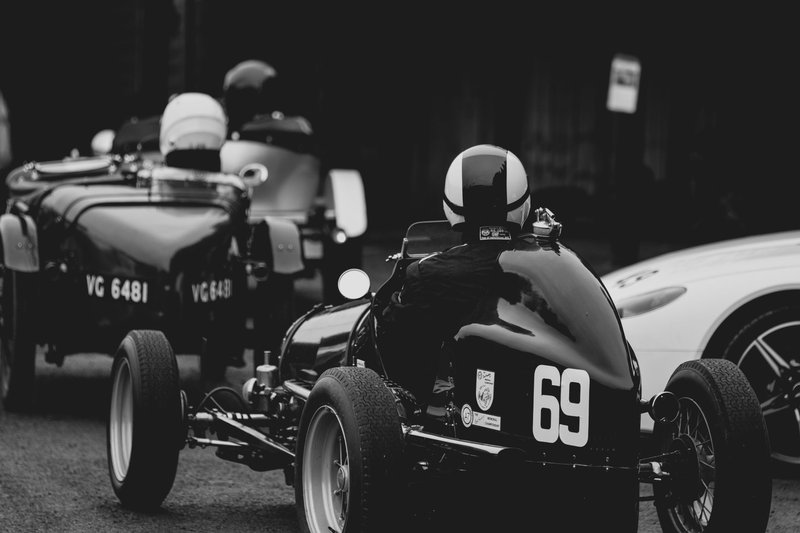
This isn’t the list that just repeats the 240Z and the Hakosuka GT-R and calls it done. Those two earned their spots — you’ll find them below with real numbers, not just nostalgia. But there are also cars here that most roundups skip entirely, because they didn’t get sold in the US or because history remembers them as footnotes. They shouldn’t be.
TLDR: The Icons You Need to Know
If you only remember five names from this list, make them these: the Datsun 240Z (the car that proved Japan could build a proper GT), the Toyota 2000GT (the one that proved Japan could build something genuinely exotic), the Nissan Skyline GT-R Hakosuka (the touring-car killer), the Mazda RX-3 (rotary power that terrorized Trans-Am), and the Datsun 510 (the budget car that beat cars twice its price on track). Everything else on this list either built on what they started or filled a gap they left open.
1. Datsun 240Z (1969-1973)
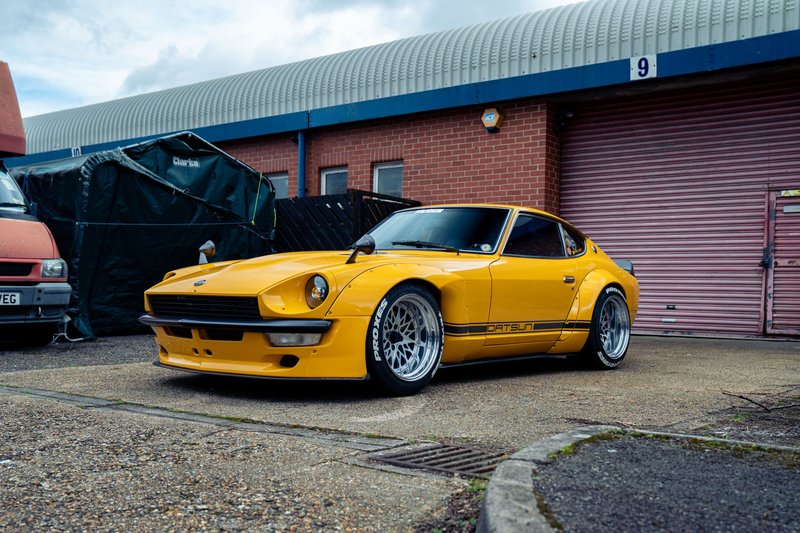
Specs: 2.4L inline-six, 151 hp, 0-60 in 8 seconds, top speed 125 mph. US price at launch: $3,526.
Nissan’s design team, working under Yoshihiko Matsuo, gave America a sports car that looked like it cost three times what it did, and that was the entire point. The 240Z outsold every European roadster combined in its first year on US soil, and it did it with a live-axle rear end and a straight-six borrowed from a sedan. Why it mattered: it single-handedly created the idea that “affordable sports car” and “Japanese” belonged in the same sentence, a reputation the rest of this list built on for the next decade.
2. Toyota 2000GT (1967-1970)
Specs: 2.0L inline-six (Yamaha-developed head), 150 hp, 0-60 in 8.4 seconds, top speed 135 mph. Original price: roughly $7,000, nearly double a Jaguar E-Type.
Toyota built fewer than 350 of these, largely by hand, with a body styled by Count Albrecht von Goertz’s studio and an engine co-developed with Yamaha. It’s the car James Bond drove (a targa-topped one-off) in “You Only Live Twice,” and the one still cited as the moment Japanese engineering stopped being dismissed by European critics. Why it mattered: it was never meant to sell in volume — it existed to prove Toyota could build a world-class GT car, full stop.
3. Nissan Skyline GT-R “Hakosuka” (1969-1972)
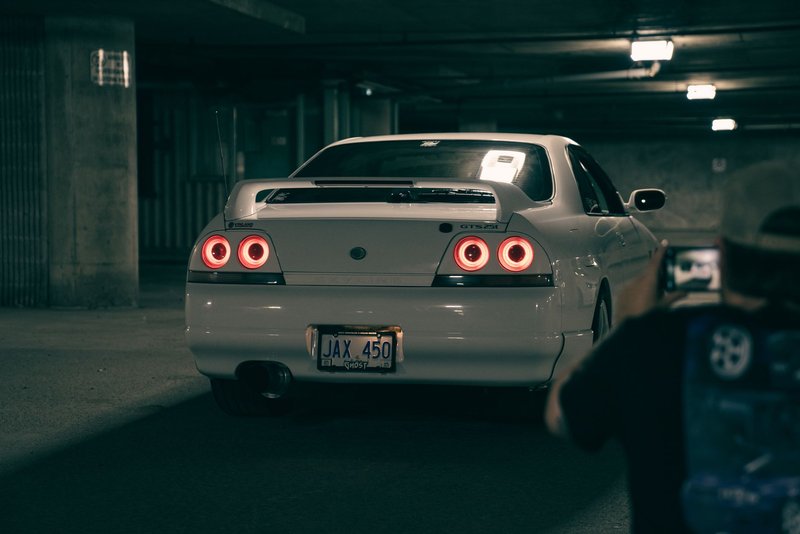
Specs: 2.0L S20 inline-six (a de-tuned version of the Prince R380 race engine), 160 hp, 0-60 in 7.7 seconds, top speed 130 mph. Domestic price around ¥1.5 million.
The Hakosuka (“boxy Skyline”) won 33 consecutive races in Japanese touring car competition between 1969 and 1972, a streak that made the GT-R badge mean something before most of the world had ever heard of it. Why it mattered: it established the GT-R as Japan’s answer to homologation-special racing, a lineage that runs in a straight line to the R34 and R35 decades later.
4. Nissan Skyline GT-R “Kenmeri” (1972-1973)
Specs: same 2.0L S20 six, 160 hp, 0-60 around 7.5 seconds. Only 197 built.
Named for its “Ken and Mary” ad campaign, the Kenmeri GT-R arrived right as the 1973 oil crisis hit, and Nissan pulled the plug after fewer than 200 units. Why it mattered: its scarcity — a direct casualty of the fuel crisis — makes it one of the most valuable Japanese classics that exists today, precisely because it never got the chance to prove itself.
5. Datsun 510 (1968-1973)
Specs: 1.6L four-cylinder, 96 hp, 0-60 in 12 seconds, top speed 99 mph. US price: $1,996.
The 510 wasn’t styled to turn heads — it looked like a Japanese BMW 2002, largely because Nissan wanted exactly that comparison. On track, though, it swept the Trans-Am 2.5 Challenge in 1971 and 1972, beating BMWs and Alfa Romeos that cost significantly more. Why it mattered: it proved a cheap, mass-produced Japanese sedan could out-handle purpose-built European sports sedans, which is a bigger deal than it sounds.
6. Mazda RX-3 (1971-1978)
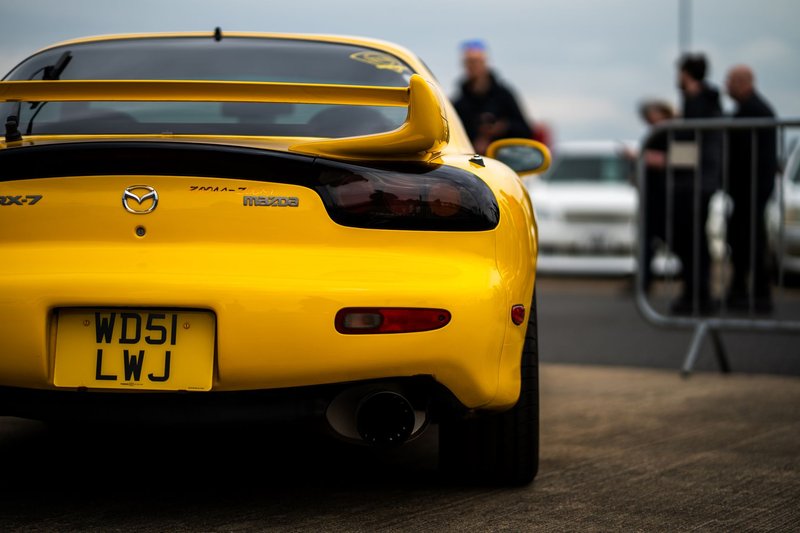
Specs: 1.1L twin-rotor engine, 105 hp, 0-60 in 10.5 seconds, top speed 110 mph.
Mazda’s rotary engine was a gamble that could have sunk the company, and the RX-3 is where that gamble paid off publicly. It won its class at the 1971 Fuji Grand Champion race and became a fixture in American road racing through the mid-70s, embarrassing conventional piston engines with half the displacement. Why it mattered: it validated the Wankel rotary as a legitimate performance engine, not just a novelty.
7. Mazda RX-7 (1978-1985)
Specs: 1.1L twin-rotor (12A), 100 hp, 0-60 in 9.2 seconds, top speed 120 mph. Launch price: $6,995.
Arriving right at the tail end of the decade, the first-generation RX-7 took everything Mazda learned from the RX-3 and put it in a proper front-engine, rear-drive sports car with near-perfect weight distribution. Why it mattered: it outsold every rotary Mazda that came before it combined, and it’s the car that kept the Wankel engine commercially viable into the 1980s and beyond.
8. Toyota Celica (1970-1977)
Specs: 1.6L to 2.0L four-cylinder options, up to 115 hp, 0-60 in roughly 10 seconds. Base price: $2,569.
Toyota marketed the first Celica as the “Ford Mustang of Japan,” and the pitch worked: long hood, short deck, available big-block-adjacent engine options for the segment. Why it mattered: it gave Toyota a genuine pony-car competitor at a moment when American muscle cars were being strangled by emissions regulations, and it sold well enough to justify the Supra spinoff that followed.
9. Mitsubishi Galant GTO (1970-1977)
Specs: 1.7L to 2.0L four-cylinder, up to 125 hp, top speed around 118 mph.
Never officially sold in the US under that name (it later arrived badged as the Dodge Colt GT and Plymouth Cricket), the Galant GTO had a fastback silhouette that borrowed shamelessly from the Ford Mustang and a “Sportsroof” trim that leaned into the muscle car aesthetic harder than almost anything else on this list. Why it mattered: it showed Mitsubishi chasing the same performance-image playbook as Nissan and Toyota, proof the entire industry had shifted, not just two companies.
10. Isuzu 117 Coupé (1968-1981)
Specs: 1.6L to 1.8L four-cylinder, up to 120 hp with the fuel-injected XE trim.
Styled by Giorgetto Giugiaro at Ghia — the same designer behind the DeLorean and Volkswagen Golf — the 117 Coupé was hand-built in low volumes for its first several years, which meant it stayed expensive and rare even in Japan. Why it mattered: it’s proof that Italian design houses and Japanese engineering were already collaborating a decade before that became common practice, and it rarely gets mentioned alongside its more famous contemporaries.
11. Honda S800 (carryover, 1966-1970)
Specs: 0.8L inline-four, 70 hp, redline at a screaming 9,500 rpm, top speed 100 mph.
Technically a late-60s design, the S800 carried into the first year of the new decade and set the template every small Honda roadster since has followed: tiny displacement, absurd rev range, motorcycle-derived engineering (chain-driven rear axle on early cars). Why it mattered: it’s the direct ancestor of the S2000, and it proved Honda’s motorcycle-engineering DNA translated to cars just as well.
12. Toyota Corolla Levin / Trueno (TE27, 1972-1974)
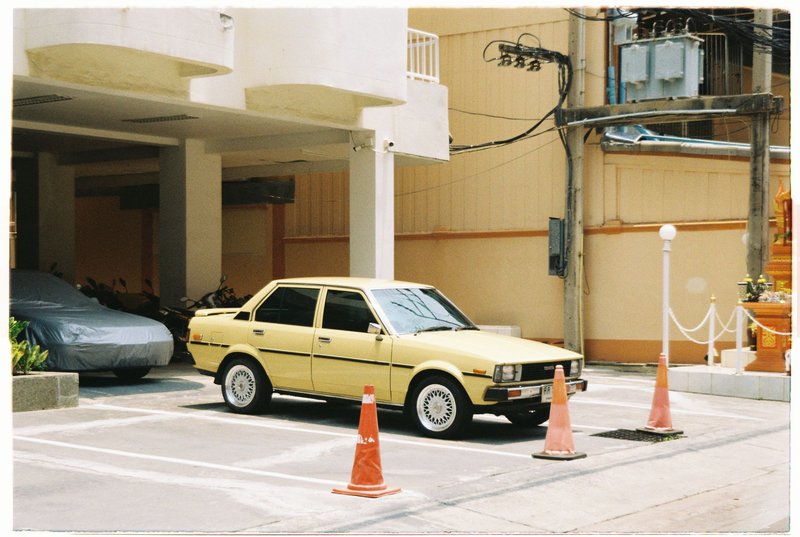
Specs: 1.6L twin-cam four (2T-G), 115 hp, lightweight at roughly 2,100 lbs.
The TE27 was a humble Corolla with a race-bred engine dropped in, and that combination made it a rally and touring car weapon throughout the mid-70s. Why it mattered: it established the “cheap chassis, serious engine” formula that later defined the AE86, one of the most influential enthusiast cars Japan ever built.
13. Datsun 280Z (1975-1978)
Specs: 2.8L inline-six with Bosch L-Jetronic fuel injection, 149 hp, 0-60 in 9.5 seconds.
Emissions regulations gutted horsepower across the entire industry by the mid-70s. It was a challenge that hit Detroit’s automakers particularly hard — you can see the struggle across their entire 1974 lineup — but the 280Z’s fuel-injected six was Nissan’s answer to it, more displacement to offset what smog equipment took away. Why it mattered: it kept the Z-car relevant through the ugliest years of the malaise era, when most performance cars were getting objectively worse.
14. Toyota Celica Liftback 2000GT (1976-1977)
Specs: 2.0L twin-cam four, 130 hp, a genuine performance figure for the mid-70s.
The liftback body added practicality without diluting the original Celica’s proportions, and the 2000GT trim brought a genuine twin-cam engine to a mainstream coupe at a time when most manufacturers were detuning everything they made. Why it mattered: it showed Toyota still chasing performance seriously even as the rest of the industry retreated into malaise-era mediocrity.
15. Mazda Cosmo AP (1975-1981)
Specs: 1.3L twin-rotor engine, up to 135 hp in later trims, distinctive fastback coupe styling.
The second-generation Cosmo leaned into personal luxury coupe styling more than outright sports car dynamics, but it kept Mazda’s rotary program alive commercially through the leanest years of the oil crisis. Why it mattered: without the Cosmo AP’s sales numbers propping up the rotary division through 1975-1981, there’s a real argument the RX-7 never gets greenlit.
Why the Oil Crisis Made These Cars Even More Important
The 1973 oil embargo quadrupled gas prices in the US almost overnight, and Detroit’s response was to strangle horsepower with emissions equipment nobody had figured out how to tune around yet. Japanese manufacturers, already building smaller, more fuel-efficient engines by necessity, suddenly looked less like a budget alternative and more like the only companies still making sense — by 1978, Japanese cars dominated what buyers actually wanted, a shift that happened in fewer than five years. That’s the real reason 1970s JDM sports cars matter beyond nostalgia: they arrived at the exact moment the rest of the performance car industry was retreating, and they kept building enthusiast cars anyway.
Why So Few Made It to America New
A lot of the cars on this list — the Hakosuka GT-R, the Kenmeri, the Isuzu 117, the Galant GTO — never got official US distribution at all. Japanese manufacturers in the early 70s were still building out American dealer networks, and US safety and emissions standards were tightening faster than smaller-volume models could be certified to meet them. That’s also why the classic-import scene leans so heavily on the 25-year federal exemption rule: cars that couldn’t legally be sold new in the States in 1972 became legally importable exactly 25 years later, which is why you’ll see a sudden wave of Hakosuka and Kenmeri GT-Rs entering the US market in any given year, right on schedule.
What They’re Worth Now
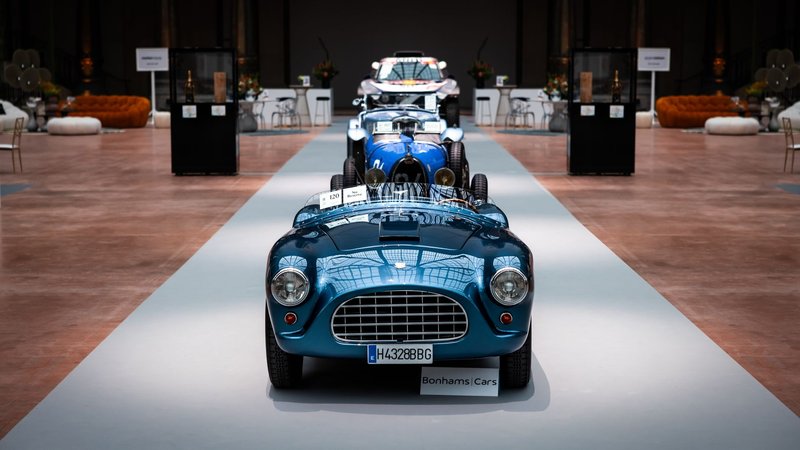
Values have moved fast. A clean Datsun 240Z that sold for under $10,000 a decade ago now regularly clears $40,000-$60,000 at auction for a well-restored example, and matching-numbers cars have topped $100,000. The scarcity cars have gone further: Kenmeri GT-Rs, with only 197 ever built, have sold north of $150,000 in Japan, and a documented Toyota 2000GT sold at RM Sotheby’s for over $900,000 in 2013. Even the underrated picks are climbing — Isuzu 117 Coupés and TE27 Corolla Levins have both seen auction results double over the past five years as collectors run out of 240Zs to buy and start looking one tier down.
None of that price movement should overshadow what actually mattered about these cars: they’re the reason nobody questions whether a Japanese sports car can be a serious one anymore. That fight was won five decades ago, by the fifteen cars above.

Marco Delantero
More from Marco DelanteroHow we reviewed this article
This article was researched against manufacturer records and editorially reviewed before publishing. We accept no payment for coverage. Some guides contain affiliate links; see our affiliate disclosure.