Popular cars in 2001 means two different lists. One is what Americans bought, and it’s mostly pickups, family sedans and SUVs. The other is what they pinned to their walls, and it includes a 333-horsepower BMW, a Honda that revved to 9,000 rpm and a retro-styled Chrysler that people lined up to overpay for. This post covers both, plus what the era’s cars are like to own now.
TLDR
- Best-selling vehicle: Ford F-Series, 911,597 units, the first time it passed 900,000.
- Best-selling car: Honda Accord, 414,718 units. It ended Toyota Camry’s four-year run at the top.
- Best-selling SUV: Ford Explorer, 415,921 units, only about 1,200 ahead of the Accord.
- Most wanted by enthusiasts: BMW M3 (E46), Honda S2000, Porsche 911 GT2 and Chevrolet Corvette Z06.
- Cultural favorites: PT Cruiser, New Beetle and Ford Focus.
- Buying one now: Cheap sedans are easy to find, rust and neglected maintenance are the main risks, and the enthusiast cars have become expensive.
Table of Contents
- Most Popular Cars in 2001 by US Sales
- Category Winners
- The Cars People Wanted
- Why 2001 Looked the Way It Did
- Outside the US
- Owning a 2001 Car Today
Most Popular Cars in 2001 by US Sales
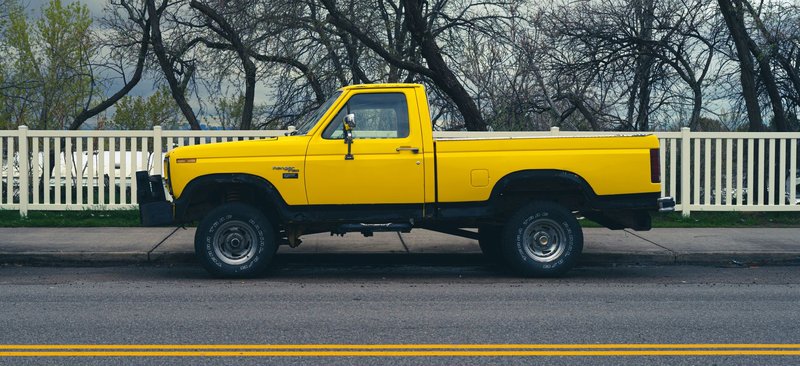
Here are the top five US sellers for the 2001 calendar year, the ones that define the year.
| Rank | Model | US sales (2001) |
|---|---|---|
| 1 | Ford F-Series | 911,597 |
| 2 | Chevrolet Silverado | 716,051 |
| 3 | Ford Explorer | 415,921 |
| 4 | Honda Accord | 414,718 |
| 5 | Toyota Camry | 390,449 |
Two things stand out. First, the gap. The F-Series outsold the Camry by more than two to one, and the top two spots belonged to full-size pickups. Second, the Explorer and Accord finished 1,203 units apart. That’s roughly the difference of one busy week at a big dealership.
Why each one won:
- F-Series. It was the answer to every truck question: work truck, family hauler, contractor’s tool. The range ran from a stripped regular-cab to a crew-cab King Ranch-style luxury trim, so one nameplate covered buyers at very different budgets. Pickups were also the most profitable thing Detroit built, which is why 0% financing offers piled up around them.
- Silverado. Chevrolet’s rival to the F-Series sold more than 700,000 on its own. It was the only truck close enough to make Ford look over its shoulder.
- Explorer. The four-door SUV that made the family station wagon feel like a relic. It sold through the Firestone tire recall and the rollover scrutiny that followed, which tells you how strong demand was.
- Accord. Roomy, quiet, well built and sold with Honda’s reputation for engines that last. In 2001 that was enough to pass the Camry.
- Camry. It lost the top car spot after four straight years, and 390,449 sales is still a number most carmakers would trade a limb for. The Camry won on being the safest, dullest and most dependable choice, and a lot of buyers wanted exactly that.
Category Winners
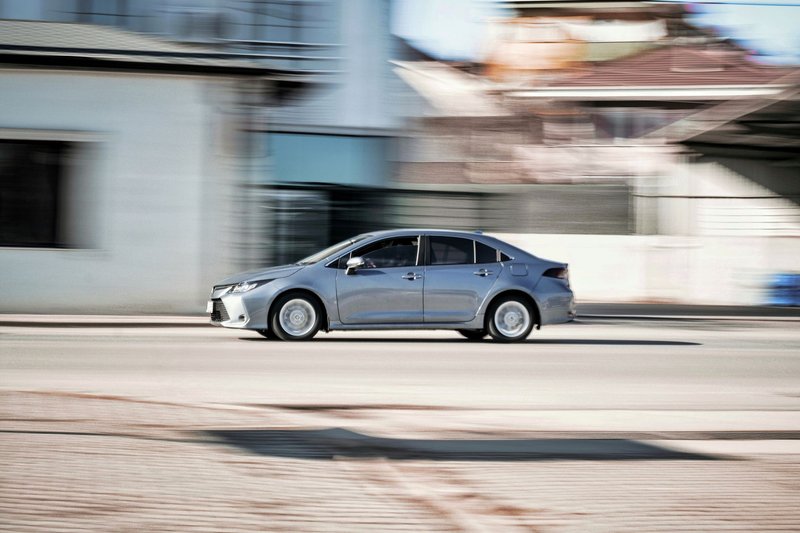
Splitting by body style tells a cleaner story than the overall list.
- Car: Honda Accord. The Camry took second, and the Civic and Corolla fought it out below them as the small-car favorites. Ford’s Taurus was still a major seller, but a big share of its volume went to rental and corporate fleets rather than private buyers.
- Pickup: Ford F-Series, with the Silverado a clear second. Dodge’s Ram was the third pillar of the Detroit truck business.
- SUV: Ford Explorer. Its price, size and four doors fit the way American families wanted to live, and nothing in the class matched its volume.
- Minivan: Chrysler’s Caravan family, which covered the Dodge Caravan, Grand Caravan and Chrysler Town & Country twins. Honda’s redesigned Odyssey and Toyota’s Sienna were taking the premium end.
One caution on the F-Series number. It’s a line, not a single model, and it combines F-150 through the heavier-duty trucks. It’s still the only fair way to compare, because that’s how Ford reports it.
The Cars People Wanted
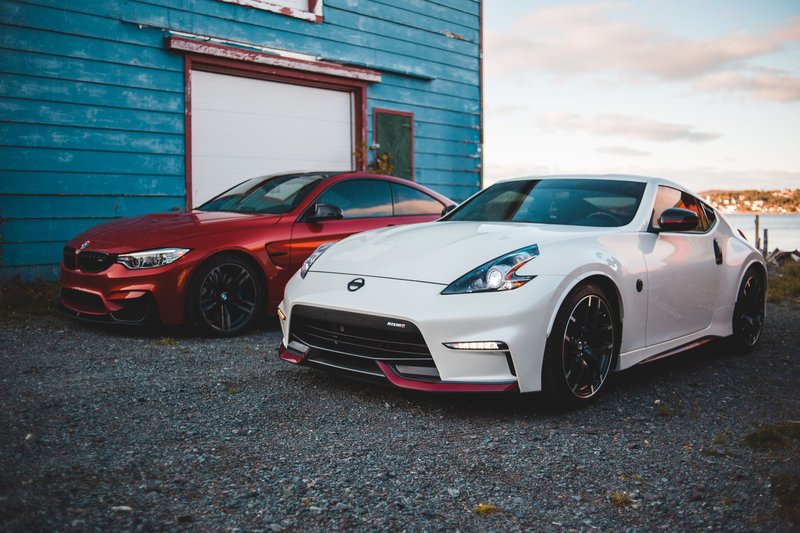
Sales charts show what people could afford. Wish lists show something else, and the enthusiast side of 2001 is stronger than the sales side.
The performance icons:
- BMW M3 (E46). Its 3.2-liter inline-six made 333 horsepower and revved past 7,500 rpm. It’s widely treated as the point where the M3 stopped being a fast 3 Series and became its own animal.
- Honda S2000. A 2.0-liter four-cylinder making 240 horsepower with a redline near 9,000 rpm, rear-wheel drive, and a price just over $30,000. Nothing else offered that engine speed at that price.
- Porsche 911 GT2 (996). Twin turbos, rear-wheel drive, no stability control, and around 460 horsepower. It had a reputation as a car that demanded respect from its driver.
- Chevrolet Corvette Z06. The 2001 model arrived with a 385-horsepower LS6 V8 and a stiffer, lighter body. It was a track car with a license plate for a fraction of the Porsche’s price.
- Ford Mustang Bullitt. A 2001 special edition in dark green, tuned and styled as a nod to the 1968 movie car.
The cars that defined the mood:
- Chrysler PT Cruiser. Motor Trend named it Car of the Year for 2001. Dealers charged over sticker, and the retro hot-rod look made it a status object, which is odd to say about a small wagon-shaped hatchback.
- Volkswagen New Beetle. The 1998 reboot was still a fixture in 2001, and the new 1.8T turbo model gave it some actual pace.
- Ford Focus. The Focus arrived in America in 2000 with sharp handling and angular styling, and it quickly became the small car enthusiasts recommended. Early cars had a reputation for recalls, which dulled the shine over time.
- Toyota Prius. The first Prius reached the US as a 2001 model. Almost nobody bought one that year, but it set up what came next.
Why 2001 Looked the Way It Did
Three forces shaped the 2001 market.
The SUV boom. Light trucks, meaning pickups, SUVs and minivans, were approaching half of all new vehicle sales. Fuel was cheap, trucks were more comfortable than they’d ever been, and automakers made much larger margins on them than on sedans. That’s why the Explorer and the Silverado sit where they do.
Zero percent financing. After the September 11 attacks, GM launched its “Keep America Rolling” 0% financing program, and Ford and Chrysler responded with their own deals. The full-year market came in around 17 million vehicles, one of the strongest on record, even in a shaky economy. Truck-heavy lineups benefited most.
A design turn toward retro. The PT Cruiser, New Beetle and the next year’s Mini and Ford Thunderbird all leaned on nostalgia. The other direction was the Pontiac Aztek, which debuted for 2001 and became a lasting example of what happens when a design committee wins. If you want one image of the year, picture a PT Cruiser parked next to an Aztek.
Outside the US

The US list doesn’t travel. Europe’s best-sellers were compact hatchbacks such as the Volkswagen Golf, Peugeot 206 and Renault Clio. In Japan, small cars led too, and Honda launched the Fit in June 2001. It went on to become a national best-seller.
Pop culture added a layer. The Fast and the Furious hit theaters in June 2001 and turned Honda Civics, Toyota Supras and Mitsubishi Eclipses into movie props. The tuner scene that film introduced to mainstream audiences is still the reason many of these cars cost what they do.
There’s also a legal reason to care about 2001 right now. Under the federal 25-year import rule, vehicles built in 2001 are becoming eligible to bring into the US in 2026. That includes late-build Japanese performance cars such as the Nissan Skyline GT-R (R34) and the Mitsubishi Lancer Evolution VII, which went on sale in Japan in early 2001.
Owning a 2001 Car Today
Most 2001 bestsellers are now old enough that the market sorts them into three groups.
Cheap commuters. A typical Accord, Camry or Civic is inexpensive to buy, often a few thousand dollars, and that price holds because they’re still dependable. Clean, low-mileage cars with records cost more than the average listing, and they’re worth it.
Trucks and SUVs. F-150s and Silverados remain everywhere, and a straight one with a clean frame is a useful tool. Rust on the frame, cab corners and rocker panels is the main problem in states that salt their roads. The Explorer’s V6 can develop timing chain noise, and Ford and Chevy trucks alike need their transmissions checked on a long test drive.
Enthusiast cars. The E46 M3 and S2000 have turned into collectibles. Prices for the best examples have climbed well past what a 25-year-old car should cost, and a bargain version usually has deferred maintenance or crash history. The 996 GT2 is in another price tier altogether.
What to check on any 2001 car:
- Open recalls. Plug the VIN into the NHTSA recall lookup. Many 2001-era Hondas and Toyotas were part of the Takata airbag recalls, and an unrepaired airbag is not something to gamble on.
- Maintenance records. Toyota’s and Honda’s V6 engines from this period suffer when oil changes were skipped. The Accord V6 automatic transmission also has a reputation for failing earlier than the rest of the car.
- Rust. Look underneath, not just at the paint. Check subframes, brake lines and fuel lines.
- Rubber and plastics. Bushings, hoses, belts and interior trim all age out at this mileage. Budget for them.
- Crash safety. A 2001 car lacks features that are standard now, such as stability control on most models and side curtain airbags on many. The IIHS ratings database includes older vehicles if you want to compare.
- Fuel cost. The EPA’s fueleconomy.gov lists official figures for 2001 models. A V8 truck from this year can easily cost twice as much in fuel as an Accord.
The popular cars in 2001 were the ones that matched how people lived: a truck for the job, a sedan that wouldn’t quit, an SUV for the kids. A quarter-century later, the sedans are still the easiest to live with, the trucks are the easiest to resell, and the sports cars are the ones people regret not buying.

Marco Delantero
More from Marco DelanteroHow we reviewed this article
This article was researched against manufacturer records and editorially reviewed before publishing. We accept no payment for coverage. Some guides contain affiliate links; see our affiliate disclosure.