Table of Contents
- The quick answer
- Miura SV: the last of the icon
- Espada Series III: the one owners actually kept
- Jarama 400 GTS: the grand tourer nobody talks about
- Urraco P250: the baby Lambo that flopped
- The oil crisis that gutted the order books
- What these four are worth chasing today
The quick answer
Four Lamborghinis were in production in 1973: the Miura SV (its final year), the Espada Series III, the Jarama (upgraded mid-year to the 400 GTS), and the Urraco P250. No LM, no Countach yet — that car wouldn’t reach customers until 1974. This was the last full lineup of the Ferruccio Lamborghini era before the oil crisis hit and the company spent the rest of the decade changing hands.
| Model | Years produced | Units built | 0–60 mph | New price (1973) | Value today |
|---|---|---|---|---|---|
| Miura SV | 1971–1973 | ~150 | ~5.7 sec | $21,000–$24,000 | $3.5M–$4.9M+ |
| Espada Series III | 1972–1978 | ~456 total | ~7.5 sec | Low-to-mid $20,000s | ~$90,000, top cars $200K+ |
| Jarama 400 GTS | 1973–1976 | 150 (GTS) | ~7 sec | ~$25,000 | $80,000–$140,000 |
| Urraco P250 | 1973–1976 | 522 | 6.9 sec | $22,500 | $50,000–$100,000 |
Miura SV: the last of the icon
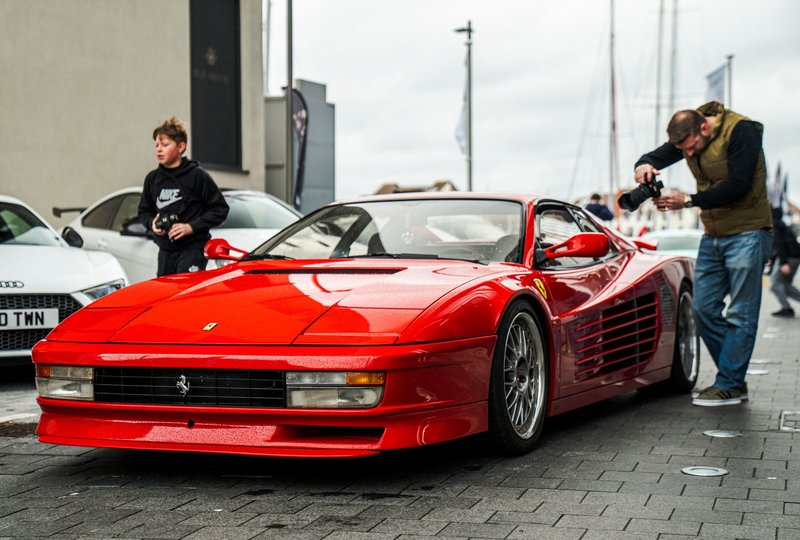
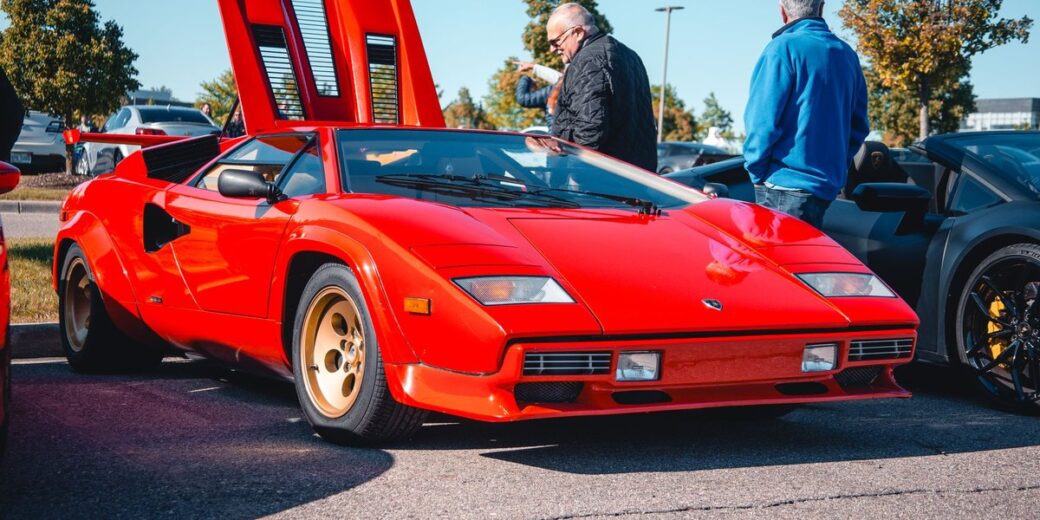
By 1973, the Miura was already six years old and everyone in Sant’Agata knew the Countach was coming to replace it. The SV — Sprint Veloce — was the send-off: wider rear haunches to cover fatter tires, separated engine and transmission oil (the earlier Miuras shared a sump between the two, which chewed up gearboxes), and a reworked intake that finally let the 3.9-liter V12 breathe properly.
Lamborghini built roughly 150 SVs across the model’s three-year run, and 1973 was the last of it — the oil crisis and a stalled order book shut the line down before the year was out. That scarcity is why the SV isn’t just the best Miura to own; it’s the one that broke the million-dollar barrier first and kept climbing. A well-documented example crossed the block for $4.9 million, which says less about nostalgia and more about how few of these Lamborghini ever actually finished.
Power depends on who’s measuring: Lamborghini’s own brochure claimed 385 hp, period road tests found closer to 350. Either number was enough to embarrass most contemporary supercars, and the SV remains the quickest street Miura Lamborghini ever sold.
Espada Series III: the one owners actually kept
The Espada gets overshadowed by the Miura’s mid-engine drama, which is unfair, because it’s the Lamborghini that made the company money in the early ’70s. Four seats, a huge glass hatch, and a 3.9-liter V12 up front — this was Ferruccio’s answer to the Ferrari 365 GTC/4 and Maserati Indy, built for owners who wanted to actually use the car.
The Series III, introduced in 1972 and still in production through 1973, added power steering as standard, a redesigned dashboard, and a mild bump to around 350 hp from the same six-Weber V12 that powered the Jarama and Miura. Top speed sat around 150 mph, which for a full four-seat GT in 1973 was genuinely rare air.
Roughly 456 Series III cars were built across the full run, making it the most common of the four 1973 Lamborghinis by a wide margin — and that relative abundance is exactly why it trades for a fraction of Miura money despite sharing the same engine family. Average condition cars land around $90,000; the best-documented examples have pushed past $200,000 at auction.
Jarama 400 GTS: the grand tourer nobody talks about
The Jarama is the model even dedicated Lamborghini people forget existed. Named after a Spanish region famous for fighting bulls (Lamborghini’s naming convention, not subtlety), it replaced the Islero in 1970 as a shorter, stiffer two-plus-two built on a modified Espada platform — same idea, tighter package, more aggressive Bertone-via-Marcello-Gandini body.
1973 was the year the Jarama actually got good. The original 400 GT made way for the 400 GTS mid-year, with power climbing from 350 to 365 hp and torque up to 300 lb-ft, plus a functional hood scoop that wasn’t just decoration. Lamborghini built 150 GTS units through 1976, on top of the 177 original GTs — 327 Jaramas total, which makes it rarer than the Espada it’s mechanically related to.
Part of why the Jarama stays cheap relative to its rarity: it never had a signature moment. No film cameo, no factory racing pedigree, nothing that turns a good car into a legend. That’s arguably the whole appeal now — you get Miura-grade engineering and genuine scarcity without Miura money, in a car most people at a cars-and-coffee meet won’t be able to name.
Urraco P250: the baby Lambo that flopped
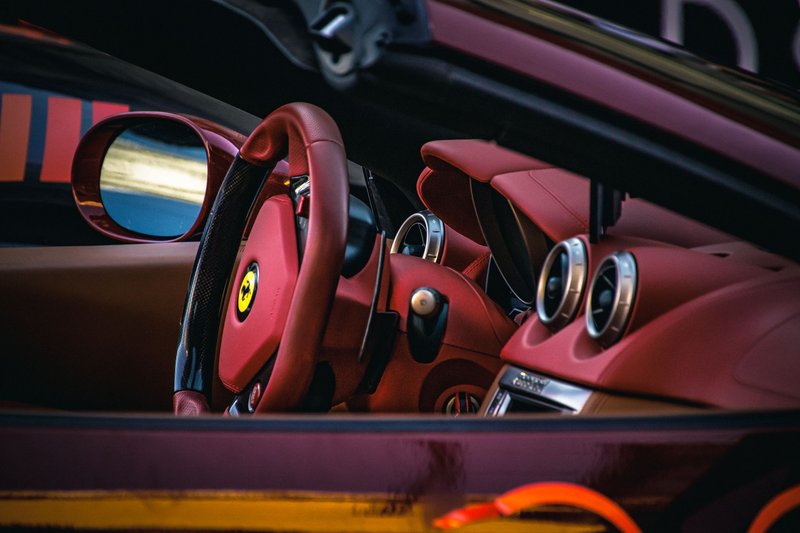
The Urraco was supposed to be Lamborghini’s Porsche 911 fighter — a smaller, cheaper, 2+2 mid-engine car that could be built and sold in real volume. Ferruccio wanted 1,000 a year. He got nowhere close.
The 1973 P250 ran a 2.5-liter V8 (Lamborghini’s first V8, and the only V8 in the 1973 lineup) making 220 hp and 166 lb-ft, good for a 6.9-second run to 60 and a 150-mph top end. Bertone’s Gandini gave it clean, low-key lines that read more Italian coupe than supercar — which was the point, and also part of why it never caught on with buyers who wanted their Lamborghini to look like one.
At $22,500 new, the Urraco undercut the Espada and Jarama by a meaningful margin, but it launched into the worst possible market: buyers spooked by fuel prices weren’t in the mood for a new, unproven model from a company known for temperamental V12s. Only 522 P250s were ultimately built. Today it’s the entry point into 1970s Lamborghini ownership — real ones trade for a fraction of what the V12 cars command, which makes it the one car on this list you could plausibly still daily drive without insuring it like a house.
The oil crisis that gutted the order books
Every one of these four cars got hit by the same thing at the same moment. In October 1973, OAPEC members cut oil exports to the US and its allies in response to Western support for Israel during the Yom Kippur War, and by December, OPEC had raised prices roughly 130 percent on top of that. Gas lines, rationing, and a genuine sense that the era of cheap fuel was over followed almost immediately.
A 12-cylinder Italian car that drank fuel like it owed the world money was suddenly the worst possible purchase a wealthy buyer could make in public. Lamborghini, more exposed than most manufacturers because its entire lineup was V12s (plus the brand-new V8 Urraco nobody wanted yet), saw demand collapse within months. The Miura line ended that year partly because of it. The Urraco’s launch volume never recovered. Ferruccio himself sold his remaining stake in the company by 1974—the year when the entire automotive industry was being strangled by the same forces—done with the business he’d built, and Lamborghini spent the rest of the decade bouncing between owners and briefly into bankruptcy.
None of that is visible in a spec sheet. But it’s the reason 1973 reads, in hindsight, as the last year of the company’s original golden run rather than just another model year.
What these four are worth chasing today
If you’re shopping rather than reading for trivia: the Urraco is the realistic entry point, the Jarama is the rarity play that’s still underpriced relative to what it is, the Espada is the one you can actually use, and the Miura SV is the one you buy once you’ve stopped pretending this is a rational hobby. All four share engineering DNA from the same three-year window, right before a global energy shock changed what a car company like Lamborghini was allowed to build.

Daniela Voss
More from Daniela VossHow we reviewed this article
This article was researched against manufacturer records and editorially reviewed before publishing. We accept no payment for coverage. Some guides contain affiliate links; see our affiliate disclosure.