
Show the math
(1 − 17%) × 18.16¢ + 17% × $0.53 = $0.2408 per kWh33.3 kWh ÷ 100 × $0.2408 = $0.0802$3.995 ÷ 26.0 MPG = $0.1537Gas 10.1¢ and EV 6.1¢ per mile, added to fuel($0.2547 − $0.1412) × 13,740 mi = $1,559$3,400 ÷ $1,559 = 2.18 years (upfront = premium + charger − incentives; constant prices, no discounting)3370 ÷ 33.3 = 101.2$3.995 ÷ $0.0802 = 49.8 MPGShort answer: Driving an EV saves about 1,559 dollars a year over a gas car at US average prices: 1,009 dollars in fuel and 550 dollars in maintenance. Fuel costs 8.0 cents per mile for the EV against 15.4 cents for gas, and a 3,400 dollars price premium is recovered in about 2.2 years. The figures are for a midsize car driven 13,740 miles a year.
The result depends on three prices: gas, your home electricity rate and the share of charging done on a public DC fast charger. The calculator takes each price by state, shows its source and date, and returns yearly savings, cost per mile and break-even years on the EV price premium.
How to use the EV vs gas calculator
How the EV vs gas calculation works
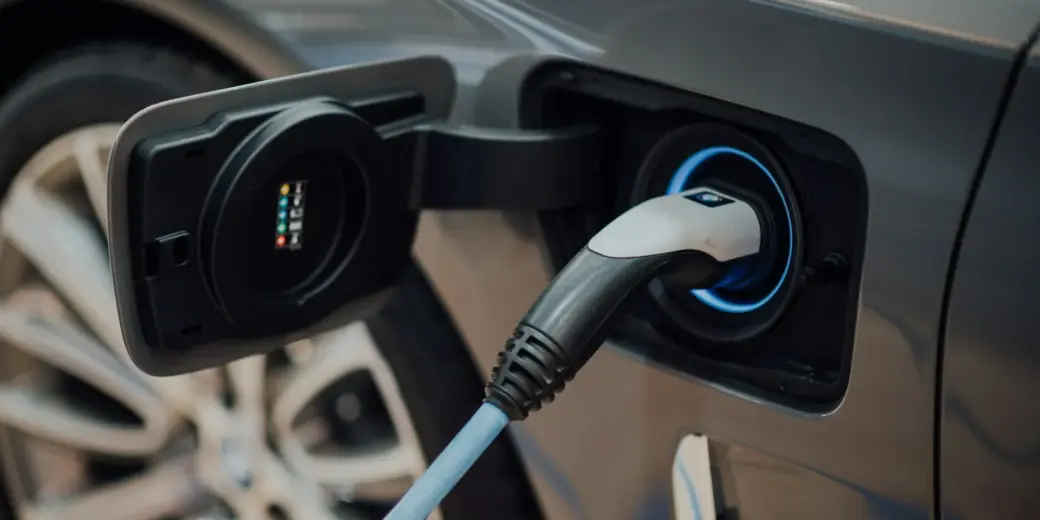
Each car gets a cost per mile, and the difference times your miles is the yearly saving. Gas cost per mile is gas price divided by MPG. EV cost per mile is kWh per 100 miles divided by 100, times the blended electricity rate. The blended rate weights your home rate and your public rate by charging share. Break-even years is the upfront amount divided by yearly savings. The US Department of Energy uses the same kWh-times-price method for home charging cost.
Worked example with the defaults: gas is 3.995 dollars a gallon at 26 MPG, which is 15.4 cents per mile. The blended electricity rate is 24.1 cents per kWh, so an EV using 33.3 kWh per 100 miles costs 8.0 cents per mile. Over 13,740 miles that is 2,111 dollars for gas fuel and 1,102 dollars for EV electricity.
Each default carries its source and date. Gas is the EIA national average and home electricity is the EIA residential average.
| Input | Default | Source and date |
|---|---|---|
| Gas price | 3.995 dollars per gallon | EIA, week of Nov 9, 2026 |
| Home electricity | 18.16 cents per kWh | EIA residential average, August 2026 |
| Public DC fast charging | 0.53 dollars per kWh | Paren, Q1 2026 |
| Public charging share | 17% | IEA: about 83% of US charging is at home |
| Annual miles | 13,740 | FHWA, 2024 |
| Maintenance, gas vs EV | 10.1 vs 6.1 cents per mile | Argonne National Laboratory, 2021 |
EV vs gas savings by vehicle class
Pickups save the most, 2,266 dollars a year, because the gas version burns the most fuel. Large SUVs take the longest to pay back, 4.6 years, because their premium is 8,100 dollars. Each row uses the national prices above.
| Class | Gas MPG | EV kWh per 100 mi | Premium (dollars) | Saved per year (dollars) | Break-even (years) |
|---|---|---|---|---|---|
| Small car | 25.8 | 37.1 | 2,800 | 1,450 | 1.9 |
| Midsize car | 26 | 33.3 | 3,400 | 1,559 | 2.2 |
| Small SUV | 24.5 | 33 | 3,450 | 1,698 | 2.0 |
| Midsize SUV | 20.5 | 40 | 5,050 | 1,904 | 2.7 |
| Large SUV | 16.7 | 63.2 | 8,100 | 1,745 | 4.6 |
| Pickup | 17 | 45.7 | 6,800 | 2,266 | 3.0 |
Home charging vs public fast charging
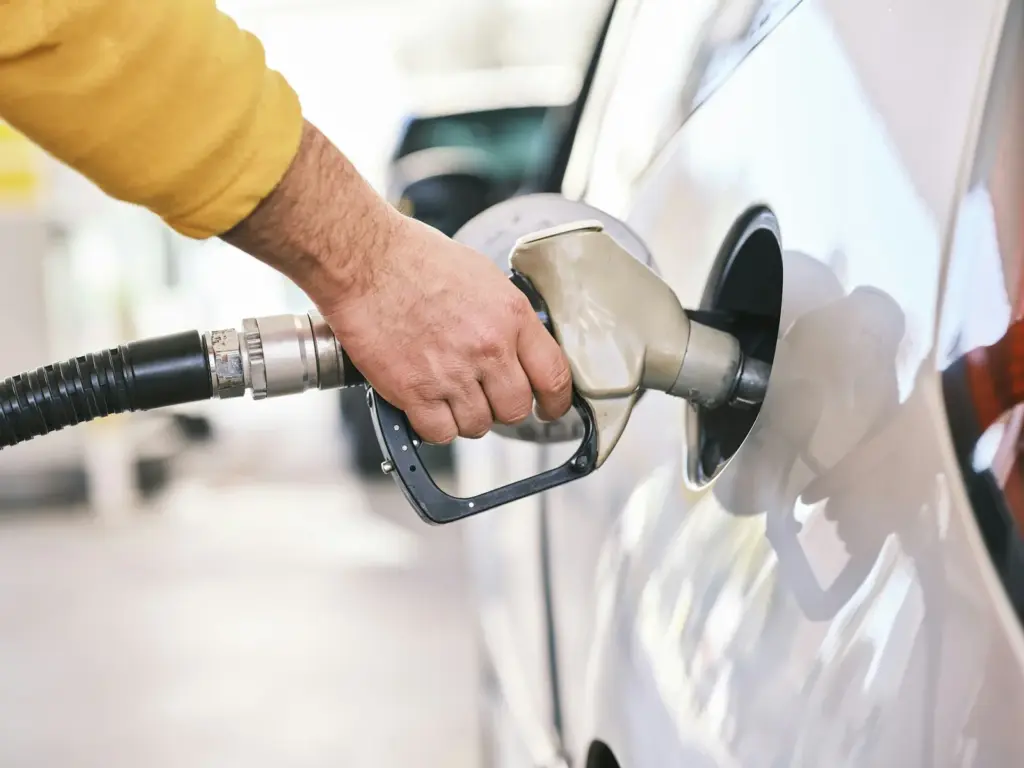
Home charging costs about 6.0 cents per mile, less than half the 15.4 cents for gas. Public DC fast charging costs 17.6 cents per mile, which is more than gas on fuel alone.

| Charging mix | Electricity (cents per kWh) | EV fuel cost (cents per mile) | Against gas |
|---|---|---|---|
| Home only | 18.2 | 6.0 | Cheaper |
| 83% home, 17% public (default) | 24.1 | 8.0 | Cheaper |
| Public DC fast only | 53 | 17.6 | More expensive on fuel |
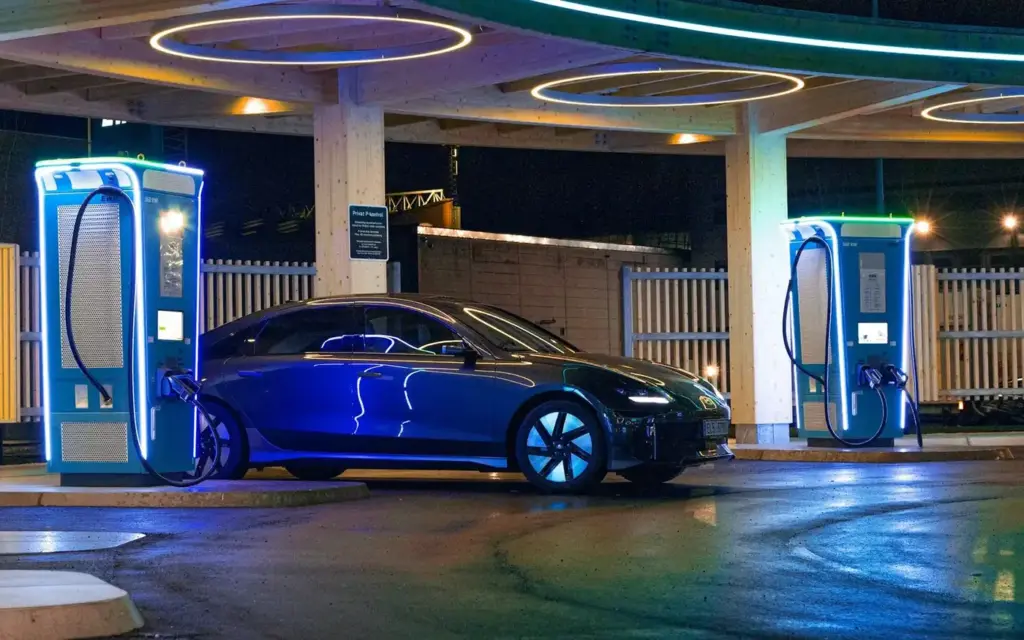
A Level 2 charger runs on a 240-volt circuit and refills an EV overnight at the home rate. If you need one installed, enter its cost in the home charger field and the calculator adds it to the upfront amount before break-even. Pick a Level 2 home charger that matches your car’s connector.
MPGe vs MPG: comparing efficiency
MPGe is the miles an EV drives on 33.7 kWh, the energy in one gallon of gasoline (DOE). The conversion is MPGe = 3,370 ÷ kWh per 100 miles, so 33.3 kWh per 100 miles is 101.2 MPGe.
MPGe compares energy, not cost. At the default prices a gas car needs 49.8 MPG to match the EV’s fuel cost per mile. The EV is about 1.9 times cheaper per mile than the 26 MPG gas car, not the three or four times its MPGe suggests.
How state prices change the savings
The saving depends on electricity price relative to gas. Hawaii pays 47.18 cents per kWh and keeps 681 dollars a year of savings, while Nevada saves 2,027 dollars. State prices come from EIA (gas: week of Nov 9, 2026; electricity: August 2026) and are shown for the default midsize car.
| State | Gas (dollars per gallon) | Electricity (cents per kWh) | Gas (cents per mile) | EV (cents per mile) | Saved per year (dollars) | Break-even (years) |
|---|---|---|---|---|---|---|
| Nevada | 4.49 | 12.72 | 17.3 | 6.5 | 2,027 | 1.7 |
| California | 5.56 | 29.75 | 21.4 | 11.2 | 1,946 | 1.7 |
| Texas | 3.41 | 15.91 | 13.1 | 7.4 | 1,335 | 2.5 |
| Hawaii | 4.42 | 47.18 | 17.0 | 16.0 | 681 | 5.0 |
Break-even, incentives and maintenance
At the defaults, the 3,400-dollar premium divided by 1,559 dollars of yearly savings gives 2.2 years, or 26 months. That is about 30,000 miles. On fuel savings alone the break-even is 3.4 years. Net of the premium, the savings add up as follows.
| Years of ownership | Net savings after the premium (dollars) |
|---|---|
| 3 | 1,277 |
| 5 | 4,395 |
| 10 | 12,189 |
Maintenance accounts for 550 dollars of the yearly saving. Argonne National Laboratory puts scheduled maintenance, tires included, at 6.1 cents per mile for an EV against 10.1 for a gas car. Set maintenance to fuel only for the stricter figure.
Insurance, depreciation and financing are left out because they depend on the specific car. For the full total, use the cost of owning a car calculator.
How accurate the EV vs gas estimate is
The estimate is as accurate as the efficiency and prices you enter. It holds prices constant with no discounting, so break-even is a plain division. EPA label efficiency is measured at the outlet, so charging losses are already in it.
This article contains Amazon affiliate links. 33gears earns a commission on qualifying purchases. See our affiliate disclosure.
Frequently asked questions
At US average prices an EV saves about 1,559 dollars a year for a midsize car driven 13,740 miles, made up of 1,009 dollars in fuel and 550 dollars in maintenance. For that car the saving runs from 681 dollars in Hawaii to 2,027 dollars in Nevada.
At the defaults it takes 2.2 years, or 26 months, to recover a 3,400-dollar premium. Break-even is the upfront amount divided by yearly savings, and it reaches 4.6 years for a large SUV.
Home charging costs about 6.0 cents per mile and public DC fast charging about 17.6 cents per mile. Gas costs 15.4 cents per mile for the default car.
It is the electricity an EV uses to drive 100 miles, the way MPG is the distance a gas car drives on a gallon. Dividing 3,370 by kWh per 100 miles gives MPGe, so 33.3 kWh per 100 miles is 101.2 MPGe.
No. The federal clean vehicle credit ended for vehicles acquired after September 30, 2025. State and utility rebates may still apply, and you can enter them in the incentives field.
At the defaults, yes. Fuel and maintenance savings total 7,795 dollars over 5 years, which is 4,395 dollars after the 3,400-dollar premium.
Argonne puts scheduled maintenance at 6.1 cents per mile for an EV against 10.1 for a gas car. EVs have no oil changes and fewer moving parts to service.
Sources
- EIA. Gasoline and Diesel Fuel Update
- DOE AFDC. Charging at home
- DOE. Fact of the Week 1373: Efficiency of EVs
- EPA and DOE. Fuel economy data
- Argonne National Laboratory. Vehicle maintenance costs
- Electrek. EV fast charging prices
- IEA. Global EV Outlook 2024
- FHWA. Highway Statistics 2024
- IRS. Clean vehicle tax credits

James Kowalski
More from James KowalskiHow we reviewed this article
This article was researched against manufacturer records and editorially reviewed before publishing. We accept no payment for coverage. Some guides contain affiliate links; see our affiliate disclosure.