Old Volvos split into two groups: the cars you buy with your heart (Amazon, P1800) and the cars you buy with your spreadsheet (240, 740, 940). The rest sit somewhere between. This guide covers the eight lines that matter, from the 1947 PV444 to the 960 of the mid-1990s, with years, identification cues, known faults and a one-line verdict on each.
TLDR
- Most reliable and easiest to live with: the 240, 740 and 940 with naturally aspirated four-cylinder engines.
- Best classic for the money: the Amazon. Simple mechanics, strong parts support, and it drives like a 1960s car should.
- Best to look at: the P1800. Priced accordingly.
- Best modern-ish daily driver: a well-serviced 850, ideally a wagon.
- Skip unless you know what you’re doing: the 260 V6 and the 760/780 V6 cars.
Contents
- The quick reference table
- PV444 and PV544 (1947-1965)
- Amazon (1956-1970)
- P1800 and 1800ES (1961-1973)
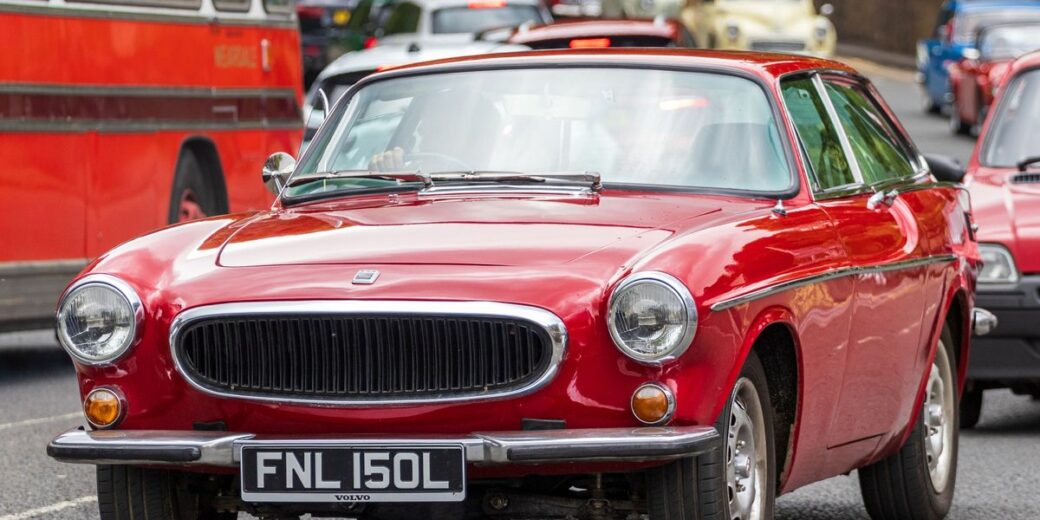
- The 140 series (1966-1974)
- The 240 and 260 (1974-1993)
- The 700 series: 740, 760 and 780 (1982-1992)
- 850 (1991-1997)
- 940 and 960 (1990-1998)
- Where the sources disagree on dates
- Which old Volvo should you buy?
The quick reference table
Years are for production in Sweden and Europe, with US sales years separate where they differ. Production ranges follow Volvo Cars’ own heritage catalogue, cross-checked against Wikipedia’s model list.
| Model | Europe | US sales | Bodies | Verdict |
|---|---|---|---|---|
| PV444 / PV544 | 1947-1965 | 1955-1965 | 2-door sedan | Charming, parts are harder |
| Amazon (121/122/221) | 1956-1970 | 1959-1970 | 2-door, 4-door, wagon | Best starter classic |
| P1800 / 1800ES | 1961-1973 | 1961-1973 | Coupe, ES wagon | Buy for style, budget for rust |
| 140 (142/144/145) | 1966-1974 | 1968-1974 | 2-door, 4-door, wagon | Underrated Amazon alternative |
| 240 (242/244/245) | 1974-1993 | 1975-1993 | 2-door, 4-door, wagon | The default answer |
| 260 (262/264/265) | 1975-1982 | 1975-1982 | 2-door, 4-door, wagon | Skip, mostly |
| 740 / 760 / 780 | 1982-1992 | 1983-1992 | 4-door, wagon, Bertone coupe | 740 yes, V6s no |
| 850 | 1991-1997 | 1993-1997 | 4-door, wagon | Good if serviced |
| 940 / 960 | 1990-1998 | 1991-1995 | 4-door, wagon | Best of the bricks |
PV444 and PV544 (1947-1965)
The PV444 was Volvo’s first real mass-market car. It was designed during the war, shown in 1944, and reached customers in 1947. It looks like a shrunken 1940s American sedan, with a humped fastback roofline and, on early cars, a two-piece split windshield.
- Years: PV444 1947-1958, PV544 1958-1965. US sales started in 1955.
- Body: two-door sedan only.
- Engines: B14, B16 and later B18 four-cylinders.
- Spot it: the PV544 has a one-piece curved windshield. The PV444 has two flat panes.
- Known for: early adoption of a unibody and, on the 544, front three-point seat belts from 1959.
- Watch for: rust in the floors, sills and the rear shock towers. Trim and body panels are hard to find.
- Verdict: a sweet driver for a collector who enjoys hunting for parts. Not a first classic.
Amazon (1956-1970)
The Amazon is the car most people picture when they say “old Volvo.” Rounded “pontoon” styling, a chrome grille bar, and a body that has aged better than most of its contemporaries. Around 670,000 were built, and the four-door family sedan was a staple of 1960s roads.
- Years: 1956-1970. US sales ran from 1959.
- Bodies: two-door sedan (121/131), four-door sedan (122S) and the two-door wagon (221, from 1962).
- Engines: B16, B18 and B20 four-cylinders. The B18 and B20 are tough, simple engines.
- Spot it: the 122S four-door is the common one. The two-door sedan and wagon are scarcer and cost more.
- Known for: the world’s first standard three-point seat belt in a production car, fitted from 1959. Nils Bohlin’s design, patented in the US in 1962, is still the basis of every seat belt today.
- Watch for: rust in the sills, front fenders, rear arches and the area around the battery tray. Mechanicals are cheap to fix. Bodywork is not.
- Verdict: buy. It’s the best-supported pre-1970 Volvo and a car you can actually drive every weekend.
P1800 and 1800ES (1961-1973)
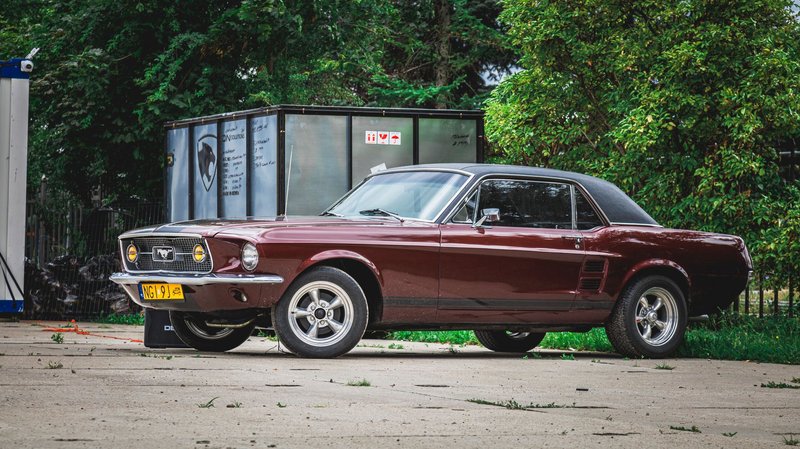
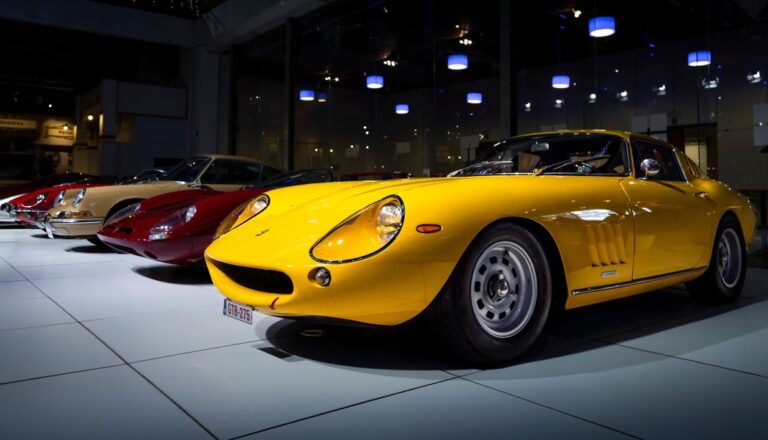
The P1800 is the Volvo everyone knows from television: Roger Moore drove one in The Saint. The shape was drawn by Pelle Petterson, who was working at the Italian house Frua at the time. Early cars were built by Jensen in West Bromwich, England, then production moved to Volvo’s Lundby plant in Gothenburg in 1963. It also sits among the 1960s coupes worth owning.
- Years: 1961-1973 (coupe to 1972, ES wagon to 1973).
- Bodies: two-seat-plus-occasional-rear-seat coupe, and from 1971 the glass-hatch 1800ES.
- Engines: B18 then B20, with Bosch fuel injection on the 1800E from 1970.
- Spot it: the early cars have small tail fins and chrome-heavy trim. The ES has a frameless glass tailgate and no fins.
- Known for: durability. A New York owner, Irv Gordon, put more than three million miles on his 1966 P1800S.
- Watch for: rust, body panel availability, and prices that have outrun the car’s real driving quality.
- Verdict: buy it if you want a Volvo that turns heads. The ES is the rarer, more usable one.
P1800 vs Amazon
Same family, same engines, very different cars. The Amazon is cheaper, roomier and easier to repair. The P1800 is lower, sharper and worth significantly more money. If you want to drive it, buy the Amazon. If you want to show it, buy the P1800. Amazon buyers get more car for the money. P1800 buyers get the shape.
The 140 series (1966-1974)
The 140 is the Amazon’s boxier replacement, and it’s the model people forget. It introduced dual-circuit brakes and was built around crumple zones, years before they were common.
- Years: 1966-1974 in Europe. US sales ran 1968-1974.
- Bodies: 142 (two-door), 144 (four-door), 145 (wagon). Roughly 1.25 million were built.
- Engines: B18 and B20 four-cylinders, with fuel injection on the later E models.
- Spot it: a flat, upright body with a wide horizontal grille. The 240 that replaced it has a longer nose.
- Watch for: rust, worn bushings and SU carburetor tuning on the early US cars.
- Verdict: a fair buy. It’s a more modern car than the Amazon and still cheaper than a nice one.
The 240 and 260 (1974-1993)
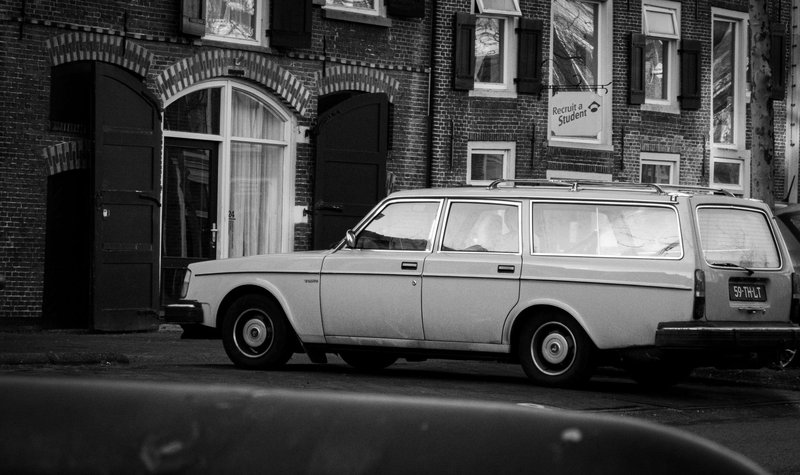
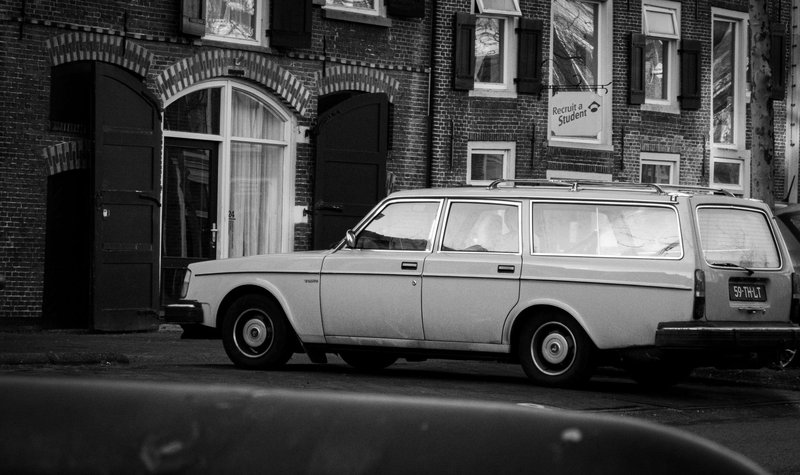
This is the one. Nearly 2.9 million 240s were built over almost 20 years. The 240 started as a 140 with a longer nose, to make room for a planned V6 and a new MacPherson strut front suspension. It stayed in production until 1993, long after Volvo had moved on.
- Years: 1974-1993 in Europe. US sales ran 1975-1993.
- Bodies: 242 (two-door), 244 (four-door), 245 (wagon). The model code reads series, cylinders, doors.
- Engines: B21 and B230 four-cylinders. Turbo versions from the early 1980s.
- Known for: being very hard to kill. In 1985 the 240 Turbo won the European Touring Car Championship, which tells you what the chassis can take.
- Watch for: rust in the rear arches and sills, the brittle late-80s engine wiring harness, cracked dashboards and worn J-type overdrive on manuals.
- Verdict: buy. If you only read one section, this is it. The wagon is the one to find.
The 260
The 260 (262C coupe, 264 sedan, 265 wagon) used the PRV V6 and a longer, more luxurious body, and it ran from 1975-1982. The early V6s have a reputation for camshaft wear. The 262C Bertone coupe, with its chopped roof, is a design oddity with a small following. Skip the 260 unless you want that Bertone.
The 700 series: 740, 760 and 780 (1982-1992)
The “brick” era begins here. Rear-wheel drive and a boxy shape that did not change much for a decade.
- Years: 760 from 1982, 740 from 1984 and the 780 coupe from 1986. Production ended in 1992. US sales of the 760 started in 1983, and the 740 in 1985.
- Bodies: 744 and 745 for the 740, 764 and 765 for the 760, and the Bertone-built 780 coupe.
- Engines: B230 four-cylinder on the 740, with turbo versions. The 760 offered a PRV V6 and, in Europe, a six-cylinder diesel.
- Spot it: squarer nose and a ribbed horizontal grille, compared with the smoother 940.
- Watch for: the same wiring-harness problem as the 240, tired automatics and ignored timing belts.
- Verdict: buy a non-turbo 740 or 745. The 760 V6 and 780 are expensive to keep alive.
850 (1991-1997)
The 850 broke every Volvo rule: front-wheel drive, a transverse five-cylinder engine, and a rear axle that steers slightly under cornering load. It was also the car that put Volvo into touring-car racing, with a wagon on the grid in 1994, and it spawned the yellow T-5R.
- Years: 1991-1997 in Europe. US sales ran 1993-1997.
- Bodies: four-door and wagon.
- Engines: five-cylinder naturally aspirated, turbo and the high-output T-5R.
- Known for: side-impact protection (SIPS), and a smooth, flexible engine.
- Watch for: the crankcase ventilation system, which clogs and causes oil leaks, along with worn engine mounts and neglected automatic transmissions.
- Verdict: buy if the service history is clean. The wagon is the best of them.
940 and 960 (1990-1998)
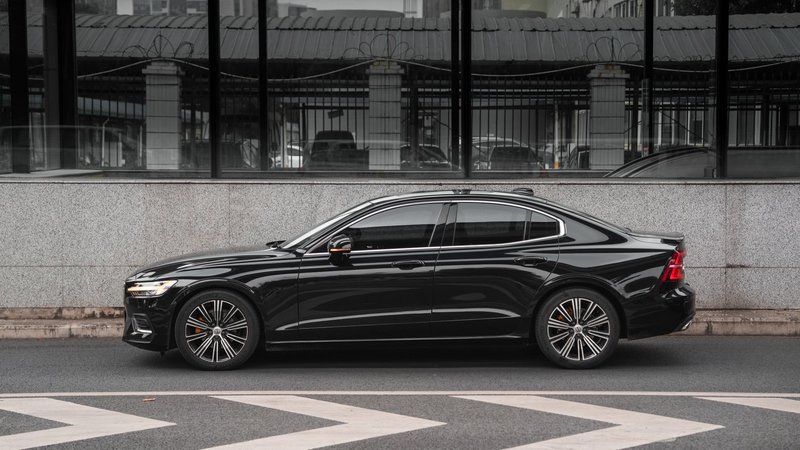
The 940 is a refreshed 740 with a smoother nose, an improved interior and more safety equipment. The 960 is the same body with an inline-six, available from 1990 in Europe and from 1992 in the US, and independent rear suspension.
- Years: 940 from 1990 to 1998 in Europe, US sales 1991-1995. The 960 ran 1990-1994, then became the S90 and V90 until 1998.
- Bodies: sedan and wagon.
- Engines: four-cylinder B230 and later 16-valve versions on the 940. A 24-valve 3.0 inline-six on the 960.
- Known for: being the last rear-wheel-drive Volvo, and for a reputation for lasting almost forever.
- Watch for: the usual rust and the aging electronics on high-spec versions.
- Verdict: buy. A 940 wagon with a clean history may be the best cheap classic Volvo.
740 vs 940
If you’re trying to tell the two apart, look at the nose. The 740’s is flatter and squarer. The 940’s is rounder, with a smoother grille, and the interior was reworked. Mechanically they are close cousins, so a good 740 is a good buy too, and the choice often comes down to which one is nearer to you.
Where the sources disagree on dates
Old Volvo dates are messy, and the sources do not all agree. These are the three conflicts that come up most.
- Amazon, 1970 or 1971? Volvo and Wikipedia list production in Sweden as ending in 1970. Some sources say 1971, probably because cars built late in the run were registered or sold as 1971 models. I use 1970.
- P1800, 1972 or 1973? Both are right. The coupe ended in 1972. The 1800ES wagon ran through 1973.
- 240, 1974 or 1983? One Volvo club page lists the 240 as 1983-1993. Volvo’s own catalogue starts the car in 1974, and the US got it from 1975. The 1983 date likely marks the point when the 240 became the only 200-series line left after the 260 ended in 1982.
If a seller quotes a different year, check the VIN and the build plate before you trust a listing. For US cars, the NHTSA recall lookup takes a VIN and shows open recalls on later models.
Which old Volvo should you buy?
Here is the ranking, from least to most risk.
| Priority | Best pick | Why |
|---|---|---|
| Reliability | 240 / 940 non-turbo | Simple four-cylinder, strong aftermarket |
| Parts availability | 240, then 740/940 | Produced in huge numbers, still sold new and used |
| Lowest price | 740, 940 or 240 sedan | Cheap to buy, often under a few thousand dollars |
| Best classic feel | Amazon | Cheap enough to drive, with the 1960s look |
| Best investment | P1800 / 1800ES | Values have held, but the buy-in is high |
| Best daily driver | 850 wagon, 940 wagon | Modern safety, easy to live with |
Some rules apply to every one of these.
- Rust beats mileage. A 300,000-mile 240 with a solid body is a better buy than a 100,000-mile one with rotten sills.
- Ask for the timing belt date. Skipped belt changes ruin engines.
- Buy the best you can afford. Restoring a neglected Volvo costs more than the purchase price.
- Wagon or sedan? The wagon costs more and is worth it. Wagons are the models that people keep.
Last, check fuel economy before you commit. The EPA’s fueleconomy.gov lists the ratings for most of the 1980s and 1990s models, and a turbo 740 is thirstier than people expect.
The short version: a 240 or 940 wagon for the money, an Amazon for the weekend, a P1800 if you can afford the badge. Everything else is a specialist’s choice.

Marco Delantero
More from Marco DelanteroHow we reviewed this article
This article was researched against manufacturer records and editorially reviewed before publishing. We accept no payment for coverage. Some guides contain affiliate links; see our affiliate disclosure.