1965 was the year the Mustang had its first full production run, Detroit rebuilt its entire full-size lineup, and Europe and Japan quietly released cars that shaped the next twenty years. Most lists of cars made in 1965 stop at Dearborn and Maranello. This one covers the whole map, with engines, power figures and a note on why each car mattered.
Contents
- The context: what made 1965 different
- American cars of 1965
- British cars of 1965
- German cars of 1965
- Italian cars of 1965
- French cars of 1965
- Japanese cars of 1965
- Quick-reference table
- Which 1965 cars are collectible today
The context: what made 1965 different
The Mustang arrived in April 1964, so 1965 was its first full model run. Ford sold more than 559,000 of them in that run and passed the one-million mark by early 1966. Every other manufacturer spent 1965 trying to answer it.
General Motors, Ford and Chrysler all released fresh full-size cars, and American Motors rebuilt its Rambler Classic range. Studebaker was dying: US production had ended in South Bend in December 1963, and the Hamilton, Ontario plant kept going until March 1966. 1965 was its last full year.
Safety was the other thread. Seat belts were optional on most 1965 cars, and the federal rules that changed that came after the 1966 National Traffic and Motor Vehicle Safety Act, which created what is now NHTSA. Ralph Nader’s Unsafe at Any Speed, aimed at the Corvair, was published in November 1965 and helped push that law through.
American cars of 1965
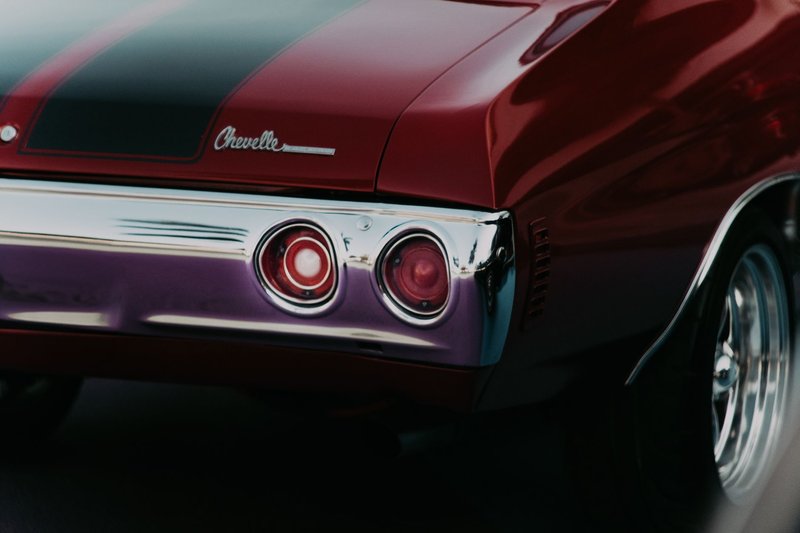
Ford Mustang
The base car cost $2,368 and came with a 101 hp 170 cubic inch six. The one that built the legend was the 289 V8, offered at 200, 225 and 271 hp. The 271 hp “K-code” Hi-Po is the one collectors hunt. The fastback body arrived for 1965, along with the GT package of front discs, a stiffer suspension and fog lamps.
Shelby GT350
Carroll Shelby took a K-code fastback, ripped out the rear seat, and tuned the 289 to 306 hp. Roughly 560 cars were built for 1965, all in Wimbledon White with blue stripes, and a handful were stripped R-model racers. It cost about $4,500, nearly double the price of a standard Mustang.
AC Cobra 427
The 427 Cobra was shown in New York in April 1965: a 7.0 liter Ford FE V8 rated around 425 hp in a car that weighed barely over 2,500 lb. It had a redesigned chassis with coil springs instead of the earlier leaf springs, and flared fenders to cover the wider tires. That same year, Shelby’s Cobra Daytona Coupe helped Ford win the FIA GT Manufacturers’ Championship ahead of Ferrari.
Ford GT40
The GT40 Mk I, with its 4.7 liter 289 V8, was still finding its feet in 1965. It didn’t win Le Mans that year, and Ford’s real result came in 1966 with the 7.0 liter Mk II. But the road-going GT40 cars started appearing in 1965, and the program that Ford bankrolled to beat Ferrari was in full swing.
Chevrolet Impala
Chevrolet rebuilt the Impala with curved side glass and a new perimeter frame. It sold more than a million in 1965, an American record for a single nameplate that year. The new Caprice trim package also appeared, dressing up the four-door hardtop and eventually becoming its own model.
Chevrolet Corvair
The second-generation Corvair was the best-looking car Chevrolet made that year, with Coke-bottle styling that looked nothing like the 1960 original. It also got a fully independent rear suspension that corrected the handling problems critics had hammered. The Corsa’s turbocharged 2.7 liter flat-six made 180 hp. Sales fell anyway, and the Nader book finished the job.
Chevrolet Corvette Sting Ray
Four-wheel disc brakes became standard in 1965, and a 396 cubic inch big-block rated at 425 hp arrived mid-year. Only 2,157 Corvettes got that engine, and it replaced the fuel-injected small-block, which was dropped after 1965.
Chevrolet Chevelle SS 396
The Z16 package put a 375 hp 396 into the midsize Chevelle. Just 201 were built, making it one of the rarest muscle cars of the decade.
Pontiac GTO
Pontiac sold 75,352 GTOs in 1965, a big jump from the first year, when it was an option package on the Tempest. The base 389 V8 made 335 hp, and the Tri-Power setup with three two-barrel carburetors raised that to 360. The GTO created the template for the muscle car: big engine, mid-size body, low price.
AMC Marlin
AMC’s answer to the personal luxury coupe was a fastback body built on the Rambler Classic. It was the least successful car on this list and the strangest looking, with a roofline that ran all the way back to the tail. About 10,000 were built in 1965. It’s a cult favorite now for exactly that reason.
Other notables
- Ford Galaxie and LTD: the redesigned Galaxie got vertically stacked headlights, and the LTD trim level launched, aimed at buyers who would otherwise have looked at a Buick.
- Plymouth Barracuda: in its second year, available with the Formula S package and a 273 V8.
- Buick Riviera Gran Sport: a more performance-focused version of the Riviera, with a 425 cubic inch V8.
British cars of 1965
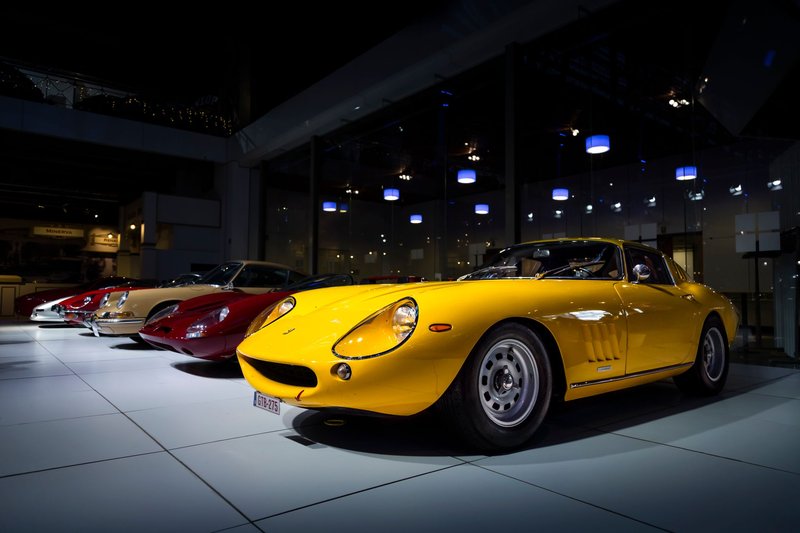
Jaguar E-Type 4.2
The Series 1 E-Type was updated in late 1964 with a 4.2 liter inline-six making 265 hp (gross), a new all-synchromesh gearbox and better seats. The body was unchanged, and it remained one of the most beautiful shapes ever put on a road car. 1965 was the year buyers got the improved version, still claiming a 150 mph top speed.
Aston Martin DB5 and DB6
The DB5 had its final production year in 1965, and the DB6 replaced it in October with a longer wheelbase and a raised Kamm tail. Both ran a 4.0 liter inline-six, up to 282 hp in the DB6. James Bond’s DB5 in Goldfinger had put the car on the map the year before.
Rolls-Royce Silver Shadow
Launched in October 1965, the Silver Shadow was Rolls-Royce’s first unibody car, with disc brakes and hydropneumatic self-leveling suspension licensed from Citroën. Its 6.2 liter V8 was the heart of the company’s cars for decades.
Mini Cooper S
Timo Mäkinen won the 1965 Monte Carlo Rally in a Mini Cooper S. The 1,275 cc engine made about 76 hp, and the car weighed under 1,400 lb. It beat much bigger and more powerful machinery, and nobody has stopped talking about it since.
Sunbeam Tiger
A Sunbeam Alpine with a Ford 260 V8 (4.3 liters, 164 hp) crammed under the hood. Carroll Shelby had prototyped it. It was cheaper than the Cobra, and much less of a handful.
MGB GT
Launched in October 1965, the MGB GT gave the roadster a fixed roof with a hatchback, designed with help from Pininfarina. It was the sensible way to own an MG.
German cars of 1965
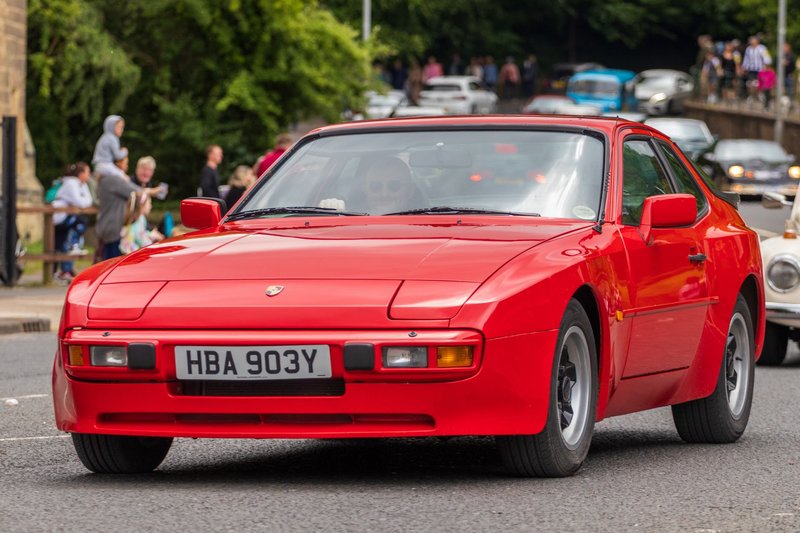
Porsche 911 and 912
The 911 was in its first full year of production, with a 2.0 liter air-cooled flat-six making 130 hp. In April 1965 Porsche added the 912, a 911 body with the old 356’s 1.6 liter four-cylinder rated at 90 hp. It was meant to be the cheaper way in, and many buyers preferred its balance.
Mercedes-Benz 230SL
The “Pagoda” W113 was in mid-run with a fuel-injected 2.3 liter six at 150 hp. The concave hardtop gave it its nickname and was designed for easier visibility and entry.
BMW 2000 CS
Shown at the Frankfurt show in 1965, this coupe with a controversial front end was the predecessor to the better-known 6 Series. The 1500 and 1800 sedans were the cars that saved BMW from financial collapse in the early 1960s.
Audi (the comeback)
Audi came back as a brand in 1965 after a long absence. Volkswagen owned Auto Union by then, and the new Audi 72 (called the F103) was the first car to carry the name since the war.
Volkswagen Beetle
Still on sale and still on its way to becoming the best-selling car in the world at that point. Yearly updates were small, but the 1965 model had larger windows than before.
Italian cars of 1965
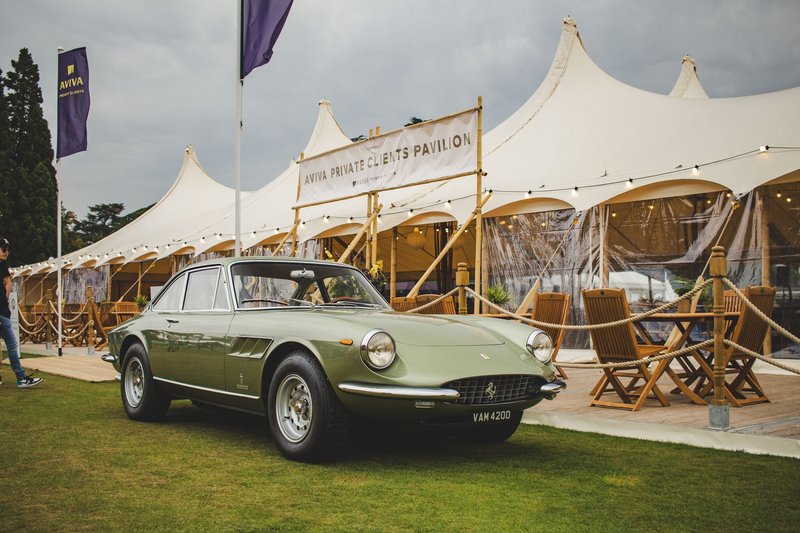
Fiat 850 Coupe and Spider
The 850 Coupe came first, with Bertone’s Spider following in 1965. Both used the rear-mounted 843 cc engine of the 850 sedan, giving them about 50 hp. They were not fast. They were cheap, light and good looking, and that was the whole pitch.
Ferrari 275 GTB
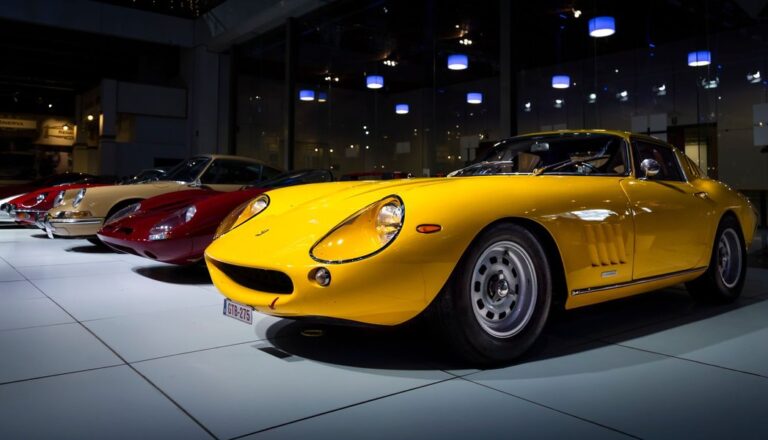
The 275 GTB went into production in 1965 with a 3.3 liter V12 making 280 hp, a rear transaxle and four-wheel independent suspension. It was Ferrari’s first road car to combine those. For the rest of the company’s 1965 range, road and race, see the complete Ferrari lineup. It is regarded by many as the best front-engined V12 Ferrari ever built.
Lamborghini 350 GT
Only the second year of Lamborghini as a car company. The 350 GT used a 3.5 liter V12 making about 270 hp and was designed to be a smoother, more refined alternative to a Ferrari. The Miura chassis was shown in Turin in November 1965, but the finished car came later.
Alfa Romeo Giulia Sprint GTA
The GTA, with its aluminum body panels, appeared in 1965 and became a touring car racing legend. The “A” stands for alleggerita, meaning lightened.
Lancia Fulvia Coupe
Launched at Geneva in 1965, with a narrow-angle V4 engine and front-wheel drive. It was a small, precise car that won the International Rally Championship for Makes in 1972.
Iso Grifo
Iso paired an Italian body by Bertone with a Chevrolet 327 V8, and it was shown in 1965. This pattern of using an American engine in an Italian body would be repeated for the next ten years.
French cars of 1965
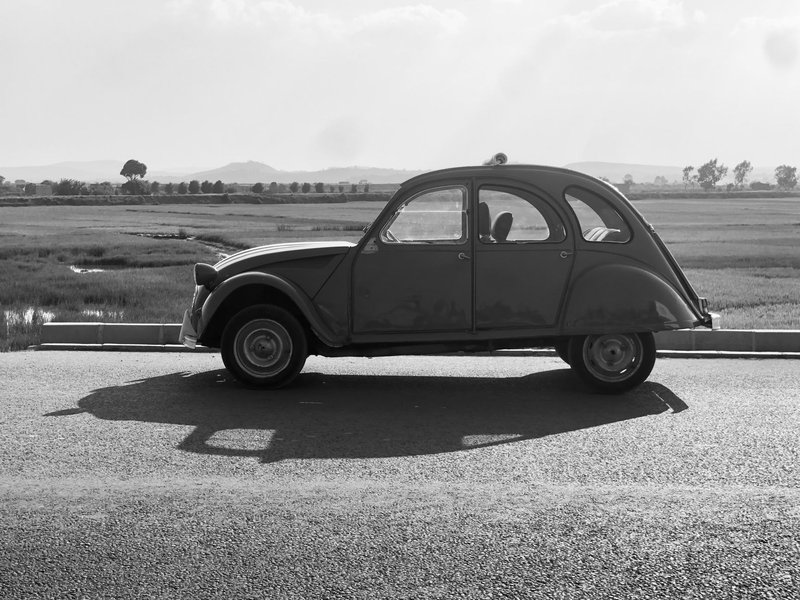
Renault 16
Launched in early 1965, the 16 was one of the first mass-produced family hatchbacks, with front-wheel drive, a 1.5 liter engine and a rear hatch. It was European Car of the Year for 1966.
Peugeot 204
Peugeot’s first front-wheel-drive car had a transversely mounted engine tilted in the bay. The layout was close to what Mini had done, and it became the standard for small family cars.
Citroën DS
Still in production after ten years and still unlike anything else on the road. Hydropneumatic suspension, self-leveling and a semi-automatic gearbox made it feel years ahead.
Japanese cars of 1965
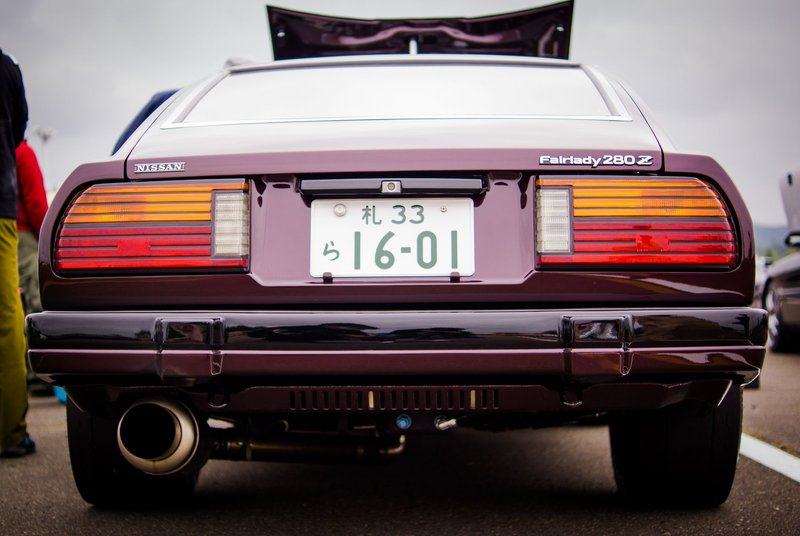
Toyota 2000GT
Toyota showed a prototype at the Tokyo Motor Show in 1965, with a 2.0 liter inline-six and a design influenced by Yamaha. The production car would arrive in 1967 and later appear in a Bond film.
Nissan Silvia (CSP311)
A hand-built coupe with a 1.6 liter engine, introduced in 1965 and designed with help from Yamaha. About 554 were made. It’s now the root of a name that stayed alive for decades.
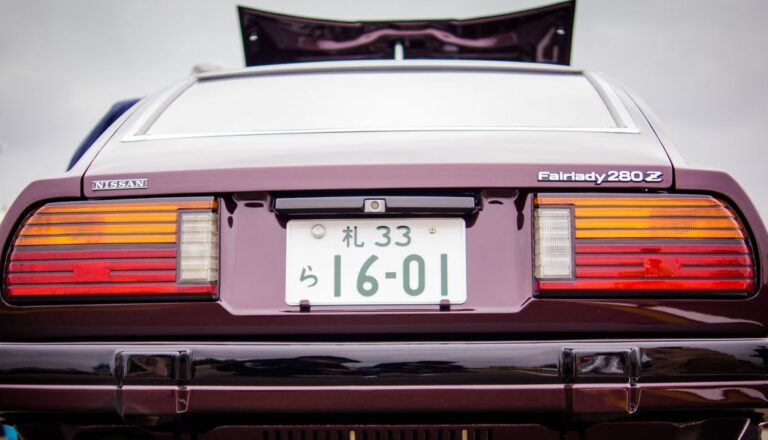
Datsun Fairlady 1600
The SP311 roadster got a 1.6 liter engine in 1965, making about 90 hp, and sold in the United States as the Datsun 1600. It was Japan’s low-cost answer to the MGB. It sits alongside other classic Datsun models that defined an era from the same period.
Quick-reference table
| Car | Country | Engine | Power | Notes |
|---|---|---|---|---|
| Ford Mustang (K-code) | US | 4.7 L V8 | 271 hp | Base Mustang cost $2,368 |
| Shelby GT350 | US | 4.7 L V8 | 306 hp | About 560 built |
| AC Cobra 427 | UK/US | 7.0 L V8 | about 425 hp | Shown April 1965 |
| Chevrolet Corvette L78 | US | 6.5 L V8 | 425 hp | 2,157 built |
| Chevelle SS 396 (Z16) | US | 6.5 L V8 | 375 hp | 201 built |
| Pontiac GTO | US | 6.4 L V8 | 335 hp | 75,352 built |
| Jaguar E-Type 4.2 | UK | 4.2 L I6 | 265 hp | Better gearbox and seats |
| Aston Martin DB6 | UK | 4.0 L I6 | 282 hp | Replaced the DB5 in October |
| Porsche 911 | Germany | 2.0 L flat-six | 130 hp | First full year |
| Porsche 912 | Germany | 1.6 L flat-four | 90 hp | Launched April 1965 |
| Ferrari 275 GTB | Italy | 3.3 L V12 | 280 hp | Rear transaxle |
| Lamborghini 350 GT | Italy | 3.5 L V12 | about 270 hp | Early production |
| Fiat 850 Spider | Italy | 0.8 L four | about 50 hp | Bertone design |
| Renault 16 | France | 1.5 L four | about 55 hp | European Car of the Year 1966 |
| Nissan Silvia | Japan | 1.6 L four | about 96 hp | About 554 built |
Which 1965 cars are collectible today
Prices below are rough ranges for good, documented cars. Check recent auction results before buying anything.
- Shelby GT350 and Cobra 427: original cars sit well above the rest. A real GT350 runs into six figures, often several hundred thousand dollars, and genuine 427 Cobras can pass a million. Replicas are far cheaper, so provenance is everything.
- Ford GT40: original cars are multi-million-dollar pieces. Continuation and replica cars exist.
- Ferrari 275 GTB: one of the most valuable cars on this list, with prices in the millions.
- Jaguar E-Type Series 1: a usable roadster is a six-figure car, and the 4.2 is cheaper than the earlier 3.8.
- Mustang K-code fastback: the best-value route into 1965 Ford ownership at the high end. Ordinary six-cylinder cars and coupes are still affordable.
- Corvette 396 and Chevelle Z16: rare factory-built big-blocks are expensive, and the paperwork matters.
- Porsche 911 and 912: early cars have gone up sharply in price, with the 912 as the cheaper alternative.
- Fiat 850 Spider, Mini Cooper S, MGB GT: these remain accessible and are fun to drive. They are also easier to maintain.
- AMC Marlin: the cheapest oddity here, and one of the more interesting.
The pattern is the same everywhere: low production, racing history and original paperwork push prices up. Big-volume cars like the Impala and Beetle stay modest, and that is the best way into the year if you want something to drive.

Marco Delantero
More from Marco DelanteroHow we reviewed this article
This article was researched against manufacturer records and editorially reviewed before publishing. We accept no payment for coverage. Some guides contain affiliate links; see our affiliate disclosure.