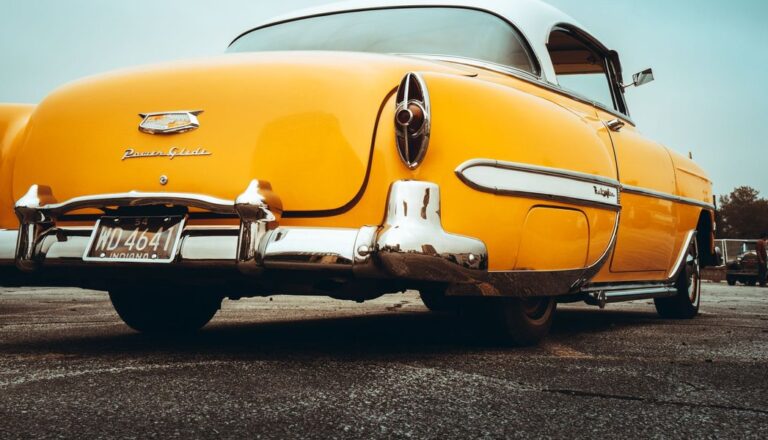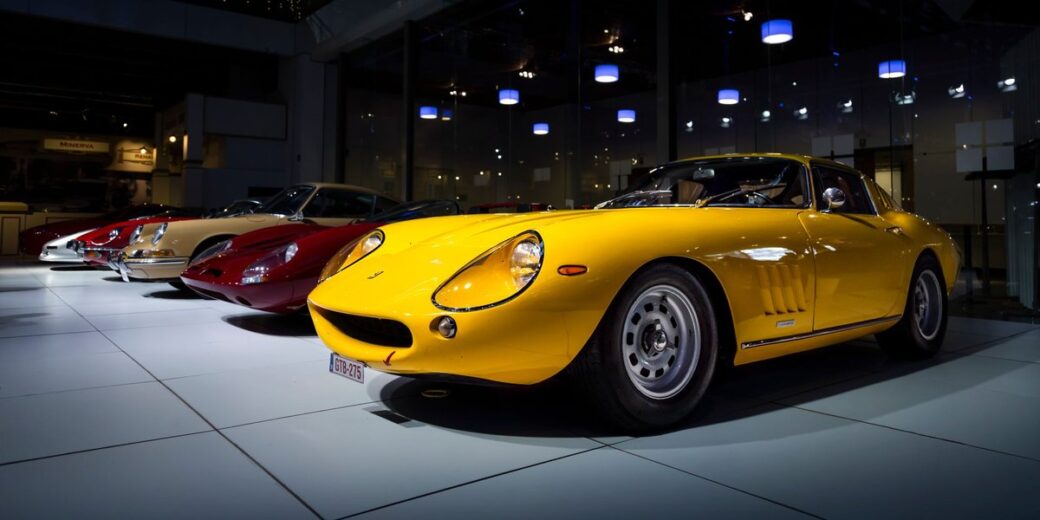
Most 1950s car lists are a parade of chrome with one photo per entry and no explanation. This one tells you why each car earned its place, what was under the hood, and what it costs today.
The decade produced two kinds of icons. Detroit built rolling statements of postwar confidence: nearly 8 million American cars rolled out in 1955, a record at the time, and they got longer, lower and shinier every year. Europe answered with cars that solved problems instead of decorating them: fuel injection, disc brakes, front-wheel drive, a suspension that floated. Both camps are here, because the most iconic cars of the 1950s came from both.
Contents
- TLDR
- Why These Are the Most Iconic Cars of the 1950s
- Quick Reference Table
- American Land Yachts
- American Two-Seaters
- European Sports Cars
- Innovators and Small Cars
- The Truck
- So Which One Is the Most Iconic?
TLDR
- The picture of the decade: the 1955-57 Chevrolet Bel Air. Nothing else says “1950s America” faster.
- The most influential car: the 1959 Mini. Its transverse engine and front-wheel-drive layout became the template for small cars.
- The most expensive: the Ferrari 250 Testa Rossa. A 1957 example sold for about $16.4 million in 2011.
- The most advanced: the Citroën DS, which had self-leveling hydropneumatic suspension and front disc brakes in 1955.
- The best way to own one: a Thunderbird, XK140 or Fiat 500. All three are far cheaper than their fame suggests.
Why These Are the Most Iconic Cars of the 1950s
“Iconic” gets thrown around loosely, so here is the test every car on this list passed. It had to do at least one of three things:
- Change how cars were built or sold. A new engine, a new layout, a new kind of vehicle.
- Define the look of the era. You can date a photo by it.
- Escape the car world. Films, racetracks, and tragedies that made it famous to people who don’t care about cars.
Three forces shaped the decade. Postwar prosperity put a car in most driveways, and the Federal-Aid Highway Act of 1956 launched the Interstate system that gave those cars somewhere to go. The jet age, and then Sputnik in October 1957, pushed designers toward fins, bullet taillights and rocket-ship chrome. Cadillac’s first tailfins in 1948 were copied from the twin tails of the Lockheed P-38 Lightning, and the idea grew from there. The 1940s icons show where that started. And European sports cars, imported in small numbers, showed American buyers that a car could be fast without being big.
Quick Reference Table
| # | Car | Years | Engine | Type |
|---|---|---|---|---|
| 1 | Chevrolet Bel Air | 1955-57 | 265 or 283 cu in V8 | Land yacht |
| 2 | Cadillac Eldorado Biarritz | 1959 | 390 cu in V8, 345 hp | Land yacht |
| 3 | Chrysler C-300 | 1955 | 331 cu in Hemi V8, 300 hp | Land yacht |
| 4 | Plymouth Fury | 1958 | 350 cu in V8, about 290 hp | Land yacht |
| 5 | Ford Thunderbird | 1955-57 | 292 or 312 cu in V8 | Two-seater |
| 6 | Chevrolet Corvette | 1953-57 | 235 cu in six, then V8 | Two-seater |
| 7 | Mercedes-Benz 300SL | 1954-57 | 3.0 L fuel-injected six, 215 hp | Sports car |
| 8 | Porsche 550 Spyder | 1953-56 | 1.5 L four-cam flat-four, about 110 hp | Sports car |
| 9 | Jaguar XK140 | 1954-57 | 3.4 L six, 190-210 hp | Sports car |
| 10 | Ferrari 250 Testa Rossa | 1957-58 | 3.0 L V12, about 300 hp | Sports car |
| 11 | Citroën DS | 1955 | 1.9 L four, 75 hp | Innovator |
| 12 | BMC Mini | 1959 | 848 cc four, 34 hp | Innovator |
| 13 | Volkswagen Type 2 | 1950 | 1.1 L air-cooled flat-four, 25 hp | Innovator |
| 14 | Fiat Nuova 500 | 1957 | 479 cc twin, 13 hp | Innovator |
| 15 | Chevrolet Cameo Carrier | 1955-58 | 265 cu in V8 optional | Truck |
American Land Yachts
Big, heavy, chrome-trimmed and unashamed. These four show how Detroit moved from round and modest to fins and fury in about five years.
1. Chevrolet Bel Air (1955-57)
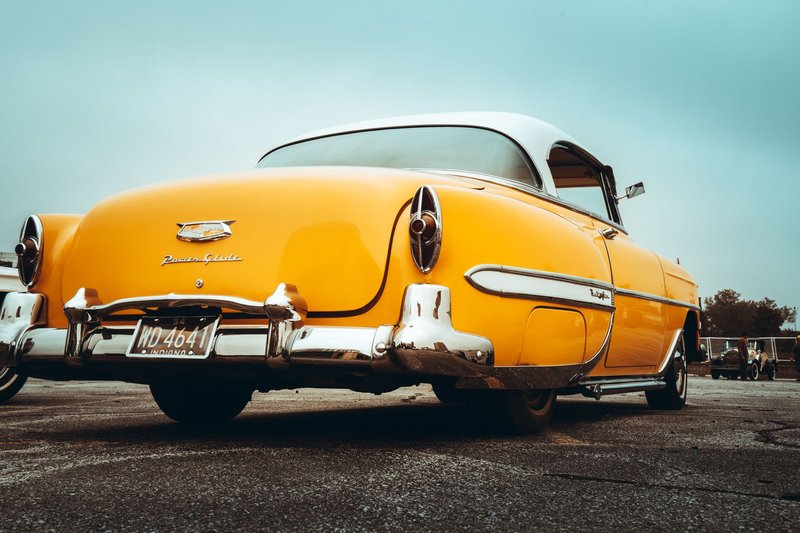
- Years: 1955-57 (the “Tri-Five” generation)
- Engine: 265 cu in V8 in 1955 (162 hp, 180 hp with the Power Pak); 283 cu in V8 with fuel injection and 283 hp by 1957
- Price then vs. now: roughly $2,300 to $2,800 new. Sedans start around $40,000 today; convertibles and Nomad wagons run well past $100,000
The 1955 Chevy was the car that made Chevrolet cool. It brought the company’s first modern V8, a clean new body, and a Bel Air trim level aimed at buyers who wanted to look like they’d moved up a class. By 1957 Chevy was advertising a fuel-injected 283 that made one horsepower per cubic inch, a number Detroit had been chasing for years.
The ’57 is the one that lives on the posters, with its finned rear fenders and gold anodized trim. It sold well because it looked expensive and wasn’t. Chevy reused the same body for three years, which is exactly why parts are cheap and every car show has a row of them.
2. Cadillac Eldorado Biarritz (1959)
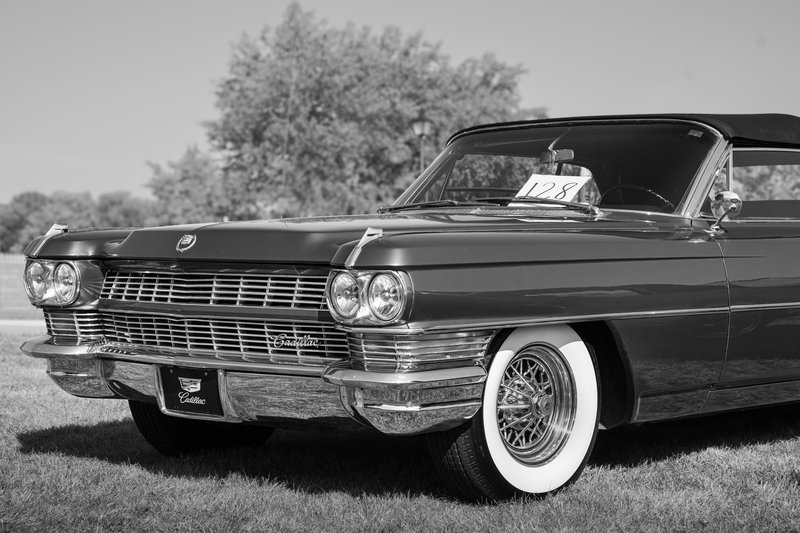
- Years: the Eldorado debuted in 1953 (just 532 built); the 1959 Biarritz is the peak
- Engine: 390 cu in V8 with triple two-barrel carburetors, 345 hp
- Price then vs. now: $7,401 new, roughly three times a Bel Air. A good Biarritz now sells for about $100,000 to $200,000
Every excess of the decade shows up in the 1959 Eldorado. Its fins were the tallest Cadillac ever built, topped with twin bullet taillights. It is nearly 19 feet long. Cadillac made about 1,300 Biarritz convertibles, which made each one a status symbol before it left the showroom.
Tailfins peaked here and then collapsed. By 1961 Cadillac had cut them down, and the style’s absurdity had become part of its charm. If you want a single car for the phrase “1950s tailfin cars,” this is it.
3. Chrysler C-300 (1955)
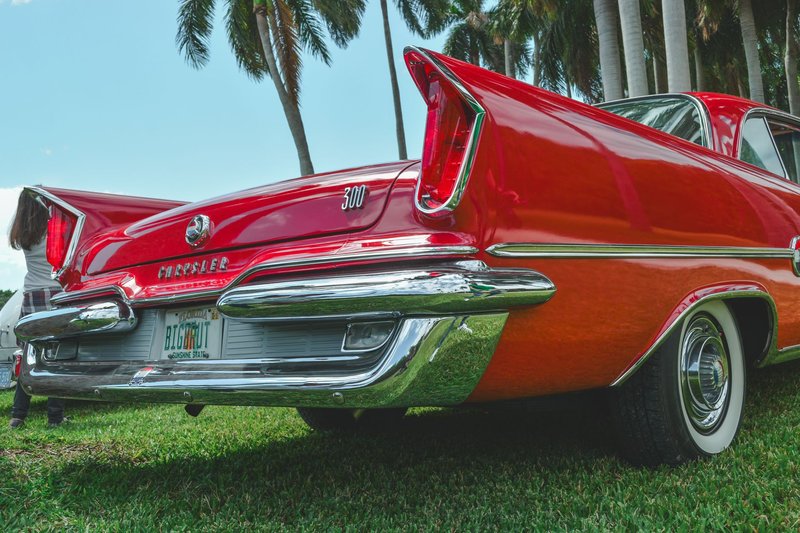
- Years: 1955 (the first of the “letter series” 300s)
- Engine: 331 cu in Hemi V8 with two four-barrel carburetors, 300 hp
- Price then vs. now: a little over $4,000 new. Sound cars start around $100,000 now
The name was the spec sheet: 300 horsepower, the first American production car to hit that figure. Chrysler built only 1,725 of them, and almost all were sold with the Hemi, a sharp suspension and bucket seats. Carl Kiekhaefer’s C-300s dominated stock car racing in 1955, and Tim Flock took the NASCAR Grand National title in one.
This is the ancestor of the muscle car, built two or three years before the term existed. It was also expensive, nearly double a Bel Air, so the C-300 was a rolling status statement for people who cared more about speed than shine.
4. Plymouth Fury (1958)
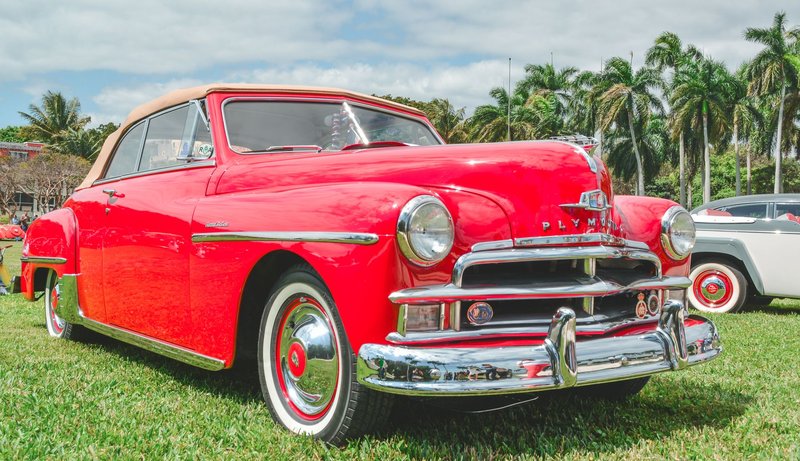
- Years: 1956-58, with 1958 the best known
- Engine: 350 cu in “Golden Commando” V8, around 290 hp
- Price then vs. now: about $3,000 new. Typically $40,000 to $80,000 now, depending on condition and documentation
Plymouth’s Forward Look design put tall, sharp fins on a car that cost far less than a Cadillac, and the cars of 1956 show how fast the fin spread across Detroit. The 1958 Fury was the sporty top trim, with gold anodized side trim and a big V8. Plymouth built only 5,303 of them that year.
It would be an obscure rarity if not for Stephen King. His 1983 novel Christine, and John Carpenter’s film of the same year, made a 1958 Fury the most famous murderous car in history. A car that cost a family-sedan price became the decade’s best horror prop.
American Two-Seaters
Two cars, both launched within a year of each other, and an argument that shaped American performance for decades.
5. Ford Thunderbird (1955-57)
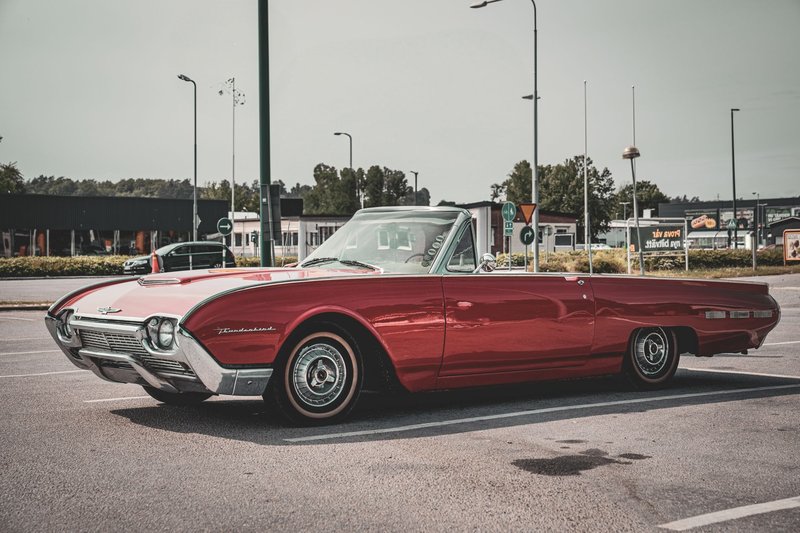
- Years: 1955-57 (the two-seat original; the 1958 model added a back seat)
- Engine: 292 cu in Y-block V8, 193 hp, in 1955; a supercharged 312 reached 340 hp in 1957
- Price then vs. now: $2,944 new in 1955. Typically $50,000 to $100,000 now, more for supercharged F-code cars
Ford refused to call the Thunderbird a sports car. It was a “personal car,” quick but comfortable, with roll-up windows, a removable hardtop and an automatic option. Buyers liked the distinction. Ford sold about 16,000 in 1955, while Chevrolet sold fewer than 700 Corvettes.
Ford had read the market better than Chevy had. The Thunderbird created the personal luxury segment that filled showrooms for the next 30 years. Ford’s 1959 lineup later borrowed the Thunderbird’s face. The 1957 refresh, with small fins and an optional supercharger, is the one collectors chase.
6. Chevrolet Corvette (1953-57)
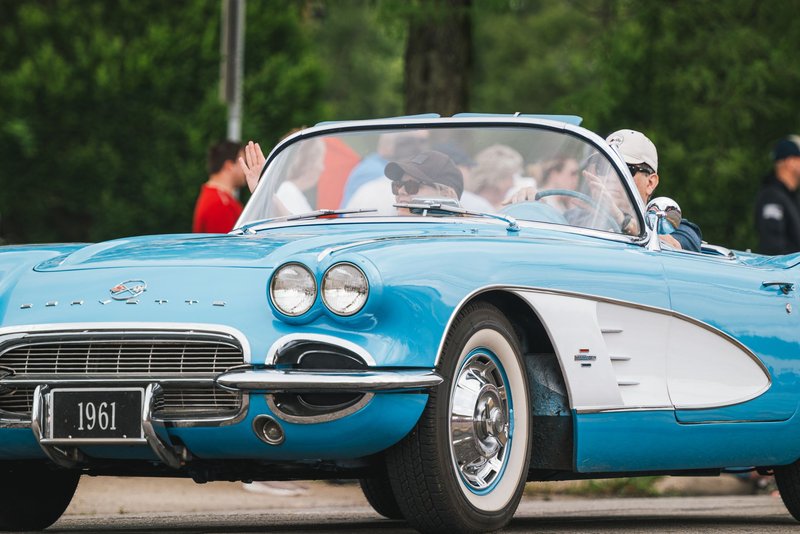
- Years: 1953-57 (first generation)
- Engine: 235 cu in “Blue Flame” six with 150 hp in 1953; a V8 from 1955; fuel injection in 1957
- Price then vs. now: $3,490 new in 1953. A 1953 original is now well over $200,000; later cars cost less
The first Corvette was a bad sports car with a fiberglass body. Only 300 were built, by hand in Flint, Michigan, all in white with a red interior. They had a two-speed automatic and a six-cylinder engine, and sales were so slow in 1954 that General Motors considered killing it.
Then the V8 arrived in 1955, Zora Arkus-Duntov turned it into a real performance car, and by 1957 it had fuel injection and a four-speed gearbox. The Corvette survived because the Thunderbird scared Chevrolet, and it has been in production, with one gap year of generational change, ever since.
European Sports Cars
Fewer of these were built, and all of them cost serious money. They taught Americans what a car could do on a twisty road.
7. Mercedes-Benz 300SL Gullwing (1954-57)
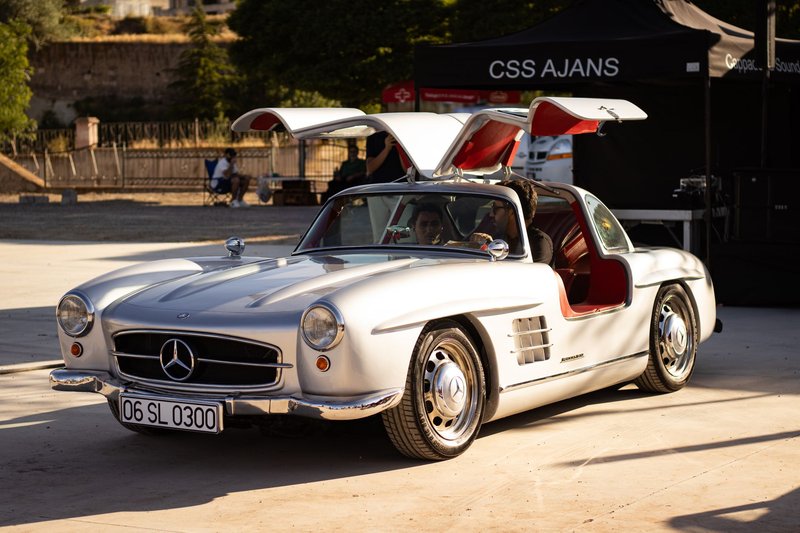
- Years: 1954-57 (about 1,400 coupes)
- Engine: 3.0 L inline-six with mechanical direct fuel injection, 215 hp
- Price then vs. now: about $7,000 new in the U.S. Well over $1 million now
The 300SL was a race car with license plates. Its tubular spaceframe was so tall at the sides that conventional doors wouldn’t work, which is why the doors hinge on the roof. The engine was the first fuel-injected one in a production car, and with the tallest gearing the Gullwing reached roughly 160 mph, faster than anything else you could buy.
It exists because U.S. importer Max Hoffman told Mercedes that Americans would pay for a road-going version of its racing car. He was right. Gullwings are the most valuable car in this list that isn’t a Ferrari.
8. Porsche 550 Spyder (1953-56)
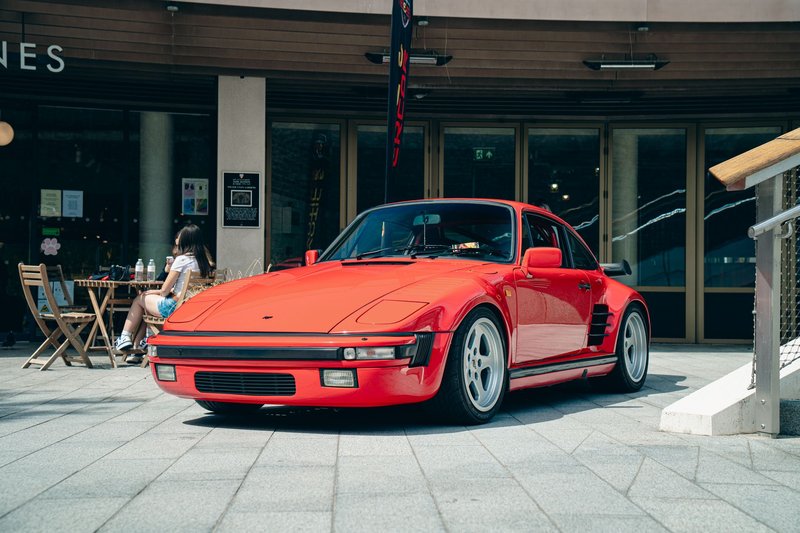
- Years: 1953-56 (about 90 built)
- Engine: 1.5 L four-cam flat-four, around 110 hp
- Price then vs. now: roughly $4,600 new. Several million dollars now
The 550 weighed about 1,300 pounds, which is why 110 hp was enough. It beat bigger cars across Europe, and in 1956 a 550A took an overall win at the Targa Florio, a result that put Porsche on the map as a racing brand.
It’s also the car James Dean died in. He crashed his 550 on September 30, 1955, on the way to a race, and the car he called “Little Bastard” became the dark center of 1950s car mythology. The Spyder’s fame is partly racing and partly a young actor.
9. Jaguar XK140 (1954-57)
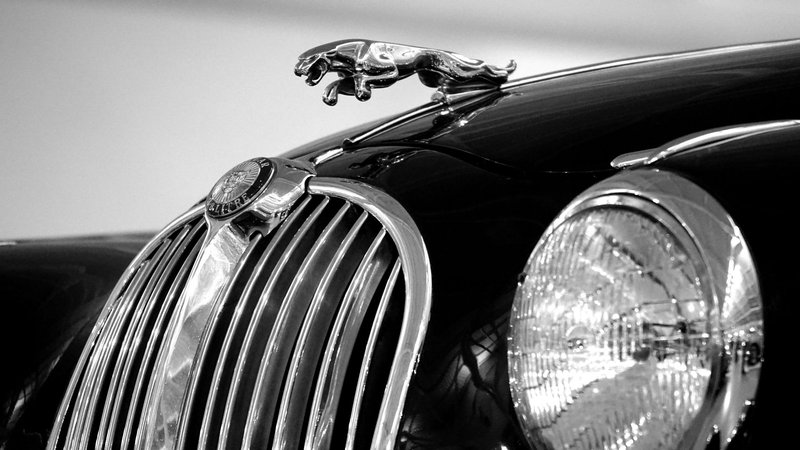
- Years: 1954-57, as a roadster, fixed-head coupe and drophead coupe
- Engine: 3.4 L DOHC inline-six, 190 hp (210 hp in SE form)
- Price then vs. now: around $4,000 new. Typically $80,000 to $150,000 now
The XK140 is the middle child of Jaguar’s XK family, and the one that doesn’t get the attention. The XK120 stunned the world in 1948 with a 120 mph top speed, and the XK150 added disc brakes in 1957. The 140 improved on the 120 where owners had complained: more cabin space, rack-and-pinion steering, an overdrive option, and sturdier bumpers.
Jaguar’s racing success gave it halo status. It won Le Mans in 1951, 1953, 1955, 1956 and 1957, and the road cars shared the same engine family. You got the racing glamour at a fraction of the cost of a Ferrari.
10. Ferrari 250 Testa Rossa (1957-58)
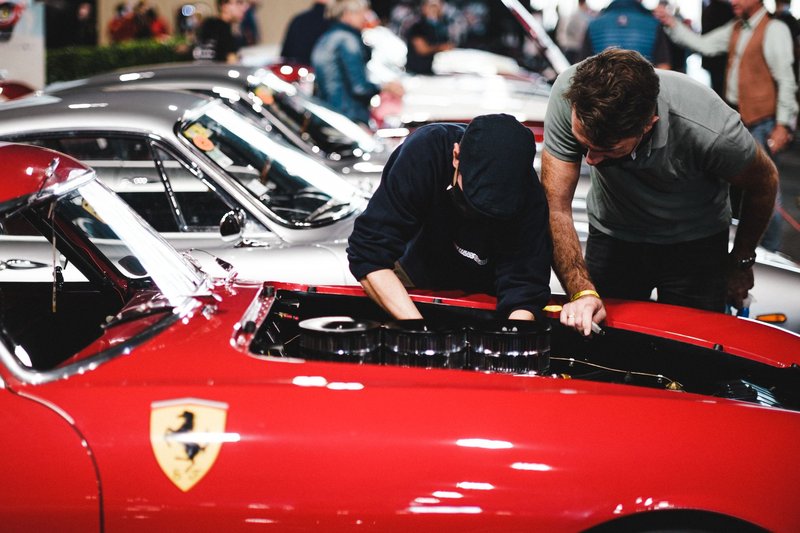
- Years: 1957-58 for the original “pontoon-fender” cars, with fewer than 40 built
- Engine: 3.0 L Colombo V12, about 300 hp
- Price then vs. now: sold to racing customers and teams. A 1957 example sold for about $16.4 million in 2011
The name means “red head,” after the engine’s red-painted cam covers. The pontoon-style fenders, with their open cutouts around the front wheels, were designed for cooling and became the car’s signature shape. Ferrari won Le Mans in 1958 with a 250 TR, and again in 1960 and 1961 with later versions.
This is the most expensive entry here, and the reason isn’t just rarity. It’s the clearest case of a race car that happens to be beautiful, and in the 1950s the line between the two was thinner than it is now.
Innovators and Small Cars
None of these was fast or glamorous. All four changed what a car could be, and all four are still on the road.
11. Citroën DS (1955)
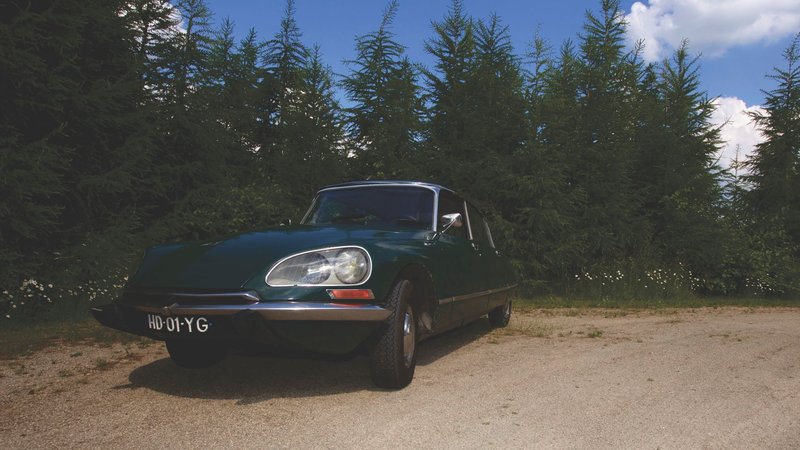
- Years: 1955-75 (the DS19 launched in 1955)
- Engine: 1.9 L four-cylinder, 75 hp
- Price then vs. now: priced above every mainstream French sedan. Sedans now usually run $30,000 to $60,000; convertibles cost far more
When Citroën unveiled the DS at the 1955 Paris Motor Show, it took about 12,000 orders on the first day. Nothing else on the road looked like it, and nothing else behaved like it. The hydropneumatic suspension kept the car level and let the driver raise the body for rough roads. A central hydraulic system ran the power steering, brakes, clutch and gear selector, and the car had front disc brakes years before most rivals.
Roland Barthes compared it to a Gothic cathedral in his 1957 essay on the car. In 1962 it saved a president: Charles de Gaulle’s DS kept driving on its rear tires after gunmen shot out its tires in an assassination attempt. The suspension worked even when the car didn’t.
12. BMC Mini (1959)
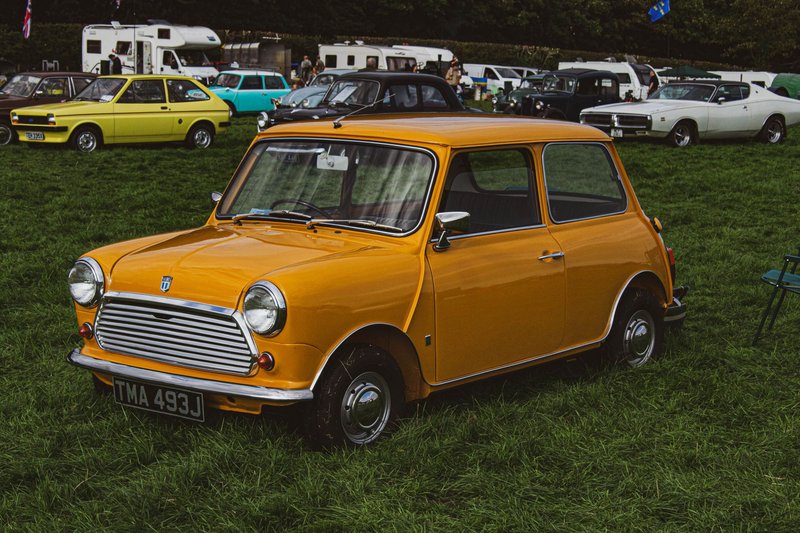
- Years: launched August 1959 as the Austin Seven and Morris Mini-Minor
- Engine: 848 cc four-cylinder, 34 hp
- Price then vs. now: a bit under £500 new. Good early cars typically cost $15,000 to $35,000 now
Alec Issigonis designed it on a simple idea: the car should be 10 feet long, and about 80 percent of that space should be for people and luggage. He turned the engine sideways, put the gearbox in the sump, and drove the front wheels. The wheels sat at the four corners, and the car handled like a go-kart.
The Mini didn’t look like a revolution. It looked like a toy. But the layout became the default for small cars, and almost every front-drive hatchback since follows its basic arrangement. It was the quietest and most consequential car of the decade.
13. Volkswagen Type 2 (1950)
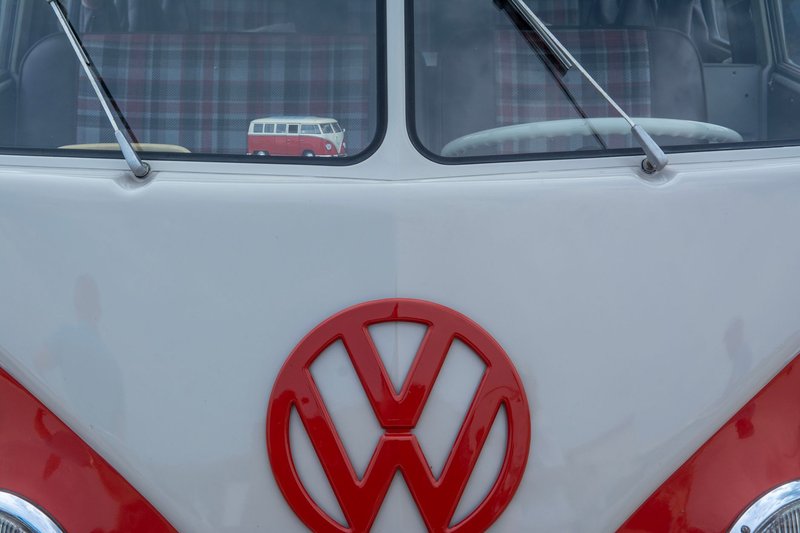
- Years: introduced March 1950
- Engine: 1.1 L air-cooled flat-four, 25 hp
- Price then vs. now: priced as a working vehicle. Standard buses now cost $25,000 and up; Samba models with the skylight windows regularly top $100,000
The idea came from Dutch importer Ben Pon, who sketched a boxy van on a Beetle chassis in 1947. VW built it with the engine in the back and the driver sitting over the front axle, creating a flat floor and more room than any car of its footprint.
The standard Transporter was a delivery van. The Samba, with its extra windows and two-tone paint, became the bus of the 1960s counterculture. Strip the nostalgia away and it’s still one of the best-packaged vehicles ever made.
14. Fiat Nuova 500 (1957)
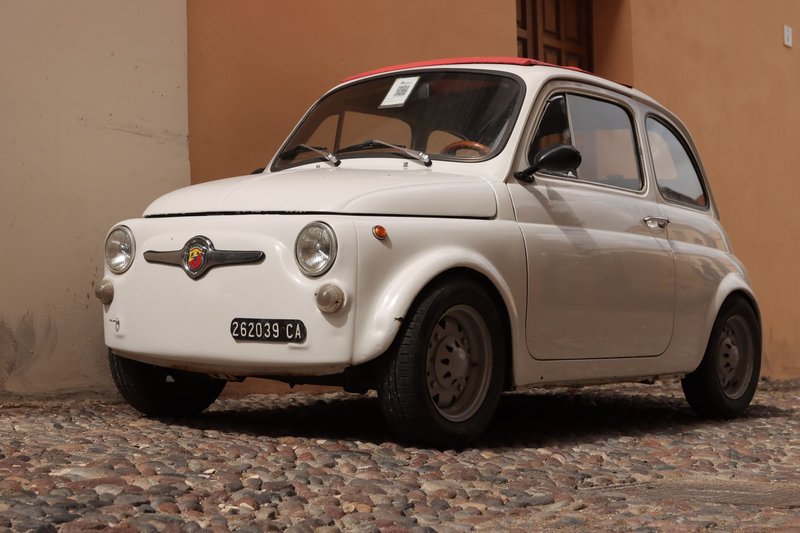
- Years: launched July 1957
- Engine: 479 cc air-cooled two-cylinder, 13 hp
- Price then vs. now: about 490,000 lire (roughly $800) new. Restored cars typically cost $15,000 to $30,000
Dante Giacosa’s 500 was shorter than a Mini, with an engine tucked behind the rear axle. It was cheap enough that Italian families who had been riding scooters could afford four wheels. A fabric roof rolled back for ventilation, and the whole car looked like a smile on wheels.
It earned its fame by putting a nation on the road. Along with the VW Beetle and the Mini, it defined the small European car for decades, and it’s the cheapest way into this list that still turns heads.
The Truck
One pickup makes the cut, because it changed how trucks looked.
15. Chevrolet Cameo Carrier (1955-58)
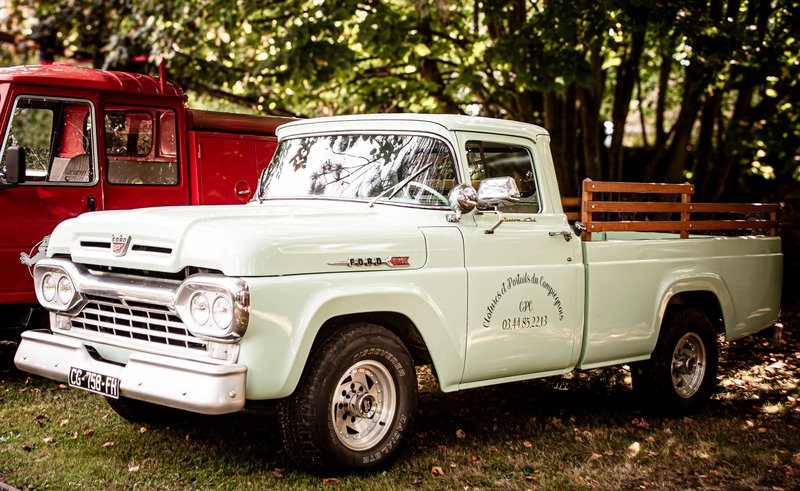
- Years: 1955-58
- Engine: Chevrolet’s new 265 cu in V8 was available
- Price then vs. now: a premium of several hundred dollars over a standard 3100 pickup. Restored examples typically sell for $50,000 to $100,000 or more
Pickups in 1955 were work tools with fenders. The Cameo Carrier changed that with flush, smooth rear bed sides made from fiberglass, a wraparound rear window and two-tone paint. It looked like a car with a bed, and it was the first pickup that people bought because they liked how it looked.
Chevrolet built Cameos in small numbers, and they were more expensive than regular trucks. They didn’t change the market on their own, but they started the idea that a pickup could be a lifestyle choice. Every crew-cab luxury truck traces back to this one.
So Which One Is the Most Iconic?
It depends on what you count.
By image, the 1957 Chevrolet Bel Air. Show anyone a photo and they’ll say “1950s” before they say “Chevy.” It captured the decade’s optimism, and it was affordable enough to be everywhere.
By influence, the Mini. It was neither pretty nor fast, but the layout it introduced has outlived the tailfins and the chrome by more than half a century. The Citroën DS is a close second for what it showed engineers was possible.
By myth, the Porsche 550 Spyder. Its fame came from a race win and a fatal crash, and no other car on this list carries that much weight.
If you only get one, pick the Bel Air for the picture and the Mini for the legacy. The decade made room for both.

Marco Delantero
More from Marco DelanteroHow we reviewed this article
This article was researched against manufacturer records and editorially reviewed before publishing. We accept no payment for coverage. Some guides contain affiliate links; see our affiliate disclosure.