Table of Contents
- TLDR
- 1959 Was Peak Excess — And the First Cracks Showed
- 1. Chevrolet Impala
- 2. Ford Galaxie
- 3. Ford Fairlane 500
- 4. Cadillac Coupe de Ville
- 5. Plymouth Fury
- 6. Studebaker Lark
- 7. Rambler American
- 8. Chevrolet El Camino
- 9. Chevrolet Corvette
- 10. Volkswagen Beetle
- 11. Austin Mini
- 12. Datsun Bluebird
TLDR
The 1959 Chevrolet Impala outsold everything else in America that year, moving roughly 473,000 units on the strength of a new full-width body and a 348-cubic-inch V8 that topped out at 315 horsepower. Ford’s Galaxie wasn’t far behind at over 464,000. But the real story of 1959 is the squeeze from both ends: the Volkswagen Beetle alone put close to 93,000 cars on American driveways, Studebaker’s scrappy little Lark turned a profit for a company that hadn’t seen one in five years, and in England, a car called the Mini went on sale that would eventually outsell all of them combined. This list covers the twelve cars — mainstream, luxury, and import — that actually moved metal in 1959, with the sales figures, prices, and horsepower most retrospectives leave out.
1959 Was Peak Excess — And the First Cracks Showed
Every “best cars of 1959” list mentions the tailfins. Fair enough — 1959 was the year Detroit stopped restraining itself. GM designer Chuck Jordan later described the year as “letting a tiger out of the cage.” The Smithsonian’s National Museum of American History traces the fin’s evolution from a modest 1948 Cadillac fender flourish to the towering, 42-inch-tall spikes on the ’59 Eldorado — a car so committed to the bit it needed its own zip code for parking.
What most retrospectives skip is the arithmetic underneath the chrome. The Big Three still controlled about 94% of the American new-car market in 1959, and Chevrolet, Ford, and Plymouth were still fighting for the same buyer with bigger engines and longer decklids. But import registrations were climbing fast enough that Detroit could see the shape of the next decade coming — nearly 120,000 Volkswagens alone found buyers that year, and independents like Studebaker and American Motors bet correctly that a compact car, done first, would outsell a full-size car done better. The Henry Ford museum’s compact car collection documents exactly this pivot: 1959 as the last year Detroit could pretend bigger was simply better.
That’s the tension running through every entry below — excess at one end of the lot, restraint at the other, and both approaches selling in real numbers.
1. Chevrolet Impala
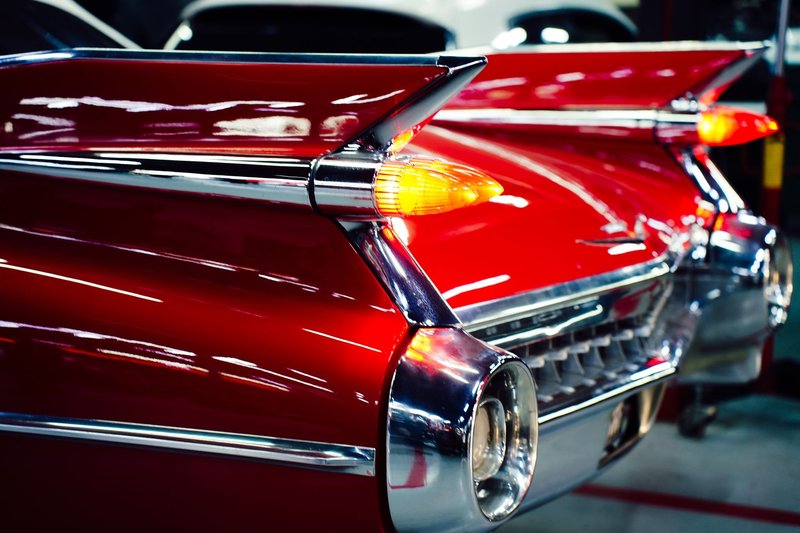
The Impala had been a Bel Air trim level in 1958; for 1959, Chevrolet spun it off as its own series and it immediately became the best-selling car in America, with roughly 473,000 built across body styles. Chevy offered eight engines that year, from a wheezy 235-cubic-inch six making 145 horsepower up to the Turbo-Thrust 348 V8 with triple two-barrel carburetors, rated at 315 horsepower. Prices ran from about $2,600 for a base sedan to nearer $2,900 for the convertible. The batwing taillights and cat’s-eye rear end were new for ’59 and instantly divisive — GM had redesigned the whole full-size lineup on nine months’ notice after peeking at rival styling studios, and it shows in how little the Impala’s face resembles the ’58 it replaced.
2. Ford Galaxie
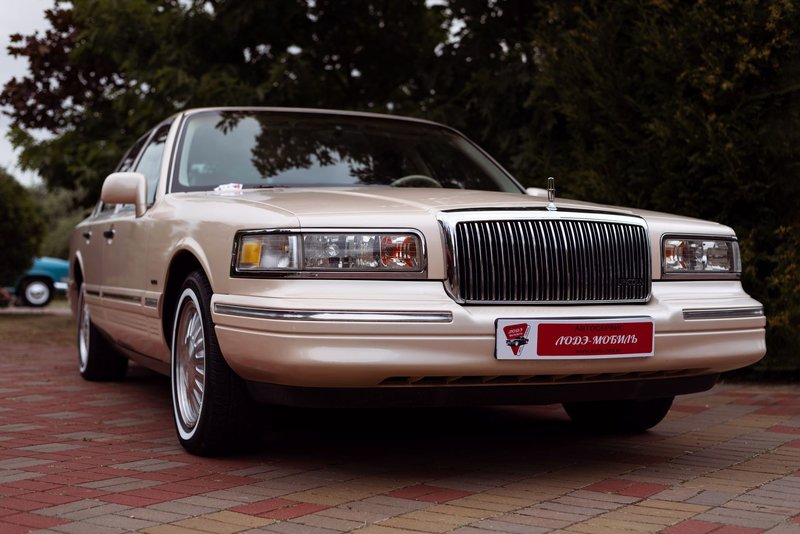
Ford’s answer to the Impala sold better than 464,000 units for 1959, with the four closed-roof body styles alone accounting for over 405,000 of that and better than 27% of Ford’s entire model-year volume. Most buyers passed on the top engine — a 352-cubic-inch V8 good for 300 horsepower — in favor of the 332 (225 hp) or the workhorse 292 Y-block (200 hp), which tells you something about how Galaxie buyers actually used the car versus how it was advertised. The name itself was new for ’59, borrowed straight from the space race a few months before NASA had even picked its first astronauts.
3. Ford Fairlane 500
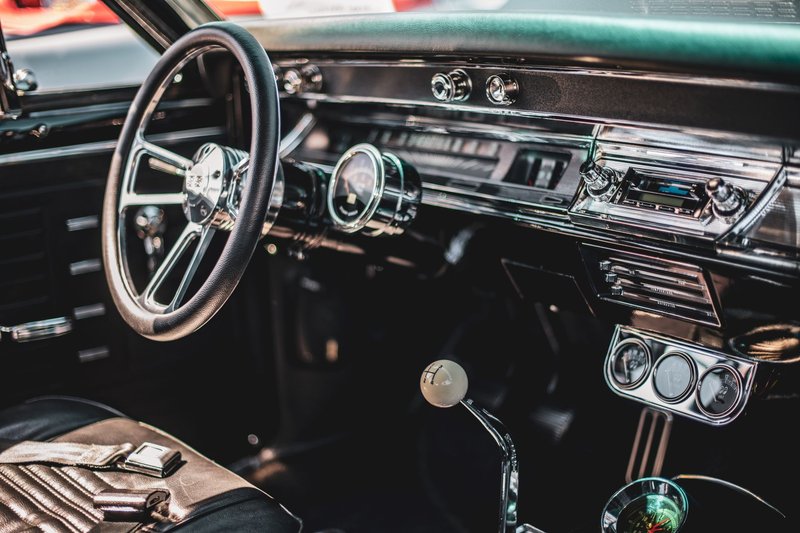
One rung below the Galaxie sat the Fairlane 500, Ford’s mid-trim full-size line, which found 178,800 buyers in 1959 at prices between roughly $2,360 and $2,600. It ran the same drivetrain menu as the Galaxie but skipped the flashiest trim, which made it the practical choice for buyers who wanted Ford’s new ’59 sheet metal without paying Galaxie money for it. It’s the car that gets left off most retrospectives because it isn’t flashy — but it outsold plenty of models that get all the ink.
4. Cadillac Coupe de Ville
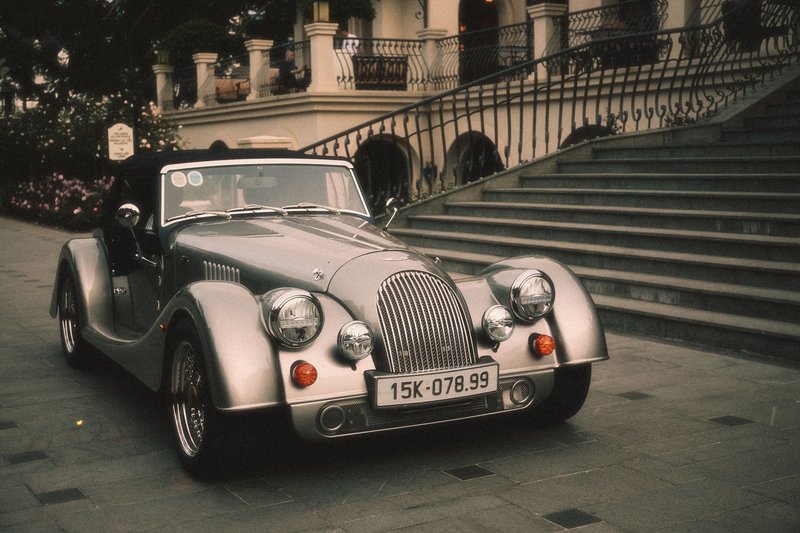
If the Impala was 1959’s volume winner, the Coupe de Ville was its statement piece. At $5,250 — more than double what a loaded Impala cost — Cadillac still moved 21,924 of them, enough to keep Cadillac well ahead of Lincoln and Chrysler in the luxury tier. Under the hood: a 390-cubic-inch V8 making 325 horsepower and 430 lb-ft of torque, hauling a car that weighed in around 4,600 pounds thanks to fins that stretched nearly 42 inches into the air. It’s the car people mean when they say “1959 Cadillac” without qualification, and it earns it.
5. Plymouth Fury
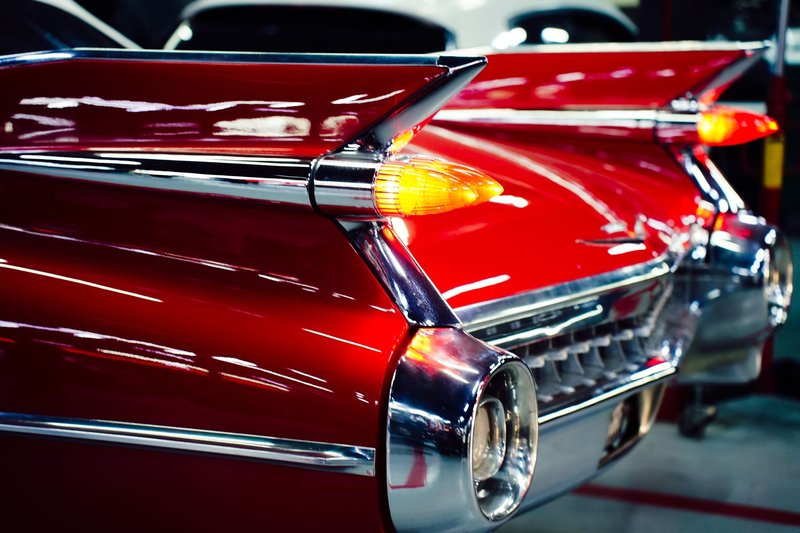
Plymouth built 82,030 Furys for 1959, priced between about $2,700 and $3,130 depending on trim, with the Sport Fury hardtop and convertible variants (17,867 and 5,990 units respectively) commanding the upper end. The base 318 V8 made 230 horsepower, a four-barrel version bumped that to 260, and the optional 361-cubic-inch Golden Commando V8 topped out at 305. Plymouth’s fins that year were sharper and more finned than Chevrolet’s, part of the same design arms race that put the Eldorado’s over anything else on the road.
6. Studebaker Lark
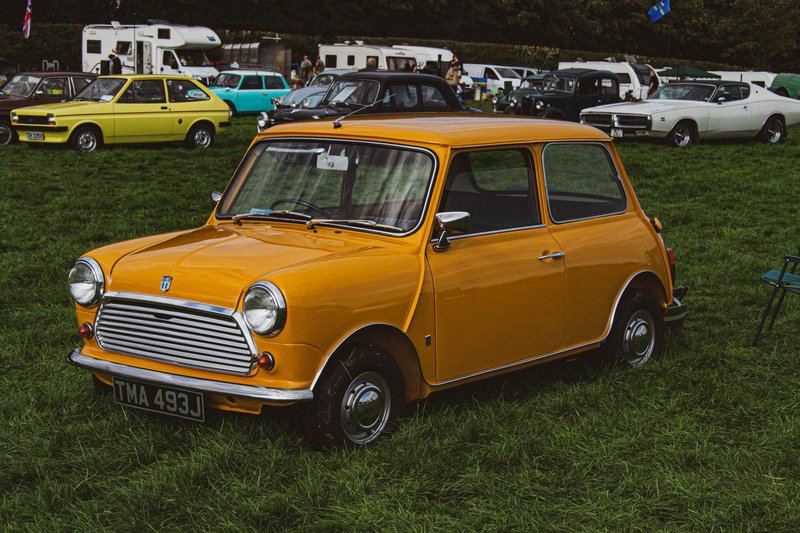
The Lark is the sleeper on this list, and it deserves more credit than it usually gets. Studebaker was hemorrhaging money and had no budget for an all-new car, so it took the center section of its aging 1953–58 sedan, shortened the wheelbase from 116.5 to 108.5 inches, and chopped nearly 28 inches of front and rear overhang. The result reached showrooms in November 1958 as a 1959 model, priced from just under $2,000 up to about $2,600 for a V8. Buyers responded: Studebaker’s total 1959 volume swelled to 160,826 cars, including 131,075 Larks, and the company posted a $28.5 million profit — its first since the Studebaker-Packard merger five years earlier. It beat every Big Three compact to market by close to a year.
7. Rambler American
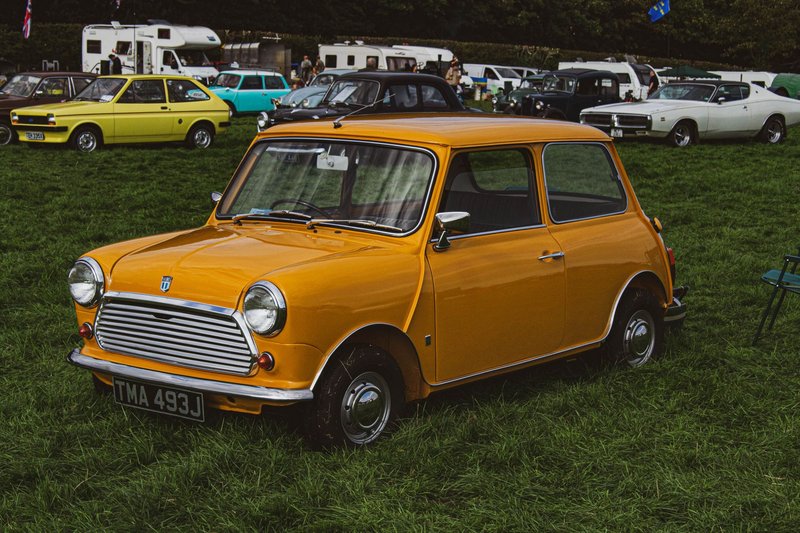
American Motors had the same idea as Studebaker and executed it just as well. The Rambler American, priced from $1,795 — the cheapest car built in America that year — sold more than 90,000 units in 1959, comfortably outselling Chrysler’s DeSoto and the fading Edsel combined. AMC’s overall production nearly doubled for the year under CEO George Romney, pushing the company to sixth place industry-wide and a $60 million profit. Romney spent the year publicly hammering Detroit’s “gas-guzzling dinosaurs,” and for once the sales figures backed up the marketing.
8. Chevrolet El Camino
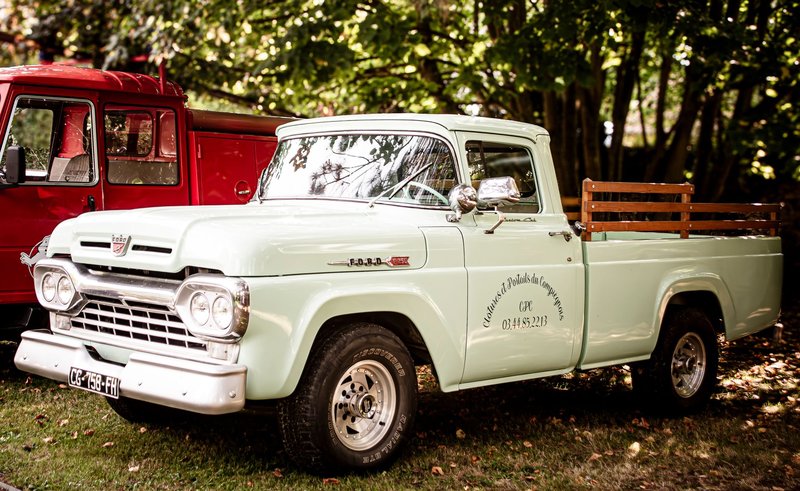
Chevrolet’s car-truck hybrid launched in 1959 to answer Ford’s Ranchero, and it did fine business for a first attempt: 22,246 sold, which beat both the Ranchero’s 21,706 first-year total from 1957 and the 14,169 units of Ford’s contemporary sedan-pickup rival. It shared its front clip and dashboard with the Impala, so buyers got batwing-taillight styling with a bed instead of a trunk — a genuinely strange pitch that nonetheless found a real audience among small-business owners who wanted something that didn’t look like a work truck.
9. Chevrolet Corvette
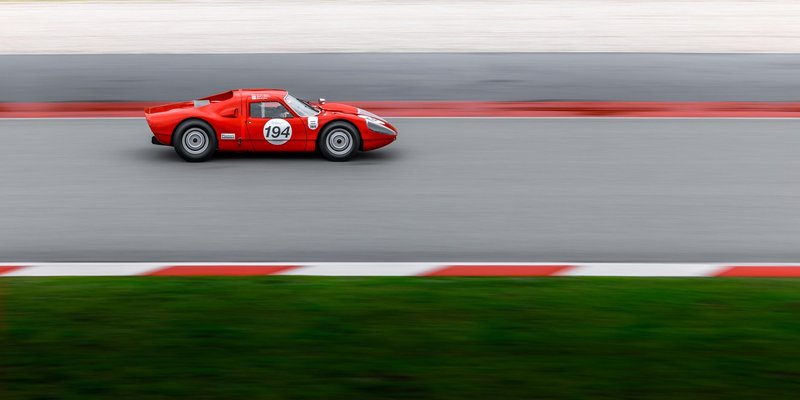
Corvette volume was modest next to the family sedans — 9,670 built for 1959 at a base price around $3,875 — but it’s worth including because it shows Chevrolet running two completely different playbooks in the same model year. The 283-cubic-inch small-block V8 ranged from 230 horsepower in base tune up to 290 with Rochester mechanical fuel injection, a genuinely advanced option for a mass-market American brand in 1959. The fuel-injected cars are the ones collectors chase today, making the Corvette stand among the most sought-after 1950s sports cars, and the gap between a base Corvette and a fuelie is a good stand-in for how wide the performance range got within a single Chevrolet showroom that year.
10. Volkswagen Beetle
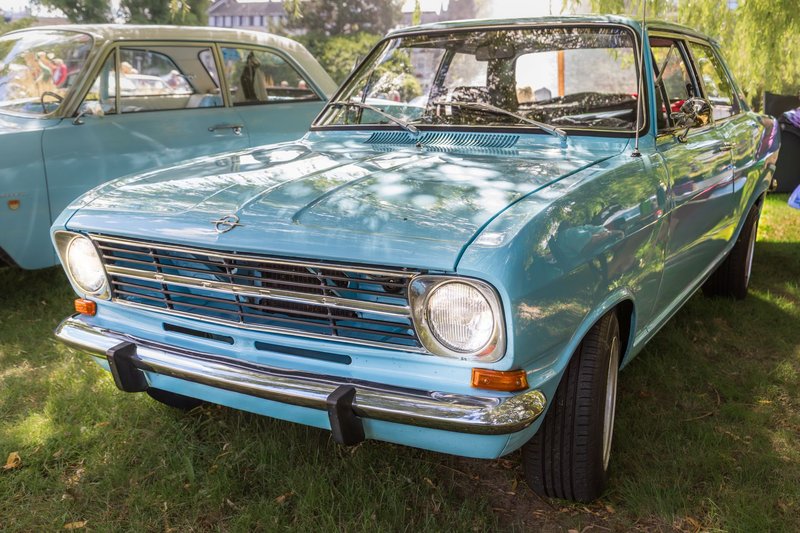
Volkswagen sold roughly 93,000 Beetles in the US in 1959 — 88,857 sedans and 4,180 cabriolets — making it the country’s top-selling imported car by a wide margin and putting VW ahead of every other foreign manufacturer combined. For those interested in the full range of 1959 Volkswagen models, the Beetle was just one of several entries that year. That’s a small fraction of Impala-sized volume, but it mattered because it proved a market existed for a car that was the Impala’s exact opposite: air-cooled, rear-engined, and deliberately, aggressively small. The Doyle Dane Bernbach ad agency began work that same year on the campaign that would become “Think Small,” which leaned into the Beetle’s oddness instead of apologizing for it — a genuinely unusual move in an industry selling size as status.
11. Austin Mini
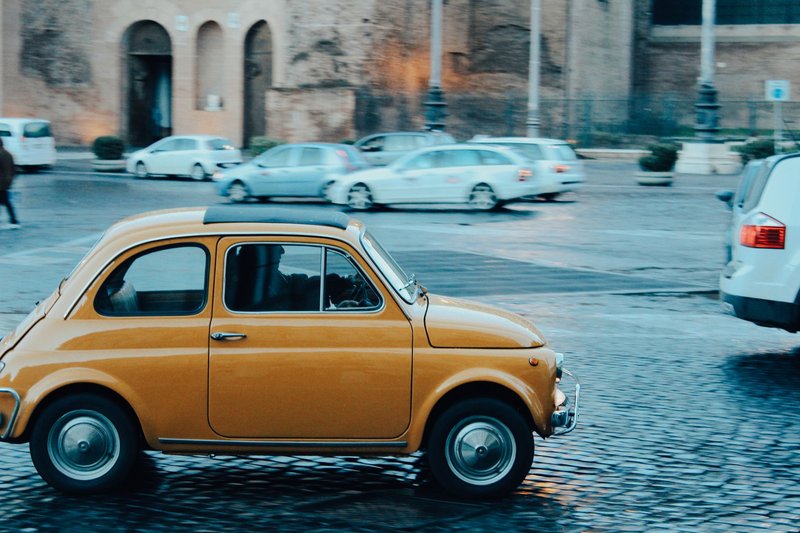
The Mini went on sale in Britain on August 26, 1959, as two nearly identical badge-engineered models: the Austin Seven and the Morris Mini-Minor. For a deeper dive into the history of old Austin models, the Mini represented a turning point in the company’s approach to compact cars. British Motor Corporation built it in response to the 1956 Suez Crisis fuel shortage, and chief engineer Alec Issigonis delivered a finished car in under two and a half years. It cost just under £500 in the UK and roughly $1,340 where it reached American buyers, powered by an 848cc engine making about 33 horsepower and returning close to 40 mpg with a light foot. Sales started slow, but the engineering — a transverse engine driving the front wheels, wheels pushed to the corners to maximize cabin space — became the template nearly every small car on the planet still follows.
12. Datsun Bluebird
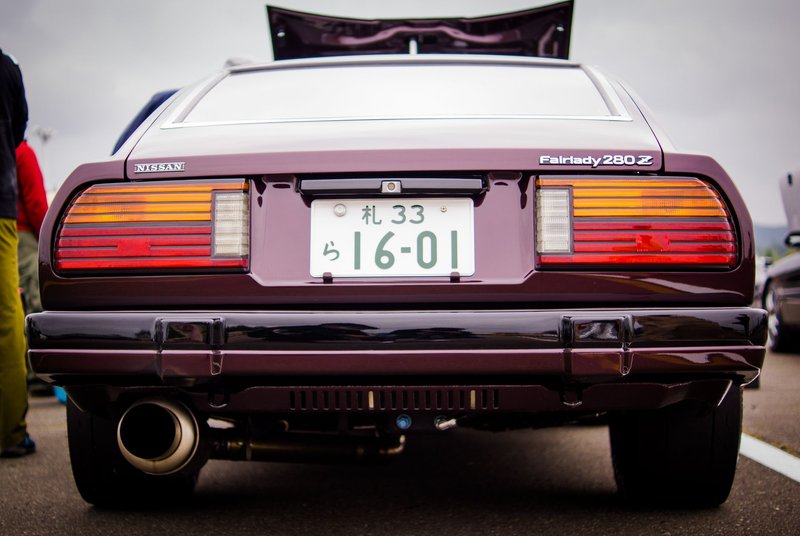
Nissan launched the first-generation Datsun Bluebird in Japan in August 1959, badged as the 1200 and powered by a 1189cc four-cylinder making 43 PS (about 42 horsepower). It wasn’t a volume seller in the US the way the Beetle was — Datsun’s American export push wouldn’t really gather speed for another few years — but it matters on this list because it’s the car that put Nissan on the path toward the export strategy that would make Japanese compacts a fixture of American driveways by the 1970s. In 1959, it was still mostly a domestic Japanese seller; within fifteen years, its descendants would be outselling plenty of the American nameplates on this list.
Line these twelve up and the pattern isn’t subtle: America’s best-selling cars in 1959 were bigger, more powerful, and more expensive than ever, right at the moment the cars that would eventually replace them were quietly finding their first buyers. The Impala won the year. The Lark, the Rambler, the Beetle, and the Mini won the decade that followed.

Marco Delantero
More from Marco DelanteroHow we reviewed this article
This article was researched against manufacturer records and editorially reviewed before publishing. We accept no payment for coverage. Some guides contain affiliate links; see our affiliate disclosure.