Detroit built about 8.2 million passenger cars in 1969, roughly 7% fewer than the year before, and GM alone accounted for around half of them. Most of those cars were Impalas, Galaxies and Beetles with a vinyl bench seat and an AM radio. The ones people remember are the small fraction that came with a Hemi, a wing, or a 6-pack carburetor setup. This guide covers both groups: what people actually bought, and the cars that give 1969 its reputation.
The year also had a quiet turning point. Muscle cars hit a peak of absurdity (one Dodge was built mainly to win NASCAR races), and at the same time a $3,500 Japanese coupe and a $1,995 Ford compact were being designed to take the market in a different direction.
Contents
- The 1969 snapshot
- Muscle cars made in 1969
- Pony cars and sports cars
- Luxury cars
- Everyday cars: what Americans actually bought
- Europe in 1969
- Japan in 1969
- Quick-reference table
- How to read 1969
The 1969 snapshot
Three things defined the model year.
Horsepower was cheap and rare at the same time. A buyer could walk into a Plymouth dealer and order a Road Runner for under $3,000 (the 1968 original started at $2,896). But the really exotic engines, the aluminum-block 427s and the street Hemis, were built in tiny numbers, some of them only dozens.
Safety rules arrived. Federal standards required head restraints for the front outboard seats on cars built from January 1, 1969, according to a National Highway Traffic Safety Administration interpretation. That is why so many late-60s cars have those stiff vinyl-covered bumps on top of the front seats.
Some names ended and some began. Chevrolet’s rear-engine Corvair, which Britannica lists as built from 1960 to 1969, went out of production. The Ford Maverick launched in April at $1,995. The Datsun 240Z was about to reach showrooms. Ford’s Torino became its own line.
Muscle cars made in 1969
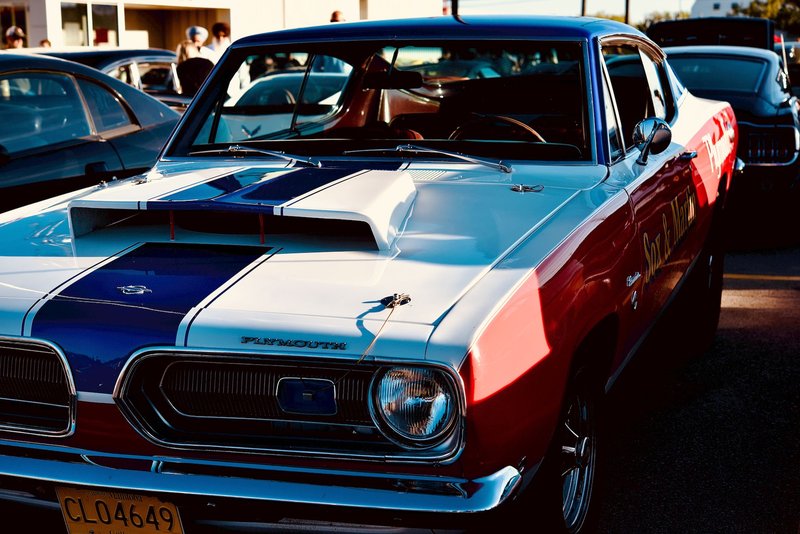
This is where the production numbers get silly. Muscle cars made in 1969 range from 80,000-unit sellers to cars you could count on two hands.
Dodge Charger Daytona. Dodge built 505 of them, and every one exists because NASCAR wanted proof of aerodynamics. The 18-inch nose cone and the rear wing, tall enough to clear the trunk lid when it was open, were there to fix high-speed instability on superspeedways. Standard power was a 440 V8 rated at 375 hp, with the 426 Hemi (425 hp) optional. Buddy Baker became the first driver to officially top 200 mph on a closed course in a Daytona at Talladega in March 1970. Strictly speaking the Daytona is a 1969 model.
Dodge Charger 500. The Daytona’s predecessor. Dodge flushed the grille and recessed the rear window to cut drag, and built 392. If you see one with a Hemi, it is worth multiples of the base car.
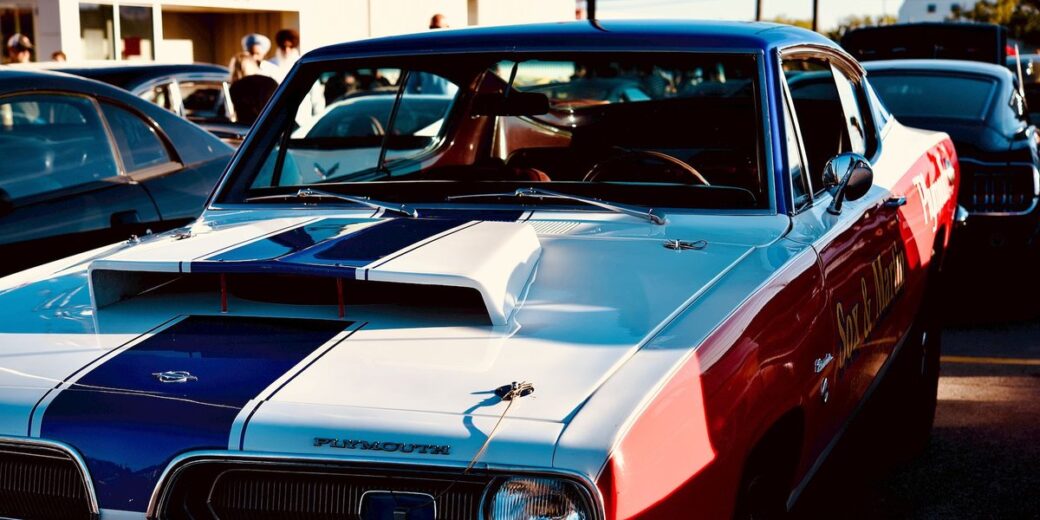
Plymouth Road Runner. The idea was simple: take a stripped-down mid-size body, put a big engine in it, charge less than the competition, and license the Warner Bros. cartoon character and its horn for a “beep, beep.” About 84,000 were built in 1969, which makes it the volume leader of the budget muscle era. The Hemi version is the rarity: fewer than 800 left the factory with it.
Pontiac GTO Judge. Pontiac sold 6,833 Judges in 1969. It was the brand’s answer to the Road Runner’s price-and-attitude approach, with loud paint colors, a rear spoiler, and the Ram Air III 400 V8 (366 hp) as standard equipment. The Judge name came from a “Here Comes the Judge” sketch on the TV show Laugh-In.
Chevrolet Chevelle SS 396. The mainstream seller of the group, with roughly 86,000 built in 1969. It will not get as many auction headlines as the rarer cars, but it is the one you actually see at car shows, in numbers.
Ford Torino Talladega. Ford needed a slippery Torino for NASCAR, so it extended the nose and rolled the rocker panels. About 750 were built. It was a homologation special in the same way the Daytona was, and the two fought each other at the track.
AMC SC/Rambler. American Motors painted a compact Rambler red, white and blue, dropped a 390 V8 into it, and had Hurst build 1,512 of them. It is the odd one in the list.
Pony cars and sports cars
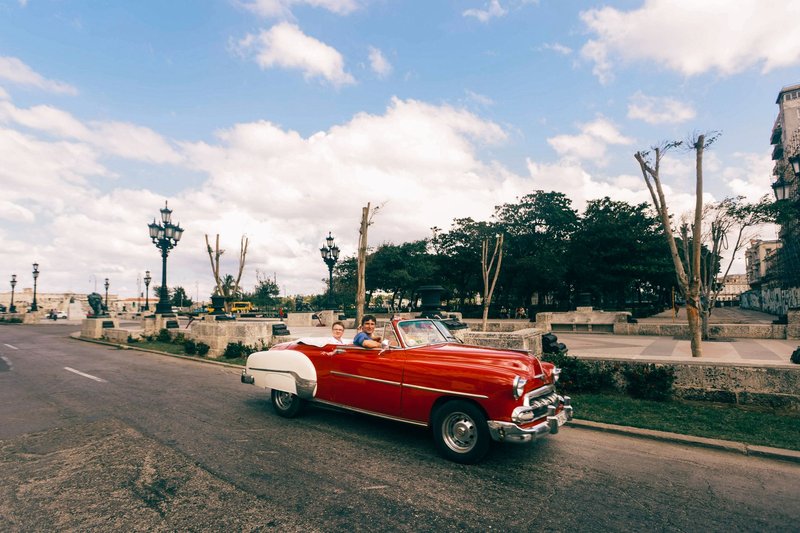
Chevrolet Camaro. Chevrolet built around 243,000 Camaros for 1969, the last year of the first generation. Most were ordinary six- and V8-cylinder coupes. Then there was the ZL-1: an all-aluminum 427 big-block, offered through a special COPO order, rated at 430 hp (and widely believed to make more). Chevrolet built 69 of them. A regular Z/28 with the 302 small block is far easier to find, at over 20,000 units.
Chevrolet Corvette. The Stingray name returned for 1969, now as one word, and the small-block grew from 327 to 350 cubic inches. Total production was about 38,000. At the top of the order sheet, the L88 427 was built in 116 examples, and the all-aluminum ZL1 version was built in two.
Ford Mustang. Ford made just under 300,000 of them for 1969, with a restyled body that was longer and wider than before. The new Mach 1 package sold more than 72,000 units by itself. The collector cars are the Boss 302 (1,628 built, a road-racing homologation special) and the Boss 429 (859 built). Ford spent 1971 phasing both out, as its 1971 lineup shows. The Boss 429’s semi-hemispherical engine was so big that Ford had Kar Kraft modify the cars by hand.
Pontiac Trans Am. Pontiac built only 697 Trans Ams in 1969, all painted white with blue stripes. It was a trim package, and nobody thought it would become a franchise.
Pontiac Grand Prix. Not a pony car, but the personal-luxury coupe that mattered. Redesigned for 1969 with a long hood and short deck, it sold over 112,000 units, more than three times the 1968 total.
Luxury cars
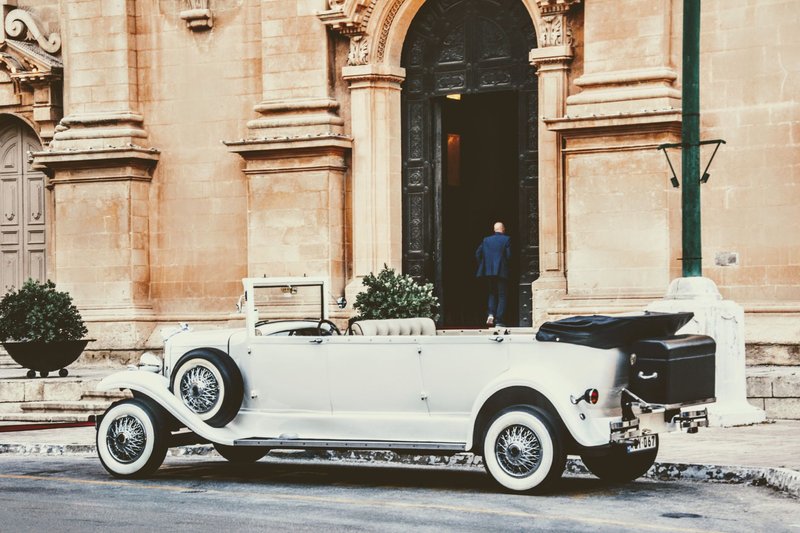
Lincoln Continental Mark III. Introduced for the 1969 model year, it carried a 460 V8 rated at 365 hp and a faux-Rolls radiator grille that gave the car a distinct profile. About 23,000 were built in 1969. It shared a platform with the Thunderbird, and Lincoln’s marketing leaned hard on prestige.
Cadillac Eldorado. A front-wheel-drive coupe powered by a 472 cubic inch V8. At 1969 prices it was a competitor to nobody. It sold on size, quiet and an effortless shove.
Mercedes-Benz 300 SEL 6.3. The European answer: a 6.3-liter V8 shoehorned into the S-Class body, good for around 6.5 seconds to 60 mph. It was quicker than most American muscle cars while carrying four adults and a trunk of luggage.
Everyday cars: what Americans actually bought
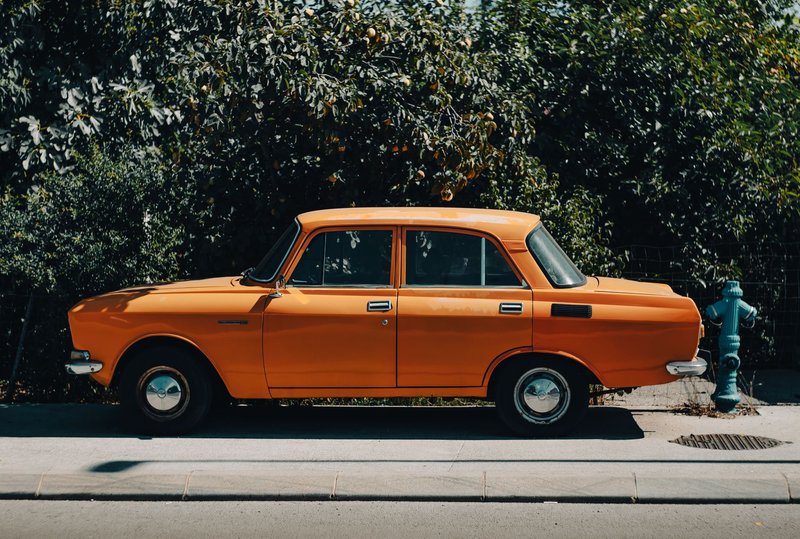
The muscle cars are the story, but the sales charts tell a different one. The best-selling nameplate in America was, again, the Chevrolet Impala, as it had been for most of the decade. Behind it came Ford’s full-size cars and Chevrolet’s Chevelle. The full-size sedan and wagon still ran the American market.
The cars that point at the future were smaller:
- Volkswagen Beetle. The most popular import by a wide margin, still sold on reliability and low running costs.
- Ford Maverick. Launched in April 1969 at a base price of $1,995, it pulled in over half a million buyers within its first year.
- Honda N600. Honda’s first car sold in the United States, a tiny two-cylinder coupe that most Americans did not know what to do with.
- Toyota Corolla and Datsun 510. Both were already on sale, and both were laying down the habit of buying a Japanese car that simply worked.
The Corvair’s end (see the snapshot above) is a reminder that Detroit’s own compact experiment was being replaced by tamer cars.
Europe in 1969
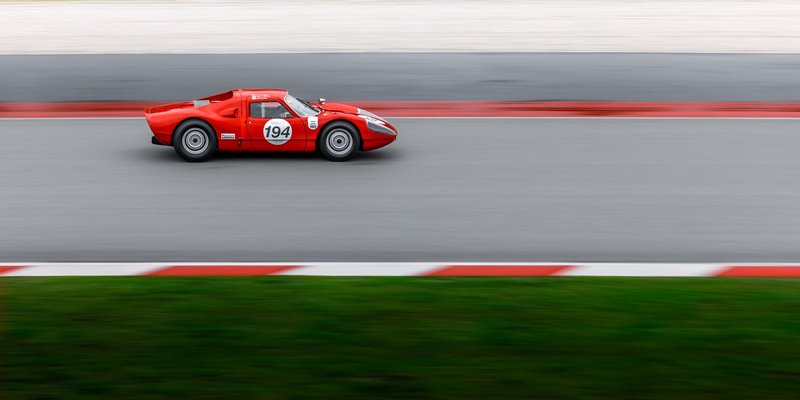
American coverage of this year tends to skip Europe, which is a mistake. Europe produced both the fastest road cars and some of the most influential small ones.
Ferrari 365 GTB/4 “Daytona.” A front-engine V12 coupe with a top speed near 175 mph, in production from 1968 for around five years with roughly 1,300 built.
Dino 246 GT. Ferrari’s mid-engine V6 car, sold as a Dino rather than a Ferrari. The 2.4-liter V6 made about 195 PS, and it is now one of the more usable classics from the era.
Porsche 911. For 1969 Porsche lengthened the wheelbase by about 57 mm to 2,268 mm and added fuel injection to the 911 E and 911 S. The car still looked unchanged to most eyes, but it handled better.
Porsche 917. Shown at Geneva in March 1969. Porsche had to build 25 to qualify for racing, and parked them in front of the factory for inspectors.
Jaguar E-Type Series II. The 4.2-liter six-cylinder carried on, now with uncovered headlights and a stronger dashboard. It was the Series I’s more civilized successor.
Aston Martin DBS V8. Aston’s first production V8 arrived in September 1969, a 5.3-liter engine in a body that had launched with the six two years earlier.
Ford Capri. Launched in Europe in January 1969 as the continent’s Mustang. It was low, long-hooded, cheap, and sold in huge numbers.
Fiat 128. A transverse engine with front-wheel drive packaged into a small sedan. It was voted European Car of the Year for 1970, and its layout became the standard recipe for small cars.
Ford GT40 at Le Mans. In June, Jacky Ickx and Jackie Oliver won the 24 Hours of Le Mans in a GT40, the fourth consecutive Ford win at the race according to Britannica’s list of winners. Ickx famously walked, rather than ran, to his car at the start in protest of the dangerous running start, and then won the race by a margin of a few hundred feet.
Japan in 1969
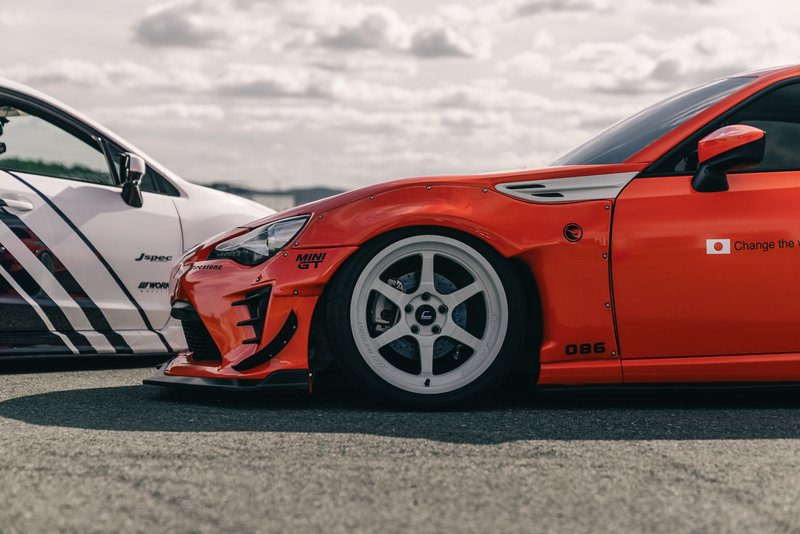
Datsun 240Z. Introduced in Japan in October 1969 as the Fairlady Z, with the US launch coming as a 1970 model. A 2.4-liter inline-six with around 150 hp, independent suspension, and a price of roughly $3,500 undercut the Jaguar E-Type and the Porsche 911 by thousands of dollars. It changed what Americans expected a sports car to cost.
Nissan Skyline GT-R (PGC10). Debuted in February 1969 as a four-door sedan with the S20, a 2.0-liter DOHC inline-six making 160 PS. The two-door arrived in 1970. This is the root of every GT-R since.
Toyota 2000GT. Built from 1967 to 1970, with 351 made in total. It was Japan’s first true exotic, and a coupe that cost more than the average American home’s down payment.
Quick-reference table
| Model | Engine | Production / note |
|---|---|---|
| Dodge Charger Daytona | 440 V8 or 426 Hemi | 505 built |
| Dodge Charger 500 | 440 V8 or 426 Hemi | 392 built |
| Plymouth Road Runner (Hemi) | 426 Hemi | Fewer than 800 |
| Plymouth Road Runner (all) | 383 / 426 / 440 | About 84,000 |
| Pontiac GTO Judge | 400 Ram Air III | 6,833 |
| Pontiac Trans Am | 400 V8 | 697 |
| Chevrolet Camaro ZL-1 | Aluminum 427 | 69 |
| Chevrolet Camaro (all) | Six to 427 V8 | About 243,000 |
| Chevrolet Corvette ZL1 | Aluminum 427 | 2 |
| Chevrolet Corvette (all) | 350 / 427 | About 38,000 |
| Ford Mustang Boss 429 | 429 semi-hemi | 859 |
| Ford Mustang Boss 302 | 302 V8 | 1,628 |
| Ford Torino Talladega | 428 V8 | About 750 |
| AMC SC/Rambler | 390 V8 | 1,512 |
| Pontiac Grand Prix | 400 / 428 V8 | Over 112,000 |
| Lincoln Continental Mark III | 460 V8 | About 23,000 |
| Datsun 240Z | 2.4 inline-six | US sales from 1970 model year |
| Nissan Skyline GT-R (PGC10) | 2.0 DOHC inline-six | Debuted Feb 1969 |
| Toyota 2000GT | 2.0 inline-six | 351 over 1967 to 1970 |
How to read 1969
The cars made in 1969 split cleanly into three groups. There were the volume cars that kept Detroit running: Impalas, Chevelles, Mustangs. There were the rare homologation specials that Chrysler, Ford, Chevrolet and Pontiac built to win races or to protect their reputations. And there were the arrivals from Europe and Japan that, within a few years, would reshape the whole market.
If you are shopping for a classic car from 1969, the production numbers are the first filter. A Road Runner or a Chevelle SS is a car you can buy, drive and fix. A Daytona or a ZL-1 is an asset with a title. Know which one you are looking at before you open the checkbook.

Marco Delantero
More from Marco DelanteroHow we reviewed this article
This article was researched against manufacturer records and editorially reviewed before publishing. We accept no payment for coverage. Some guides contain affiliate links; see our affiliate disclosure.