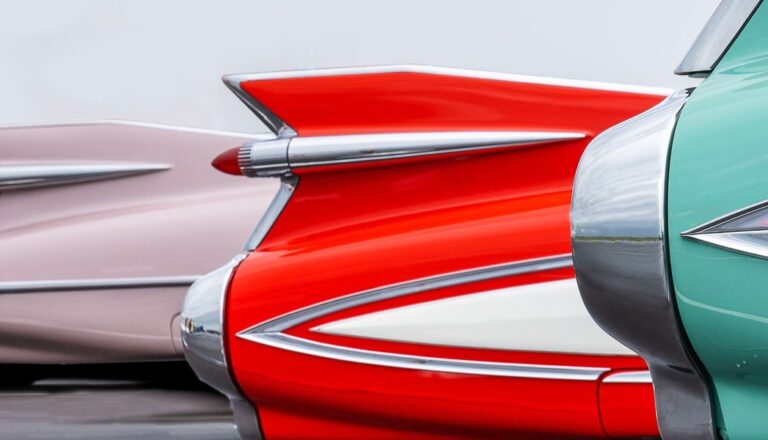

Ford has killed off more nameplates than most automakers ever get to launch. Some died from bad math — the Edsel torched roughly $350 million in three model years. Others died from good math: the Fusion sold fine, just not as well as an Explorer parked on the same lot. And a few, like the Escape, aren’t really dead — they’re on hold until the electric version is ready.
This is the full list, sedans through vans, classic through current, with the actual reason each one got cut and what Ford put in its place.
TLDR
Ford’s recent cuts — Fusion (2020), Edge (2024), Transit Connect (2023), and the Escape after 2026 — all trace back to the same decision: build fewer car platforms, more SUVs and trucks, and shift factory capacity toward electric vehicles. The Escape is the one to watch — it’s coming back as an EV around 2029. The classic-era casualties (Edsel, Escort, Taurus, Crown Victoria, Thunderbird) died from sales collapses, changing regulations, or a redesign Ford never got around to. None of those are rumored to return as gas cars.
Table of Contents
- The Full Lineup at a Glance
- Sedans and Cars Ford Discontinued
- Edsel
- Ford Escort
- Ford Taurus
- Ford Crown Victoria
- Ford Thunderbird
- Ford Fusion
- Ford Fiesta
- Ford Focus
- The One-Off: Ford Ranchero
- SUVs and Crossovers Ford Discontinued
- Ford Flex
- Ford C-Max
- Ford Edge
- Ford Escape
- Vans Ford Discontinued: Ford Transit Connect
- FAQ: Will Any of These Come Back?
The Full Lineup at a Glance
| Model | Years Produced | Discontinued | Successor |
|---|---|---|---|
| Edsel | 1958–1960 | 1959 (announced) | None — the brand was shut down |
| Ford Escort (NA) | 1981–2002 | 2002 | Ford Focus |
| Ford Taurus | 1986–2019 | 2019 | None — folded into SUV lineup |
| Ford Crown Victoria | 1992–2011 | 2011 | Taurus / Police Interceptor Utility |
| Ford Thunderbird | 1955–1997, 2002–2005 | 2005 | None |
| Ford Ranchero | 1957–1979 | 1979 | None in the US |
| Ford Fusion | 2006–2020 | 2020 | Escape / Edge (crossover shift) |
| Ford Fiesta | 1976–2023 | 2023 (Europe); 2019 (US) | Ford Puma (Europe) |
| Ford Focus (NA) | 2000–2018 | 2018 | Ford Escape / EcoSport |
| Ford Flex | 2009–2019 | 2019 | Ford Explorer |
| Ford C-Max | 2013–2018 | 2018 | Ford Escape Hybrid |
| Ford Edge | 2007–2024 | 2024 | Ford Explorer, future EVs |
| Ford Transit Connect (US) | 2013–2023 | 2023 | None in the US |
| Ford Escape (current gen) | 2000–2026 | After 2026 model year | All-electric Escape (~2029) |
Sedans and Cars Ford Discontinued
Edsel
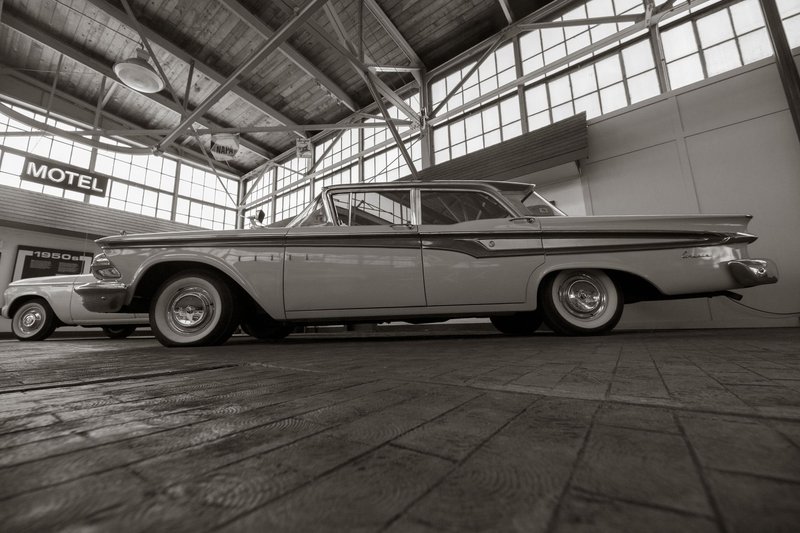
The Edsel wasn’t just a discontinued model — Ford discontinued an entire brand. Launched for 1958 with a grille that critics compared to a horse collar, it arrived into a recession right as buyers were downsizing, backed by market research that somehow missed all of that. Ford sold about 110,000 Edsels total across three model years before pulling the plug on November 19, 1959, having burned through roughly $350 million—a cautionary tale shared with other failed automotive brands. The name became shorthand in American business schools for a launch that failed on timing, design, and price all at once — not one of those alone would have killed it.
Ford Escort
The Escort was Ford’s best-selling small car through the 1980s and into the ’90s, and it went out the way most compacts do: replaced by something better before anyone noticed the old one was gone. The Focus arrived in 2000 with a genuinely modern chassis, and Ford kept building Escorts alongside it for two more years to satisfy rental fleets. The last Escort sedan rolled off the line on February 20, 2002; the ZX2 coupe hung on into 2003 before the nameplate disappeared from North America for good.
Ford Taurus
The 1986 Taurus is the rare car that changed how an entire industry designed sedans — its aerodynamic, jellybean shape made the boxy competition look instantly dated. That reputation didn’t save it. By the 2010s the Taurus had drifted into fleet-sale territory, overshadowed by Ford’s own Fusion on one side and Explorer on the other. The last North American Taurus came off the line in 2019, part of Ford’s broader 2018 announcement that it would stop selling nearly every car in the US and Canada to concentrate on trucks and SUVs.
Ford Crown Victoria
If you’ve ever ridden in a taxi or gotten pulled over before 2012, there’s a decent chance it was a Crown Vic. Built on Ford’s Panther platform from 1992 until production ended on September 15, 2011, the Crown Victoria became the default American police car and fleet sedan largely because nothing else combined body-on-frame durability with V8 power at that price. Ford didn’t replace it with another sedan — the Police Interceptor Utility, an armored-up Explorer, took over patrol duty instead.
Ford Thunderbird
The Thunderbird ran for over four decades starting in 1955, morphing from two-seat sports car to personal luxury coupe to, eventually, something nobody could quite define. Ford killed it in 1997, then brought it back in 2002 as a retro two-seater riding on the same platform as the Lincoln LS. The revival looked great in photos and sold worse than Ford hoped; it lasted only through the 2005 model year before Ford shelved the name again, this time for good.
Ford Fusion
The Fusion is the cleanest example of a car that died from a market shift, not a design failure. Sales peaked at 306,860 units in 2014 and had fallen to 166,045 by 2019 — still a real number, just not one that competed with what an Escape or Edge earned Ford per unit of factory capacity. Production ended in August 2020. Ford confirmed in 2018 that it would stop building nearly all its North American cars, betting that customers moving from sedans to SUVs weren’t coming back — a trend the EPA’s own fuel economy data shows has been accelerating for over a decade.
Ford Fiesta
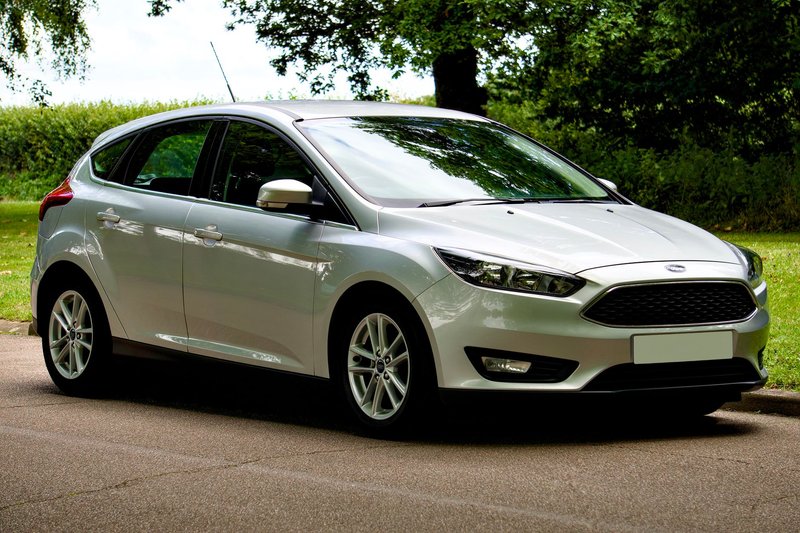
Forty-seven years is a long run for any car, and the Fiesta earned its retirement rather than getting pushed into it early. US sales ended in 2019 as part of the same lineup cull that took the Fusion and Taurus, but the Fiesta kept selling well in Europe until Ford wound down production at its Cologne plant in June 2023 to make room for new EV lines. Tightening EU vehicle emissions rules made it harder to justify a small, low-margin gas car taking up floor space Ford needed for electric models.
Ford Focus
The Focus outlived the Escort it replaced by nearly two decades before facing the same fate. North American production ended in 2018, swept up in Ford’s car-lineup cuts alongside the Fusion and Taurus, with Escape and EcoSport crossovers absorbing the compact-buyer traffic. The Focus kept building in Europe for several more years, a reminder that “discontinued” often means discontinued in one market, not everywhere Ford sells cars.
The One-Off: Ford Ranchero
Ford built a car with a truck bed bolted onto it for 22 years, and nobody’s quite replicated it since. The Ranchero ran from 1957 to 1979, riding on Ford’s full-size and later Fairlane/Falcon/LTD platforms depending on the generation, aimed at buyers who wanted pickup utility without giving up a car’s ride and looks. It never outsold the Chevrolet El Camino by much and never came close to F-Series volume, and by the late ’70s the “car-truck” concept had lost to two things: cheap compact pickups like the Ranger and the simple fact that most Ranchero buyers just wanted an F-150. Ford let the idea die rather than fight for a niche.
SUVs and Crossovers Ford Discontinued
Ford Flex
The Flex looked like a shrunken Country Squire wagon and drove like a minivan wearing a trench coat — boxy, three rows, and genuinely loved by the people who bought one. That cult following never translated into volume. Built from 2009 to 2019, it got outsold consistently by the Explorer and Edge, and Ford didn’t see a reason to keep three overlapping crossovers in production. The Flex’s Oakville, Ontario plant capacity went to other models once it was gone.
Ford C-Max
Ford’s answer to the Toyota Prius v never found its footing in the US. The C-Max hybrid and plug-in hybrid hatchback ran from 2013 to 2018, squeezed between a Fusion Hybrid that did the same job with a more familiar sedan shape and an Escape Hybrid that did it in a body style Americans actually wanted. Ford folded the C-Max’s hybrid technology into the Escape lineup and quietly let the standalone model go.
Ford Edge
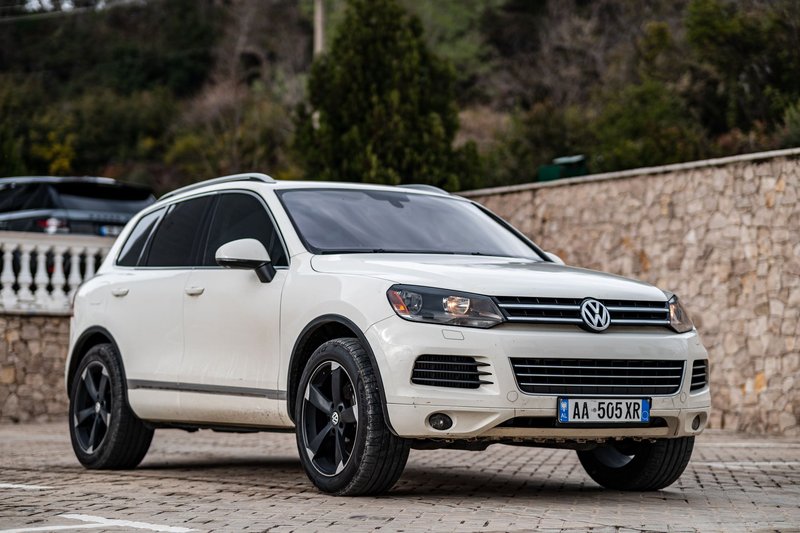
The Edge spent 17 years as Ford’s answer to “I want something bigger than an Escape but I don’t need three rows.” That’s a fine pitch until Ford’s own Explorer and Bronco started eating into it from both directions — one with more seats, one with more attitude. The last Edge left Ford’s Oakville Assembly Plant in Ontario on April 26, 2024; that same factory is being retooled to build five new electric vehicles. The Edge also never got a hybrid or EV variant in its final years, a gap that mattered more each year as buyers cross-shopped electrified rivals.
Ford Escape
This is the one with an asterisk. Ford is ending the current Escape after the 2026 model year as part of a roughly $2 billion overhaul of its Louisville Assembly Plant — but the name isn’t going away. Ford has confirmed an all-electric Escape, built on its new low-cost Universal EV platform, is targeted for around 2029, positioned as an affordable entry into the compact crossover segment rather than a premium EV play. If you’re shopping a gas Escape now, you’re not buying a dead-end model so much as the last generation of one that’s about to change species entirely.
Vans Ford Discontinued: Ford Transit Connect
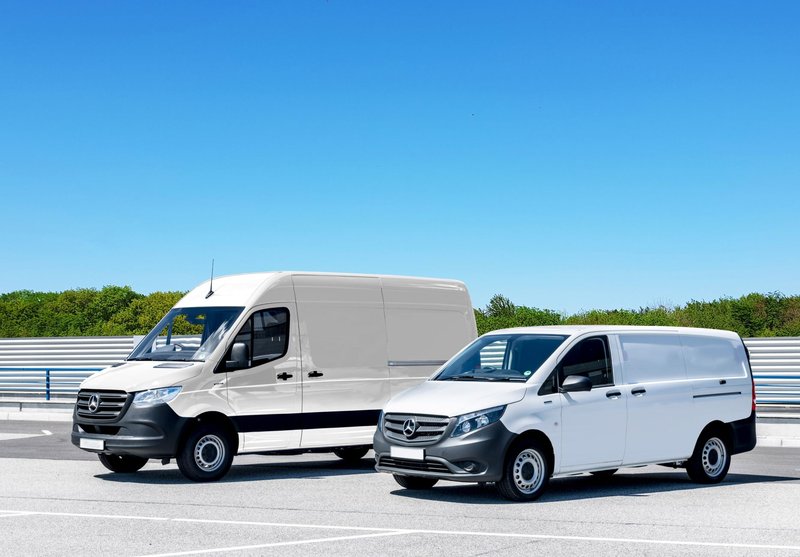
Small commercial vans are a tough business in the US — margins are thin, and the segment never grew the way SUVs did. Ford discontinued the Transit Connect in the United States after the 2023 model year, citing manufacturing cost and complexity alongside soft demand, and scrapped a planned Maverick-based successor that had been in development. It’s not dead everywhere: Europe still gets a Transit Connect / Tourneo Connect, now built off a Volkswagen Caddy platform through Ford and VW’s commercial-vehicle partnership.
FAQ: Will Any of These Come Back?
Will Ford bring back the Fusion? Nothing’s confirmed, and the outlook isn’t great. Ford’s US car capacity is committed to SUVs, trucks, and EVs, and reviving a midsize sedan would mean competing against the exact math that killed it the first time. The nameplate could theoretically resurface on a crossover someday, but a gas sedan named Fusion isn’t on any known roadmap.
Is the Ford Escape actually coming back after it’s discontinued? Yes — that’s the one confirmed revival on this list. The current gas Escape ends after 2026; an all-electric Escape is planned for around 2029 on Ford’s Universal EV platform.
Will Ford ever revive the Focus or Escort? Unlikely as standalone nameplates. Ford’s compact-car segment in North America has been absorbed almost entirely into crossovers. The Bronco’s 2021 return proves Ford will resurrect a name when the business case is strong enough — it just hasn’t found one for a compact sedan or hatchback.
Why did Ford discontinue almost all of its cars at once? Timing more than coincidence. Ford’s 2018 restructuring cut nearly its entire North American car lineup in one move because SUVs and trucks generated far higher profit per unit, and consumer demand had already shifted that direction for years.
What’s the rarest discontinued Ford? The Edsel, by a wide margin — around 110,000 units built across all body styles and three model years, compared to the hundreds of thousands Ford sold annually of cars like the Taurus or Fusion at their peaks.
Ford’s discontinued list keeps growing, and it’ll keep growing as the EV transition forces more of these calls. But the Escape’s comeback is the tell: these aren’t always deaths, sometimes they’re just the gas-powered chapter ending before the electric one starts.

James Kowalski
More from James KowalskiHow we reviewed this article
This article was researched against manufacturer records and editorially reviewed before publishing. We accept no payment for coverage.