Search for “1920s Chevrolet” and you get two kinds of results: marketplace listings with a price and a VIN, or a Wikipedia stub on one specific model year with no context for what came before or after it. Neither tells you the actual story — that Chevrolet spent the decade clawing its way from a struggling also-ran into the company that outsold Ford, and did it by changing the car almost every single year.
This is that story, year by year, with the numbers that matter if you’re trying to understand what you’re looking at — or buying.
Table of Contents
- 1920–1922: Two Fours, One Confusing Lineup
- 1923: The Series B Superior Arrives
- 1924: The Series F Refines the Formula
- 1925: The Series K and the Brake Problem
- 1926: The Series V and a Record Year
- 1927: The Capitol AA Beats Ford
- 1928: The National AB and Real Brakes
- 1929: The Stovebolt Six Changes Everything
- What They’re Worth Now, and Where to Find One
1920–1922: Two Fours, One Confusing Lineup
Chevrolet entered the decade running two separate four-cylinder cars at once, which tells you everything about how disorganized the company still was under William Durant’s second, shakier stint at General Motors. The Series 490 — named for its original $490 price tag, though by 1921 it ran $795 to $1,375 depending on body style — used a small 171-cubic-inch four making 26 horsepower on a 102-inch wheelbase. It sold well anyway: 117,827 built in 1921 alone.
Above it sat the Series FB, a genuinely bigger car with a 224-cubic-inch overhead-valve four putting out 37 horsepower on a 110-inch wheelbase, offered as a roadster, coupe, sedan, and tourer. Running two overlapping product lines made no engineering or marketing sense, and Chevrolet knew it. Both were phased out by 1922 in favor of a single, better-planned successor.
1923: The Series B Superior Arrives
This is where the decade’s real story starts. The Series B Superior replaced both the 490 and the FB with one coherent lineup, priced from $495 for the tourer to $860 for the sedan. “Superior” wasn’t just a trim name — it was a statement of intent. Chevrolet was through building the cheapest possible car and starting to build a good cheap car, close enough to a Ford in price but noticeably better finished.
The gamble worked. Superior sales in 1923 nearly tripled Chevrolet’s prior-year volume, and General Motors took notice: this was the first Chevrolet generation stable enough to be built on for several years running rather than reinvented from scratch.
1924: The Series F Refines the Formula
The Series F carried the Superior name into 1924 with prices trimmed slightly, from $490 to $795. Mechanically it was an evolution rather than a redesign — same basic four-cylinder architecture, tightened tolerances, better fit and finish on the closed bodies. That closed-body detail mattered more than it sounds. In 1920, closed cars were a small minority of the market; by the middle of the decade, sedans and coaches were outselling open touring cars and roadsters nationwide, a shift the Smithsonian’s automobile history collection traces to affordable enclosed models finally reaching buyers who’d previously been priced out of weather protection. Chevrolet’s Series F rode that wave rather than starting it, but it rode it well.
1925: The Series K and the Brake Problem
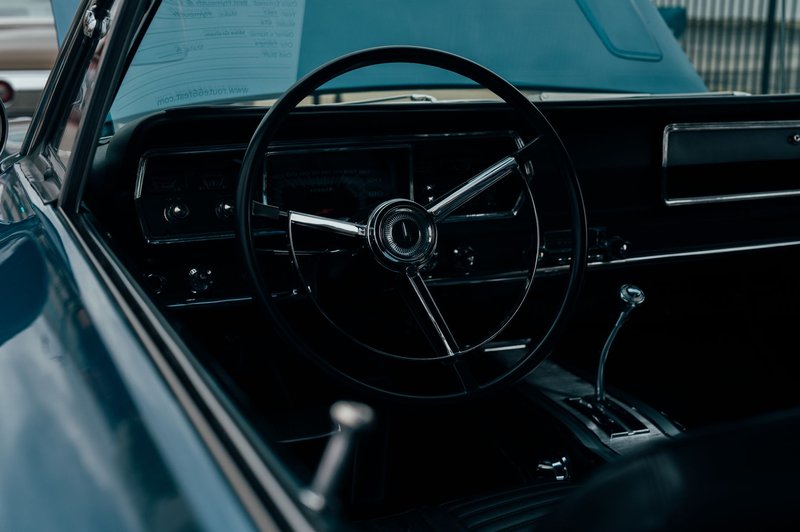
The Series K, priced $525 to $735, brought 11-inch brake drums to the rear wheels — a real upgrade in stopping power for the era, but still a two-wheel system. That’s worth flagging because it’s the detail modern shoppers get wrong most often: despite what a seller’s listing might imply, no 1925 Chevrolet stops like a modern car, or even like a late-1920s one. Front-wheel braking wouldn’t show up on Chevrolet passenger cars for a few more years yet, which matters if you’re planning to actually drive one rather than trailer it to shows.
Fisher Body supplied the closed-body Series K shells with vertical ventilating windshields, a small comfort feature that sounds trivial until you’ve sat in a non-ventilating closed car in August.
1926: The Series V and a Record Year
For 1926, the Superior became the Series V, spreading across five body styles: a roadster and four-door tourer at $510, a coupe and two-door coach at $645, a four-door sedan at $735, and a Landau Sedan topping the range at $765. The spread of price points across nearly identical mechanicals was deliberate — Chevrolet was learning to sell the same car to buyers with different budgets rather than building one car for everyone, a lesson Ford’s single-price-point Model T strategy never fully absorbed.
1927: The Capitol AA Beats Ford
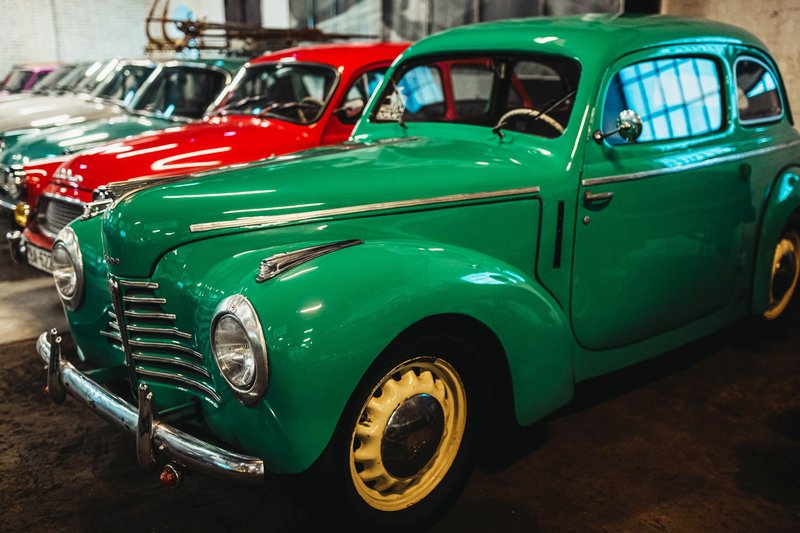
1927 is the year everything changed, for two reasons that had nothing to do with each other and everything to do with each other.
First: Ford shut down Model T production that year to retool for the Model A, leaving a months-long gap in showrooms nationwide. Chevrolet’s new Series AA Capitol walked through that open door. Chevrolet built 1,001,820 cars in 1927 — its first million-car year — with the Capitol accounting for 678,843 of them. The $695 Capitol Coach two-door sedan alone sold 239,566 units, making it the single best-selling car body style in the United States that year. For the first and only time in the decade, Chevrolet outsold Ford.
Second, and less noticed at the time: on June 23, 1927, GM’s executive committee approved a new internal department “to study the question of art and color combinations in General Motors products,” and hired a Hollywood custom coachbuilder named Harley Earl to run it. Earl’s Art and Colour Section started with GM’s upmarket LaSalle brand, but the idea that a car’s appearance deserved its own dedicated professional — not an afterthought bolted onto engineering — would filter down through every GM division, Chevrolet included, by the end of the decade.
1928: The National AB and Real Brakes
The Series AB National replaced the Capitol AA and became the best-selling Chevrolet of the entire decade: 1,193,212 built, including 69,217 from the Oshawa, Ontario plant alone. The reason to remember 1928 specifically: this was the first Chevrolet with four-wheel brakes, a genuine safety upgrade Chevrolet needed before it could responsibly sell a faster car — because a faster car was exactly what was coming next.
1929: The Stovebolt Six Changes Everything
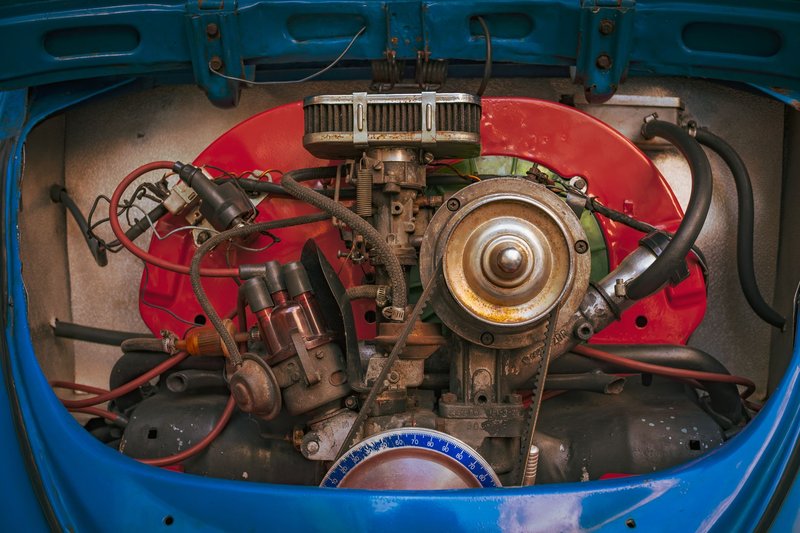
Every four-cylinder Chevrolet of the decade led to this. The Series AC International dropped the four entirely for a new 194-cubic-inch overhead-valve inline six, feeding through a single-barrel Carter carburetor to make 46 horsepower — a substantial jump that finally let Chevrolet claim genuine performance, not just value, against Ford’s four-cylinder Model A. Mechanics nicknamed it the “stovebolt six” because its fasteners resembled the ones holding a woodstove together, a name so sticky it stuck to Chevrolet inline-sixes for the next three decades of production.
The AC International lasted exactly one model year before GM replaced it with the Series AD Universal for 1930, but its engine architecture — six cylinders, overhead valves, more power for not much more money — set the template Chevrolet ran with well into the 1950s.
What They’re Worth Now, and Where to Find One
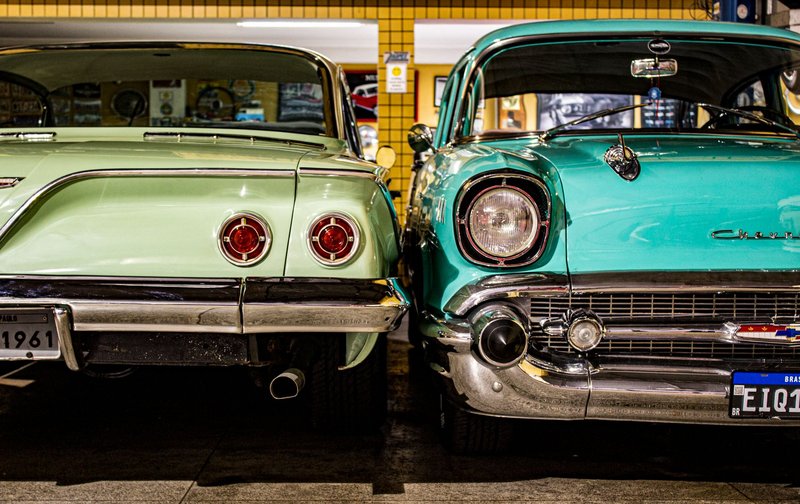
Values vary enormously by body style and originality, which is the single most common thing buyers get wrong when comparing listing prices. A rough-running open touring car and a fully restored closed sedan from the same model year aren’t the same purchase, even when they share a VIN prefix.
As a rough guide: driver-quality four-cylinder Superiors (1923–1926) in decent but unrestored condition tend to land in the low-to-mid five figures, with well-documented restorations pushing higher. The 1927–1928 Capitol and National models, being the most numerous survivors thanks to their million-plus production runs, are generally the easiest and most affordable entry point into the decade. The 1929 International, as the only six-cylinder car of the era and the rarest single-year model, commands a premium over its four-cylinder siblings — sometimes a significant one for well-sorted examples.
For context on what the original sticker prices mean today, the Bureau of Labor Statistics’ inflation calculator is the standard tool — running a $695 1927 Capitol Coach through it gives you a sense of just how affordable Chevrolet was actually trying to be, relative to household incomes of the time.
Parts availability favors the more common cars. Superior and Capitol/National mechanical parts — brake components, engine internals, glass — are well supported by the vintage Chevrolet specialty suppliers because so many examples survived; body panels and trim get harder to source the further back you go, especially for the shorter-run early Series FB and 490 cars. Before buying, join one of the active vintage Chevrolet owners’ clubs — they’re the fastest way to get a straight answer on whether a given car’s price matches its actual condition, and most will know the seller or the car’s history if it’s been shown before.
The decade’s real lesson, if you’re shopping rather than just reading: buy the car that matches what you actually want to do with it. A four-cylinder Superior with a tired brake system is a fair-weather show car, not a road trip vehicle. A 1929 International with its six-cylinder engine and four-wheel brakes is the closest thing the decade produced to something you could genuinely drive today — which is exactly why it costs more.

Marco Delantero
More from Marco DelanteroHow we reviewed this article
This article was researched against manufacturer records and editorially reviewed before publishing. We accept no payment for coverage. Some guides contain affiliate links; see our affiliate disclosure.