Ferrari’s 1955 lineup splits cleanly into three groups: Grand Prix cars (625 F1, 555 Super Squalo), sports-racers (750 Monza, 500 Mondial, 857 S, the six-cylinder 118 LM and 121 LM, and the V12 410 S), and a short list of hand-built road cars (250 Europa GT, 410 Superamerica). That’s the answer. The rest of this post covers what each car was, what engine sat under the hood, and how it did against the Mercedes-Benz team that dominated the season.
1955 was a bad year for Ferrari on the results sheet and a busy one on the drawing board. Mercedes won five of the six championship Grands Prix run outside Indianapolis. Alberto Ascari, Ferrari’s double world champion, died in May while testing a 750 Monza at Monza, days after crashing a Lancia into the harbor at Monaco. Lancia then quit racing and handed its D50 Grand Prix cars to Ferrari, which changed the next three years of the company’s history.
Table of contents
- TLDR
- How Ferrari named its cars
- Formula 1 cars
- Sports-racers
- Road cars
- Quick-reference table
- Built in 1955, titled in 1956
- How to identify a model by chassis number
TLDR
- Best-known 1955 Ferrari racer: the 750 Monza, a 3.0-liter four-cylinder.
- Only F1 win of the year: Maurice Trintignant at Monaco, in a 625-based car.
- Biggest engine: the 410 S, a roughly 5.0-liter V12 built for a race (the Carrera Panamericana) that was canceled before it ran.
- Most-seen road car: the 250 Europa GT, with a 3.0-liter Colombo V12.
- Naming rule: most Ferrari numbers are the displacement of one cylinder in cc, not the whole engine.
How Ferrari named its cars
Most of the confusion around 1955 Ferrari models comes from the names, so start here.
For the racers, the number is usually the displacement of a single cylinder in cubic centimeters, rounded. A 750 Monza has four cylinders of about 750 cc each, so 3.0 liters. The 500 Mondial is four cylinders at 500 cc: 2.0 liters. The 857 S is 857 cc times four, about 3.4 liters. The 735 LM is 735 cc times six, about 4.4 liters. The V12 cars follow the same logic: a 410 is roughly 413 cc per cylinder, about 5.0 liters in total. Not everything fits. The 553 and 555 Formula 1 names are project numbers, and the 118 LM and 121 LM are internal engine type numbers (Tipo 118 and Tipo 121).
Letters after the number tell you the job. S means sport, LM means Le Mans, GT means grand touring. Nicknames are separate: “Squalo” is Italian for shark, and “Super Squalo” is the shark’s updated sibling.
Formula 1 cars
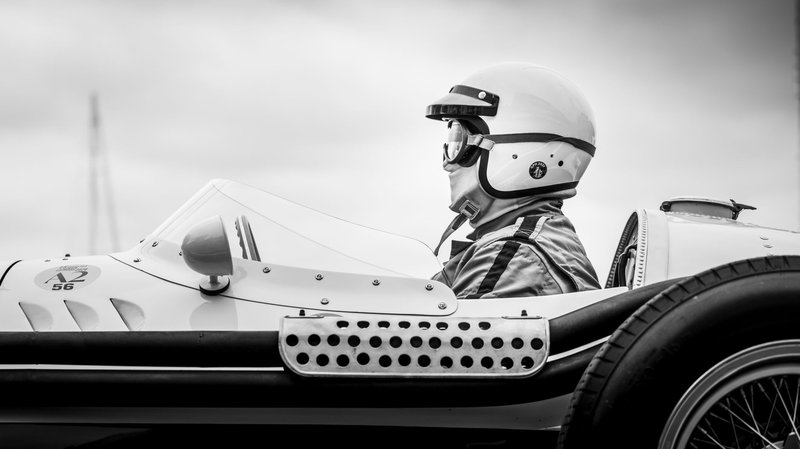
Formula 1 ran to a 2.5-liter limit in 1955, and Ferrari’s answer was a family of Aurelio Lampredi’s inline-fours. They were not fast enough that year.
Ferrari 625 F1
The 625 F1 was a 2.5-liter inline-four, four cylinders at about 625 cc, and it was the workhorse of the 1954 and 1955 seasons. It was a development of the 500 F2 engine that carried Ascari to the 1952 and 1953 world titles, stretched to meet the new formula. Ferrari’s only Grand Prix win of 1955 came at Monaco, where Maurice Trintignant took the flag in a 625-based car after the leading Mercedes cars hit trouble. That was the season’s high point. Mercedes won every other championship round outside the Indianapolis 500.
Ferrari 555 Super Squalo
The 555 was the planned replacement: the same 2.5-liter four-cylinder layout, but in a chassis with the fuel tanks and bodywork reworked for better weight distribution. Motor Sport’s account of the 555 covers the car in detail. The 553 Squalo that came before it was mainly a 1954 car. Together the 625 and 555 were what Ferrari fielded until the Lancia cars arrived.
Where the Lancia D50 fits
The D50 is not a Ferrari model for 1955 purposes, but it explains the season’s end. After Ascari’s death, Lancia withdrew and its V8 D50 cars moved to Ferrari. Motor Sport’s history of the D50 tells that story. Ferrari ran them as Lancia-Ferrari D50s in 1956, and Juan Manuel Fangio won that year’s title in one.
Sports-racers
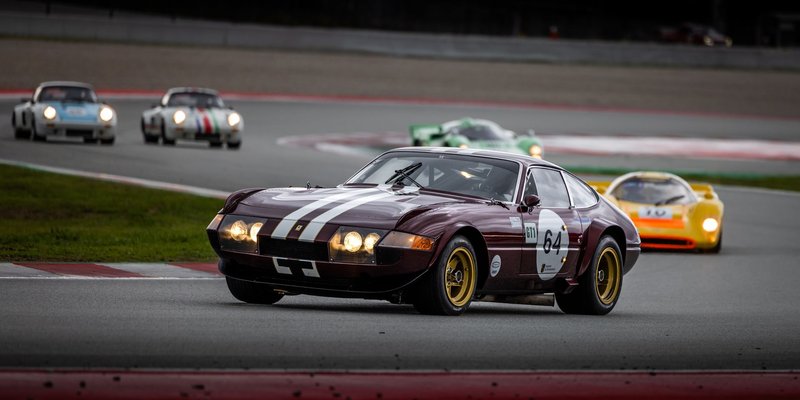
Sports-car racing was where Ferrari kept its pride in 1955. The calendar was the Mille Miglia, the Targa Florio, the 24 Hours of Le Mans and a run of smaller long-distance events, and the opposition came from a crowded 1950s sports-car field that included Mercedes’ 300 SLR, Jaguar’s D-type and Aston Martin.
Ferrari 750 Monza
The 750 Monza is the car most people picture. It used a 3.0-liter four-cylinder (Lampredi’s engine, in a lighter tubular chassis) with bodywork by Scaglietti, and around 30 were built. Its curvy, open two-seater shape is the template for the 1950s Ferrari sports-racer. It was fast and light, and it was the car Ascari was driving when he died at Monza.
Ferrari 500 Mondial
The 500 Mondial is the little brother. It had a 2.0-liter four-cylinder derived from the 500 F2 Formula 2 engine, detuned to roughly 170 hp, in a car weighing around 720 kg. About 29 were built between 1953 and 1955, mostly bodied by Pinin Farina and Scaglietti. It was a customer car for the 2.0-liter class, and it was cheap enough that privateers raced it for years afterward.
Ferrari 857 S
The 857 S was Ferrari’s attempt to catch Mercedes. Take a 750 Monza chassis, enlarge Lampredi’s four to 3.4 liters and about 280 hp, and send it against the Mercedes 300 SLR. Only a handful were built. The 857 S is a one-season answer, and it shows up in period results as a front-running Ferrari that could not quite win.
Ferrari 118 LM and 121 LM (376 S, 446 S, 735 LM)
These are the cars with the tangled names. The 118 LM carried a 3.7-liter inline-six and was previously labeled the 376 S. The 121 LM carried a 4.4-liter inline-six and was previously the 446 S, with the 735 LM name (735 cc times six) attached to the same car. Both used a chassis closely related to the 750 Monza, and the six-cylinder cars were built for the long, fast road races of 1955. At the Mille Miglia, Eugenio Castellotti brought a 121 LM home third behind two Mercedes, which was the best a Ferrari could do on the day. At Le Mans the story was worse: the race is remembered for the crash that killed 80-plus spectators and the Mercedes driver Pierre Levegh, and Ferrari’s cars did not figure in the finish.
Ferrari 376 S
The 376 S is the early name for the 118 LM above. If you see “376 S” in an auction listing, it is the 3.7-liter inline-six sports-racer, not a separate model.
Ferrari 410 S
The 410 S is the biggest and rarest racer on the list. It used a 5.0-liter (4,962 cc) Lampredi V12 making about 380 hp, a long-block unit developed with the Superamerica road car in mind, and only four were built across 1955 and 1956. It was designed for the 1955 Carrera Panamericana, and that race was canceled after the Le Mans disaster. The 410 S never ran the event it was built for, and ended up as a loud, powerful sports-racer with nothing to prove it against.
Road cars
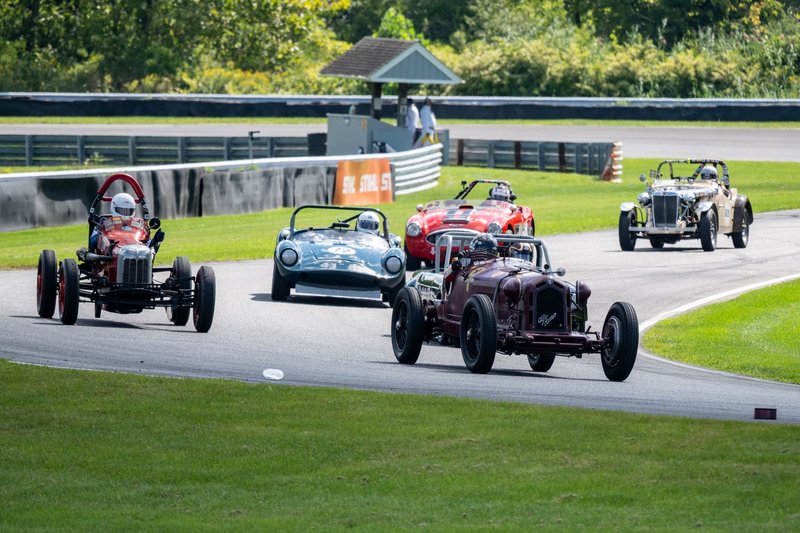
Ferrari’s road cars in 1955 were essentially racing cars with leather. Production was measured in dozens, each one coachbuilt, and each customer specified more or less what he wanted.
Ferrari 250 Europa GT
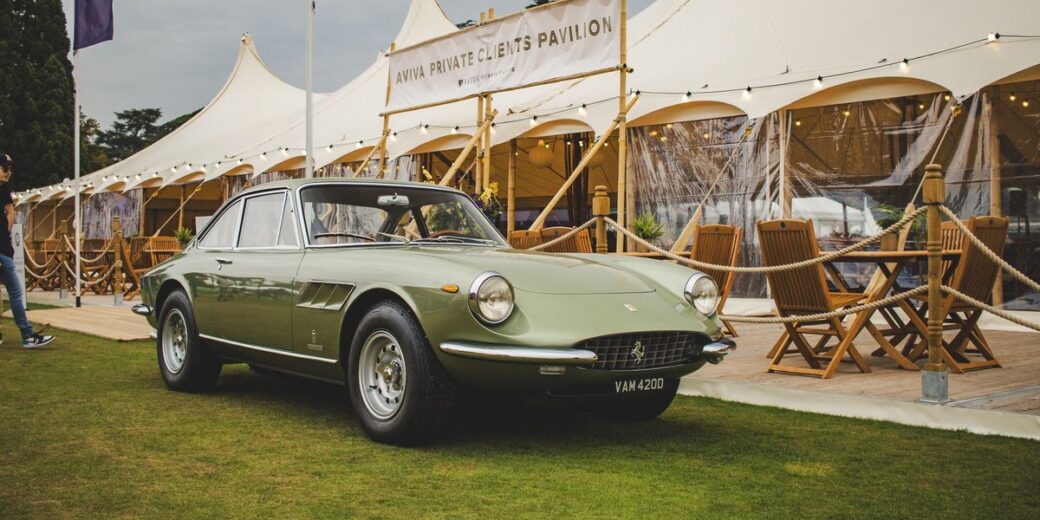
The 250 Europa GT is the one most 1955 Ferrari searches are really after. It launched at the Paris Salon in October 1954 and used a 3.0-liter (2,953 cc) Colombo V12 making around 220 hp, a lighter and smaller engine than the Lampredi V12 in the Europa that came before it. Most cars wore Pinin Farina coupe bodywork, but Boano built a batch of lowroof alloy berlinettas, which is why you see “Europa GT by Boano” on auction lots. Fewer than 50 were built in total.
Ferrari 410 Superamerica
The 410 Superamerica is the road-going version of the big Lampredi V12, at roughly 5.0 liters and around 340 hp. A rolling chassis appeared at the Paris Motor Show in October 1955, and a finished car was shown at the Brussels Motor Show a few months later. The first batch was around 16 cars, mostly Pinin Farina coupes, and the Superamerica went on to three series before the Colombo-engined 400 Superamerica replaced it. This was the most expensive Ferrari you could buy.
Ferrari 375 America and 375 Plus Speciale
Both are leftovers worth mentioning because they appear under “1955” in some catalogs. The 375 America was the previous top-of-the-line grand tourer, with a 4.5-liter Lampredi V12 and about a dozen built before the 410 Superamerica took over. The 375 Plus was a 1954 racer with a 4.9-liter V12 that won the 1954 24 Hours of Le Mans for Froilán González and Trintignant, and the Speciale was a coachbuilt road version. Neither was a new 1955 design.
Quick-reference table
| Model | Type | Engine | Notable fact |
|---|---|---|---|
| 625 F1 | Formula 1 | 2.5 L inline-4 | Trintignant’s Monaco win, Ferrari’s only F1 win of 1955 |
| 555 Super Squalo | Formula 1 | 2.5 L inline-4 | Replacement for the 553 Squalo |
| 750 Monza | Sports-racer | 3.0 L inline-4 | Around 30 built; Ascari’s fatal car |
| 500 Mondial | Sports-racer | 2.0 L inline-4 | About 29 built, detuned F2 engine |
| 857 S | Sports-racer | 3.4 L inline-4 | About 280 hp; built to match Mercedes |
| 118 LM (376 S) | Sports-racer | 3.7 L inline-6 | Six-cylinder Le Mans car |
| 121 LM (735 LM, 446 S) | Sports-racer | 4.4 L inline-6 | Castellotti third at the Mille Miglia |
| 410 S | Sports-racer | 5.0 L V12 | Four built; built for a canceled Carrera Panamericana |
| 250 Europa GT | Road car | 3.0 L Colombo V12 | Launched at Paris, Oct. 1954 |
| 410 Superamerica | Road car | 5.0 L Lampredi V12 | About 340 hp; first batch around 16 |
Built in 1955, titled in 1956
Ferrari’s calendar did not match a registration clerk’s, and it produces most of the “wrong year” listings you see.
A car can be shown in October 1954, built through 1955, and first registered in 1956. The 250 Europa GT is the clearest case: the design debuted in 1954, individual cars were built in 1955, and many were titled as 1956 models. The 410 Superamerica goes the other way, with the chassis shown in Paris in 1955 but the finished car reaching customers in 1956. Sources also disagree on show dates, so a listing’s model year often reflects the paperwork rather than the car.
For a buyer or a researcher, the rule is simple. Treat “1955” as one of three dates: when the design was shown, when the chassis was built, and when the car was first titled. Decide which one you mean before comparing listings, and check what the seller is using.
How to identify a model by chassis number
Ferrari chassis numbers are four digits, usually with a letter suffix, and they tell you more than the badge.
- Odd or even. Road cars (the Europa GT, the Superamerica) got odd numbers. Competition cars (the Monza, Mondial, the six-cylinder LM cars, the 410 S) got even numbers.
- The suffix. Letters mark the type: M for Monza, MD for Mondial, LM for Le Mans cars and GT for grand tourers. A Monza chassis reads something like 0500 M, with the zero-padding.
- Rebodying and conversion. Racing Ferraris were routinely rebodied, re-engined or converted. A number can match a car whose body or engine is not original, so check the history, not just the plate.
- Authentication. The factory’s Ferrari Classiche program certifies original cars and is the document serious buyers ask for.
If the number is even and ends in M, MD or LM, it is a racer. If it is odd with a GT suffix, it is a road car. That one rule sorts most 1955 listings before you read a word of the description.

Daniela Voss
More from Daniela VossHow we reviewed this article
This article was researched against manufacturer records and editorially reviewed before publishing. We accept no payment for coverage. Some guides contain affiliate links; see our affiliate disclosure.