| Charger | Charge | Mile | Month |
|---|---|---|---|
| Your mix | $9.18 | $0.080 | $92 |
| Home L2 | $9.18 | $0.060 | $69 |
| Home L1 | $9.73 | $0.060 | $69 |
| Public L2 | $15.17 | $0.100 | $114 |
| DC fast | $26.50 | $0.176 | $202 |
Show the math
75 kWh × (80 − 20)% = 45 kWh45 kWh ÷ 0.89 efficiency = 50.56 kWh (5.56 kWh lost)$0.182 per kWh (home Level 2)50.56 kWh × $0.182 = $9.1875 kWh ÷ 0.89 × $0.182 = $15.3083% home, 17% DC fast = $0.241 per kWh33.3 kWh ÷ 100 × $0.241 = $0.080$0.080 × 13,740 mi = $1,102 a year, $92 a monthShort answer: Charging an electric car at home costs about $0.060 per mile. A 75 kWh battery charged from 20% to 80% takes 45 kWh, draws 50.6 kWh from the wall and costs $9.18 at the August 2026 US average of 18.2 cents per kWh. Add the 17% of charging that typically happens at public DC fast chargers and the average rises to $0.080 per mile, or $92 a month for 1,145 miles.
Three things set the bill: the price per kWh where you charge, how many kWh your car uses per mile, and how much of your charging happens at home. The calculator above takes all three, covers any electric car including Teslas, and has presets for seven popular models. It prices the electricity only. For hours per charge, use the EV charging time calculator.
This article contains Amazon affiliate links. 33gears earns a commission on qualifying purchases. See our affiliate disclosure.
How to use the EV charging cost calculator
How the EV charging cost calculation works
The cost of one charge is the energy added to the battery, divided by charging efficiency, times the price per kWh. Written out: cost per charge = battery kWh × (end % minus start %) ÷ efficiency × price per kWh. Cost per mile = kWh per 100 miles ÷ 100 × price per kWh. Monthly cost is cost per mile times miles driven.
| Line | Value (75 kWh battery, 20% to 80%) |
|---|---|
| Energy added to the battery | 45 kWh |
| Energy drawn from the outlet at 89% efficiency | 50.6 kWh |
| Energy lost as heat | 5.6 kWh |
| Home electricity rate | $0.182 per kWh |
| Cost per session | $9.18 |
| Full charge, 0% to 100% (84.3 kWh drawn) | $15.30 |
The per-mile figure uses 33.3 kWh per 100 miles (3 miles per kWh). At the home rate that is $0.060 per mile, so 200 miles uses 66.6 kWh and costs $12.09. The national home average comes from the EIA (August 2026).
EV charging cost by charger type
Home charging is the cheapest option, and DC fast charging costs about three times as much per mile. Public Level 2 sits between them at $0.300 per kWh, from a Resources for the Future analysis of federal charger data (January 2025). DC fast is $0.530 per kWh, the network average for Q1 2026 reported by Paren. Each session below is the same 45 kWh; the monthly column uses 1,145 miles.
| Charger | Price per kWh | Session (20% to 80%) | Full charge | Per mile | Per month |
|---|---|---|---|---|---|
| Home Level 1 | $0.182 | $9.73 | $16.21 | $0.060 | $69 |
| Home Level 2 | $0.182 | $9.18 | $15.30 | $0.060 | $69 |
| Public Level 2 | $0.300 | $15.17 | $25.28 | $0.100 | $114 |
| DC fast charging | $0.530 | $26.50 | $44.17 | $0.176 | $202 |
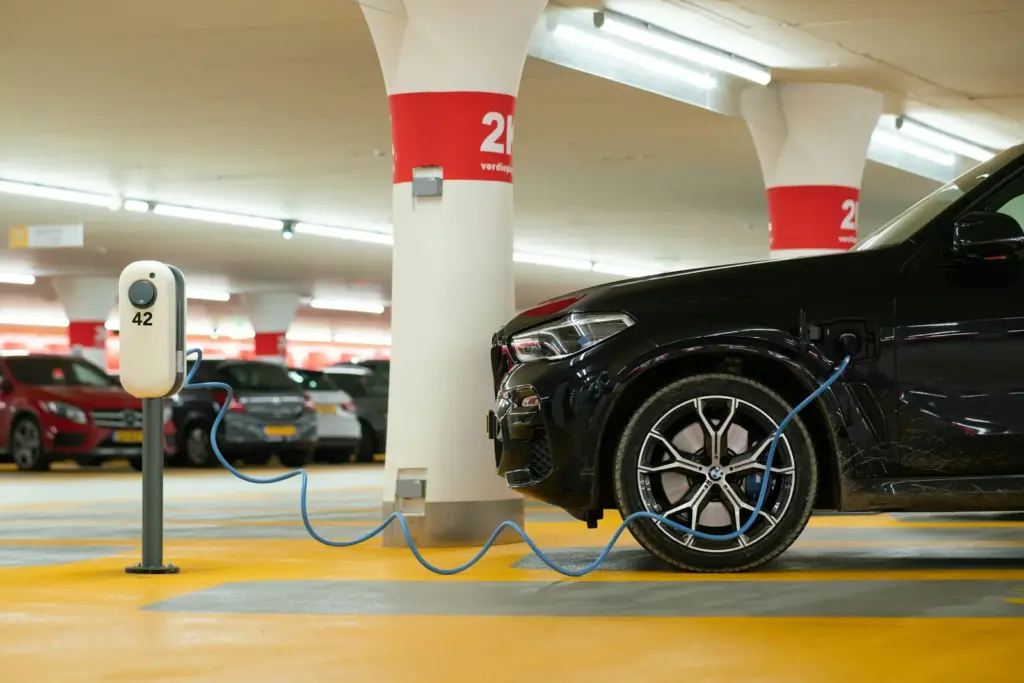
Most drivers mix the two. The calculator default is 83% home Level 2 and 17% DC fast, which blends to $0.241 per kWh and costs $0.080 per mile, $92 a month and $1,102 a year. That 17% of fast charging adds 2 cents per mile over charging only at home. Nothing in this section compares against gasoline; the EV vs gas calculator does that.
Charging losses and Level 1 vs Level 2
Charging loses energy as heat, so you pay for more kWh than the battery stores. Level 2 loses about 11%, Level 1 about 16% and DC fast about 10%. Studies put Level 1 two to six percentage points less efficient than Level 2.
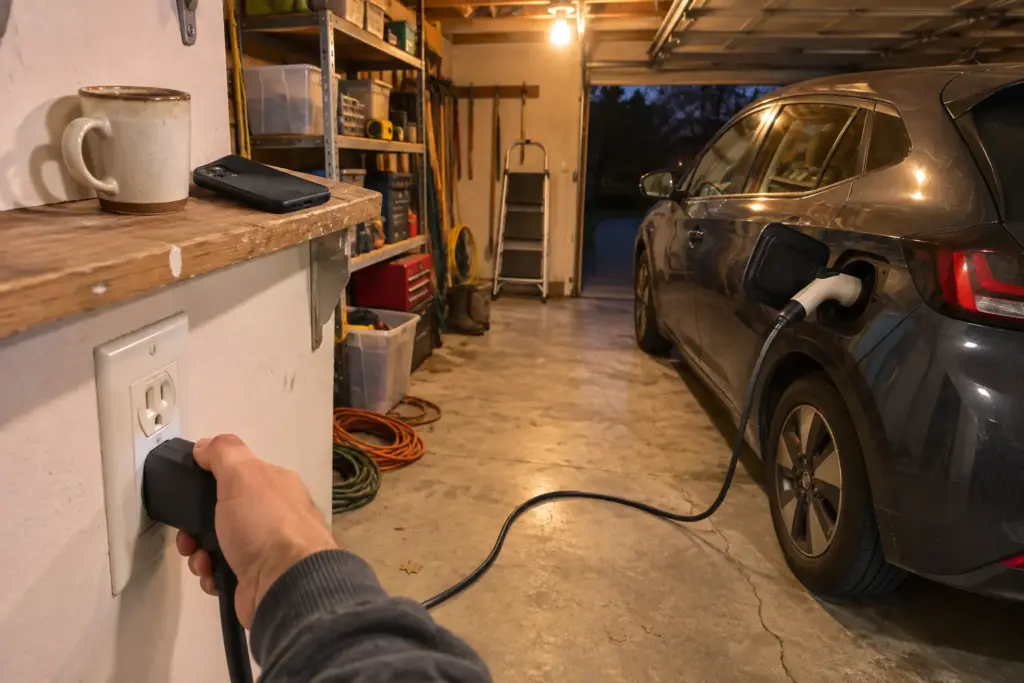
Source for the wall measurement: the EPA and DOE fuel economy data. At home the meter counts everything the charger pulls, losses included. Public chargers bill kWh delivered to the car (see NIST), so the loss on that side is the car’s only.
The efficiency gain from Level 2 is small per session, and speed is the main reason to install one. If you charge daily and want to leave the outlet behind, a Level 2 home charger with a J1772 connector fits most cars, and Teslas use an adapter.
Cost to charge popular electric cars, Tesla included
A full charge at home costs $16.12 in a Tesla Model 3 and $26.73 in an F-150 Lightning, because the Lightning has a 131 kWh battery and uses 47.91 kWh per 100 miles. Battery size sets the cost of one full charge, and efficiency sets the monthly bill. Tesla owners paying Supercharger rates should enter that rate in the DC fast field instead of the network average.
| Car | Battery (kWh) | kWh per 100 miles | Full charge at home | Per mile at home | Per month at home | Full charge at DC fast |
|---|---|---|---|---|---|---|
| Tesla Model 3 RWD | 79 | 24.64 | $16.12 | $0.045 | $51 | $46.52 |
| Tesla Model Y Long Range RWD | 74 | 25.23 | $15.10 | $0.046 | $52 | $43.58 |
| Chevrolet Equinox EV FWD | 85 | 31.08 | $17.34 | $0.056 | $65 | $50.06 |
| Ford Mustang Mach-E RWD Extended | 88 | 30.67 | $17.96 | $0.056 | $64 | $51.82 |
| Hyundai Ioniq 5 RWD | 80 | 30 | $16.32 | $0.054 | $62 | $47.11 |
| Ford F-150 Lightning ER | 131 | 47.91 | $26.73 | $0.087 | $100 | $77.14 |
| Nissan Leaf 75 kWh | 75.1 | 30 | $15.32 | $0.054 | $62 | $44.23 |
Efficiency is the EPA label figure (model year 2026, except the Lightning at model year 2025) and battery size is usable capacity from manufacturer and third-party specifications. Choose the manual entry in the calculator for any other car.
EV charging cost by state
Home charging costs $0.157 per mile in Hawaii and $0.042 in Nevada, a gap of nearly four times, because residential rates run from 12.72 to 47.18 cents per kWh. State rates are EIA residential averages for August 2026. Each row is home Level 2 at the default car.
| State | Rate (cents per kWh) | Session (20% to 80%) | Per mile | Per month |
|---|---|---|---|---|
| Nevada | 12.72 | $6.43 | $0.042 | $48 |
| Texas | 15.91 | $8.04 | $0.053 | $61 |
| California | 29.75 | $15.04 | $0.099 | $113 |
| Hawaii | 47.18 | $23.86 | $0.157 | $180 |
How to lower your EV charging cost
Charge at home, overnight, on an off-peak rate. With an example off-peak price of 10 cents per kWh and 85% of charging done off-peak, the blended rate drops to $0.112 per kWh. A session then costs $5.68 instead of $9.18, and a month costs $43 instead of $69, a saving of $26. Your utility’s off-peak price is on its time-of-use rate sheet.
Public session fees add to the energy price. A $3 fee turns a $15.17 public Level 2 session into $18.17. Enter the fee in the calculator to include it.
How accurate the charging cost estimate is
The estimate is as accurate as the rate and efficiency you enter. The EPA figure is a laboratory average; speed, cold weather and hills raise your real kWh per 100 miles, so replace it with the number from your car’s trip computer once you have one. The weakest constant is DC fast efficiency, 90% here, which published tests put between 85% and 93%. Public prices change by network, time and location, so type the rate you see on the charger when it differs.
Frequently asked questions
Charging at home costs about 6 cents per mile, or about 9 dollars to add 45 kWh to a 75 kWh battery. That uses the August 2026 US average of about 18 cents per kWh. Your own rate on your bill sets the real figure.
A full charge from 0% to 100% of a 75 kWh battery costs about 15 dollars at home and about 44 dollars at a DC fast charger. Smaller batteries cost proportionally less and larger ones proportionally more.
Home charging is cheaper. Per mile it costs about 6 cents at home against about 10 cents on public Level 2 and about 18 cents on DC fast. Public prices are from January 2025 for Level 2 and Q1 2026 for DC fast.
A Tesla Model 3 costs about 16 dollars for a full charge at home, or about 4.5 cents per mile. The same charge at a DC fast charger costs about 47 dollars at the national average rate.
Multiply the kWh added to the battery by the price per kWh, then divide by charging efficiency, which is about 89% on Level 2. Adding 45 kWh at about 18 cents per kWh costs about 9 dollars.
Level 2 charging loses about 11% of the energy drawn from the wall, Level 1 about 16% and DC fast about 10%. Per-mile figures from the EPA already include these losses.
Two hundred miles costs about 12 dollars at home and about 35 dollars at a DC fast charger, for a car using 33.3 kWh per 100 miles.
Yes. If 85% of charging moves to an off-peak rate of 10 cents per kWh, a home session drops from about 9 dollars to about 6 dollars. Check your utility for its off-peak price and hours.
Sources
- EIA. Electric Power Monthly, average price by sector
- EPA and DOE. Fuel economy data
- NIST. Electric vehicle fueling FAQs
- Resources for the Future. Pain at the electric vehicle pump
- Electrek. EV fast charging prices
- IEEE. Level 1 and Level 2 charging efficiency
- INL and DOE. DC fast charging efficiency
- IEA. Global EV Outlook 2024

James Kowalski
More from James KowalskiHow we reviewed this article
This article was researched against manufacturer records and editorially reviewed before publishing. We accept no payment for coverage. Some guides contain affiliate links; see our affiliate disclosure.