
TLDR
Buy an EV if you can charge at home and most of your driving is local. Buy a plug-in hybrid if you can charge at home but regularly take long trips. Buy a regular hybrid if you can’t plug in at home, or you want the lowest-fuss car you can own. The deciding factor is almost never the car. It’s where the car sleeps at night.
Contents
- The three types, in plain terms
- Electric cars vs hybrid cars at a glance
- Five-year running costs, with the math
- Charging is the real dividing line
- Range, cold weather and long trips
- Maintenance, batteries and resale value
- Incentives have changed
- Who should not buy each one
- A five-question checklist
- FAQ
The three types, in plain terms
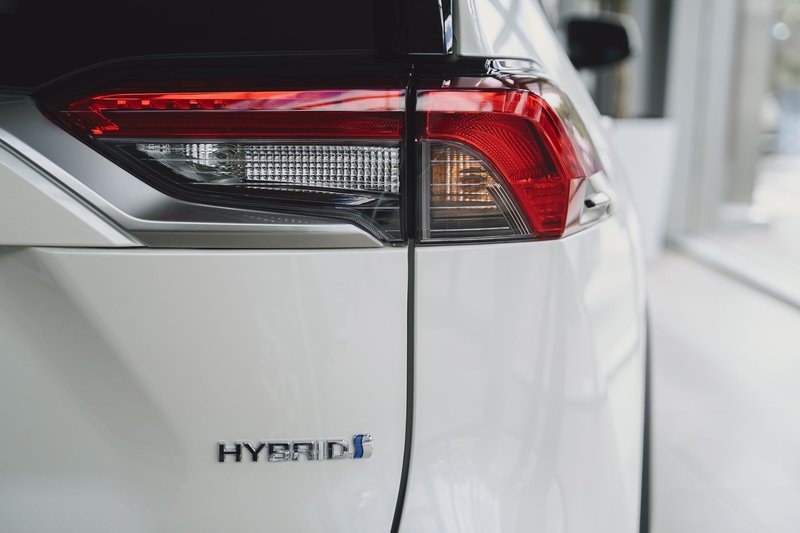
Hybrid (HEV). A petrol engine with a small battery and electric motor. The battery fills itself from braking and from the engine. You never plug it in, you fill it at the pump, and it typically returns somewhere around 45 to 55 mpg. Toyota’s Prius and Corolla Hybrid, and the Honda CR-V Hybrid, work this way.
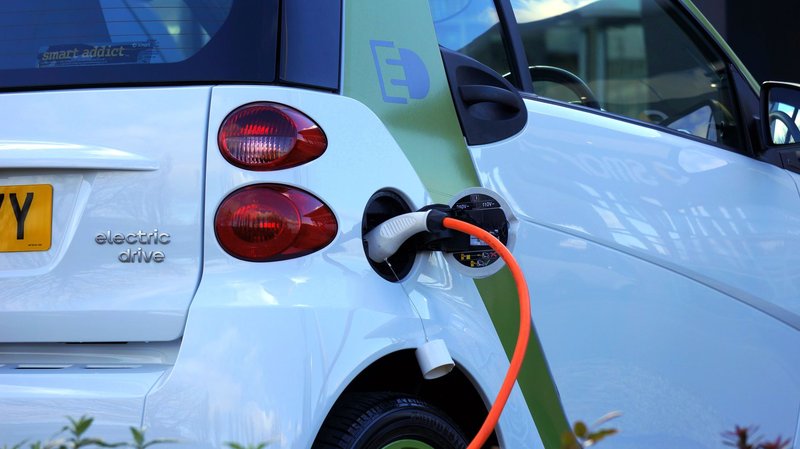
Plug-in hybrid (PHEV). The same idea with a much bigger battery you charge from a socket. Most give 25 to 50 miles of electric driving, then the engine takes over like a hybrid. The U.S. Department of Energy describes them as running on electricity first, with the engine as backup. This is the genuine middle ground between the other two.
Electric (EV). A battery and motors, no engine. No tailpipe, no oil changes, no fuel station. Everything depends on the battery and on where you can charge it. The DOE’s EV overview covers the basic hardware.
Electric cars vs hybrid cars at a glance
| Hybrid (HEV) | Plug-in hybrid (PHEV) | Electric (EV) | |
|---|---|---|---|
| Purchase price | Lowest of the three | Mid to high | Often highest, though gaps are closing |
| Energy cost per 100 miles* | About $6.40 | About $6.10 (mixed use) | About $4.90 at home, about $12.90 on public fast chargers |
| Maintenance | Engine servicing plus brakes | Engine servicing plus charging gear | Tyres, brakes (used less), cabin filter, coolant |
| Real-world range | 500+ miles | 400 to 600 miles combined | 200 to 350 miles, lower in cold weather |
| Refuelling | 5 minutes | 5 minutes, or overnight plug | Overnight at home, 20 to 40 minutes on the road |
| Tailpipe emissions | Some | None on battery, some after | None |
| Home charging needed | No | Strongly preferred | Practically yes |
*Assumptions in the next section.
Five-year running costs, with the math
Numbers beat adjectives here, so these are the assumptions: 12,000 miles a year (60,000 over five years), petrol at $3.20 a gallon, home electricity at $0.17 per kWh, public DC fast charging at $0.45 per kWh. The EV does 3.5 miles per kWh, the hybrid 50 mpg, and the PHEV drives 60% of its miles on electricity and the rest at 40 mpg.
- EV, home charging: 100 miles takes about 28.6 kWh, which costs about $4.86. Over 60,000 miles: roughly $2,900.
- Hybrid: 100 miles uses 2 gallons, costing $6.40. Over 60,000 miles: roughly $3,840.
- PHEV: $4.86 for the electric 60 plus $3.20 for the petrol 40 comes to about $6.10 per 100 miles. Over 60,000 miles: roughly $3,700.
- EV, public fast charging only: 28.6 kWh at $0.45 is $12.86 per 100 miles. Over 60,000 miles: roughly $7,700, double the hybrid.
Two things stand out. First, the gap between an EV charged at home and a good hybrid is only about $900 over five years in this scenario. That’s real money, but it won’t pay off a $6,000 price premium on its own. Second, an EV that lives on public fast chargers is the most expensive way to drive in this comparison. Swap in your own local prices; if your electricity is $0.30 per kWh, the EV’s advantage mostly disappears.
If you drive 30 miles a day, the picture changes. A PHEV with 35 to 40 miles of electric range covers that commute on battery alone, so its petrol engine barely runs on weekdays. You get EV running costs with no range worries at the weekend.
Charging is the real dividing line
A home charger turns an EV from a compromise into the easiest car you’ll own. You plug in when you park, wake up to a full battery, and never visit a station. The EPA’s EV myths page notes that most charging happens at home for exactly this reason.
Without a driveway or garage, it flips. Apartment dwellers relying on slow street chargers, a workplace socket or a shared bay are at the mercy of availability. A hybrid has no such dependency. Fill up, drive off.
A PHEV is only worth its premium if you plug it in. Owners who never charge one are hauling a heavy battery around to burn petrol less efficiently than a regular hybrid.
Range, cold weather and long trips
Hybrids and PHEVs win on long trips without any planning. A tank gives 500 miles or more, and a stop takes five minutes. EVs can do long trips fine, but you plan around chargers, and a fast-charging stop is 20 to 40 minutes.
Cold is where EV range drops. Fueleconomy.gov notes that low temperatures and cabin heating reduce range; in freezing weather, a 20 to 30% loss at motorway speeds isn’t unusual. Heat pumps, standard on many newer EVs, soften it. A hybrid barely notices, because the engine produces heat as a by-product.
If your longest regular trip is under 150 miles, any modern EV copes. If you routinely cross states or countries, a hybrid or PHEV makes the whole thing less stressful.
Maintenance, batteries and resale value
Maintenance. EVs have fewer moving parts: no oil, spark plugs, belts or exhaust. Regenerative braking makes pads last far longer. Hybrids use regeneration too, so their brakes also outlast conventional cars, but they still need the engine looked after. PHEVs carry both sets of parts, so on paper they’re the most complex.
Batteries. Federal rules in the US require EV batteries to be covered for at least 8 years or 100,000 miles, and many hybrids carry similar cover on their hybrid components. Degradation in modern packs is usually gradual, typically a few percent in the early years, not a cliff. Out-of-warranty replacement is the one genuinely expensive risk, often several thousand dollars for an EV and less for a hybrid.
Resale. Hybrids from Toyota and Honda hold value extremely well, because used buyers know they last. EVs have taken steeper early depreciation, partly because prices have been cut and tech improves quickly. Some models now hold value better, but check used listings for the exact model before you buy.
Incentives have changed
The US federal EV tax credit of up to $7,500 for new EVs ended for vehicles acquired after September 30, 2025. If an article tells you to “claim your $7,500,” it’s out of date. Some states, utilities and local programmes still offer rebates or cheaper off-peak electricity, so check those before comparing sticker prices. Outside the US, incentives vary widely and change often.
Who should not buy each one
Skip the EV if you park on the street with no charging access, you tow regularly, or you drive long rural distances in cold climates with sparse fast chargers.
Skip the PHEV if you won’t plug it in, or if you never drive far enough to need the engine. In that case an EV is simpler and a hybrid is cheaper.
Skip the hybrid if you have cheap home electricity and a short commute. You’d be paying for petrol you don’t need.
A five-question checklist
- Can you charge at home or at work overnight? If no, lean hybrid.
- Is your daily driving under 40 miles? If yes, a PHEV or EV fits.
- Do you take trips above 250 miles more than a few times a year? If yes, lean PHEV or hybrid.
- Is your home electricity under about $0.20 per kWh? If yes, charging at home pays well.
- Do you plan to keep the car beyond the battery warranty? If yes, check warranty terms and a hybrid’s track record.
FAQ
Is a hybrid or an electric car cheaper to own? With home charging, the EV is cheaper to run, but the hybrid is often cheaper to buy. Over five years, they frequently end up close. Public charging flips it in the hybrid’s favour.
Is a plug-in hybrid better than an electric car? For drivers who can charge at home but also take long trips, yes. It covers daily driving on battery and removes range worries on the road.
Are hybrids better than EVs for long trips? Yes, in convenience. Refuelling takes five minutes and stations are everywhere.
Which is best for a commute? If you can charge at home, an EV or PHEV. If you can’t, a hybrid.
Do EVs really have lower maintenance costs? Yes, mostly. No oil changes, fewer parts to wear. Tyres still wear, and EVs are heavy, so they can wear them faster.

James Kowalski
More from James KowalskiHow we reviewed this article
This article was researched against manufacturer records and editorially reviewed before publishing. We accept no payment for coverage. Some guides contain affiliate links; see our affiliate disclosure.