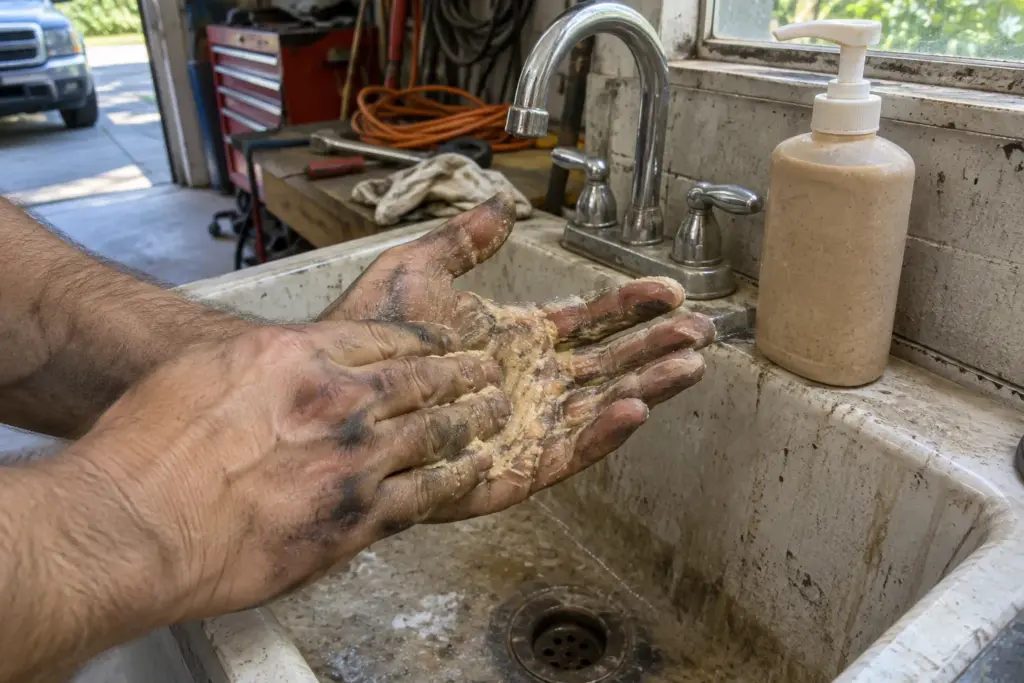
Short answer: Mechanics rub a waterless pumice hand cleaner into completely dry hands, scrub for a minute, brush under the nails, then rinse and finish with ordinary soap and water. No cleaner on hand? Dish soap on dry hands does the same job on light grease. Never use gasoline, brake cleaner or thinner: they strip the skin and are the wrong tool.
Most people reach for hand soap and warm water first, and that is why grease stays in the creases. Soap and water alone barely touches it. The fix is a cleaner built to dissolve grease, applied before any water, followed by a gentle wash and some moisturizer. Below is the full routine, what to do with no cleaner in the garage, how to get black grease out from under the nails, and the shortcuts that damage your skin.
This article contains Amazon affiliate links. 33gears earns a commission on qualifying purchases. See our affiliate disclosure.
How mechanics remove grease from their hands
Shop cleaners work in a set order. Occupational health guidance follows the same ladder: the mildest soap for everyday dirt, a waterless hand cleaner for oil and grease, and an abrasive soap only when the waterless cleaner fails, used sparingly.
No hand cleaner? Three home methods that work
Dish soap, sugar and cooking oil all cut grease. Pick by how bad it is.
All three beat plain soap and water. None replaces a pumice cleaner for a full day of engine work.
How to get grease out from under your nails
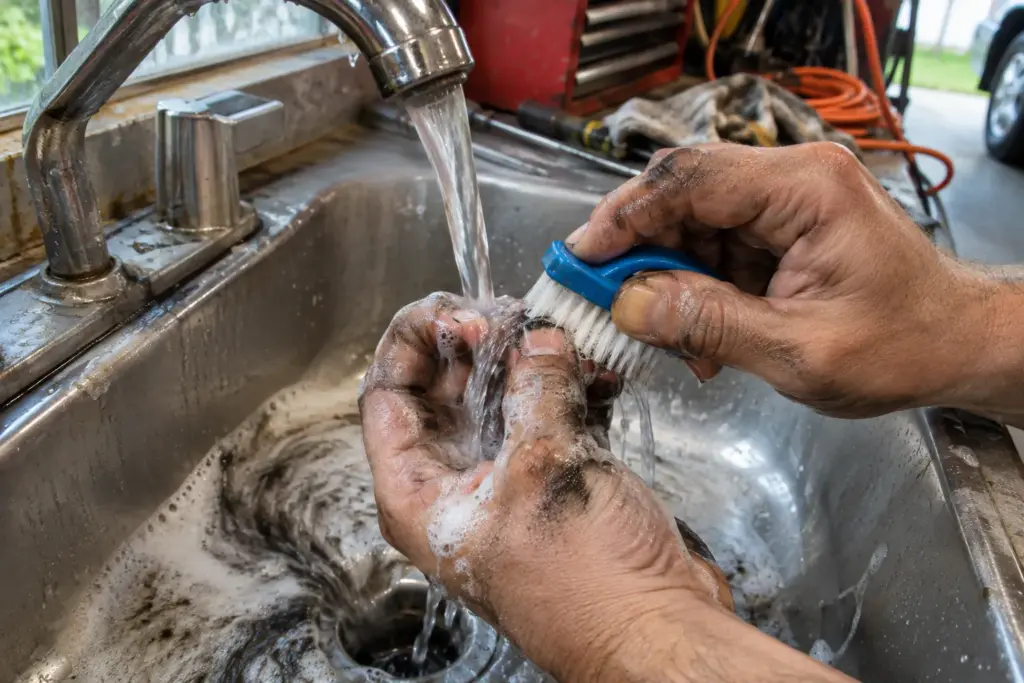
Grease packs under the nail and soap never reaches it. Use a nail brush with cleaner on dry hands. Scraping one nail against another only pushes the dirt deeper and tears the skin.
- Before the job: drag each nail across a dry bar of soap so the soap packs under the tip. The grease sits on the soap instead of the nail, and it rinses out afterward.
- Keep nails short. Less nail means less room for grease to collect.
- Brush after the job: a nail brush with cleaner first, then a second pass with soap and water.
What to do about stubborn, set-in grease
Repeat the dry-hand step with a fresh palmful, and scrub the creases harder than the rest. Grease worked into knuckle lines and cracked skin often looks like a stain, so a faint gray line after two passes is normal and fades over the next few washes.
| Problem | Fix |
|---|---|
| Black lines in knuckle creases | Second pass of waterless cleaner, scrubbing across the lines with the nail brush |
| Grease still on the hands after one wash | Repeat the dry cleaner step once, then a mild soap wash. Stop there |
| Skin feels raw or stings | Stop scrubbing, wash with mild soap, apply moisturizer or ointment |
| Used engine oil on the skin | Wash it off soon and wash again before eating or touching your face |
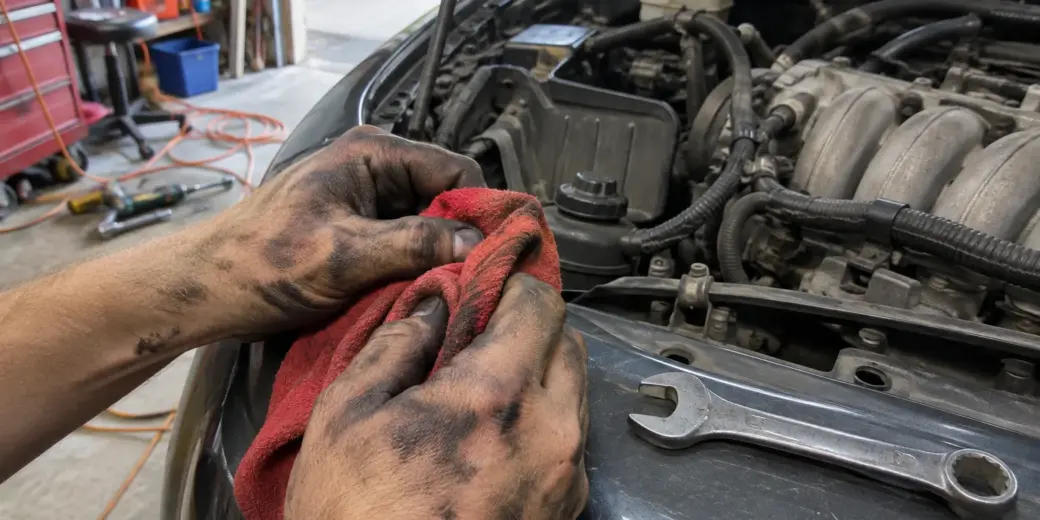
Used engine oil needs a proper wash, not just a wipe. The CDC’s toxic substances agency (ATSDR) reports skin rashes among mechanics who handle it often, and long-term skin exposure caused skin cancer in mice. A shop rag leaves it on your hands for the rest of the day.
What not to use to clean grease off your hands
Fuel and solvents dissolve grease fast, which is why people use them, and why they hurt. Solvents dry out and defat the skin, and repeated contact leaves it red and cracked. Gasoline on skin causes irritation and redness, and prolonged contact causes chemical burns.
How to keep grease off your hands in the first place
The easiest cleanup is the one you skip. Occupational health sources rank prevention above cleaning: protective gloves first, barrier cream when gloves are not practical.
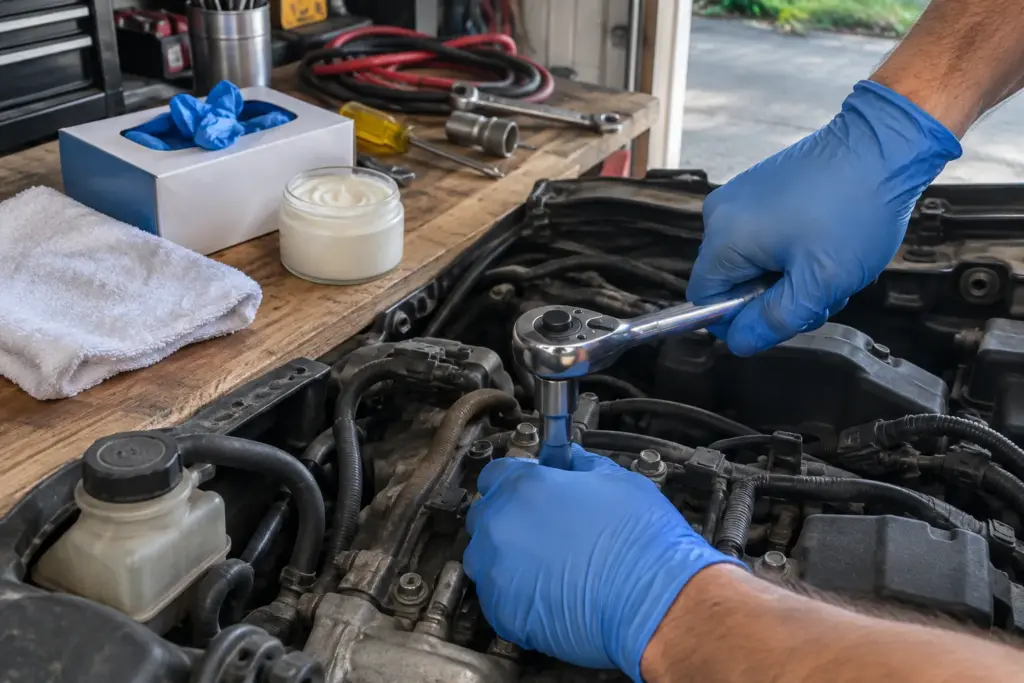
- Wear nitrile gloves. Disposable nitrile gloves handle oil and grease. Fresh boxes of nitrile gloves are cheap, and our nitrile glove guide lists thicknesses by job. Heavy work such as freeing a seized bolt calls for a mechanic glove instead.
- Use barrier cream when gloves get in the way. It substitutes for gloves in tight jobs and does not replace them. The cream has to match the chemical you are working with.
- Do the pre-job nail trick described above if you work bare-handed.
- Keep a bottle of cleaner at the sink, not in the truck, so cleanup happens before the grease dries.
Frequently asked questions
Most use a waterless pumice hand cleaner rubbed into dry hands, followed by a nail brush and a rinse with soap and water. Dish soap on dry hands is the common fallback.
Rub a little vegetable oil into the grease, wipe it off with a paper towel, then wash with soap and water. A paste of sugar and water also lifts it with scrubbing.
Yes. Dish soap is made to break up grease and works on light to moderate amounts, especially when rubbed on dry hands first. It dries skin out, so apply moisturizer afterward.
No. Gasoline can irritate skin and cause chemical burns after prolonged contact, and solvents dry out and crack skin. Use a hand cleaner made for the job.
Scrub with a nail brush and waterless hand cleaner on dry hands, then wash again with soap and water. Dragging your nails across a bar of soap before the job keeps grease out in the first place.
Grease sinks into skin creases and cracks, and it shows as a gray line after cleaning. A second pass with the nail brush and moisturizing cracked skin make it fade over a few washes.
Occasional contact is a rash risk, and mechanics who handle used oil often report skin rashes. Wash it off soon with soap and water instead of leaving it on.
Pumice and other abrasives wear down the outer skin layer, so use them only when mild soap fails and follow with moisturizer.
Sources
- CCOHS. Dermatitis, Irritant Contact
- NIOSH (CDC). Skin Exposures and Effects
- America’s Poison Centers. Gasoline and Diesel Fuel
- ATSDR (CDC). ToxFAQs for Used Mineral-based Crankcase Oil
- American Academy of Dermatology. Skin care tips for hands
- The Manual. How to clean greasy hands
- Tasting Table. Vegetable oil as a hand degreaser

James Kowalski
More from James KowalskiHow we reviewed this article
This article was researched against manufacturer records and editorially reviewed before publishing. We accept no payment for coverage. Some guides contain affiliate links; see our affiliate disclosure.