Short answer: Around 100,000 miles most cars are due for new spark plugs, the first coolant change, transmission fluid, brake fluid, both air filters and, on engines that have one, a timing belt and water pump. The same visit should include a close look at hoses, belts, shocks and struts, brakes, the battery and engine mounts. Expect roughly 500 to 1,500 dollars, more if the timing belt is due.
The average car on US roads is now 12.8 years old, and plenty of them pass 100,000 miles in good health. The ones that do usually had this service done on time. The single most expensive mistake at this mileage is skipping a timing belt: on many engines a snapped belt bends the valves and turns a planned repair into a new engine. Tick off the checklist below as you go, or print it for the shop.
Your ticks stay saved on this device. The 100,000-mile checklist PDF has the same list on one page with room for notes. For the routine items that keep repeating, like oil and tire rotations, use the mileage tool in the car maintenance schedule.
This article contains Amazon affiliate links. 33gears earns a commission on qualifying purchases. See our affiliate disclosure.
What maintenance is due at 100,000 miles
Four jobs are time-critical at this mileage because skipping them causes damage, not just wear: the timing belt, coolant, transmission fluid and brake fluid. The rest are inspections that decide what else needs replacing.
| Service | Why it matters at 100k | Replace or inspect |
|---|---|---|
| Spark plugs | Long-life plugs are rated 60,000 to 120,000 miles. Worn plugs cause misfires and burn more fuel. | Replace |
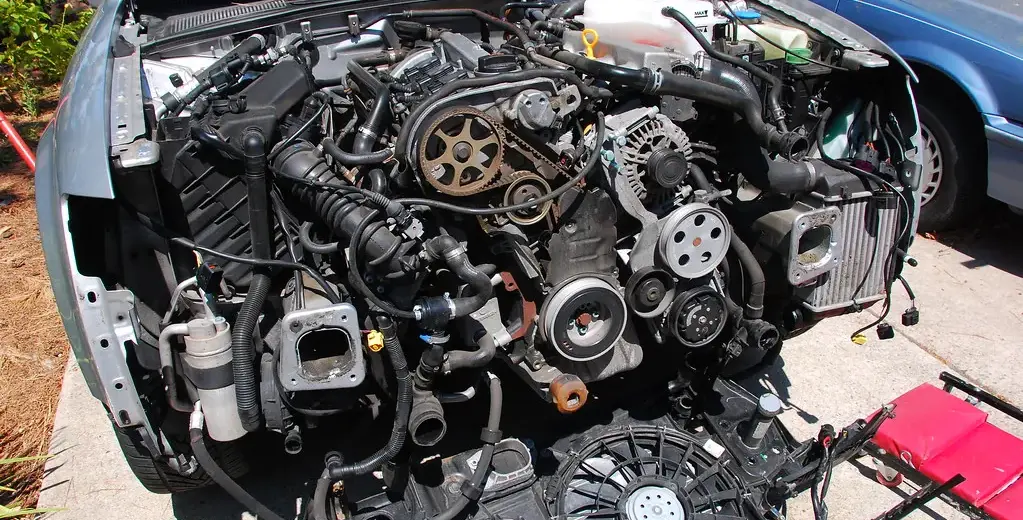
| Timing belt and water pump | Belts are rated about 60,000 to 105,000 miles. The pump sits behind the belt, so it is replaced in the same job. | Replace (belt engines) |
| Coolant | Long-life coolant often gets its first change at 100,000 miles or 10 years. Old coolant corrodes the radiator and pump. | Replace |
| Transmission fluid | Many schedules call for it at 60,000 miles under severe use. Fresh fluid protects clutches and the torque converter. | Replace |
| Brake fluid | Goes by time, every 2 to 3 years. Old fluid boils sooner under hard braking. | Replace if due |
| Serpentine belt and hoses | Rubber hardens with age and heat. A failed belt stops the alternator and often the water pump. | Inspect, replace if worn |
| Shocks and struts | Worn dampers lengthen braking and make the car wallow on bumps. | Inspect |
| Engine mounts, O2 sensors, PCV valve | Wear items that fail on high-mileage cars. Replace on symptoms. | Inspect |
Your owner’s manual decides the exact list. Toyota, for example, schedules spark plugs at 120,000 miles and its first coolant change at 100,000, while some turbo engines want plugs every 60,000. If the car came with no records, treat every fluid as overdue and change it now.
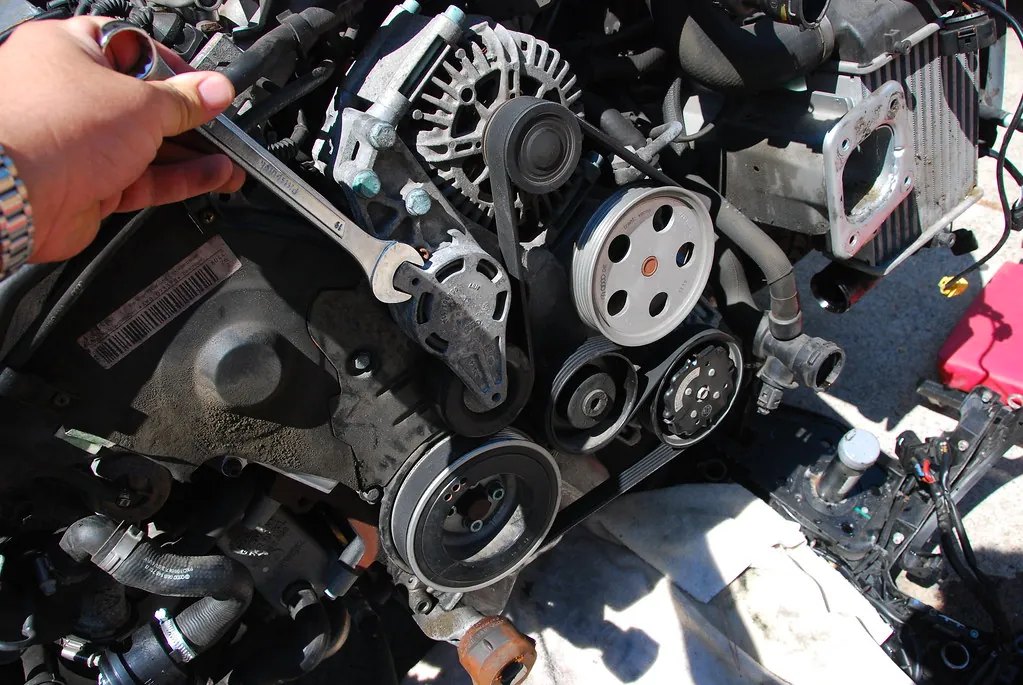
Timing belt or timing chain: how to tell
Look up the maintenance schedule: an engine with a timing belt has a replacement interval listed for it, and an engine with a chain has none. If the manual is missing, these steps settle it in a few minutes.
Timing chains last much longer but depend on clean oil. Stretched chains and worn guides show up as a rattle on cold starts. Regular oil changes are the maintenance for a chain engine.
How much a 100,000-mile service costs
A full 100,000-mile service usually runs 500 to 1,500 dollars depending on what is due. A timing belt job pushes it higher. National averages from RepairPal for the common items:
| Job | Typical US cost | Note |
|---|---|---|
| Timing belt replacement | About 920 to 1,340 dollars | Water pump and tensioner add parts cost; do them together |
| Water pump | About 890 to 1,140 dollars | Much less when done with the belt |
| Spark plugs | About 290 to 400 dollars | V6 engines with rear plugs cost more |
| Transmission fluid change | About 290 to 360 dollars | A drain-and-fill costs less than a flush |
| Shocks or struts (pair) | About 1,140 to 1,350 dollars | Only if the inspection finds them worn |
Prices vary a lot by car: RepairPal’s timing belt estimate runs from about 530 dollars for a RAV4 to over 1,700 for an Audi A4. Get a written quote that lists each item, and ask which ones are due by the manual and which ones the shop recommends on condition.
Doing the spark plugs yourself is one of the easier jobs on four-cylinder engines. You need a spark plug socket and a 3/8-inch torque wrench, because overtightened plugs strip aluminum cylinder heads. For bolts that have no published spec, the bolt torque chart lists values by size and grade. The cost of owning a car calculator shows how maintenance grows as a car ages.
Is high-mileage oil worth it?
High-mileage oil is worth trying if your engine leaks a little or burns oil between changes; otherwise regular synthetic in the right viscosity works just as well. High-mileage blends add seal conditioners that swell old rubber seals slightly, plus extra detergents. Makers aim them at engines past 75,000 miles.
Stick to the viscosity printed on the oil filler cap or in the manual. A high-mileage full synthetic oil in that grade is an easy swap at the next change. AAA recommends synthetic oil for high-mileage engines and severe service.

Signs your high-mileage car needs attention
Older cars give warnings before most big failures. These are the ones to act on within days, not at the next service.
| Sign | Likely cause | What to do |
|---|---|---|
| Adding more than a quart of oil between changes | Worn rings, valve seals or a leak | Track it: GM treats a quart per 2,000 mi as normal |
| Red or pink puddle, burnt smell | Transmission fluid leak or old fluid | Check the level and book a shop visit |
| Temperature gauge creeping up | Low coolant, thermostat, water pump, radiator | Stop before it overheats |
| Engine revs but the car does not speed up | Slipping transmission | Have it checked before it gets worse |
| Clunk when shifting into drive | Worn engine or transmission mount | Inspect the mounts |
| Steady check engine light | Often an oxygen sensor, coil or evap leak | Read the code with an OBD2 scanner |
| Flashing check engine light | Active misfire | Stop driving soon; it can damage the catalytic converter |
The OBD2 code lookup explains any code your scanner shows.
Is a car with 100,000 miles worth fixing?
Usually yes, if the body is solid and the repair costs less than about half of what the car is worth. A paid-off car with a fresh timing belt, fluids and plugs often has years left, and the 100,000-mile service costs far less than a year of payments on a replacement.
Few cars go on forever, though. An iSeeCars study found the average vehicle has about a 5% chance of reaching 250,000 miles, while some trucks and SUVs from Toyota pass that mark far more often. Rust, repeated transmission trouble and oil burning are the usual reasons to move on.
Maintenance after 100,000 miles
After this service, switch to the severe schedule for oil and inspections, and keep counting toward the next milestones: transmission fluid again at the interval your manual lists, coolant every 50,000 miles or 5 years on long-life coolant, and a second belt change on belt engines.
- Check the oil level every month and top it off.
- Change oil about every 5,000 miles or 6 months.
- Inspect brakes, tires and suspension at each oil change.
- Test the battery every fall.
- Look under the car for new drips once a week.
Planning a long drive on an older car? The road trip car maintenance checklist covers the checks to do before you leave.
Frequently asked questions
Most cars need spark plugs, coolant, transmission fluid, brake fluid and both air filters around 100,000 miles, plus a timing belt and water pump on engines with a belt. Hoses, belts, suspension and brakes get inspected.
Expect roughly 500 to 1,500 dollars depending on what your schedule lists. A timing belt and water pump can add about 900 to 1,500 dollars on their own.
Yes for most cars. It costs much less than the damage it prevents, such as a snapped timing belt or a transmission that fails on old fluid, and it keeps the car worth more at resale.
Check the maintenance schedule in the owner’s manual. A belt has a replacement mileage listed and a chain does not. A dealer can also tell you from the VIN.
It is optional. High-mileage oil can reduce small leaks and oil burning from aging seals, but a regular synthetic in the correct viscosity is fine for an engine that does not leak or burn oil.
There is no fixed limit. The average car on US roads is about 13 years old, durable models pass 200,000 miles with good maintenance, and about 5 percent of all vehicles reach 250,000 miles.
It can be, if it has records showing the 100,000-mile service, including the timing belt on belt engines. Without records, budget for that service right after you buy it.
Usually yes, with a gentle drain-and-fill rather than a pressure flush. If the transmission already slips, have it diagnosed first.
Sources
- S&P Global Mobility. US vehicle age rises again to 12.8 years
- AAA Club Alliance. When should timing belts be replaced?
- Universal Technical Institute. Timing belt vs timing chain
- RepairPal. Spark plug replacement cost
- RepairPal. Timing belt replacement
- Bumper. 100k mile maintenance
- ALLDATA DIY. Is high-mileage engine oil worth the cost?
- Gates. Belt inspection tech tip
- iSeeCars. Longest-lasting cars study
- Toyota. 2026 Camry warranty and maintenance guide

James Kowalski
More from James KowalskiHow we reviewed this article
This article was researched against manufacturer records and editorially reviewed before publishing. We accept no payment for coverage. Some guides contain affiliate links; see our affiliate disclosure.