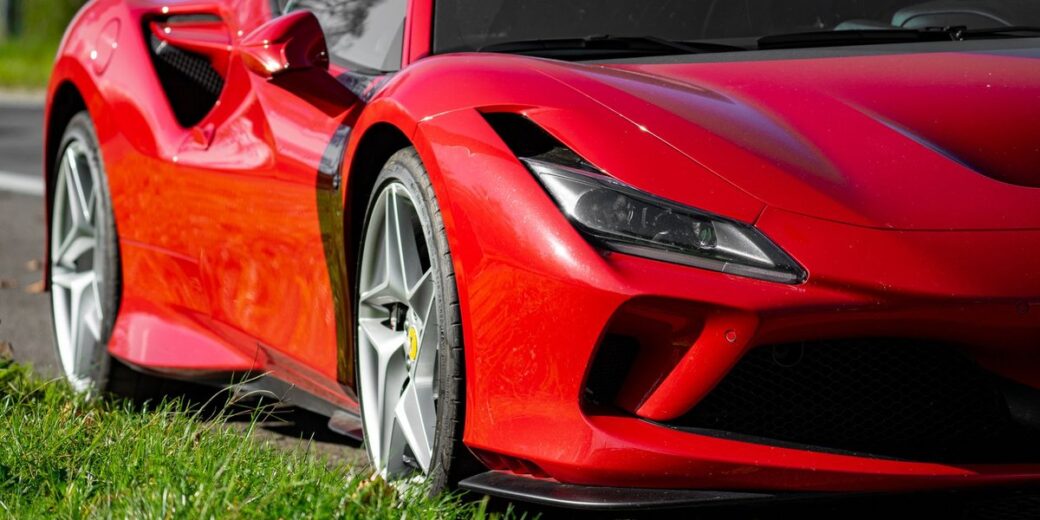
Most rundowns of 2004 Ferrari models are two-line database entries: a name, a horsepower figure, an asking price scraped from a dealer feed. None of them tell you why 2004 actually mattered. It was the last year you could buy a naturally aspirated Ferrari V8 that hadn’t been touched by a turbo, the year the Enzo’s production run wound down to its final cars, and the year Ferrari quietly showed the world what would replace the 360 without selling a single one of it yet. That’s three different eras colliding in twelve months, and it shows in what these cars are worth today.
Table of Contents
- TLDR
- Ferrari 360 Modena and Spider
- Ferrari 360 Challenge Stradale
- Ferrari 575M Maranello
- Ferrari Enzo
- Ferrari F430 — Shown, Not Sold, in 2004
- What These Cars Are Worth as an Investment
- Buying a Used 2004 Ferrari: What to Check
TLDR
In 2004, Ferrari’s US lineup came down to four cars you could actually drive off a lot: the 360 Modena and 360 Spider (entry-level V8, naturally aspirated, roughly $70,000–$100,000 today), the 360 Challenge Stradale (track-focused, limited-run, now a genuine collectible at $300,000–$450,000+), the 575M Maranello (front-engine V12 GT, $100,000–$250,000 depending on transmission), and the Enzo (final production year, F1-derived tech, now trading in the $4 million–$8 million range with exceptional cars well past that). Ferrari also unveiled the F430 at the Paris Motor Show that September — a preview of what came next, not something you could buy yet. If you’re shopping this era, the Challenge Stradale has been the strongest riser of the group; the standard 360 remains the cheapest way into a V8 Ferrari from this decade.
Ferrari 360 Modena and Spider
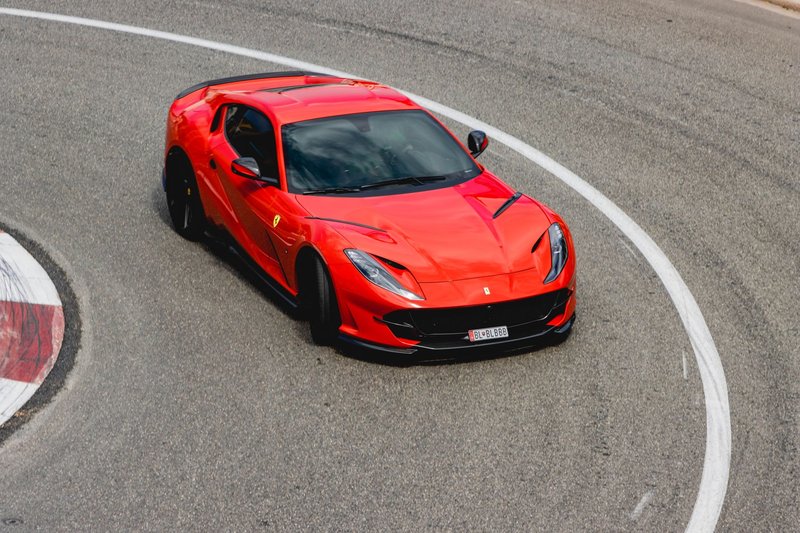
By 2004, the 360 Modena was in its last full model year — Ferrari would replace it with the F430 for 2005. That makes the 2004 cars the final, most-sorted version of a design that had already been in production since 1999, with years of running fixes baked in.
The Modena’s 3.6-liter V8 makes 400 horsepower at 8,500 rpm, mated to either a conventional six-speed manual or Ferrari’s paddle-shift F1 transmission. It’ll do 0–60 in about 4.5 seconds and top out near 189 mph — numbers that read modestly next to a modern V8 Ferrari, but the 360 was the first Ferrari with an aluminum spaceframe chassis, which is why it weighs several hundred pounds less than the steel-bodied 348 it replaced. The Spider is the same car with a power-folding soft top and a bit more scuttle shake on rough roads, otherwise mechanically identical.
New, a 360 Modena listed for around $150,000. Today, a well-kept manual example typically runs $70,000–$100,000, with F1-transmission cars often trading toward the lower end of that range — the manual is the more sought-after gearbox now that the F1 unit’s clutch and actuator wear are well understood. It’s the cheapest way into a Ferrari V8 from this decade, and the least likely of anything on this list to appreciate quickly.
Ferrari 360 Challenge Stradale
If the Modena is the 360 for daily use, the Challenge Stradale is the 360 with everything not related to lap time stripped out. Ferrari cut roughly 240 pounds through thinner glass, lighter carpet, deleted sound-deadening, and optional Lexan rear glass, then bumped the V8 to 425 horsepower and fitted Ferrari’s first application of carbon-ceramic brakes on a road car. It was offered only with the F1 paddle-shift gearbox — no manual — because the whole point was shaving tenths, not preserving heel-toe purity.
The result was a genuinely different car to drive: stiffer, louder, more direct, with a exhaust note that Ferrari deliberately routed to be heard from the cabin. It’s the closest thing to a Ferrari Challenge race car you could register for the road, and enthusiasts treat it that way.
That’s reflected in what these cars sell for now. Original MSRP was around $198,000 — a real premium over the standard 360 at the time. Today, clean, well-documented Challenge Stradales routinely sell for $300,000–$450,000, and standout low-mileage examples have pushed well past $600,000 at auction, with at least one exceptional sale reported above $1.8 million in early 2026. It’s the single strongest performer among 2004 Ferraris that aren’t the Enzo, and among the best sports cars of the 2000s overall.
Ferrari 575M Maranello
The 575M sat at the opposite end of the 2004 lineup from the 360: front-engined, V12-powered, built for covering continents rather than apexes. Its 5.75-liter V12 makes 508 horsepower, good for 0–60 in around 4.2 seconds and a top speed above 200 mph — genuinely quick for a 3,800-pound grand tourer, and quieter about it than the mid-engined cars in this list.
Ferrari offered the 575M with either a traditional six-speed manual or the F1 paddle-shift, and that choice matters enormously for value today. F1 cars — the majority of production — can be found for $100,000–$180,000 in good condition. The manual cars, genuinely rare (production estimates put manual 575Ms in the low hundreds worldwide), routinely command $200,000–$300,000 or more when they surface for sale. If you’re shopping this model, the transmission decides which market you’re in before price does.
Ferrari Enzo
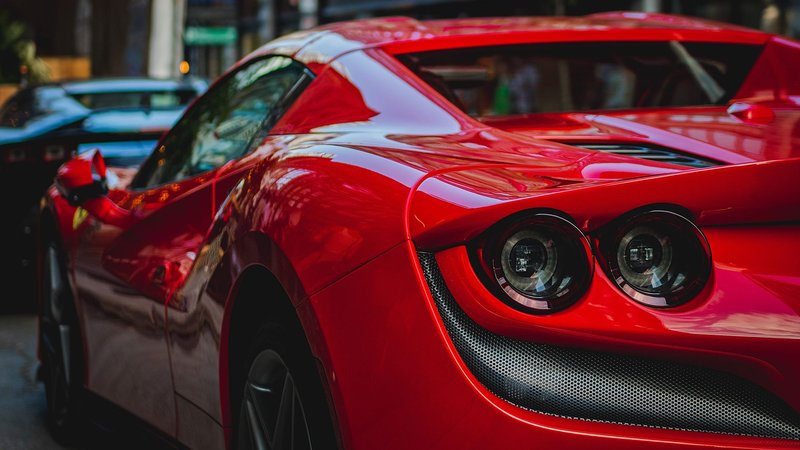
2004 was the Enzo’s last year of production, and it’s the car that makes this whole model year worth writing about. Ferrari built 400 in total — 399 sold to customers, plus a 400th car gifted to Pope John Paul II, who asked Ferrari to auction it instead and donate the proceeds to victims of the 2004 Indian Ocean tsunami. That car alone sold for roughly $1.15 million in 2005, then resold for $6.05 million a decade later — a preview of where the whole model was headed.
The Enzo packed more genuine Formula 1 technology into a road car than anything Ferrari had built before: a carbon-fiber monocoque tub, F1-derived paddle-shift gearbox with no manual option, active aerodynamics, and the first application of carbon-ceramic brake discs on any production car. The 6.0-liter V12 makes 651 horsepower, enough for 0–60 in roughly 3.1 seconds and a top speed of 218 mph — figures that held up against dedicated hypercars for years afterward.
New, the Enzo listed for around $659,000. Today it trades in an entirely different universe: typical sales fall between $4 million and $8 million, and the broader collector-car market’s strength heading into 2026 has pushed exceptional, low-mile Enzos well beyond that, with one 2026 auction result reportedly approaching $18 million. Blue-chip Ferraris have shown this pattern before — a 1962 250 GTO sold for more than $70 million at a Sotheby’s sale, and the Enzo is the car most likely from this era to keep climbing toward that kind of rarefied air.
Ferrari F430 — Shown, Not Sold, in 2004
The car that gets left out of most “2004 Ferrari” lists is the one that technically wasn’t for sale yet: the F430, unveiled at the Paris Motor Show that September as the 360’s replacement. It introduced the manettino steering-wheel switch, a new flat-plane-crank 4.3-liter V8 making 490 horsepower, and Ferrari’s first electronic differential — features that would define the brand’s V8 cars for the next decade. European left-hand-drive customers didn’t take delivery until November 2004; US buyers waited until the summer of 2005. It belongs in this story because it’s the reason 2004 was the 360’s last stand, not because you could park one in your driveway that year. Once it arrived in 2005, the F430 would define the next era of V8 Ferraris.
What These Cars Are Worth as an Investment
Treat these four cars as four different bets, because they behave nothing alike as assets. The 360 Modena is a depreciation curve that’s mostly flattened out — it’s a usable exotic, not a speculation play, and that’s fine if driving it matters more than its resale chart. The 575M sits in a similar spot, with the manual-gearbox cars as the one segment showing real upward pressure because so few were built.
The Challenge Stradale is the sleeper of the group. It was priced as an accessory to the 360 line in 2004 and now sells for three to four times what a standard Modena brings, on the strength of a production run in the low thousands and a reputation as the last naturally aspirated, analog-feeling Ferrari built for the track. The broader classic-car auction market has been running hot into 2026, and limited-run cars like the CS have been prime beneficiaries of that momentum.
The Enzo is in a category by itself. Four hundred cars, a hard production cap that will never change, and F1 technology that still reads as significant twenty years later — it’s the closest thing on this list to blue-chip art, and it’s priced that way.
Buying a Used 2004 Ferrari: What to Check
None of these cars are appliance-simple to own, and the paperwork matters as much as the car.
Verify the chassis number against Ferrari’s own records, especially on a Challenge Stradale. Because a genuine CS sells for multiples of a standard 360, cars have surfaced with Challenge Stradale bodywork and badges grafted onto a regular Modena shell. Ferrari Classiche certification — Ferrari’s own authentication and restoration program — confirms a car’s originality and matching numbers, and it’s worth the cost before you commit six figures.
Budget for major service, not just oil changes. All four of these cars need a full belt-and-clutch service on a roughly three-year interval regardless of mileage, and on the 360 and 575M that job commonly runs $3,000–$6,000 at a Ferrari specialist. Skipped service history is the single biggest red flag across this generation.
On F1-transmission cars, check clutch wear specifically. The Modena, Challenge Stradale, and F1-equipped 575M all use the same style of automated single-clutch gearbox, and a worn clutch or failing actuator pump is an expensive surprise — get a specialist to pull the clutch wear data from the car’s ECU before you buy, not after.
Ask for full service records, not a folder of gas receipts. A 2004 Ferrari with twenty years of documented specialist maintenance is worth a real premium over an identical car with gaps in its history — buyers in this market pay for provable, not implied, upkeep.
On the Enzo specifically, production number matters more than mileage. Because all 400 cars are individually documented and tracked by serious collectors, a car’s specific chassis number, color, and ownership chain affect value more than they would on a more common model — this is a car to buy through a specialist dealer or auction house with a verified history, not a private classified ad.
Twenty years on, the 2004 lineup reads like a hinge point in Ferrari’s history — the last of the analog 360, the final Enzos rolling off the line, and the F430 waiting in the wings. That’s a rare combination for a single model year, and it’s a big part of why these particular cars have aged the way they have.

Daniela Voss
More from Daniela VossHow we reviewed this article
This article was researched against manufacturer records and editorially reviewed before publishing. We accept no payment for coverage. Some guides contain affiliate links; see our affiliate disclosure.