Table of Contents
- Why 1999 Was BMW’s Pivot Point
- The All-New 3-Series (E46): A Clean-Sheet Redesign
- The 5-Series Touring Wagon Lands Stateside
- The 7-Series: BMW’s Quiet Flagship Year
- Z3 and the Birth of the M Coupe
- The M3’s Last E36 Year, With the E46 Waiting in the Wings
- The X5 (E53): BMW’s First SUV
- Buying a 1999 BMW in 2026: What to Know
- The Lineup That Set Up Two Decades of BMW
Most years in a carmaker’s history are incremental. 1999 wasn’t one of those years for BMW. The company launched an all-new 3-Series, put its first-ever SUV into production, closed out the E36 M3’s run, and introduced a hardtop Z3 variant nobody outside Munich saw coming. Look at the 1999 BMW models side by side and you’re looking at a company mid-transformation, not mid-cycle.
That matters if you’re trying to place a used BMW you’re considering, or if you’re just trying to understand how the brand got from the boxy, driver-focused cars of the ’80s and ’90s to the tech-laden lineup it sells today. 1999 is the hinge point.
Why 1999 Was BMW’s Pivot Point
Three things happened at once that year: the 3-Series got its first ground-up redesign since 1990, BMW entered the SUV market for the first time in the company’s history, and the M3 nameplate quietly passed from one generation to the next. No other year in BMW’s modern history stacks up three changes of that size.
The context helps explain why. BMW spent the mid-’90s watching Mercedes-Benz launch the M-Class and Land Rover carve out the luxury off-road segment, while American buyers kept trading sedans for trucks and SUVs. BMW needed a response, and the X5 was it. At the same time, the E36 3-Series had been in production for nearly a decade in various forms and needed a replacement that could compete with a newly aggressive Audi A4 and a redesigned Mercedes C-Class. 1999 is where both of those pressures resolved.
The All-New 3-Series (E46): A Clean-Sheet Redesign
The E46 3-Series arrived for the 1999 model year as a sedan first, with the coupe following later that same year. It replaced the E36, and the differences went deeper than sheet metal. BMW stiffened the chassis, widened the track, and moved to a new multi-link rear suspension design that traded some of the E36’s rear-end nervousness for more predictable, progressive breakaway at the limit. Road testers of the era consistently pointed to the E46’s steering feel as the benchmark other sport sedans were measured against, and that reputation followed the car for its entire production run.
US buyers got the 323i (2.5-liter inline-six, roughly 168 horsepower) and the 328i (2.8-liter inline-six, around 193 horsepower) for the 1999 launch year, both running BMW’s M52TU engine family. The interior grew more rounded and ergonomic than the E36’s flatter dash, a small detail that signaled a bigger shift: BMW was starting to design cabins around comfort and switchgear logic rather than pure minimalism.
The E46 would go on to spawn a wagon, a convertible, a compact hatchback, and the E46 M3, but none of that existed yet in 1999. What buyers got that first year was the sedan and, by the end of the year, the coupe — the foundation everything else was built on.
The 5-Series Touring Wagon Lands Stateside
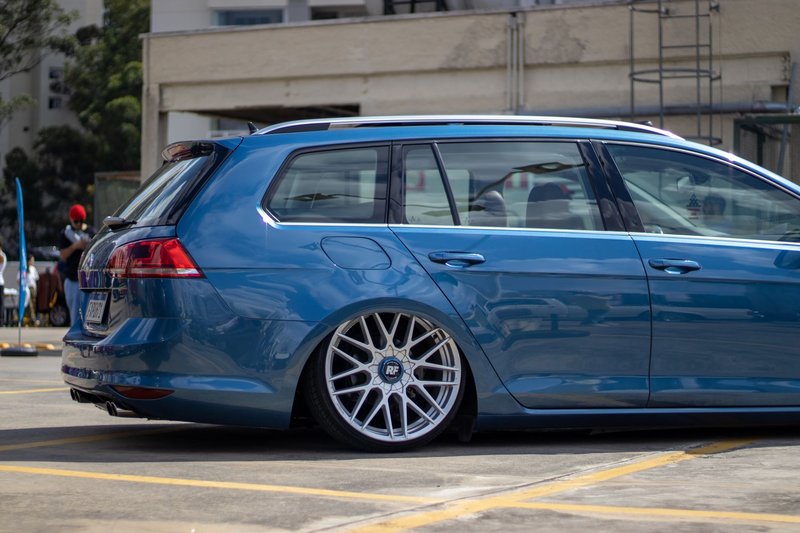
While the 3-Series was getting reinvented, the E39 5-Series was in the middle of its run and getting a genuinely new body style for the American market: the Touring wagon. BMW had sold wagon variants of the 5-Series in Europe for years, but 1999 marked the point where US buyers could walk into a dealership and order a 528i Sport Wagon or 540i Sport Wagon with a factory-installed rear-facing third-row jump seat, a feature aimed squarely at buyers cross-shopping Volvo and Mercedes wagons.
The E39 itself is widely regarded as one of BMW’s best-driving sedans of any era, thanks to a well-sorted double-wishbone front suspension and a chassis that felt taut without being punishing. The 1999 Touring didn’t change that formula; it just packaged it with a cargo hold, giving buyers who wanted E39 dynamics without giving up hauling capacity a reason to skip the SUV conversation entirely — ironic, given what BMW was about to launch a few months later.
The 7-Series: BMW’s Quiet Flagship Year
The E38 7-Series didn’t get a redesign in 1999 — that was still two years out — but it’s worth including because of what it represented in the lineup: BMW’s technology flagship, running the 4.4-liter V8 in the 740i/740iL and a 5.4-liter V12 in the 750iL. The E38 is the last 7-Series many enthusiasts point to as “clean” — analog gauges, a manageable number of electronic systems, and a design language (credited to Boyke Boyer) that aged into something closer to understated than dated.
1999 was a steady, unglamorous year for the E38: no major mechanical changes, just refinement. That steadiness is part of why the E38 has a small but real collector following now — it’s the flagship BMW from right before flagship BMWs got complicated.
Z3 and the Birth of the M Coupe
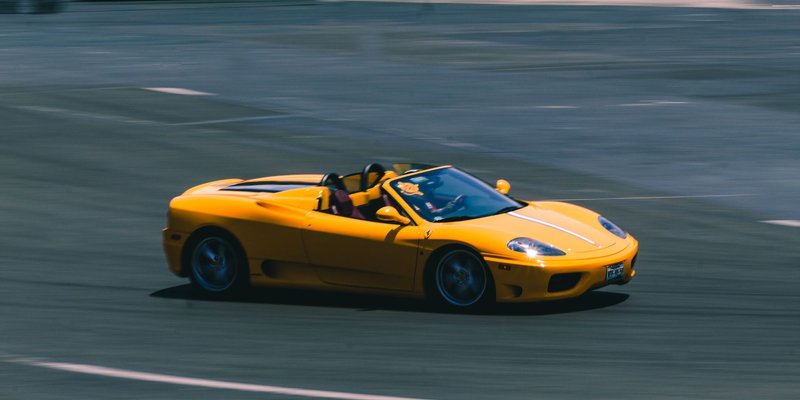
The Z3 had been on sale since 1996 as a roadster, but 1999 is when BMW’s engineers built something nobody asked for and everybody who saw it in person remembers: the Z3 M Coupe. Take the M roadster’s chassis and drivetrain, stretch a hardtop shooting-brake body over it, and you get a car with the practicality of a small wagon and the personality of a race car. Enthusiasts nicknamed it the “clownshoe” for its unusual proportions, not always affectionately at first — but the nickname stuck around because the car earned it.
Under the hood, the M Coupe ran BMW’s S52 inline-six in US trim, a high-revving, mechanically fuel-injected engine that rewarded being driven hard. Like other standout sports cars from the 1990s, it wasn’t fast in a straight line by modern standards. It was fast in the way that matters on a back road, which is a different thing entirely.
The M3’s Last E36 Year, With the E46 Waiting in the Wings

By 1999, the E36 M3 was in its final stretch in the US market, sold as a coupe and convertible running the S52 engine. The E36 M3 never quite matched the reverence enthusiasts hold for the original E30 M3, partly because BMW detuned the US-spec engine relative to the European S50, but it built a loyal following anyway for being genuinely usable as a daily driver with real M-car reflexes.
Behind the scenes, the E46 M3 was already in development, and it would arrive within a couple of model years running a new S54 engine and a chassis derived from the redesigned E46 platform. 1999 sits at the seam between those two cars: the last stretch of one M3 era, with the next one already being tuned on the other side of the wall. If you’re shopping either generation today, that seam is worth knowing, because it explains why E36 M3 prices and E46 M3 prices have started to converge in the collector market — buyers are increasingly treating them as two flavors of the same idea rather than an old car and a new one.
The X5 (E53): BMW’s First SUV
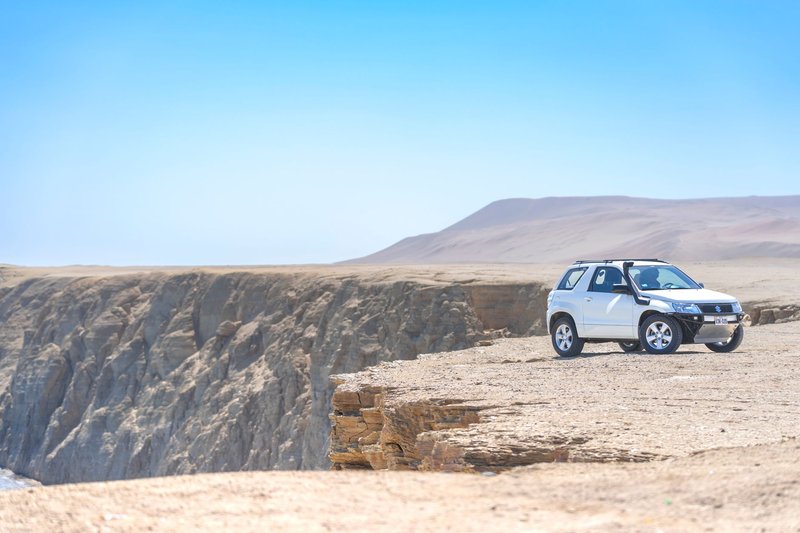
Nothing on this list matters more to BMW’s current business than the X5. Unveiled in 1999 and reaching US dealerships as an early-2000 model, the E53 X5 was BMW’s first SUV, and the company treated it less like a truck and more like a tall 5-Series — a deliberate positioning choice that shaped the entire “Sports Activity Vehicle” category BMW still uses to describe its SUVs today.
Initial engines were a 4.4-liter V8 (X5 4.4i) and a 3.0-liter inline-six (X5 3.0i), both paired with all-wheel drive and a suspension tuned for road manners over rock-crawling. That decision to prioritize on-road dynamics over off-road capability drew some criticism from traditional SUV buyers at launch, but it’s exactly why the X5 succeeded: it gave BMW loyalists a tall wagon that still drove like a BMW, at a moment when Mercedes’ M-Class and the Lexus RX had already proven there was demand for exactly that.
Buying a 1999 BMW in 2026: What to Know
None of the 1999 BMW models are simple used-car purchases at this point — they’re all at least old enough to need real mechanical scrutiny, not just a test drive and a Carfax check.
E46 3-Series: The M52TU/early M54 engines are generally solid, but check the plastic cooling system components — radiators, expansion tanks, and water pump impellers from this era were prone to failure, and a cooling system that’s never been redone at this age is a liability, not a maintenance item to defer. Front subframe reinforcement is also worth inspecting on higher-mileage cars.
E39 Touring: These are genuinely rare now, especially the 540i Sport Wagon with a manual transmission. Rarity means parts availability for wagon-specific trim and self-leveling rear suspension components can be worse than for the sedan, so budget accordingly.
Z3 M Coupe: Values have climbed steadily as buyers rediscovered it, and clean, unmodified examples are increasingly treated as collector cars rather than used sports cars. That’s pushed prices up faster than most other 1999 BMWs on this list.
E36 M3: Still the most affordable entry point into M-car ownership from this era, though clean, unmodified coupes are getting harder to find at reasonable prices. Like other iconic old BMW models, E36 M3 values are climbing as buyers who missed out on E30 M3 prices look one generation up.
X5 (E53): The least collectible of the group and, honestly, the one to be most careful with mechanically — early X5s can carry expensive repair bills for cooling systems, transfer cases, and air suspension (on later options) if deferred maintenance has piled up. Before committing to any 1999-era BMW, it’s worth checking the NHTSA’s recall database for outstanding safety recalls tied to the specific model and VIN, since open recalls on cars this old don’t always get flagged by a standard used-car history report.
Parts availability across the board is better than you’d expect for 25-plus-year-old cars, mostly because BMW’s independent aftermarket and specialist community are unusually deep. That’s less true for wagon-specific and M Coupe-specific trim pieces, where original parts runs were small to begin with.
The Lineup That Set Up Two Decades of BMW
Look at the 1999 BMW models as a group and the throughline is obvious in hindsight: this was the year BMW committed to expansion — new body styles, a new segment, a new 3-Series platform — while still closing out the ideas that defined the brand through the ’90s. The E36 M3 said goodbye. The E46 said hello. The X5 opened a door BMW never closed again.
If you’re chasing one of these cars today, the smartest approach isn’t picking the flashiest badge. It’s matching the car to what actually made 1999 interesting for it — the E46’s new-platform confidence, the Touring’s practicality, the M Coupe’s weirdness, the E36 M3’s last stand, or the X5’s founding-generation status. Each one tells a different piece of the same story.

Daniela Voss
More from Daniela VossHow we reviewed this article
This article was researched against manufacturer records and editorially reviewed before publishing. We accept no payment for coverage. Some guides contain affiliate links; see our affiliate disclosure.