Most “classic BMW” lists are just a ranking of whatever’s most expensive at auction that year. They tell you the E30 M3 is legendary without explaining why, skip the models that actually make sense to own, and treat collector value like an afterthought.
This list is different. It covers 15 of the most significant old BMW models — organized by decade, with the specs that mattered, the context that made them important, and honest numbers on what they sell for today. Including some that won’t bankrupt you.
Table of Contents
- TLDR: The Short Version
- 1950s–1960s: The Survivors
- 1. BMW 507 (1956–1959)
- 2. BMW 1500 (1962–1964)
- 1970s: The Cars That Saved BMW
- 3. BMW 2002 (1968–1976)
- 4. BMW 2002 Turbo (1973–1974)
- 5. BMW 3.0 CSL (1971–1975)
- 6. BMW M1 (1978–1981)
- 1980s: The Golden Era
- 7. BMW E28 M5 (1984–1988)
- 8. BMW E30 M3 (1986–1991)
- 9. BMW E30 325i (1985–1992)
- 10. BMW E24 635CSi (1978–1989)
- 1990s: Before It Got Complicated
- 11. BMW E34 M5 (1991–1995)
- 12. BMW E36 M3 (1992–1999)
- 13. BMW Z3 M Coupe (1998–2002)
- 2000s: Modern Classics
- 14. BMW E46 M3 (2000–2006)
- 15. BMW E60 M5 (2004–2010)
- Which Old BMW Should You Actually Buy?
TLDR: The Short Version {#tldr}
Best all-around classic: E30 M3 — if you can stomach the price. Best value classic: E36 M3 or E30 325i — real driving character, real money left in your wallet. Most appreciating: E28 M5 and Z3 M Coupe — both were undervalued for decades and are climbing fast. Unicorn money: BMW 507 — Elvis had one; budget accordingly. Daily-drivable classic with a story: E46 M3 — the last truly analog M car before iDrive arrived.
1950s–1960s: The Survivors {#1950s-1960s}
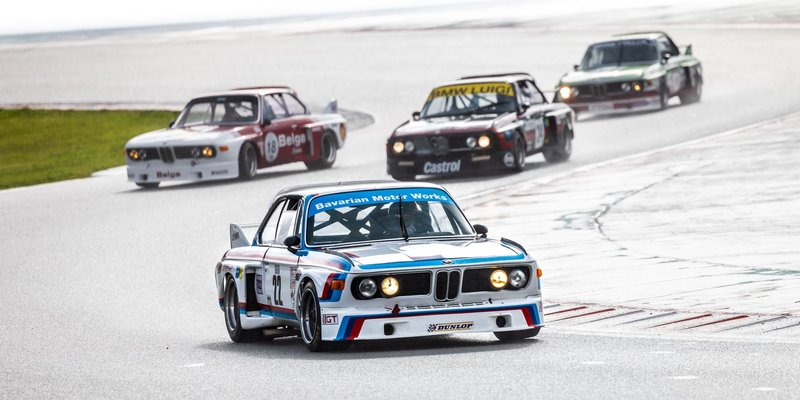
BMW in the 1950s was building motorcycles and bubble cars to stay solvent. The 507 is what they built when someone gave them a blank check and told them to try harder.
1. BMW 507 (1956–1959) {#bmw-507}
Engine: 3.2L V8, 150 hp Production: 254 units Current market: $1.5M–$2.5M+
The 507 was BMW’s answer to the Mercedes-Benz 300 SL — a roadster intended to break into the American sports car market. It was designed by Albrecht Graf Goertz, who sketched it on a salary of $1,000 a month. It almost bankrupted BMW. Each car sold for less than it cost to build, and the company was close to folding by the time production ended.
Elvis Presley owned a white one. He had it repainted red after female fans kept scratching their names into the paint.
The 507 is untouchable territory for most collectors — prices have crossed $2M at auction. But it belongs on this list because it established that BMW could build something genuinely beautiful, not just practical.
2. BMW 1500 (1962–1964) {#bmw-1500}
Engine: 1.5L inline-4, 80 hp Production: ~23,000 units Current market: $8,000–$25,000
The 1500 (and its siblings — the 1600, 1800, 2000 — known collectively as the “Neue Klasse”) is the car that actually saved BMW as a company. Not glamorous, but the chassis architecture it introduced set the template BMW followed for the next 40 years: rear-wheel drive, independent suspension front and rear, inline engine mounted longitudinally.
Every great BMW since traces its DNA here.
1970s: The Cars That Saved BMW (Again) {#1970s}
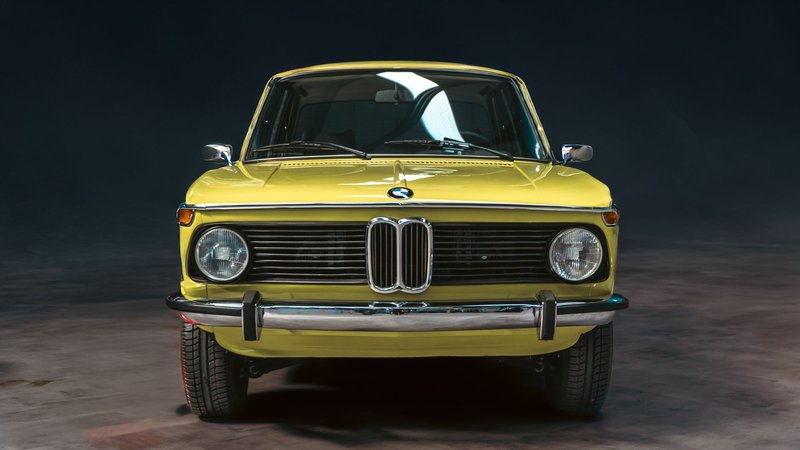
If the Neue Klasse saved the company, the 2002 put BMW on the map internationally — especially in the United States. It was a decade when the automotive landscape was shifting dramatically; while many American and European manufacturers were struggling with the oil crisis and tightening emissions rules, the 1970s produced some genuinely memorable cars across the market — but few defined the sports sedan concept the way BMW did.
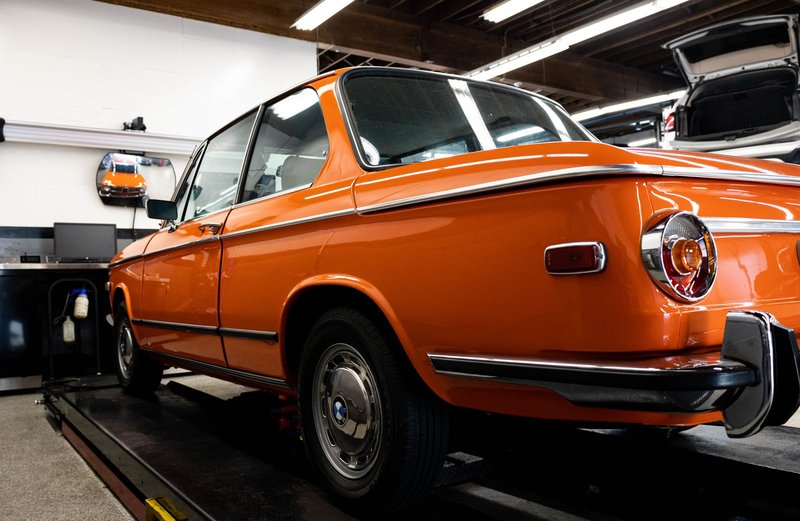
3. BMW 2002 (1968–1976) {#bmw-2002}
Engine: 2.0L inline-4, 100 hp (base) Production: ~861,000 units (all variants) Current market: $12,000–$45,000 (condition-dependent)
The 2002 was what happened when BMW dropped a 2.0L engine into the small two-door body of the 1602. The result was a compact car that felt nothing like the economy boxes it competed with on paper. Road & Track tested it in 1968 and called it one of the best-handling cars available at any price.
It popularized the sports sedan concept in America before anyone used that phrase. Clean examples are appreciating steadily, and the market rewards originality — matching-numbers cars and unrestored survivors command serious premiums.
4. BMW 2002 Turbo (1973–1974) {#bmw-2002-turbo}
Engine: 2.0L turbocharged inline-4, 170 hp Production: 1,672 units Current market: $80,000–$180,000
Europe’s first turbocharged production car. BMW printed the word “turbo” on the front spoiler in mirror script — so drivers ahead of you could read it in their rearview mirror. The marketing team was not subtle.
The power delivery was brutal by modern standards: nothing, nothing, nothing, then a wall of boost that would step the rear out if you weren’t ready. With 170 hp in a car weighing under 1,000 kg, it was the fastest production BMW when it launched. The oil crisis killed it after just 1,672 units.
Prices have climbed sharply. A clean car now trades between $80,000 and $180,000 depending on originality and condition.
5. BMW 3.0 CSL (1971–1975) {#bmw-30-csl}
Engine: 3.0L inline-6, 206 hp (road car); up to 430+ hp (race) Production: ~1,265 units (road versions) Current market: $200,000–$500,000+
The “L” in CSL stands for Leichtbau — lightweight. BMW stripped the doors, hood, trunk lid, and bumpers to aluminum or plastic. The side windows were thinner glass. The result was a coupe that weighed 1,165 kg and dominated European Touring Car racing from 1973 to 1979.
The road cars came with a bolted-on aerodynamic package — big spoilers, roof fins — that was technically an option because German regulations prohibited fixed wings. You were shipped the parts in the trunk and encouraged to fit them yourself.
The factory race cars wore those same bodies in the Art Car liveries painted by Alexander Calder, Roy Lichtenstein, and Frank Stella. That crossover between motorsport and contemporary art is still unique in the industry.
6. BMW M1 (1978–1981) {#bmw-m1}
Engine: 3.5L inline-6, 277 hp (road car) Production: 453 units Current market: $350,000–$700,000+
BMW’s only mid-engine production car, and arguably the car that founded the M division as a serious entity. The M1 was designed by Giorgetto Giugiaro of Italdesign, co-developed with Lamborghini (who were supposed to build it and then went bankrupt mid-project), and eventually assembled by hand in Stuttgart.
The road car made 277 hp from a twin-cam inline-six. The Procar race version — which ran a one-make support series for Formula 1 races in 1979 and 1980 — produced around 470 hp. Niki Lauda won the inaugural Procar season.
Only 453 examples were built. Prices reflect that.
1980s: The Golden Era {#1980s}
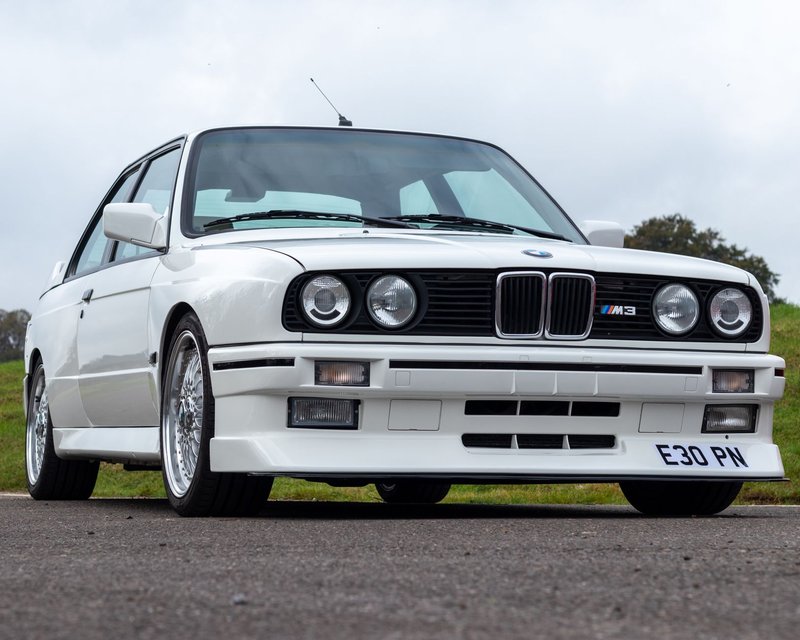
Ask any BMW purist when the brand peaked and they’ll say the 1980s. The E30 M3 and E28 M5 both came from this era, and they represent a philosophy BMW has struggled to recapture: absolute driving focus, no compromise. It’s worth remembering that 1980 was the year Detroit hit bottom — a context that made BMW’s engineering discipline during that same decade feel even more deliberate by contrast.
7. BMW E28 M5 (1984–1988) {#bmw-e28-m5}
Engine: 3.5L inline-6 (S38), 282 hp Production: ~2,191 units Current market: $40,000–$120,000
The first M5 wore the body of a perfectly ordinary 5 Series sedan. That was the point. Under the hood sat the S38 — the same engine architecture as the M1, adapted for a four-door family car. When it launched, it was the fastest production sedan in the world.
Understated doesn’t cover it. The only visual hints were the M-color door stripe, the slightly flared arches, and the deeper front spoiler. The interior was near-stock 5 Series. The M5 was BMW’s original sleeper.
E28 M5 values have climbed meaningfully in the last five years as collectors recognized it as both the first of its lineage and genuinely rare. Clean, original examples now trade between $60,000 and $120,000. Drivers with a high tolerance for maintenance are buying them around $40,000–50,000 and finding them worth every frustration.
8. BMW E30 M3 (1986–1991) {#bmw-e30-m3}
Engine: 2.3L inline-4 (S14), 195 hp (Euro) Production: ~17,970 units (all variants) Current market: $50,000–$120,000+ (US-spec); higher for Euro Sport Evolution
The E30 M3 was built for one reason: homologation. BMW needed 5,000 road cars to race in Group A touring car competition. The engineers gave the road car a high-revving 2.3L four-cylinder with individual throttle bodies, wider bodywork, a raised roofline for helmet clearance, and a different suspension geometry.
It won the World Touring Car Championship in 1987. It won the European Touring Car Championship three years running. It also turned out to be one of the most tactile, communicative sports cars of its era — the engine screams to 8,000 rpm, the steering is direct, and you can feel exactly what the rear wheels are doing at all times.
Prices for US-spec cars have stabilized around $50,000–$80,000 for clean drivers. European Evolution variants — Sport Evolution and Cecotto — trade well above that. Johnny Cecotto Editions, limited to 505 units, have crossed $150,000.
9. BMW E30 325i (1985–1992) {#bmw-e30-325i}
Engine: 2.5L inline-6 (M20), 168 hp Production: Several hundred thousand Current market: $8,000–$30,000
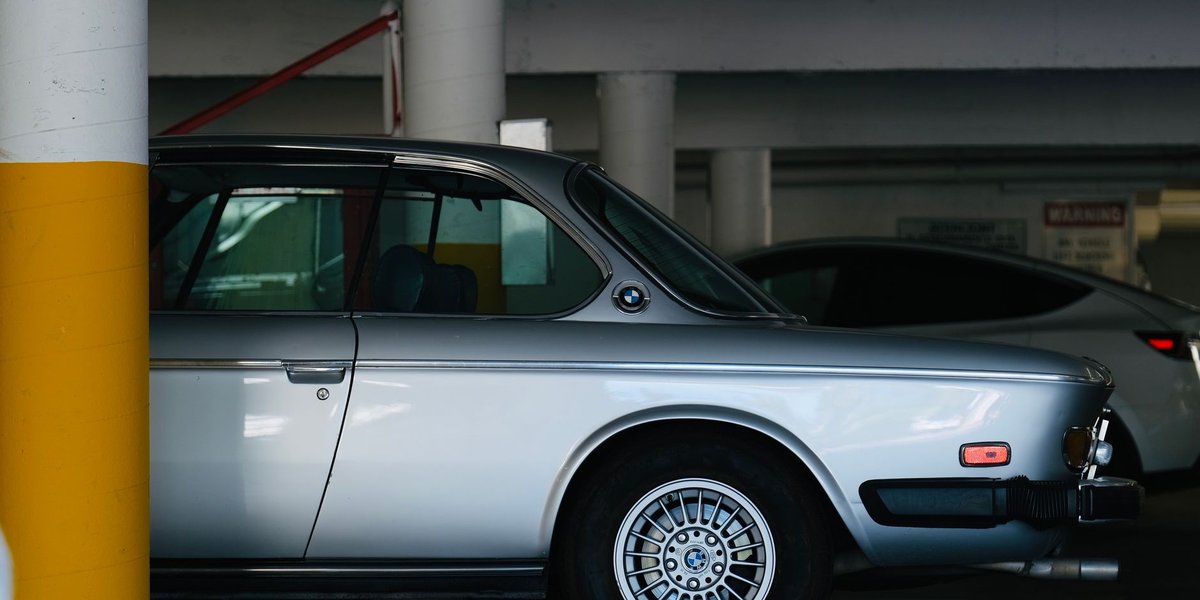
Not every car on this list needs to cost six figures. The E30 325i is the classic BMW that actually makes sense to own: relatively simple mechanics, parts availability that won’t keep you awake at night, and a driving experience that holds up against far more expensive machinery.
The M20 inline-six is smooth and characterful. The chassis communicates. The car is small enough to feel nimble by modern standards. A solid driver costs $12,000–$18,000. Convertibles and original paint survivors trend higher.
This is the entry point into real BMW classics without committing to a restoration project or a car that needs a specialist for every service.
10. BMW E24 635CSi (1978–1989) {#bmw-e24-635csi}
Engine: 3.5L inline-6 (M30), 218 hp Production: ~86,000 units (all E24 variants) Current market: $15,000–$45,000
The 6 Series coupe that nobody talks about enough. The E24 was BMW’s grand tourer during a period when the company was producing some of its best work. The 635CSi version gets the big M30 inline-six, a proper 2+2 body that’s aged better than almost anything else from 1978, and enough interior room to actually use the back seats.
The M635CSi variant — which got the M88 engine from the M1 — is a different (and significantly more expensive) story. But the standard 635CSi offers the same shape and most of the experience at a fraction of the cost.
1990s: Before It Got Complicated {#1990s}
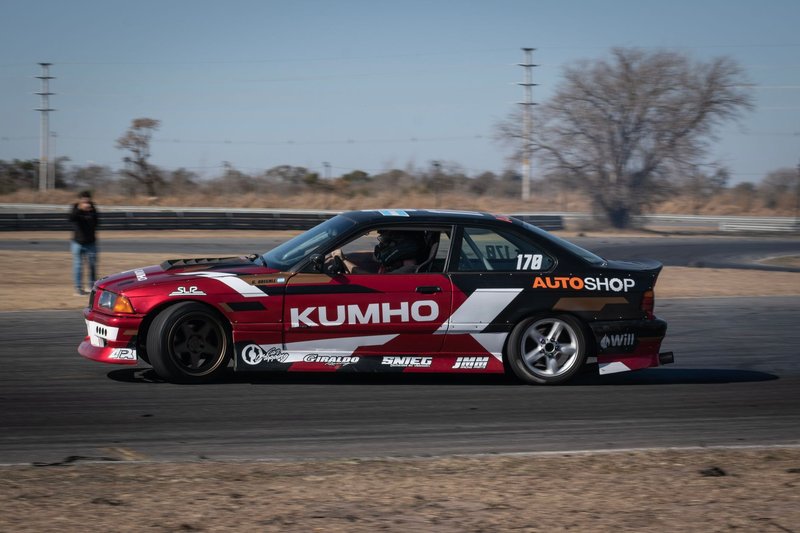
The 1990s saw BMW expand the M lineup and experiment with body styles. Some of it worked brilliantly. Some of it (the 7-series Bangle era is coming, just not yet) was more complicated.
11. BMW E34 M5 (1991–1995) {#bmw-e34-m5}
Engine: 3.6L/3.8L inline-6 (S38), 315–340 hp Production: ~12,000 units Current market: $30,000–$80,000
The E34 M5 is bigger and heavier than the E28 — more of a long-distance car than a sprint car — but it got an updated version of the S38 that eventually produced 340 hp in the final 3.8L “Last Edition” spec. Those last 50 US-spec cars came with a numbered plaque and are worth hunting for.
Standard E34 M5s with clean service histories trade around $35,000–$55,000. Finding one that hasn’t been thrashed is the hard part.
12. BMW E36 M3 (1992–1999) {#bmw-e36-m3}
Engine: 3.0L/3.2L inline-6 (S50/S52), 240–321 hp (depending on market and year) Production: ~50,000+ units (all variants) Current market: $15,000–$40,000
The E36 M3 is the most undervalued car on this list. For years it sat in the E30’s shadow — smaller engine, fewer motorsport wins, less mystique. That calculus is shifting. The Euro-spec S50 engine (available in the US from 1996 in S52 form) is a genuinely great motor. The chassis is balanced. And the price still makes sense.
US-spec E36 M3s start around $15,000–$18,000 for drivers. European S50-equipped cars cost more. The 3.2L convertible is having a moment with collectors and has crossed $40,000 for exceptional examples.
13. BMW Z3 M Coupe (1998–2002) {#bmw-z3-m-coupe}
Engine: 3.2L inline-6 (S52/S54), 240–315 hp Production: ~6,291 units (worldwide) Current market: $40,000–$90,000+
The Z3 M Coupe was called a “clown shoe” when it launched. The proportions are genuinely odd: Z3 roadster nose, shooting brake rear, all squashed together. It was also one of the best-handling BMWs of the decade. The rear-biased weight distribution and the S54 engine in later cars made it a chassis that rewarded commitment.
BMW built fewer than 6,300 worldwide. S54-equipped cars (2001–2002) now trade between $60,000 and $90,000 for clean examples. The earlier S52 cars are more accessible — $35,000–$55,000 — and the driving experience is 90% there.
Values have climbed steadily for five years and show no sign of stopping. The window to buy before this becomes serious collector territory may already be closing.
2000s: Modern Classics {#2000s}
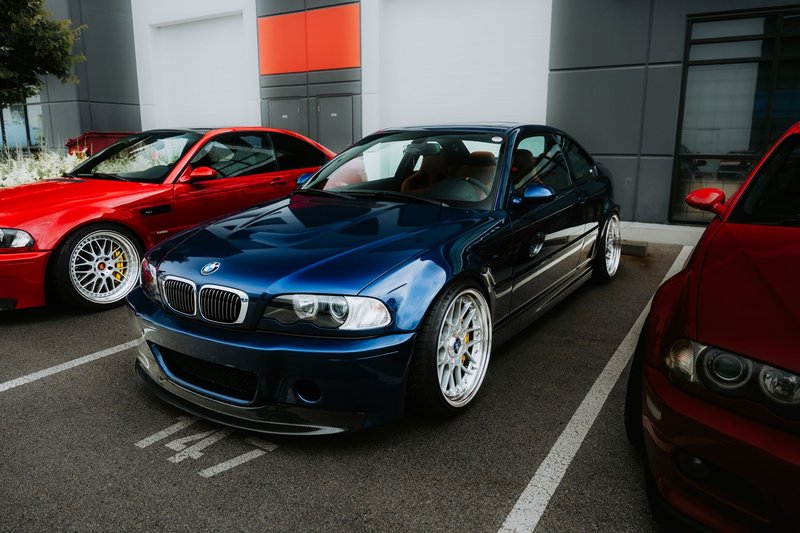
The 2000s produced BMWs that are old enough to be cheap and good enough to be worth caring about. Two models stand out.
14. BMW E46 M3 (2000–2006) {#bmw-e46-m3}
Engine: 3.2L inline-6 (S54), 333 hp Production: ~85,000 units (worldwide) Current market: $25,000–$65,000
The S54 in the E46 M3 is one of the best naturally aspirated six-cylinders BMW ever built. It makes 333 hp at 7,900 rpm and sounds like it means it. The chassis is balanced and communicative in a way that later M3s — with their turbocharged engines and electric steering — have never fully matched.
The E46 M3 also benefits from being the last M3 before iDrive, before run-flat tires became standard, and before the cars started gaining weight with each generation. It feels like a sports car rather than a performance sedan that happens to have a back seat.
Rod bearings are the known issue. Any pre-purchase inspection needs to check for rod bearing wear or evidence of replacement. Cars with documented bearing replacements are worth more. Budget $35,000–$45,000 for a solid driver with records. Exceptional low-mileage coupes have crossed $65,000.
15. BMW E60 M5 (2004–2010) {#bmw-e60-m5}
Engine: 5.0L V10 (S85), 500 hp Production: ~20,000 units (worldwide) Current market: $20,000–$50,000
The E60 M5 is the most complicated car on this list, in every sense. The S85 V10 — a naturally aspirated, 8,250 rpm, 500 hp V10 in a family sedan — is one of the most exotic engines BMW ever produced outside of a race car. It was derived directly from Formula 1 architecture.
It also has SMG transmission issues, throttle actuator failures, rod bearing problems, and a maintenance schedule that will humble you. A neglected E60 M5 is a money pit. A properly maintained one with documented service history is a genuinely special car that you can drive to the grocery store.
Buy the best one you can find. Avoid anything with SMG issues that haven’t been addressed. Budget realistically for maintenance. The reward, if you’re patient, is a V10 that spins to 8,000 rpm and sounds like nothing else from the era.
Which Old BMW Should You Actually Buy? {#which-to-buy}
Here’s the honest breakdown by budget and intention:
Under $20,000: E30 325i or E36 M3. The 325i is more reliable and simpler to maintain. The E36 gives you the full M experience at a price that still makes sense. Both drive well and have established parts ecosystems.
$20,000–$40,000: E46 M3 or E34 M5. The E46 is the driver’s choice — better chassis, better engine sound, more tossable. The E34 M5 is the grand tourer, more comfortable over distance. Check service records on both. Rod bearings on the E46, S38 maintenance on the E34.
$40,000–$80,000: Z3 M Coupe, E28 M5, or E30 M3. All three are appreciating. The Z3 M has the highest ceiling. The E28 M5 has the best story. The E30 M3 has the motorsport heritage that explains the price.
Above $80,000: E30 M3 Sport Evolution, 2002 Turbo, 3.0 CSL, M1, or 507. You’re in collector territory. Buy for condition and provenance, not bargains.
A few universal rules: buy the best example you can afford rather than a project car. Deferred maintenance on any of these will cost more than the difference in purchase price. Get a pre-purchase inspection from a BMW specialist, not a general shop. And join the relevant owner community before you buy — the E30 community, the E46 board, the 2002 forums. They’ll tell you what to look for and where to look.
BMW built a lot of great cars. The challenge isn’t finding one worth owning. It’s narrowing down which chapter of the story you want to drive.

Marco Delantero
More from Marco DelanteroHow we reviewed this article
This article was researched against manufacturer records and editorially reviewed before publishing. We accept no payment for coverage.