Table of Contents
- Why 1994 Was a Turning Point
- The Outgoing V8: Ferrari 348 GTB, GTS, and Spider
- The New V8: Ferrari F355 Berlinetta
- The Flagship V12: 512 TR and F512 M
- Ferrari’s Racing Comeback: The F333 SP
- Ferrari in Formula 1: The 412 T1
- 1994 Ferrari Lineup: Specs Compared
- What a 1994 Ferrari Is Worth Today
TLDR
Six Ferraris carry the 1994 model year, and they split cleanly into three worlds. On the road: the outgoing 348 GTB/GTS/Spider, the brand-new F355 Berlinetta (launched May 1994), and the flat-12 512 TR alongside its late-year replacement, the F512 M. On the track: the F333 SP prototype, which won on its debut at the 24 Hours of Daytona. In Formula 1: the 412 T1, driven by Jean Alesi and Gerhard Berger to a single win in a season overshadowed by tragedy at Imola. If you’re chasing one car from this year, it’s the F355 — it’s the one that changed what a Ferrari V8 was supposed to feel like.
Why 1994 Was a Turning Point
Every “1994 Ferrari” list you’ll find elsewhere is really a spec sheet for one car, usually the F355, because that’s the one with the Wikipedia page. That’s the gap. 1994 wasn’t a one-car year at Maranello — it was the year the company’s entire product line turned over at once: outgoing V8, incoming V8, outgoing V12, incoming V12, a new racing program, and a Formula 1 season that reshaped the sport itself.
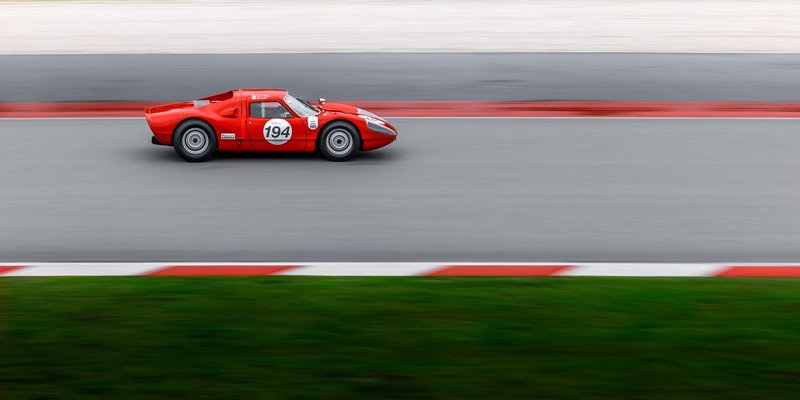
The road cars alone tell a story about Ferrari’s engineering under Luca di Montezemolo, who’d taken over as CEO in late 1991 and pushed the factory to close the gap with Honda and Porsche on build quality without losing the theatrics that make a Ferrari a Ferrari. The F355 is the clearest proof of that shift, but it didn’t happen alone. Look at the full roster and you get a snapshot of a company mid-transformation, on the road and on the track.
The Outgoing V8: Ferrari 348 GTB, GTS, and Spider
The 348 was still in showrooms for the first half of 1994, in three body styles: the GTB berlinetta, the GTS targa, and the Spider convertible that had joined the range in 1993. All three ran the same 3.4-liter V8, mounted longitudinally instead of the transverse layout Ferrari had used since the 308 — a change that actually made the 348 harder to work on despite being marketed as an improvement.
Output sat at 320 hp, good for a 0-62 mph run in roughly 5.2 seconds and a top speed of 174 mph. Respectable numbers for the era, but the 348 had a reputation problem: early cars suffered from twitchy rear-end behavior at the limit, a side effect of the transverse gearbox shifting weight distribution. Ferrari spent the model’s production run quietly fixing what the press had already flagged, which is part of why the F355’s debut felt like such a relief internally.
The New V8: Ferrari F355 Berlinetta
Ferrari unveiled the F355 in May 1994, and the name itself told you what mattered: 3.5 liters of displacement, 5 valves per cylinder. That five-valve head was the real story — it let the engine breathe at revs no naturally aspirated Ferrari V8 had touched before, spinning to over 8,000 rpm and making a genuinely different sound than the 348 it replaced.
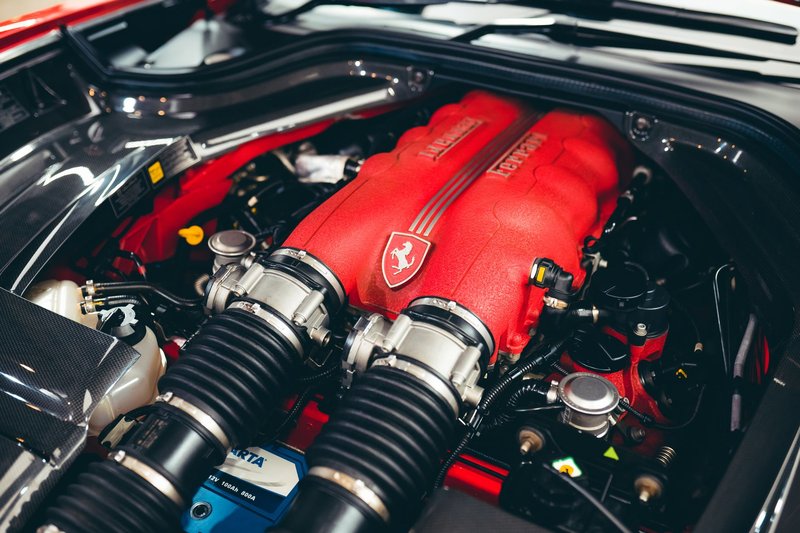
The numbers back it up: 380 hp, 0-60 mph in about 4.7 seconds, and a top speed of 183 mph, a substantial jump over the 348 on every axis, placing the F355 among the best sports cars of the 1990s. Ferrari also fixed the handling complaints with revised suspension geometry and a wider rear track. The Berlinetta coupe was the only body style available in 1994; the GTS targa and Spider convertible followed in 1995, which is worth knowing if you’re trying to date a specific car by year rather than by name alone.
The Flagship V12: 512 TR and F512 M
At the top of the road-car range, Ferrari ran two flat-12 flagships through 1994. The 512 TR — a heavily reworked Testarossa with a lower nose, single-piece wheels, and a stiffer chassis — had been in production since 1991 and continued through most of 1994, making 428 hp in European spec and hitting 190 mph.
Late in the year, Ferrari replaced it with the F512 M, and the “M” stood for modificata. The most obvious change was cosmetic: fixed headlights replaced the 512 TR’s pop-up units, a detail that still divides Testarossa purists today. Underneath, output climbed to 440 hp, enough for a 0-62 mph time around 5.0 seconds and a top speed north of 192 mph. Ferrari built only about 500 F512 Ms, which makes it the rarest road car on this list by a wide margin.
Ferrari’s Racing Comeback: The F333 SP
While the road cars were changing over, Ferrari quietly returned to sports car racing for the first time since 1973 with the F333 SP, built in partnership with Dallara. The prototype ran a 4.0-liter V12 derived directly from the Ferrari 641 Formula 1 car, producing 650 hp and a top speed near 230 mph in a carbon-fiber chassis that weighed a fraction of any road car on this list.
It won on debut. Entered in the IMSA GT Championship’s new WSC class, the F333 SP took overall victory at both the 24 Hours of Daytona and the 12 Hours of Sebring in 1994 — a serious result for a car that hadn’t existed a year earlier. Ferrari built only 40 examples of the F333 SP across its entire production run through 2003, which tells you how much of a specialist tool this was rather than a volume racing product.
Ferrari in Formula 1: The 412 T1
Ferrari’s Formula 1 effort in 1994 ran the 412 T1, a John Barnard design powered by a 3.5-liter V12 and driven by Jean Alesi and Gerhard Berger. Berger won the German Grand Prix — Ferrari’s only victory of the season — and finished third in the drivers’ championship. The car was substantially reworked mid-year into the 412 T1B after Barnard’s team targeted persistent balance problems in the chassis.
The season is remembered for something far darker than lap times. At Imola, the San Marino Grand Prix weekend that opened the European season, Roland Ratzenberger died in qualifying and Ayrton Senna was killed the next day when his Williams struck a concrete wall at the Tamburello corner — a tragedy that, according to ESPN’s account of the aftermath, triggered the safety overhaul that eventually made Senna and Ratzenberger the last driver fatalities at a Grand Prix weekend for decades. Nicola Larini filled in for an injured Alesi at that race and the following Pacific GP, driving the 412 T1 that weekend at Ferrari’s home track under circumstances nobody in the paddock wanted.
1994 Ferrari Lineup: Specs Compared
| Model | Engine | Power | 0-60 mph | Top Speed |
|---|---|---|---|---|
| 348 GTB/GTS/Spider | 3.4L V8 | 320 hp | ~5.2 sec | 174 mph |
| F355 Berlinetta | 3.5L V8 | 380 hp | 4.7 sec | 183 mph |
| 512 TR | 4.9L Flat-12 | 428 hp | 4.8 sec | 190 mph |
| F512 M | 4.9L Flat-12 | 440 hp | ~5.0 sec | 192+ mph |
| F333 SP | 4.0L V12 | 650 hp | N/A (race car) | ~230 mph |
| 412 T1 | 3.5L V12 | F1-spec | N/A (race car) | Track-dependent |
What a 1994 Ferrari Is Worth Today
None of the road cars from this list are cheap anymore, and the gap between them has widened rather than closed. The F512 M’s rarity — under 500 built — keeps it consistently ahead of the more common 512 TR at auction, while the F355 sits in an odd spot: it’s the most historically important of the group, but its production numbers (over 11,000 across all body styles through 1999) keep values more accessible than the flagship V12s. The 348 remains the entry point into 1990s Ferrari ownership, priced well below its successor despite sharing the same era’s build-quality bumps.
This tracks a broader pattern in the collector market: classic cars have outperformed major stock indices over extended stretches, and 1990s Ferraris are a frequently cited example of that trend, particularly limited-production models like the F512 M and anything wearing a competition history like the F333 SP. Values on a genuine, raced example of the latter run well into seven figures when one changes hands — they rarely do.
If you’re shopping this era, condition and paperwork matter more than the badge. A well-documented 348 with full service history will outsell a neglected F355 every time. But if forced to pick the one 1994 Ferrari that matters most to the brand’s story, it’s still the F355 — the car that proved Ferrari could build something exotic and dependable in the same breath, and the template every V8 Ferrari since has followed.

Daniela Voss
More from Daniela VossHow we reviewed this article
This article was researched against manufacturer records and editorially reviewed before publishing. We accept no payment for coverage. Some guides contain affiliate links; see our affiliate disclosure.