
Ask most KTM histories what happened in the 1960s and you get a paragraph, maybe two, wedged between “founded in 1934” and “orange bikes everywhere by the 1990s.” That’s a shame, because the 1960s is the decade KTM actually became KTM — not the road-bike assembler it started as, but the off-road brand the name means today. Here’s every model that got them there, in order, with the parts other write-ups skip.
Table of Contents
- A company in crisis at the decade’s open
- Mecky and the Ponny line: KTM’s first mass-market bikes
- The Mirabell scooter
- Comet (1963) and Trophy 125: the road bikes peak
- 1964: the 250 GS and the off-road debut
- 1968: the monoshock breakthrough
- Why KTM turned away from the street
- KTM’s 1960s lineup at a glance
A company in crisis at the decade’s open
KTM entered the 1960s already down a founder. Ernst Kronreif, the businessman who’d bankrolled Hans Trunkenpolz’s original repair shop into “Kronreif & Trunkenpolz Mattighofen,” died in 1960 — the event that gives the company its initials to this day. Trunkenpolz himself, the engineer half of the partnership and the man who’d actually built the bikes, died of a heart attack two years later, in 1962. His son Erich Trunkenpolz took over from there.
Those are two separate losses in two separate years, not one contested event, and getting the sequence right matters: it means KTM lost both of its founding figures within eighteen months of each other, right as the company was trying to scale a moped business into something bigger. Erich inherited a factory that was still, at its core, an assembler — KTM bought engines from Fichtel & Sachs and from Rotax rather than building its own, a practice that continued into 1970. The frames, the styling, and increasingly the racing program were KTM’s. The powerplants, for most of the decade, were not.
Mecky and the Ponny line: KTM’s first mass-market bikes
The groundwork was laid just before the decade started. The Mecky moped, launched in 1957, ran on the first engine KTM designed in-house rather than sourced — a small milestone that gets buried under everything that came after it.
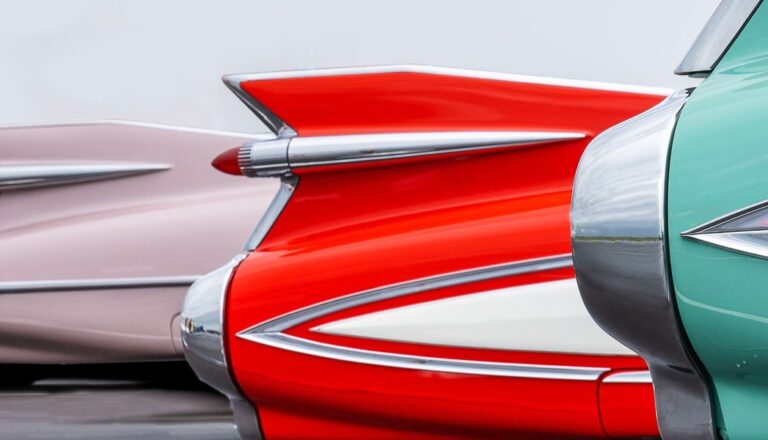
What actually moved units was the Ponny. Ponny I arrived in 1960 with tail fins, whitewall tires, and twin headlamps — styling lifted straight from American car design and grafted onto a moped frame, which sounds absurd until you see how well it sold. German manufacturer Gritzner licensed the design outright, rebadged it the “KTM de Luxe,” and rode it to 14,000 units and the German market lead in 1961. Ponny II followed in 1962 with updated running gear. For a company that had just lost both its founders, the Ponny was the thing that kept the lights on.
The Mirabell scooter
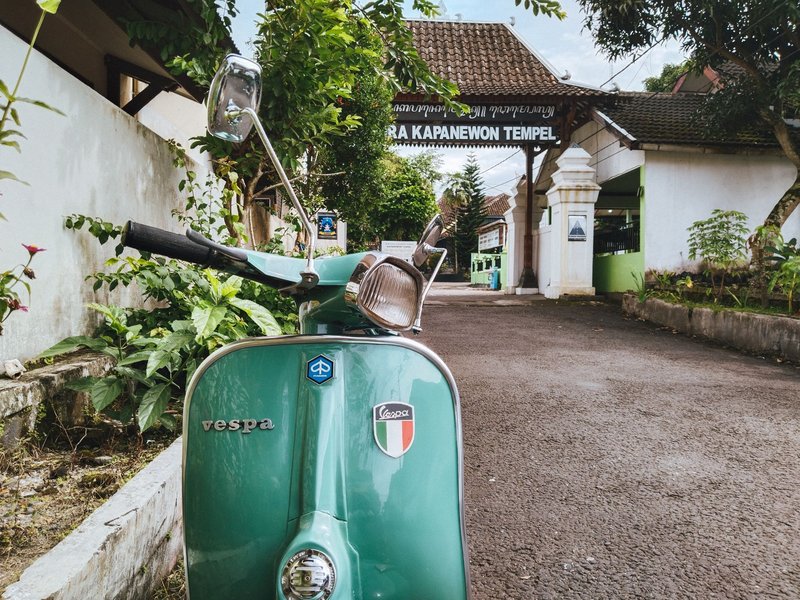
Running alongside the Ponny mopeds was the Mirabell, a proper scooter that had actually debuted in 1956 and carried into the new decade. It used a Rotax-built 125cc single-cylinder two-stroke putting out around 6-7 horsepower, fed through a three-speed foot-shift gearbox, with an eight-liter tank tucked under swoopy, fully enclosed steel bodywork. The clever part was the “Dynastarter” — a combined starter motor and alternator in one unit, which was a genuinely tidy piece of engineering for a bike aimed at commuters rather than enthusiasts.
The Mirabell mattered less for what it was than for what it proved: KTM could build a fully-bodied, electric-start scooter competitive with anything coming out of Italy at the time, using bought-in engines and its own chassis know-how. That same formula — outsourced engine, in-house everything else — is exactly what carried the brand through the rest of the decade.
Comet (1963) and Trophy 125: the road bikes peak
By 1963, KTM’s road and moped lineup had matured into the Comet, a sportier machine that represented the high point of the company’s street-focused ambitions before the off-road pivot took over. The Trophy 125 sat in the same family — a proper small-displacement road bike rather than a moped, aimed at riders who’d outgrown the Ponny but weren’t shopping for anything exotic.
This is the last stretch of the decade where KTM was still primarily thinking like a road-bike and moped manufacturer. Everything from 1964 onward gets reframed by what happened next.
1964: the 250 GS and the off-road debut
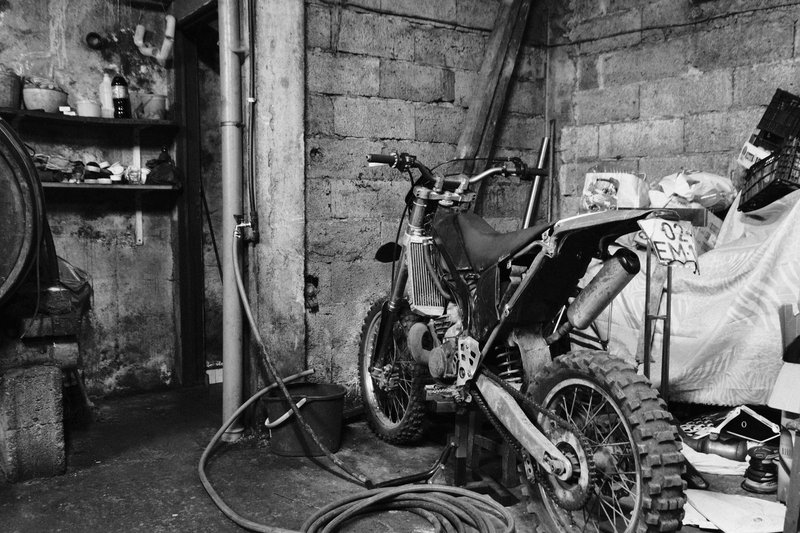
The 250 GS, introduced in 1964, was KTM’s first purpose-built off-road machine — the bike that put the company on a different road entirely, so to speak. It wasn’t a fringe experiment; it was a direct response to what KTM’s engineers were seeing in European off-road competition, where lightweight two-strokes were starting to beat heavier, road-derived machines on rough terrain.
The 250 GS didn’t turn KTM into a motocross powerhouse overnight — that took another decade of development — but it set the template: purpose-built suspension travel, a frame designed around terrain rather than pavement, and an engine tune built for torque over top speed. Every enduro and motocross bike KTM built afterward traces back to this one.
1968: the monoshock breakthrough
Four years after the 250 GS, KTM fitted a production motorcycle with monoshock rear suspension — a single central shock replacing the twin-shock setup nearly every manufacturer used at the time. It’s easy to undersell this because Yamaha’s YZ250 gets most of the historical credit for popularizing monoshock design when it arrived in 1975, seven years later. But KTM had it first, on a production bike, in 1968, at a company most people still associate with mopeds.
The advantage was real and immediate: better wheel control over rough ground, which is precisely what an off-road bike needs and a road bike doesn’t. That the innovation showed up on a KTM in 1968 rather than a road-racing marque tells you where the company’s engineering attention had already shifted.
Why KTM turned away from the street
Put the decade’s timeline side by side and the strategy becomes obvious. KTM opens the 1960s selling stylish, road-going mopeds and scooters — the Ponny, the Mirabell, eventually the Comet and Trophy — because that’s where the money was in postwar Austria. By the mid-1960s, Japanese manufacturers were flooding the European street-bike market with cheaper, more reliable machines that Honda, Yamaha, and Suzuki could build at a scale an Austrian assembler simply couldn’t match.
KTM’s answer wasn’t to compete head-on. It was to go somewhere the Japanese factories hadn’t fully committed yet: off-road competition, where small-batch engineering and a close relationship with racers still counted for more than mass-production scale. The 250 GS in 1964 and the monoshock in 1968 aren’t isolated technical achievements — they’re the visible evidence of a company repositioning itself while it still had a road-bike business to fund the transition. Company records also point to KTM diversifying into bicycles during this same stretch, a separate business line that still exists today and that gave the firm another leg to stand on while the motorcycle side retooled. The orange livery that’s now inseparable from the KTM name wouldn’t fully take hold until later, but the underlying identity — off-road first — was set here, in the 1960s, not in some later marketing decision.
KTM’s 1960s lineup at a glance
- Mecky (1957, carried into the decade) — moped, KTM’s first fully in-house engine
- Ponny I (1960) — moped, tail-fin styling, licensed to Gritzner as the “KTM de Luxe”
- Ponny II (1962) — updated moped, refined running gear
- Mirabell (1956, carried into the decade) — scooter, Rotax 125cc two-stroke, Dynastarter
- Comet (1963) — sportier road bike, peak of KTM’s street-focused lineup
- Trophy 125 — small-displacement road bike above the moped tier
- 250 GS (1964) — KTM’s first purpose-built off-road motorcycle
- 1968 monoshock model — first production KTM with single-shock rear suspension
None of these bikes individually reads like a turning point. Stacked in order, they’re a company quietly building the case for everything KTM became after 1970 — and that’s the part every “brand history” chapter skips past to get to the racing trophies.

Tyler Bridges
More from Tyler BridgesHow we reviewed this article
This article was researched against manufacturer records and editorially reviewed before publishing. We accept no payment for coverage.