Table of Contents
- The Short Answer
- Why 1956 Is the Year Porsche Collectors Argue About
- 356A Coupe
- 356A Cabriolet
- 356A Speedster
- 356A/1500 GS Carrera
- 1956 vs. 1955: What Actually Changed
- What a 1956 Porsche Is Worth Today
- FAQ
The Short Answer
Porsche sold four distinct 356A variants in 1956: the Coupe, the Cabriolet, the Speedster, and the range-topping 356A/1500 GS Carrera. All four rode on the same revised chassis introduced a few months earlier, but they split hard on price, power, and purpose — the Coupe and Cabriolet were everyday sports cars, the Speedster was a stripped-down beach cruiser that became a design icon by accident, and the Carrera was a homologated race engine wearing a road car’s clothes. Porsche built 4,201 cars total that year, and the Carrera accounted for a small fraction of that number, which is most of why it now costs ten times what a standard Coupe does.
Why 1956 Is the Year Porsche Collectors Argue About
Porsche didn’t run clean model years the way Detroit did. The 356A launched partway through the 1955 calendar year, so a “1956” 356A might carry over parts or specs from the late-1955 cars, and the changeover to the next generation wasn’t a single January 1 event either. That ambiguity is exactly why so many listings and forum threads argue about what counts as a “true” 1956 car versus an early 356A or a car built with 1957 updates already trickling in.
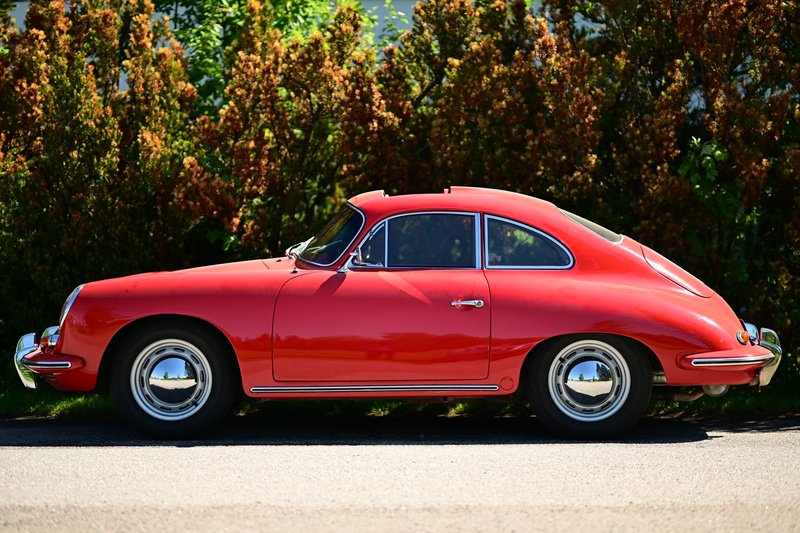
What’s not ambiguous: the 356A itself was a real redesign, not a trim refresh. Porsche widened the wheels, softened the front springs, stiffened the anti-roll bar, and — most visibly — swapped the old bent-glass windshield for a one-piece curved unit. If you’re trying to tell a 356 “pre-A” from a 356A at a car show, the windshield is the fastest tell. More on that comparison below.
356A Coupe
The Coupe was the volume seller and the car most people picture when they hear “356.” Reutter built the steel bodies, and the shape — a low, rounded fastback with a face that already looks unmistakably Porsche — barely changed for the rest of the model’s life.
| Spec | Detail |
|---|---|
| Engine | Air-cooled flat-four, 1.3L–1.6L depending on trim |
| Power | 44–60 hp (Normal and Super tunes) |
| Torque | ~81 lb-ft (1600 Normal) |
| Transmission | 4-speed manual |
| Body | Steel, Reutter-built |
| Wheelbase | 82.7 in |
| Weight | ~2,010 lbs |
A 1956 Coupe with the base 1300 engine wasn’t fast — 44 hp moved a lightweight car adequately, not urgently — but the appeal was never straight-line speed. It was the chassis: a rear-engine layout that rewarded a driver who understood weight transfer, in a package that could be daily-driven to work and raced on a Sunday club circuit without modification.
356A Cabriolet
Mechanically identical to the Coupe, the Cabriolet swapped the steel roof for a proper folding top with a padded boot cover, built by the same Reutter works. It cost more than the Coupe when new and still does today, because open-top 356s have always drawn a different, often wealthier, buyer than the closed cars.
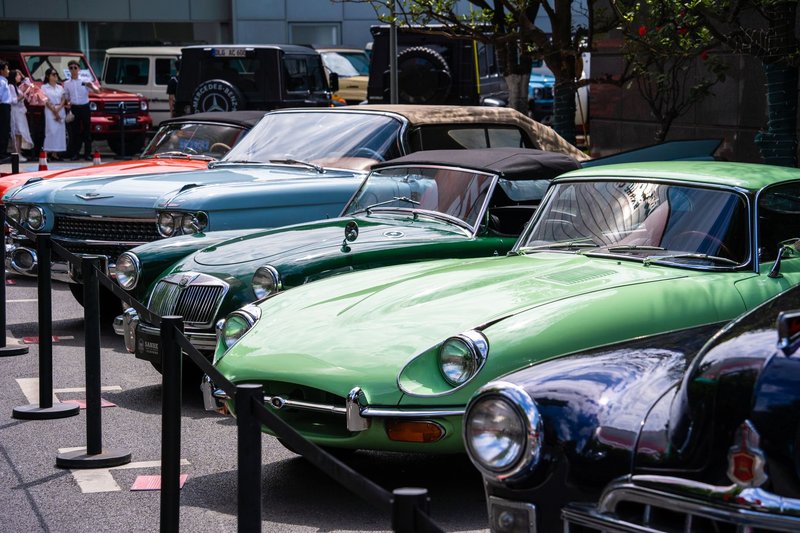
The engineering trade-off is real, though: removing a car’s roof removes structural rigidity, and Porsche stiffened the sills and floor pan to compensate. It worked well enough that the Cabriolet never earned a reputation for cowl shake the way some period convertibles did, but it’s a heavier car than the Coupe by a noticeable margin.
356A Speedster
The Speedster exists because of one man: Max Hoffman, Porsche’s U.S. importer, who told the factory that American buyers wanted something cheaper, lower, and rawer than the Cabriolet. Porsche obliged by cutting the windshield down to a low racing screen, fitting bare-bones bucket seats, deleting the interior door panels and most of the trim, and using simple side curtains instead of roll-up windows.
| Spec | Detail |
|---|---|
| Engine | 1.6L flat-four (Normal or Super) |
| Power | 60 hp (Normal) / 75 hp (Super) |
| 0–60 mph | ~11.3 sec (Super) |
| Top speed | ~100 mph |
| Original U.S. price | Just under $3,000 |
It was supposed to be the cheap 356. Instead it became the one everyone wanted photographed at a beach in Malibu—one of the best cars of the 1950s—and that image did more for Porsche’s American identity than any ad campaign the company ran that decade. The irony is that the deleted comfort features — no proper top, a windshield low enough to require goggles at speed — are exactly what makes surviving examples so hard to find in unmolested condition. Owners upgraded them into more livable cars almost immediately, which is why an original Speedster interior is now a bigger value driver than the engine spec.
356A/1500 GS Carrera
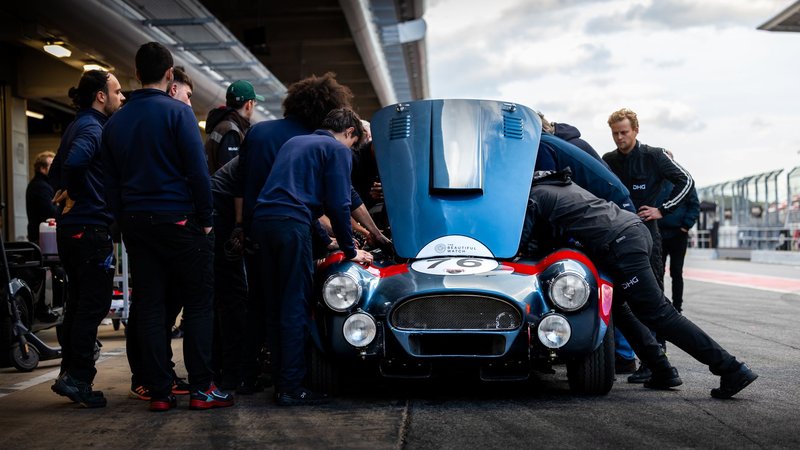
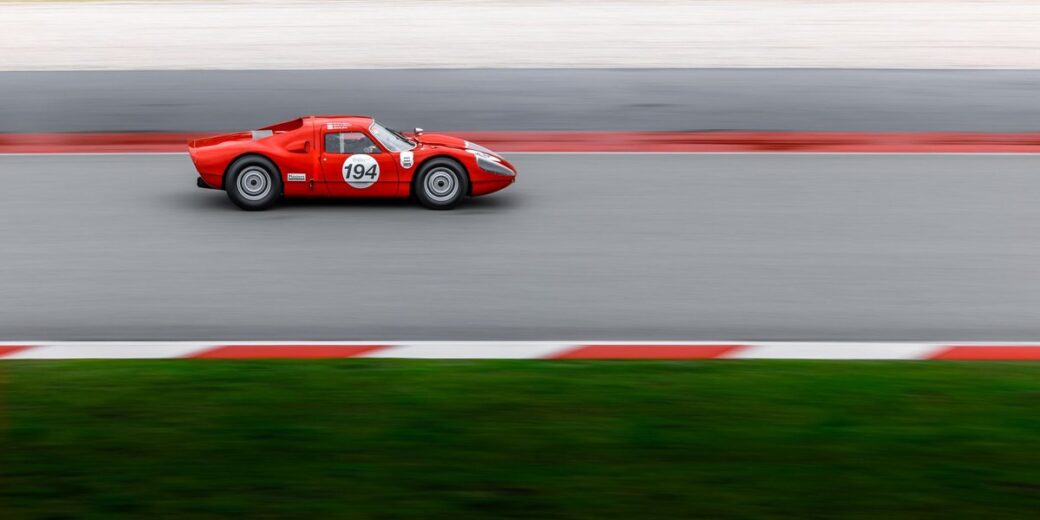
The Carrera is a different animal entirely, and Porsche priced it that way. Under the decklid sits a four-cam engine derived directly from Porsche’s 550 Spyder race program — a roller-bearing crank, dual overhead cams per bank, and a level of mechanical complexity nothing else in the 356 range came close to. It needed far more maintenance than the pushrod engines in the rest of the lineup, and it sounded nothing like them either.
| Spec | Detail |
|---|---|
| Engine | 1.5L four-cam flat-four (Type 547) |
| Power | ~100 hp |
| Body styles | Coupe (GT and standard) |
| Badge origin | Named for Porsche’s Carrera Panamericana wins |
The name came from Porsche’s back-to-back class wins at Mexico’s brutal Carrera Panamericana road race, and Porsche wasn’t shy about attaching that pedigree to a showroom car. According to Hagerty’s valuation data, a well-documented 1956 Carrera GS now trades for multiples of what a standard Coupe commands — the four-cam engine alone is worth more in parts value than an entire base 356A.
1956 vs. 1955: What Actually Changed
The pre-A cars (1952–1955) and the 356A that followed aren’t the same car wearing a different label. Porsche reworked the platform:
- Windshield: Pre-A used a split or bent two-piece windshield; the 356A introduced a curved, one-piece unit — the single fastest way to identify which generation you’re looking at.
- Suspension: Softer front springs, a stiffer front anti-roll bar, revised steering linkage, and longer rear shocks — changes aimed squarely at taming the tail-happy handling pre-A owners complained about.
- Wheels: Widened to 4.5 inches and reduced from 16 to 15 inches in diameter, improving contact patch without changing the car’s low stance.
- Engines: The 356A range grew to five four-cylinder options spanning 1300cc to the Carrera’s 1500cc four-cam, versus the narrower 1500cc range on pre-A cars.
None of this is cosmetic. A pre-A and a 356A can look nearly identical in a low-resolution photo, and that’s exactly why so many listings get the generation wrong — deliberately or not.
What a 1956 Porsche Is Worth Today
Values across the 1956 lineup span an enormous range, and body style matters as much as condition:
- Coupe: Entry point for the range, with rougher project cars starting around $89,500 and clean, sorted examples running well into six figures.
- Cabriolet: Consistently the premium over an equivalent Coupe — exceptional documented examples have reached $434,000, though the broader Cabriolet market averages closer to $200,000.
- Speedster: The most volatile of the group. Recorded 1956 sales have landed as low as $175,500 for rougher cars, while a well-sorted 1957 example hit $590,000 — originality and matching-numbers engines drive most of that spread.
- 356A/1500 GS Carrera: The outlier. Documented sales from recent auction cycles have ranged from roughly $235,000 to $385,000, and Hagerty’s valuation tool tracks the four-cam Carrera consistently above every other 1956 variant.
Provenance moves these numbers more than almost any other factor. A Carrera with confirmed period racing history, or a Speedster with its original interior intact, routinely outsells a mechanically identical car with a murkier paper trail.
FAQ
How many Porsches did the factory build in 1956? Porsche’s total production across the 356 range was 4,201 cars for the year — a figure that covers all body styles and engine variants combined, not the Carrera alone.
What’s the easiest way to tell a 1956 356A from a pre-A car? Check the windshield. Pre-A cars have a split or bent two-piece glass; the 356A switched to a curved one-piece windshield, and that change is visible from across a parking lot.
Is the 356A/1500 GS Carrera really worth that much more than a standard Coupe? Yes, and the reason is under the deck lid, not the badge. The Carrera’s four-cam Type 547 engine came from Porsche’s works racing program, required far more specialized maintenance, and was built in far smaller numbers than the pushrod engines in the Coupe and Cabriolet.
Was the Speedster actually the cheapest 356A when new? It was — Porsche stripped it down specifically to hit a lower U.S. price point at Max Hoffman’s request. Decades later, that same stripped-down originality is what collectors pay the biggest premium to find intact.

Marco Delantero
More from Marco DelanteroHow we reviewed this article
This article was researched against manufacturer records and editorially reviewed before publishing. We accept no payment for coverage.