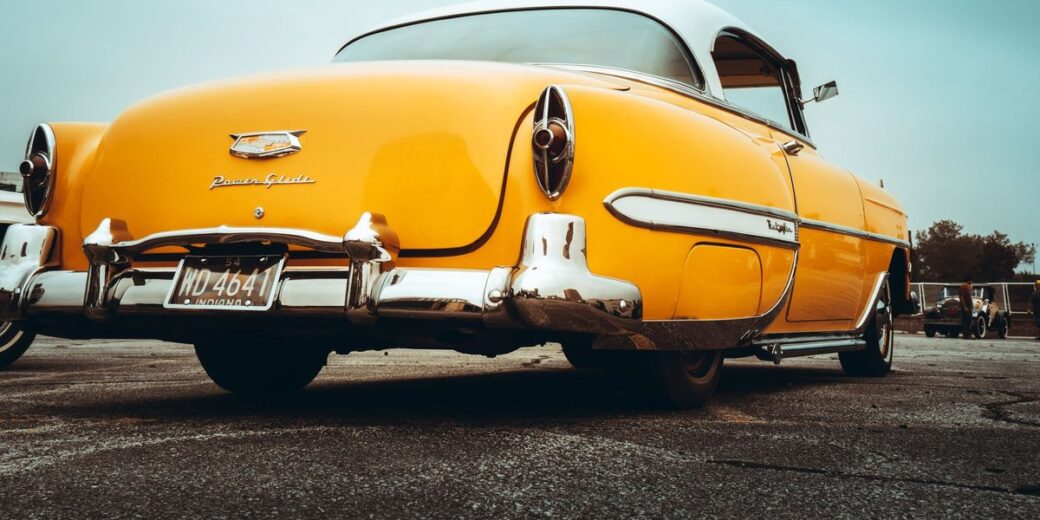
Chevrolet sold three full-size car lines in 1959, plus a wagon, a car-pickup and a sports car. The lines were Biscayne, Bel Air and Impala, in ascending order of price and trim. The extras were the Nomad, the El Camino and the Corvette. All the full-size cars shared the same wild new body: horizontal “batwing” rear fins, teardrop “cat’s-eye” taillights and a lot of glass.
The confusion starts because Chevrolet changed the ladder that year. Impala stopped being a Bel Air trim package and became its own series, Biscayne took over as the base model, and the wagon names got reshuffled. Here’s the whole 1959 Chevrolet lineup, sorted the way Chevrolet sold it.
TLDR
- Biscayne (series 1100/1200): the base line. Plain trim, fleet-and-family cars.
- Bel Air (1500/1600): the middle line, with more chrome and the Parkwood and Kingswood wagons.
- Impala (1700/1800): the top line. Sport Coupe, Sport Sedan, four-door sedan and the only full-size convertible.
- Nomad: the top wagon, now a four-door.
- El Camino: a car-based pickup on the full-size body.
- Corvette: separate two-seater, 283 V8 only.
- Engines: 235 six, 283 V8, 348 V8.
Contents
- The 1959 lineup at a glance
- Biscayne: the base line
- Bel Air: the middle line
- Impala: the top line
- Nomad, El Camino and Corvette
- 1959 Chevrolet engine options
- How to identify your 1959 Chevrolet
- Which 1959 Chevy suits which buyer
The 1959 lineup at a glance
Chevrolet used paired series numbers: the lower number for six-cylinder cars, the higher number for V8s. A “1200” is a V8 Biscayne, a “1600” is a V8 Bel Air, and so on.
| Series | Series numbers | Body styles | Engines | Price position |
|---|---|---|---|---|
| Biscayne | 1100 / 1200 | Two- and four-door sedans, Brookwood wagons | 235 six, 283 V8, 348 V8 | Lowest |
| Bel Air | 1500 / 1600 | Two- and four-door sedans, four-door hardtop, Parkwood and Kingswood wagons | 235 six, 283 V8, 348 V8 | Middle |
| Impala | 1700 / 1800 | Sport Coupe, Sport Sedan, four-door sedan, convertible | 235 six, 283 V8, 348 V8 | Top of the car line |
| Nomad | Wagon, Impala-level trim | Four-door wagon | V8 normally | Top wagon |
| El Camino | Separate model | Car-pickup | 235 six, 283 V8, 348 V8 | Between Bel Air and Impala |
| Corvette | Separate model | Two-seat convertible | 283 V8 only | Own category |
Not every body style came with every engine in every line, and some trim-level boundaries are fuzzy because Chevrolet’s own paperwork overlaps. Treat the table as the map and your car’s cowl tag as the final word (more on that below).
Biscayne: the base line
Biscayne replaced the 1958 Del Ray as the entry model. It’s the least decorated of the three: thinner side trim, plainer interiors, fewer ornaments on the fins. Fleet buyers and families who wanted the big new body without the price took most of them.
The Brookwood station wagon belongs here, sitting in the Biscayne price tier.
Don’t write the Biscayne off. A V8 Biscayne with the 348 is the same car underneath as the Impala at a lower sticker price, and restorers like them because there’s less brightwork to replace. The catch is that the missing trim is also the missing resale premium.
Bel Air: the middle line
Bel Air was the previous generation’s top series, and in 1959 it slid down one step. You still get extra chrome, better upholstery and more side trim than the Biscayne, but it lacks the Impala’s distinctive tail treatment.
This is the line with the wagons that cause the most arguments online. The Parkwood and Kingswood both sit in the Bel Air tier. Parkwood is the six-passenger, Kingswood is the nine-passenger with the rear-facing third seat. Several web pages bounce the Kingswood name around between series. Chevrolet’s 1959 series numbering puts both in the Bel Air group, so a car described otherwise is most likely mixing it with a later model year.
The Bel Air also offered a four-door hardtop and the usual two- and four-door sedans.
Impala: the top line
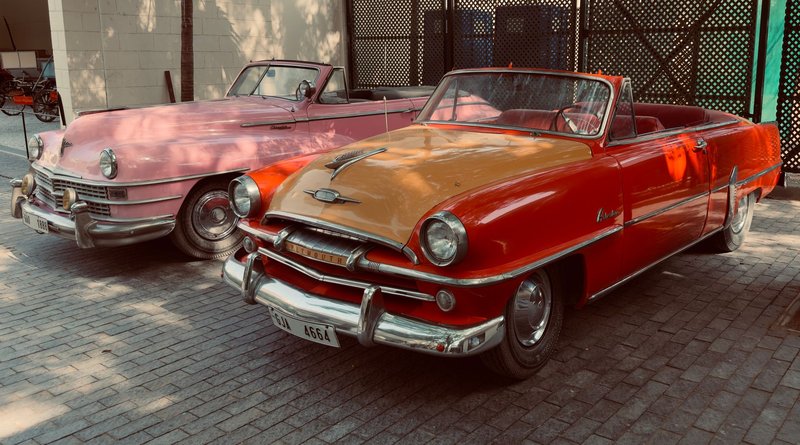
Impala is the car most people picture when they say “1959 Chevy.” It was in its first year as a stand-alone series, and it got the full set of styling cues: more chrome, dual teardrop taillights on each side (the lower lines used a single lens), and the best interiors.
Body styles:
- Sport Coupe: two-door hardtop with the flat roof and huge wraparound rear glass.
- Sport Sedan: four-door hardtop with no center pillar.
- Four-door sedan: the pillared version, less glamorous and less common in the market now.
- Convertible: the only full-size Chevrolet convertible in 1959.
The convertible is the one collectors chase. Production numbers vary between published sources, which is why I’m not printing a single figure here. The Over-Drive Magazine fact sheet gives breakdowns by body style if you need them, and a roundup of 1959 sales and prices shows where the Impala sat against its rivals.
Impalas came with the same three engines as the other lines, but the 283 and 348 V8s were the typical choices.
Nomad, El Camino and Corvette
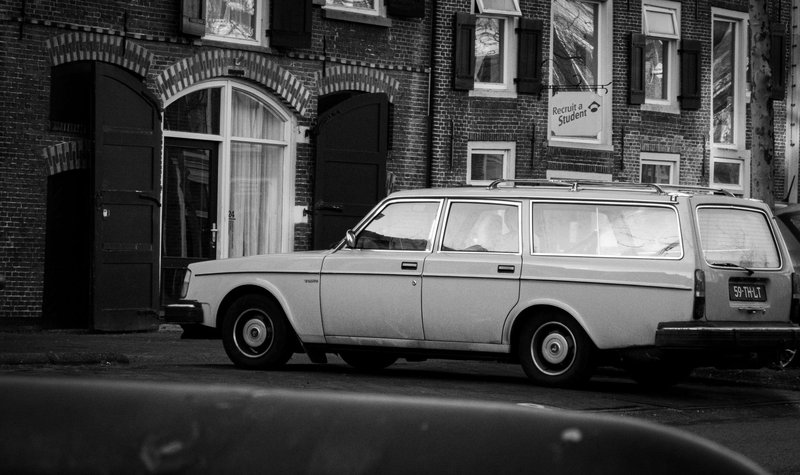
Nomad. The 1955 to 1957 Nomad was a two-door hardtop wagon. By 1959 it was a four-door, which is the detail several sites get wrong. It was the top wagon, trimmed like an Impala, with a sliding-style roof rack setup and extra chrome as the identifying marks. It’s the rarest of the 1959 full-size wagons, and prices follow.
El Camino. Chevrolet brought the El Camino back for 1959 after skipping 1958, this time on the full-size body. It uses the same fins and taillights as the cars, with a wraparound rear window and a bed that’s essentially the cargo area stretched out. You could order a six or any of the V8s, including the 348. Production was roughly 22,000 cars, according to standard industry production tables.
Corvette. The Corvette had nothing to do with the full-size body or the series numbers. The 1959 car lost the fake hood louvers and chrome trunk strips of the 1958 model and kept the 283 V8, rated from 230 hp to 290 hp, the top figure for the fuel-injected version. Production was 9,670 cars.
1959 Chevrolet engine options
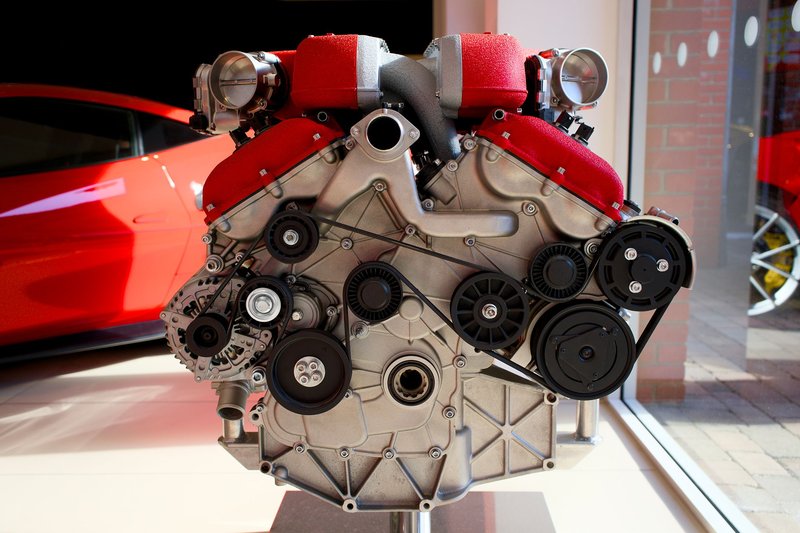
Three engine families covered the full-size cars.
| Engine | Type | Output | Notes |
|---|---|---|---|
| 235 Blue-Flame | Inline six | 135 hp | Base engine, usually with the three-speed manual |
| 283 Turbo-Fire | V8 | 185 hp (two-barrel), 230 hp (four-barrel) | The mainstream V8 |
| 348 Turbo-Thrust | W-head V8 | 250 hp to 335 hp | Big-block precursor; Tri-Power versions at the top |
On the six: some pages list 145 hp for the 235. 135 hp is the 1959 rating, and the higher number looks like a leftover from the 1958 spec sheet.
The 348 is the engine that makes people pay attention. Its cylinder heads give it the “W” nickname, and in high-output form it’s the car Chevrolet used to chase Ford’s 1959 lineup and Pontiac with on the street. Corvette buyers got the 283 only, with Powerglide or manual.
Transmissions: a three-speed manual, with or without overdrive, the two-speed Powerglide automatic, and the three-speed Turboglide, which is the one restorers dislike servicing.
How to identify your 1959 Chevrolet
Skip the badge-reading at first. Start with the paperwork on the car.
- Serial number (VIN). On the 1959 cars it’s on a plate on the driver-side door hinge pillar. It isn’t the 17-character format; those didn’t start until 1981, so the NHTSA VIN decoder won’t handle it. You’ll need a Chevrolet reference for 1959 serial formats.
- Cowl tag. The Fisher Body plate on the firewall. It gives the style number, the build date, trim and paint codes. A style number such as 59-1867 reads as: 1959, Impala V8 (the 18), and convertible (the 67).
- Trim cues. Impala: dual teardrop taillights per side, wide rear trim panel. Bel Air and Biscayne: one lens per side and simpler trim. Nomad: stainless-steel roof trim. El Camino: pickup body. Every full-size 1959 car has the batwing fins; the differences are in the details.
- Engine stamping. Check the engine block pad to see if the engine is original. A lot of cars have had swaps over the decades.
A numbers-matching Impala with the cowl tag and engine code lined up is easier to sell than one that merely looks right.
Which 1959 Chevy suits which buyer
- Weekend cruiser, big budget: Impala convertible. It’s the one everyone recognizes.
- Better value for the style: Impala Sport Coupe or a Bel Air hardtop.
- Restoration project that won’t bankrupt you: Biscayne with a V8.
- Something unusual: El Camino or Nomad. Both are scarce and both get a second look at shows.
- Speed: a 348 car, in any series.
- Family hauler: a Kingswood or Parkwood wagon.
Prices depend heavily on condition, engine and originality. Convertibles and Tri-Power 348 cars sit at the top, and sedans and six-cylinder cars at the bottom. Check recent auction results before you commit to any number.

Marco Delantero
More from Marco DelanteroHow we reviewed this article
This article was researched against manufacturer records and editorially reviewed before publishing. We accept no payment for coverage. Some guides contain affiliate links; see our affiliate disclosure.