Table of Contents
- The Year Ford Borrowed the Thunderbird’s Face
- A Gold Medal in Brussels and the 50-Millionth Ford
- The Skyliner’s Last Bow
- The 1959 Lineup: Custom 300, Fairlane, Fairlane 500, Galaxie
- Engines and Transmissions
- What a 1959 Ford Costs Today
- What to Check Before You Buy
- Which 1959 Ford Should You Buy
The Year Ford Borrowed the Thunderbird’s Face
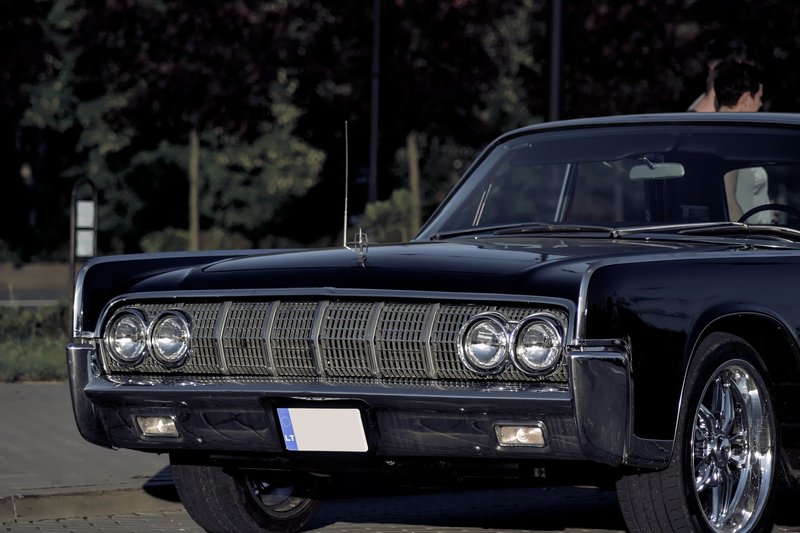
Ford’s full-size cars had spent the mid-1950s looking like sensible appliances next to Chevrolet’s Bel Air. For 1959, Ford fixed that by stealing its own best idea. The new Galaxie hardtop roofline — that long, low, almost fastback profile — was lifted straight from the two-seat Thunderbird, and Ford wasn’t shy about saying so. Dealers pitched it as “Thunderbird in looks, Thunderbird in luxury,” and for once the tagline undersold the car.
Chief stylist Joe Oros ran the studio that produced the ’59 face: a broad, split grille, canted headlights, and quarter panels that flared into modest fins instead of the towering blades Chrysler and Cadillac were still chasing. Ford played it straighter than the competition that year, and it worked. Buyers who wanted a Thunderbird but couldn’t justify a two-seater bought a Galaxie instead, and Ford sold more than 464,000 of them.
A Gold Medal in Brussels and the 50-Millionth Ford
1959 wasn’t just a sales story. That April, the Comité Français de l’Élégance handed Ford a gold medal for styling at the 1958 Brussels World’s Fair — the first time an American manufacturer had won the honor at the Belgian exposition, which drew over 40 million visitors during its run. It was a genuine coup: European jurors weren’t usually inclined to praise Detroit chrome, and Ford framed the win as proof that American design could hold its own against anything coming out of Turin or Paris.
The same year, Ford rolled the 50-millionth car off its cumulative production line and put it on a coast-to-coast tour alongside a 1903 Model A and the experimental Levacar, a hovering test vehicle nobody actually expected to sell. It was a company at its most confident: gold medals, half a century of production, and a lineup that had just out-styled itself.
Tailfins were the design language of the whole era — Cadillac had started the fashion back in 1948, and by 1959 some fins had grown absurd, with certain Cadillac models running 45 inches tall. The most iconic 1959 car models across the industry pushed this styling language even further. The Smithsonian’s National Museum of American History traces the fin craze back to a Cadillac designer who got the idea from a P-38 fighter plane. Ford’s ’59 fins, by comparison, were restrained — more crease than blade — which is part of why the cars still look clean today instead of costumed.
The Skyliner’s Last Bow
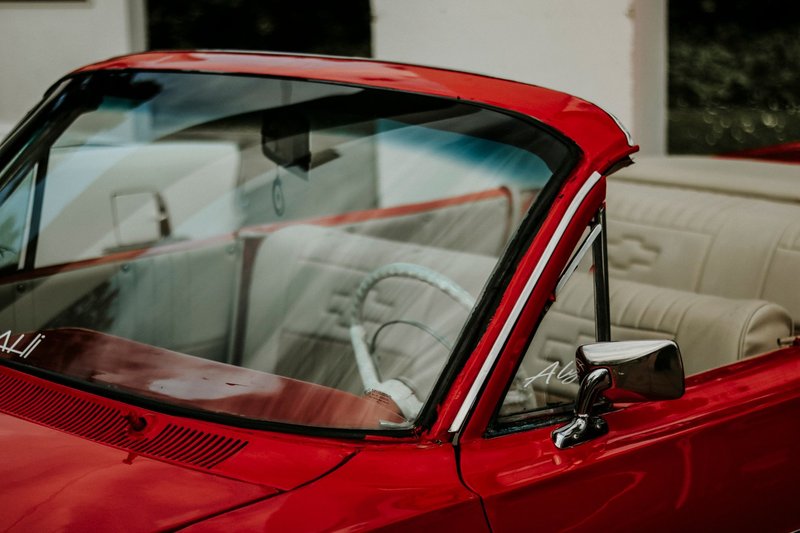
Buried in the Galaxie lineup was the strangest car Ford built that decade: the Skyliner retractable hardtop, a steel-roofed coupe whose entire top folded down into the trunk at the push of a button. It used seven reversible electric motors, four lift jacks, and around 600 feet of wiring to do something no mass-production car had done before or has done since in quite the same mechanical way.
1959 was its swan song. After three model years, Ford discontinued the Skyliner, and the final run totaled just 12,915 cars — the lowest production number of the three years it existed. Complexity had a cost; the mechanism was heavy, ate into trunk space even with the roof up, and gave dealers plenty of reasons to steer buyers toward the cheaper Sunliner convertible instead. That rarity is exactly why Skyliners now command the highest prices of any ’59 Ford, regular fender damage and all.
The 1959 Lineup: Custom 300, Fairlane, Fairlane 500, Galaxie
Ford ran four trim lines on the same 118-inch wheelbase in 1959, and the lineup got more complicated mid-year when the Galaxie arrived and bumped Fairlane 500 out of the top spot.
| Trim | Position | Body styles | 1959 production |
|---|---|---|---|
| Custom 300 | Entry-level, fleet and price-leader | 4-door sedan, 2-door sedan, 2-door business coupe | Ford’s best-seller: 249,553 four-door and 228,573 two-door sedans |
| Fairlane | Mid-level | 4-door sedan, 2-door sedan | 97,789 |
| Fairlane 500 | Former flagship, displaced mid-year | 4-door Town Sedan, 2-door Club Sedan, 4-door Town Victoria hardtop, 2-door Club Victoria hardtop | 79,011 |
| Galaxie | New top trim, added mid-year | Sedans, Victoria hardtops, Sunliner convertible, Skyliner retractable | 464,336, including 12,915 Skyliners |
The Custom 300 was the car fleet buyers and budget-conscious families actually drove home — plain vinyl, rubber floor mats, no chrome to speak of, and by far the highest volume of any single trim. The Galaxie was the one people remember, because it’s the one that looked like a Thunderbird and cost a few hundred dollars less.
Engines and Transmissions
Every full-size ’59 Ford except the Skyliner could be had with the base six, though almost nobody who bought a Galaxie ordered it that way.
| Engine | Displacement | Output | Notes |
|---|---|---|---|
| Mileage Maker I6 | 223 cu in | 145 hp @ 4,000 rpm | Standard on Custom 300 and Fairlane |
| Thunderbird V8 | 292 cu in | 200 hp @ 4,400 rpm | Two-barrel carb, mechanical lifters |
| Thunderbird Special V8 | 332 cu in | 225 hp @ 4,400 rpm | Hydraulic lifters, carried over as the mid-tier V8 |
| Thunderbird 352 Special V8 | 352 cu in | 300 hp @ 4,600 rpm | Top engine, mostly ordered on Galaxie |
Transmission choices ran from a three-speed manual (with optional overdrive) up to Fordomatic, a two-speed automatic, or the newer three-speed Cruise-O-Matic on V8 cars. A well-optioned Galaxie hardtop with the 352 and Cruise-O-Matic was, for 1959, about as close to effortless highway cruising as Ford offered short of an actual Thunderbird.
What a 1959 Ford Costs Today
Values swing hard based on model, body style, and how much of the car is original. Plain sedans are genuinely affordable classics; convertibles and the Skyliner are a different market entirely.
| Model / body style | Typical asking price today |
|---|---|
| Custom 300 sedan, driver quality | $8,000–$20,000 |
| Fairlane / Fairlane 500 sedan or hardtop | $13,000–$35,000 |
| Galaxie hardtop, solid original or restored | $15,000–$45,000 |
| Galaxie Sunliner convertible | $30,000–$55,000 |
| Galaxie Skyliner retractable | $45,000–$65,000+, more for documented low-mileage cars |
Plain sedans in driver condition still trade in the low five figures, which is unusual for a 65-plus-year-old American car with this much presence. The premium sits almost entirely in body style: two-door hardtops outprice sedans with identical drivetrains, and anything that folds its roof away costs more than anything that doesn’t.
What to Check Before You Buy
One thing you can cross off the worry list: the troublesome Ford-Aire air suspension that plagued some 1958 models never carried into 1959. Ford quietly dropped the option after air lines leaked, valves froze in cold weather, and the compressor struggled to keep moisture out of the system. Every ’59 rides on conventional coil and leaf springs, so that particular headache belongs to the previous model year, not this one.
What still matters on any 1959 Ford:
- Rust in the usual full-frame trouble spots — rocker panels, the lower edges of front and rear fenders, trunk floor, and the area around the taillight panel. Sixty-five years of humid summers and salted winters have taken a toll on unibody-adjacent panels even on cars that look solid from ten feet away.
- Skyliner-specific mechanical health — if you’re looking at a retractable, budget for the top mechanism itself. Seven motors, dozens of relay switches, and hundreds of feet of wiring means a non-functioning top isn’t a minor fix; it’s a specialist job, and parts for the mechanism are scarcer than body trim.
- Matching numbers and trim originality — with the Galaxie added mid-year, some cars carry mixed Fairlane 500/Galaxie badging and trim from the changeover. That’s not a defect, but it affects value, so confirm what you’re actually looking at against the build sheet.
- Parts availability — sheet metal, trim, and mechanical parts for the Custom 300 through Galaxie range are well supported by reproduction suppliers, since the platform shares plenty with other late-’50s full-size Fords. Skyliner-specific top components are the exception; those you track down through owner clubs and parts cars.
Which 1959 Ford Should You Buy
If you want a usable, honest classic without a second mortgage, a Custom 300 or Fairlane sedan with the 292 or 332 V8 gets you real 1959 Ford presence for the least money, and parts support is solid. If you want the car that defined the year, a Galaxie hardtop with the Thunderbird roofline is the one people will actually recognize — that’s the shape that won the Brussels medal and out-sold everything else Ford built that season. And if money isn’t the constraint, the Skyliner is the one to chase: only 12,915 left the factory, none of them cheap to maintain, and every one of them still does something no ordinary car from 1959 can.

Marco Delantero
More from Marco DelanteroHow we reviewed this article
This article was researched against manufacturer records and editorially reviewed before publishing. We accept no payment for coverage. Some guides contain affiliate links; see our affiliate disclosure.