Nineteen fifty-nine is the year American cars got as big, as finned, and as chrome-laden as they’d ever get — and then, almost in the same twelve months, the industry started walking it back. Detroit built its tallest fins ever. It also built the Studebaker Lark, the Rambler American, and quietly readied a rear-engine Chevrolet that would have horrified anyone at a 1955 design review. Across the Atlantic, a British engineer crammed four adults into a car smaller than a modern Fiat 500 and changed what “small car” meant for the next fifty years.
That collision — maximum excess and the first real pushback against it — is what makes 1959 worth a closer look than a birth-year trivia search usually gets.
Table of Contents
- Why 1959 Was the Hinge Point
- American Full-Size Icons: Peak Tailfin
- First-Year Nameplates and the Compact Pivot
- European Sports and Luxury
- The Debut That Changed Everything: The Mini
- The Most Popular Car of 1959
TLDR
1959 was the peak year for American tailfin styling — Cadillac’s fins never got taller, before or after — and simultaneously the year Detroit blinked and rushed compacts like the Studebaker Lark and Rambler American to market. Chevrolet debuted the Impala nameplate and the El Camino; Ford rolled out the Galaxie mid-year; and in Britain, the Austin Seven and Morris Mini-Minor arrived on August 26, 1959, as the twin badges of what the world would just call the Mini. Below: 18 cars across both continents, grouped by what they represent, each with the specs and context that explain why it still gets talked about.
Why 1959 Was the Hinge Point
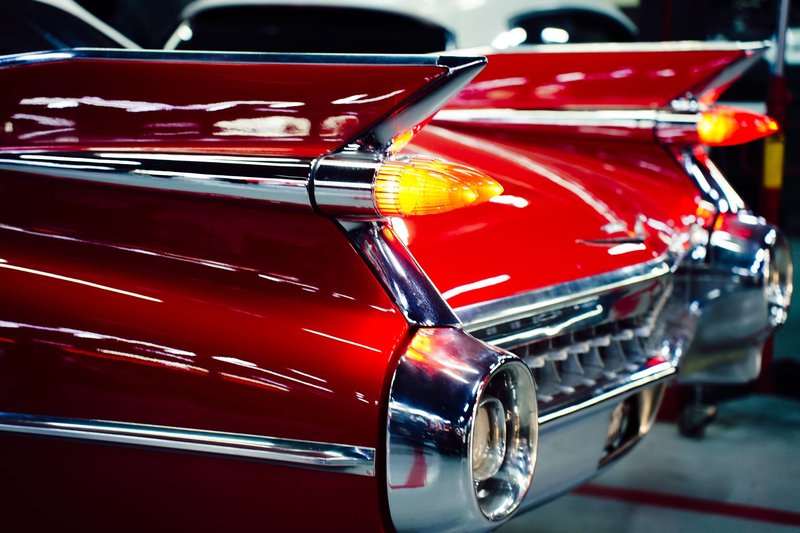
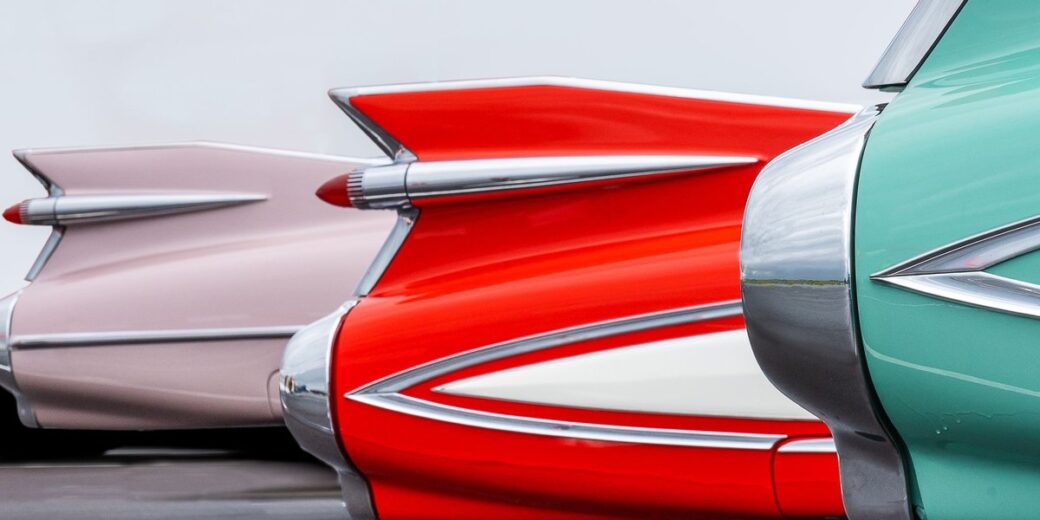
Tailfins didn’t start in 1959 — Harley Earl’s design team had been growing them since the 1948 Cadillac, reportedly inspired by a wartime look at a Lockheed P-38 Lightning’s twin tail rudders. But 1959 is where the trend maxed out. GM design chief Chuck Jordan later described the year bluntly: the ’59 models were “like letting a tiger out of the cage, saying ‘go!'” Cadillac’s fins that year were the tallest the brand ever built, before design offices across Detroit spent the next three years quietly filing them back down, according to History.com’s account of the tailfin era.
At the same time, a quieter story was playing out on dealer lots. Studebaker, a company on the edge of bankruptcy, bet its survival on a small, plain car called the Lark — and it worked well enough that Rambler, Ford, and GM all had compact programs of their own moving through development that same year. Chevrolet’s answer, the rear-engine Corvair, was revealed to the press on October 2, 1959, for the 1960 model year. None of this reads as coincidental: 1959 is the year the industry proved both instincts — bigger and smaller — at the same time, in the same showrooms.
American Full-Size Icons: Peak Tailfin
1. 1959 Cadillac Eldorado
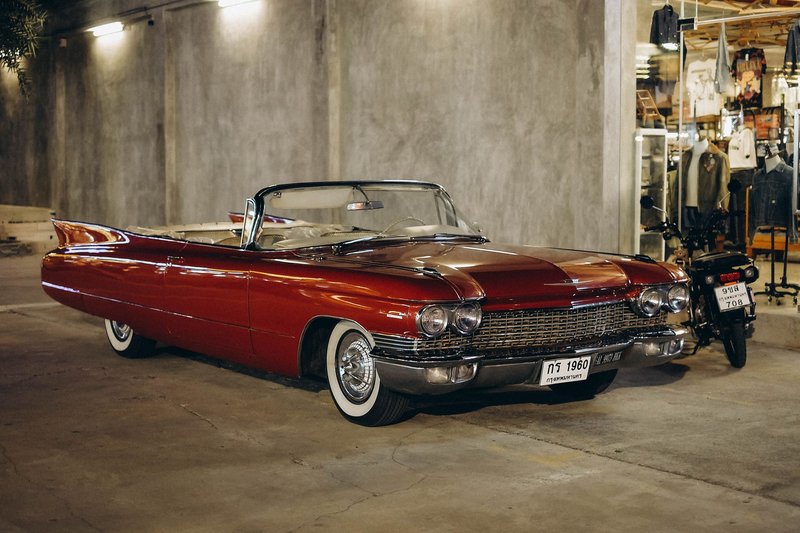
The Eldorado is the car people mean when they say “1959 tailfins.” Cadillac stretched the fins skyward as a direct answer to Chrysler’s 1957 Forward Look cars, and the result — twin bullet taillights sitting atop fins that read as a rocket exhaust nozzle — was never repeated at that height again. The Eldorado Seville coupe and Biarritz convertible both listed at $7,401; the ultra-exclusive Eldorado Brougham four-door hardtop ran $13,075, more than double the price of a well-equipped Impala. Power came from a 390-cubic-inch V8 making up to 345 horsepower in Eldorado trim.
2. 1959 Chevrolet Impala
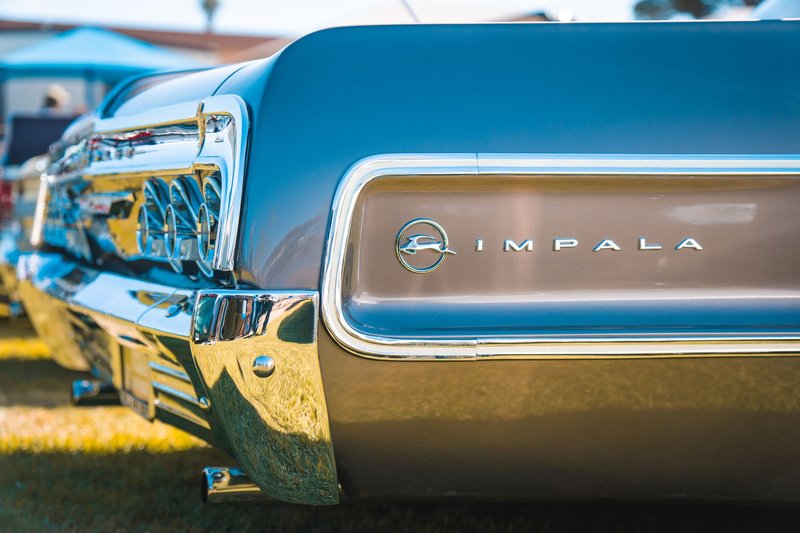
This was the Impala’s first year as its own model line rather than a Bel Air trim package, and Chevrolet leaned all the way into it: “bat-wing” rear fenders, cat’s-eye taillamps, and a decklid wide enough to land a plane on. Buyers responded — Chevrolet built roughly 473,000 Impalas for the model year, including 182,520 four-door Sport Sedans and 72,765 convertibles, at prices between $2,598 and $2,900. Engine options ran from a 135-horsepower six up to a fuel-injected 283 small-block, a spread wide enough to cover both grandma’s grocery car and something you’d actually want to drive fast.
3. 1959 Plymouth Fury
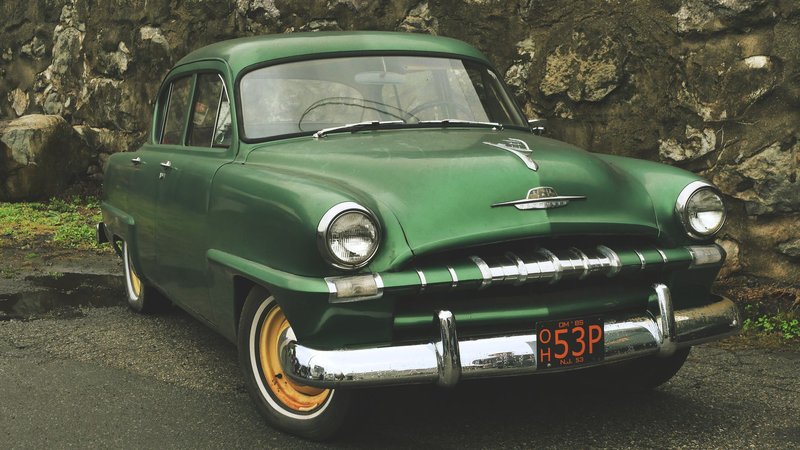
Plymouth’s fins were more restrained than Cadillac’s, but the Fury still carried the year’s full complement of chrome trim and a two-tone paint treatment across its flanks. Priced between $2,700 and $3,130, the Fury found 82,030 buyers out of Plymouth’s 458,261 total production for the year — respectable numbers for a division that was starting to lose ground to Chevrolet and Ford in the full-size fight.
4. 1959 Buick Electra 225
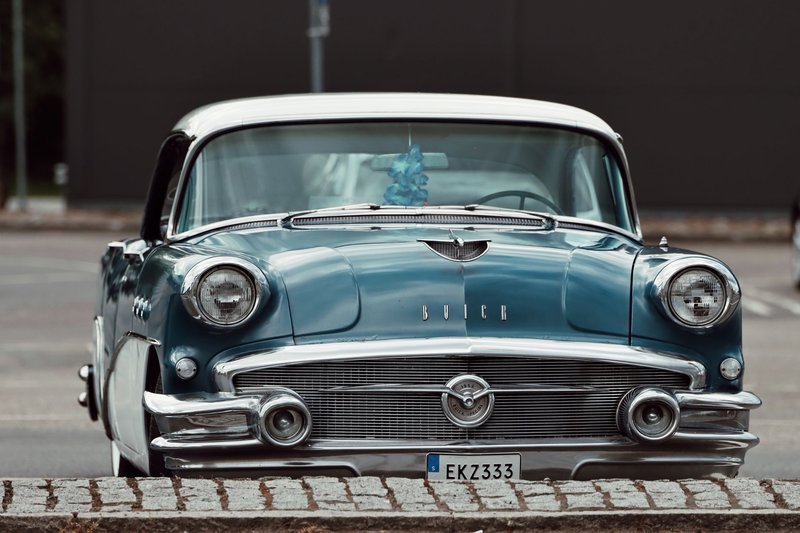
Buick’s flagship earned its “deuce and a quarter” nickname honestly — the Electra 225 measured 225 inches bumper to bumper, making it one of the longest American passenger cars on sale that year. It sat above the Invicta and LeSabre in Buick’s lineup, with the sweepspear side trim and portholes (“VentiPorts”) that had become the brand’s signature since the late 1940s, now stretched across a body long enough to need its own zip code.
5. 1959 Chrysler 300E
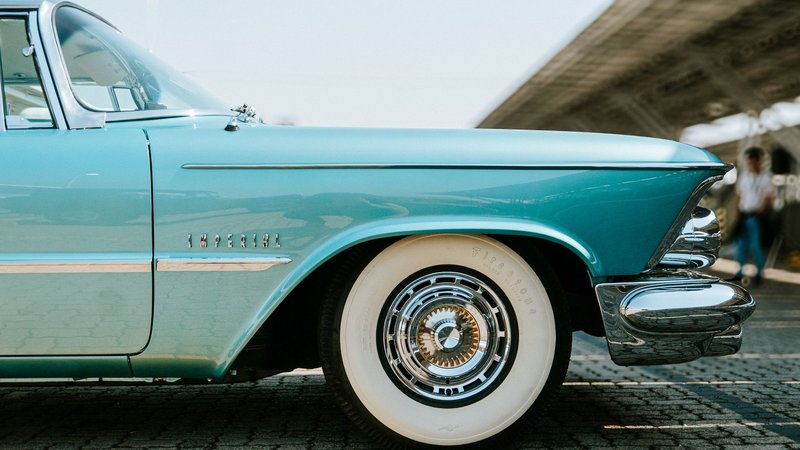
The “letter series” 300s were Chrysler’s halo cars — low-volume, high-performance, and priced to keep it that way. The 300E carried a 413-cubic-inch wedge V8 in place of the earlier Hemi, a switch that traded some cachet for more usable torque. It was never meant to sell in Impala numbers, and it didn’t; that scarcity is exactly why 300-letter cars command serious money at auction today.
First-Year Nameplates and the Compact Pivot
6. 1959 Chevrolet El Camino
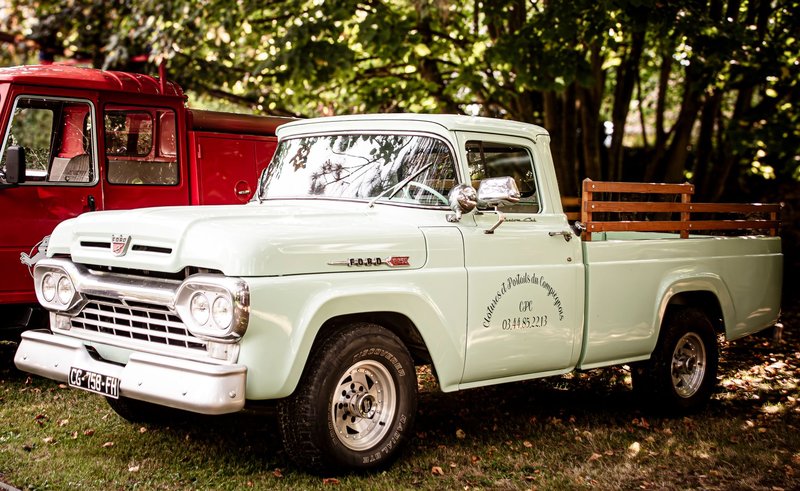
Chevrolet’s first swing at a car-truck hybrid rode on the same 119-inch-wheelbase Safety-Girder X-frame as the Impala, with a cargo bed rated for 1,150 pounds and nearly 34 cubic feet of double-wall steel box. Buyers could option it with the workhorse inline-six, a 283-cubic-inch V8, or a 280-horsepower 348. Only 22,246 were built for 1959 — a niche seller at the time that’s become one of the most collected Chevrolets of the decade.
7. 1959 Ford Galaxie
Ford introduced the Galaxie mid-year as an upscale spin on the long-running Fairlane, borrowing its slower-sloping rear roofline from the Thunderbird to give the top-trim full-size Ford a more formal profile than the rest of the lineup. It’s a small styling move by 1959’s standards, but the Galaxie name would outlive nearly every other nameplate on this list, running in Ford’s lineup for two more decades.
8. 1959 Studebaker Lark
Studebaker was circling bankruptcy by the mid-1950s, and the Lark was a genuine bet-the-company move: a smaller, simpler car built by shortening the existing full-size platform rather than engineering something new from scratch. It worked. The Lark sold well over 130,000 units in 1959 on a 108.5-inch wheelbase, priced from $1,925 to $2,588, with a 90-horsepower six or an optional 180-horsepower 259 V8. For a company that nearly closed its doors, that’s a genuine comeback story.
9. 1959 Rambler American
American Motors took a different route to the same idea: it dusted off the 1950 Nash Rambler’s tooling and sold it, largely unchanged, as a budget-priced compact aimed squarely at buyers who’d otherwise import a Volkswagen. No fins, no chrome excess — just a small, cheap car at a moment when small and cheap were suddenly fashionable again.
10. 1959 Chevrolet Corvair
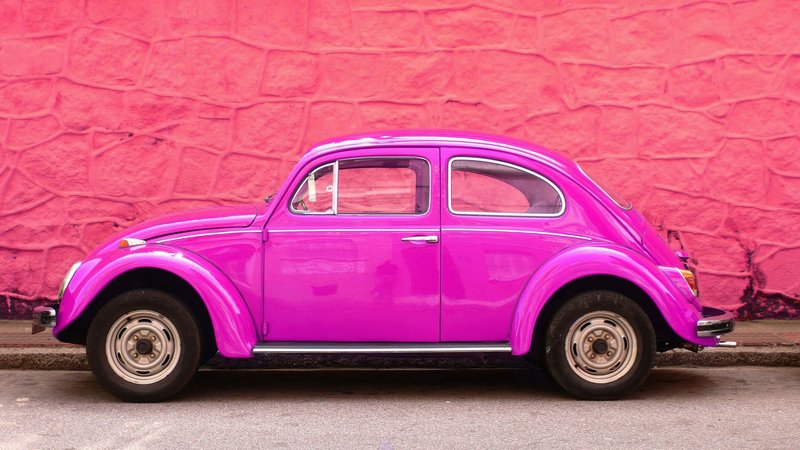
GM’s answer to the compact question was the most radical car on this list. Revealed to the press on October 2, 1959, for the 1960 model year, the Corvair paired a rear-mounted, air-cooled flat-six with unibody construction — nothing else out of Detroit at the time looked remotely like it. It was built to compete with the Volkswagen Beetle on its own terms, engine layout included, a genuinely unusual bet for a company that had built nothing but front-engine cars for half a century.
11. 1959 Ford Anglia 105E
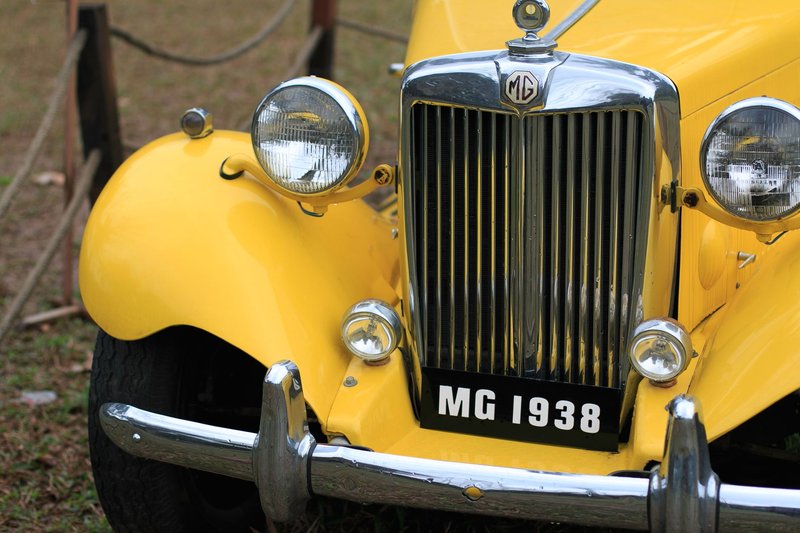
Ford’s UK arm launched the Anglia 105E in September 1959 with a reverse-raked rear window, a styling choice borrowed loosely from American cars of the era and unlike anything else in the British small-car segment. It was cheap, boxy, and forgettable to most — until decades later, when it became the car the Weasleys fly to Hogwarts in the Harry Potter films, giving a budget 1959 economy car a strange second life with an audience that wasn’t born yet.
12. 1959 Volkswagen Beetle
The Beetle wasn’t new in 1959, but that’s the point — it was the import every American compact on this list was built to answer. Simple, air-cooled, and rear-engined years before Detroit tried the same layout on the Corvair, it kept selling steadily through a model year when GM, Ford, Chrysler, Studebaker, and Rambler all scrambled to build something smaller.
European Sports and Luxury
13. 1959 Aston Martin DB4 GT
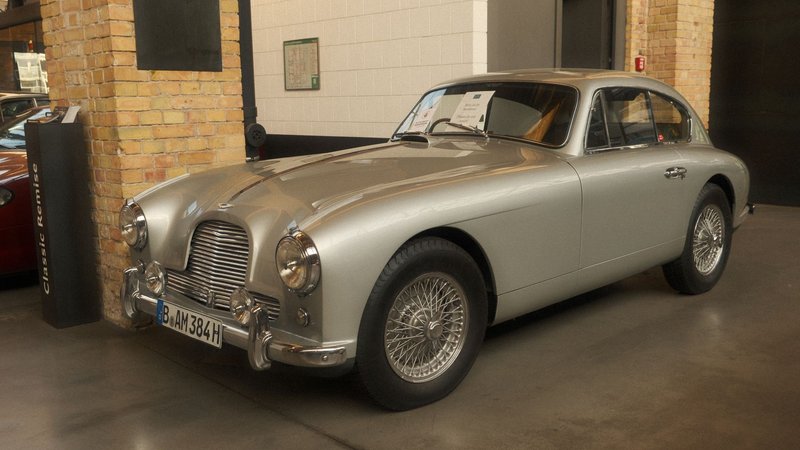
The DB4 GT arrived as the lightweight, short-wheelbase version of Aston’s new DB4, built for buyers who wanted the road car with more of the race car left in it. Its 3.7-liter inline-six made 302 horsepower, enough for a 0-60 mph run in about 6.1 seconds and a top speed of 153 mph — genuinely quick figures for 1959, when most American V8s were chasing straight-line numbers instead of outright pace.
14. 1959 Jaguar Mark 2
Jaguar’s Mark 2, launched in October 1959, paired a 107-inch wheelbase with the same race-proven XK straight-six architecture that had already won Le Mans. Buyers could choose a 2.4-liter making 120 horsepower, a 3.4 at 210 horsepower, or the 3.8-liter version at 220 — a car equally happy as a family saloon or, with the bigger engine fitted, quick enough to embarrass sports cars at a stoplight.
15. 1959 Mercedes-Benz 300SL Roadster
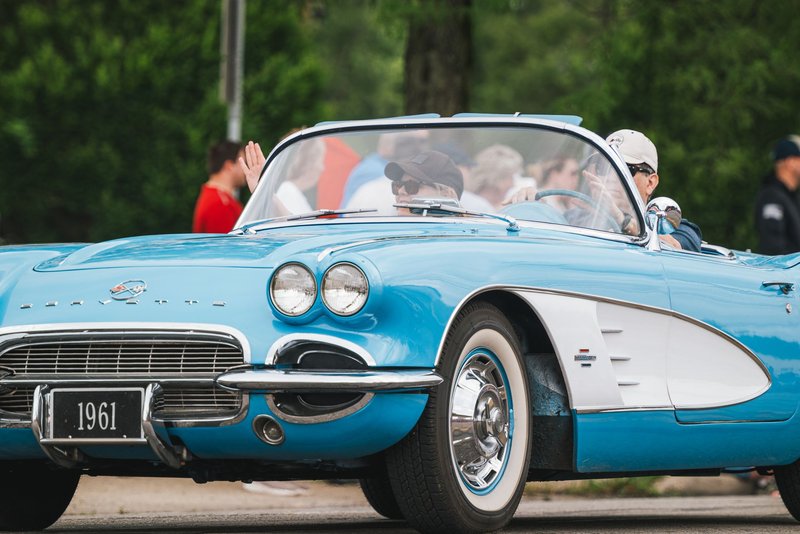
By 1959 the 300SL had shed its Gullwing doors for a conventional roadster body, but it kept the fuel-injected inline-six and the racing pedigree that made the model a fixture on rich collectors’ wish lists — then and now. It’s the car that proves not every 1959 European entry needed fins to look fast.
16. 1959 Porsche 356A

1959 was the last full model year for the original 356A body before Porsche introduced the revised 356B for 1960. Air-cooled, rear-engined, and small in a way that made American compacts of the same year look enormous by comparison, the 356A was already establishing the formula — light weight over raw power — that would define Porsche’s road cars for decades.
17. 1959 Alfa Romeo Giulietta Spider
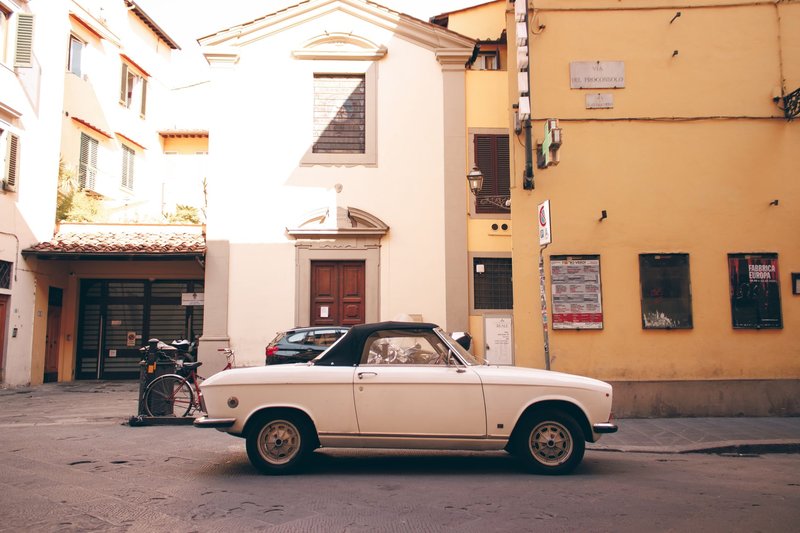
Bertone’s Giulietta Spider paired a small twin-cam four-cylinder with a body light enough to make modest horsepower feel quick. It sold on cornering feel rather than straight-line numbers, aimed at buyers who wanted something closer to a boulevard sports car than a boat with fins — a very different sales pitch than anything coming out of Detroit that year.
The Debut That Changed Everything: The Mini
18. 1959 Austin Seven / Morris Mini-Minor
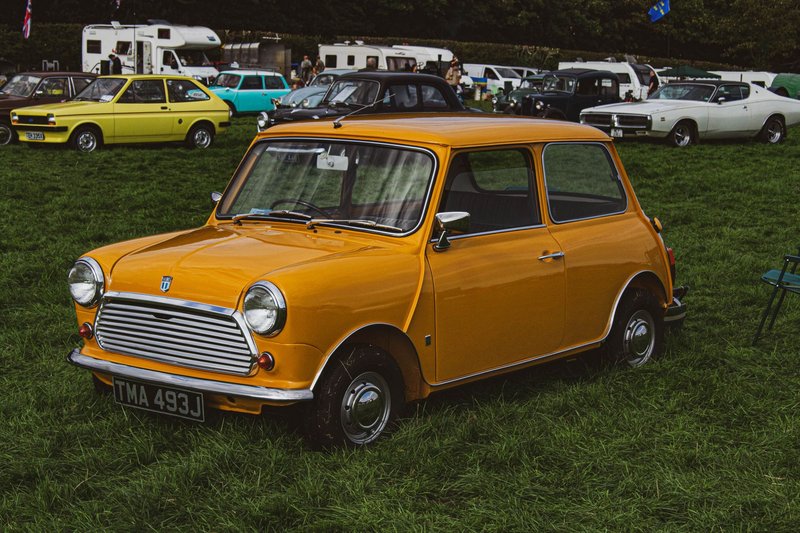
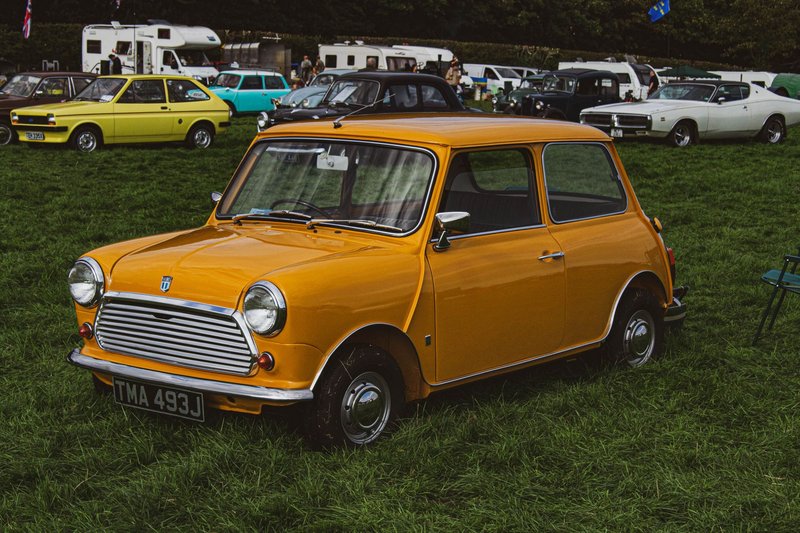
The British Motor Corporation launched the Mini on August 26, 1959, as two nearly identical badge-engineered models — the Austin Seven and the Morris Mini-Minor — distinguished mainly by their grille shape and trim. Designer Alec Issigonis had been handed a brief that reads almost impossibly tight for the era: seat four adults, keep fuel consumption low, drive well, and sell cheap. His solution was the first mass-production car to combine a transverse front engine with front-wheel drive, packing four adults and 195 liters of luggage into a body just over three meters long, according to BMW Group’s official history of the Mini. Every transverse-engine front-wheel-drive economy car built since — which is most of them — owes something to a layout worked out in 1959.
The Most Popular Car of 1959
There’s no single, clean answer to “the most popular car of 1959” — it depends whether you’re counting by nameplate or by manufacturer. By individual model, the Impala led the pack: Chevrolet built around 473,000 of them in its debut year alone, more than any other single nameplate on this list. By comeback story, nothing touches the Studebaker Lark, which pulled in well over 130,000 sales for a company that had been circling bankruptcy just a few years earlier.
Zoom out further and the bigger trend matters more than any one model: U.S. passenger car sales climbed to roughly 5.9 million for 1959, with General Motors, Ford, and Chrysler claiming about 94 percent of that market between them — even as Studebaker, Rambler, and a growing wave of Volkswagen imports proved there was real demand for something smaller than what Detroit’s Big Three were used to building.
That’s the real story 1959 tells. Not one winner, but a market splitting in two directions at once — and both of them still shape what’s parked in driveways today.

Marco Delantero
More from Marco DelanteroHow we reviewed this article
This article was researched against manufacturer records and editorially reviewed before publishing. We accept no payment for coverage.