BMW started the 1980s selling sporty sedans to people who liked driving, and finished it with a V12 flagship, a plastic-bodied roadster with doors that drop into the sills, and the second-generation M5 already in development. Most lists of 1980s BMW models stop at the M cars. The decade had a lot more going on than that, and some of the best cars to actually own are the ones with no M badge.
This guide covers the whole lineup by series, with production years, engines and the one reason each car matters. Chassis codes like E30 and E28 are BMW’s internal development codes (the E stands for Entwicklung, German for development), and they’re the fastest way to talk about these cars without confusing a 1983 5 Series with a 1989 one.
Table of Contents
- The 1980s BMW Models at a Glance
- 3 Series: E21 and E30
- 5 Series: E28 and E34
- 6 Series: E24
- 7 Series: E23 and E32
- The Outliers: M1, Z1 and the 8 Series
- US vs. Europe: What Changed Across the Atlantic
- Which 1980s BMW to Buy Today
- Summary
The 1980s BMW Models at a Glance
Years show the full production run of each chassis, not just the part that fell inside the decade. Power is the European rating in PS (metric horsepower) unless noted.
| Model | Chassis code | Years | Engine | Power |
|---|---|---|---|---|
| 3 Series | E21 | 1975–1983 | 1.6–2.3L four and six-cylinder | 75–143 PS |
| 3 Series | E30 | 1982–1994 | 1.6–2.7L four and six, plus diesels | 90–170 PS |
| M3 | E30 | 1986–1991 | 2.3L four-cylinder (S14) | 200 PS |
| 5 Series | E28 | 1981–1988 | 1.8–3.5L four and six, plus turbodiesel | 90–218 PS |
| M5 | E28 | 1984–1988 | 3.5L six-cylinder (S38) | 286 PS |
| 5 Series | E34 | 1988–1996 | 1.8–3.5L four and six | up to 211 PS (535i) |
| M5 | E34 | 1988–1995 | 3.6L six-cylinder (S38) | 315 PS |
| 6 Series | E24 | 1976–1989 | 2.8–3.5L six-cylinder | 184–218 PS |
| M635CSi | E24 | 1984–1989 | 3.5L six-cylinder (M88/S38) | 286 PS |
| 7 Series | E23 | 1977–1987 | 2.8–3.4L six, 3.2L turbo (745i) | 170–252 PS |
| 7 Series | E32 | 1986–1994 | 3.0–3.5L six, 5.0L V12 | 188–300 PS |
| M1 | E26 | 1978–1981 | 3.5L six-cylinder (M88/1) | 277 PS |
| Z1 | Z1 | 1989–1991 | 2.5L six-cylinder | 170 PS |
| 8 Series | E31 | 1989–1999 | 5.0L V12 (850i) | 300 PS |
3 Series: E21 and E30
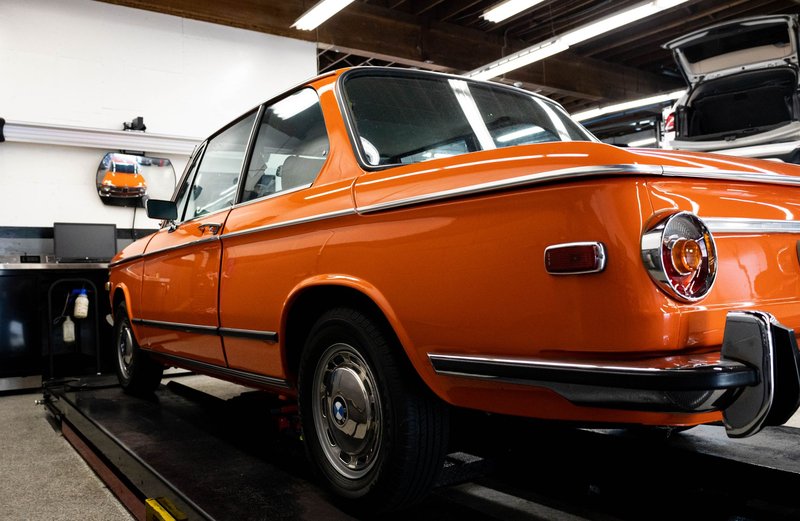
E21 (1975–1983). The first 3 Series was already five years old when the decade started, and it stayed on sale until 1983. Europe got everything from the 1.6L 315 up to the 323i, which put a 2.3L fuel-injected six into a compact body and made 143 PS. That car is the missing link between the old 2002 and everything that followed. The US never got the six; American 320i buyers got a 1.8L four making roughly 100 hp. There was no factory convertible, but the coachbuilder Baur sold a 320 with a fixed rollover hoop and a removable roof panel, the TC1.
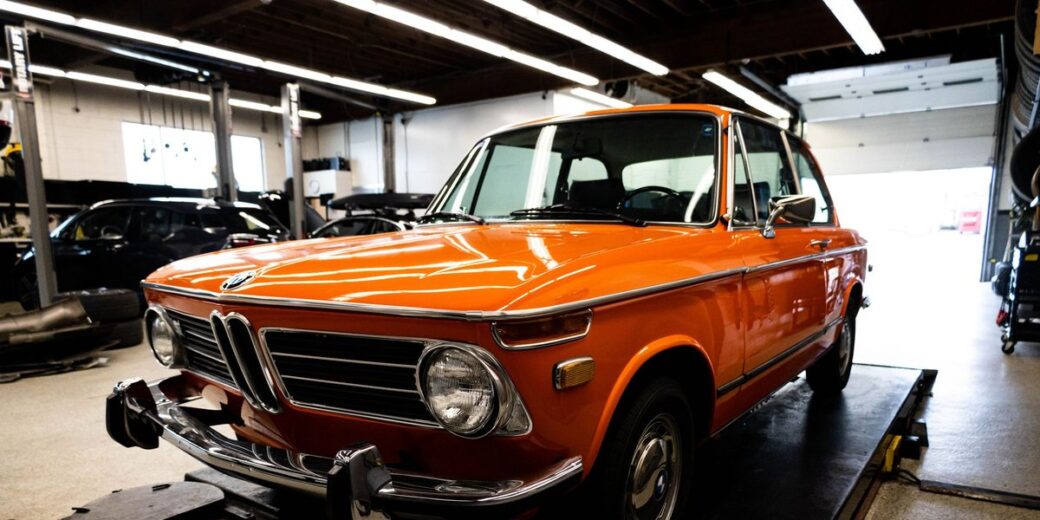
E30 (1982–1994). This is the car most people mean when they say “80s BMW.” Boxy, light, rear-wheel drive, with a greenhouse so upright you can see all four corners from the driver’s seat. The range was wide:
- 316, 318i, 320i: the four-cylinder base cars. Unglamorous, but they’re the lightest E30s and the ones people forget when they argue about the lineup.
- 323i (1982–1987): the 2.3L six, 139 PS in Europe.
- 325i (1985–1991): a 2.5L six making 170 PS. The one most buyers want.
- 325e: the “eta” engine, a 2.7L tuned for torque at low revs and fuel economy, sold mainly in the US for its first years.
- 325iX (1987 on): the all-wheel-drive version, with a viscous center differential that sends most of the torque to the rear wheels. Rare, and ahead of its time for a compact BMW.
- 324d and 324td: turbodiesels for European buyers who did a lot of miles.
- Convertible and Touring: the factory convertible arrived in 1985, the Touring wagon in 1987.
E30 M3 (1986–1991). BMW built the M3 so it could go touring-car racing, and the road car was the legal paperwork. The S14 is a high-revving 2.3L four-cylinder with a four-valve head, rated at 200 PS in Europe and 192 hp in the US. Flared arches, a steeper rear window and a bigger boot lid set it apart from the regular E30. Homologation specials followed: the Evolution II (1988, 220 PS) and the Sport Evolution (1990, 2.5L, 238 PS, 600 built). A small number of M3 convertibles, around 786, were also made.
5 Series: E28 and E34
E28 (1981–1988). Subtle styling, a quiet cabin, and a wide menu of engines. The lineup ran from the 518 and 520i up through the 525i, 528i and 535i (1985–1988), with a 524td turbodiesel (115 PS) for Europe that also found its way to the US. The M535i (1985–1988) sat in between: a 3.5L, 218 PS six with the M Technic body kit and sport suspension, sold in Europe. It’s the E28 that most enthusiasts quietly prefer to own.
E28 M5 (1984–1988). The first M5 took the 286 PS six from the M1 supercar, put it in an ordinary-looking sedan and let Motorsport GmbH hand-assemble it in Garching. About 2,200 were built, and the top speed was just over 150 mph, a figure that made it the fastest production sedan in the world when it launched. US cars arrived only for the 1988 model year, with a catalytic converter and 256 hp.
E34 (1988–1996). The E34 started production at the tail end of the decade, so its place on the list is thin but real. The 535i carried over the big M30 six (211 PS), and the 525i and 520i covered the volume end. The E34 M5 (1988–1995) is the one to know. It used a 3.6L S38 making 315 PS in Europe and 310 hp in the US, where it arrived for 1991.
6 Series: E24
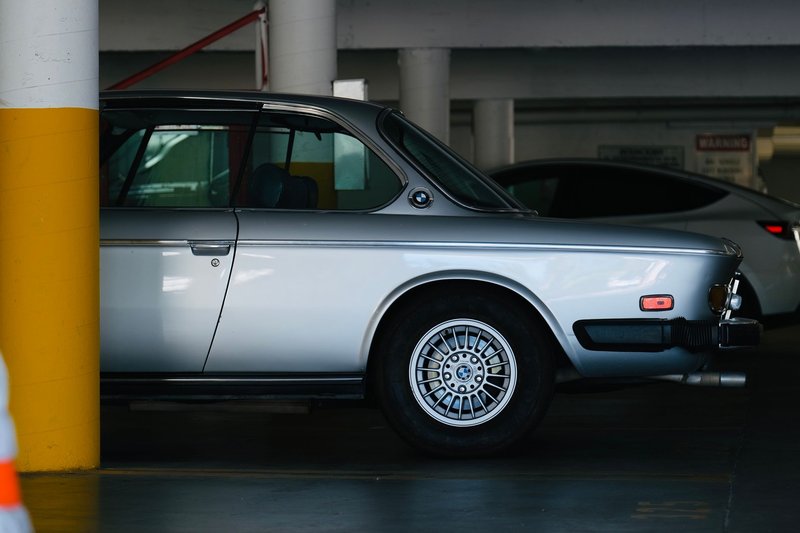
The E24 coupe ran from 1976 to 1989, which makes it one of the longest-lived BMWs of its time. The nose is low and pointed (people called it the “shark nose”), the roofline has no B-pillar, and the only things missing are a convertible and a back seat that adults enjoy.
- 628CSi (1979–1987): the entry point, a 2.8L six making 184 PS.
- 633CSi: a 3.2L six, 200 PS, replaced by the 635 in 1978.
- 635CSi (1978–1989): the core car, with a 3.5L, 218 PS six. US buyers got the 633CSi first and the 635CSi later.
- M635CSi (1984–1989): a 3.5L, 286 PS six derived from the M1’s engine.
The M635CSi is the headline, but the 635CSi is where the value is. It does 90% of the job with a fraction of the maintenance bill.
7 Series: E23 and E32
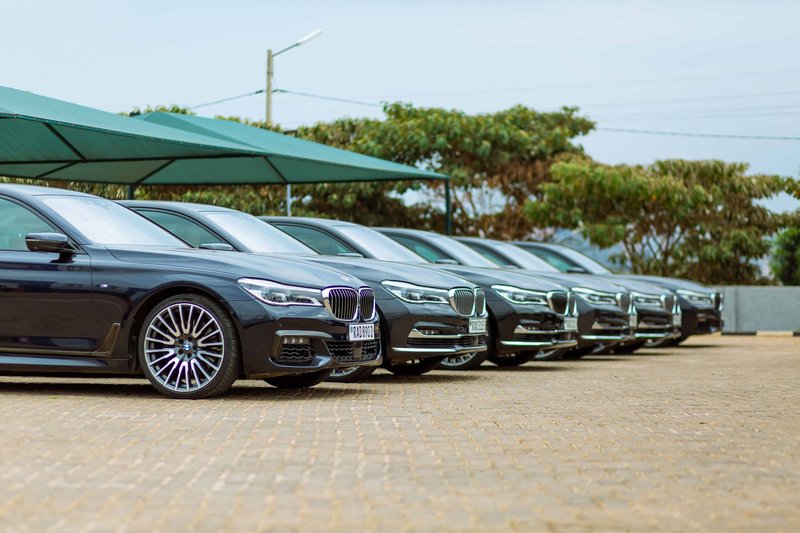
E23 (1977–1987). BMW’s first 7 Series was a flagship that looked like a larger 5 Series on purpose. The engines ran from the 728 and 728i through the 730, 732i and 733i, up to the 735i. The 745i (1980 on in Europe) added a turbocharged 3.2L six making 252 PS, which put it in a different performance class from every other luxury sedan in the segment. US dealers sold the 733i and then the 735i.
E32 (1986–1994). The E32 is where BMW’s flagship started chasing Mercedes properly, and it did it with an engine. The 750i and long-wheelbase 750iL (from 1987) used the M70 5.0L V12 making 300 PS, the first V12 in a German production car since the war. The engine ran two separate engine computers, one for each bank of cylinders. Below it sat the 730i, 735i and the long-wheelbase 735iL. All 7 Series cars of this era came with a self-imposed 250 km/h (155 mph) speed limiter, and the 750iL was the car that made that limiter famous.
The Outliers: M1, Z1 and the 8 Series
M1 (1978–1981). BMW’s only mid-engine production car. Giugiaro styled it, Lamborghini was meant to build it before the deal fell through, and the road version used a 3.5L, 277 PS six. About 450 were made, including race versions for the Procar series. It’s not an 80s car in spirit, but it was still being built in 1981 and its engine ended up powering the M5 and M635CSi.
Z1 (1989–1991). A two-seat roadster with a galvanized steel chassis, thermoplastic body panels and doors that slide down into the sills. Under the hood was the same 2.5L, 170 PS six as the 325i, and the rear suspension was a new multi-link design BMW later used on the E36 3 Series. About 8,000 were built. BMW never sold it new in the US.
E31 8 Series (1989–1999). Unveiled in 1989 as the 850i, with the 5.0L, 300 PS V12 from the 750i. The 8 Series replaced the 6 Series at the top of the range, and it was heavier, more complex and far more expensive. US sales didn’t start until 1991.
US vs. Europe: What Changed Across the Atlantic
BMW built different versions of the same car for different markets, and the differences matter if you’re shopping for one.
- Power: US cars had catalytic converters and emissions equipment that cut output. The E30 M3 lost 8 PS, and the E28 M5 lost around 30 PS (256 hp against 286 PS). The cost of meeting EPA emissions rules was often a car with less power than its European twin.
- Naming: the E24 sold in the US as the M6 from 1987 to 1989. The same car in Europe was the M635CSi.
- Engines: the US skipped the E21 323i and the E28 520i, got the economy-minded 325e before the 325i, and never received the 745i turbo.
- Bumpers: to meet 5 mph impact rules, US cars got large, heavy bumpers on E21, E23 and E24 models. Many owners swap them for the European versions.
- The Z1: it never had an official US release. Under the 25-year rule, NHTSA lets you import a car once it’s old enough, and the Z1 has qualified since 2014.
Which 1980s BMW to Buy Today
For driving fun on a budget: E30 325i. A good 325i is the best compromise in the decade. The six-cylinder sounds right, the chassis is balanced, and parts are easy to find. Avoid rust, tired suspension bushings and cars that have been modified badly.
For an everyday classic: E28 535i or M535i. An E28 is a stronger car than most people give it credit for, and it’s less expensive than an M5. Look for service history on the M30 engine.
For style: E24 635CSi. The coupe looks as good now as it did in 1980. Check the rear subframe area, the electrics and the dash for cracks.
For the collector: E30 M3, E28 M5, E34 M5. These are the cars that have gained the most in value. The E30 M3 has crossed into six-figure territory. The E34 M5 is the more usable choice and generally costs less than the E28 version.
For a gamble: E32 750iL. It’s a lot of car for the money, but the V12 means the bills are twice as large when something goes wrong. Only buy one with full records.
For the unusual: Z1. It’s rare and unique, and you can import one into the US now. Expect to pay more than a comparable 325i by a wide margin.
Summary
The 1980s BMW models ran far wider than the M cars suggest. The E30 3 Series, E28 and E34 5 Series, E24 6 Series, E23 and E32 7 Series, plus the M1, Z1 and 850i, cover almost every type of car a manufacturer can build. The M3 and M5 are the ones everyone wants. But the 325i, the 535i and the 635CSi are the cars that make you understand why BMW’s reputation took off in the decade, and they cost far less to own. If you’re buying, start with the chassis code, check the year and market, and work out from there.

Daniela Voss
More from Daniela VossHow we reviewed this article
This article was researched against manufacturer records and editorially reviewed before publishing. We accept no payment for coverage. Some guides contain affiliate links; see our affiliate disclosure.