Table of Contents
- The Short Answer
- 1992 Lamborghini Diablo
- 1992 Lamborghini LM002 “Rambo Lambo”
- The LM/American Special Edition
- Why Only Two Models
- 1992 Prices vs. Today’s Values
- What Came Right After
The Short Answer
Lamborghini’s 1992 lineup had exactly two cars in production: the Diablo, a 5.7-liter V12 coupe that had just replaced the Countach, and the LM002, the 5.2-liter V12 off-roader nicknamed the “Rambo Lambo” — in its final full year before production wound down in 1993. A lot of automotive database sites list only the Diablo for 1992, or worse, tack on models like the Aventador and Huracán that didn’t exist for another two decades. Both errors are wrong. Two models, one road car and one truck, both V12.
1992 Lamborghini Diablo
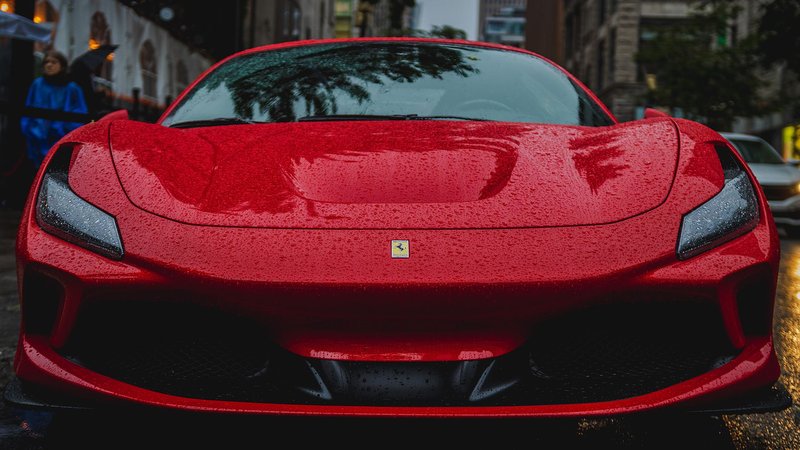
The Diablo landed in 1990 as the successor to the Countach, one of the most iconic 1980s sports cars, and by 1992 was in its second full production year, still offered only as a rear-wheel-drive coupe — the four-wheel-drive VT variant wouldn’t arrive until 1993. Marcello Gandini penned the original shape, though Chrysler’s design studio (Lamborghini’s owner at the time) softened some of his sharper edges before the car reached production, a compromise Gandini reportedly never fully forgave.
| Spec | Detail |
|---|---|
| Engine | 5.7L V12, naturally aspirated |
| Power | 485 hp @ 7,000 rpm |
| Torque | 428 lb-ft @ 5,200 rpm |
| 0–60 mph | 3.9 seconds |
| Top speed | 202+ mph |
| Drivetrain | Rear-wheel drive |
| Transmission | 5-speed manual |
| Original MSRP (1992) | ~$232,600 |
That top speed made the Diablo the first production Lamborghini to break the 200 mph mark, securing its place among the best cars of the 1990s, and Sant’Agata leaned on it hard in period marketing. As a full passenger car with single-digit fuel economy, it also landed squarely in gas guzzler tax territory — a levy that, as the EPA explains, applies only to cars, not trucks or SUVs. That distinction matters for the second half of this list.
1992 Lamborghini LM002 “Rambo Lambo”
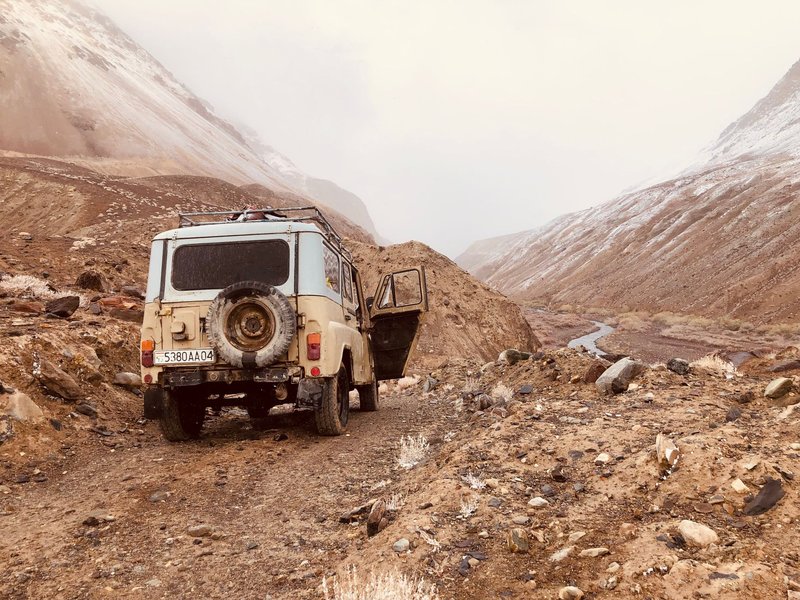
The LM002 gets left off nearly every “1992 Lamborghini models” list, which is a real gap — it was still a current-production vehicle that year, and it’s arguably the stranger, more interesting story. Lamborghini built it originally as a military prototype (the Cheetah, then the LM001) before pivoting to a civilian luxury off-roader aimed at wealthy buyers in the Middle East who wanted something that could out-torque a Range Rover and out-flex a Rolls-Royce.
| Spec | Detail |
|---|---|
| Engine | 5.2L V12 (Countach-derived) |
| Power | 444–450 hp |
| Torque | 368 lb-ft |
| 0–60 mph | 7.7 seconds |
| Fuel economy | ~8 mpg |
| Drivetrain | Permanent four-wheel drive |
| Original MSRP (1992) | ~$120,000 |
The interior was full leather with wood trim, a strange contrast to a chassis built to shrug off dune driving and run on Pirelli Scorpion tires developed specifically for the truck. By 1992, the LM002 was on its way out — Lamborghini built roughly 300 to 330 of them total across the model’s run, with production ending in 1993, so any 1992 example is already a car built in the tail end of a short run.
The LM/American Special Edition
The one 1992-specific footnote most sources miss entirely: Lamborghini debuted the LM/American at the 1992 Detroit Auto Show, a limited run of the last 60 LM002s built and sold exclusively in the United States. These came with MSW/OZ Racing alloy wheels, chromed front and rear bumpers, ground-effects side skirts, unique badging and body striping, and an upgraded interior over the standard truck. Some LM/American units could be optioned with a 7.2-liter marine-derived V12 in place of the standard 5.2. If you’re chasing rarity within an already rare model, this is the variant to know — it’s the closest thing 1992 Lamborghini had to a “special edition.”
Why Only Two Models
Lamborghini in 1992 wasn’t the sprawling, model-a-year operation it is today. Chrysler bought the company in 1987 for a relatively modest sum, at a point when the Italian marque was financially fragile, and ran it as a low-volume specialty brand rather than pushing rapid model expansion. Under Chrysler’s ownership, Lamborghini’s entire focus went into getting the Diablo out the door as the Countach’s successor, while the LM002 quietly rode out its final production years on carryover engineering. Two models, both V12, both hand-built in low numbers — that was the whole company. Lamborghini wouldn’t add a third concurrent model line until the Gallardo arrived in 2003, under Volkswagen Group ownership.
1992 Prices vs. Today’s Values
Neither of these cars is cheap today, but they’ve moved in different directions relative to their original stickers.
The Diablo left the factory around $232,600. Recorded sales for Diablos now average roughly $398,000, with clean examples trading well above $400,000 and rougher, higher-mileage cars still clearing $160,000. That’s close to a 70% gain over original MSRP before you even adjust for inflation.
The LM002 started cheaper, at roughly $120,000, and has appreciated harder in percentage terms. Average sale prices now sit around $301,000, with well-documented, low-mileage trucks pushing past $275,000 and top examples reaching into the high $400,000s. Rarity is doing a lot of that work — with only a few hundred ever built and even fewer surviving in usable condition, LM002 supply essentially can’t grow.
Condition, documentation, and originality swing both cars’ values by six figures in either direction, so any number here is a starting point for research, not a number to buy against sight unseen.
What Came Right After
If you’re cross-shopping 1992 Diablos against later years, it helps to know what changed right around the corner. The all-wheel-drive Diablo VT arrived for the 1993 model year, adding a viscous-coupling front differential that could send up to 25% of torque forward under slip — a genuinely different driving character from the rear-drive ’92 car, and a variant collectors now treat as a distinct sub-model. The track-focused SE30 followed in 1993–94, stripped down and rear-drive only, built to celebrate Lamborghini’s 30th anniversary. A 1992 base Diablo predates both: no VT hardware, no SE30 lightweighting, just the original Gandini-shaped coupe as it left the factory before Lamborghini started splitting the model into variants.
That makes the 1992 cars — Diablo and LM002 alike — the last snapshot of Lamborghini’s lineup before it started multiplying. One road car, one truck, no trim ladder. Whatever you’re chasing, that’s what actually existed that year.

Daniela Voss
More from Daniela VossHow we reviewed this article
This article was researched against manufacturer records and editorially reviewed before publishing. We accept no payment for coverage.