Nash didn’t fade out quietly. The company that built some of America’s most innovative mid-century cars vanished as a brand name in 1957, and most of its models disappeared with it — some after a single year, others after decades of steady production. The problem is that nobody has put them all in one place. Wikipedia gives you a page per model. Enthusiast clubs give you a wall of model numbers. None of it tells you the whole arc.
So here it is: every major Nash model that got discontinued, organized by series, with the year it died, why it died, and what replaced it. The short version is that almost everything traces back to one event — the 1954 merger with Hudson that created American Motors Corporation, and AMC’s decision three years later to kill the Nash name entirely.
Table of Contents
- The Short Version
- How Nash Began and Ended
- The Early Cars (1916–1942)
- The Lafayette
- The Statesman and Ambassador
- The Nash 600
- The Rambler
- The Metropolitan
- Discontinued Nash Models at a Glance
- What a Nash Is Worth Today
The Short Version {#tldr}
Nash built cars from 1917 to 1957. Charles Nash bought the Thomas B. Jeffery Company in 1916 and renamed it, and for nearly four decades Nash Motors turned out everything from cheap economy cars to genuinely advanced flagships. The brand pioneered unibody construction, the first modern automotive heating-and-ventilation system, and reclining seats that folded into a bed.
The end came in two steps. In 1954, Nash-Kelvinator merged with Hudson to form American Motors Corporation — at the time the largest corporate merger in U.S. history. AMC kept building Nash-badged cars for three more model years, then retired the Nash name (and Hudson’s) after 1957 to focus everything on the Rambler brand. The Rambler, ironically a Nash creation, outlived its parent by more than a decade and carried Nash’s DNA straight into the AMC era.
How Nash Began and Ended {#how-nash-began-and-ended}
Charles W. Nash ran General Motors as its president before he left in 1916 to buy his own company. His target was the Thomas B. Jeffery Company of Kenosha, Wisconsin, maker of the Rambler and the Jeffery. He renamed the operation Nash Motors and put his name on the 1918 models. That Kenosha plant would stay the heart of the company for its entire life.
Nash’s engineering reputation was real, not marketing. The company built the first car with a thermostatically controlled heating and ventilation system that pulled in fresh air — the “Weather Eye,” introduced in 1938 and so far ahead of competitors that the basic concept still describes how your car’s climate control works. In 1941 Nash introduced one of the first mass-produced unibody cars in America, the 600, years before unibody became the industry standard.
The 1937 merger with Kelvinator, the refrigerator maker, gave the company the “Nash-Kelvinator” name and the cash reserves that kept it alive through the lean years. George Mason ran the combined company and spent the early 1950s arguing that the independents needed to consolidate or die. He was right. The Hudson merger in 1954 proved it, and when Mason died suddenly that year, his protégé George Romney took over and made the call to bet everything on Rambler. Hudson’s own lineup met the same fate as Nash’s in the AMC reshuffle, and if you want to trace where each of those cars went, the full roster of Hudson models that were discontinued tells the other half of the merger story.
The Early Cars (1916–1942) {#the-early-cars}
The first Nash, the Model 681 of 1918, was a six-cylinder car that established the company’s reputation for solid, overbuilt engineering. Through the 1920s Nash sold cars under a confusing thicket of model numbers and series names — the Light Six, the Advanced Six, the Special Six, the Ambassador Eight. Most were named by their engine configuration and trim level rather than a memorable badge, which is exactly why the surviving model-number indexes from the Nash Car Club read like spreadsheets.
The pattern through this era: a model would run a few years, get renamed or renumbered, and quietly vanish into the next generation. The Ajax, a lower-priced companion brand Nash launched in 1925, lasted barely a year before Nash folded it back into its own lineup as the “Nash Light Six” in 1926 — an early sign of the company’s willingness to kill a nameplate the moment the math stopped working.
All of these prewar cars stopped when civilian production halted in February 1942 for World War II. When production resumed in 1945, Nash came back with a streamlined lineup built around three names that would carry the company to the end: Ambassador, the new 600, and a little later, Statesman.
The Lafayette {#the-lafayette}
The Lafayette name had two separate lives at Nash, and both ended in discontinuation. Nash first used it as a luxury marque from 1919, then revived it in 1934 as a lower-priced model meant to keep dealers in business during the Depression. The Depression-era Lafayette was a sensible, affordable car that did its job and then got absorbed — by 1937 it became the Nash Lafayette 400, and by 1940 the Lafayette name was retired entirely, its slot in the lineup taken over by the 600.
The Lafayette is the cleanest example of Nash’s recurring habit: spin up a nameplate for a specific market moment, then quietly retire it when conditions changed. It never had the longevity of the Ambassador because it was never meant to.
The Statesman and Ambassador {#statesman-and-ambassador}
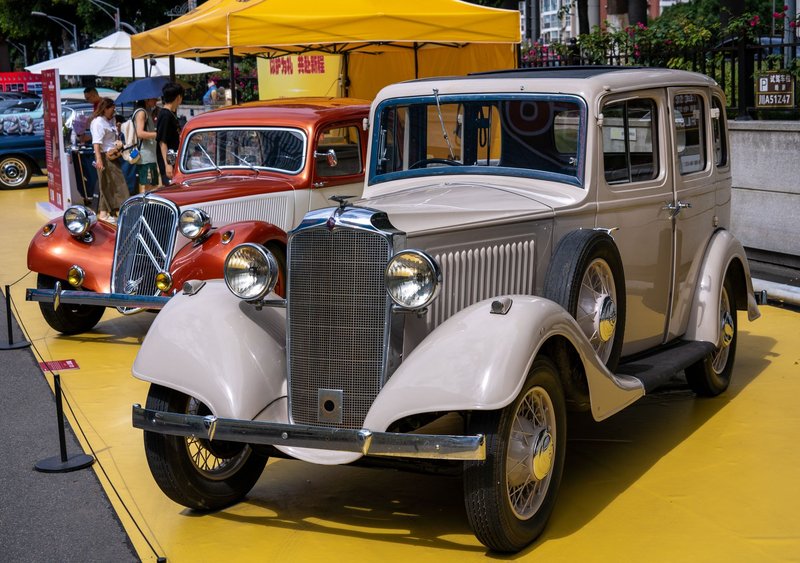
These two were Nash’s bread and butter in the postwar years, and they’re the most “Nash” of all the models — the ones that defined the look and the engineering.
The Ambassador was Nash’s flagship, a name that ran from 1932 all the way to the end. Through the late 1940s and 1950s the Ambassador wore the famous “Airflyte” bathtub styling — the fully enclosed, aerodynamic body with skirted front wheels that you either loved or thought looked like an upside-down bathtub. The 1949–1951 Airflyte Ambassadors are among the most recognizable Nashes ever built. The Ambassador name survived the AMC merger and was applied to Rambler-based cars; the original Nash-bodied Ambassador was discontinued after 1957 when the Nash brand died, though AMC kept the name on its Rambler line for years.
The Statesman arrived in 1950 as the Ambassador’s shorter-wheelbase, six-cylinder sibling, replacing the old 600. It shared the Airflyte styling but rode a smaller platform. The Statesman ran through 1956, then was discontinued and effectively replaced by the Rambler-based Ambassador and Statesman badges as AMC restructured the lineup around the Rambler platform.
Both cars used Nash’s unibody construction and the company’s reclining seats — the ones that folded flat into a double bed, a feature Nash marketed heavily and that earned the cars a particular reputation among the drive-in generation.
The Nash 600 {#the-nash-600}
The 600 deserves its own section because it was genuinely ahead of its time. Launched in 1941 and revived after the war, the 600 was one of the first American unibody cars, which made it lighter and stiffer than body-on-frame rivals. The name came from its efficiency claim: it could supposedly travel 600 miles on a single 20-gallon tank, roughly 30 miles per gallon at a time when that number was unheard of.
The 600 ran through 1949, when it was renamed the Statesman for 1950. So it wasn’t discontinued so much as rebadged — but the 600 name itself disappeared, and the original lightweight economy concept it represented got folded into the larger postwar lineup. The unibody engineering it pioneered, on the other hand, became the foundation for nearly everything Nash and AMC built afterward.
The Rambler {#the-rambler}
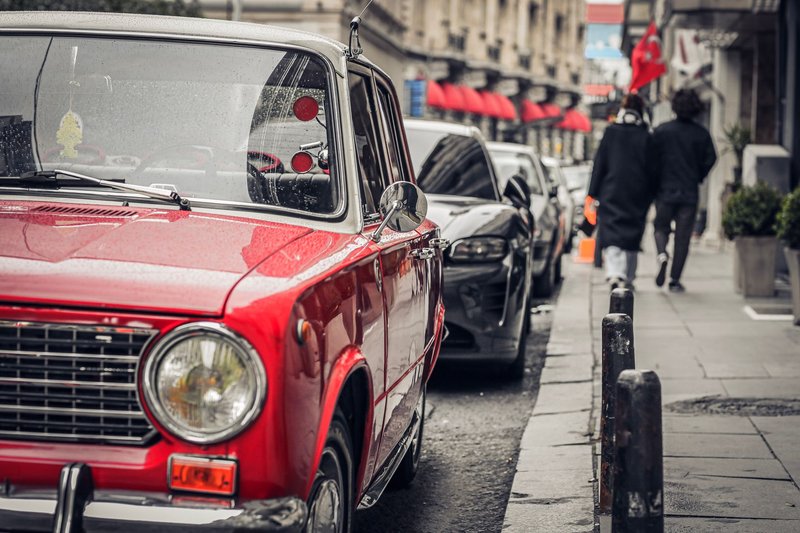
Here’s the twist in the whole story. The Rambler is the Nash model that didn’t die — it outlived the brand that created it.
Nash revived the Rambler name in 1950 (it had originally belonged to the Jeffery company’s cars before Nash) for a compact, well-equipped economy car. George Mason’s bet was that a smaller, cheaper, high-quality car could carve out a niche the Big Three ignored. He was right again. The Rambler sold well enough that when AMC was deciding which brands to keep after the Hudson merger, the answer became obvious: kill Nash and Hudson, keep Rambler.
So the Nash Rambler, as a Nash, was discontinued after 1957 along with everything else wearing the Nash badge. But the car itself simply lost the Nash name and became the AMC Rambler, which went on to enormous success through the 1960s. The 1958 Rambler American was essentially a warmed-over 1955 Nash Rambler design, brought back from the dead because it was cheap to produce and sold during a recession. Nash’s economy-car philosophy didn’t die with the brand — it became AMC’s entire identity.
The Metropolitan {#the-metropolitan}
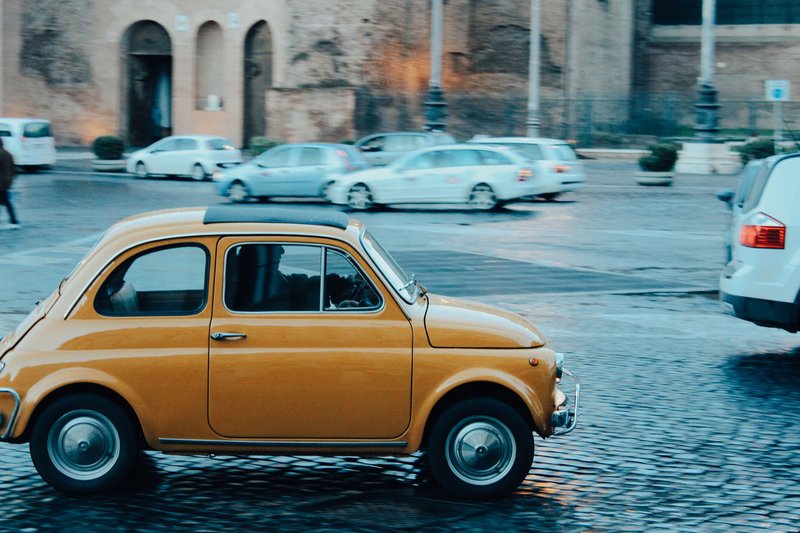
The Metropolitan is the strangest and most charming entry on this list. Introduced in 1953, it was a tiny two-seat subcompact — radical for an American manufacturer at the time — built in England by Austin using a British engine and assembled body, then shipped to the U.S. and sold under the Nash badge. It was one of the first American “captive imports.”
The Metropolitan was aimed at a second-car market that barely existed yet: city drivers, women commuters, suburban households that wanted something small and economical. It looked like a scaled-down version of the full-size Nashes, complete with a hint of the Airflyte styling. After the Nash brand was discontinued in 1957, the Metropolitan kept selling — first badged as a Nash and Hudson, then simply as the “Metropolitan” with no brand name at all from 1959, until production ended in 1961 and U.S. sales finished in 1962.
Among collectors, the Metropolitan has a devoted following precisely because it’s so odd: an Anglo-American hybrid that predicted the subcompact boom by twenty years.
Discontinued Nash Models at a Glance {#summary-table}
| Model | Production Years | Discontinued | Successor / Notes |
|---|---|---|---|
| Early Nash sixes (681, Advanced/Special Six) | 1918–1942 | 1942 (war), names retired postwar | Rolled into Ambassador / 600 lines |
| Ajax | 1925–1926 | 1926 | Renamed Nash Light Six |
| Lafayette | 1934–1940 | 1940 | Replaced by Nash 600 |
| Nash 600 | 1941–1949 | 1949 | Renamed Statesman |
| Statesman | 1950–1956 | 1956 | Rambler-based Statesman/Ambassador |
| Ambassador (Nash-bodied) | 1932–1957 | 1957 | Name continued on Rambler-based AMC cars |
| Nash Rambler | 1950–1957 | 1957 (as Nash) | Became AMC Rambler — survived to 1969 |
| Metropolitan | 1953–1962 | 1962 (U.S. sales) | No direct successor |
What a Nash Is Worth Today {#collector-value}
Nash values reward the unusual over the merely old. The 1949–1951 Airflyte Ambassadors — the full bathtub-styled cars — are the icons, and clean drivers typically trade in the low-to-mid five figures, with show-quality examples reaching higher. Their styling is so distinctive that they’re instantly recognizable at any classic show, which keeps demand steady among Nash specialists.
The Metropolitan is the surprise value play. Its tiny size, cartoonish charm, and easy-to-source British Austin mechanicals make it one of the most approachable vintage cars to own, and good examples are affordable relative to most 1950s American iron. Restored convertibles command a premium, but a solid coupe remains attainable for a first-time collector.
Early prewar Nashes and the Statesman/600 sedans are the value end — solid, well-built cars that haven’t caught the collector market’s imagination the way the Airflytes and Metropolitans have. That makes them genuinely usable classics for someone who wants a piece of Nash history without the show-car price. The Nash Car Club of America’s model-number registry is the single best resource for verifying what you’re looking at before you buy, since the prewar naming is a maze.
The through-line, in the end, is that Nash never died so much as it transformed. Its best ideas — unibody construction, the small economy car, fresh-air heating — didn’t disappear in 1957. They became AMC, and from there seeped into the whole industry. The badge is gone. The engineering is everywhere.

Marco Delantero
More from Marco DelanteroHow we reviewed this article
This article was researched against manufacturer records and editorially reviewed before publishing. We accept no payment for coverage.