Wikipedia will hand you an alphabetical list of 44 cars introduced in 1956 with zero context. A spotter’s guide will show you thirty American models and their trim codes. Neither tells you why 1956 actually matters, or which of these cars are worth chasing today versus which ones you can safely admire from a distance.
Here’s the short version: 1956 is the year Detroit committed fully to chrome and fins, Europe’s sports car makers hit a stride they wouldn’t lose for a decade, and — almost as an afterthought to car buyers at the time — the U.S. government signed the law that built the roads all of this horsepower would eventually run on. Below is the rundown organized the way it actually happened: by segment, with the specs and prices that made each car matter.
Table of Contents
- Detroit Goes All In: American Icons of 1956
- Europe’s Answer: Sports and Luxury Cars of 1956
- The Practical Side: Economy Cars of 1956
- Why 1956 Actually Mattered
- What a 1956 Original Is Worth Today
Detroit Goes All In: American Icons of 1956
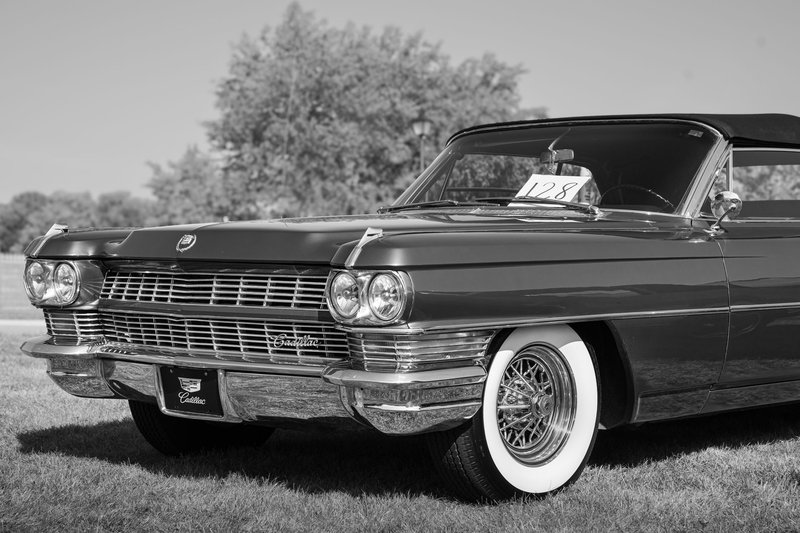
American manufacturers spent 1956 proving that more chrome, more fin, and more push-buttons sold cars. They were right.
Chevrolet Bel Air
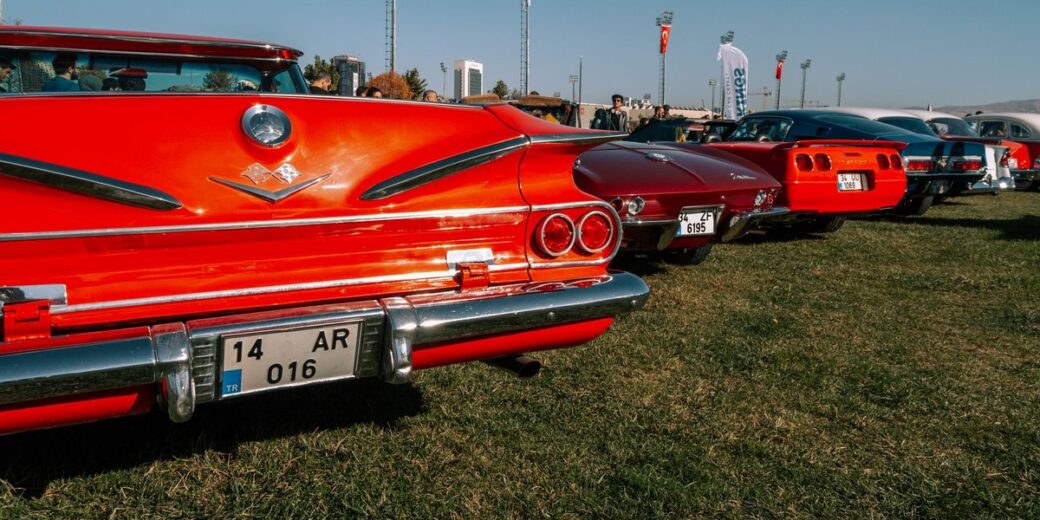
The ’56 Bel Air is the car most people picture when they hear “1956 classic.” Chevrolet offered a 235.5 cubic-inch inline-six making 140 horsepower for buyers who wanted a sedan, and a 265 cubic-inch V8 for buyers who didn’t. The V8 started at 162 horsepower in the base “Turbo-Fire” tune, but Chevrolet kept turning the dial — a 205-horsepower “Super Turbo-Fire” arrived at launch, and by January 1956 a dual-carburetor version borrowed straight from the Corvette pushed 225 horses through a two-door frame that started around $2,022 and topped out near $2,700 for a Sport Coupe. A three-speed manual was standard; a two-speed Powerglide automatic was the option most people actually checked.
Ford Thunderbird
Ford’s answer to the Bel Air wasn’t really a competitor — the Thunderbird was priced at $3,151, roughly $450 more than the 1955 model, and aimed at buyers who wanted a personal car rather than a family one. The big mechanical news was a new 312 cubic-inch V8 making 215 horsepower with a four-barrel Holley carburetor, sold alongside a carryover 292 V8 at 193 horsepower for buyers who didn’t need the extra push. The detail that actually identifies a ’56 Thunderbird at a car show: the continental spare-tire kit on the rear bumper became standard this year and was dropped the very next model year, which makes 1956 the only Thunderbird vintage that wears it from the factory.
Cadillac Eldorado Seville and Biarritz
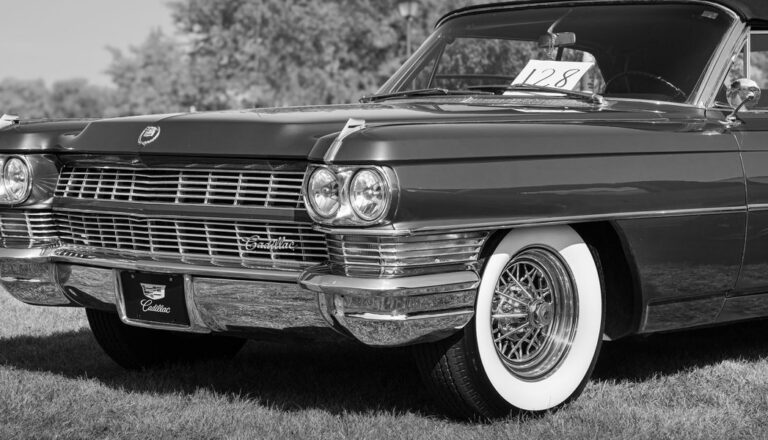
1956 is the year Cadillac split its flagship into two names — the two-door hardtop became the Eldorado Seville, and the convertible took the Eldorado Biarritz badge, both riding a rear end with fins prominent enough to look like a different car from the standard Series 62 underneath. Both versions carried a specially tuned 305-horsepower V8 fed by dual four-barrel carburetors, a real bump over the 285 horsepower in a regular Cadillac, and both were priced at $7,500 — serious money in 1956. The Seville coupe outsold the Biarritz convertible by nearly two to one, 3,900 units to 2,150.
Chrysler 300B
Chrysler’s contribution to 1956 wasn’t styling, it was a number: one horsepower per cubic inch, a benchmark no American production car had hit before. The 300B’s 354 cubic-inch Hemi made 340 horsepower in standard tune, and Chrysler offered a “race only” version rated at 355 — meaning the raw engine displacement and the horsepower figure crossed for the first time in a U.S. street car. It’s also the year Virgil Exner’s “Forward Look” styling language landed across every Chrysler brand, which is why Plymouths, Dodges, DeSotos, and Chryslers from this year all share the same aggressive fin language.
Europe’s Answer: Sports and Luxury Cars of 1956
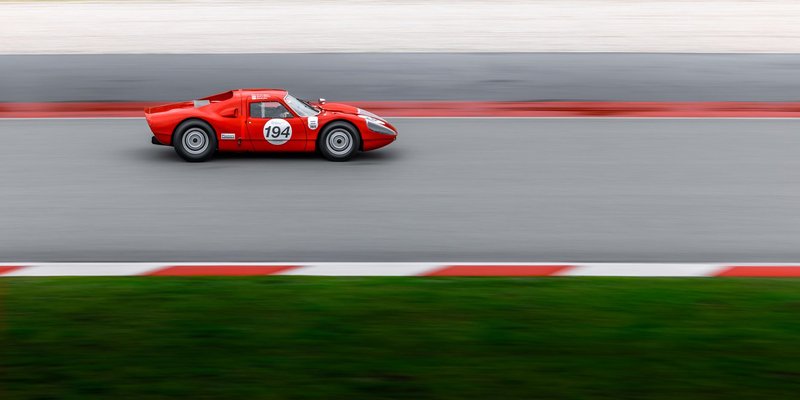
While Detroit chased chrome, European manufacturers were building the cars that would define what a sports car should be for the next two decades.
Porsche 356A
The 356A was the first Porsche to really separate itself from its VW Beetle ancestry — a stiffer body, a curved windshield instead of the split-glass unit, and a 1.6-liter flat-four making 59 horsepower at 4,500 rpm, enough for a top speed around 100 mph. Porsche built 4,201 examples in 1956 alone, and period prices ran from roughly $3,210 for a base coupe to $5,900 for the Speedster — a spread that tells you Porsche was already selling the same platform to two very different customers.
BMW 507
Max Hoffman, the importer who talked BMW into building the 507 in the first place, wanted it to sell for around $5,000 to compete with Mercedes’ 300SL. Production costs blew that number up: the 507 launched at $9,000 and climbed to $10,500 within its first year, a price BMW couldn’t actually recoup — the company lost money on every single one it built. The 3.2-liter V8 made 150 horsepower, enough for a factory-claimed 122 mph top speed, wrapped in aluminum bodywork that’s the reason surviving examples now sell for seven figures, establishing it as one of BMW’s most iconic models.
Ferrari 410 Superamerica
Unveiled at the 1956 Brussels Motor Show, the 410 Superamerica paired a 4.9-liter Lampredi V12 making 340 horsepower with Pinin Farina coachwork built in numbers so small — just twelve Series I coupes — that owning one was never really about the driving experience. It would hit nearly 150 mph, which was absurd for 1956, but the car’s real function was announcing that Ferrari had a customer base willing to pay for exclusivity as much as performance.
AC Ace-Bristol
The AC Ace had been around since 1953 with a wheezy AC-designed six under the hood. 1956 is the year AC started offering the Bristol-built 2-liter six instead, a pushrod engine with inclined valves that punched well above its displacement — some tuned examples cleared 130 horsepower at 5,750 rpm, enough to get the lightweight roadster into the nine-second bracket to 60 mph. The Bristol engine option cost 22% more than the standard car, and by the time Ace production ended in 1963, more than half the 723 cars built had taken the upgrade.
The Practical Side: Economy Cars of 1956
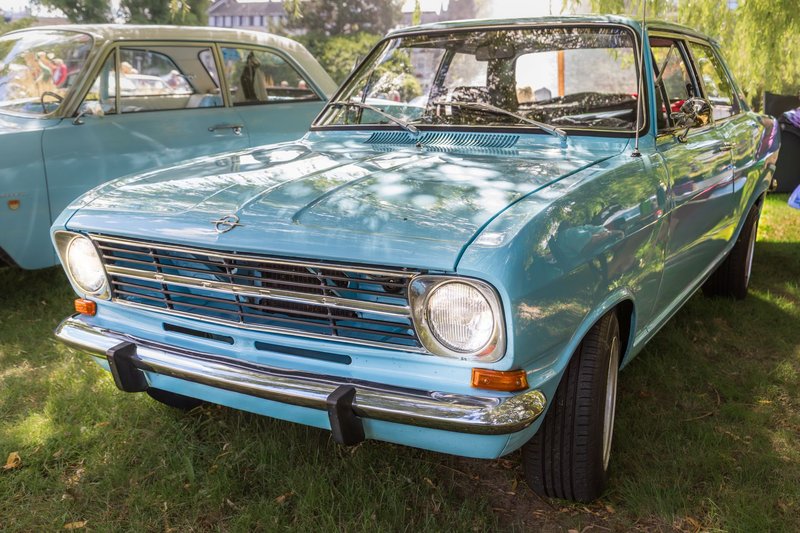
Not every significant 1956 car was chasing horsepower. Postwar Europe still needed cars ordinary families could actually afford.
Renault Dauphine
Renault unveiled the Dauphine to twenty thousand people at the Palais de Chaillot in March 1956, then took it straight to the New York Auto Show the following month — a signal Renault intended this small rear-engined sedan to sell well outside France. The numbers explain why it needed to be cheap to survive: an 845cc four-cylinder making just 27 horsepower, driving through a three-speed manual, in a car that weighed about 650 kg. It wasn’t fast. It was affordable, and it went on to become one of the best-selling French cars of its era.
Volvo Amazon
Volvo unveiled the Amazon at a press event in Stockholm’s Winter Palace in 1956, though production didn’t actually start until 1957 — worth knowing if you’re chasing an “original” example, since a true 1956-built Amazon doesn’t exist. What matters historically is who designed it: Jan Wilsgaard was 26 years old and building his first mass-production car around three principles — safety, comfort, and ease of maintenance — that would go on to define Volvo’s entire brand identity for the next sixty years.
Austin A35
The A35 replaced the Austin A30 in 1956 and swapped in a larger 948cc engine making 34 horsepower, along with a proper gearlever in place of the A30’s awkward shifter. A 1956 road test clocked the base two-door saloon at £554 including tax — genuinely cheap transportation, sold in saloon, estate, and delivery-van body styles, that stayed in production for the delivery variant all the way into 1968.
Why 1956 Actually Mattered
Two things happened in 1956 that had nothing to do with any single model and everything to do with how cars would be built and driven for decades afterward.
First, Chrysler put the automatic transmission control on the dashboard instead of the steering column. Every Chrysler-built brand — Plymouth, Dodge, DeSoto, Chrysler, Imperial — got push-button gear selectors mounted to the left of the wheel starting this year, a layout that lasted through 1964 before column and floor shifters won out for good. It’s the kind of detail that looks futuristic in period photos and slightly baffling to anyone trying to drive one for the first time.
Second, and with far more consequence: on June 29, 1956, President Eisenhower signed the Federal-Aid Highway Act, authorizing 41,000 miles of interstate highway and a funding mechanism — the Highway Trust Fund — that the federal government still uses today. Every one of the cars above was designed for a road network that, in mid-1956, mostly didn’t exist yet. The tailfins and the horsepower races that defined the year were, in a very literal sense, cars built ahead of the roads they’d eventually drive on.
What a 1956 Original Is Worth Today
This is where most “cars of 1956” articles stop — with the history and the specs. What they skip is whether any of this is still buyable, and at what price.
A 1956 Chevrolet Bel Air in good condition runs about $82,000 today; drop into a well-optioned convertible and Hagerty’s concours valuation climbs to $177,000, with the dual-quad version at $187,000. A handful of Bel Air convertibles have cleared six figures at auction in the past five years, including one that sold for $178,750 at Mecum’s Kissimmee sale. The Nomad wagon variant of the same platform commands even more — $126,000 at concours condition, ahead of the equivalent Bel Air coupe.
That’s the American end. The European sports cars from this list occupy a different tier entirely — Ferrari 410 Superamericas and surviving BMW 507s trade in the millions, priced more like art than transportation, largely because so few were built in the first place.
If you’re actually shopping rather than just admiring, the practical entry points are the cars nobody was chasing in 1956: a Renault Dauphine or Austin A35 in decent shape can still be found for a fraction of what a Bel Air commands, and they’re mechanically simple enough that a competent home mechanic can keep one running. It’s worth knowing, too, that the broader collector market has been rotating toward newer classics — money that used to chase 1950s American iron is increasingly going to 1980s and 1990s cars instead. That shift has, if anything, made genuinely good 1956 examples more attainable for buyers willing to go against the current trend rather than chase it.

Marco Delantero
More from Marco DelanteroHow we reviewed this article
This article was researched against manufacturer records and editorially reviewed before publishing. We accept no payment for coverage.