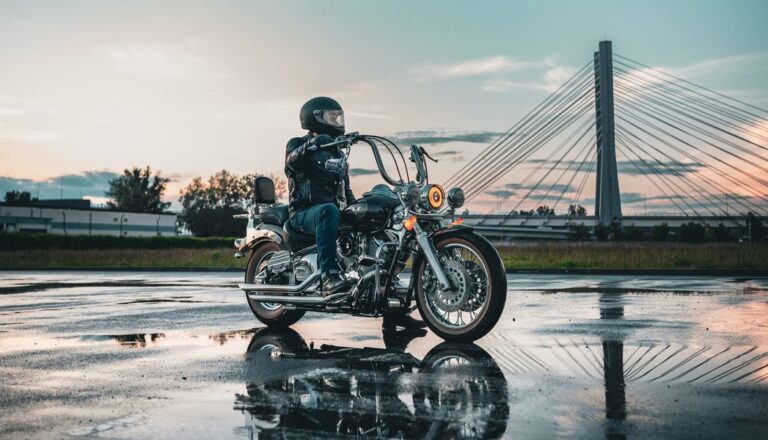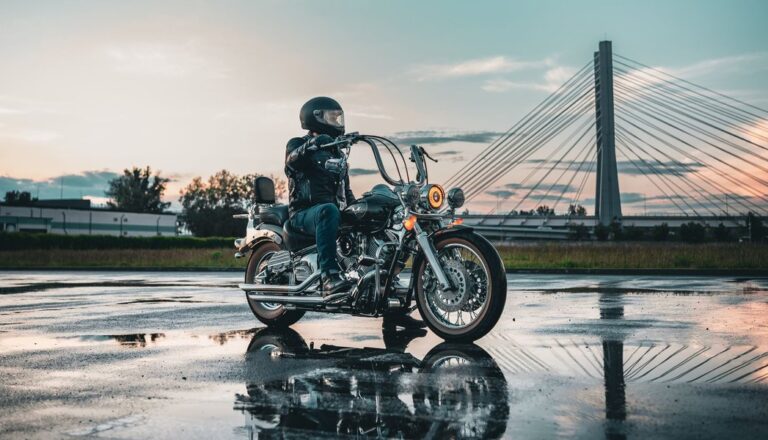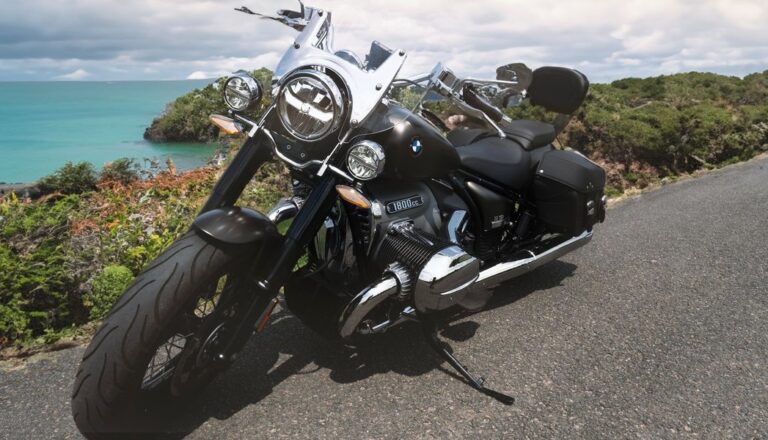
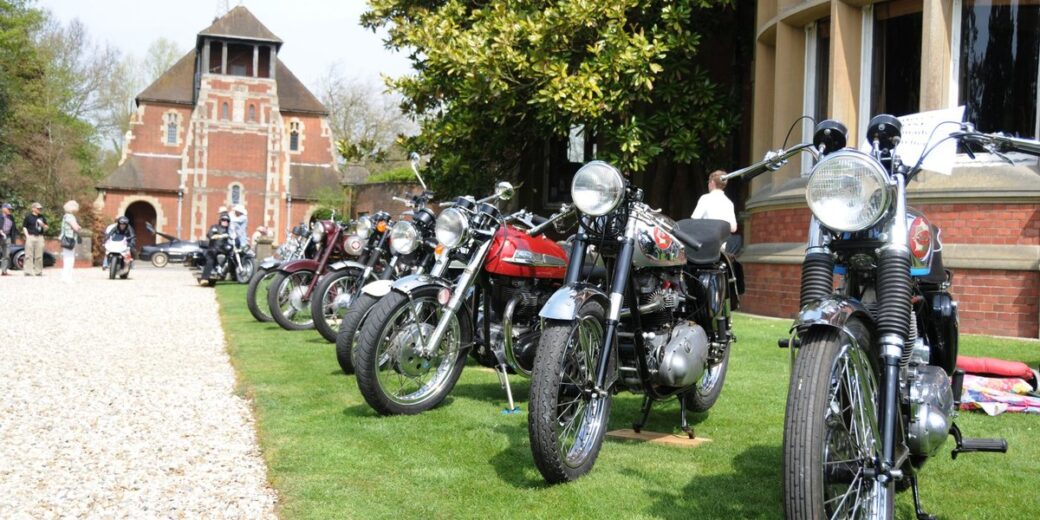
Harley-Davidson’s 1951 lineup spans three eras at once. The big twin was a 1948 design with hydraulic valve lifters and aluminum heads. The 45 flathead dated to 1937. The little two-stroke was a German design the company had picked up after the war. Nothing in the catalog was close to new, and the K-model that would modernize the middle of the range was still a year away.
That’s what makes the 1951 Harley-Davidson models worth sorting out. Wikipedia gives year ranges, and valuation sites give prices without explaining what you’re pricing. Here’s the full lineup in one place, with specs, a way to confirm a bike’s year, and values.
Contents
- 1951 Harley-Davidson models at a glance
- Big twins: the FL Hydra-Glide Panhead
- Flathead 45s: WL, WR and the WLA question
- The S-125 two-stroke
- The Servi-Car
- How to identify a 1951 Harley
- What a 1951 Harley-Davidson is worth
- How 1951 differs from 1950 and 1952
1951 Harley-Davidson models at a glance
| Model | Engine | Displacement | Role |
|---|---|---|---|
| FL Hydra-Glide (Panhead) | OHV V-twin | 74 ci (1,208 cc) | Flagship touring bike, also sold as a police bike |
| WL | Side-valve (flathead) V-twin | 45 ci (739 cc) | Mid-size road bike |
| WR | Side-valve V-twin | 45 ci (739 cc) | Flat-track racer |
| S-125 | Two-stroke single | 123 cc (7.5 ci) | Lightweight entry bike |
| Servi-Car | Side-valve V-twin | 45 ci (739 cc) | Three-wheeled utility trike |
The WLA, the military version of the 45, appears in many “1951” lists but wasn’t a 1951 production bike. More on that below.
Big twins: the FL Hydra-Glide Panhead
The FL was the top of the range. It’s a Panhead, named for the rocker covers that look like inverted cooking pans, and it carried the telescopic “Hydra-Glide” front fork that replaced the old springer on the big twins in 1949. The displacement is 74 cubic inches (the bore and stroke work out to about 73.7), which is 1,208 cc.
| Spec | 1951 FL |
|---|---|
| Engine | OHV V-twin, hydraulic lifters, aluminum heads |
| Displacement | 74 ci (1,208 cc) |
| Transmission | 4-speed, tank-mounted hand shift with foot clutch |
| Front suspension | Hydra-Glide telescopic fork |
| Rear suspension | Rigid (hardtail) |
| Brakes | Drum, front and rear |
The rear end matters if you’re picturing the bike. A swingarm didn’t arrive on the big twin until the Duo-Glide in 1958, so a 1951 FL is hydraulic up front and rigid in back. The seat sits on a sprung post to make up for it.
Reported 1951 changes are small: the Linkert M-74B carburetor, and the end of the low-compression versions, which left the high-compression FL as the standard big twin. Both come from secondary sources. Check them against Harley-Davidson Museum material or a factory parts book before you quote them on a restoration. The Harley-Davidson Museum is the place to start.
Production was small by later standards. One history of the period puts 1951 output of overhead-valve V-twins at 8,303 bikes, in a market where British Triumphs were starting to take sales from Milwaukee.
The Police Special
Police departments were a core customer for the big twin, and Harley sold a police-equipped FL: siren, windshield, saddlebags and the heavy-duty fittings that went with them. You’ll see model codes such as FLE in listings, and sources disagree on exactly what the extra letter meant for 1951. Go by the engine stamp and the factory documentation, not the listing.
Flathead 45s: WL, WR and the WLA question
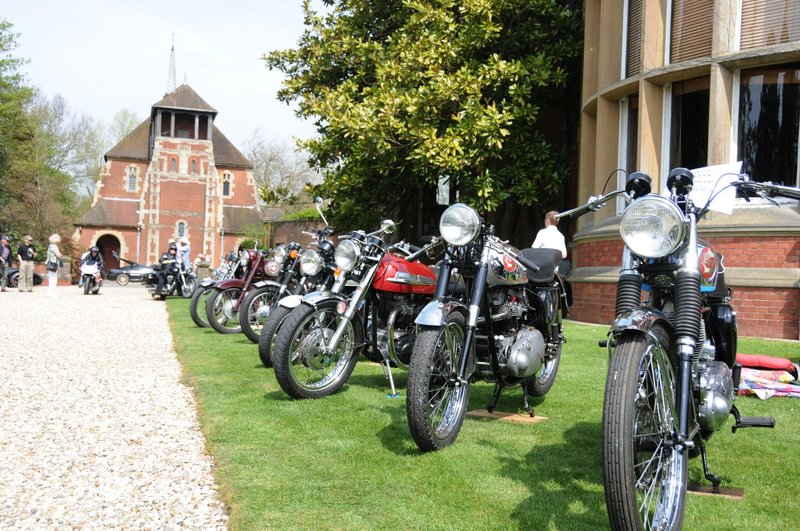
The WL was the practical Harley. A 45-cubic-inch side-valve V-twin (739 cc), a three-speed gearbox, and the same foot-clutch and hand-shift arrangement as the big twin. It stayed on a springer front fork in 1951, which makes it one of the last new Harleys you could buy with one. It was cheaper than the FL, simpler to work on, and slower.
| Spec | 1951 WL |
|---|---|
| Engine | Side-valve V-twin |
| Displacement | 45 ci (739 cc) |
| Transmission | 3-speed, hand shift with foot clutch |
| Front suspension | Springer fork |
| Rear suspension | Rigid |
| Brakes | Drum, front and rear |
The WR racer
The WR was the factory’s amateur racing version of the 45, the bike Class C flat-track riders bought to compete. It’s a stripped WL-based engine with racing cams and no road equipment, built in small numbers, and almost never offered for sale. If one turns up with documents, it’s priced individually.
The WLA is not a 1951 bike
The WLA was the military 45 that Harley built by the tens of thousands for the Allies in World War II. Production for the war ended in 1945. A “1951 WLA” is a surplus bike, often civilianized, not a bike built in 1951. If a seller lists one as a 1951 model, ask for the engine number. The year prefix will tell you.
The S-125 two-stroke
Harley’s smallest bike was a 123 cc two-stroke single, built from 1948 on a design taken from the German DKW RT 125 after the war. It was a cheap way into the brand, a commuter and first bike, and was nothing like the rest of the catalog. The S-125 ran through 1952 and was followed by the ST and the Hummer.
| Spec | 1951 S-125 |
|---|---|
| Engine | Air-cooled two-stroke single |
| Displacement | 123 cc (7.5 ci) |
| Transmission | 3-speed |
| Front suspension | Telescopic fork |
| Rear suspension | Rigid |
| Brakes | Drum, front and rear |
Collectors treat it as a curiosity rather than a rival to the V-twins, and prices reflect that.
The Servi-Car
The Servi-Car is a three-wheeled Harley with a rear cargo box and a 45 flathead V-twin, and it’s the longest-running model in this lineup. It was introduced in 1932 and sold through 1973. Police used it for parking enforcement, and garages used it to pick up customers’ cars: the rider towed a car with the trike’s rear hitch, so the rider could bring the car back.
The gearbox is a three-speed with a reverse gear, which no other 1951 Harley has. There’s no hand shift lever on the tank to confuse you. The rear axle is a differential, so the bike steers like a tricycle and leans like nothing at all.
| Spec | 1951 Servi-Car |
|---|---|
| Engine | Side-valve V-twin |
| Displacement | 45 ci (739 cc) |
| Transmission | 3-speed with reverse |
| Layout | Three wheels, rear differential and cargo box |
| Brakes | Drum |
How to identify a 1951 Harley
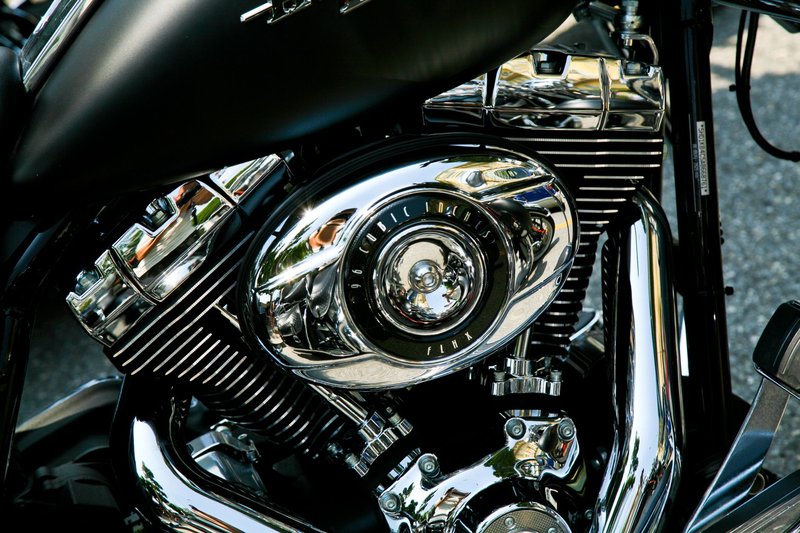
Harley didn’t use 17-character VINs until 1970. Before that, the identifier is the engine number, stamped on the left crankcase. A 1951 big twin reads like this: 51FL8745.
- 51 is the model year.
- FL is the model code.
- The rest is the serial number.
A Hagerty past-sales listing for a 1951 FL uses exactly this format, so you can use it as a template. What to check:
- The year prefix should be 51, and the model letters should match the bike in front of you. A 74 ci twin stamped “WL” is a problem.
- The frame number should normally match the engine number. Mismatches mean a replaced engine or frame, which is common on bikes that have been ridden for 70 years, and it affects value.
- The bike’s features should fit the stamp: a Hydra-Glide fork on an FL, a springer on a WL, reverse gear on a Servi-Car.
Original engine numbers sometimes got ground off and re-stamped. If the digits look uneven or the metal around them looks worked, ask for paperwork.
What a 1951 Harley-Davidson is worth
Values depend heavily on condition and originality. These ranges are approximate US market figures for complete, matching-number bikes. Check recent sales for the specific bike before you pay or price anything.
| Model | Fair (runs, needs work) | Good (driver) | Excellent (restored or original) |
|---|---|---|---|
| FL Hydra-Glide | $12,000 to $18,000 | $20,000 to $30,000 | $35,000 to $50,000 |
| WL 45 | $6,000 to $9,000 | $10,000 to $15,000 | $18,000 to $25,000 |
| Servi-Car | $6,000 to $9,000 | $10,000 to $15,000 | $18,000 to $28,000 |
| S-125 | $1,500 to $3,000 | $3,000 to $5,000 | $6,000 to $9,000 |
Police Specials and WR racers with documented history sit above these. Bikes with non-original paint, replacement engines or a 1951 label that doesn’t match the stamp sit below.
The FL gets the most attention because the Panhead is the most collectible engine of the era, but the WL is easier to buy and keep running. Parts are still available for both.
How 1951 differs from 1950 and 1952
Little changed between 1950 and 1951. The big twin had already moved to the Hydra-Glide fork in 1949, so the 1951 FL looks like its predecessor. What separates the years is detail: the carburetor and the engine compression options mentioned above.
1952 is the break. Harley introduced the K model that year, a 45 with a unit-construction engine, a foot shift and a rear swingarm. The old WL ended, and the Panhead became available with a foot-shift option. So 1951 is the last year of the 1930s-style Harley as the mainstream mid-size bike, the final year before the 45 went modern.
For the company’s wider history, Britannica’s overview of Harley-Davidson gives the context around this period.

Sarah Thornton
More from Sarah ThorntonHow we reviewed this article
This article was researched against manufacturer records and editorially reviewed before publishing. We accept no payment for coverage. Some guides contain affiliate links; see our affiliate disclosure.