Harley-Davidson sold roughly 40 distinct models in the 2019 model year, spread across six families: Street, Sportster, Softail, Touring, Trike and CVO. Most of the launch coverage from 2018 was organized around what was new. This guide covers the whole lineup, what each bike costs, what each is for, and which ones are worth buying used today.
Table of Contents
- What changed for 2019
- 2019 Harley-Davidson lineup at a glance
- Milwaukee-Eight 107 vs 114 vs 117
- Street models
- Sportster models
- Softail models
- The FXDR 114
- Touring models
- The Boom! Box GTS system
- Trikes
- CVO models
- Buying a 2019 Harley-Davidson used
What changed for 2019
The big mechanical change had already happened. For 2018, Harley rebuilt the Softail line around a new frame and the Milwaukee-Eight engine, and the Dyna family was folded into it. The 2019 model year built on that.
Here’s what was new:
- FXDR 114. A drag-inspired power cruiser on the Softail platform, and the only truly new model in the standard lineup.
- Wider use of the 114. More Softail and Touring models got the larger Milwaukee-Eight 114 engine.
- Boom! Box GTS. A new touchscreen infotainment system for Touring and CVO bikes.
- Three CVO bikes. The CVO Limited, CVO Street Glide and CVO Road Glide, all on the 117 engine.
- Trike updates. The Freewheeler and Tri Glide Ultra carried over with revised features.
The Street and Sportster lines were essentially carryover. The Sportster in particular was the last of the old Evolution-engine generation before the Revolution Max-powered Sportster S arrived in 2021. For the wider 2019 market, 10 Best Motorcycles of 2019 collects reviews of the year’s standout bikes.
2019 Harley-Davidson lineup at a glance
Prices below are approximate US base MSRPs, rounded. Paint upcharges, ABS and dealer fees moved the real number. Torque figures are Harley’s claimed numbers, also rounded.
| Family | Models | Engine | Approx. MSRP | Best for |
|---|---|---|---|---|
| Street | Street 500, Street 750, Street Rod | 494cc to 749cc Revolution X, liquid-cooled | $7,000 to $9,500 | New riders, city riding |
| Sportster | Iron 883, SuperLow, Forty-Eight, Iron 1200, 1200 Custom, Roadster | 883cc or 1,202cc Evolution | $9,000 to $12,500 | Classic looks on a budget |
| Softail | Street Bob, Low Rider, Slim, Sport Glide, Deluxe, Fat Bob, Fat Boy, Heritage Classic, Breakout, FXDR 114 | Milwaukee-Eight 107 or 114 | $15,000 to $22,000 | Everyday cruising, customizing |
| Touring | Road King, Road King Special, Street Glide, Street Glide Special, Road Glide, Road Glide Special, Road Glide Ultra, Electra Glide Ultra Classic, Ultra Limited, Ultra Limited Low | Milwaukee-Eight 107 or 114 | $19,500 to $30,000 | Long distance, two-up riding |
| Trike | Freewheeler, Tri Glide Ultra | Milwaukee-Eight 114 | $28,000 to $34,000 | Riders who want three wheels |
| CVO | CVO Limited, CVO Street Glide, CVO Road Glide | Milwaukee-Eight 117 | $40,000 to $45,000 | Collectors, buyers who want everything |
Special paint variants and limited editions aren’t listed separately.
Milwaukee-Eight 107 vs 114 vs 117
The news articles from 2018 mention all three engines and never explain how they differ. They’re the same engine at three displacements. The name comes from four valves per cylinder across two cylinders, eight in total. The engine first replaced the Twin Cam in Harley’s big touring bikes in 2017, a switch explained in the 2017 Harley-Davidson lineup guide.
| Engine | Displacement | Claimed torque | Where you find it |
|---|---|---|---|
| Milwaukee-Eight 107 | 1,745cc | About 109 to 111 ft-lb | Base Softails, Road King, Street Glide, Road Glide |
| Milwaukee-Eight 114 | 1,868cc | About 119 to 121 ft-lb | Fat Boy, Breakout, FXDR, upper Touring models, trikes |
| Milwaukee-Eight 117 | 1,923cc | About 126 ft-lb | CVO models only |
The jump from 107 to 114 is about 10 ft-lb, which you’ll notice when passing on a highway with a passenger and luggage. The jump from 114 to 117 is smaller than the price difference suggests. If you’re picking between engines, the 107 is plenty for most riders. Choose the 114 if you ride two-up or carry gear. The 117 is a CVO feature, and you pay for the whole CVO package to get it.
Street models
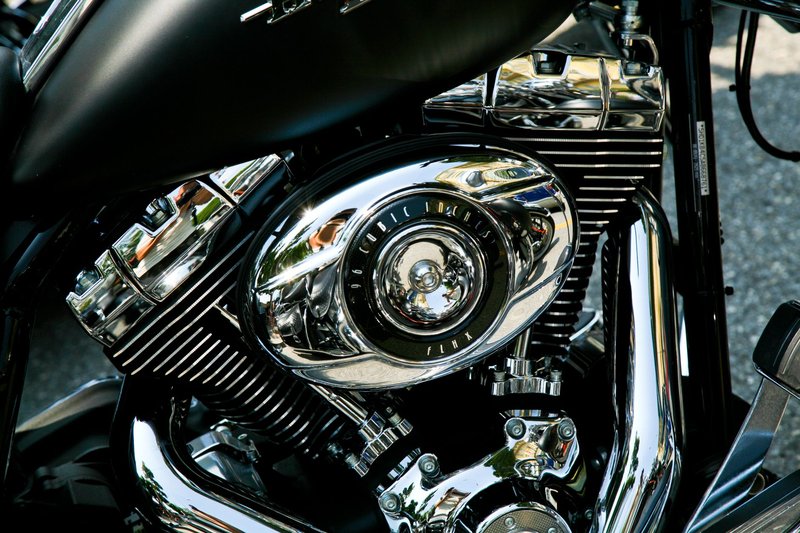
The Street family was Harley’s attempt at a lighter, cheaper bike for new riders. All three use the liquid-cooled Revolution X V-twin, which has nothing in common with the big air-cooled engines.
| Model | Engine | Claimed torque | Approx. MSRP | Who it’s for |
|---|---|---|---|---|
| Street 500 | 494cc | About 32 ft-lb | $7,000 | First-time riders, commuters |
| Street 750 | 749cc | About 43 ft-lb | $7,500 | Riders who want more highway room |
| Street Rod | 749cc (high output) | About 47 ft-lb | $9,500 | Riders who want a sportier, forward-leaning bike |
The Street Rod is the one that stands apart. It has a more aggressive riding position, a different frame geometry and a more eager engine. If you’re a new rider, a Motorcycle Safety Foundation course is a better first purchase than any of these bikes, and then the Street 500 or 750 makes sense.
Sportster models
The Sportster is Harley’s oldest model line, and the 2019 versions still use the air-cooled, rubber-mounted Evolution engine. Torque is about 53 ft-lb for the 883cc models and about 73 ft-lb for the 1,202cc models.
| Model | Engine | Approx. MSRP | Who it’s for |
|---|---|---|---|
| Iron 883 | 883cc | $9,500 | Riders who want a blacked-out bobber look for the least money |
| SuperLow | 883cc | $9,000 | Shorter riders, low seat height |
| Forty-Eight | 1,202cc | $11,500 | Fat-tire peanut-tank styling |
| Iron 1200 | 1,202cc | $11,500 | The same bike as the Iron 883 with more power |
| 1200 Custom | 1,202cc | $12,000 | Chrome and a 21-inch front wheel |
| Roadster | 1,202cc | $12,000 | Sportier suspension and a faster-handling Sportster |
The Roadster is the best-handling Sportster of the group. Its suspension is firmer than the other models, which makes it the one to pick if you care about corners.
Softail models
The Softail family is the center of the 2019 lineup. All of them use the 2018-generation frame, which hides a single rear shock under the seat and is stiffer than the old design. They also share the Milwaukee-Eight engine.
| Model | Engine | Claimed torque | Approx. MSRP | Who it’s for |
|---|---|---|---|---|
| Street Bob | 107 | About 109 ft-lb | $15,000 | Stripped-down mini-ape bars, the base bobber |
| Low Rider | 107 | About 109 ft-lb | $15,500 | Easy handling with a classic look |
| Slim | 107 | About 109 ft-lb | $16,000 | Retro 1950s styling |
| Sport Glide | 107 | About 109 ft-lb | $17,000 | Bags and a fairing without the Touring weight |
| Deluxe | 107 | About 109 ft-lb | $18,500 | Whitewall tires, chrome, vintage looks |
| Fat Bob | 107 or 114 | About 109 or 119 ft-lb | $18,500 and up | Aggressive style, fat front tire |
| Heritage Classic | 107 or 114 | About 109 or 119 ft-lb | $19,500 and up | Leather bags, windshield, retro tourer |
| Fat Boy | 114 | About 119 ft-lb | $20,000 | The solid-disc-wheel icon |
| Breakout | 114 | About 119 ft-lb | $21,000 | A long, low drag-style cruiser |
The Street Bob and Low Rider are the best used values in the family. They’re simple, they take aftermarket parts well, and they’re the ones with the most owners to share advice with. The Fat Bob is the sportiest of the group. The Heritage Classic is the one to pick if you want to tour on a Softail without buying a full Touring bike.
The FXDR 114
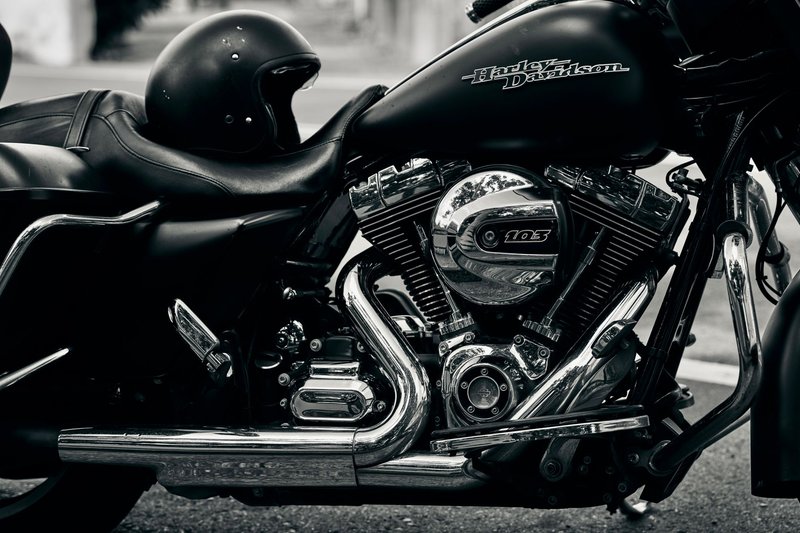
The FXDR 114 was the news story of the 2019 lineup. It sits on the Softail platform but looks nothing like the rest of the family. It has a lightweight aluminum swingarm and subframe, a fat 240mm rear tire and a stretched, low stance that Harley said was inspired by drag racing. The name nods to the old Dyna FXDR from the 1990s.
| Spec | FXDR 114 |
|---|---|
| Engine | Milwaukee-Eight 114 |
| Claimed torque | About 119 ft-lb |
| Approx. MSRP | $22,000 |
| Who it’s for | Riders who want a power cruiser and don’t mind a stretched-out riding position |
It was a divisive bike. It looked and rode differently from every other Harley, and the stretched position isn’t for everyone. That also makes it one of the more distinctive 2019 bikes on the used market.
Touring models
Touring bikes are what most people picture when they think of Harley-Davidson: big fairings, saddlebags and a long-distance seat. For 2019, the upper-tier models used the 114 engine and the base models stayed on the 107.
| Model | Engine | Approx. MSRP | Who it’s for |
|---|---|---|---|
| Road King | 107 | $19,500 | Riders who want a windshield and bags, with no fairing |
| Road King Special | 107 | $21,500 | The Road King with blacked-out styling and upgraded wheels |
| Street Glide | 107 | $22,000 | Riders who want the batwing fairing, a lower price |
| Street Glide Special | 114 | $25,500 | The fairing, bags, bigger engine and touchscreen |
| Road Glide | 107 | $24,000 | Riders who want the frame-mounted shark-nose fairing |
| Road Glide Special | 114 | $27,500 | The Road Glide with the bigger engine and touchscreen |
| Road Glide Ultra | 114 | $28,500 | Long-distance riders carrying a passenger |
| Electra Glide Ultra Classic | 107 | $24,000 | Classic tourer with a trunk and a passenger backrest |
| Ultra Limited | 114 | $29,500 | The flagship, with a full comfort package |
| Ultra Limited Low | 114 | $29,000 | The Ultra Limited with lower suspension for shorter riders |
The key difference between the Street Glide and Road Glide is the fairing. The Street Glide’s fairing mounts to the fork and turns with the bars. The Road Glide’s is bolted to the frame and stays put, which makes it more stable at highway speed. Harley sells both with the same bags and similar comfort, so the choice is mostly about looks and the feel of the steering.
The Boom! Box GTS system
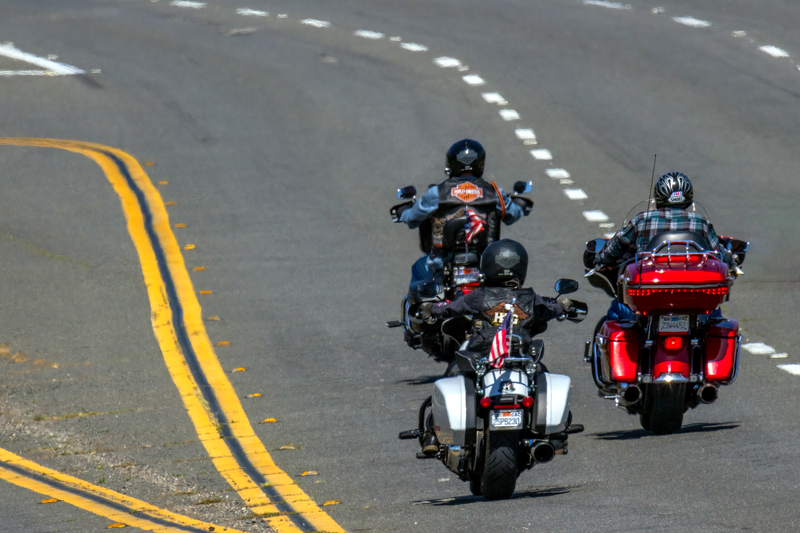
The Boom! Box GTS was the biggest feature change on the 2019 Touring bikes. It’s a 6.5-inch touchscreen infotainment system that works with gloves, and it handles navigation, phone pairing and audio. It was available on select Touring models and came with the CVO bikes.
If you’re shopping used, check that the screen responds cleanly and that the phone pairs properly. Software and hardware on these systems can age differently from the rest of the bike. Bikes with the older Boom! Box 6.5GT or 4.3 radios work fine too, but they have fewer features.
Trikes
Harley’s 2019 trike lineup had two models, both with the 114 engine.
| Model | Engine | Approx. MSRP | Who it’s for |
|---|---|---|---|
| Freewheeler | 114 | $28,000 | Riders who want a lean-free trike with a rear storage compartment |
| Tri Glide Ultra | 114 | $34,000 | Long-distance trike riders who want a fairing and a trunk |
Trikes depreciate differently from two-wheelers. The buyer pool is smaller, so condition and mileage matter a lot.
CVO models
CVO stands for Custom Vehicle Operations, Harley’s factory-custom division. These are the only 2019 bikes with the Milwaukee-Eight 117, and they include premium paint, upgraded audio, special wheels and the Boom! Box GTS.
| Model | Engine | Claimed torque | Approx. MSRP | Who it’s for |
|---|---|---|---|---|
| CVO Street Glide | 117 | About 126 ft-lb | $40,000+ | Riders who want the fork-mounted fairing with every upgrade |
| CVO Road Glide | 117 | About 126 ft-lb | $40,000+ | Riders who want the frame-mounted fairing with every upgrade |
| CVO Limited | 117 | About 126 ft-lb | $44,000+ | Full touring comfort with a trunk and audio package |
CVO bikes are built in small numbers, which can help resale. They also carry the biggest depreciation hit in the first few years, so a used one can come at a large discount to the original price.
Buying a 2019 Harley-Davidson used
A 2019 Harley is now about seven years old. Most of the depreciation is behind it. These are ballpark used prices for clean examples with average mileage. Mileage, condition and accessories can move them by thousands.
| Bike | Typical used price |
|---|---|
| Street 500 / 750 | $3,500 to $5,500 |
| Sportster 883 / 1200 | $5,500 to $9,000 |
| Street Bob, Low Rider, Slim | $10,000 to $13,500 |
| Fat Boy, Fat Bob, Breakout | $11,500 to $15,000 |
| FXDR 114 | $12,000 to $16,000 |
| Road King, Street Glide | $13,000 to $18,000 |
| Road Glide Special, Ultra Limited | $15,000 to $22,000 |
| CVO models | $22,000 to $32,000 |
What to check before you buy
- Recalls. Run the VIN through NHTSA’s recall lookup and ask the seller for proof that open recalls were done.
- Engine heat. Milwaukee-Eight bikes, especially the 114 in traffic, run hot on the rider’s right leg. Take a test ride in stop-and-go conditions before you commit.
- Infotainment. On GTS-equipped bikes, test the touchscreen, Bluetooth and navigation.
- Modifications. Many 2019 bikes have had exhaust and air-cleaner changes. Ask whether the ECM was re-tuned to match. A bike with a Stage 1 upgrade and no tune runs lean.
- Service history. Look for oil changes and primary and transmission fluid service on schedule.
Which trims to look for
- For a first Harley: the Street Bob or Low Rider. They’re the best balance of price, simplicity and parts availability.
- For touring: the Street Glide Special or Road Glide Special. You get the 114 engine and the touchscreen for much less than an Ultra Limited.
- For the best value: a Sportster Iron 1200 or Roadster, if you don’t need a big-bike feel.
- For something different: the FXDR 114. Few were sold compared with other models, and it looks like nothing else on the road.
The best 2019 Harley-Davidson model depends on how you ride: pick the family that matches your use, then pick the engine size you need.

Sarah Thornton
More from Sarah ThorntonHow we reviewed this article
This article was researched against manufacturer records and editorially reviewed before publishing. We accept no payment for coverage. Some guides contain affiliate links; see our affiliate disclosure.