More units
This kW to hp converter turns kilowatts into horsepower as you type, along with metric horsepower (PS), bhp and watts. Enter the kW figure from a spec sheet, registration document or EV brochure and read the horsepower straight away. The gauge shows which real cars make that much power. For torque, wheel horsepower and every other unit, open the full horsepower converter.
How to convert kW to hp
1 kW = 1.341 hp. To convert kilowatts to horsepower, multiply the kW figure by 1.341. For example, 100 kW × 1.341 = 134.1 hp, and 150 kW × 1.341 = 201.2 hp.
The exact factor is 1.34102, because one mechanical horsepower is 745.69987 watts (NIST Special Publication 811). Dividing by 0.7457 gives the same answer as multiplying by 1.341.
| To get | Multiply kW by | 100 kW is |
|---|---|---|
| hp (mechanical, US) | 1.3410 | 134.1 hp |
| PS (metric, Europe) | 1.3596 | 136.0 PS |
| bhp | 1.3410 | 134.1 bhp |
| watts | 1,000 | 100,000 W |
kW to hp conversion table
Find your kW figure in the table. The most searched values are in bold.
| kW | hp | PS |
|---|---|---|
| 1 | 1.3 | 1.4 |
| 2 | 2.7 | 2.7 |
| 3 | 4.0 | 4.1 |
| 4 | 5.4 | 5.4 |
| 5 | 6.7 | 6.8 |
| 6 | 8.0 | 8.2 |
| 7 | 9.4 | 9.5 |
| 8 | 10.7 | 10.9 |
| 9 | 12.1 | 12.2 |
| 10 | 13.4 | 13.6 |
| 15 | 20.1 | 20.4 |
| 20 | 26.8 | 27.2 |
| 25 | 33.5 | 34.0 |
| 30 | 40.2 | 40.8 |
| 35 | 46.9 | 47.6 |
| 40 | 53.6 | 54.4 |
| 45 | 60.3 | 61.2 |
| 50 | 67.1 | 68.0 |
| 55 | 73.8 | 74.8 |
| 60 | 80.5 | 81.6 |
| 65 | 87.2 | 88.4 |
| 70 | 93.9 | 95.2 |
| 75 | 100.6 | 102.0 |
| 80 | 107.3 | 108.8 |
| 85 | 114.0 | 115.6 |
| 90 | 120.7 | 122.4 |
| 95 | 127.4 | 129.2 |
| 100 | 134.1 | 136.0 |
| 110 | 147.5 | 149.6 |
| 120 | 160.9 | 163.2 |
| 130 | 174.3 | 176.8 |
| 140 | 187.7 | 190.3 |
| 150 | 201.2 | 203.9 |
| 160 | 214.6 | 217.5 |
| 170 | 228.0 | 231.1 |
| 180 | 241.4 | 244.7 |
| 190 | 254.8 | 258.3 |
| 200 | 268.2 | 271.9 |
| 210 | 281.6 | 285.5 |
| 220 | 295.0 | 299.1 |
| 230 | 308.4 | 312.7 |
| 240 | 321.8 | 326.3 |
| 250 | 335.3 | 339.9 |
| 260 | 348.7 | 353.5 |
| 270 | 362.1 | 367.1 |
| 280 | 375.5 | 380.7 |
| 290 | 388.9 | 394.3 |
| 300 | 402.3 | 407.9 |
| 325 | 435.8 | 441.9 |
| 350 | 469.4 | 475.9 |
| 375 | 502.9 | 509.9 |
| 400 | 536.4 | 543.8 |
| 425 | 569.9 | 577.8 |
| 450 | 603.5 | 611.8 |
| 475 | 637.0 | 645.8 |
| 500 | 670.5 | 679.8 |
| 550 | 737.6 | 747.8 |
| 600 | 804.6 | 815.8 |
| 650 | 871.7 | 883.8 |
| 700 | 938.7 | 951.7 |
| 750 | 1,005.8 | 1,019.7 |
| 800 | 1,072.8 | 1,087.7 |
| 850 | 1,139.9 | 1,155.7 |
| 900 | 1,206.9 | 1,223.7 |
| 950 | 1,274.0 | 1,291.6 |
| 1,000 | 1,341.0 | 1,359.6 |
kW to hp or kW to PS?
It depends on where the other number comes from. US spec sheets use mechanical horsepower (hp), so multiply by 1.341. German and most European spec sheets give metric horsepower, written PS (or CV, ch or pk), so multiply by 1.36 instead. The two differ by 1.4%. A car listed at 150 kW is 201 hp in the US and 204 PS in Germany, with no change to the engine.
European spec sheets normally print both, as in “353 kW (480 PS)” for the 2025 Porsche 911 Carrera S. The US brochure for the same car says 473 hp. All three describe one engine.
Why car power is listed in kW
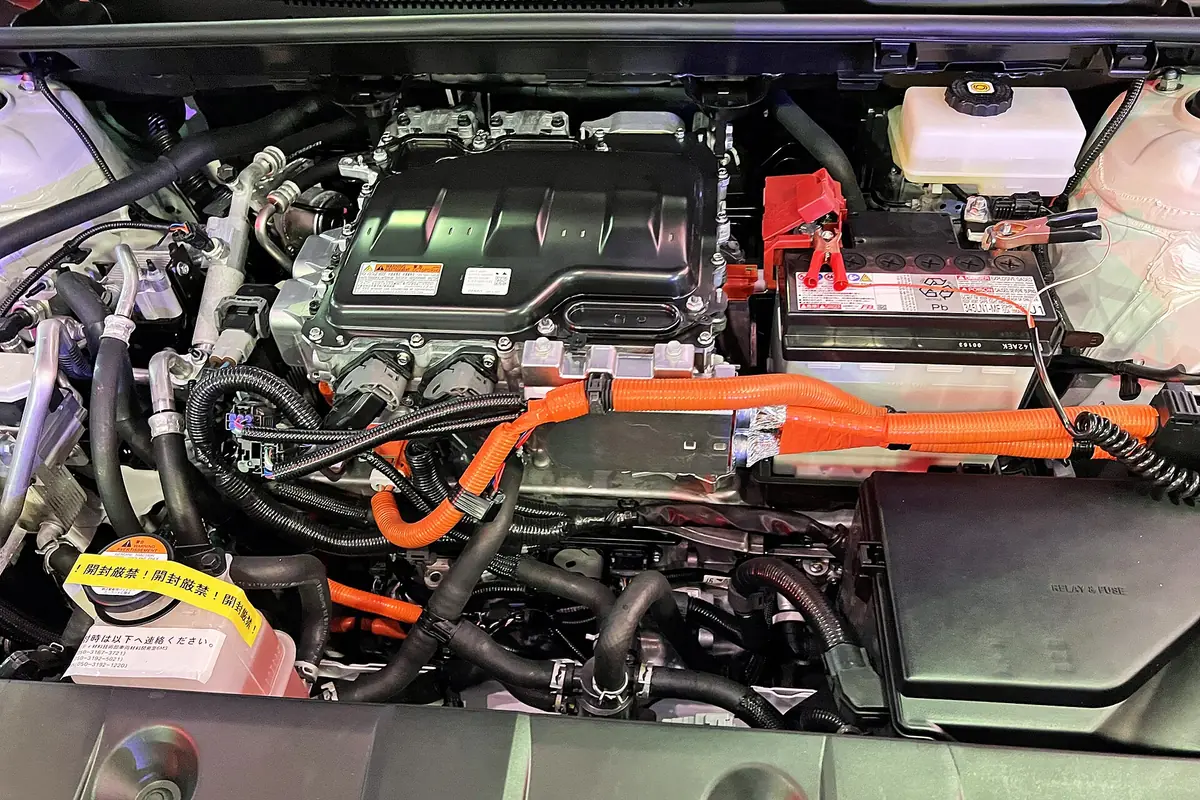
The kilowatt is the legal unit of power in the EU, so type approval papers, registration documents and insurance forms list engine power in kW. Horsepower survives in advertising. Electric cars are the other place kW shows up first, because an electric motor is rated the same way as any other electrical machine.
An EV’s kW figure is usually its peak power, which it can deliver for a few seconds. Two motors rated 150 kW each do not always add up to 300 kW for the whole car, because the battery may not supply both at full power at once. Use the system output figure when the maker gives one.
Do not confuse kW with kWh. A kilowatt (kW) is power, how fast energy is used. A kilowatt-hour (kWh) is energy, the amount stored in a battery. A 75 kWh battery and a 75 kW motor are different things, and only the motor’s kW converts to horsepower.
Other conversions
Use the hp to kW converter for the reverse direction. The horsepower converter also turns torque and rpm into horsepower and converts dyno wheel horsepower to crank horsepower. To see what a power figure means for acceleration, try the 0-60 calculator.
FAQ
How many hp is 1 kW?
1 kW is 1.341 horsepower, or 1.36 metric horsepower (PS).
How many hp is 100 kW?
100 kW is 134.1 hp, or 136.0 PS.
How many hp is 75 kW?
75 kW is 100.6 hp, or 102.0 PS.
How many hp is 200 kW?
200 kW is 268.2 hp, or 271.9 PS.
What is the formula for kW to hp?
hp = kW × 1.341. The exact factor is 1,000 ÷ 745.69987 = 1.34102.
How do you convert kW to bhp?
The same way as kW to hp: multiply by 1.341. Brake horsepower is horsepower measured at the crankshaft, so it uses the same unit.
How do you convert kW to PS?
Multiply kilowatts by 1.36. 100 kW is 136.0 PS. PS is metric horsepower, the unit on German and most European spec sheets.
Is kW the same as kWh?
No. kW measures power and kWh measures energy. An electric car’s motor is rated in kW and its battery in kWh. Only the kW figure converts to horsepower.
Why do EVs list power in kW?
Electric motors are electrical machines, and their power has always been rated in watts and kilowatts. The EU also requires kW on vehicle documents, so most makers lead with kW and add hp or PS for marketing.
Sources & References
- NIST Special Publication 811, Appendix B.8, conversion factors for power: https://www.nist.gov/pml/special-publication-811/nist-guide-si-appendix-b-conversion-factors/nist-guide-si-appendix-b8
- Porsche Newsroom, 911 Carrera S (Australia): https://newsroom.porsche.com/en_AU/2025/products/porsche-911-carrera-s-and-cabriolet-38344.html

James Kowalski
More from James KowalskiHow we reviewed this article
This article was researched against manufacturer records and editorially reviewed before publishing. We accept no payment for coverage. Some guides contain affiliate links; see our affiliate disclosure.