Key Takeaways
- Ear-type pinch clamps (Oetiker, crimp clamps) come off by cutting the ear with end nippers or side cutters.
- Cut ear clamps are single use: install a new clamp of the right size with ear clamp pincers.
- Spring clamps with two tabs open with hose clamp pliers and can be reused.
- Twist a stuck hose and use a hose pick; never pry against a plastic fitting.
Affiliate links: as an Amazon Associate we earn from qualifying purchases.
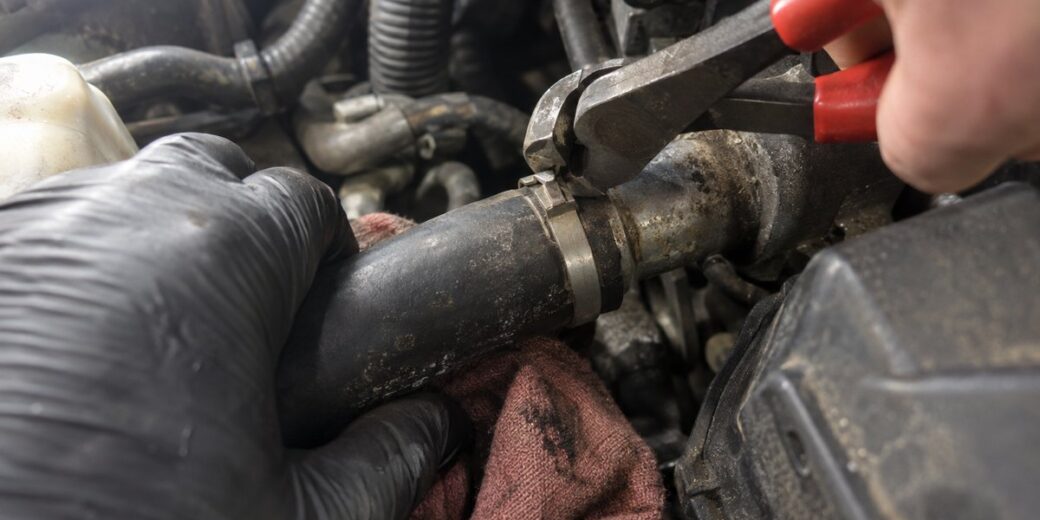
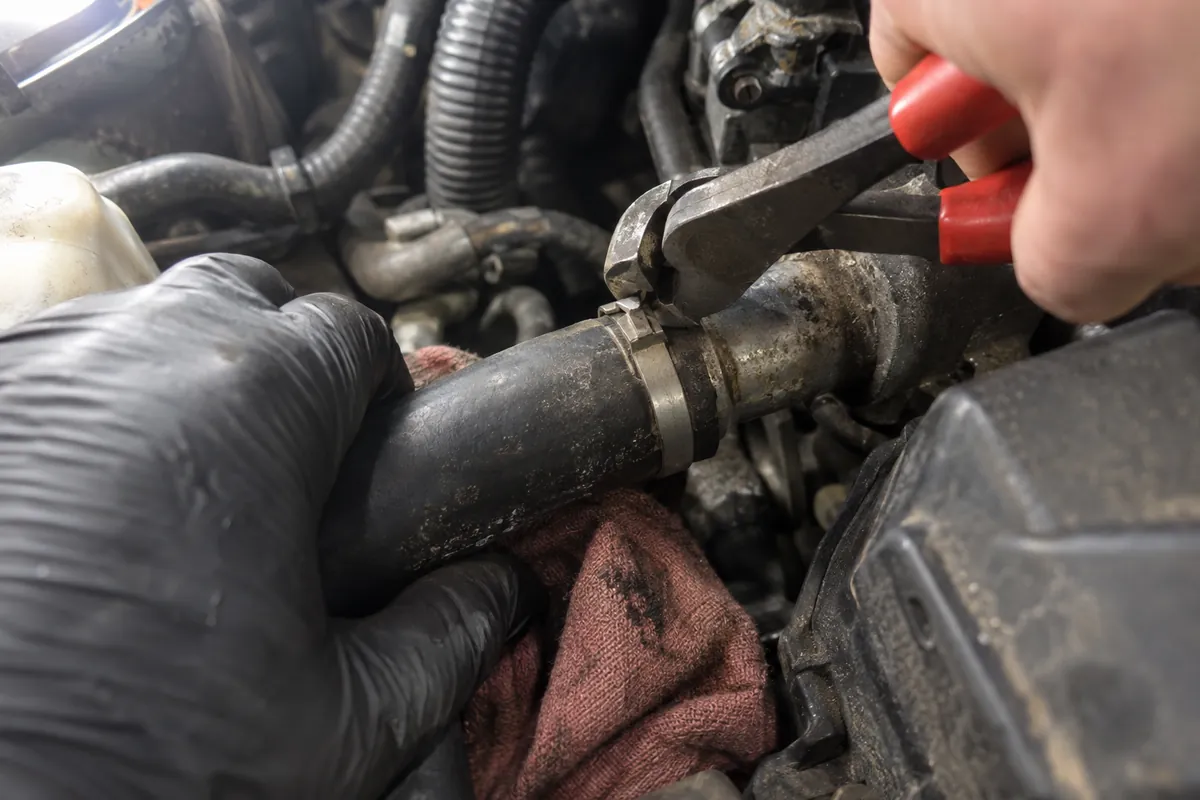
To remove a pinch hose clamp, cut through the raised ear with end-cutting nippers or diagonal cutters, peel the open band off the hose and throw it away. Ear-type pinch clamps (often sold as Oetiker or crimp clamps) are single use, so you install a new one with ear clamp pincers when you put the hose back. If your clamp has two tabs instead of an ear, it is a spring clamp: squeeze the tabs together with hose clamp pliers, slide the clamp back along the hose and reuse it.
I spent ten years in independent shops and dealer service bays, and pinch clamps came off almost every day: heater hoses, fuel lines on older imports, vacuum lines, PCV hoses and every CV boot job. The clamp itself takes ten seconds to remove. The time goes into the hose that will not come off the pipe afterward, or the plastic radiator neck someone cracked by prying. This guide covers both types of pinch clamp, the tools that make them easy, what to do without those tools and how to put a new clamp on so it seals.
Which type of pinch clamp do you have?
“Pinch clamp” gets used for two different parts, and they come off in opposite ways. Check yours before you grab a tool.
| Clamp | How to spot it | How to remove it | Reusable? |
|---|---|---|---|
| Single-ear clamp (Oetiker, crimp clamp) | Thin stainless band with one raised, squeezed “ear” sticking up | Cut the ear | No |
| Stepless ear clamp | Like a single-ear clamp, with a smooth inner surface and no gap under the ear | Cut the ear | No |
| Two-ear clamp | Two raised ears on a thicker band, common on older fuel lines | Cut one ear | No |
| Low-profile stepless clamp | Flat band with small hooks that lock into windows, no ear | Release the hooks with pincers | Yes |
| Spring clamp (wire or flat band) | Springy band or wire with two tabs that overlap | Squeeze the tabs, slide it off | Yes, if it still grips |
| PEX cinch clamp | Stainless ring with one ear on plastic water pipe | Cut or twist the ear | No |
Ear clamps are the ones most people mean by “pinch clamp”, because you install them by pinching the ear closed. They hold by deforming the metal, so there is nothing to loosen. Spring clamps are constant-tension clamps: the band wants to shrink, and the tabs are how you open it. Carmakers fit them to coolant hoses because they keep squeezing as the rubber expands and shrinks with engine heat.
What you need
A single cutting tool handles every ear clamp, and one pair of hose clamp pliers handles every spring clamp. Buy the pincers only if you plan to install new ear clamps, which you will if you cut one off.
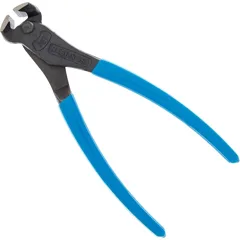 End-cutting nippers. The Channellock 357 is the tool I reach for first. The flat face of the jaws sits on top of the ear and cuts it straight across, so you never get the blade near the hose. Diagonal cutters work too, with less room for error.
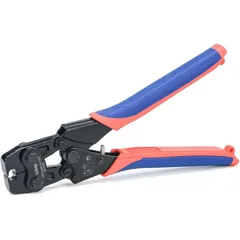 Clamp cutter. The iCrimp ICP-PC01 is a compound-action cutter sold for PEX cinch clamps that also takes ear clamps with an ear up to 13 mm wide. The compound action gives more force on thick two-ear clamps. Oetiker’s own HCC 2000 hand clamp cutter does the same job for genuine Oetiker clamps.
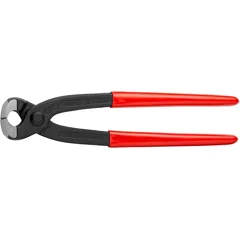 Ear clamp pincers. For installing the new clamp. The Knipex 10 98 i220 has a slim head that fits around CV boots and fuel lines and closes the ear without crushing its corners. The Oetiker 14100396 straight jaw pincer is the original pattern, and the AKIHISA 9-inch pliers work fine for a few jobs a year.
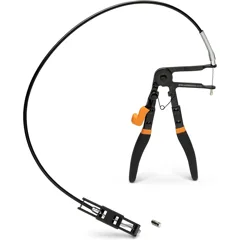 Hose clamp pliers. For spring clamps. Cable-type pliers like the GEARWRENCH 82115 let you squeeze a clamp you can barely see, such as the lower radiator hose or a heater hose against the firewall. The Astro 9409A locks shut so you can let go of the handles while you work the hose free.
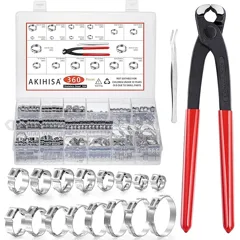 Replacement clamps. The AKIHISA 360-piece kit has 16 sizes of 304 stainless single-ear clamps from 5.3 to 36.1 mm, plus a pair of pincers. For CV boots, use the clamps that come in the boot kit.
Also useful: safety glasses (cut clamp ends fly), nitrile gloves, a small flat screwdriver, a hose pick, a rag and a drain pan if the hose carries coolant or fuel.
How to remove a pinch hose clamp
These steps cover single-ear, stepless and two-ear clamps, which all come off by cutting the ear. Spring clamps and PEX clamps have their own sections below.
1. Let the system cool and release the pressure
Never open a coolant hose on a hot engine: the system is under pressure and the coolant can be well above boiling. Wait until the radiator hose is cool to the touch, then drain the coolant below the level of the hose. On a fuel-injected car, relieve the fuel pressure before you cut a clamp on a fuel line, usually by pulling the fuel pump fuse or relay and running the engine until it stalls. Put a rag under the joint either way.
2. Find the ear and pick your angle
Rotate the hose a little if the ear faces away from you. A heater hose usually turns on its pipe even when it will not slide off. You want straight access to the top of the ear, because that is where you cut. If you can only reach it from the side, use diagonal cutters instead of end nippers.
3. Cut through the ear
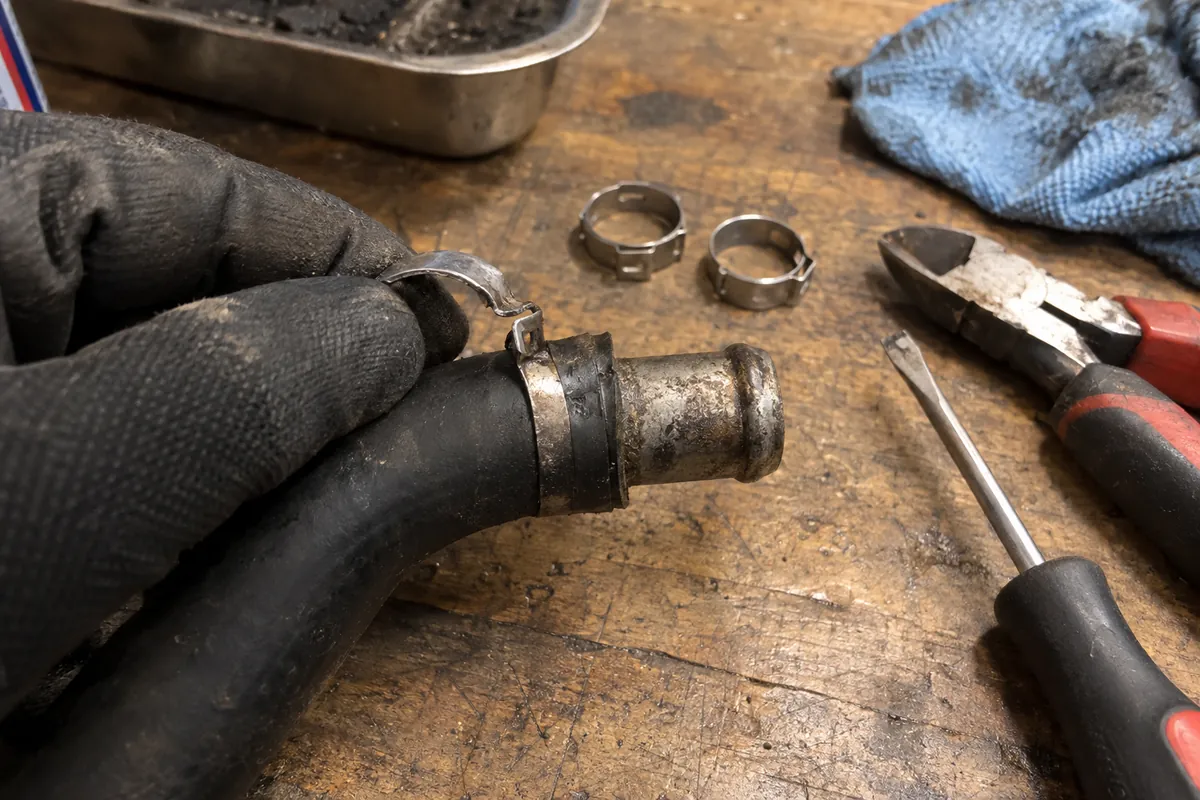
Set the jaws of the end nippers on top of the ear, across its width, and squeeze. The ear splits and the band relaxes with a small snap. With diagonal cutters, slide one jaw into the gap under the ear (or as close to the base as it fits) and cut through one leg of the ear. Keep the cutter pointed away from the hose so the blade never touches the rubber or a plastic fitting. Wear safety glasses: the cut ends can flick off.
If the cutter will not close on a thick clamp, rock the nippers back and forth while you squeeze. The ear fatigues and breaks after a few moves.
4. Peel the clamp off the hose
Slide a small flat screwdriver under one cut end and lift it away from the hose, then pull the band open with pliers and unwrap it. Do not pry against a plastic pipe or radiator neck. Throw the old clamp away so it does not go back on by mistake.
5. Break the hose loose from the fitting
Twist the hose on its pipe before you pull. Old rubber bonds to the metal, and a straight pull just stretches it. If it still will not move, slide a hose pick between the hose and the pipe and run it around the joint to break the bond. If you are replacing the hose anyway, slit the end lengthwise with a utility knife and peel it off, cutting only through the rubber and not into the barb.
6. Clean and check the fitting
Wipe the pipe or barb clean and look for scale, corrosion pits or a groove where the old clamp sat. On plastic fittings, check for cracks at the base. A damaged fitting leaks no matter what clamp you put on it. Check the hose end too: if it is hard, cracked or swollen, replace the hose.
7. Choose the right size replacement clamp
Ear clamps are sized by diameter, and each size covers only a few millimeters. Measure the outside diameter of the hose once it is pushed on the fitting, then pick the clamp whose range puts that number near the middle. A clamp that is too big closes fully and still leaves the hose loose. One that is too small will not fit over the hose.
8. Position the clamp and crimp the ear
Push the hose fully onto the fitting, past the barb or bead. Slide the new clamp over the hose so it sits behind the bead, a few millimeters in from the end of the hose. Put the pincer jaws around the base of the ear and squeeze until the ear closes completely and its legs touch. A half-closed ear is the most common reason a new ear clamp leaks.
9. Check for leaks
Refill the coolant or restore fuel pressure (turn the key to ON a few times on a fuel-injected car), then check the joint with a dry finger and a flashlight. Run a coolant system up to temperature and check again, because some leaks only show under pressure.
How to remove spring hose clamps
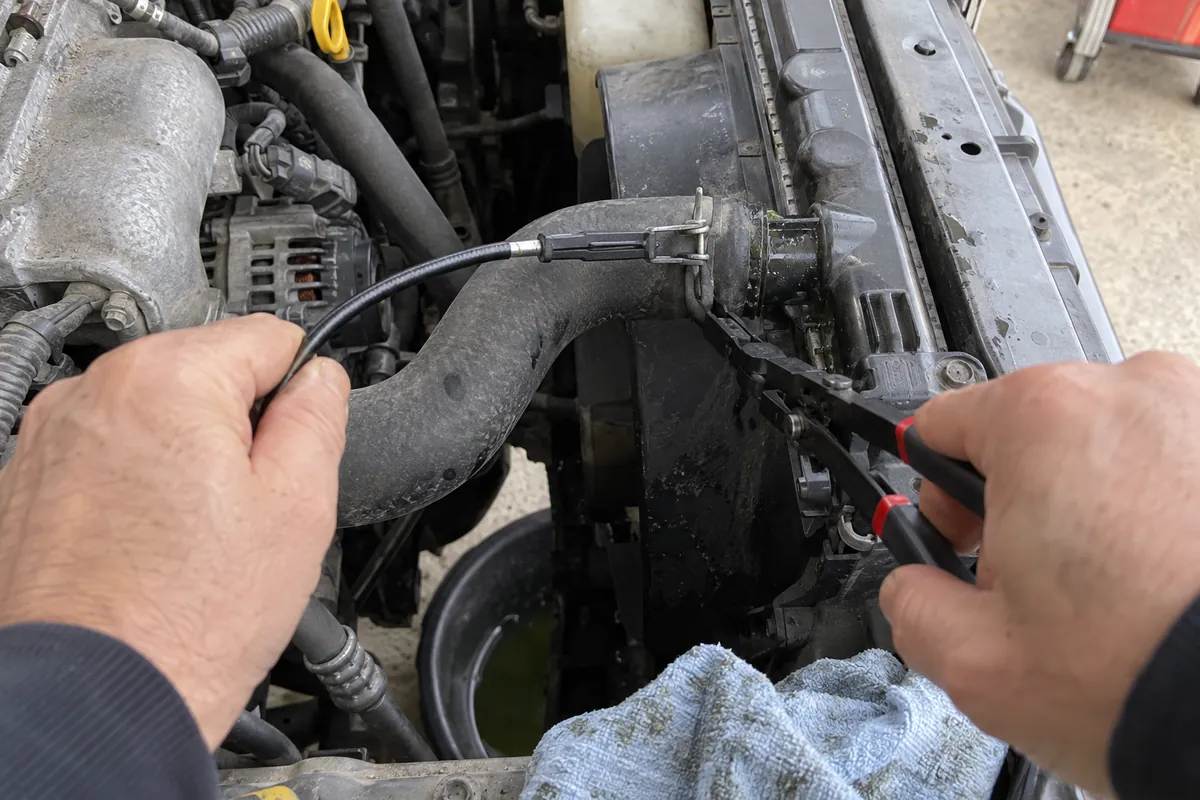
Spring clamps are the pinch clamps you squeeze to open. They are on most factory coolant, heater and vacuum hoses.
- Let the engine cool completely and drain the coolant below the hose.
- Rotate the clamp so the tabs face you. A short pair of slip-joint pliers can do this if the clamp is stuck.
- Grip both tabs with hose clamp pliers and squeeze until the band opens enough to slide. If the pliers lock, lock them now.
- Slide the clamp back along the hose, past the end of the fitting and a couple of inches farther, then release it there. Parking it on the hose keeps it out of the way and keeps it with the hose.
- Twist the hose free as in step 5 above.
- To reinstall, push the hose on, open the clamp with the pliers, slide it back over the joint just behind the bead and release it.
Regular slip-joint or groove-joint pliers open a wire spring clamp when you can reach it. The problem is holding it open while you slide it, which is why the locking and cable pliers exist. On flat-band clamps, regular pliers tend to slip off the tabs, so use pliers with grooved or swiveling jaws.
Reuse a spring clamp only if it still springs back tight and is not rusted through. If one is damaged, replace it with the same type and size. Do not swap in a worm-drive clamp on a coolant hose: a worm clamp holds a fixed diameter, and the joint can seep as the hose shrinks when it cools.
How to remove a pinch clamp without the special tool
You do not need a dedicated clamp tool to get an ear clamp off. Any of these work:
- Diagonal cutters (side cutters). Cut one leg of the ear at its base, as in step 3. This is how most people remove them.
- Two pairs of pliers. Grip the ear with needle-nose pliers and twist it back and forth. The metal fatigues and snaps after several twists. Slow, but it works where no cutter fits.
- Flat screwdriver. On a small clamp, push the tip into the folded seam on top of the ear and twist to spread it. This loosens the clamp enough to slide it off a metal pipe. It works best on small clamps.
- Rotary tool with a cut-off wheel. Cut through the ear, never the band, and only when the hose is being replaced. It is the last option because a slip cuts the hose.
To install a new ear clamp without pincers, you can close the ear with end nippers by squeezing gently from the sides of the ear, not across the top. Stop before the jaws bite. It takes practice, and it is easy to cut the clamp you just bought, so a set of pincers costs less than the hoses you risk.
For a spring clamp without hose clamp pliers, squeeze the tabs with slip-joint pliers, then hold the clamp open by clamping locking pliers across the tabs. Slide it back and release.
How to remove PEX pinch clamps
PEX plumbing uses stainless cinch clamps that look and work like single-ear hose clamps, and searches for “pinch clamp” turn them up too. They come off the same way.
- Shut off the water and open a faucet below the joint to drain the line.
- Cut the ear with a cinch clamp removal tool such as the iCrimp ICP-PC01, or with end nippers. Some removal tools grip the ear and twist it until the clamp breaks instead.
- Slide the loose ring off the pipe.
- Work the fitting out of the pipe. If it is tight, cut the pipe just past the end of the fitting and use a new fitting.
- Check the pipe end for nicks from the cutter. If you see any, cut that section off before you put a new fitting and clamp on.
Copper PEX crimp rings are a different part: they are a smooth band with no ear, and they need a crimp ring removal tool or must be cut off with the fitting.
Removing clamps on CV boots
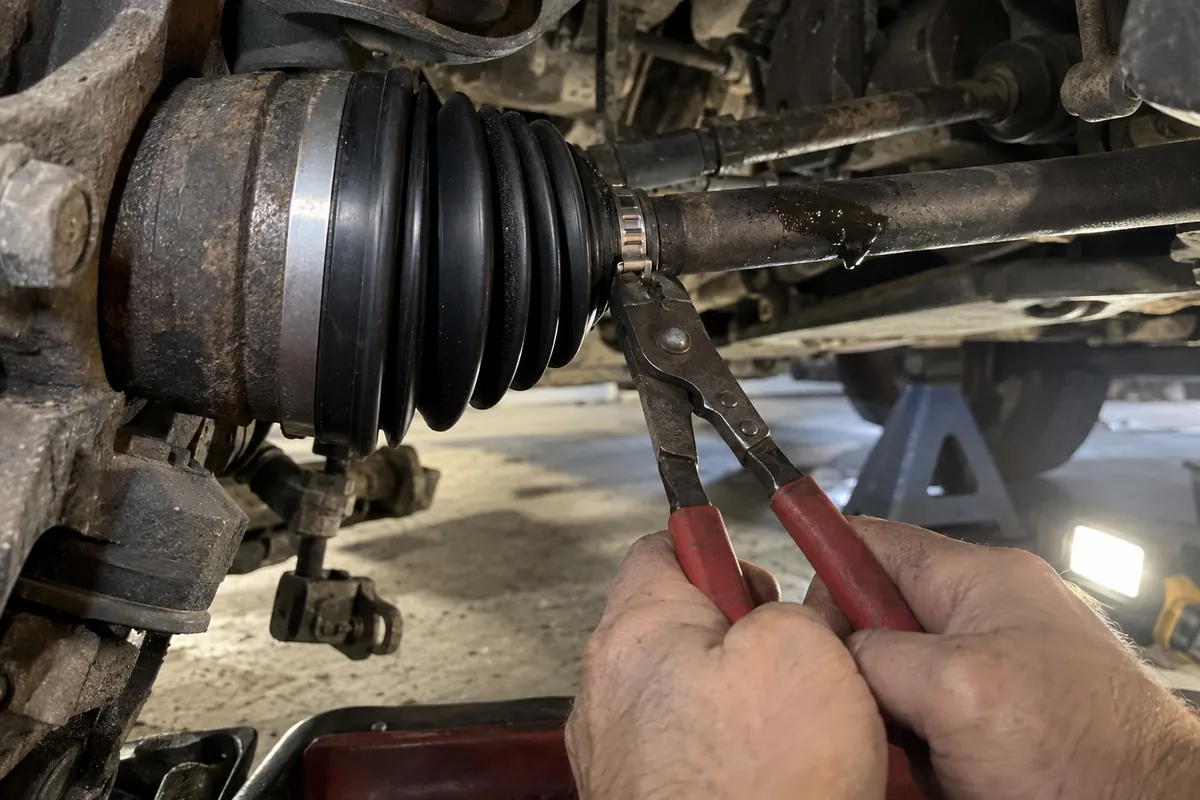
CV boots use the same ear clamps on many cars, and some use a flat band clamp with a crimped tab or a low-profile clamp. On the ear type, cut the ear with nippers exactly as above. On band types, cut through the crimped section or release the locking hooks, then pull the band off. Boot clamps are always replaced with the boot. Most boot kits include both clamps, and a boot kit with ear clamps needs ear clamp pincers to install. Some band-type boot clamps need a separate banding tool to tighten.
Removing low-profile stepless clamps
Low-profile stepless clamps (Oetiker 168 style) have no ear. The band end has small hooks that lock into windows in the band underneath. To remove one, grip the band with low-profile clamp pincers so the jaws engage the hooks, squeeze to take the tension off and lift the outer end free. These are made to be opened and refitted, so they can go back on. If a hook bends, replace the clamp.
Common mistakes
- Cutting the band instead of the ear. The band sits directly on the hose. A cutter on the band cuts the rubber too.
- Prying against plastic. Radiator necks, coolant pipes and fuel line fittings on modern cars are often plastic. Lever against the clamp or the hose, never the fitting.
- Reusing a cut ear clamp. Once the ear is cut or opened, the clamp cannot hold. Use a new one.
- Using the wrong size replacement. If the ear closes completely and you can still turn the clamp on the hose, the clamp is too big.
- Not closing the ear fully. The ear legs should touch. Partial closure leaves the band loose.
- Working on a hot cooling system. Wait until the hoses are cool and drain the coolant first.
- Replacing a spring clamp with a worm-drive clamp on coolant hoses. Use the same type of clamp the factory used.
When to stop and see a mechanic
Take it to a shop if the clamp is on a high-pressure fuel line, an AC line or a brake line. Those joints use crimped fittings or quick-connects, not hose clamps, and are not something to cut. Stop too if the fitting under the clamp cracks or breaks when you pull the hose, if you cannot relieve fuel pressure, or if coolant keeps leaking from a new clamp of the right size. That usually points to a damaged pipe or barb.
FAQ
How do you remove a pinch clamp from a hose?
Cut through the raised ear with end-cutting nippers or diagonal cutters, peel the band open with a small screwdriver and pull it off. Then twist the hose to break it loose from the fitting before you pull it off. If the clamp has two tabs instead of an ear, it is a spring clamp: squeeze the tabs with hose clamp pliers and slide it back.
Can you reuse a pinch clamp?
No, not the ear type. Single-ear, stepless and two-ear clamps hold by permanently deforming the ear, and cutting or spreading the ear ruins it. Spring clamps and low-profile stepless clamps can be reused if they are undamaged.
What tool removes Oetiker clamps?
Oetiker makes a hand clamp cutter (HCC 2000) for its ear clamps, but any good end-cutting nippers or diagonal cutters do the same job. Ear clamp pincers are the tool for installing them, not for removing them.
How do you remove a pinch clamp without pliers?
Twist the ear with needle-nose pliers until it snaps, spread the ear seam with a small flat screwdriver, or cut the ear with a rotary tool if you are replacing the hose. For a spring clamp, squeeze the tabs with slip-joint pliers and hold them with locking pliers.
What is the difference between a pinch clamp and a spring clamp?
A pinch clamp has a raised ear that is squeezed closed to tighten it and stays that way, so it is cut off to remove it. A spring clamp is a tensioned band with two tabs; squeezing the tabs opens it, and releasing them lets it grip again.
Can you use a worm-drive clamp instead of a pinch clamp?
For many fuel and vacuum hoses a worm-drive clamp works, but on small hoses its screw housing can distort the hose and leak. On coolant hoses that came with spring clamps, use spring clamps, because they keep tension as the hose expands and shrinks with temperature.
How do I know what size ear clamp to buy?
Measure the outside diameter of the hose while it is on the fitting and choose a clamp whose range puts that number near the middle. Ear clamps are labeled by diameter in millimeters, and kits with 10 to 16 sizes cover most automotive hoses.
Why won’t the hose come off after I remove the clamp?
Rubber bonds to the fitting over time. Twist the hose first, then run a hose pick between the hose and the pipe to break the bond. If the hose is being replaced, slit the end lengthwise with a utility knife, cutting only the rubber.
How do you remove a PEX pinch clamp?
Shut off and drain the water, then cut the ear with a cinch clamp removal tool or end nippers, or twist the ear with a removal tool until the ring breaks. Slide the ring off and check the pipe for nicks before you install a new clamp.
How tight should a pinch clamp be?
Close the ear until both legs touch. The clamp is designed to give the correct tension at full closure, so there is no adjusting. If the ear is fully closed and the clamp still turns easily on the hose, use the next size down.
Related guides
- How to use an OBD2 scanner: read the codes a vacuum leak sets before you start pulling hoses.
- Stocking stuffers for mechanics and Christmas gifts for mechanics: more hand tools for the toolbox.
- Best books to learn about cars: repair manuals and how-car-systems-work books.
- Car engine 3D model: see where the coolant and vacuum hoses connect.
Sources & References
- Oetiker, HCC 2000 hand clamp cutter technical data sheet: https://eu-assets.contentstack.com/v3/assets/bltbc4004bca00989b0/blt6b035816b9f18887/645a82c0359cde0a1ec3cf36/oet_tds_HCC-7000-609_Hand_Clamp_Cutter_EN.pdf
- Motion Pro, stepless hose clamps instructions: https://www.manualsdir.com/manuals/699267/motion-pro-stepless-hose-clamps.html
- Rick's Free Auto Repair Advice, hose clamp pliers for spring band clamps: https://ricksfreeautorepairadvice.com/hose-clamp-pliers-a-must-have-tool-for-spring-band-clamps/

James Kowalski
More from James KowalskiHow we reviewed this article
This article was researched against manufacturer records and editorially reviewed before publishing. We accept no payment for coverage. Some guides contain affiliate links; see our affiliate disclosure.