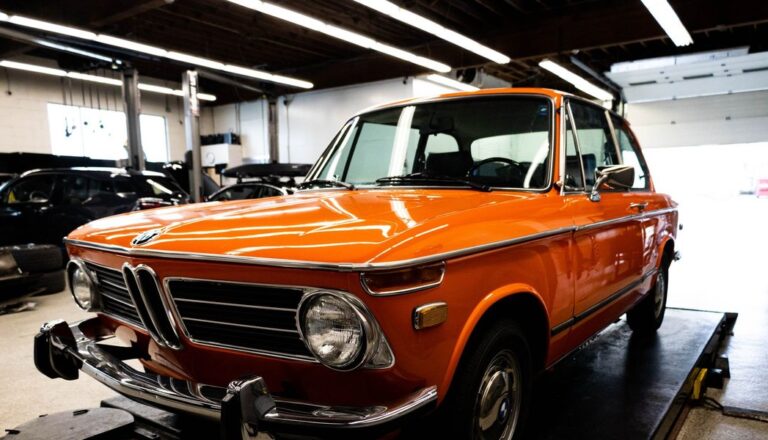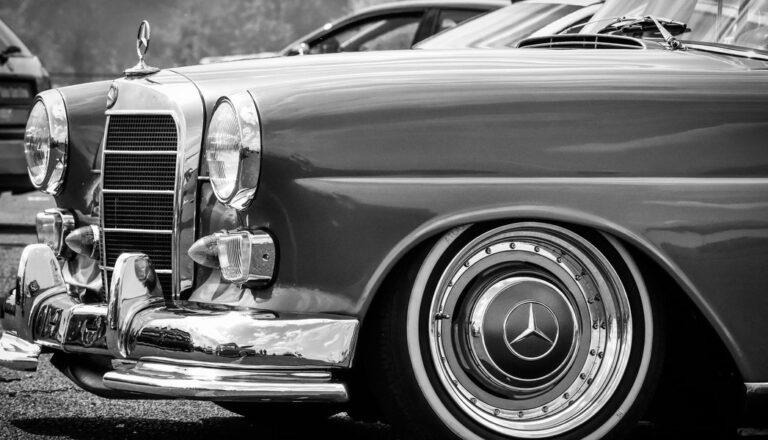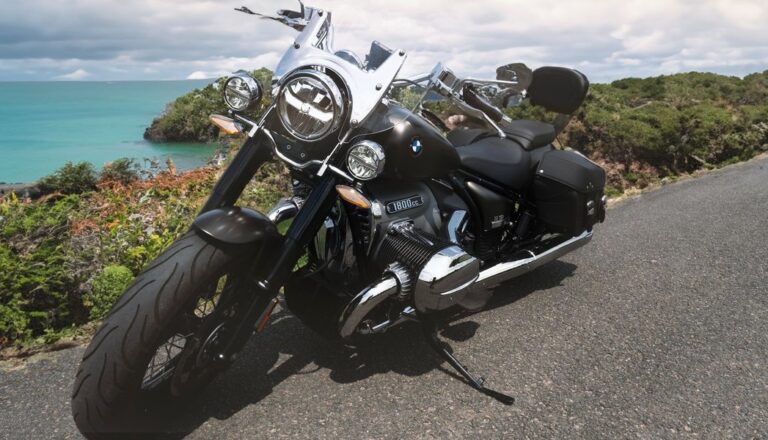
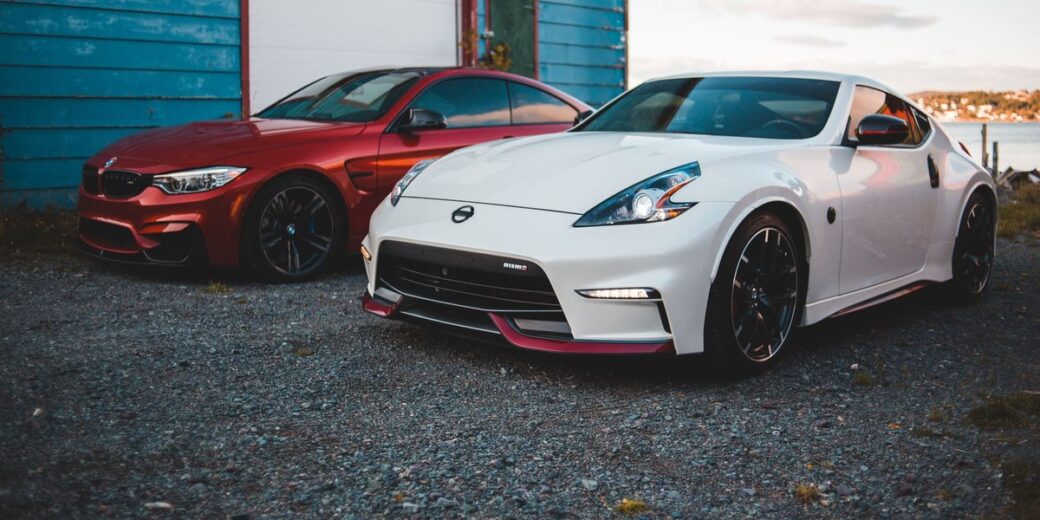
The 2010s were the last decade when one model year gave you a 9,000-rpm naturally aspirated V8, a 707-hp muscle car you could order with a manual gearbox, and a plug-in hybrid hypercar. Ten years on, the best 2010s sports cars have split into two groups. Some depreciated into bargains. Others turned into assets.
This guide ranks 16 of them by budget, with specs, what they cost new, what they cost now, and which version to buy.
Table of Contents
- TLDR: the short list
- How we chose
- Quick-scan comparison table
- Affordable fun
- American V8s and muscle
- Supercars and hypercars
- Hybrids
- Buying one without getting burned
- What the 2010s sports cars changed
TLDR: the short list
- Best under $25k: Mazda MX-5 (ND) or Toyota GT86/Subaru BRZ. Buy the 2019 MX-5 for the extra power.
- Best V8 for the money: Chevrolet Corvette C7 Stingray with the Z51 package.
- Best driver’s car overall: Porsche Cayman GT4 (981). Manual only, flat-six, and priced like it knows.
- Best future classic: Ford Shelby GT350. The flat-plane V8 and the manual-only gearbox aren’t coming back.
- Biggest depreciation bargain: BMW i8, at roughly a third of its original price.
- Most outrageous: Dodge Challenger Hellcat. 707 hp, a 4,400-lb coupe, and a red key.
How we chose
The window is model years 2010 through 2019. A car qualifies if it was sold new in that window and either debuted there or got a defining update there. That is why the Nissan GT-R (introduced in 2008) is in: its 2012 and 2017 updates changed it enough to count.
Every car had to be a coupe or roadster built to drive, not a sedan with a big engine. That rules out the Tesla Model S and the Charger Hellcat, however fast they were. It also rules out limited-run halo cars like the LaFerrari and McLaren P1, which most buyers will never price-check.
The used prices are approximate U.S. ranges for clean, reasonably low-mileage cars. Mileage, options, color and service history move them by tens of thousands on the expensive end. Treat them as a starting point, then check current listings and recent auction results before you spend money. Original MSRPs are approximate base prices without destination fees or options.
Quick-scan comparison table
| Car | Years | Power | 0–60 mph (approx.) | Drivetrain | Original MSRP | Used price today |
|---|---|---|---|---|---|---|
| Toyota GT86 / Subaru BRZ | 2012–2019 | 200–205 hp | 6.3 s | RWD | ~$25,000 | $12k–$20k |
| Mazda MX-5 (ND) | 2016–2019 | 155–181 hp | 5.8 s | RWD | ~$25,000 | $16k–$26k |
| Porsche Cayman GT4 (981) | 2016 | 385 hp | 4.2 s | RWD | ~$84,600 | $105k–$140k |
| Ford Mustang GT (S550) | 2015–2019 | 435–460 hp | 4.5 s | RWD | ~$33,000 | $20k–$32k |
| Ford Shelby GT350 | 2016–2019 | 526 hp | 4.0 s | RWD | ~$50,000 | $50k–$70k |
| Chevrolet Camaro ZL1 | 2017–2019 | 650 hp | 3.5 s | RWD | ~$63,000 | $40k–$55k |
| Dodge Challenger SRT Hellcat | 2015–2019 | 707–797 hp | 3.7 s | RWD | ~$60,000 | $40k–$60k |
| Chevrolet Corvette C7 Stingray | 2014–2019 | 455–460 hp | 3.8 s | RWD | ~$52,000 | $35k–$50k |
| Nissan GT-R (R35) | 2012–2019 | 545–565 hp | 2.9 s | AWD | ~$90,000 | $65k–$95k |
| Audi R8 V10 (first gen) | 2010–2015 | 525–550 hp | 3.8 s | AWD | ~$150,000 | $80k–$115k |
| McLaren 570S | 2016–2019 | 562 hp | 3.2 s | RWD | ~$185,000 | $110k–$150k |
| Ferrari 458 Italia | 2010–2015 | 562 hp | 3.2 s | RWD | ~$230,000 | $190k–$260k |
| Lexus LFA | 2011–2012 | 552 hp | 3.6 s | RWD | $375,000 | $1M+ |
| Porsche 918 Spyder | 2014–2015 | 887 hp (combined) | 2.2 s | AWD | $845,000 | ~$2M |
| BMW i8 | 2014–2019 | 357 hp (combined) | 4.2 s | AWD | ~$136,000 | $45k–$65k |
| Acura NSX (second gen) | 2017–2019 | 573 hp (combined) | 2.9 s | AWD | ~$156,000 | $95k–$125k |
Affordable fun
These three are about steering feel and balance, not straight-line numbers. None of them wins a drag race, and none of them cares.
Toyota GT86 / Subaru BRZ (2012–2019)
Verdict: The cheapest honest rear-drive sports car of the decade, and still one of the best at teaching you how to drive.
- Specs: 2.0-liter flat-four, 200 hp (205 hp with the manual from the 2017 update), 151 lb-ft, six-speed manual or automatic, RWD, roughly 2,800 lb.
- Price: About $25,000 new (as the Scion FR-S, it was $24,930 for 2013). Roughly $12,000–$20,000 used.
- Buy this: A 2017 or later manual for the small power bump and revised suspension tuning. Budget for tires. The stock low-grip rubber was part of the car’s character, and not everyone enjoys it.
The complaint was always the mid-range, a torque dip that made the engine feel lazy until the revs climbed. Owners fixed it with a tune and an exhaust, or just accepted it. The chassis is the point: a low seating position, light steering, and rear tires that let go gently.
Mazda MX-5 Miata (ND, 2016–2019)
Verdict: The best-handling car on this list per dollar, and one of the few you can drive near its limit on public roads without losing your license.
- Specs: 2.0-liter Skyactiv-G four, 155 hp in 2016–2018 and 181 hp for 2019, six-speed manual or automatic, RWD, about 2,330 lb.
- Price: $24,915 new for the 2016 Sport. Roughly $16,000–$26,000 used.
- Buy this: A 2019 Club or Grand Touring. The 2019 update added 26 hp and raised the redline to 7,500 rpm, and it fixed the ND’s biggest criticism, that it ran out of breath. The retractable-hardtop RF (2017 on) is heavier and less pure, but it suits buyers who drive in winter.
The ND shed weight against the car it replaced, and it shows. The pedals, the short-throw shifter and the 2,300-lb curb weight make the 155-hp car feel faster than its 5.8-second 0–60 suggests.
Porsche Cayman GT4 (981, 2016)
Verdict: Porsche’s best-handling car of the decade, and the only one on this list that’s now worth more than it cost new.
- Specs: 3.8-liter flat-six, 385 hp, 309 lb-ft, six-speed manual only, RWD, 0–60 in about 4.2 s.
- Price: $84,600 new. Roughly $105,000–$140,000 used, depending on mileage and options.
- Buy this: A one-owner car with documented service. Skip any example with heavy track use unless it comes with an inspection report.
The GT4 took its flat-six from the 911 Carrera S family, lowered the suspension and added a fixed rear wing and front diffuser. It also arrived at the end of the flat-six Cayman line, because the 718 that replaced the 981 in 2016 moved to a turbocharged four-cylinder. That’s why used prices keep climbing. Buyers know what came next, and they know what was lost.
American V8s and muscle
The decade was the horsepower war. Ford, Chevrolet and Dodge each built a car in the 2010s that would have been a supercar in 1995.
Ford Mustang GT (S550, 2015–2019)
Verdict: The first mainstream Mustang GT with independent rear suspension, and the first one that didn’t make you apologize for the handling.
- Specs: 5.0-liter Coyote V8, 435 hp (460 hp from the 2018 refresh), 400 lb-ft, six-speed manual (10-speed automatic from 2018), RWD, 0–60 in about 4.5 s.
- Price: About $33,000 new. Roughly $20,000–$32,000 used.
- Buy this: A 2018 or later GT with the Performance Pack. You get the extra power, a better interior, a Torsen limited-slip differential, bigger brakes and a stiffer chassis tune. The Level 2 pack adds MagneRide adaptive dampers, if you can find one.
It’s the cheapest way into a car that sounds like a V8 should and handles better than its weight suggests.
Ford Shelby GT350 (2016–2019)
Verdict: A 526-hp, 8,250-rpm V8 with a flat-plane crankshaft, bolted to a manual gearbox. Ford hasn’t built anything like it since.
- Specs: 5.2-liter “Voodoo” V8, 526 hp, 429 lb-ft, six-speed manual only, RWD, 0–60 in about 4.0 s.
- Price: $49,995 new for 2016. Roughly $50,000–$70,000 used.
- Buy this: The standard GT350, not the R. The R drops the rear seat and adds carbon-fiber wheels, and it costs a good deal more. The standard car is the one you can drive every day.
Flat-plane cranks are normally found in Ferraris. The GT350’s makes a higher, rawer note than any other Mustang, and it pulls hard to the redline. Production ended after the 2020 model year with no direct successor, which is the main reason it’s the best future classic here.
Chevrolet Camaro ZL1 (2017–2019)
Verdict: A 650-hp supercharged V8 in a car that handles like it’s sorry about its weight.
- Specs: 6.2-liter supercharged LT4 V8, 650 hp, 650 lb-ft, six-speed manual or 10-speed automatic, RWD, 0–60 in about 3.5 s.
- Price: Roughly $63,000 new. Roughly $40,000–$55,000 used.
- Buy this: A ZL1 with the six-speed manual. The 1LE track package (2018) lapped the Nürburgring Nordschleife in 7:16, but the ride is stiff enough to make a long drive tiring.
The sixth-generation Camaro shares its Alpha platform with the Cadillac ATS and CTS, which is why it’s so competent. It’s also why the visibility is awful. The roofline is low and the rear window is a slot.
Dodge Challenger SRT Hellcat (2015–2019)
Verdict: The dumbest, loudest and most entertaining car of the decade, and the only one on this list that ships with a key that limits its power.
- Specs: 6.2-liter supercharged V8, 707 hp (797 hp in the 2019 Redeye), 650 lb-ft, six-speed manual or eight-speed automatic, RWD, roughly 4,400 lb, 0–60 in about 3.7 s.
- Price: $59,995 new in 2015. Roughly $40,000–$60,000 used, with Redeyes at the top.
- Buy this: A manual, which is rarer and more fun than the automatic. Before you pay, confirm that you get two red keys. The red fob unlocks full power. The black one caps output at 500 hp, and a replacement red fob isn’t cheap.
Getting a 4,400-lb coupe to 60 mph in under four seconds takes the engine and some very sticky tires. The Hellcat’s party trick is how well it works as an everyday car. It has a big trunk and a rear seat that fits adults.
Chevrolet Corvette C7 Stingray (2014–2019)
Verdict: The best performance bargain in the used market, and the car that prepared the Corvette for a mid-engine layout.
- Specs: 6.2-liter LT1 V8, 455 hp (460 with performance exhaust), 460 lb-ft, seven-speed manual with rev-matching or eight-speed automatic, RWD, 0–60 in about 3.8 s.
- Price: $51,995 new for 2014. Roughly $35,000–$50,000 used. The Z06 (650 hp, about $78,000 new) runs roughly $65,000–$85,000 now.
- Buy this: A Stingray with the Z51 performance package, which adds a limited-slip differential, a dry-sump oil system, larger brakes and extra cooling. If you want more, the Grand Sport (2017 on) uses Z06 bodywork and brakes with a 460-hp Stingray engine.
The C7 got a proper interior and real chassis tuning. It also made the case that a front-engine Corvette had reached its limit, which is why the C8 arrived in 2020 with the engine behind the seats.
Supercars and hypercars
The 2010s were also the last decade when most of these were built around naturally aspirated engines or gearboxes you could talk to. Prices reflect that.
Nissan GT-R (R35, 2012–2019)
Verdict: The car that made $100,000 look like a bargain next to a Porsche 911 Turbo, and the used price makes it look cheaper still.
- Specs: 3.8-liter twin-turbo V6, 545 hp (2012) rising to 565 hp (2017 refresh), six-speed dual-clutch, AWD, about 3,800 lb, 0–60 in 2.9 s or better.
- Price: About $90,000 new for 2012. Roughly $65,000–$95,000 used.
- Buy this: A 2015 or later car. The 2015 revisions brought a calmer ride and a better interior, and the 2017 refresh added a reworked cabin and the extra power. Look for stock suspension and an engine that hasn’t been heavily tuned, and ask for service records on the dual-clutch transmission, because its fluid services are costly.
The all-wheel-drive system and the launch control are brutal and effective. What the GT-R lacks is polish. The whole thing feels like a machine and not a car, which is why people love it.
Audi R8 V10 (first generation, 2010–2015)
Verdict: A mid-engine V10 supercar with a daily-driver cabin, and the only one in this section you can get with a gated manual.
- Specs: 5.2-liter V10 (shared with the Lamborghini Gallardo), 525 hp (550 hp in the V10 Plus), six-speed manual or R tronic single-clutch automatic, quattro AWD, 0–60 in about 3.8 s.
- Price: Around $150,000 new. Roughly $80,000–$115,000 used, with the manual cars at the top.
- Buy this: The six-speed manual. The R tronic gearbox is slow and jerky at low speeds, and it isn’t what you want in a car this expensive. Manuals are rarer and are the ones collectors will chase.
The second-generation R8 arrived in 2016 and was quicker and sharper, but it dropped the manual. That makes the first-generation V10 with a gated shifter one of the last chances to row your own gears in a mid-engine supercar from a mainstream maker.
McLaren 570S (2016–2019)
Verdict: The entry point to McLaren ownership, a carbon-tub supercar priced close to a new 911 Turbo S.
- Specs: 3.8-liter twin-turbo V8, 562 hp, 443 lb-ft, seven-speed dual-clutch, RWD, 0–60 in about 3.2 s.
- Price: About $185,000 new. Roughly $110,000–$150,000 used.
- Buy this: A coupe with full McLaren service history. The Spider (2018 on) adds a folding hardtop, which is more of a lifestyle choice.
It has hydraulic steering at a time when most rivals had gone electric. That’s the detail that sets it apart. It talks back, it feels light and connected, and the carbon tub gives it a stiffness its price shouldn’t allow. Ownership isn’t cheap. A McLaren service costs more than one for a comparable Porsche, so budget accordingly.
Ferrari 458 Italia (2010–2015)
Verdict: The last mid-engine Ferrari V8 without turbochargers, and the one that will be remembered as the peak.
- Specs: 4.5-liter V8, 562 hp, 398 lb-ft, 9,000-rpm redline, seven-speed dual-clutch, RWD, 0–60 in about 3.2 s.
- Price: About $230,000 new. Roughly $190,000–$260,000 used, with Speciale models well above that.
- Buy this: A later Italia with a documented service record. Early cars were recalled for adhesive in the wheel-arch area, so confirm the work was done. The Spider (2012 on) has a folding aluminum roof and costs a bit more.
Ferrari replaced it in 2015 with the turbocharged 488. The 488 is quicker, but its engine doesn’t wind out to 9,000 rpm and it doesn’t sound like the 458. That’s the whole case for this car, and used prices show buyers agree.
Lexus LFA (2011–2012)
Verdict: A 9,000-rpm V10 that Yamaha helped tune to sound like a Formula One car. It was slow to sell when new, and it’s now one of the decade’s most prized collectibles.
- Specs: 4.8-liter V10, 552 hp, six-speed single-clutch automated manual, RWD, carbon-fiber body, 0–60 in about 3.6 s. Lexus built 500.
- Price: $375,000 new. Roughly $1 million or more now, with some sales well above that.
- Buy this: There’s little to choose between. Look for the lowest mileage and a complete history. The 50 Nürburgring Package cars are the ones that command the biggest premiums.
The engine revs so quickly that Lexus used a digital tachometer, because an analog needle couldn’t keep up. The paddle-shift gearbox is the weak spot by modern standards. The engine is the point.
Porsche 918 Spyder (2014–2015)
Verdict: The car that proved a plug-in hybrid could be a hypercar. Porsche claimed it was the first production car to lap the Nürburgring in under seven minutes (6:57).
- Specs: 4.6-liter V8 and two electric motors, 887 hp combined, seven-speed PDK, AWD, 0–60 in about 2.2 s in magazine testing. Porsche built 918.
- Price: $845,000 new. Roughly $2 million now.
- Buy this: A Weissach Package car, with its weight savings and unique trim, is the one collectors want. It costs more.
Along with the LaFerrari and McLaren P1, it formed the “Holy Trinity” of 2010s hypercars. The 918 had the most usable electric-only mode of the three, and it was the one you could drive on a normal day.
Hybrids
The two hybrids here were not about economy. They used electric motors to fill torque gaps and improve traction, and they were the first mainstream signs of where performance cars were heading. (The 918 above belongs to this group too, but it sits in a price class of its own.)
BMW i8 (2014–2019)
Verdict: It looked like a concept car, drove like a very good GT, and has depreciated more than anything else on this list.
- Specs: 1.5-liter turbo three-cylinder plus an electric motor, 357 hp combined, six-speed automatic, AWD, 0–60 in about 4.2 s. Electric range is around 15 miles.
- Price: About $136,000 new. Roughly $45,000–$65,000 used.
- Buy this: A coupe with documented battery health and service history. The Roadster (2019) costs more and adds weight.
The i8 has a carbon-fiber passenger cell and a design that still looks like it’s from the future. It was always more about efficiency and style than raw numbers, and the EPA’s fuel economy listings show how far it went on a charge compared with a typical plug-in hybrid. That’s why it lost value quickly, and why it’s one of the cheapest ways to own a car that looks like a supercar.
Acura NSX (second generation, 2017–2019)
Verdict: A hybrid supercar with more technology than a car this size should need, and an interior that’s more usable than a Ferrari’s.
- Specs: 3.5-liter twin-turbo V6 plus three electric motors, 573 hp combined, nine-speed dual-clutch, AWD, 0–60 in under 3 s.
- Price: About $156,000 new. Roughly $95,000–$125,000 used.
- Buy this: A 2018 or 2019 car, which got small chassis and software updates. Skip those with heavy modifications.
Honda built it in Marysville, Ohio. An electric motor on each front wheel helps pull the car through corners (torque vectoring), which makes it feel more planted than a rear-drive rival. Reviewers found it less dramatic than the 458 or 570S when new, and used prices reflect that. It’s a good car at a fair price.
Buying one without getting burned
The cheap ones are cheap to buy and sometimes expensive to fix. The expensive ones are expensive at every stage. Three rules apply across the list.
Check recalls first. Run the VIN through NHTSA’s recall lookup. It takes two minutes, and several cars here have had recalls on engines, adhesives or electronics.
Pay for a pre-purchase inspection. A specialist inspection of a car you’re about to spend $100,000 on costs a few hundred dollars. The FTC’s used-car guidance covers the basics of what to ask a dealer, and a marque specialist can cover the rest.
Price in the running costs. A $20,000 GT86 has cheap parts and an easy service. A $110,000 McLaren or a $190,000 Ferrari has annual costs that can approach the price of a used GT86. Tires, brake jobs and dual-clutch services are where the money goes.
What the 2010s sports cars changed
The 2010s sports cars made four changes that still shape what you can buy.
Turbocharging became normal. Ferrari moved from the naturally aspirated 458 to the turbo 488 in 2015. Porsche replaced the 981 Cayman’s flat-six with a turbo four in 2016. Ford put its EcoBoost engines in everything. Used prices for the last naturally aspirated cars, such as the 458, the GT4 and the GT350, show how buyers valued what was disappearing.
Dual-clutch gearboxes won the performance race. The GT-R, the 458, the 570S, the 918 and the NSX all used one. They were quicker than any manual and pushed the manual into niche territory. The GT4 and GT350 were manual-only, which tells you what Porsche and Ford thought their enthusiasts wanted.
Hybrid power moved from the lab to the showroom. The 918, the i8 and the NSX used electric motors to add performance, and the i8’s depreciation shows how buyers treated the early ones. Today’s performance hybrids and EVs build on those cars.
Horsepower stopped being the limit. The Hellcat’s 707 hp in 2015 and the 797-hp Redeye in 2019 put supercar-level power into a $60,000 coupe. At the same time, the C7 Corvette’s chassis and the Z06’s 650 hp laid the groundwork for the mid-engine C8.
If you’re shopping for 2010s sports cars today, the best value is at the cheaper end of the list. The MX-5, the BRZ and the C7 Stingray are cheap, fun and easy to live with. The GT350, the GT4 and the 458 are the ones to buy if you want a car that may hold its value. Pick one and drive it. They were built for it.

Marco Delantero
More from Marco DelanteroHow we reviewed this article
This article was researched against manufacturer records and editorially reviewed before publishing. We accept no payment for coverage. Some guides contain affiliate links; see our affiliate disclosure.