Tesla built exactly four models across the 2010s: a sports car nobody could keep in stock, a sedan that beat Porsche and BMW judges at their own game, an SUV that showed up two years late because of its own doors, and a sedan the company nearly couldn’t build fast enough to meet demand. That’s the entire run of 2010s Tesla models — four cars, one decade, and the difference between “electric car” meaning a golf cart with a permit and meaning something a normal buyer cross-shopped against a 5 Series.
Here’s how each one happened, what it actually cost and delivered when it launched, and what to check if you’re eyeing a used one today.
Table of Contents
- The 2010s Tesla Lineup at a Glance
- 2008: The Roadster Planted the Flag
- 2012: The Model S Made EVs Respectable
- 2014-2015: Autopilot and Ludicrous Mode Change the Conversation
- 2015: The Model X Arrives, Doors and All
- 2016: The Gigafactory Bet
- 2017: The Model 3 Pushes Electric Into the Mainstream
- Buying a Used 2010s Tesla: What Actually Matters
- The Bottom Line
The 2010s Tesla Lineup at a Glance
| Model | Launch | Starting Price | EPA Range | Defining Moment |
|---|---|---|---|---|
| Roadster | Feb 2008 | ~$109,000 | 245 mi (2010 update) | First highway-legal EV built on a lithium-ion pack |
| Model S | Jun 2012 | $57,400 | 265 mi (85 kWh) | Motor Trend Car of the Year, 2013 |
| Model X | Sep 2015 | ~$132,000 (Signature) | ~250 mi (90D) | Falcon-wing doors delayed launch by two years |
| Model 3 | Jul 2017 | $44,000 (Long Range) | 310 mi (Long Range) | 400,000+ reservations in one week |
2008: The Roadster Planted the Flag
The Roadster wasn’t trying to be practical. Built on a modified Lotus Elise chassis because Tesla had neither the capital nor the time to engineer a body from scratch, it existed to prove one specific point: a lithium-ion pack could push a road car past the range and performance ceiling everyone assumed came with “electric.” Base models ran 0-60 in 3.7 seconds. A 2010 pack upgrade pushed EPA-rated range to 245 miles, respectable even now.
Tesla built roughly 2,450 of them through 2012, at a loss on every unit. It didn’t matter. The Roadster wasn’t the business — it was the proof of concept that got investors, and eventually customers, to take the next car seriously.
2012: The Model S Made EVs Respectable
The Model S is where the decade actually starts mattering. It launched in June 2012 at $57,400 for the base 60 kWh version, climbing past $90,000 for the Signature Performance trim. The 85 kWh pack was EPA-rated at 265 miles, a number no other production EV was within shouting distance of at the time.
Five months later, Motor Trend named it 2013 Car of the Year — the first time in the award’s 64-year run that the honor went to a car with no combustion engine at all, and the first unanimous judge vote anyone on the panel could remember. Then, in August 2013, the National Highway Traffic Safety Administration recorded the highest safety score the agency had measured up to that point: five stars, not just overall, but in every individual category. Part of that came from a structural quirk unique to the car — no engine block up front means a longer crumple zone, and a battery pack mounted low in the floor pan that made rollover almost impossible to induce in testing.
That combination — a Motor Trend win most manufacturers spend a career chasing, plus a federal safety record that made “EVs aren’t as safe” a hard argument to make — is what moved the Model S from “interesting startup car” to “car a bank would happily finance.”
2014-2015: Autopilot and Ludicrous Mode Change the Conversation
In October 2014, alongside the new all-wheel-drive “D” variants, Tesla started shipping Model S units with a hardware suite most owners didn’t fully understand yet: forward radar, a windshield-mounted camera, and 360-degree ultrasonic sensors. Musk called it Autopilot. The hardware sat mostly dormant until Tesla pushed the software over the air roughly a year later, in the October 2015 version 7.0 update — lane keeping, adaptive cruise, and automated parking, all delivered without a dealer visit or a hardware swap. That delivery method was as significant as the feature itself; nobody else in the industry was updating a car’s driving behavior remotely.
Ludicrous mode landed the same summer, July 2015, on the P90D — a software-and-hardware fuse upgrade that dropped 0-60 to 2.8 seconds. It reframed the whole car for a different buyer entirely: not just an EV that didn’t suck, but a sedan that could out-launch a Ferrari from a stoplight. That’s the moment “Tesla owner” and “car enthusiast” stopped being separate categories.
2015: The Model X Arrives, Doors and All
Tesla showed a Model X prototype in February 2012 and initially promised deliveries within a year or two. It shipped in September 2015 — roughly two and a half years late, almost entirely because of one design decision: the falcon-wing rear doors, a dual-hinge mechanism meant to open fully in tight garages and parking spaces where a conventional door couldn’t swing clear.
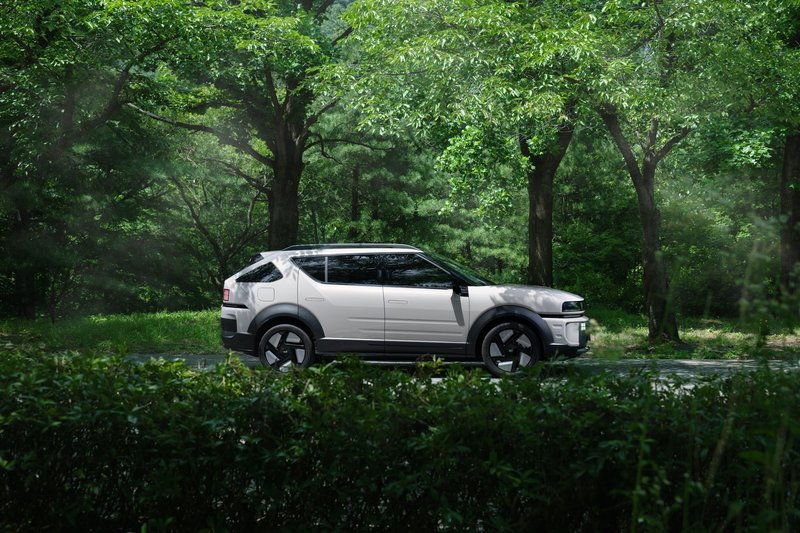
The doors fought back. Tesla went through multiple supplier iterations and even sued a door-hardware supplier over parts that reportedly failed to perform, and Musk later called the Model X “the hardest car to build in the world.” When it finally arrived, Signature series pricing started around $132,000, with the 90D trim rated near 250 miles of range. The delay cost Tesla credibility with reservation holders who’d been waiting since 2012 — but the doors, whatever they cost in engineering hours, became the car’s signature.
2016: The Gigafactory Bet
In July 2016, Tesla opened Gigafactory Nevada — partially, at around 14% of its planned footprint, but open enough to start producing battery cells with partner Panasonic. The full build-out target was roughly 10 million square feet, built on the bet that manufacturing cells at that scale, in-house and alongside a dedicated partner, was the only way to get battery costs low enough to sell an EV anywhere near mainstream sedan pricing.
That bet wasn’t optional context — it was the prerequisite for the next car on this list. Without the Gigafactory, there’s no plausible path to a $35,000 starting price on anything Tesla built next.
2017: The Model 3 Pushes Electric Into the Mainstream
Tesla unveiled the Model 3 on March 31, 2016, and took more than 400,000 reservations — a refundable $1,000 deposit each — within a week, for a car nobody outside the company had driven. Production started in July 2017, with the first deliveries handed over that same month.
The catch: the promised $35,000 base trim didn’t actually exist yet. The only configuration available at launch was the Long Range, priced around $44,000 before options, and it took until 2019 for Tesla to ship the base rear-wheel-drive version reservation holders had put deposits down against. Months after launch, the EPA confirmed the Long Range trim’s combined rating at 310 miles — a number that made the Model 3 the first mass-production EV to clear 300 miles at a price a doctor or a dentist, not just a tech executive, could plausibly justify. That gap between promise and delivery frustrated plenty of early reservation holders, but it’s also what made the Model 3, not the Model S, the car that actually normalized EV ownership at scale.
Buying a Used 2010s Tesla: What Actually Matters
If you’re shopping a used Model S from this era — and plenty of well-priced ones are out there now, several years and one owner removed from their original sticker — three things matter more than trim level.
Battery degradation. It’s better than most shoppers assume. Real-world tracking on well-maintained packs shows roughly 5-8% capacity loss by 50,000 miles, and 10-20% by 150,000 miles, depending heavily on climate and how often the previous owner used DC fast charging or left the pack sitting at 100%. Tesla backed most Model S trims with an 8-year, 125,000-to-150,000-mile battery warranty guaranteeing at least 70% capacity over that window — ask for the car’s in-app battery health readout before you commit to anything.
Reliability. Consumer Reports has tracked below-average reliability marks for early Model S model years, and the common failure points are well documented among owners: door handle motors, air suspension leaks, and early media control units that eventually need replacement. None of these are deal-breakers on their own, but they’re exactly what a pre-purchase inspection should target — not just a battery check.
Depreciation. Early Model S units have shed a large share of their original sticker price, which is good news for a buyer and bad news for the person who bought one new in 2013. That steep depreciation curve is precisely why the used-buying case is strong right now: you’re paying gas-car money for a car that was, at launch, the most advanced production sedan on the road. For detailed breakdowns of specific model years, year-by-year guides like the 2016 Tesla models breakdown help narrow down which generation offers the best value and reliability for your budget.
The Bottom Line
Four cars, one decade: a sports car that proved the concept, a sedan that made regulators and car-of-the-year judges agree an EV could win outright, an SUV whose doors nearly broke the company’s production schedule, and a sedan that finally made the math work for a buyer without a tech-executive budget. None of the EVs on the market now — from any manufacturer — exist on the same timeline without that specific sequence of 2010s Tesla models forcing the rest of the industry to catch up.

Marco Delantero
More from Marco DelanteroHow we reviewed this article
This article was researched against manufacturer records and editorially reviewed before publishing. We accept no payment for coverage. Some guides contain affiliate links; see our affiliate disclosure.