McLaren’s 2020 range ran from a 612 hp grand tourer with a real luggage compartment to a 1,055 hp hybrid that tops out at 250 mph. Between them sit a lightweight track special, a 710 hp daily-driveable supercar, and a roofless speedster with no windscreen. Most spec pages cover one of these cars at a time. This guide puts all of them side by side.
Contents
- The 2020 McLaren lineup at a glance
- How McLaren sorts its cars into series
- Sport Series: 600LT and 600LT Spider
- Super Series: 720S and 720S Spider
- GT: the one you can take on holiday
- Ultimate Series: Senna, Elva and Speedtail
- Which 2020 McLaren should you choose?
The 2020 McLaren lineup at a glance
Figures are manufacturer claims and rounded. Prices are approximate launch prices in US dollars, converted from pounds for the cars that were never sold with a US sticker.
| Model | Series | Engine | Power | 0-60 mph | Launch price |
|---|---|---|---|---|---|
| GT | GT | 4.0L twin-turbo V8 | 612 hp | 3.1 sec | $210,000 |
| 600LT | Sport | 3.8L twin-turbo V8 | 592 hp | 2.8 sec | $240,000 |
| 600LT Spider | Sport | 3.8L twin-turbo V8 | 592 hp | 2.8 sec | $256,000 |
| 720S | Super | 4.0L twin-turbo V8 | 710 hp | 2.8 sec | $285,000 |
| 720S Spider | Super | 4.0L twin-turbo V8 | 710 hp | 2.8 sec | $315,000 |
| Senna | Ultimate | 4.0L twin-turbo V8 | 789 hp | 2.7 sec | about $1,000,000 |
| Elva | Ultimate | 4.0L twin-turbo V8 | 804 hp | under 3.0 sec | about $1,700,000 |
| Speedtail | Ultimate | 4.0L V8 plus electric motor | 1,055 hp | 0-186 mph in 12.8 sec | about $2,200,000 |
How McLaren sorts its cars into series
McLaren’s naming is more logical than it looks. Sport Series cars are the entry point and the most track-focused per dollar. Super Series cars are the core range, with more power and more refinement. The GT is its own category, built for distance rather than lap times. Ultimate Series cars are limited-run halo projects, each built in the hundreds or fewer.
Every one of these models uses a twin-turbocharged V8. The Speedtail adds hybrid assistance. Nobody at McLaren was building a V6 or a naturally aspirated car in 2020, so the choice between models is about weight, power, roof and purpose, not engine layout.
Sport Series: 600LT and 600LT Spider
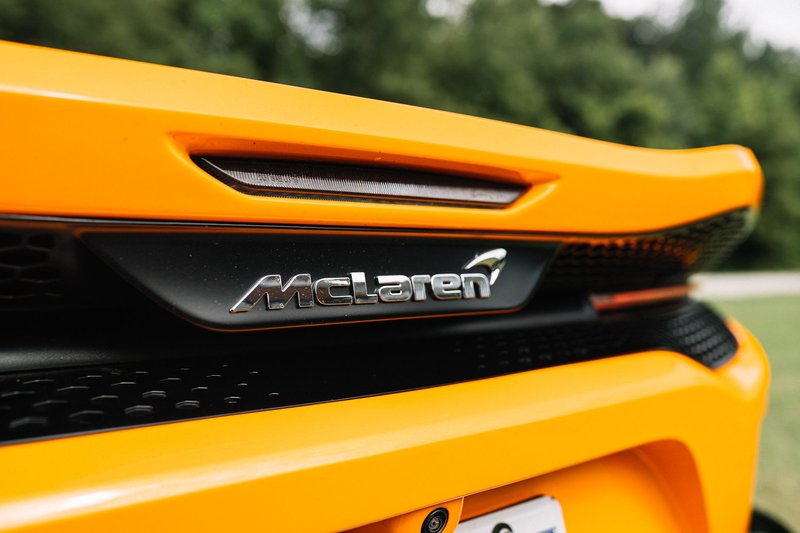
The “LT” stands for Longtail, a badge McLaren has reserved for stripped, lengthened, aerodynamically sharpened cars since the F1 GTR Longtail of the 1990s. The 600LT takes the 570S platform and cuts roughly 100 kg from it. It gets a 3.8-liter V8 tuned to 592 hp, a longer front splitter and rear deck, and carbon-fiber racing seats.
The giveaway is the exhaust. The tailpipes exit through the top of the rear bodywork, just above the diffuser, which sounds sharper and keeps heat away from the underbody. Park one next to a 570S and the difference is obvious from behind.
The 600LT suits someone who actually drives on circuits, or who wants the most direct steering and the least filtering of road feel in the lineup. It’s loud, firm and not subtle. The Spider adds a retractable hard-top for a modest weight penalty, and it’s the better pick if you want the noise with the sky above it.
Super Series: 720S and 720S Spider
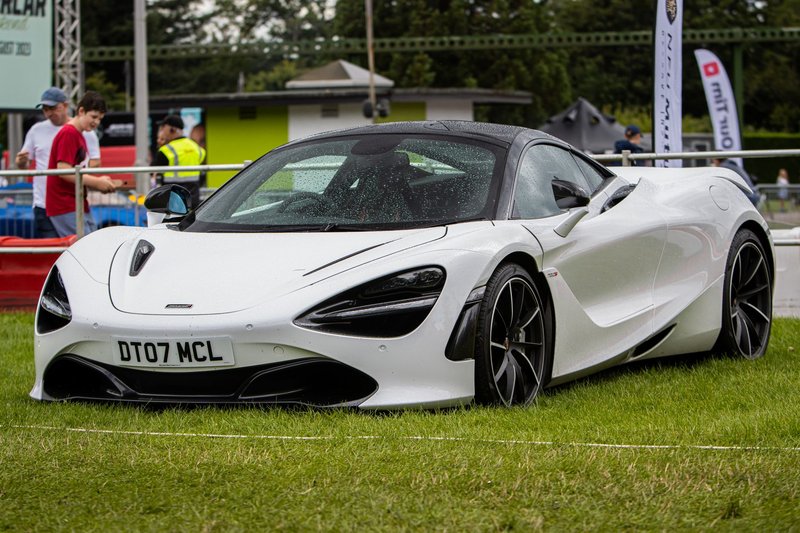
The 720S is the car most people picture when they think of a modern McLaren. A 4.0-liter twin-turbo V8 makes 710 hp, enough for 0-60 mph in 2.8 seconds and a 212 mph top speed. The doors open upward and forward in a dihedral arc, and the glasshouse is deep and thin, so visibility is better than a car this wide has any right to offer.
What separates it from the 600LT is the way it drives on a normal road. Proactive Chassis Control replaces conventional anti-roll bars with hydraulics, which lets the car ride comfortably in its softest mode and still stay flat when pushed. It’s a supercar you could use every week.
The 720S Spider keeps the same power and the same acceleration numbers, with a folding hard-top that stows behind the seats in about 11 seconds. Choose the coupe if you want the stiffest structure and the lowest price. Choose the Spider if you’d rather hear the V8 without the glass.
GT: the one you can take on holiday
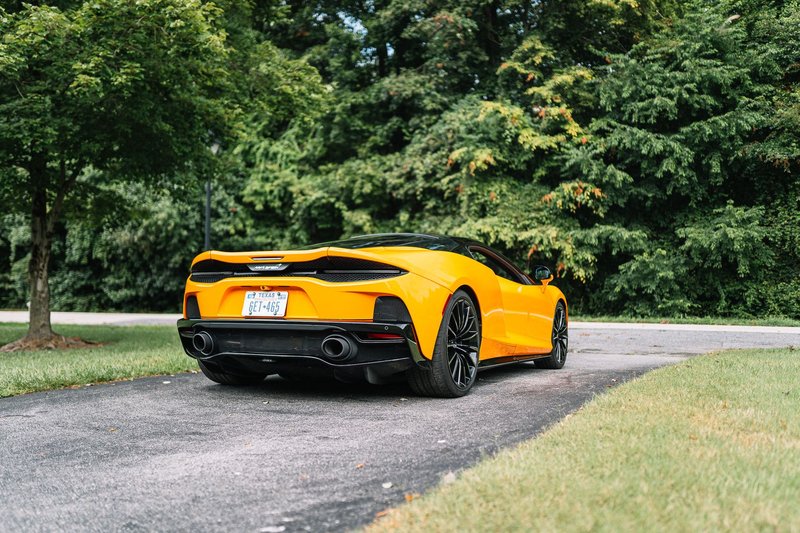
The GT is the quietest and least dramatic McLaren on the list, and that’s the point. It uses a 4.0-liter twin-turbo V8 at 612 hp, an automatic-feeling seven-speed dual-clutch gearbox and softer suspension than any other car here. It still reaches 60 mph in about 3.1 seconds.
The headline feature is luggage space: 570 liters in total, split between a front trunk and a rear deck under a glass hatch. The rear deck takes a set of skis or a couple of golf bags. No other car in this lineup comes close, and it’s the reason the GT exists.
It suits buyers who like the McLaren look and engineering but plan to cover real distance, and who aren’t interested in lap times. It also depreciates less sharply than the track-focused cars, mostly because more people can imagine owning one.
Ultimate Series: Senna, Elva and Speedtail
McLaren Senna
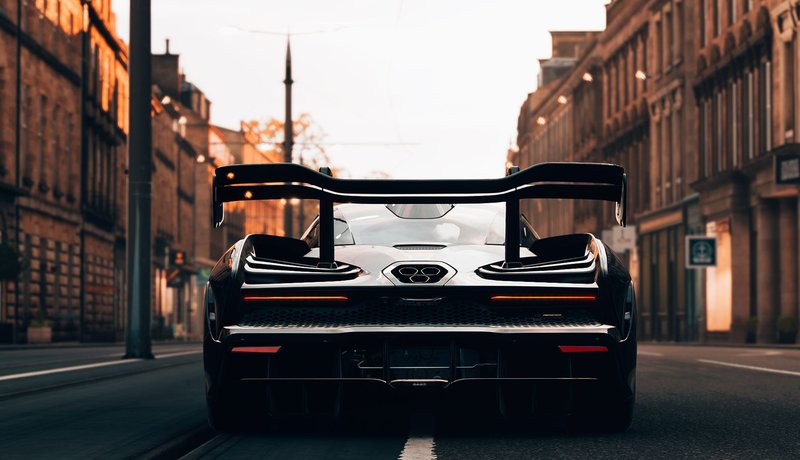
The Senna was designed around downforce first and everything else second. Its 4.0-liter V8 makes 789 hp, and the car weighs about 1,198 kg dry. Active aerodynamics, a huge rear wing and a lower glass panel in each door (so the driver can see the apex) all follow from that. McLaren built 500 of them, and deliveries were winding down as 2020 began.
It’s a road-legal track car. Buy one if you collect cars that are honest about their purpose.
McLaren Elva
The Elva has no roof and no windscreen. An Active Air Management System sends a controlled pocket of air up over the cockpit, so occupants aren’t hit in the face at speed. A race-style windscreen is available as an option, though most owners skip it.
The 4.0-liter V8 makes 804 hp, and the car weighs just under 1,300 kg. McLaren built 249 examples, with deliveries starting in 2020. It’s named after the 1960s Bruce McLaren Elva sports racer, and like that car it’s about open-air driving at speed more than outright track performance.
McLaren Speedtail

The Speedtail is the fastest McLaren ever made, at 250 mph. Its petrol-electric powertrain produces 1,055 hp and gets from 0 to 186 mph in 12.8 seconds, which is faster than the McLaren F1 reaches 186 mph by several seconds.
Its three-seat layout puts the driver in the center with a passenger either side, a direct callback to the F1. The tail is made of flexible carbon-fiber panels that bend to change aerodynamic shape, and the front wheels wear carbon-fiber covers. McLaren built 106 and every one was sold before production began.
Which 2020 McLaren should you choose?
Start with how you will use it.
- Long trips and daily use: the GT. Nothing else here carries luggage.
- Track days and raw feel: the 600LT or 600LT Spider.
- A supercar that does everything: the 720S, coupe or Spider.
- A collectible track car: the Senna.
- Open-air driving without a roof: the Elva.
- Maximum speed and rarity: the Speedtail.
Used values shift constantly, so treat these as rough ranges for well-kept, lower-mileage cars. A GT typically sells somewhere around $160,000 to $200,000. A 600LT coupe tends to run $230,000 to $280,000 because production was limited, with Spiders at a premium. A used 720S coupe usually sits around $200,000 to $260,000, and the Spider about $50,000 more. The Senna trades above $1 million, the Elva and Speedtail above that, and prices for those cars depend heavily on provenance and specification.
If you’re comparing the 600LT against the 720S, the question comes down to character. The 600LT is lighter, louder and more demanding. The 720S is faster in a straight line, easier to live with, and holds its value more reliably. The GT sits outside that debate entirely. It’s the 2020 McLaren to buy when you want the badge but need a trunk.
Most 2020 McLaren car models do one thing very well. Pick the one whose job matches yours.

Marco Delantero
More from Marco DelanteroHow we reviewed this article
This article was researched against manufacturer records and editorially reviewed before publishing. We accept no payment for coverage. Some guides contain affiliate links; see our affiliate disclosure.