Toyota built almost no passenger cars in 1944. The company had been designated a munitions company on 17 January 1944, which put its output under state control and pointed it at trucks, military vehicles and aircraft engines. The only production car still moving through the Koromo plant that year was the AC sedan, and it stopped in February.
If you found a “1944 Toyota” in a trivia question or a family story, the answer is almost certainly a truck.
Contents
- TLDR
- Why Toyota barely made cars in 1944
- The 1944 Toyota car models
- Quick-reference table
- Trucks and military vehicles
- Timeline: 1943 to 1947
- Where the sources disagree
TLDR
- Passenger cars built in 1944: only the AC sedan, 19 units, until February.
- Prototypes: two or three B/BC luxury cars, most likely from 1944, and the AK10 four-wheel-drive prototype from July 1944.
- What dominated output: KB and KC trucks, plus military work including the Su-Ki amphibious vehicle.
- Gap: no Toyota passenger cars were produced in 1945 or 1946. The next one, the SA, arrived in 1947.
Why Toyota barely made cars in 1944
By 1944, Japan’s auto industry was a war industry. Passenger cars had been squeezed out for years by fuel rationing, steel allocation and military priorities. By 1940 Toyota was already selling very few passenger cars, and the January designation made it official: Toyota’s wartime research and production went to what the government ordered, and a sedan wasn’t on the list.
So the question “what car models did Toyota make in 1944” has a short answer and a longer, more interesting one. The short answer is one model, for about six weeks. The longer one covers what was left on the drawing board.
The 1944 Toyota car models
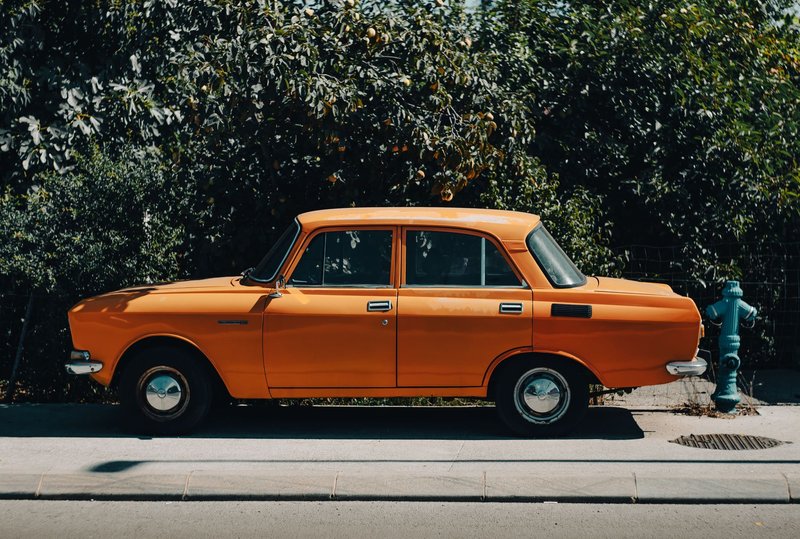
AC sedan
The AC was the last Toyota passenger car in production during the war. It was the successor to the AA, Toyota’s first production sedan from 1936, and it kept the 3.4-litre inline-six lineage of that car. Production ran from 1943, and 115 AC sedans were built in total.
Of those, 19 were built in 1944, before production ended in February. That’s the entire passenger-car output for the year. If you’re looking at a period photo of a Toyota sedan taken in 1944, it’s an AC, and it’s one of fewer than twenty.
B and BC luxury prototypes
Toyota also worked on a larger, more upmarket car, designated B and later BC. Two or three prototypes were built, most likely in 1944. They were the last passenger car development at Toyota before the war ended, and none reached production. Nobody was buying luxury sedans in Japan that year, and Toyota’s engineers knew it.
AK10
The AK10 is the odd one out. It was a four-wheel-drive prototype dating from July 1944, a small military-style utility vehicle rather than a car in the usual sense. It belongs on this list because searchers lump it in with “1944 Toyota models,” and because it points forward: Toyota’s later off-road work, including the Jeep-inspired BJ of 1951, grew out of this kind of thinking.
Quick-reference table
| Model | Type | 1944 status | Units |
|---|---|---|---|
| AC | Passenger sedan | In production until February 1944 | 19 in 1944 (115 total) |
| B / BC | Luxury sedan prototype | Prototypes, most likely 1944 | 2 or 3 |
| AK10 | 4WD utility prototype | Prototype, July 1944 | Prototype only |
| KB | Truck | In production | Main output |
| KC | Truck | In production | Main output |
| Su-Ki | Amphibious military vehicle | Military program | Few, if any, in service |
Trucks and military vehicles
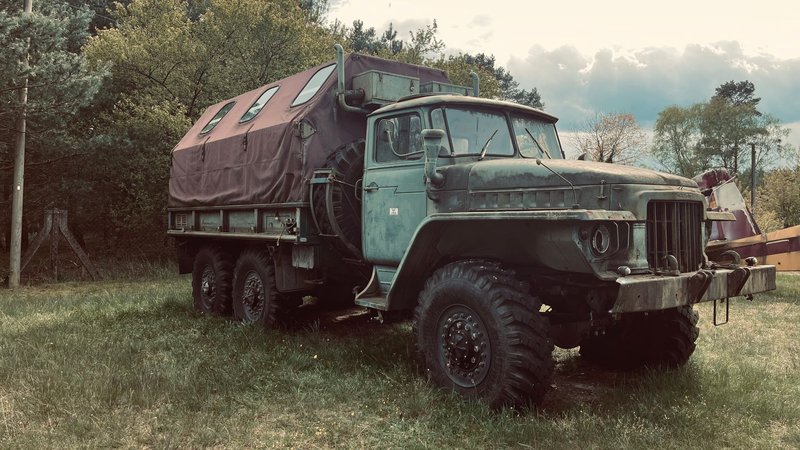
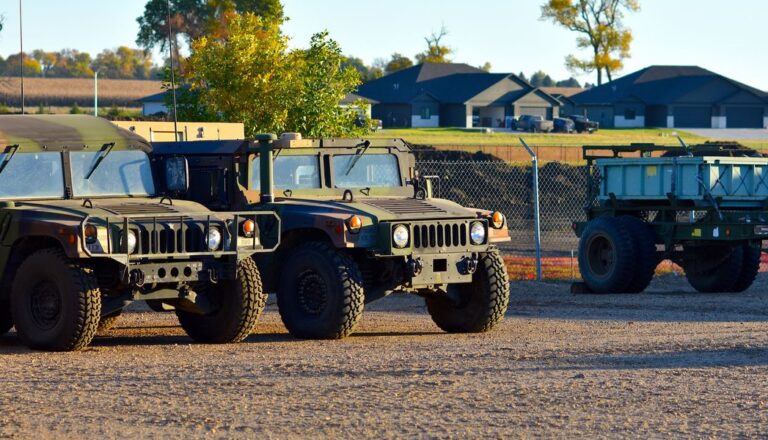
Trucks were the real 1944 Toyota story. The KB and KC were the workhorses, and they accounted for nearly everything that left the factory gate. Wartime trucks were stripped down to save materials, so don’t expect the details of a prewar vehicle: simplified cabs, minimal trim and a general attitude of “it needs to run.”
The Su-Ki was an amphibious military vehicle, and it’s the Toyota entry on the supercars.net model list that spans the 1940s and includes 1944. It was a niche military program, not a car, and it never turned into a product line.
Toyota also built aircraft engines during the war. That work is documented on the company’s own history pages, and it explains why a carmaker was designated a munitions company in the first place.
Timeline: 1943 to 1947
- 1943: The AC sedan enters production.
- January 1944: Toyota is designated a munitions company on the 17th.
- February 1944: AC production ends at 115 units total, 19 of them built that year.
- 1944: B/BC luxury prototypes are built, most likely this year. The AK10 prototype follows in July.
- 1945: The war ends. No passenger cars are built.
- 1946: Still no passenger cars. Truck production leads the recovery.
- 1947: The SA, Toyota’s first postwar passenger car, arrives and restarts the car line.
Count the gap: from February 1944 to 1947, Toyota built no production passenger cars at all. The SA wasn’t a continuation of the AC. It was a clean-sheet small car for a country that had lost the war and needed to move again.
Where the sources disagree
Some of the pages ranking for this topic are user-edited mirrors of Wikipedia, and they conflict with each other on dates. The clearest example is the AE prototype, which sources date differently. If a page gives a single confident year for the AE, check it against Toyota’s own chronological table before repeating it.
The same caution applies to the B/BC. “Most likely 1944” is as firm as the evidence gets, and the unit count of two or three reflects real uncertainty, not rounding. Toyota’s chronological table is terse, but it’s the primary source, and it’s the reference to trust when the mirrors disagree.

Marco Delantero
More from Marco DelanteroHow we reviewed this article
This article was researched against manufacturer records and editorially reviewed before publishing. We accept no payment for coverage. Some guides contain affiliate links; see our affiliate disclosure.