Contents
- The context: a V-twin, a shaft and a new owner
- Quick reference: 1970s Guzzi models at a glance
- V7 and V7 Special: where the decade starts
- V7 Sport: the one everyone wants
- 850 GT, Eldorado and California: the workhorses
- 750 S and S3: the Sport grows up
- 850 T3: the unglamorous good one
- Le Mans: the 1976 bike that defined the brand
- The odd ones: Nuovo Falcone, Convert and V50
- 1000 SP: the end-of-decade tourer
- Buying a 1970s Moto Guzzi
- Summary
Moto Guzzi spent the 1970s doing something odd for an Italian factory: it sold the same basic engine, a transverse 90-degree V-twin with shaft drive, in everything from police patrol bikes to a 130 mph sports machine. Strip away the fairings and the paint, and almost every big Guzzi of the decade is the same layout from Mandello del Lario. The differences are in the frames, the brakes, and how much someone cared.
This guide runs through the decade in order, with specs, what made each bike different, and what to watch for if you want to buy one.
The context: a V-twin, a shaft and a new owner
The V-twin that powers every bike here arrived in 1967 as the V7, a 703cc engine with its cylinders sticking out into the airstream on either side. Guzzi had drawn it up with institutional customers in mind, and police forces and the Italian military bought them in numbers. That background explains a lot: the engine was built to be slow-revving, torquey and hard to kill, not fast.
The company itself was in trouble. Moto Guzzi went into government-managed receivership at the start of the decade, and in 1973 Alejandro De Tomaso, the Argentine-born owner of the car maker De Tomaso (and of Benelli, which he had bought in 1971), took it over. His influence shows up mostly in the second half of the decade: parts shared with Benelli, the Sei six-cylinder ambitions, and a push for a more modern range. The factory kept its character through all of it. The best bikes of the 1970s were mostly the ones where the engineers were left alone.
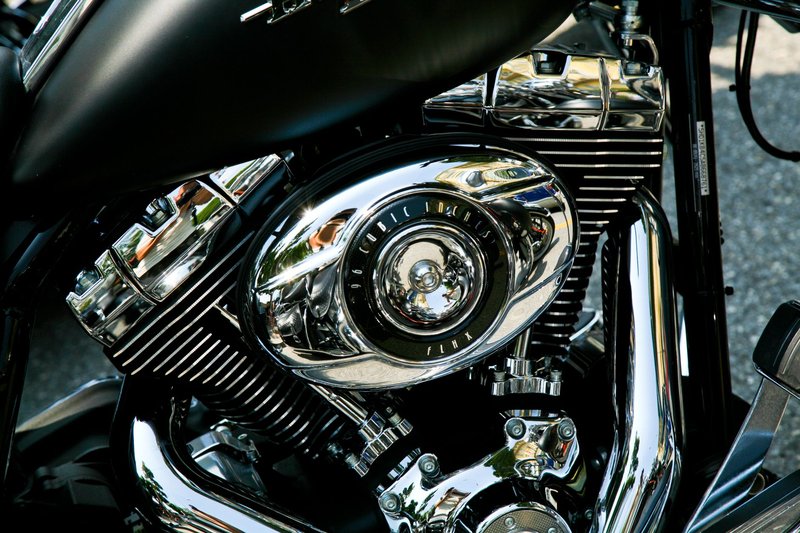
Two features define the whole decade. The transverse layout puts the cylinder heads out in the open, so you can see them, and so can the pavement in a lean. The shaft drive means no chain to oil, adjust or replace, and a slight rise and fall of the rear end when you open and close the throttle. Owners learn to live with both.
Quick reference: 1970s Guzzi models at a glance
Figures are approximate factory claims and vary by market and year. Treat the top speeds as ceilings, not promises.
| Model | Years | Engine | Power | Top speed | What stands out |
|---|---|---|---|---|---|
| V7 Special | 1969-71 | 757cc V-twin | about 50 hp | about 100 mph | Bigger bore, police-style touring |
| V7 Sport | 1971-74 | 748cc V-twin | about 70 hp | about 125 mph | Tonti frame, red-painted (Telaio Rosso) |
| 850 GT / Eldorado | 1971-72 | 844cc V-twin | about 50 hp | about 100 mph | Big-bore tourer and police bike |
| 750 S / S3 | 1974-77 | 748cc V-twin | about 68 hp | about 120 mph | S3 added linked disc brakes |
| 850 T3 | 1975-79 | 844cc V-twin | about 50 hp | about 105 mph | Linked brakes, sensible, durable |
| Le Mans | 1976-78 | 844cc V-twin | about 71 hp | about 130 mph | Café racer look, 40mm carburetors |
| 1000 SP | 1978-79 | 949cc V-twin | about 70 hp | about 125 mph | Full fairing, long-distance tourer |
| V50 | 1977-79 | 490cc V-twin | mid-40s hp | about 95 mph | The new small-twin generation |
V7 and V7 Special: where the decade starts
The original V7 (1967) was a big, heavy, slightly agricultural machine, and Americans liked it for exactly that reason. By 1969 Guzzi had opened the bore to 757cc for the V7 Special, which was the bike the company carried into the 1970s. It ran a roughly 50 hp engine, a four-speed gearbox, and drum brakes that were adequate in 1970 and not in 1977.
The V7 Special matters because the Sport grew out of it. Same crankcase family, same shaft, different attitude. If you want the cheapest way into early V7-series ownership, the Special is it. Just don’t expect it to feel like the bike on the poster.
V7 Sport: the one everyone wants
Lino Tonti took a good engine and gave it a frame worthy of it. The V7 Sport, launched in 1971, used a bored-down 748cc motor (the bore and stroke change gave it a more oversquare, freer-revving character) and about 70 hp. Among the classic Italian motorcycles of its time, it was the first real superbike answer to the Japanese and British machines, and for a couple of years it was among the fastest production bikes you could buy, with a top speed around 125 mph.
The frame is the reason people still talk about it. Tonti’s duplex-cradle design used a removable lower rail so the engine could drop out, and the early cars were finished in red, hence “Telaio Rosso”. Later versions went to a more conventional black frame. The Sport also ran five gears and a pair of drum brakes up front, which at the time were considered a performance feature.
Production was small, in the low thousands, and the bike lived in a market that hadn’t decided it needed one. That scarcity is a large part of its present value. The red-frame bikes are the ones collectors chase. If you are shopping for one, the first question is not the price but the paperwork: frame numbers, engine numbers and evidence that the red frame is genuine. A lot of bikes have been “improved” over fifty years.
850 GT, Eldorado and California: the workhorses
In 1971 Guzzi bored the engine out to 844cc and started selling it as the Eldorado in America, and as the 850 GT elsewhere. It made roughly 50 hp, which sounds modest and was beside the point. This was a bike for riding all day at 80 mph with the cylinder heads out in the airstream, not for posing.
The California version, with a big screen, panniers and crash bars, is one of the quiet success stories of the decade. It sold to American police departments and highway patrols, and the name stuck for the rest of the century. If you see a 1970s California, you are looking at the line that lasted longest. Modern California models are direct descendants of that bike.
750 S and S3: the Sport grows up
The V7 Sport’s successor was the 750 S, which appeared in 1974 with largely the same 748cc engine and about 68 hp. In 1975 it became the 750 S3, and this is where things got interesting. The S3 got Brembo disc brakes with Guzzi’s linked system: the foot pedal operated a front disc and the rear, so a single input slowed the whole bike, while the handlebar lever worked the other front disc.
It was a clever idea for 1975 and it split opinion. Some riders loved how settled it kept the bike under braking. Others felt the system took too much choice away from the rider. Either way, it fixed the drum-brake complaint that had followed the V7 Sport around, and it gave the 750 S3 more real-world pace than the numbers suggest.
The S3 is also one of the cheaper ways to get Tonti-frame handling without the V7 Sport’s price. It sits in the sweet spot: sporty, rideable, and not yet priced out of reach of ordinary buyers.
850 T3: the unglamorous good one
The 850 T3, from 1975, is the model everyone overlooks, which is a good reason to look at it. It used the 844cc engine in a more upright, comfortable chassis, with the same linked-brake setup as the S3. It made around 50 hp and topped out near 105 mph, and nobody ever called it exciting.
What it did was run. The T3 was an everyday bike that covered high mileage without drama, which is why plenty of survivors remain. Hardly anyone is trying to restore one to concours condition, so you find honest, well-used examples at sensible prices. If a Le Mans is a poster bike, the T3 is the one that lives in someone’s garage and still starts.
Le Mans: the 1976 bike that defined the brand
Then came the Le Mans in 1976. Guzzi took the 844cc engine, fitted 40mm Dell’Orto carburetors and a sharper state of tune, and claimed about 71 hp with a top speed near 130 mph. The riding position was low and committed, the bikini fairing was small and neat, and the whole thing looked like it was doing 100 mph standing still.
It wasn’t a lightweight, and the long wheelbase and shaft drive made it a stable bike rather than a flickable one. That was the point. The Le Mans is a machine for fast, smooth road riding on bends you can see through, and it made a case for the transverse twin that no other bike in the catalogue managed. Early cars are known as the Le Mans I. The Mark II followed in 1978 with a larger fairing and a few chassis tweaks, and it is now often seen as the more rideable one.
For many people, the Le Mans is the 1970s Guzzi. It’s the bike that appears on posters and in the memories of anyone who rode in the period.
The odd ones: Nuovo Falcone, Convert and V50
Not everything Guzzi built in the decade was a big twin. The Nuovo Falcone was the last of the horizontal single-cylinder line, a 500cc bike built largely for police and military customers. It ran into the middle of the decade, and it’s a specialist’s purchase today, mostly for people who love the idea of a Guzzi that predates the V-twin era.
The V1000 Convert, from 1975, used the 949cc engine with a hydraulic torque converter and a two-speed gearbox, so no clutch lever. It was meant for riders who didn’t want to shift. It sold in small numbers, and today it is a curiosity rather than a bargain.
The V50, from 1977, is the bike that mattered for the next decade. It used a new small-capacity V-twin of about 490cc, with the same transverse layout in a lighter, more compact package. It’s the start of a different Guzzi story, and it set up the smaller V35 and V50 models that followed.
At the bottom of the catalogue, Guzzi also sold small-capacity machines such as the Nibbio and Cross 50. They get far less attention than the V-twins, and for good reason, but they show how wide the range was.
1000 SP: the end-of-decade tourer
The 1000 SP arrived in 1978, a year crowded with new motorcycle models, and closed the decade. It took a bored-out 949cc version of the V-twin and wrapped it in a full fairing, aimed squarely at long-distance riders. Power was around 70 hp, and the top speed was close to 125 mph.
It was comfortable, heavy and quick enough for long days. The SP spawned a family of bikes that stayed in production into the 1980s, and it’s generally the most practical of the big 1970s twins for modern roads. If you want to ride a classic Guzzi regularly rather than polish it, an SP or a T3 will do the job better than a Le Mans.
Buying a 1970s Moto Guzzi
Values. Prices vary heavily by condition and country, so check recent sales before you commit. As a rough guide:
- V7 Sport (Telaio Rosso): the top of the market, often well into five figures and sometimes far beyond.
- Le Mans I and II: strong prices that have risen steadily, with good examples costing well above a T3.
- 750 S3: a mid-range collector bike, cheaper than the Sport.
- 850 T3, 850 GT and California: the most affordable big twins, and the best value for riding.
- 1000 SP: inexpensive for what you get, though demand is lower.
Known weak points. Most of the complaints are the same across the range.
- Brakes. The early bikes with drum brakes are slow to stop by modern standards. The linked system on the S3 and T3 is better but needs maintenance, and the linkage and hoses often need attention.
- Gearing. Guzzis of the period are tall-geared and relaxed, so they feel lazy at low speed and don’t reward being thrashed.
- Shaft drive and rear end. Check for wear in the drive and for oil leaks at the final drive. Worn rear drives make a noise you’ll recognise once you’ve heard it.
- Electrics. Old wiring, tired switchgear and failing alternators are common. Budget for a rewire if the bike hasn’t been touched in decades.
- Cylinder heads and carburetors. The Dell’Orto carbs need setting up properly, and unsynchronised carbs make the engine run rough and feel underpowered.
Parts. The good news is that the Guzzi community is large and organised. Specialist suppliers in Italy, the UK and the US stock mechanical parts for the big-twin range, and clubs trade knowledge freely. The harder items are cosmetic: original fairings, correct paint colours and some early trim for the V7 Sport are difficult to find, and reproductions vary in quality.
A sensible approach is to buy the best example you can afford, and to prefer a documented, well-maintained bike over a tempting but uncertain one.
Summary
The 1970s was the decade when Moto Guzzi moved from police-and-military supplier to a maker people actually wanted to ride. The V7 Sport set the sporting tone, the 750 S3 and 850 T3 added linked brakes and refinement, the Le Mans gave the brand its enduring image, and the 1000 SP made the big twin practical for long distances. Under all of it sat the same transverse V-twin and shaft drive.
If you want one 1970s Moto Guzzi to own, the choice comes down to what you plan to do with it. Buy a V7 Sport if you are a collector, a Le Mans if you want the icon, and a T3 or SP if you want to ride it.

Sarah Thornton
More from Sarah ThorntonHow we reviewed this article
This article was researched against manufacturer records and editorially reviewed before publishing. We accept no payment for coverage. Some guides contain affiliate links; see our affiliate disclosure.